Loreful
HomeDiscover
Search series, authors…⌘K
Loreful

Reading orders for SF/F series and shared universes — with your place kept in every one.

Explore

UniversesSeriesWorksAuthorsAtlas

Help

FAQAboutSite map

Account & legal

Sign inCreate accountPrivacyTerms

Data

Built on ISFDB, Wikipedia, Wikidata and Open Library. Curated reading orders carry their reasoning on the page; the rest follow publication order. Data sources & licenses

© Loreful · data: ISFDB · CC BY

More like .007

anchored on:literary & general19th centurywhimsicalnorth america

but

Mood

The mood the book leaves you in.

  • The reading experience is propelled by journeys, exploration, and physical risk; excitement and forward momentum dominate over dread or introspection.
  • Joy and loss are deliberately mixed; the resolution grants characters something real while taking something else away, leaving warmth and sorrow together.
  • The book demands work from the reader — dense prose, difficult structure, unfamiliar ideas, or morally uncomfortable material — as part of its intended effect.
  • Grim events, cruelty, or despair dominate the atmosphere, and the book does not soften them with comfort or comic relief.
  • The atmosphere is quietly unsettling — wrongness, unease, and the uncanny pervade the book without necessarily escalating into overt horror.
  • The book is built to move the reader; character feeling is foregrounded and major scenes aim at a strong emotional response.
  • Humor is a primary aim and the prose plays for laughs — comic situations, wit, or dialogue produce sustained comedy, not occasional levity.
  • The book insists that things can improve; effort and decency are shown to matter, and the arc bends toward better outcomes even through hardship.
  • The book teaches as it goes — real facts, history, science, or craft are conveyed in enough depth that learning is part of the reading experience.
  • The book is designed to uplift and motivate, presenting perseverance or achievement in a way that invites the reader to aspire or act.
  • The overall register is cheerful and easygoing; stakes are kept gentle and the book avoids dwelling on pain or dread.
  • Withheld information drives the experience; the book sustains enigmas and secrets the reader wants resolved, whatever its genre.
  • The book is contemplative and inward-looking, giving more weight to thought, memory, and meaning than to external events.
  • The book works as comfort reading — low tension, a soothing pace, and an atmosphere the reader can unwind in.
  • Grief, loss, or melancholy set the dominant register, and the book lets sorrow stand rather than resolving it into comfort.
  • Sustained suspense is the point; the book keeps the reader braced for what happens next through danger, pressure, or impending revelation.
  • Playful invention and charm define the register — fanciful conceits, light absurdity, and a narration that delights in its own oddity.

About

What the story runs on.

  • Stories structured as a quest — a journey undertaken to find, deliver, or destroy something of great import.
  • Stories in which staying alive against nature, catastrophe, or scarcity is the central problem.
  • Stories of lovers kept apart by law, family, faith, or station, where the obstacle to love is the plot.
  • Stories in which a friendship — its making, testing, or loss — is the emotional center.
  • Stories of growing up — a young protagonist crossing from childhood into adult knowledge and responsibility.
  • Stories about who a character truly is — self-discovery, doubled lives, and the search for a self.
  • Stories about mental unraveling — descent into madness, delusion, and minds at war with themselves.
  • Stories about mourning — living through the death of a loved one and what loss does to the survivors.
  • Stories in which a buried family truth — hidden parentage, crimes, or shames — surfaces and reorders the present.
  • Stories driven by maneuvering for power — factions, conspiracies, and statecraft conducted in shadow.
  • Stories in which war itself is the subject — combat, occupation, and what warfare does to soldiers and civilians.
  • Stories organized around investigating a killing — the case, the clues, and the pursuit of the killer, in any genre's clothing.

Shelf

Where it sits in the library.

    • Fiction built on magic or other supernatural elements that have no scientific explanation.
    • Secondary-world fantasy at large scale, where the fate of nations or the world turns on the protagonists' struggle.
    • Fantasy set in a recognizably modern city or contemporary world where the supernatural intrudes on everyday life.
    • Fantasy that blends in horror's atmosphere and imagery, keeping a fantastical frame around grim or frightening material.
    • Action-driven fantasy following warriors or rogues with personal stakes against sorcerous threats, rather than world-spanning conflicts.
    • Fantasy set in a real historical period or a close analogue of one, with magic woven into the era.
    • Fantasy in which protagonists cross from the ordinary world into another world through a portal or similar passage.
    • Fiction that retells or reworks a traditional fairy tale in a new form or setting.
    • Fantasy drawing directly on myths, legends, and folklore, retelling them or building on their figures and logic.
    • Fantasy of ghosts, vampires, shapeshifters, psychics, and similar phenomena, usually set in an otherwise ordinary world.
    • Fiction mixing science-fictional trappings with overtly magical or impossible elements in one setting.
    • Low-stakes fantasy emphasizing comfort, community, and everyday pleasures over conflict and peril.
    • Speculative fiction of pervasive moral ambiguity, violence, and cynicism that rejects heroic conventions — fantasy and SF alike.
      • Fiction that extrapolates from science and technology — future societies, space travel, or speculative inventions — within at least nominally natural laws.
      • Science fiction of interstellar scope — starships, galactic polities, and adventure across star systems.
      • Science fiction committed to scientific rigor, where technical plausibility constrains the story.
      • Science fiction centered on armed forces and warfare, told largely from a military point of view.
      • Science fiction of networked, corporate-dominated near futures, pairing high technology with social decay.
      • Science fiction styled on nineteenth-century steam-powered technology, often in a Victorian or pseudo-Victorian setting.
      • Fiction depicting an oppressive or catastrophic society, presented as a warning.
      • Fiction set after civilization's collapse, following survivors in the ruins of the old world.
      • Fiction in which characters move between past and future, and the mechanics or consequences of that travel drive the plot.
      • Fiction exploring a world where a historical event went differently and history diverged from ours.
      • Science fiction about humanity's first encounter and communication with an alien intelligence.
      • Science fiction in which extraterrestrial forces attack or occupy Earth and humanity resists.
      • Fiction whose primary aim is to frighten or unsettle the reader through dread, menace, or the monstrous.
      • Horror of vast, indifferent, incomprehensible entities before which humanity is insignificant, in the Lovecraft tradition.
      • Horror of decaying houses, buried family secrets, and oppressive atmosphere in the Gothic literary tradition.
      • Horror centered on hauntings and the returning dead.
      • Horror located in the mind — paranoia, obsession, and unreliable perception rather than external monsters.
      • Horror built around the reanimated dead and survival amid their outbreaks.
      • Horror defined by explicit, transgressive gore that refuses to cut away from violence.
      • Speculative fiction of the strange and uncanny that resists both natural explanation and standard genre categories.
      • Fiction organized around solving a crime or puzzle, typically following an investigator toward the identification of a culprit.
      • A puzzle-first mystery that lays out clues so the culprit's identity can be deduced before the reveal.
      • Crime fiction of moral ambiguity, fatalism, and hard-edged style, set among the corrupt and the doomed.
      • A mystery following the realistic routines of police work — forensics, interviews, and case-building.
      • A gentle mystery with an amateur sleuth, a small community, and violence kept off the page.
      • A mystery set in a past era, where the investigation works within that period's methods and society.
      • Fast-paced fiction driven by imminent danger, pursuit, or high-stakes conspiracy, built to sustain tension.
      • A thriller of espionage — agents, tradecraft, and intelligence services in conflict.
      • A thriller centered on lawyers and the courtroom, where litigation carries the suspense.
      • A thriller driven by detailed contemporary or near-future technology, often military or scientific.
      • A thriller whose tension comes from mental states and manipulation between characters rather than external action.
      • Fiction whose central plot is a romantic relationship and its development toward an emotionally satisfying resolution.
      • Romance in which one or both partners are supernatural beings, blending fantasy elements into the love story.
      • A fantasy-romance hybrid in which the romantic arc and the fantasy plot carry equal weight.
      • Romance set in a past era, with courtship shaped by the period's society and manners.
      • Romance set in the present day, without supernatural or historical elements.
      • Fiction set in a real past period, where the historical setting materially shapes characters and events.
        • General and literary fiction emphasizing prose style, character interiority, or formal ambition over genre plot conventions.
        • Fiction in a realistic world where magical events occur and are treated as ordinary, in the tradition of Latin American literature.
        • Fiction that ridicules people, institutions, or society in order to criticize them.
        • Fiction of dreamlike, irrational imagery and logic that breaks from realistic representation.
        • Fiction that plays with narrative convention through metafiction, fragmentation, and self-reference.
        • Fiction propelled by journeys, exploration, and physical peril, where action and survival carry the plot.
        • Adventure fiction of ships and seafaring — naval engagements, voyages, and life at sea.
        • Fiction of the American frontier West — gunmen, ranchers, and lawmen, typically in the late nineteenth century.
        • Fiction centered on soldiers, campaigns, and the experience of warfare, historical or imagined.
          • Fiction written primarily to amuse, using comedic situations, wit, or parody as its organizing principle.
            • Multi-generational fiction following a family or dynasty across decades, with inheritance and kinship as the through-line.
              • Fiction whose world runs on explicit game mechanics — levels, stats, and skills that characters can see and exploit.
                • Fiction about costumed or superpowered heroes and their conflicts with comparable villains.

                Practical

                How long a commitment, whether it stands alone, and whether it has finished.

                Tap a chip to ask for it · tap again to rule it out · once more to clear. Numbers show what would be left.

                • Cover of Altered America
                  Altered America

                  series · 11 books · 2005

                  similar bywhimsical19th centurynorth america+1 more

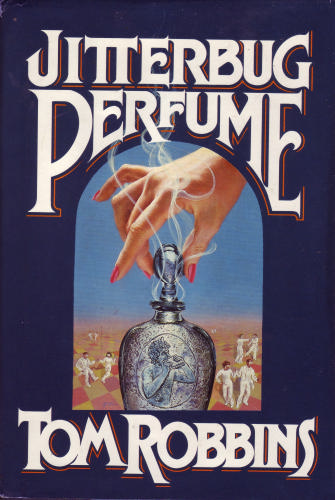
                • Cover of Jitterbug Perfume
                  Jitterbug Perfume

                  Tom Robbins · standalone novel · 1984

                  similar byliterary & generalwhimsicalnorth america

                  Jitterbug Perfume is American writer Tom Robbins' fourth novel and was listed on the New York Times Best Seller list in 1985. The book follows two interweaving storylines, one in Ancient Eurasia and one in the present day. The story connects dueling perfumers in Seattle, Paris and New Orleans to a bottle of incomparable perfume created by two unlikely but defiant lovers of the past who seek immortality. Orchestrated by a mysterious Irish philosopher, the past and the present collide when the characters come together and discover the unexpected path to life-everlasting. The book was first published in 1984 by Bantam Books and later reprinted by Random House.

                • Cover of Even Cowgirls Get the Blues
                  Even Cowgirls Get the Blues

                  Tom Robbins · standalone novel · 1976

                  similar byliterary & generalwhimsicalnorth america

                  Sissy Hankshaw was born with unusually oversized thumbs, and instead of seeing them as a flaw turns them into a gift: the greatest hitchhiking thumbs in America, carrying her across the country on a restless road life. Her travels take her to New York, where she becomes star model for the Countess, a feminine-hygiene tycoon, before a stint at a Dakota ranch called the Rubber Rose brings her into the orbit of Bonanza Jellybean's cowgirls and a mountain mystic known only as the Chink. Around Sissy's wandering, Robbins builds a philosophical comedy about freedom and gender, with a flock of endangered whooping cranes crossing her path. Tom Robbins's best-known novel.

                • Cover of The Door Into Summer
                  The Door Into Summer

                  Robert A. Heinlein · standalone novel · 1957

                  similar byrobotsnorth america

                  From the first page of the Signet 6th printing: "An electronics engineer invents a wizard robot... only to find himself shanghaied by his ruthless partner and his gold-digging fiancee. The crafty pair forces him to submit to the "long sleep" - suspended animation for thirty years. But when he wakes up in the year 2000 A.D. the inventor makes a startling discovery. He learns that it is possible now to twist time forwards or backwards. And so he returns to the past bent on a mission... of revenge."

                • Cover of Quichotte
                  Quichotte

                  Salman Rushdie · standalone novel · 2019

                  similar byliterary & generalwhimsicalnorth america

                  Quichotte is a 2019 novel by Salman Rushdie. It is his fourteenth novel, published on 29 August 2019 by Jonathan Cape in the United Kingdom and Penguin Books India in India. It was published in the United States on 3 September 2019 by Random House. Inspired by Miguel de Cervantes's classic novel Don Quixote, Quichotte is a metafiction that tells the story of an addled Indian-American man who travels across America in pursuit of a celebrity television host with whom he has become obsessed.

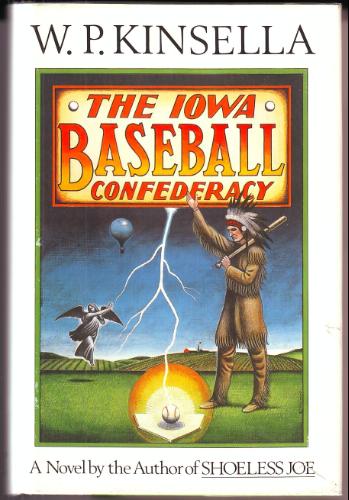
                • Cover of The Iowa Baseball Confederacy
                  The Iowa Baseball Confederacy

                  W. P. Kinsella · standalone novel · 1986

                  similar byliterary & generalwhimsicalnorth america

                  The Iowa Baseball Confederacy is a 1986 novel written by Canadian author W.P. Kinsella. It is less well known than his novel Shoeless Joe, which came to prominence when it was made into the film Field of Dreams. Like in Shoeless Joe, baseball is at the heart of the novel, which uses magical realism to blend events and individuals past and present with the author's love of the game. However, it covers more themes than Shoeless Joe and it explores a greater number of plot lines.

                • Cover of Ada or Ardor: A Family Chronicle
                  Ada or Ardor: A Family Chronicle

                  Vladimir Nabokov · standalone novel · 1969

                  similar byliterary & general19th centurynorth america

                  An alternate-world novel by the celebrated author of "Lolita" in which North America is a 19th- and early 20th-century province of Russia still ruled by Tsars.

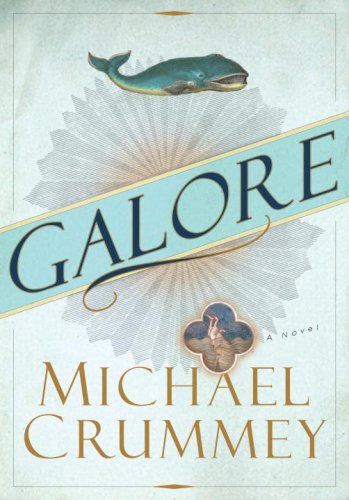
                • Cover of Galore
                  Galore

                  Michael Crummey · standalone novel · 2009

                  similar byliterary & general19th centurynorth america

                  Galore is a 2009 novel by Michael Crummey first published by Doubleday Canada. It is about the discovery of an 18th-century Jonah in a remote coastal town of Paradise Deep, Newfoundland.

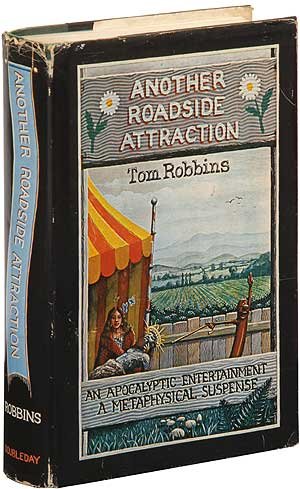
                • Cover of Another Roadside Attraction
                  Another Roadside Attraction

                  Tom Robbins · standalone novel · 1971

                  similar byliterary & generalwhimsicalnorth america

                  Speculative elements are primarily centered around Plucky Purcell, when the Vatican is cracked open by an earthquake, finding the corpse of Jesus hidden in the Vatican. He smuggles the body out, and the story follows what happens with that body.

                • Cover of Skinny Legs and All
                  Skinny Legs and All

                  Tom Robbins · standalone novel · 1990

                  similar byliterary & generalwhimsicalnorth america

                  Skinny Legs and All, novelist Tom Robbins's fifth book, was published in 1990 by Bantam Books. As with all of Robbins's novels, it weaves disparate and seemingly unrelated themes into a single narrative.

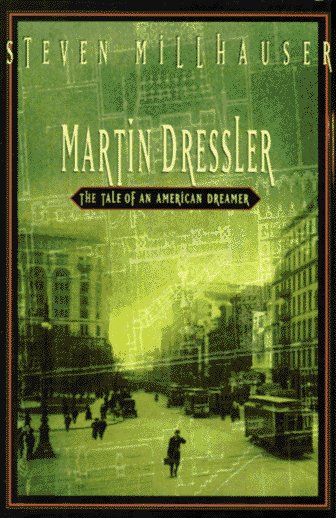
                • Cover of Martin Dressler: The Tale of an American Dreamer
                  Martin Dressler: The Tale of an American Dreamer

                  Steven Millhauser · standalone novel · 1996

                  similar byliterary & general19th centurynorth america

                  Martin Dressler: The Tale of an American Dreamer is a 1996 novel by Steven Millhauser. It won the 1997 Pulitzer Prize for Fiction and was a finalist for the 1996 National Book Award. It follows the exploits of Martin Dressler, a young, optimistic entrepreneur, in late nineteenth-century New York City. It vividly evokes its time and place through elaborate description.

                • Cover of The Bear Comes Home
                  The Bear Comes Home

                  Rafi Zabor · standalone novel · 1997

                  similar byliterary & generalwhimsicalnorth america

                  The Bear Comes Home is a novel written by American writer Rafi Zabor. It won the 1998 PEN/Faulkner Award for fiction, and was selected as an alternate for the Hemingway Foundation/PEN Award.

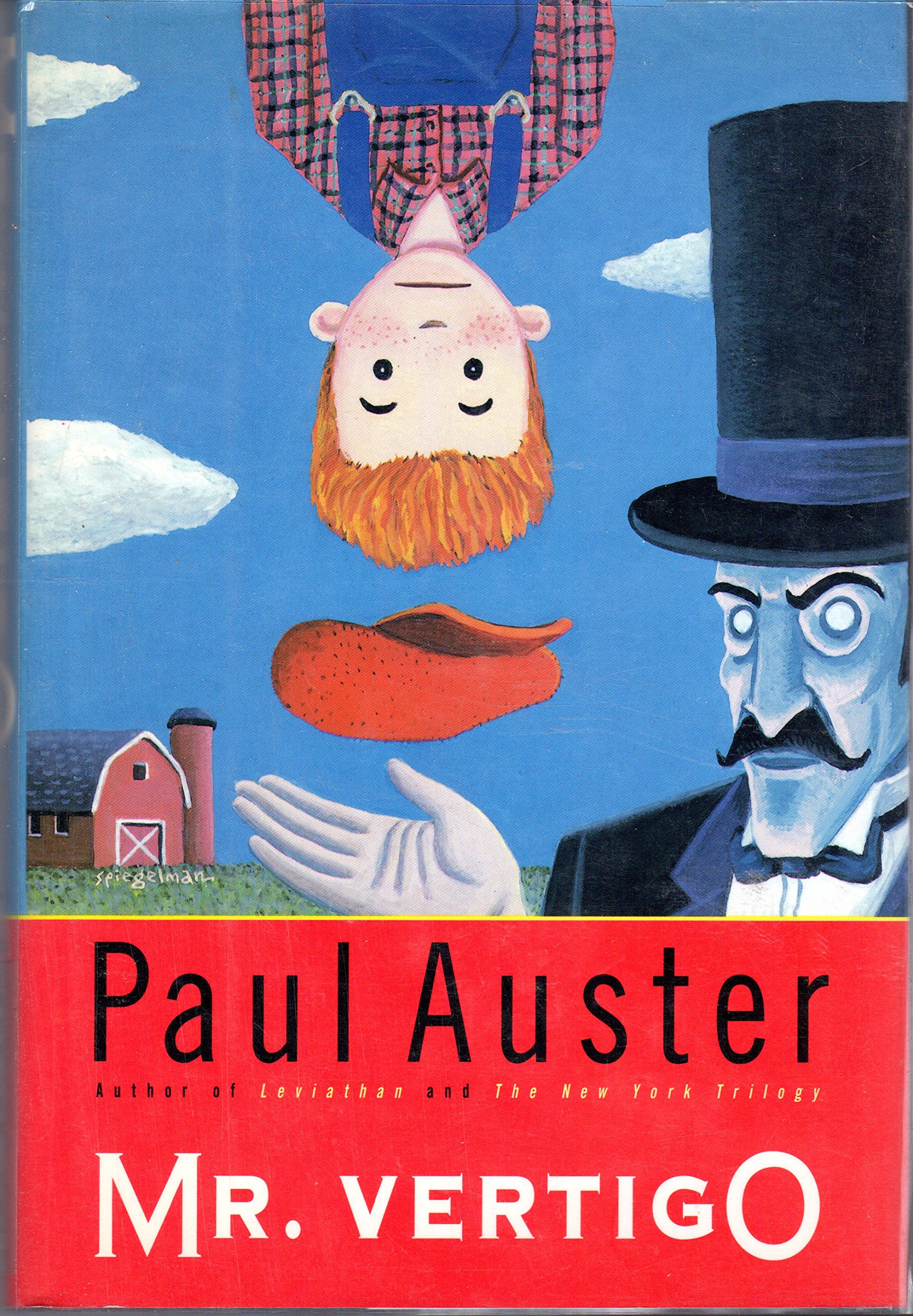
                • Cover of Mr. Vertigo
                  Mr. Vertigo

                  Paul Auster · standalone novel · 1994

                  similar byliterary & generalwhimsicalnorth america

                  In the 1920s, an orphan is rescued from the streets of St. Louis by a mysterious foreigner who teaches him to fly and walk on water. Now an octogenarian, he tells the story of his vaudeville act.

                • Cover of Alias Grace
                  Alias Grace

                  Margaret Atwood · standalone novel · 1996

                  similar byliterary & general19th centurynorth america

                  Alias Grace is a historical fiction novel by Canadian writer Margaret Atwood. First published in 1996 by McClelland & Stewart, it won the Giller Prize and was shortlisted for the Booker Prize.

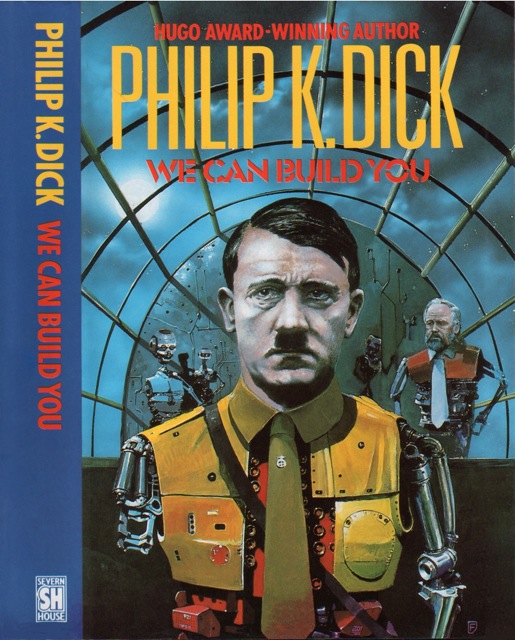
                • Cover of We Can Build You
                  We Can Build You

                  Philip K. Dick · standalone novel · 1972

                  similar byrobotsnorth america

                  We Can Build You is a 1972 science fiction novel by American writer Philip K. Dick. Written in 1962 as The First in Our Family, it remained unpublished until appearing in serial form as A. Lincoln, Simulacrum in the November 1969 and January 1970 issues of Amazing Stories magazine, re-titled by editor Ted White. The novel was issued as a mass market paperback original by DAW Books in 1972, its final title provided by publisher Donald A. Wollheim. Its first hardcover edition was published in Italy in 1976, and Vintage issued a trade paperback in 1994.

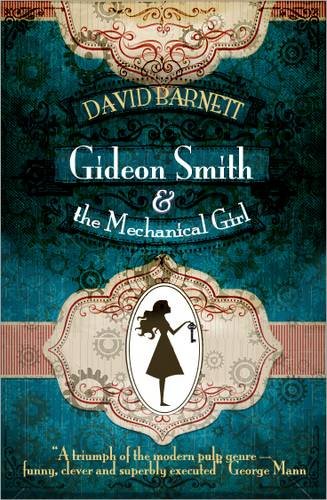
                • Cover of Gideon Smith
                  Gideon Smith

                  series · 7 books · 2013

                  similar by19th century+3 more

                • Cover of The Stepford Wives
                  The Stepford Wives

                  Ira Levin · standalone novel · 1972

                  similar byrobotsnorth america

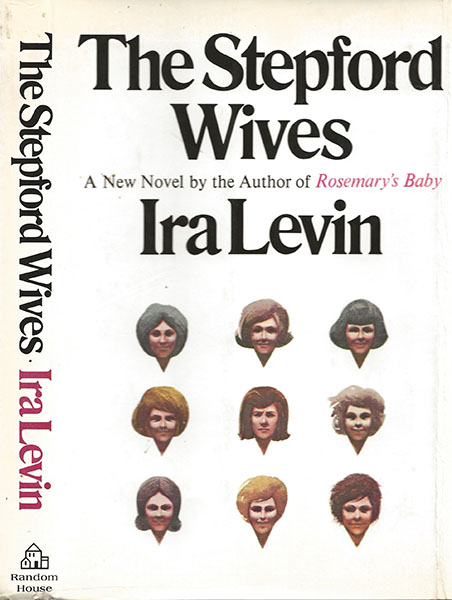
                  The Stepford Wives is a 1972 satirical "feminist horror" novel by Ira Levin. The story concerns Joanna Eberhart, a talented photographer, wife, and young mother who suspects that something in the town of Stepford is changing the wives from free-thinking, intelligent women into compliant wives dedicated solely to homemaking. As her friends slowly transform, Joanna realizes the horrific truth.

                • Cover of Lincoln in the Bardo
                  Lincoln in the Bardo

                  George Saunders · standalone novel · 2017

                  similar byliterary & general19th centurynorth america

                  Lincoln in the Bardo is a 2017 experimental novel by American writer George Saunders. It is Saunders's first full-length novel and was The New York Times hardcover fiction bestseller for the week of March 5, 2017.

                • Cover of Inland
                  Inland

                  Téa Obreht · standalone novel · 2019

                  similar byliterary & general19th centurynorth america

                  Inland is the second novel by the Serbian American author Téa Obreht. The book was published by Random House on August 13, 2019, eight years after Obreht's 2011 debut novel, The Tiger's Wife.

                • Cover of Cradle
                  Cradle

                  Arthur C. Clarke & Gentry Lee · standalone novel · 1988

                  similar byrobotsnorth america

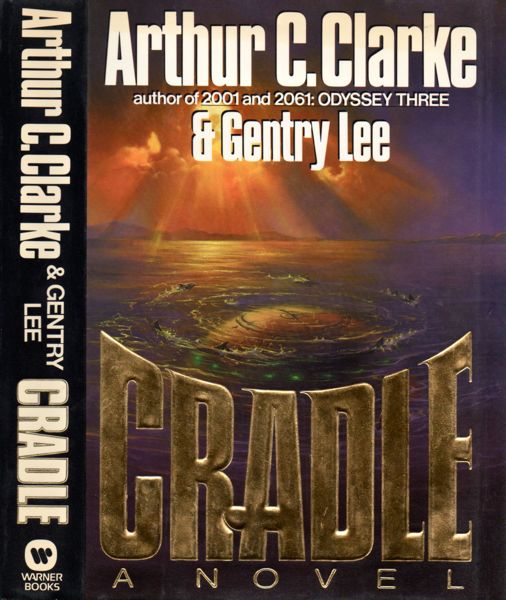
                  Cradle is a 1988 science fiction novel by Arthur C. Clarke and Gentry Lee. The premise of the novel is the contact between a few humans from the Miami area in 1994 and the super robots of a damaged space ship submerged off the Florida coast. Telecommunication advances such as videotelephones and highly efficient underwater scanning equipment used in the story bridge from the everyday, real-life aspects of the setting toward the near future, bespeaking technological progress.

                • Cover of The Simulacra
                  The Simulacra

                  Philip K. Dick · standalone novel · 1964

                  similar byrobotsnorth america

                  The Simulacra is a 1964 science fiction novel by American writer Philip K. Dick. The novel portrays a future totalitarian society apparently dominated by a matriarch, Nicole Thibodeaux. It revolves around the themes of reality and illusionary beliefs, as do many of Dick's works. Additionally, it touches on Nazi ideology.

                • Cover of The Blithedale Romance
                  The Blithedale Romance

                  Nathaniel Hawthorne · standalone novel · 1852

                  similar byliterary & general19th centurynorth america

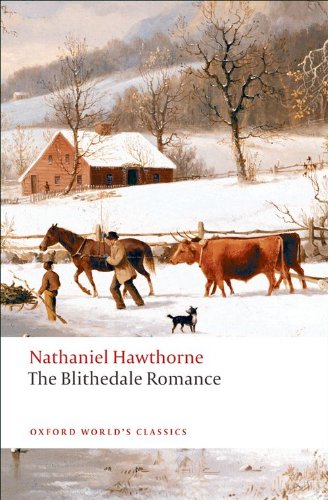
                  In the utopian community of Blithedale Farm, in the mid-1800s, Miles Coverdale embarks on a quest for betterment of the world, in a plot of veils, masks, and control by mesmerism.

                • Cover of The Hereafter Gang
                  The Hereafter Gang

                  Neal Barrett & Jr. · standalone novel · 1991

                  similar byliterary & generalwhimsicalnorth america

                  From the front flap of the Ziesing first edition: "On a hot summer Texas afternoon, Cindy Nance introduces young Doug Hoover to the two great secrets of life. Doug likes the first secret a lot. The second, that guys grow up and go to work, doesn't appeal to him at all. A series of meaningless marriages and do-nothing jobs prove Cindy was right. Turned off by the present, Doug tries to recapture the joys of his past - Captain Marvel and cinnamon squares, Dr. Pepper and window-peeking fun. Nothing goes right until Doug meets Sue Jean, the culmination of a lifetime enchantment with mean-eyed Southern girls, his all-time carhop queen. Reality takes a hard right and never slows down. Doug, Sue Jean, and readers who can hang on tight are swept through an indescribable romp that gives new meaning to life, death, and roadside romance. There are enough bizarre characters here to fill several institutions: Crime czars, proctologists, Western outlaws, dog-fighting aviators and trout-fishing Huns. The Hereafter Gang is a literary accomplishment of rare insight and pure pleasure. Barrett"s sense of humor is unexcelled. His ability to stir fantasy and reality into a delightful souffle redefines the term "magic realism.""

                • Cover of Chronic City
                  Chronic City

                  Jonathan Lethem · standalone novel · 2009

                  similar byliterary & generalnorth america+1 more

                  Chronic City (2009) is a novel by American author Jonathan Lethem.