Loreful
HomeDiscover
Search series, authors…⌘K
Loreful

Reading orders for SF/F series and shared universes — with your place kept in every one.

Explore

UniversesSeriesWorksAuthorsAtlas

Help

FAQAboutSite map

Account & legal

Sign inCreate accountPrivacyTerms

Data

Built on ISFDB, Wikipedia, Wikidata and Open Library. Curated reading orders carry their reasoning on the page; the rest follow publication order. Data sources & licenses

© Loreful · data: ISFDB · CC BY

More like 1862

anchored on:alternate historywarnorth america19th centurywar & militarytense

but

Mood

The mood the book leaves you in.

  • The reading experience is propelled by journeys, exploration, and physical risk; excitement and forward momentum dominate over dread or introspection.
  • Joy and loss are deliberately mixed; the resolution grants characters something real while taking something else away, leaving warmth and sorrow together.
  • The book demands work from the reader — dense prose, difficult structure, unfamiliar ideas, or morally uncomfortable material — as part of its intended effect.
  • Grim events, cruelty, or despair dominate the atmosphere, and the book does not soften them with comfort or comic relief.
  • The atmosphere is quietly unsettling — wrongness, unease, and the uncanny pervade the book without necessarily escalating into overt horror.
  • The book is built to move the reader; character feeling is foregrounded and major scenes aim at a strong emotional response.
  • Humor is a primary aim and the prose plays for laughs — comic situations, wit, or dialogue produce sustained comedy, not occasional levity.
  • The book insists that things can improve; effort and decency are shown to matter, and the arc bends toward better outcomes even through hardship.
  • The book teaches as it goes — real facts, history, science, or craft are conveyed in enough depth that learning is part of the reading experience.
  • The book is designed to uplift and motivate, presenting perseverance or achievement in a way that invites the reader to aspire or act.
  • The overall register is cheerful and easygoing; stakes are kept gentle and the book avoids dwelling on pain or dread.
  • Withheld information drives the experience; the book sustains enigmas and secrets the reader wants resolved, whatever its genre.
  • The book is contemplative and inward-looking, giving more weight to thought, memory, and meaning than to external events.
  • The book works as comfort reading — low tension, a soothing pace, and an atmosphere the reader can unwind in.
  • Grief, loss, or melancholy set the dominant register, and the book lets sorrow stand rather than resolving it into comfort.
  • Sustained suspense is the point; the book keeps the reader braced for what happens next through danger, pressure, or impending revelation.
  • Playful invention and charm define the register — fanciful conceits, light absurdity, and a narration that delights in its own oddity.

About

What the story runs on.

  • Stories in which extraterrestrial beings are central — as characters, cultures, or the object of the plot.
  • Stories about minds with paranormal abilities — telepathy, telekinesis, precognition, empathy — and how societies handle those who have them.
  • Stories structured as a quest — a journey undertaken to find, deliver, or destroy something of great import.
  • Stories in which staying alive against nature, catastrophe, or scarcity is the central problem.
  • Stories of lovers kept apart by law, family, faith, or station, where the obstacle to love is the plot.
  • Stories of growing up — a young protagonist crossing from childhood into adult knowledge and responsibility.
  • Stories about who a character truly is — self-discovery, doubled lives, and the search for a self.
  • Stories in which a buried family truth — hidden parentage, crimes, or shames — surfaces and reorders the present.
  • Stories driven by maneuvering for power — factions, conspiracies, and statecraft conducted in shadow.
  • Stories about rising against rulers — uprisings, resistance movements, and revolutions and their aftermaths.
  • Stories in which war itself is the subject — combat, occupation, and what warfare does to soldiers and civilians.
  • Stories organized around investigating a killing — the case, the clues, and the pursuit of the killer, in any genre's clothing.

Shelf

Where it sits in the library.

    • Fiction built on magic or other supernatural elements that have no scientific explanation.
    • Secondary-world fantasy at large scale, where the fate of nations or the world turns on the protagonists' struggle.
    • Fantasy set in a recognizably modern city or contemporary world where the supernatural intrudes on everyday life.
    • Fantasy that blends in horror's atmosphere and imagery, keeping a fantastical frame around grim or frightening material.
    • Action-driven fantasy following warriors or rogues with personal stakes against sorcerous threats, rather than world-spanning conflicts.
    • Fantasy set in a real historical period or a close analogue of one, with magic woven into the era.
    • Fantasy in which protagonists cross from the ordinary world into another world through a portal or similar passage.
    • Fiction that retells or reworks a traditional fairy tale in a new form or setting.
    • Fantasy drawing directly on myths, legends, and folklore, retelling them or building on their figures and logic.
    • Fantasy of ghosts, vampires, shapeshifters, psychics, and similar phenomena, usually set in an otherwise ordinary world.
    • Fiction mixing science-fictional trappings with overtly magical or impossible elements in one setting.
    • Low-stakes fantasy emphasizing comfort, community, and everyday pleasures over conflict and peril.
    • Speculative fiction of pervasive moral ambiguity, violence, and cynicism that rejects heroic conventions — fantasy and SF alike.
      • Fiction that extrapolates from science and technology — future societies, space travel, or speculative inventions — within at least nominally natural laws.
      • Science fiction of interstellar scope — starships, galactic polities, and adventure across star systems.
      • Science fiction committed to scientific rigor, where technical plausibility constrains the story.
      • Science fiction centered on armed forces and warfare, told largely from a military point of view.
      • Science fiction of networked, corporate-dominated near futures, pairing high technology with social decay.
      • Science fiction styled on nineteenth-century steam-powered technology, often in a Victorian or pseudo-Victorian setting.
      • Fiction depicting an oppressive or catastrophic society, presented as a warning.
      • Fiction set after civilization's collapse, following survivors in the ruins of the old world.
      • Fiction in which characters move between past and future, and the mechanics or consequences of that travel drive the plot.
      • Fiction exploring a world where a historical event went differently and history diverged from ours.
      • Science fiction about humanity's first encounter and communication with an alien intelligence.
      • Science fiction in which extraterrestrial forces attack or occupy Earth and humanity resists.
      • Fiction whose primary aim is to frighten or unsettle the reader through dread, menace, or the monstrous.
      • Horror of vast, indifferent, incomprehensible entities before which humanity is insignificant, in the Lovecraft tradition.
      • Horror of decaying houses, buried family secrets, and oppressive atmosphere in the Gothic literary tradition.
      • Horror centered on hauntings and the returning dead.
      • Horror located in the mind — paranoia, obsession, and unreliable perception rather than external monsters.
      • Horror built around the reanimated dead and survival amid their outbreaks.
      • Horror defined by explicit, transgressive gore that refuses to cut away from violence.
      • Speculative fiction of the strange and uncanny that resists both natural explanation and standard genre categories.
      • Fiction organized around solving a crime or puzzle, typically following an investigator toward the identification of a culprit.
      • A puzzle-first mystery that lays out clues so the culprit's identity can be deduced before the reveal.
      • Crime fiction of moral ambiguity, fatalism, and hard-edged style, set among the corrupt and the doomed.
      • A mystery following the realistic routines of police work — forensics, interviews, and case-building.
      • A gentle mystery with an amateur sleuth, a small community, and violence kept off the page.
      • A mystery set in a past era, where the investigation works within that period's methods and society.
      • Fast-paced fiction driven by imminent danger, pursuit, or high-stakes conspiracy, built to sustain tension.
      • A thriller of espionage — agents, tradecraft, and intelligence services in conflict.
      • A thriller centered on lawyers and the courtroom, where litigation carries the suspense.
      • A thriller driven by detailed contemporary or near-future technology, often military or scientific.
      • A thriller whose tension comes from mental states and manipulation between characters rather than external action.
      • Fiction whose central plot is a romantic relationship and its development toward an emotionally satisfying resolution.
      • Romance in which one or both partners are supernatural beings, blending fantasy elements into the love story.
      • A fantasy-romance hybrid in which the romantic arc and the fantasy plot carry equal weight.
      • Romance set in a past era, with courtship shaped by the period's society and manners.
      • Romance set in the present day, without supernatural or historical elements.
      • Fiction set in a real past period, where the historical setting materially shapes characters and events.
        • General and literary fiction emphasizing prose style, character interiority, or formal ambition over genre plot conventions.
        • Fiction in a realistic world where magical events occur and are treated as ordinary, in the tradition of Latin American literature.
        • Fiction that ridicules people, institutions, or society in order to criticize them.
        • Fiction of dreamlike, irrational imagery and logic that breaks from realistic representation.
        • Fiction that plays with narrative convention through metafiction, fragmentation, and self-reference.
        • Fiction propelled by journeys, exploration, and physical peril, where action and survival carry the plot.
        • Adventure fiction of ships and seafaring — naval engagements, voyages, and life at sea.
        • Fiction of the American frontier West — gunmen, ranchers, and lawmen, typically in the late nineteenth century.
        • Fiction centered on soldiers, campaigns, and the experience of warfare, historical or imagined.
          • Fiction written primarily to amuse, using comedic situations, wit, or parody as its organizing principle.
            • Multi-generational fiction following a family or dynasty across decades, with inheritance and kinship as the through-line.
              • Fiction whose world runs on explicit game mechanics — levels, stats, and skills that characters can see and exploit.
                • Fiction about costumed or superpowered heroes and their conflicts with comparable villains.

                Practical

                How long a commitment, whether it stands alone, and whether it has finished.

                Tap a chip to ask for it · tap again to rule it out · once more to clear. Numbers show what would be left.

                • Cover of Gettysburg / Civil War Trilogy
                  Gettysburg / Civil War Trilogy

                  series · 3 books · 2003

                  similar bywartensenorth america19th centuryalternate historywar & military

                  Gettysburg opens Newt Gingrich and William R. Forstchen's alternate-history trilogy imagining a Confederate victory at the battle of Gettysburg, then follows the shifted course of the Civil War across two further novels tracking the changed war's political and military fallout. The series leans on close military detail and real historical figures reimagined under altered circumstances. It was published between 2003 and 2005.

                • Cover of The Guns of the South
                  The Guns of the South

                  Harry Turtledove · standalone novel · 1992

                  similar bywartensenorth america19th centuryalternate historywar & military

                  The Guns of the South is an alternate history science fiction novel set during the American Civil War by Harry Turtledove. It was released in the United States on September 22, 1992.

                • Cover of Days of Infamy
                  Days of Infamy

                  series · 2 books · 2004

                  similar bywartensenorth americaalternate historywar & military

                  Harry Turtledove's Days of Infamy duology reimagines the Pacific theater of World War II with an alternate outcome at Pearl Harbor: a Japanese invasion and occupation of Hawaii rather than a single carrier strike. Days of Infamy covers the invasion itself, while End of the Beginning follows the ensuing occupation and eventual counter-invasion. As in his other alternate-history work, Turtledove follows the changed war through a wide, rotating cast of civilian and military viewpoints.

                • Cover of How Few Remain Universe
                  How Few Remain Universe

                  series · 11 books · 1997

                  similar bywartensenorth americaalternate history+1 more

                  How Few Remain opens Harry Turtledove's Southern Victory timeline, imagining a North America where the Confederacy won the Civil War. Set mostly in 1881-1882, it follows political and military figures on both sides of a divided continent as old grievances resurface into a new war. It's a single novel here, but the starting point for a much longer alternate-history sequence Turtledove extended across both twentieth-century world wars.

                • Cover of The Day After Gettysburg
                  The Day After Gettysburg

                  J. R. Dunn & Robert Conroy · standalone novel · 2017

                  similar bywartensenorth america19th centuryalternate historywar & military

                  The Day After Gettysburg is an alternate history novel written by Robert Conroy. It was published by Baen Books online as an ebook and hardcover book on June 6, 2017 and then released a paperback version a few weeks later on June 26. As Conroy had died in late 2014, two and a half years before the book was published, it was released posthumously with author J. R. Dunn finishing and releasing it.

                • Cover of The Spy
                  The Spy

                  James Fenimore Cooper · standalone novel · 1821

                  similar bytensewarnorth america19th centuryalternate history

                  Alternate history, U.S. Revolutionary War.

                • Cover of Trail of Glory
                  Trail of Glory

                  series · 2 books · 2005

                  completed

                  similar bywarnorth america19th centuryalternate historywar & military+1 more

                • Cover of 1945
                  1945

                  Robert Conroy · standalone novel · 2007

                  similar bywartensealternate historywar & militarynorth america

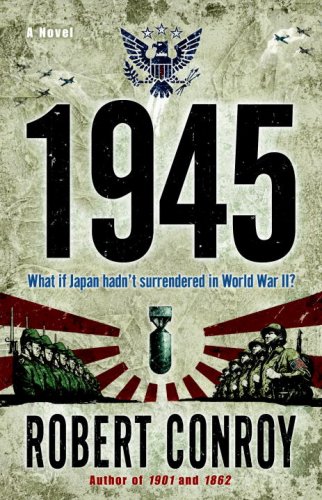
                  1945 is an alternate history novel by Michigan economics professor Robert Conroy, an author of alternate history novels, such as 1901 and 1862. It was first published in trade paperback and ebook form by Ballantine Books in May 2007. In the novel's point of divergence, the Kyūjō coup successfully suppresses Japanese Emperor Hirohito's order to surrender and so World War II in the Pacific continues into 1946.

                • Cover of 1920: America's Great War
                  1920: America's Great War

                  Robert Conroy · standalone novel · 2013

                  similar bywartensenorth americaalternate historywar & military

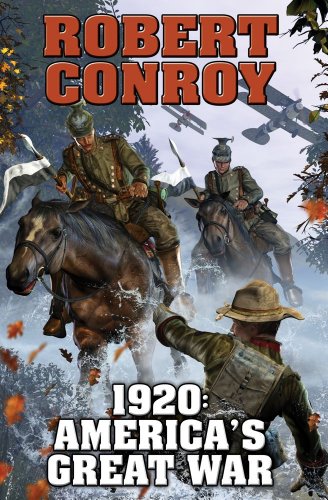
                  1920: America's Great War is an alternate history novel by the Michigan economics professor Robert Conroy. It was first published as an ebook by Baen Books in November 2013. A hardcover edition followed in December of the same year and then a paperback edition in March 2015. The novel depicts a fictional world in which Imperial Germany had emerged victorious early in World War I and launches a surprise invasion of the United States in 1920 from Mexico. The book's premise is based on an actual plan that Germany had proposed to Mexico during the war.

                • Cover of The Great War in England in 1897
                  The Great War in England in 1897

                  William Le Queux · standalone novel · 1894

                  similar bywartense19th centuryalternate historywar & military

                  The Great War in England in 1897 was written by William Le Queux and published in 1894.

                • Cover of Bring the Jubilee
                  Bring the Jubilee

                  Ward Moore · standalone novel · 1953

                  similar bywarnorth america19th centuryalternate history

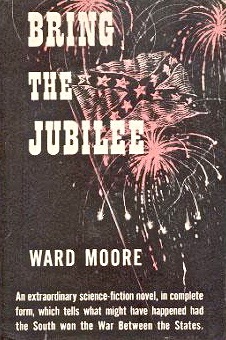
                  From the flaps of the Farrar, Straus and Young first edition: ""Although I am writing this in the year 1877, I was not born until 1921." So Hodge Backmaker begins his story of the harsh and curious world he lived in, a world in which the South won the Civil War and the all-powerful Confederacy dominated the poor and backward North; a North that had neither a transcontinental railroad, and where television was undreamed of. Like most Northerners, Hodge was poor - but he had ambition. A printer's handyman in 1938, he had since become an eminent historian. Hodge's special interest was the American past, when the States had been united and had seemed to be on the brink of prosperity and technical progress. And then he was offered an opportunity no historian could resist - he could go back in time. Hodge chsoe to return to a certain field near Gettysburg on a day in July, 1863... Bring the Jubilee is a novel of curious events, of adventures and reflection, of passions and comment. It at time Hodge's world, its horse-carriages and gas-lights, minibles and tinugraphs and the Great Emperors' War of 1914 faintly resembles our own, it is perhaps, because that world might well become a reality: on the battlefield of Gettysburg there is a small hill called Little Round Top. One July morning in 1863 the Confederate Army made the tactical error of not occupying this hill. It was a mistake that cost them victory in a battle which - in the view of many historians - was the turning point of the Civil War."

                • Cover of Brittania's Fist
                  Brittania's Fist

                  series · 3 books · 2008

                  similar bywarnorth america19th centuryalternate historywar & military+1 more

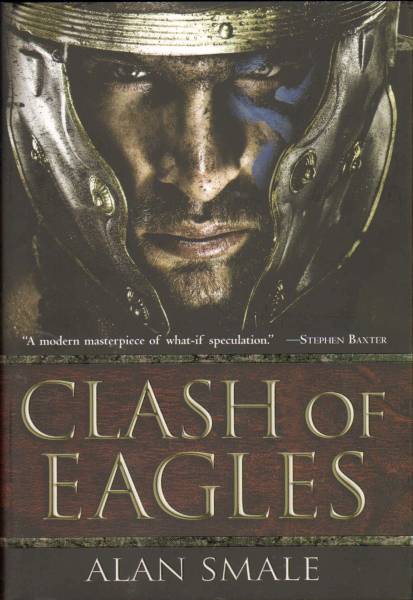
                • Cover of Clash of Eagles / The Hesperian Trilogy
                  Clash of Eagles / The Hesperian Trilogy

                  series · 4 books · 2010

                  similar bywartensenorth americaalternate history+1 more

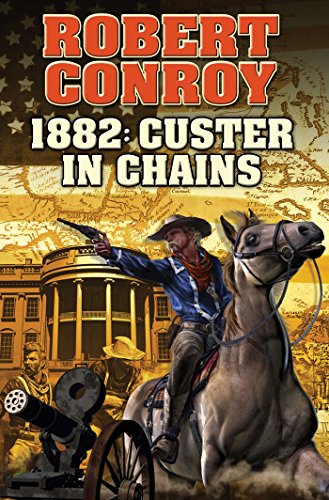
                • Cover of 1882: Custer in Chains
                  1882: Custer in Chains

                  Robert Conroy · standalone novel · 2015

                  similar bytensewarnorth america19th centuryalternate history

                  1882: Custer in Chains is an American alternate history novel written by Robert Conroy. It was first published on May 5, 2015.

                • Cover of Fire on the Mountain
                  Fire on the Mountain

                  Terry Bisson · standalone novel · 1988

                  similar bytensenorth america19th centuryalternate history+1 more

                  Alternate history, where John Brown's raid on Harper's Ferry succeeds and sparks a slave rebellion in 1859.

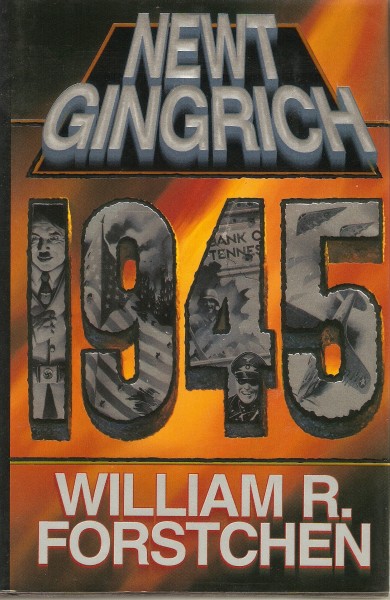
                • Cover of 1945
                  1945

                  William R. Forstchen & Newt Gingrich · standalone novel · 1995

                  similar bywartensealternate historynorth americawar & military

                  1945 is an alternate history novel written by Newt Gingrich and William R. Forstchen in 1995 that described the period immediately after World War II in which the United States had fought only against Japan, which allowed Nazi Germany to force a truce with the Soviet Union, and the two victors confront each other in a Cold War, which swiftly turns hot.

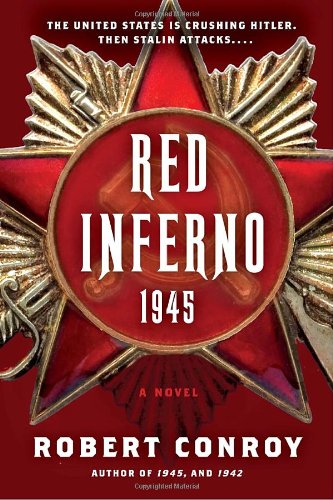
                • Cover of Red Inferno: 1945
                  Red Inferno: 1945

                  Robert Conroy · standalone novel · 2010

                  similar bywartensealternate historywar & military

                  Red Inferno: 1945 is a 2010 novel written by Robert Conroy, the author of other alternate history novels.

                • Cover of The War That Came Early
                  The War That Came Early

                  series · 6 books · 2009

                  similar bywartensealternate historywar & military

                  The War That Came Early is a six-novel series by Harry Turtledove depicting an alternate history of World War II. As is typical of Turtledove's alternate histories, the narrative follows a large cast of both fictional and historical characters.

                • Cover of Gray Victory
                  Gray Victory

                  Robert Skimin · standalone novel · 1988

                  similar bytensewarnorth america19th centuryalternate history

                  Gray Victory is a 1988 alternate history novel by Robert Skimin, taking place in an alternate 1866 where the Confederacy won its independence.

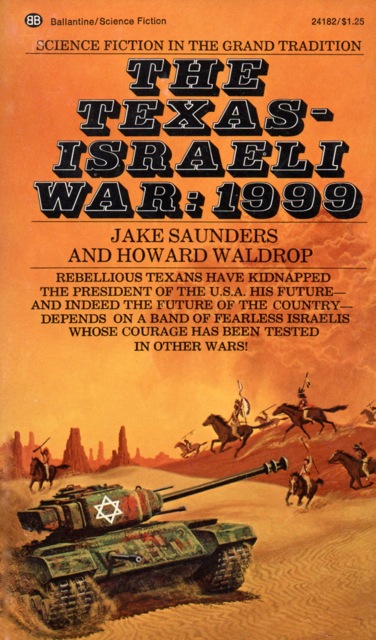
                • Cover of The Texas-Israeli War: 1999
                  The Texas-Israeli War: 1999

                  Howard Waldrop & Jake Saunders · standalone novel · 1974

                  similar bywarnorth americaalternate historywar & military+1 more

                  The Texas-Israeli War: 1999 is a 1974 science-fiction war novel by Jake Saunders and Howard Waldrop. Several early chapters appeared in Galaxy in 1973 under the title A Voice and Bitter Weeping.

                • Cover of The Man with the Iron Heart
                  The Man with the Iron Heart

                  Harry Turtledove · standalone novel · 2008

                  similar bywartensealternate historywar & military

                  The Man with the Iron Heart is an alternate history novel by Harry Turtledove. Published in 2008, it takes as its premise the survival by Reinhard Heydrich of his 1942 assassination in Czechoslovakia and his subsequent leadership of the postwar Werwolf insurgency in occupied Germany, which Turtledove depicts as growing into a far more formidable force than was the case historically.

                • Cover of Resurrection Day
                  Resurrection Day

                  Brendan DuBois · standalone novel · 1998

                  similar bytensewarnorth americaalternate history

                  The Cuban Missile Crisis escalates into a nuclear war and 10 years later the US is still trying to recover.

                • Cover of Tomorrow!
                  Tomorrow!

                  Philip Wylie · standalone novel · 1954

                  similar bywartensenorth america

                  Conjecture of a tomorrow which brings an attack by the enemy and the destruction of all major cities across an unprepared country.
                • Cover of The Hot War
                  The Hot War

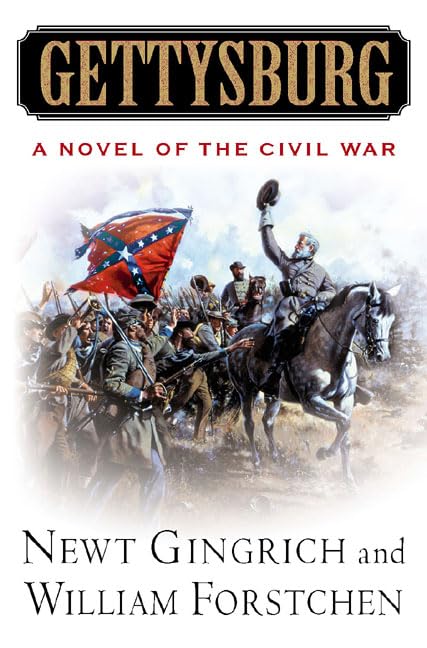
                  series · 3 books · 2015

                  similar bywartensealternate historywar & military+1 more