More like 1901
but
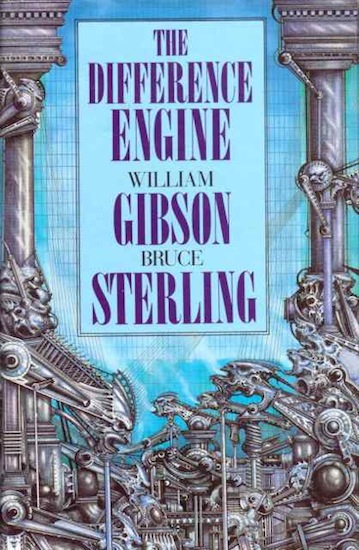
- The Difference Engine
William Gibson & Bruce Sterlingstandalone novel1990
similar byalternate history
The computer age arrives a century early with Babbage's perfection of his 'analytical engine'. The industrial revolution is accelerated by the development of steam-driven cybernetic 'Engines'. An advanced Great Britain prepares to better the world's lot. An example of the 'steampunk' sub-genre of the cyberpunk movement.
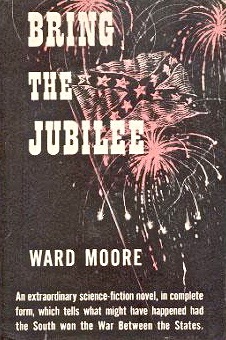
- Bring the Jubilee
Ward Moorestandalone novel1953
similar byalternate history
From the flaps of the Farrar, Straus and Young first edition: ""Although I am writing this in the year 1877, I was not born until 1921." So Hodge Backmaker begins his story of the harsh and curious world he lived in, a world in which the South won the Civil War and the all-powerful Confederacy dominated the poor and backward North; a North that had neither a transcontinental railroad, and where television was undreamed of. Like most Northerners, Hodge was poor - but he had ambition. A printer's handyman in 1938, he had since become an eminent historian. Hodge's special interest was the American past, when the States had been united and had seemed to be on the brink of prosperity and technical progress. And then he was offered an opportunity no historian could resist - he could go back in time. Hodge chsoe to return to a certain field near Gettysburg on a day in July, 1863... Bring the Jubilee is a novel of curious events, of adventures and reflection, of passions and comment. It at time Hodge's world, its horse-carriages and gas-lights, minibles and tinugraphs and the Great Emperors' War of 1914 faintly resembles our own, it is perhaps, because that world might well become a reality: on the battlefield of Gettysburg there is a small hill called Little Round Top. One July morning in 1863 the Confederate Army made the tactical error of not occupying this hill. It was a mistake that cost them victory in a battle which - in the view of many historians - was the turning point of the Civil War."
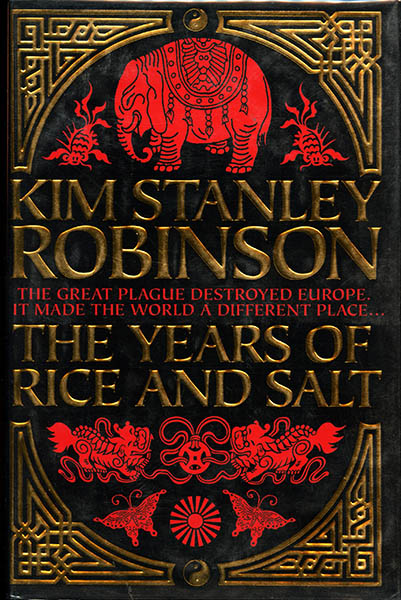
- The Years of Rice and Salt
Kim Stanley Robinsonstandalone novel2002
similar byalternate history
What if the Black Death had killed nearly everyone in Europe instead of a third of it? Kim Stanley Robinson opens on that premise with a Mongol scout named Bold, who finds a Hungarian city emptied by plague and only narrowly escapes execution meant to contain the contagion; sold into slavery, he ends up serving aboard a Chinese treasure fleet alongside a young African companion. From there the novel follows a recurring cast of souls, reincarnated across centuries and identifiable book to book by the first letter of their names, through an alternate history in which Islamic and Chinese civilizations, not a devastated Europe, shape the world's future.
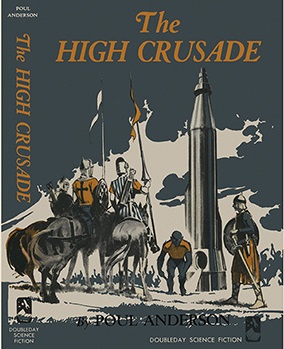
- The High Crusade
Poul Andersonstandalone novel1960
similar byalternate history
The High Crusade is a science fiction novel by American writer Poul Anderson, about the consequences of an extraterrestrial scoutship landing in medieval England. Poul Anderson described the novel as "one of the most popular things I've ever done, going through many book editions in several languages."
- The Alvin Maker Saga
series15 books1986
similar byalternate history
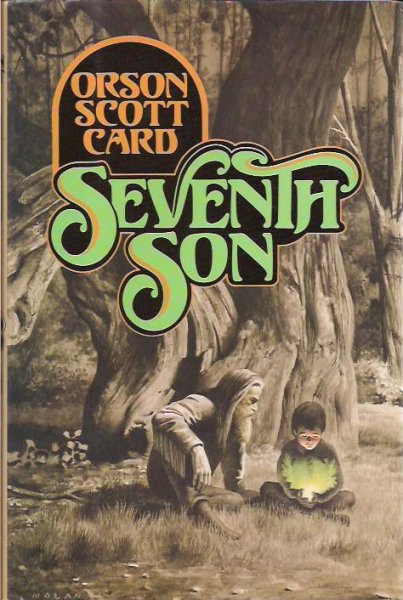
The Tales of Alvin Maker is a series of seven alternate history fantasy novels written by American novelist Orson Scott Card, published from 1987 to 2026. They explore the experiences of a young man, Alvin Miller, who realizes he has incredible powers for creating and shaping things around him.
- Ring of Fire (1632)
universe687 books2000
Start here1632 · Start here
similar byalternate history
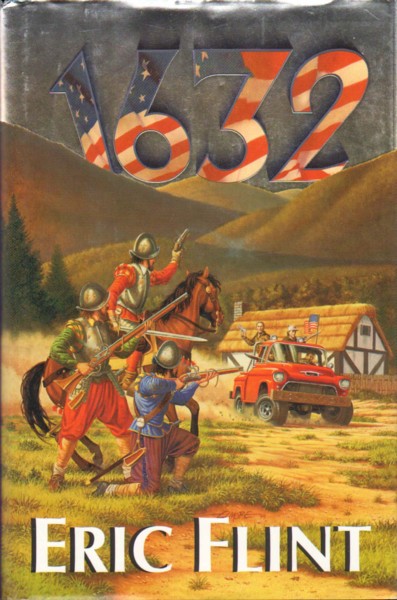
Somewhere in the spring of 1631, the sky over a stretch of Thuringian farmland cracks open, and when it closes a piece of the year 2000 is sitting in the middle of the Thirty Years' War. Grantville — a played-out coal town lifted whole out of West Virginia, high-school gym and pizza parlor and all — has landed three miles of the twentieth century three and a half centuries upstream, in the bloodiest war Europe would ever fight. The town does the only thing it knows how to do: it holds a meeting, elects a government, and gets to work. What Eric Flint began with 1632 he almost at once threw open to everyone else, and this is a shared world built the way Grantville rebuilds — by committee, by many hands, in public. The spine runs 1632, then 1633 and 1634: The Baltic War (written with David Weber), after which the timeline forks across a continent: the war in the north, the Roman intrigues of the Galileo Affair, Bavaria, the Ottomans, Russia, each carried in its own novel and its own numbered year. Feeding it is the Grantville Gazette, a running magazine of fan-then-professional fiction, and the Ring of Fire anthologies, where authors like Virginia DeMarce, Gorg Huff and Kerryn Offord supply the machinists, printers and lawyers one narrator never could. The same cosmic accident — the Assiti Shards — maroons other towns in other centuries in Time Spike and The Alexander Inheritance. There are no chosen ones here and no magic, only the terrifying leverage of already knowing how the next four hundred years turn out. The pleasure is procedural and democratic: union halls and lathes outfighting kings, down-timers and up-timers arguing their way toward a republic. Sprawling, uneven, warm-blooded, it rewards browsing over marching. Begin with 1632, read 1633 next, then follow whichever thread — sea, siege, or senate — pulls you in.
- Lest Darkness Fall
series4 books1941
similar byalternate history
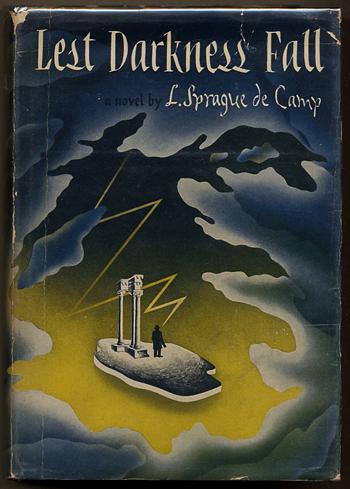
L. Sprague de Camp's Lest Darkness Fall (1939) is a single alternate-history novel in which archaeologist Martin Padway is thrown by a lightning strike from 1938 Rome back to Ostrogothic Italy in 535 AD, where he uses his knowledge of later history and technology -- distilling brandy, building a printing press, reworking military tactics -- to try to head off Europe's slide into the Dark Ages. David Drake's later novella To Bring the Light, sometimes packaged alongside it, borrows the same time-travel-to-Rome premise with a different protagonist.
- SS-GB
Len Deightonstandalone novel1978
similar byalternate history
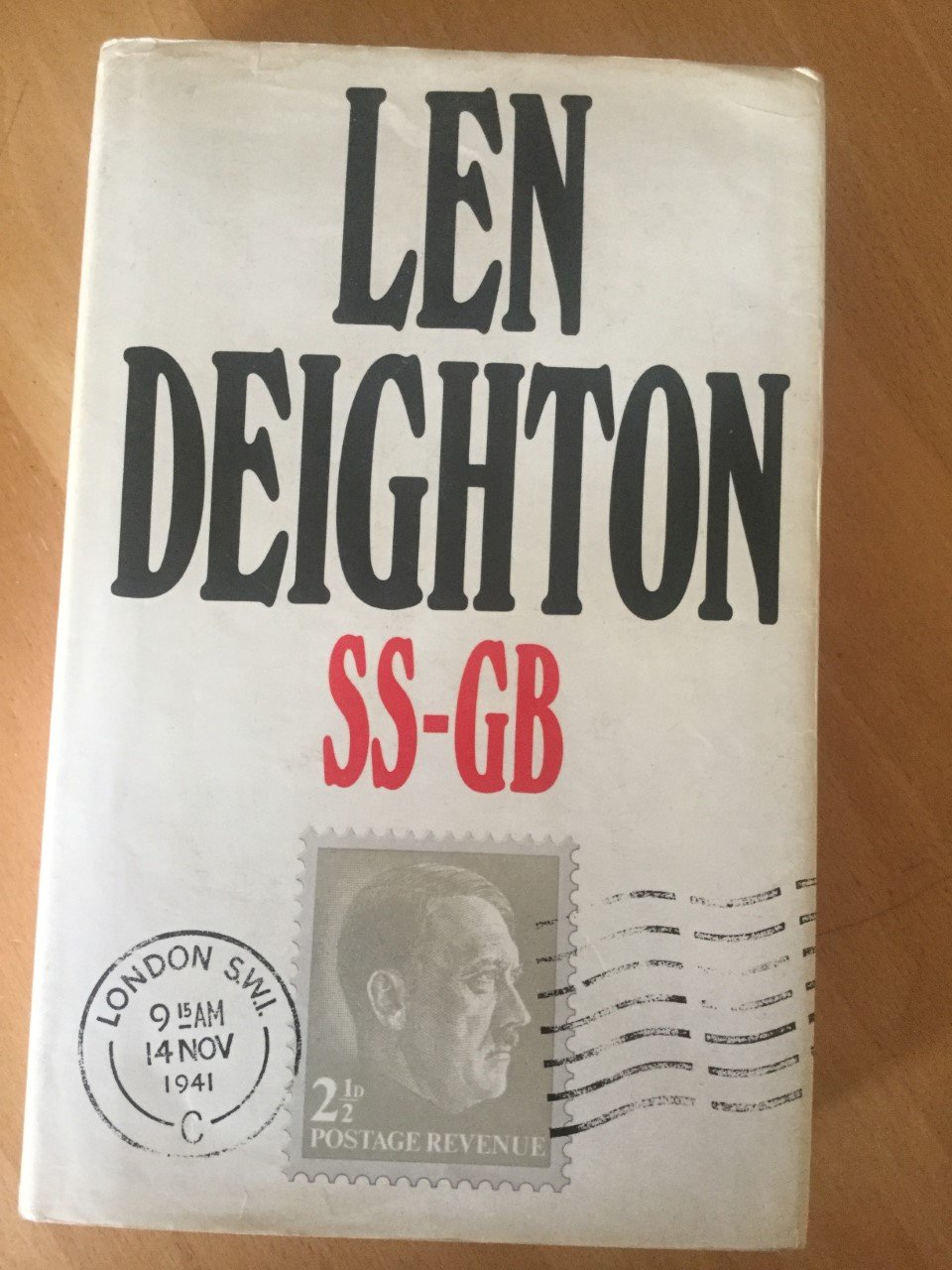
It's November 1941 in a Britain that lost the war: Operation Sea Lion succeeded, Churchill was executed, and the King is a prisoner in his own Tower of London. Detective Superintendent Douglas Archer, still working homicide for the Metropolitan Police under German occupation, catches what looks like a routine case, a well-dressed man murdered above an antiques shop, until the body's oddities point toward something far more dangerous than burglary gone wrong. Archer's investigation collides with occupation politics, the British resistance, and rival factions of the SS and the German Army, each wanting the case to go a different way. Len Deighton's alternate-history spy thriller.
- Pavane
series9 books1966
completed
similar byalternate history
Keith Roberts' Pavane (1968) is a single fix-up novel built from linked stories rather than a multi-book series: in an alternate 20th century where Elizabeth I was assassinated and Spain conquered England, the Catholic Church suppresses Protestantism and keeps technology frozen at a steam-powered, feudal level. The interconnected stories follow different Dorset families across generations as long-suppressed dissent against Church rule begins to stir.
- NASA Trilogy
series4 books1996
similar byalternate history
The NASA Trilogy consists of three hard science fiction novels written by British science fiction author Stephen Baxter. They were published from 1996 to 1998. These books explore the possibilities of the American space program if the circumstances had been different. They have generally darker tones than his other books and are critical of NASA. They consist of:
- Temeraire
series48 books2006
similar byalternate history
Temeraire is a series of nine alternate history fantasy novels written by American author Naomi Novik. The novels follow the adventures of Captain William Laurence and his dragon, the eponymous Temeraire, and reimagine events of the Napoleonic Wars with "an air force of dragons, manned by crews of aviators". His Majesty's Dragon, the first entry in the series, won the Compton Crook Award in 2007 and was nominated for the Hugo Award for Best Novel the same year. Temeraire: In the Service of the King, an omnibus volume collecting the first three novels, won the Locus Award for Best First Novel in 2007. Temeraire was nominated for the Hugo Award for Best Series in 2017.
- Never Let Me Go
Kazuo Ishigurostandalone novel2005
similar byalternate history
Never Let Me Go is a 2005 science fiction novel by the British author Kazuo Ishiguro. It was shortlisted for the 2005 Man Booker Prize, for the 2006 Arthur C. Clarke Award and the 2005 National Book Critics Circle Award. Time magazine named it the best novel of 2005. It included the novel in its '100 Best English-language novels published since 1923—the beginning of TIME'. It also received an ALA Alex Award in 2006. A film adaptation directed by Mark Romanek was released in 2010.
- Eden (Harry Harrison)
series5 books1984
completed
similar byalternate history
Harry Harrison's Eden trilogy imagines an Earth where the dinosaurs never died out, evolving instead into the Yilane, a technologically advanced reptilian civilization that shares the planet uneasily with early humans. West of Eden (1984) introduces the clash between the two species; Winter in Eden and Return to Eden carry it forward as a shifting climate forces both sides to adapt or die. It's an alternate-evolution saga more than a conventional dinosaur adventure.
- How Few Remain Universe
series11 books1997
similar byalternate history
How Few Remain opens Harry Turtledove's Southern Victory timeline, imagining a North America where the Confederacy won the Civil War. Set mostly in 1881-1882, it follows political and military figures on both sides of a divided continent as old grievances resurface into a new war. It's a single novel here, but the starting point for a much longer alternate-history sequence Turtledove extended across both twentieth-century world wars.
- Oswald Bastable
series5 books1971
part of Moorcock's Multiverse
similar byalternate history
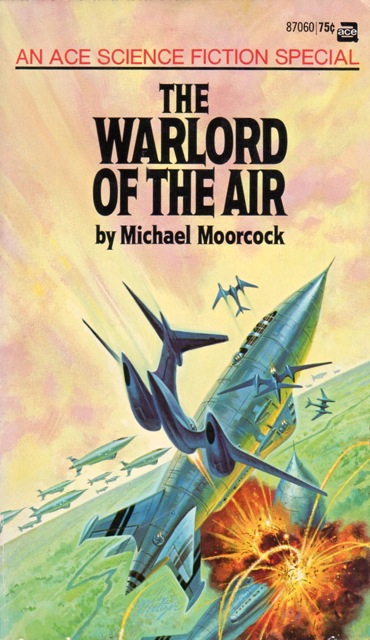
Oswald Bastable follows an Edwardian-era British soldier flung into a series of alternate futures where the First World War never happened, opening with The Warlord of the Air (1971). Across the trilogy he drifts between rival empires and airship wars, an early and influential example of what would later be called steampunk. Michael Moorcock's A Nomad of the Time Streams trilogy sits within his wider multiverse of linked worlds and recurring avatars of the Eternal Champion.
- Century Rain
Alastair Reynoldsstandalone novel2004
similar byalternate history
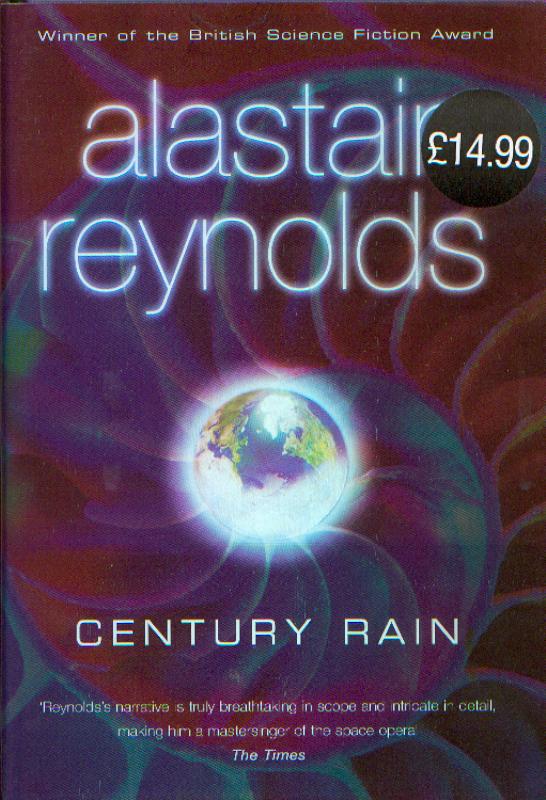
Century Rain is a 2004 noir science fiction alternative history mystery novel by Welsh author Alastair Reynolds (ISBN 0-575-07436-1).
- The Change / The Event
series41 books1998
similar by+1 more
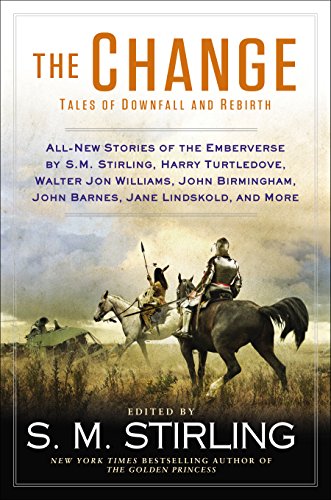
The Change: Tales of Downfall and Rebirth is a shared-world anthology of stories set in the years right after a mysterious global event instantly disables gunpowder, electricity, and combustion engines, the founding premise of S. M. Stirling's Emberverse. Sixteen different authors, coordinated by Stirling, each contribute stories set in various corners of the suddenly de-industrialized world as survivors scramble to rebuild. It's a companion volume to the Change/Emberverse novels rather than a novel itself.
- The Yiddish Policemen's Union
Michael Chabonstandalone novel2007
similar byalternate history
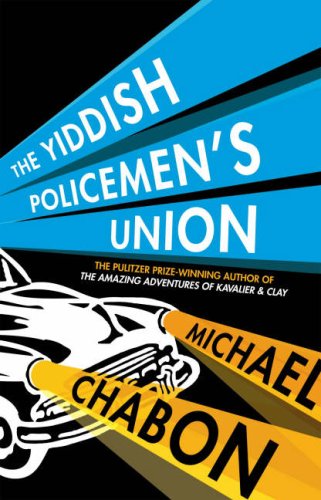
In an alternate present where Jewish refugees settled Alaska during World War II rather than Israel, homicide detective Meyer Landsman -- divorced, drinking, living in a run-down hotel -- catches a case in his own building: a former chess prodigy, shot dead beside an unfinished game. Landsman and his half-Tlingit partner Berko Shemets learn the dead man was more than he seemed, connected to a messianic movement within Sitka's Orthodox community, just as the settlement faces a countdown of its own -- its status as a federal district about to expire, everyone's future up for grabs. Michael Chabon's Hugo- and Nebula-winning noir, told as hardboiled alternate history.
- The Leviathan Trilogy
series3 books2009
similar byalternate history
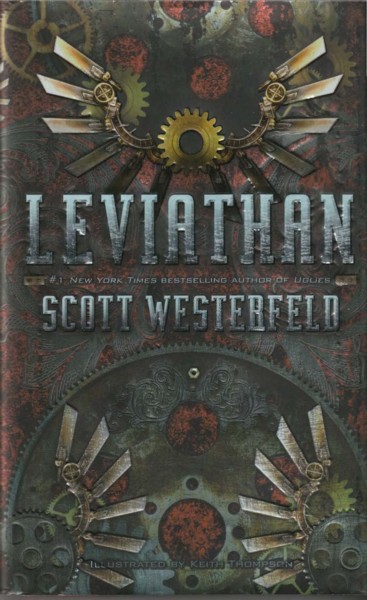
Set in an alternate First World War, Leviathan splits the belligerents into Clankers, who fight with mechanical walkers, and Darwinists, who fight with fabricated living creatures built from spliced DNA. Scott Westerfeld follows a British girl disguised as a boy to serve on a living airship and the exiled heir to the Austro-Hungarian throne as their paths collide, continuing across Behemoth and Goliath. Keith Thompson's illustrations are integral to all three books, alternating text chapters with illustrated sequences.
- Roma Eterna
series11 books1989
similar byalternate history
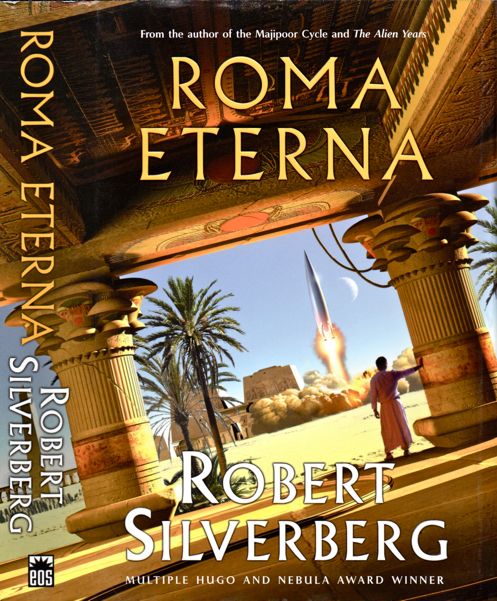
Robert Silverberg's Roma Eterna imagines an alternate history in which the Roman Empire never fell and endures into the present day, tracing its long, uneven survival through a sequence of pivotal moments across two millennia. Rather than one continuous plot, the book is a fix-up of ten linked stories, most first published in Asimov's Science Fiction over a fourteen-year span, each set in a different era of this unbroken Rome. It reads as the chronicle of a civilization rather than a story following a single cast of characters.
- The Iron Dream
Norman Spinradstandalone novel1972
similar byalternate history
Contains "The Lord of the Swastika", a Science Fiction Novel by Adolf Hitler, plus an afterword by Homer Whipple. In this universe, Adolf Hitler (1889-1953) emigrated to the US in 1919 and became a popular science fiction author, fan and illustrator. "The Lord of the Swastika" won a posthumous Hugo in 1955.
- Bartimaeus
series4 books2003
similar byalternate history
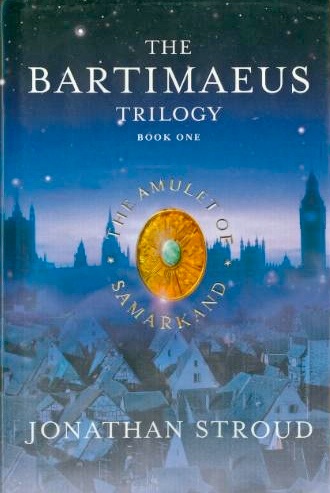
The Bartimaeus Sequence is a series of young adult novels of alternate history, fantasy and magic. It was written by British writer Jonathan Stroud and consists of a trilogy published from 2003 to 2005 and a prequel novel published in 2010. The story follows the career of a teenage magician Nathaniel and a five-thousand-year-old djinni Bartimaeus, whom he has summoned and nominally controls, through the alternate history of the peak of London's domination as a magical oligarchy.
- The Lords of Creation
series4 books2006
similar byalternate history
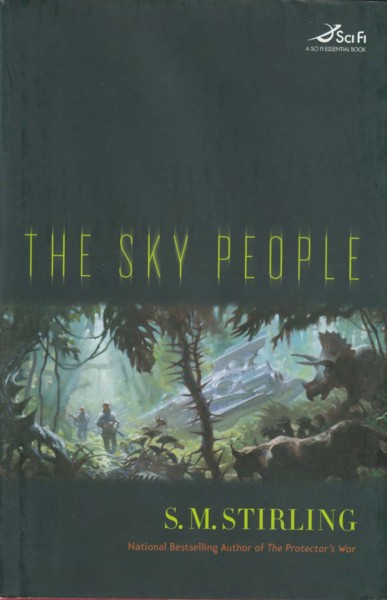
S. M. Stirling's Lords of Creation series imagines an alternate Cold War-era Solar System in which American and Soviet space probes discover that both Venus and Mars harbor intelligent civilizations and Earth-like life, including dinosaurs and human-like populations whose presence hints at ancient intervention by some older power. The Sky People follows explorers into Venus's jungles, while In the Courts of the Crimson Kings shifts the action to a dying, desert Mars; despite being conceived as a trilogy, no third novel has been published. Openly indebted to the planetary romances of Edgar Rice Burroughs, the series pairs pulp-adventure sensibility with harder science-fiction reasoning about how such worlds could exist.
- The Dragon Waiting
John M. Fordstandalone novel1983
similar byalternate history
The Dragon Waiting: A Masque of History is a 1983 historical fantasy novel by American writer John M. Ford. It won the 1984 World Fantasy Award for Best Novel. This book, set in an alternate history, contains such plot elements as vampirism, the House of Medici, and the convoluted English politics surrounding Edward IV and Richard III. It also deals with the fate of the Princes in the Tower.