Loreful
HomeDiscover
Search series, authors…⌘K
Loreful

Reading orders for SF/F series and shared universes — with your place kept in every one.

Explore

UniversesSeriesWorksAuthorsAtlas

Help

FAQAboutSite map

Account & legal

Sign inCreate accountPrivacyTerms

Data

Built on ISFDB, Wikipedia, Wikidata and Open Library. Curated reading orders carry their reasoning on the page; the rest follow publication order. Data sources & licenses

© Loreful · data: ISFDB · CC BY

More like 1962

anchored on:our worldmid 20th century

but

Mood

The mood the book leaves you in.

  • The reading experience is propelled by journeys, exploration, and physical risk; excitement and forward momentum dominate over dread or introspection.
  • Joy and loss are deliberately mixed; the resolution grants characters something real while taking something else away, leaving warmth and sorrow together.
  • The book demands work from the reader — dense prose, difficult structure, unfamiliar ideas, or morally uncomfortable material — as part of its intended effect.
  • Grim events, cruelty, or despair dominate the atmosphere, and the book does not soften them with comfort or comic relief.
  • The atmosphere is quietly unsettling — wrongness, unease, and the uncanny pervade the book without necessarily escalating into overt horror.
  • The book is built to move the reader; character feeling is foregrounded and major scenes aim at a strong emotional response.
  • Humor is a primary aim and the prose plays for laughs — comic situations, wit, or dialogue produce sustained comedy, not occasional levity.
  • The book insists that things can improve; effort and decency are shown to matter, and the arc bends toward better outcomes even through hardship.
  • The book teaches as it goes — real facts, history, science, or craft are conveyed in enough depth that learning is part of the reading experience.
  • The book is designed to uplift and motivate, presenting perseverance or achievement in a way that invites the reader to aspire or act.
  • The overall register is cheerful and easygoing; stakes are kept gentle and the book avoids dwelling on pain or dread.
  • Withheld information drives the experience; the book sustains enigmas and secrets the reader wants resolved, whatever its genre.
  • The book is contemplative and inward-looking, giving more weight to thought, memory, and meaning than to external events.
  • The book works as comfort reading — low tension, a soothing pace, and an atmosphere the reader can unwind in.
  • Grief, loss, or melancholy set the dominant register, and the book lets sorrow stand rather than resolving it into comfort.
  • Sustained suspense is the point; the book keeps the reader braced for what happens next through danger, pressure, or impending revelation.
  • Playful invention and charm define the register — fanciful conceits, light absurdity, and a narration that delights in its own oddity.

About

What the story runs on.

  • Stories in which extraterrestrial beings are central — as characters, cultures, or the object of the plot.
  • Stories in which staying alive against nature, catastrophe, or scarcity is the central problem.
  • Stories of lovers kept apart by law, family, faith, or station, where the obstacle to love is the plot.
  • Stories in which a friendship — its making, testing, or loss — is the emotional center.
  • Stories of growing up — a young protagonist crossing from childhood into adult knowledge and responsibility.
  • Stories about who a character truly is — self-discovery, doubled lives, and the search for a self.
  • Stories about mental unraveling — descent into madness, delusion, and minds at war with themselves.
  • Stories about mourning — living through the death of a loved one and what loss does to the survivors.
  • Stories in which a buried family truth — hidden parentage, crimes, or shames — surfaces and reorders the present.
  • Stories driven by maneuvering for power — factions, conspiracies, and statecraft conducted in shadow.
  • Stories in which war itself is the subject — combat, occupation, and what warfare does to soldiers and civilians.
  • Stories organized around investigating a killing — the case, the clues, and the pursuit of the killer, in any genre's clothing.

Shelf

Where it sits in the library.

    • Fiction built on magic or other supernatural elements that have no scientific explanation.
    • Secondary-world fantasy at large scale, where the fate of nations or the world turns on the protagonists' struggle.
    • Fantasy set in a recognizably modern city or contemporary world where the supernatural intrudes on everyday life.
    • Fantasy that blends in horror's atmosphere and imagery, keeping a fantastical frame around grim or frightening material.
    • Action-driven fantasy following warriors or rogues with personal stakes against sorcerous threats, rather than world-spanning conflicts.
    • Fantasy set in a real historical period or a close analogue of one, with magic woven into the era.
    • Fantasy in which protagonists cross from the ordinary world into another world through a portal or similar passage.
    • Fiction that retells or reworks a traditional fairy tale in a new form or setting.
    • Fantasy drawing directly on myths, legends, and folklore, retelling them or building on their figures and logic.
    • Fantasy of ghosts, vampires, shapeshifters, psychics, and similar phenomena, usually set in an otherwise ordinary world.
    • Fiction mixing science-fictional trappings with overtly magical or impossible elements in one setting.
    • Low-stakes fantasy emphasizing comfort, community, and everyday pleasures over conflict and peril.
    • Speculative fiction of pervasive moral ambiguity, violence, and cynicism that rejects heroic conventions — fantasy and SF alike.
      • Fiction that extrapolates from science and technology — future societies, space travel, or speculative inventions — within at least nominally natural laws.
      • Science fiction of interstellar scope — starships, galactic polities, and adventure across star systems.
      • Science fiction committed to scientific rigor, where technical plausibility constrains the story.
      • Science fiction centered on armed forces and warfare, told largely from a military point of view.
      • Science fiction of networked, corporate-dominated near futures, pairing high technology with social decay.
      • Science fiction styled on nineteenth-century steam-powered technology, often in a Victorian or pseudo-Victorian setting.
      • Fiction depicting an oppressive or catastrophic society, presented as a warning.
      • Fiction set after civilization's collapse, following survivors in the ruins of the old world.
      • Fiction in which characters move between past and future, and the mechanics or consequences of that travel drive the plot.
      • Fiction exploring a world where a historical event went differently and history diverged from ours.
      • Science fiction about humanity's first encounter and communication with an alien intelligence.
      • Science fiction in which extraterrestrial forces attack or occupy Earth and humanity resists.
      • Fiction whose primary aim is to frighten or unsettle the reader through dread, menace, or the monstrous.
      • Horror of vast, indifferent, incomprehensible entities before which humanity is insignificant, in the Lovecraft tradition.
      • Horror of decaying houses, buried family secrets, and oppressive atmosphere in the Gothic literary tradition.
      • Horror centered on hauntings and the returning dead.
      • Horror located in the mind — paranoia, obsession, and unreliable perception rather than external monsters.
      • Horror built around the reanimated dead and survival amid their outbreaks.
      • Horror defined by explicit, transgressive gore that refuses to cut away from violence.
      • Speculative fiction of the strange and uncanny that resists both natural explanation and standard genre categories.
      • Fiction organized around solving a crime or puzzle, typically following an investigator toward the identification of a culprit.
      • A puzzle-first mystery that lays out clues so the culprit's identity can be deduced before the reveal.
      • Crime fiction of moral ambiguity, fatalism, and hard-edged style, set among the corrupt and the doomed.
      • A mystery following the realistic routines of police work — forensics, interviews, and case-building.
      • A gentle mystery with an amateur sleuth, a small community, and violence kept off the page.
      • A mystery set in a past era, where the investigation works within that period's methods and society.
      • Fast-paced fiction driven by imminent danger, pursuit, or high-stakes conspiracy, built to sustain tension.
      • A thriller of espionage — agents, tradecraft, and intelligence services in conflict.
      • A thriller centered on lawyers and the courtroom, where litigation carries the suspense.
      • A thriller driven by detailed contemporary or near-future technology, often military or scientific.
      • A thriller whose tension comes from mental states and manipulation between characters rather than external action.
      • Fiction whose central plot is a romantic relationship and its development toward an emotionally satisfying resolution.
      • Romance in which one or both partners are supernatural beings, blending fantasy elements into the love story.
      • A fantasy-romance hybrid in which the romantic arc and the fantasy plot carry equal weight.
      • Romance set in a past era, with courtship shaped by the period's society and manners.
      • Romance set in the present day, without supernatural or historical elements.
      • Fiction set in a real past period, where the historical setting materially shapes characters and events.
        • General and literary fiction emphasizing prose style, character interiority, or formal ambition over genre plot conventions.
        • Fiction in a realistic world where magical events occur and are treated as ordinary, in the tradition of Latin American literature.
        • Fiction that ridicules people, institutions, or society in order to criticize them.
        • Fiction of dreamlike, irrational imagery and logic that breaks from realistic representation.
        • Fiction that plays with narrative convention through metafiction, fragmentation, and self-reference.
        • Fiction propelled by journeys, exploration, and physical peril, where action and survival carry the plot.
        • Adventure fiction of ships and seafaring — naval engagements, voyages, and life at sea.
        • Fiction of the American frontier West — gunmen, ranchers, and lawmen, typically in the late nineteenth century.
        • Fiction centered on soldiers, campaigns, and the experience of warfare, historical or imagined.
          • Fiction written primarily to amuse, using comedic situations, wit, or parody as its organizing principle.
            • Multi-generational fiction following a family or dynasty across decades, with inheritance and kinship as the through-line.
              • Fiction whose world runs on explicit game mechanics — levels, stats, and skills that characters can see and exploit.
                • Fiction about costumed or superpowered heroes and their conflicts with comparable villains.

                Practical

                How long a commitment, whether it stands alone, and whether it has finished.

                Tap a chip to ask for it · tap again to rule it out · once more to clear. Numbers show what would be left.

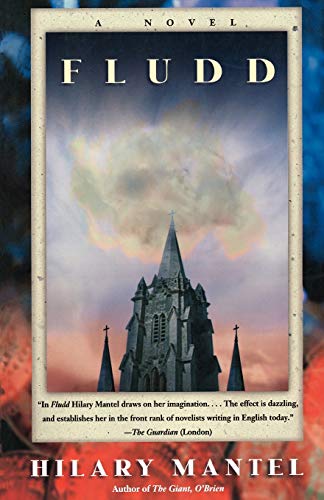
                • Cover of Fludd
                  Fludd

                  Hilary Mantel · standalone novel · 1989

                  similar byour worldmid 20th century+1 more

                  Fludd is a novel by Hilary Mantel. First published by Viking Press in 1989, it won the Winifred Holtby Memorial Prize that year.

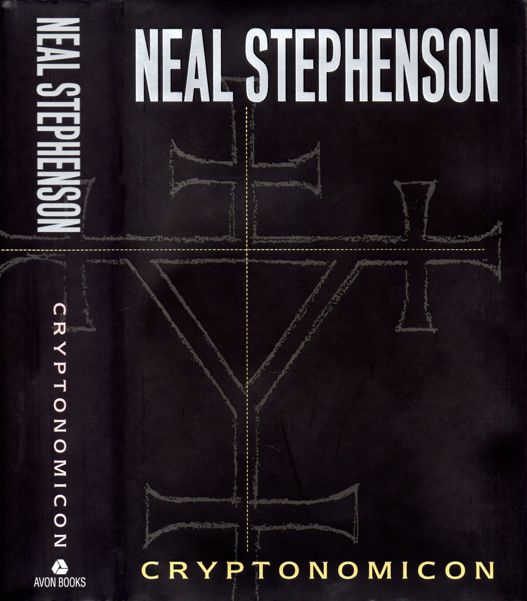
                • Cover of Cryptonomicon
                  Cryptonomicon

                  Neal Stephenson · standalone novel · 1999

                  similar byhistorical fictionour world

                  There are two main timelines in this novel. This first is during World War II, and follows the lives of three cryptologists: Lawrence Pritchard Waterhouse (American), Alan Turing (British), and Rudolf von Hacklheber (German), as well as the strange exploits of Detachment 2702. The second timeline takes place during the present, filled with the offspring of the main characters in the first timeline. They are preoccupied with the construction of a data haven.

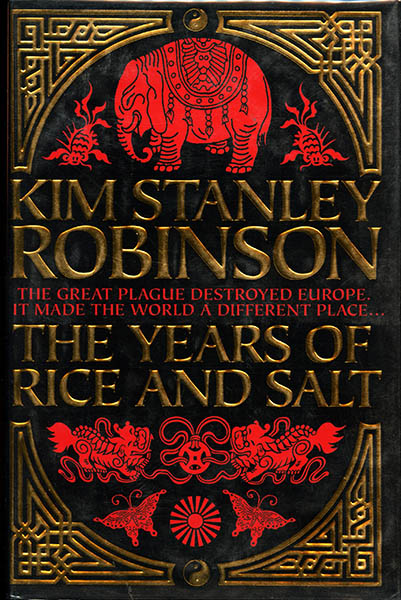
                • Cover of The Years of Rice and Salt
                  The Years of Rice and Salt

                  Kim Stanley Robinson · standalone novel · 2002

                  similar byhistorical fictionour world

                  What if the Black Death had killed nearly everyone in Europe instead of a third of it? Kim Stanley Robinson opens on that premise with a Mongol scout named Bold, who finds a Hungarian city emptied by plague and only narrowly escapes execution meant to contain the contagion; sold into slavery, he ends up serving aboard a Chinese treasure fleet alongside a young African companion. From there the novel follows a recurring cast of souls, reincarnated across centuries and identifiable book to book by the first letter of their names, through an alternate history in which Islamic and Chinese civilizations, not a devastated Europe, shape the world's future.

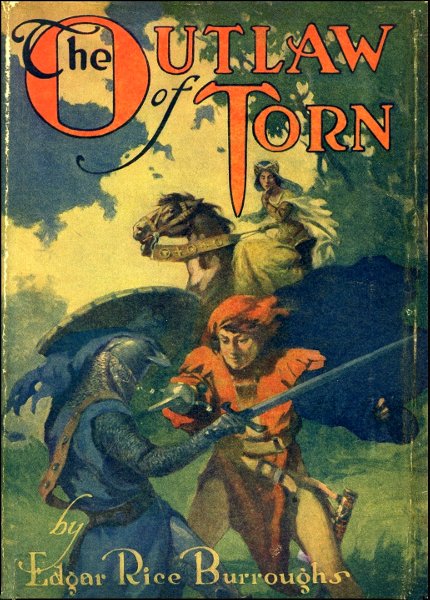
                • Cover of The Outlaw of Torn
                  The Outlaw of Torn

                  Edgar Rice Burroughs · standalone novel · 1927

                  similar byhistorical fictionour world

                  Raised from childhood by a vengeful royal fencing master who wants him turned into a weapon against the English crown, Norman of Torn grows up in 13th-century England knowing only combat and contempt for the nobility. By nineteen he leads the kingdom's largest band of outlaws and carries a king's ransom on his head, yet a priest's influence has left him with a streak of chivalry. Amid rebellion against King Henry III, Norman joins Simon de Montfort's rebels, and finds himself drawn to de Montfort's daughter despite a startling resemblance to the crown prince. An early adventure novel from Edgar Rice Burroughs.

                • Cover of Empire of the Sun
                  Empire of the Sun

                  series · 2 books · 1984

                  completed

                  similar byhistorical fiction+2 more

                  J. G. Ballard's Empire of the Sun draws on his own childhood to follow Jim, a British boy separated from his parents in Japanese-occupied Shanghai during World War II and interned in a civilian camp for the rest of the war. Ballard revisited the same period and a version of the same character years later in The Kindness of Women, a more explicitly fictionalized continuation into Jim's adult life. Empire of the Sun is the more directly autobiographical and better-known of the two.

                • Cover of The Prestige
                  The Prestige

                  Christopher Priest · standalone novel · 1995

                  similar byhistorical fictionour world

                  A magician called Borden (at least in private) writes his own version of his life as a magician. There's a lot of focus on a trick, where he seems to move across any width of stage in an instant, and on a feud with another magician, Angier. The account includes passages, where he can't decide what exactly to write, arguing with himself. 3 generations later a Borden (at least biologically) learns about his ancestor. He's also convinced, he somehow has a twin brother, who's happy about this development.

                • Cover of The Mouse That Roared
                  The Mouse That Roared

                  series · 6 books · 1955

                  completed

                  similar bymid 20th century+1 more

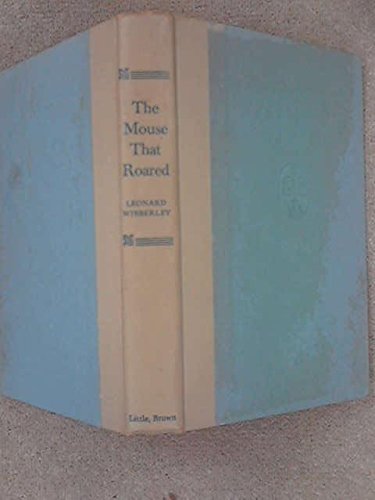
                  The Mouse That Roared launches Leonard Wibberley's satirical series about the tiny fictional Duchy of Grand Fenwick, a European microstate whose leaders declare war on the United States purely to lose quickly and collect the postwar reconstruction aid given to defeated nations. The 1955 novel uses Fenwick's mismatched ambitions to poke fun at Cold War politics and the nuclear arms race, and Wibberley kept the joke going across four more novels into the 1970s. Later entries send the duchy into further absurd confrontations with the wider world, including a race to the Moon and a scheme on Wall Street.

                • Cover of Mirror Mirror
                  Mirror Mirror

                  Gregory Maguire · standalone novel · 2003

                  similar byour world+1 more

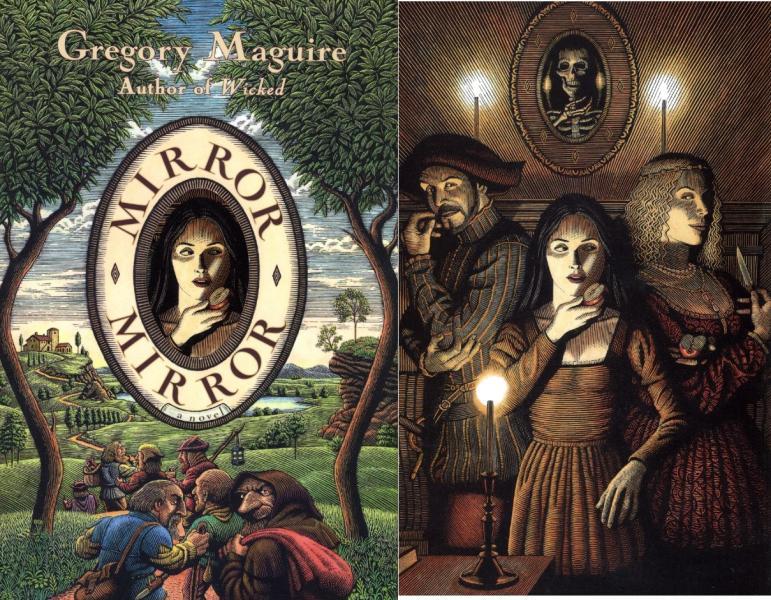
                  Mirror, Mirror is a fantasy novel by American writer Gregory Maguire, published in 2003. The novel is a revisionist version of the tale of Snow White set in rural Italy and featuring the historical Borgia family, with Lucrezia Borgia in the role of the Evil Queen.

                • Cover of Midnight Is a Place
                  Midnight Is a Place

                  Joan Aiken · standalone novel · 1974

                  similar byhistorical fictionour world

                  In northern England in 1842, fourteen-year-old Lucas leads a lonely, monotonous existence in the house of his unpleasant guardian until the unexpected arrival of an unusual little girl presages a series of events that completely change his life.

                • Cover of Midnight's Children
                  Midnight's Children

                  Salman Rushdie · standalone novel · 1980

                  similar bymid 20th century+1 more

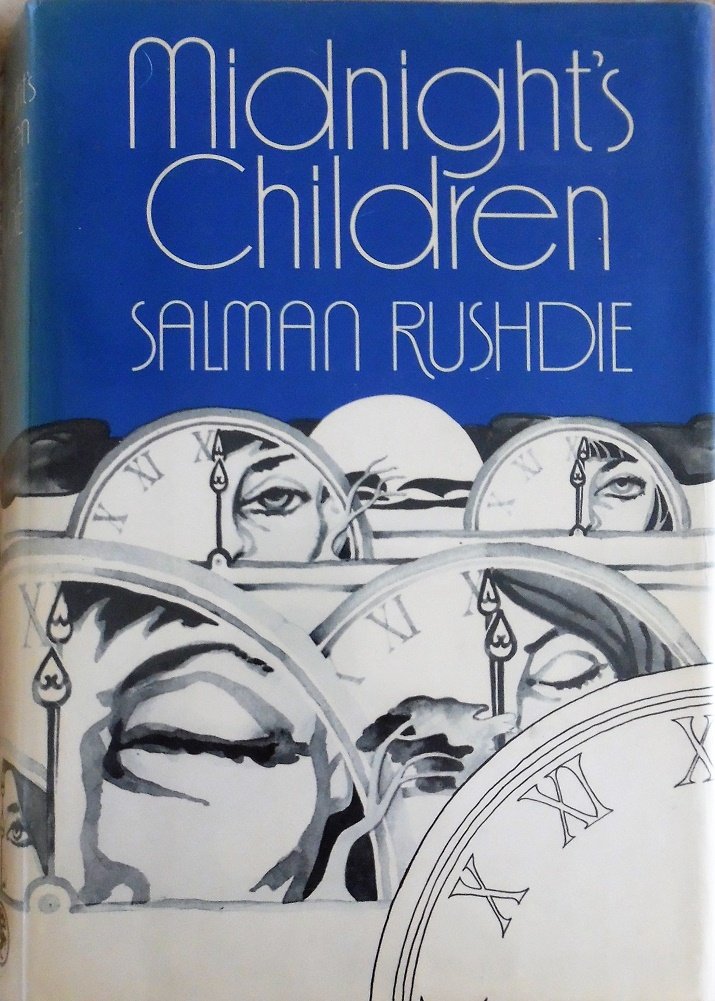
                  WorldCat: The life of a man born at the moment of India's independence becomes inextricably linked to that of his nation and is a whirlwind of disasters and triumphs that mirror modern India's course.

                • Cover of Dodger
                  Dodger

                  Terry Pratchett · standalone novel · 2012

                  similar byhistorical fictionour world

                  Dodger is a novel written by Terry Pratchett, set in early Victorian London, and inspired by Charles Dickens's character the Artful Dodger. The book was released on 13 September 2012 in the UK.

                • Cover of Airman
                  Airman

                  Eoin Colfer · standalone novel · 2008

                  similar byhistorical fictionour world

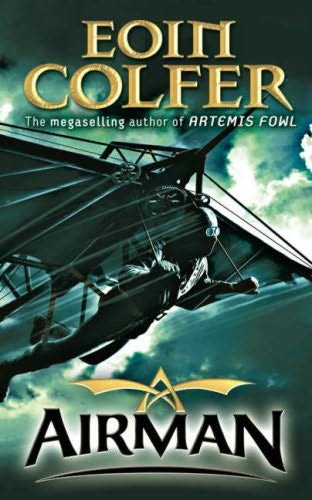
                  Airman, by Eoin Colfer, is a best-selling historical adventure novel set in the 19th century. It was released in the UK, Ireland and US in January 2008. The novel was shortlisted for the 2009 Carnegie Medal.

                • Cover of Mexican Gothic
                  Mexican Gothic

                  Silvia Moreno-Garcia · standalone novel · 2020

                  similar byhistorical fictionmid 20th century

                  It centers on a young woman investigating her cousin's claims that her husband is trying to murder her. (en.wikipedia)

                • Cover of Collected Supernatural and Weird Fiction of Robert W. Chambers
                  Collected Supernatural and Weird Fiction of Robert W. Chambers

                  series · 6 books · 1914

                  completed

                  similar byhistorical fictionour world

                • Cover of The House of the Seven Gables
                  The House of the Seven Gables

                  Nathaniel Hawthorne · standalone novel · 1851

                  similar byhistorical fictionour world

                  The House of the Seven Gables: A Romance is a Gothic novel written beginning in mid-1850 by American author Nathaniel Hawthorne and published in April 1851 by Ticknor and Fields of Boston. The novel follows a New England family and their ancestral home. In the book, Hawthorne explores themes of guilt, retribution, and atonement, and colors the tale with suggestions of the supernatural and witchcraft. The setting for the book was inspired by the Turner-Ingersoll Mansion, a gabled house in Salem, Massachusetts, belonging to Hawthorne's cousin Susanna Ingersoll, as well as ancestors of Hawthorne who had played a part in the Salem Witch Trials of 1692. The book was well received upon publication and has been adapted several times to film and television.

                • Cover of Victory City
                  Victory City

                  Salman Rushdie · standalone novel · 2023

                  similar byhistorical fictionour world

                  Victory City is a novel by Salman Rushdie published in February 2023. It is Rushdie's fifteenth novel.

                • Cover of Children of Violence
                  Children of Violence

                  series · 5 books · 1952

                  completed

                  similar bymid 20th century+1 more

                  Children of Violence is a sequence of five semi-autobiographical novels by British Nobel Prize in Literature-winner Doris Lessing: Martha Quest (1952), A Proper Marriage (1954), A Ripple from the Storm (1958), Landlocked (1965), and The Four-Gated City (1969). The novels "are strongly influenced by Lessing's rejection of a domestic family role and her involvement with communism." Lessing identified the series as a bildungsroman.

                • Cover of Cloud Cuckoo Land
                  Cloud Cuckoo Land

                  Anthony Doerr · standalone novel · 2021

                  similar byhistorical fictionour world

                  Cloud Cuckoo Land is a 2021 historical and speculative fiction novel by American author Anthony Doerr. It was first published on September 28, 2021, in the United States by Charles Scribner's Sons and the United Kingdom by Fourth Estate. The novel centers on an Ancient Greek codex that links characters from fifteenth-century Constantinople, present-day Idaho, and a twenty-second-century starship.

                • Cover of Gentlemen of the Road
                  Gentlemen of the Road

                  Michael Chabon · standalone novel · 2007

                  similar byhistorical fictionour world

                  Gentlemen of the Road is a 2007 serial novel by American author Michael Chabon. It is a "swashbuckling adventure" set in the khaganate of Khazaria around AD 950. It follows two Jewish bandits who become embroiled in a rebellion and a plot to restore a displaced Khazar prince to the throne.

                • Cover of Here Lies Arthur
                  Here Lies Arthur

                  Philip Reeve · standalone novel · 2007

                  similar byour world+1 more

                  Here Lies Arthur is a young-adult novel by Philip Reeve, published by Scholastic in 2007. Set in fifth or sixth century Britain and the Anglo-Saxon invasion, it features a girl who participates in the deliberate construction of legendary King Arthur during the man's lifetime, orchestrated by a bard. Reeve calls it a back-creation: not a genuine historical novel as it is not based on actual specific events; rather it is "back-created" from the legends, giving them a "realistic" origin.

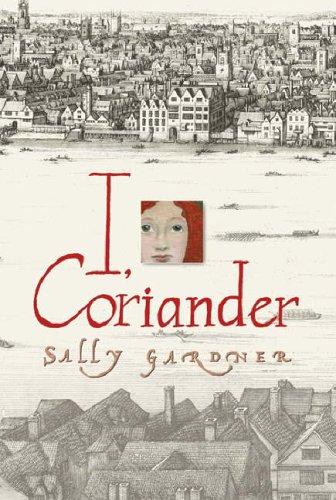
                • Cover of I, Coriander
                  I, Coriander

                  Sally Gardner · standalone novel · 2005

                  similar byour world+1 more

                  I, Coriander is a 2005 young adult novel by Sally Gardner, a historical fantasy set in London at the time of the Puritan Commonwealth. The novel traces the time period of the beheading of Charles the 1st through the Restoration of Charles the 2nd. It won the Nestlé Children's Book Prize Gold Award. It was also shortlisted for the British Children's Book of the Year and the Stockton Children's Book of the Year, as well as longlisted for the Carnegie Medal.

                • Cover of Witchcraft for Wayward Girls
                  Witchcraft for Wayward Girls

                  Grady Hendrix · standalone novel · 2025

                  similar byhistorical fictionmid 20th century

                  Witchcraft for Wayward Girls is a 2025 horror novel by American writer Grady Hendrix. It was first published in January 2025 in the United States by Berkley Books, an imprint of Penguin Random House, and in the United Kingdom by Tor Books. The novel is set in Florida in 1970, and is about a group of pregnant teenage girls living in a maternity home for unwed girls who discover a book on witchcraft.

                • Cover of The Catch Trap
                  The Catch Trap

                  series · 2 books · 1961

                  completed

                  similar byhistorical fictionmid 20th century

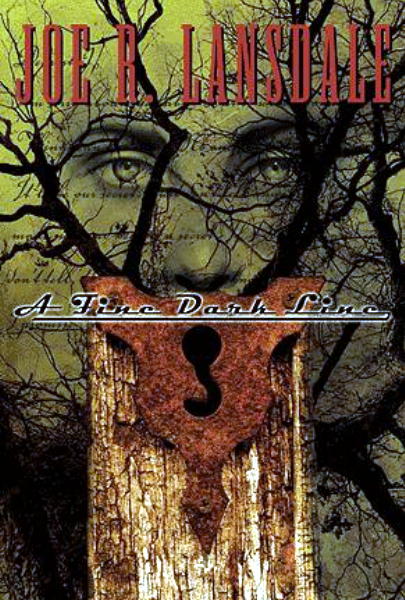
                • Cover of A Fine Dark Line
                  A Fine Dark Line

                  Joe R. Lansdale · standalone novel · 2002

                  similar byhistorical fictionmid 20th century

                  A Fine Dark Line is a 2002 novel by American writer Joe R. Lansdale. The story is set in Dumont, Texas, in 1958. This novel was issued as a limited edition by Subterranean Press and as a trade hardcover and a trade paperback by Mysterious Press. Both hardcover editions are now out of print. A trade paperback was published by Mysterious Press on October 1, 2003.