More like 1985
anchored on:alternate historytotalitarianismbritish isleslate 20th centurydystopiapolitical intrigue+3 more
but
- A Clockwork Orange
series4 books1962
completed
similar bydarkchallengingbritish islestotalitarianismdystopiascience fiction
Anthony Burgess's 1962 novel is narrated by Alex, a teenage gang leader in a near-future Britain gripped by a youth subculture of extreme violence, recounting his crimes in Nadsat, an invented slang blending English with Russian-derived words. After his crimes catch up with him, Alex is made the subject of a controversial state program meant to forcibly reform his behavior, and the novel uses his ordeal to question whether imposed goodness is worth the loss of free will. It is a standalone novel.
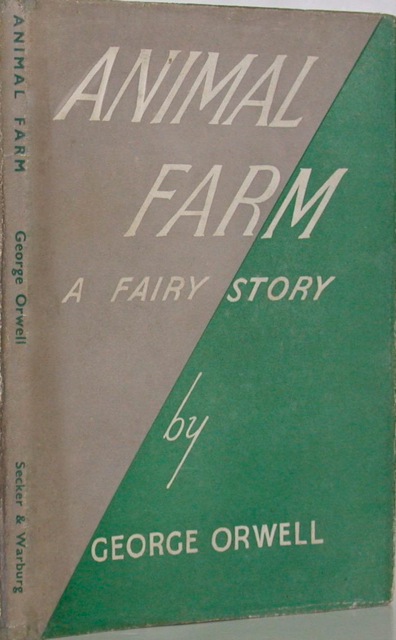
- Animal Farm: A Fairy Story
George Orwellstandalone novel1945
similar bydarkbritish islestotalitarianismpolitical intrigueclass conflict+2 more
WorldCat: "Fueled by Orwell's intense disillusionment with Soviet Communism, Animal Farm is a nearly perfect piece of writing, both an engaging story and an allegory that actually works. When the downtrodden beasts of Manor Farm oust their drunken human master and take over management of the land, all are awash in collectivist zeal."
- The Children of Men
P. D. Jamesstandalone novel1992
similar bydarkbritish islestotalitarianismdystopiascience fictionpolitical intrigue
"The human race has become infertile, and under the despotic rule of Xan Lyppiatt, the Warden of England the old are despairing and the young cruel. Theo Faren, a cousin of the Warden, lives a solitary life in this ominous atmosphere. That is, until a chance encounter with a young woman leads him into contact with a group of dissenters. Suddenly his life is changed irrevocably, as he faces agonising choices which could affect the future of mankind." (pdjames.co.uk)
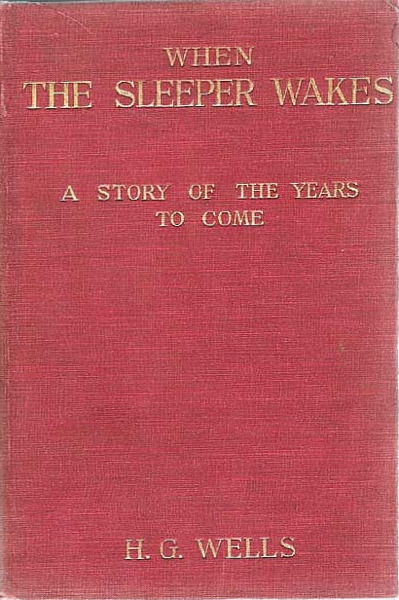
- When the Sleeper Wakes
H. G. Wellsstandalone novel1899
similar bydarkbritish islesdystopiascience fictionpolitical intriguetotalitarianism+1 more
Graham, an insomniac Englishman in 1890s London, takes a course of sleep-inducing drugs and falls into a coma that lasts two centuries. He wakes in the year 2100 to find his investments have compounded, through a ruling body called the White Council, into effective ownership of most of the world's wealth and power, making him, on paper, humanity's master, and in practice, its prisoner, held under guard while the Council governs in his name. A rebel faction led by a man named Ostrog frees him, hoping to use his symbolic authority to spark an uprising against the Council. An early H. G. Wells dystopia about inherited power and manufactured consent.
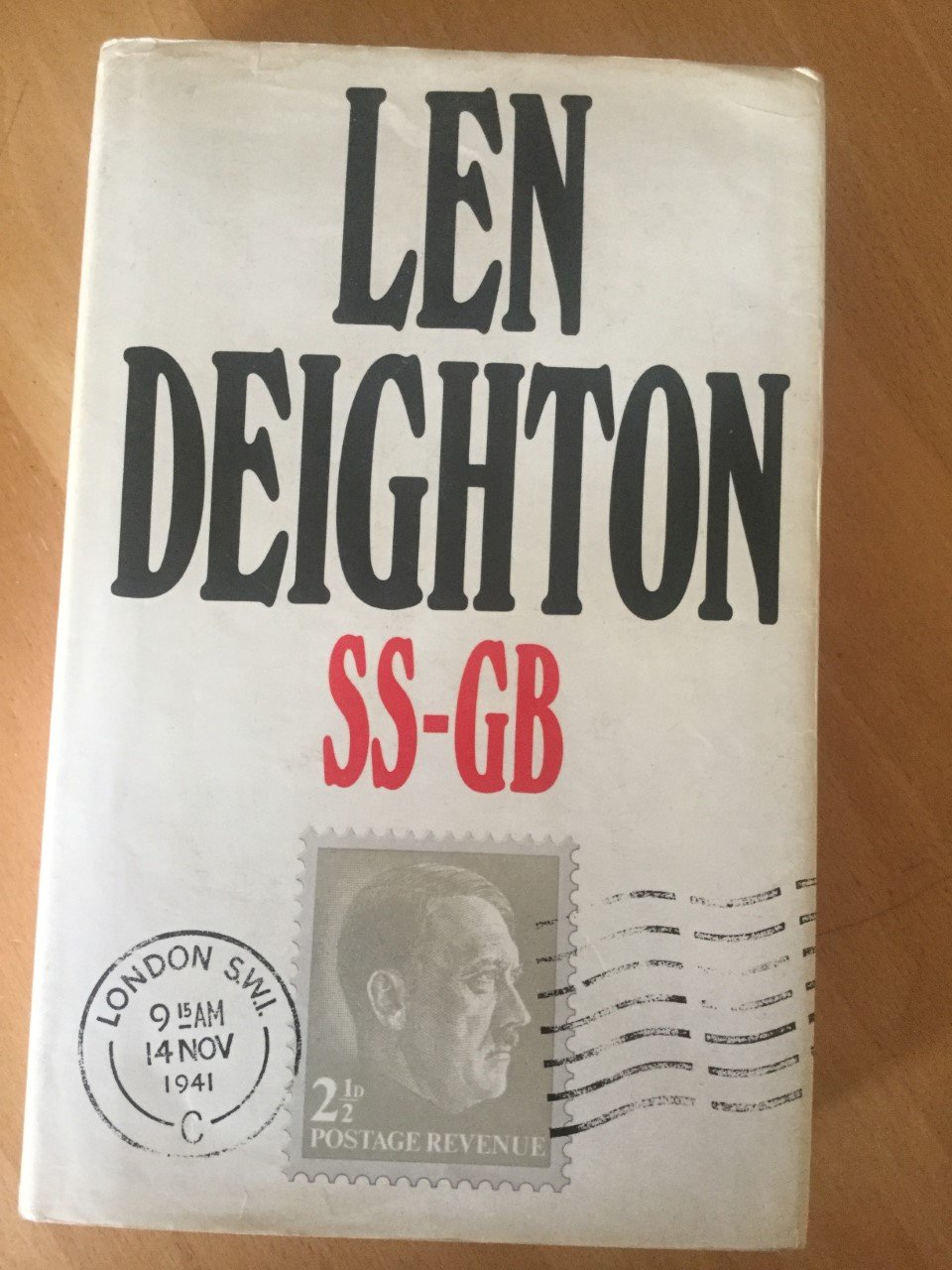
- SS-GB
Len Deightonstandalone novel1978
similar bydarkbritish islesalternate historyscience fictionpolitical intrigue+1 more
It's November 1941 in a Britain that lost the war: Operation Sea Lion succeeded, Churchill was executed, and the King is a prisoner in his own Tower of London. Detective Superintendent Douglas Archer, still working homicide for the Metropolitan Police under German occupation, catches what looks like a routine case, a well-dressed man murdered above an antiques shop, until the body's oddities point toward something far more dangerous than burglary gone wrong. Archer's investigation collides with occupation politics, the British resistance, and rival factions of the SS and the German Army, each wanting the case to go a different way. Len Deighton's alternate-history spy thriller.
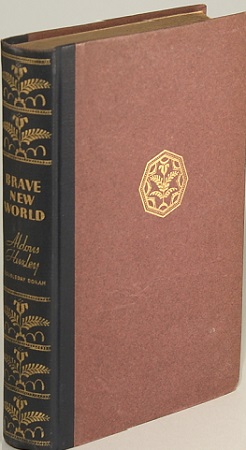
- Brave New World
series8 books1932
similar bydystopiascience fictionclass conflict+4 more
Aldous Huxley's 1932 novel imagines a future World State where reproduction, social caste, and desire are all engineered before birth, and the population is kept content through conditioning, sleep-hypnosis, and a mood-altering drug called soma. The story follows the disruption this seemingly stable order suffers when an outsider raised beyond its reach is brought into it, exposing what the society traded away for comfort and order. Some editions pair the novel with Huxley's own 1958 nonfiction essay collection, Brave New World Revisited, which reassesses the book's ideas rather than continuing its story.
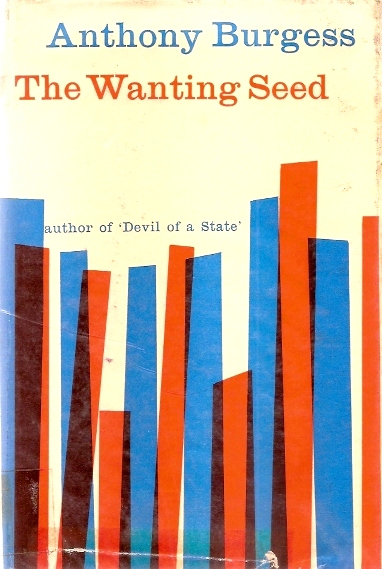
- The Wanting Seed
Anthony Burgessstandalone novel1962
similar bydarktotalitarianismchallengingdystopiascience fiction+3 more
The Wanting Seed is a dystopian novel by the English author Anthony Burgess, written in 1962.
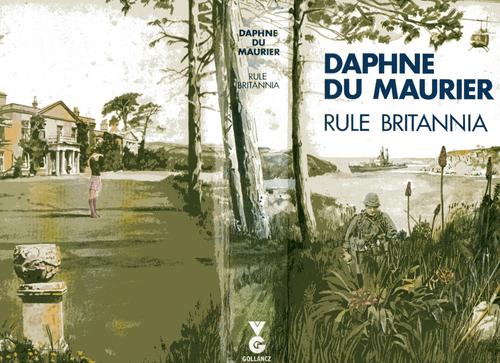
- Rule Britannia
Daphne du Maurierstandalone novel1972
similar bydarkbritish isleslate 20th centuryalternate historyscience fiction
In the late 1970s, the US invades Britain.
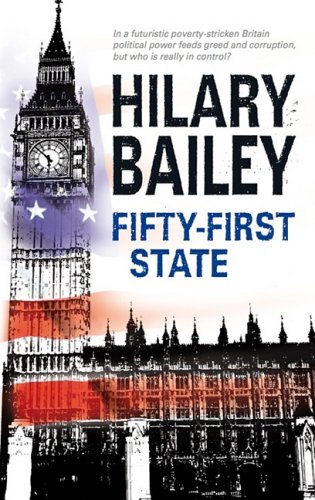
- Fifty-First State
Hilary Baileystandalone novel2008
similar bydarkbritish islesdystopiaalternate historyscience fictionpolitical intriguetotalitarianism
A woman in 2017 recounts the events which led to the military occupation of the UK by the USA.
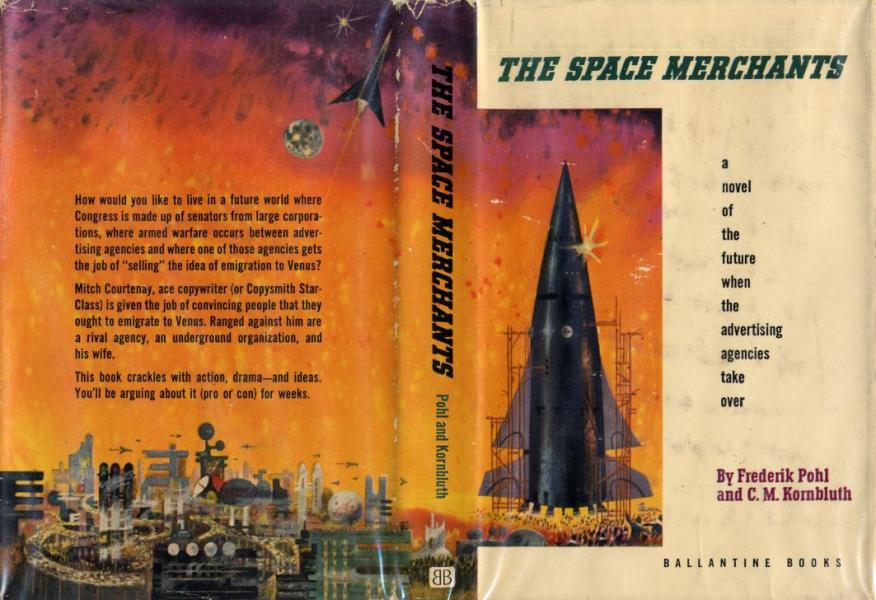
- Space Merchants
series2 books1953
completed
similar bydarkdystopiascience fictionclass conflict+2 more
The Space Merchants (1953) is a satirical science fiction novel by Frederik Pohl and C. M. Kornbluth that follows an advertising executive navigating a future where aggressive consumer capitalism has swallowed politics and daily life. The authors reunited three decades later for a direct sequel, The Merchants' War (1984), returning to the same satirical world. Together the two books form a compact bookend pair rather than an ongoing series.
- Small Change
series4 books2006
similar bydarkbritish islesalternate historytotalitarianismscience fictionpolitical intrigue
The Small Change trilogy is a series of alternate history thriller novels by the author Jo Walton that were published from 2006 to 2008. The series are set in a Europe in which the United Kingdom exits World War II in 1941. As the series begins, Britain itself slides toward fascism. The series has three books:Farthing Tor Books August 8, 2006, ISBN 0-7653-1421-5, ISBN 978-0-7653-1421-5 Ha'penny, Tor Books; Reprint edition July 1, 2008, ISBN 0-7653-5808-5, ISBN 978-0-7653-5808-0 Half a Crown, Tor Books; September 30, 2008, ISBN 0-7653-1621-8, ISBN 978-0-7653-1621-9
- The Handmaid's Tale
series3 books1985
similar bydarktotalitarianismdystopiascience fiction+2 more
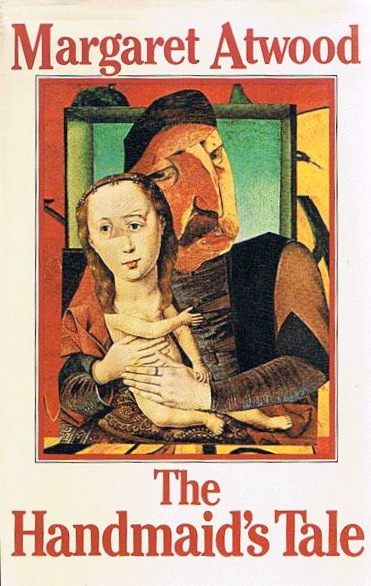
The Handmaid's Tale is Margaret Atwood's 1985 novel set in Gilead, a totalitarian theocracy that has overthrown the United States and forces fertile women into reproductive servitude as Handmaids; it is narrated by one such woman, Offred. Atwood returned to the world in her 2019 sequel The Testaments, set fifteen years later and narrated by three women, including the regime's Aunt Lydia. Together the two novels move from Gilead's grip on power toward the first cracks in it.
- Stand on Zanzibar
John Brunnerstandalone novel1968
similar bydarkchallengingdystopiascience fiction+2 more
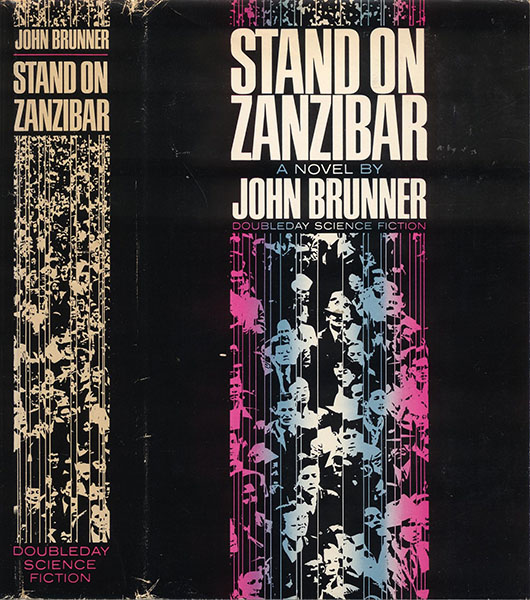
Stand on Zanzibar is a dystopian New Wave science fiction novel written by John Brunner and first in part published in New Worlds magazine in 1967 and in book form in 1968. The book won a Hugo Award for Best Novel at the 27th World Science Fiction Convention in 1969, as well as the 1969 BSFA Award and the 1973 Prix Tour-Apollo Award.
- The Last Man
Mary Shelleystandalone novel1826
similar bydarkbritish islesdystopiascience fictiongrief and loss+1 more
The Last Man is an apocalyptic, dystopian science fiction novel by Mary Shelley, first published in 1826. The narrative concerns Europe in the late 21st century, ravaged by the rise of a bubonic plague pandemic that rapidly sweeps across the entire globe, ultimately resulting in the near-extinction of humanity. It also includes discussion of the British state as a republic, for which Shelley sat in meetings of the House of Commons to gain insight to the governmental system of the Romantic era. The novel includes many fictive allusions to her husband Percy Bysshe Shelley, who drowned in a shipwreck four years before the book's publication, as well as their close friend Lord Byron, who had died two years previously.
- Darkness Visible
William Goldingstandalone novel1979
similar bydarkbritish isleslate 20th centurychallengingfaith and religion
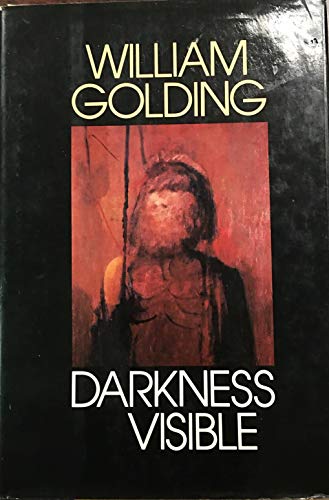
Darkness Visible is a 1979 novel by British author William Golding. The book won the James Tait Black Memorial Prize. The title comes from Paradise Lost, from the line, "No light, but rather darkness visible". It marked Golding's re-emergence as a novelist, eight years after the publication of the collection The Scorpion God.
- Let's Put the Future Behind Us
Jack Womackstandalone novel1996
similar bydarklate 20th centurydystopiascience fictionpolitical intrigueclass conflict
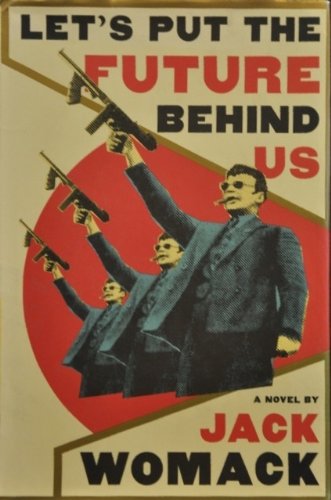
Let's Put the Future Behind Us is a speculative fiction novel by Jack Womack set in post-Soviet Russia and released in 1996. It chronicles the transition of bureaucratic apparatchiks into an endemically corrupt Russian quasi-capitalism in the early 1990s dominated by oligarchs, criminals and ultra-nationalist political groups.
- Empty World
John Christopherstandalone novel1977
similar bydarkbritish isleslate 20th centuryscience fictiongrief and loss
Empty World is a 1977 apocalyptic fiction novel written by John Christopher aimed at an adolescent audience. It was Christopher's eleventh such novel. It's centered around Neil Miller and his struggle to come to terms with the loss of his parents in a car crash and the subsequent Calcutta Plague that decimates the adult population. The novel is set in England in the late 1970s.
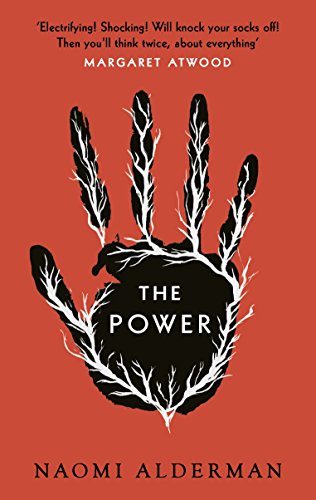
- The Power
Naomi Aldermanstandalone novel2016
similar bydarkchallengingdystopiascience fictionpolitical intrigueclass conflict
The Power is a 2016 science fiction novel by the British writer Naomi Alderman. Its central premise is of women developing the ability to release electrical jolts from their fingers, which allows them to become the dominant sex. In 2017, it won the Baileys Women's Prize for Fiction.
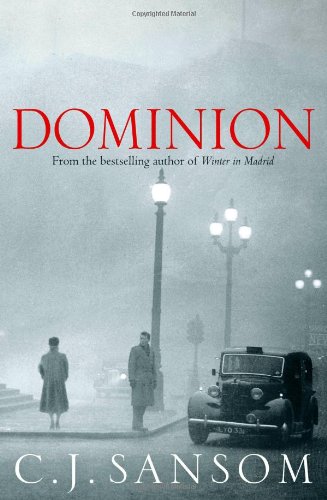
- Dominion
C. J. Sansomstandalone novel2012
similar bydarkbritish islesalternate historypolitical intriguetotalitarianism
Dominion is a 2012 alternative history novel by British author C. J. Sansom. It is a political thriller set in the early 1950s against the backdrop of a Britain that has become a satellite state of Nazi Germany. The point of divergence from actual history is that Lord Halifax, rather than Winston Churchill, succeeded Neville Chamberlain as Prime Minister in May 1940 leading to an armistice with Germany.
- It Can't Happen Here
Sinclair Lewisstandalone novel1935
similar bydarktotalitarianismdystopiascience fictionpolitical intrigue+1 more
It Can't Happen Here is a 1935 dystopian political novel by the American author Sinclair Lewis. Set in a fictionalized version of the 1930s United States, it follows an American politician, Berzelius "Buzz" Windrip, who quickly rises to power to become the country's first outright dictator, and Doremus Jessup, a newspaper editor who sees Windrip's fascist policies for what they are ahead of time and who becomes Windrip's most ardent critic.
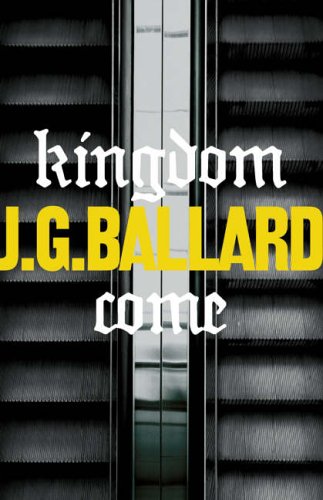
- Kingdom Come
J. G. Ballardstandalone novel2006
similar bydarkbritish isleschallengingdystopiatotalitarianism+1 more
In contemporary Britain, the suburban population falls prey to a combination of boredom, consumerism, xenophobia, sports hooliganism, and resentment of authority leading to the rise of a new fascism centered around a giant enclosed shopping mall.
- Final Blackout
L. Ron Hubbardstandalone novel1948
similar bydarkbritish islesdystopiascience fiction+1 more
Final Blackout is a dystopic science fiction novel by American writer L. Ron Hubbard. The novel is set in the future and follows a man known as "the Lieutenant" as he restores order to England after a world war. First published in serialized format in 1940 in the science fiction magazine Astounding Science Fiction, Final Blackout was published in book form in 1948 by The Hadley Publishing Co. Author Services Inc. published a hardcover edition of the book in 1988, and in 1989 the Church of Scientology-affiliated organization Bridge Publications said that a film director named Christopher Cain had signed a contract to write and direct a movie version based on the book.
- Gravity's Rainbow
Thomas Pynchonstandalone novel1973
similar bydarkbritish isleschallengingpolitical intrigue+1 more
Gravity's Rainbow is a 1973 postmodern novel by Thomas Pynchon. The narrative is set primarily in Europe at the end of World War II and centers on the design, production and dispatch of V-2 rockets by the German military. In particular, it features the quest undertaken by several characters to uncover the secret of a mysterious device, the Schwarzgerät, which is slated to be installed in a rocket with the serial number "00000".
- The Iron Dream
Norman Spinradstandalone novel1972
similar bydarkalternate historychallengingscience fictiontotalitarianism
Contains "The Lord of the Swastika", a Science Fiction Novel by Adolf Hitler, plus an afterword by Homer Whipple. In this universe, Adolf Hitler (1889-1953) emigrated to the US in 1919 and became a popular science fiction author, fan and illustrator. "The Lord of the Swastika" won a posthumous Hugo in 1955.