Loreful
HomeDiscover
Search series, authors…⌘K
Loreful

Reading orders for SF/F series and shared universes — with your place kept in every one.

Explore

UniversesSeriesWorksAuthorsAtlas

Help

FAQAboutSite map

Account & legal

Sign inCreate accountPrivacyTerms

Data

Built on ISFDB, Wikipedia, Wikidata and Open Library. Curated reading orders carry their reasoning on the page; the rest follow publication order. Data sources & licenses

© Loreful · data: ISFDB · CC BY

More like 1999

anchored on:late 20th century

but

Mood

The mood the book leaves you in.

  • The reading experience is propelled by journeys, exploration, and physical risk; excitement and forward momentum dominate over dread or introspection.
  • Joy and loss are deliberately mixed; the resolution grants characters something real while taking something else away, leaving warmth and sorrow together.
  • The book demands work from the reader — dense prose, difficult structure, unfamiliar ideas, or morally uncomfortable material — as part of its intended effect.
  • Grim events, cruelty, or despair dominate the atmosphere, and the book does not soften them with comfort or comic relief.
  • The atmosphere is quietly unsettling — wrongness, unease, and the uncanny pervade the book without necessarily escalating into overt horror.
  • The book is built to move the reader; character feeling is foregrounded and major scenes aim at a strong emotional response.
  • Humor is a primary aim and the prose plays for laughs — comic situations, wit, or dialogue produce sustained comedy, not occasional levity.
  • The book insists that things can improve; effort and decency are shown to matter, and the arc bends toward better outcomes even through hardship.
  • The book teaches as it goes — real facts, history, science, or craft are conveyed in enough depth that learning is part of the reading experience.
  • The book is designed to uplift and motivate, presenting perseverance or achievement in a way that invites the reader to aspire or act.
  • The overall register is cheerful and easygoing; stakes are kept gentle and the book avoids dwelling on pain or dread.
  • Withheld information drives the experience; the book sustains enigmas and secrets the reader wants resolved, whatever its genre.
  • The book is contemplative and inward-looking, giving more weight to thought, memory, and meaning than to external events.
  • The book works as comfort reading — low tension, a soothing pace, and an atmosphere the reader can unwind in.
  • Grief, loss, or melancholy set the dominant register, and the book lets sorrow stand rather than resolving it into comfort.
  • Sustained suspense is the point; the book keeps the reader braced for what happens next through danger, pressure, or impending revelation.
  • Playful invention and charm define the register — fanciful conceits, light absurdity, and a narration that delights in its own oddity.

About

What the story runs on.

  • Stories in which extraterrestrial beings are central — as characters, cultures, or the object of the plot.
  • Stories in which staying alive against nature, catastrophe, or scarcity is the central problem.
  • Stories of lovers kept apart by law, family, faith, or station, where the obstacle to love is the plot.
  • Stories in which a friendship — its making, testing, or loss — is the emotional center.
  • Stories of growing up — a young protagonist crossing from childhood into adult knowledge and responsibility.
  • Stories about who a character truly is — self-discovery, doubled lives, and the search for a self.
  • Stories about mental unraveling — descent into madness, delusion, and minds at war with themselves.
  • Stories about mourning — living through the death of a loved one and what loss does to the survivors.
  • Stories in which a buried family truth — hidden parentage, crimes, or shames — surfaces and reorders the present.
  • Stories driven by maneuvering for power — factions, conspiracies, and statecraft conducted in shadow.
  • Stories in which war itself is the subject — combat, occupation, and what warfare does to soldiers and civilians.
  • Stories organized around investigating a killing — the case, the clues, and the pursuit of the killer, in any genre's clothing.

Shelf

Where it sits in the library.

    • Fiction built on magic or other supernatural elements that have no scientific explanation.
    • Secondary-world fantasy at large scale, where the fate of nations or the world turns on the protagonists' struggle.
    • Fantasy set in a recognizably modern city or contemporary world where the supernatural intrudes on everyday life.
    • Fantasy that blends in horror's atmosphere and imagery, keeping a fantastical frame around grim or frightening material.
    • Action-driven fantasy following warriors or rogues with personal stakes against sorcerous threats, rather than world-spanning conflicts.
    • Fantasy set in a real historical period or a close analogue of one, with magic woven into the era.
    • Fantasy in which protagonists cross from the ordinary world into another world through a portal or similar passage.
    • Fiction that retells or reworks a traditional fairy tale in a new form or setting.
    • Fantasy drawing directly on myths, legends, and folklore, retelling them or building on their figures and logic.
    • Fantasy of ghosts, vampires, shapeshifters, psychics, and similar phenomena, usually set in an otherwise ordinary world.
    • Fiction mixing science-fictional trappings with overtly magical or impossible elements in one setting.
    • Low-stakes fantasy emphasizing comfort, community, and everyday pleasures over conflict and peril.
    • Speculative fiction of pervasive moral ambiguity, violence, and cynicism that rejects heroic conventions — fantasy and SF alike.
      • Fiction that extrapolates from science and technology — future societies, space travel, or speculative inventions — within at least nominally natural laws.
      • Science fiction of interstellar scope — starships, galactic polities, and adventure across star systems.
      • Science fiction committed to scientific rigor, where technical plausibility constrains the story.
      • Science fiction centered on armed forces and warfare, told largely from a military point of view.
      • Science fiction of networked, corporate-dominated near futures, pairing high technology with social decay.
      • Science fiction styled on nineteenth-century steam-powered technology, often in a Victorian or pseudo-Victorian setting.
      • Fiction depicting an oppressive or catastrophic society, presented as a warning.
      • Fiction set after civilization's collapse, following survivors in the ruins of the old world.
      • Fiction in which characters move between past and future, and the mechanics or consequences of that travel drive the plot.
      • Fiction exploring a world where a historical event went differently and history diverged from ours.
      • Science fiction about humanity's first encounter and communication with an alien intelligence.
      • Science fiction in which extraterrestrial forces attack or occupy Earth and humanity resists.
      • Fiction whose primary aim is to frighten or unsettle the reader through dread, menace, or the monstrous.
      • Horror of vast, indifferent, incomprehensible entities before which humanity is insignificant, in the Lovecraft tradition.
      • Horror of decaying houses, buried family secrets, and oppressive atmosphere in the Gothic literary tradition.
      • Horror centered on hauntings and the returning dead.
      • Horror located in the mind — paranoia, obsession, and unreliable perception rather than external monsters.
      • Horror built around the reanimated dead and survival amid their outbreaks.
      • Horror defined by explicit, transgressive gore that refuses to cut away from violence.
      • Speculative fiction of the strange and uncanny that resists both natural explanation and standard genre categories.
      • Fiction organized around solving a crime or puzzle, typically following an investigator toward the identification of a culprit.
      • A puzzle-first mystery that lays out clues so the culprit's identity can be deduced before the reveal.
      • Crime fiction of moral ambiguity, fatalism, and hard-edged style, set among the corrupt and the doomed.
      • A mystery following the realistic routines of police work — forensics, interviews, and case-building.
      • A gentle mystery with an amateur sleuth, a small community, and violence kept off the page.
      • A mystery set in a past era, where the investigation works within that period's methods and society.
      • Fast-paced fiction driven by imminent danger, pursuit, or high-stakes conspiracy, built to sustain tension.
      • A thriller of espionage — agents, tradecraft, and intelligence services in conflict.
      • A thriller centered on lawyers and the courtroom, where litigation carries the suspense.
      • A thriller driven by detailed contemporary or near-future technology, often military or scientific.
      • A thriller whose tension comes from mental states and manipulation between characters rather than external action.
      • Fiction whose central plot is a romantic relationship and its development toward an emotionally satisfying resolution.
      • Romance in which one or both partners are supernatural beings, blending fantasy elements into the love story.
      • A fantasy-romance hybrid in which the romantic arc and the fantasy plot carry equal weight.
      • Romance set in a past era, with courtship shaped by the period's society and manners.
      • Romance set in the present day, without supernatural or historical elements.
      • Fiction set in a real past period, where the historical setting materially shapes characters and events.
        • General and literary fiction emphasizing prose style, character interiority, or formal ambition over genre plot conventions.
        • Fiction in a realistic world where magical events occur and are treated as ordinary, in the tradition of Latin American literature.
        • Fiction that ridicules people, institutions, or society in order to criticize them.
        • Fiction of dreamlike, irrational imagery and logic that breaks from realistic representation.
        • Fiction that plays with narrative convention through metafiction, fragmentation, and self-reference.
        • Fiction propelled by journeys, exploration, and physical peril, where action and survival carry the plot.
        • Adventure fiction of ships and seafaring — naval engagements, voyages, and life at sea.
        • Fiction of the American frontier West — gunmen, ranchers, and lawmen, typically in the late nineteenth century.
        • Fiction centered on soldiers, campaigns, and the experience of warfare, historical or imagined.
          • Fiction written primarily to amuse, using comedic situations, wit, or parody as its organizing principle.
            • Multi-generational fiction following a family or dynasty across decades, with inheritance and kinship as the through-line.
              • Fiction whose world runs on explicit game mechanics — levels, stats, and skills that characters can see and exploit.
                • Fiction about costumed or superpowered heroes and their conflicts with comparable villains.

                Practical

                How long a commitment, whether it stands alone, and whether it has finished.

                Tap a chip to ask for it · tap again to rule it out · once more to clear. Numbers show what would be left.

                • Cover of Replay
                  Replay

                  Ken Grimwood · standalone novel · 1987

                  similar byour worldlate 20th century

                  Replay is a fantasy novel by American writer Ken Grimwood, first published by Arbor House in 1987. It won the 1988 World Fantasy Award for Best Novel.

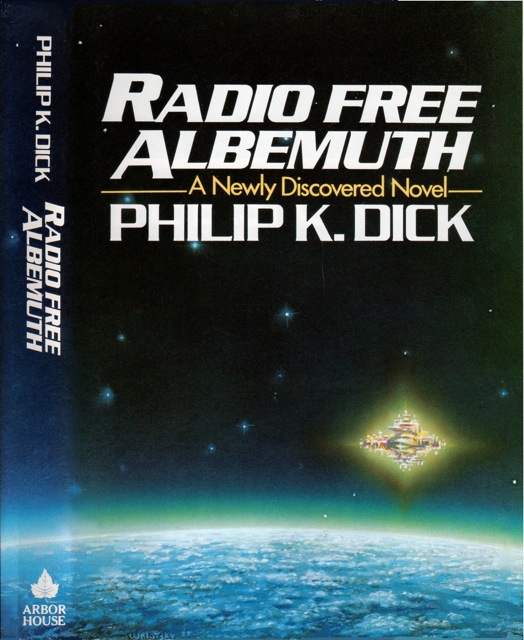
                • Cover of Radio Free Albemuth
                  Radio Free Albemuth

                  Philip K. Dick · standalone novel · 1986

                  similar byour worldlate 20th century

                  Radio Free Albemuth is a dystopian novel by Philip K. Dick, written in 1976 and published posthumously in 1985. Originally titled VALISystem A, it was his first attempt to deal in fiction with his experiences of early 1974. When his publishers at Bantam requested extensive rewrites he canned the project and reworked it into the VALIS trilogy. Arbor House acquired the rights to Radio Free Albemuth in 1985. They then published an edition under the current title, prepared from the corrected typescript given by Dick to his friend Tim Powers.

                • Cover of The Edible Woman
                  The Edible Woman

                  Margaret Atwood · standalone novel · 1969

                  similar byour worldlate 20th century

                  The Edible Woman is the first published novel by Canadian writer Margaret Atwood, published in 1969. It is the story of a young woman, Marian, whose sane, structured, consumer-oriented world starts to slip out of focus. Following her engagement, Marian feels her body and her self are becoming separated. Marian begins endowing food with human qualities that cause her to identify with it, and finds herself unable to eat, repelled by metaphorical cannibalism. In a foreword written in 1979 for the Virago edition of the novel, Atwood described it as a protofeminist rather than feminist work.

                • Cover of Carrion Comfort
                  Carrion Comfort

                  Dan Simmons · standalone novel · 1989

                  similar byour worldlate 20th century

                  Carrion Comfort is a science fiction/horror novel by American writer Dan Simmons, published in 1989 in hardcover by Dark Harvest and in 1990 in paperback by Warner Books. It won the Bram Stoker Award, the Locus Poll Award for Best Horror Novel, and the August Derleth Award for Best Novel. It is based on a novelette of the same title, published in 1983 in the magazine Omni. The first half of the novelette makes up chapter 1 of the novel, while the second half forms chapter 3.

                • Cover of Our Lady of Darkness
                  Our Lady of Darkness

                  Fritz Leiber · standalone novel · 1977

                  similar byour worldlate 20th century

                  Our Lady of Darkness (1977) is an urban fantasy novel by American author Fritz Leiber. The novel is distinguished for three elements: the heavily autobiographical elements in the story, the use of Jungian psychology that informs the narrative, and its detailed description of "megapolisomancy", a fictional occult science. It was originally published in shorter form as The Pale Brown Thing.

                • Cover of Phases of Gravity
                  Phases of Gravity

                  Dan Simmons · standalone novel · 1989

                  similar byour worldlate 20th century

                  Follows Richard Baedecker, an Apollo astronaut who walked on the moon, through his midlife crisis. He meanders through India, Glen Oak Illinois, the mountains of Colorado, and the coastline of Oregon, checking up on his son and his former Apollo crewmates.

                • Cover of The Masks of Time
                  The Masks of Time

                  Robert Silverberg · standalone novel · 1968

                  similar byour worldlate 20th century

                  From the back cover of the Ballantine first edition: "The year is 1999. The century is about to turn. The civilized world is prosperous but tense with fear about the still existing possibility of a major war. While in the large area that used called "underdeveloped" there is a hysterical conviction that the world will cone to an end with the arrival of the new century Into this explosive situation floats a creature calling himself Vornam-19 - and claiming to be a visitor from 1000 years in the future... The world is ready, indeed ripe, for a sign, an omen, a new cult. But no one realizes exactly what Vornaa-19 is in his own right."

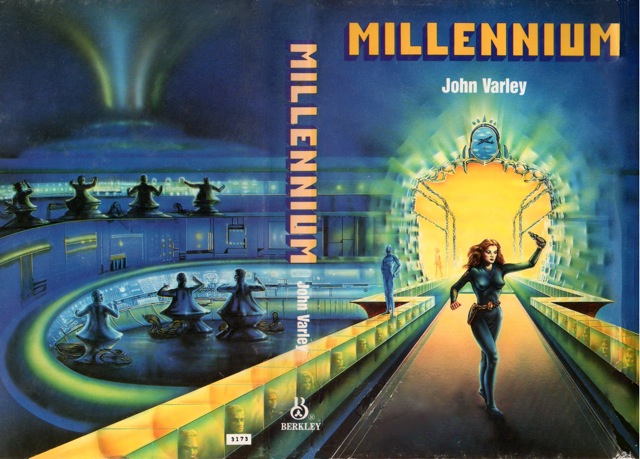
                • Cover of Millennium
                  Millennium

                  John Varley · standalone novel · 1983

                  similar byour worldlate 20th century

                  Millennium is a 1983 time travel science fiction novel by John Varley. Varley later turned this novel into the script for the 1989 film Millennium, both of which are based on Varley's short story "Air Raid", which was published in 1977.

                • Cover of Flesh
                  Flesh

                  Richard Laymon · standalone novel · 1987

                  similar byour worldlate 20th century

                  No one in town has ever seen anything like it: a slimy, mobile tube of glistening yellow flesh with dull, staring eyes and an obscene, probing mouth. But the real horror is not what it looks like, or what it does when it invades your flesh—but what it makes you do to others.

                • Cover of The Shining Girls
                  The Shining Girls

                  Lauren Beukes · standalone novel · 2013

                  similar byour worldlate 20th century

                  The Shining Girls is a science fiction thriller novel by South African author Lauren Beukes. The book centers on a mysterious drifter who murders the titular "shining girls" and one victim's attempts to expose him.

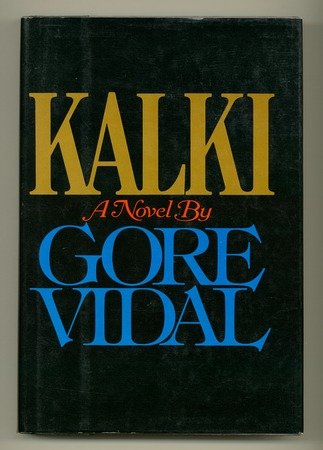
                • Cover of Kalki
                  Kalki

                  Gore Vidal · standalone novel · 1978

                  similar byour worldlate 20th century

                  A veteran back from Vietnam war claims to be the reincarnation of the Hindu god Kalki and announces the forecoming end of the world.

                • Cover of A Dream of Wessex
                  A Dream of Wessex

                  Christopher Priest · standalone novel · 1977

                  similar byour worldlate 20th century

                  A Dream of Wessex is a 1977 science fiction novel by British writer Christopher Priest. In the United States it was released under the title The Perfect Lover.

                • Cover of M31: A Family Romance
                  M31: A Family Romance

                  Stephen Wright · standalone novel · 1988

                  similar byour worldlate 20th century

                  M31: A Family Romance is the second novel written by Stephen Wright. First published in 1988 by Harmony Books, it is a dark satire about media and mass culture as filtered through the lens of a fictional family with extraterrestrial ties.

                • Cover of Mortal Fear
                  Mortal Fear

                  Robin Cook · standalone novel · 1988

                  similar byour worldlate 20th century

                  The novel Mortal Fear by Robin Cook in 1989 deals with the issues of euthanasia hospital and increasing cost of keeping elderly people alive. The piece's villain espouses views that the elderly and incapacitated deserve to die in order to lighten the burden on the overtaxed medical system—quite contrary to the view of "do no harm" held by both the novel's main character and author.

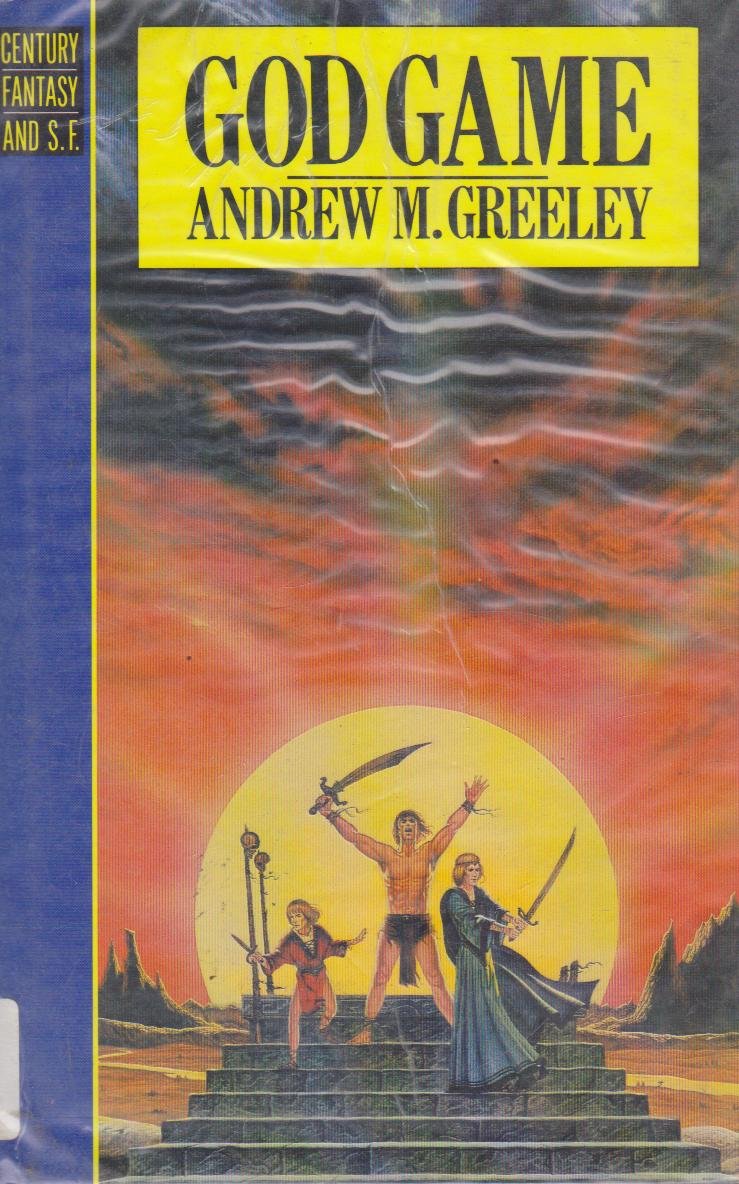
                • Cover of God Game
                  God Game

                  Andrew M. Greeley · standalone novel · 1986

                  similar byour worldlate 20th century

                  From the back cover of the second Tor printing: "One day at the beach... I was given the kingdom, the power and the glory, and let me tell you, it wasn't any fun. I was trying out a new computer game called "Duke and Duchess" when lightning struck my satellite dish. Maybe that's what caused it; I'll never know for sure. But the people I saw on the screen were real, and their trouble was desperate. And my trouble was just beginning."

                • Cover of Squire Quartet
                  Squire Quartet

                  series · 4 books · 1980

                  completed

                  similar bylate 20th century+1 more

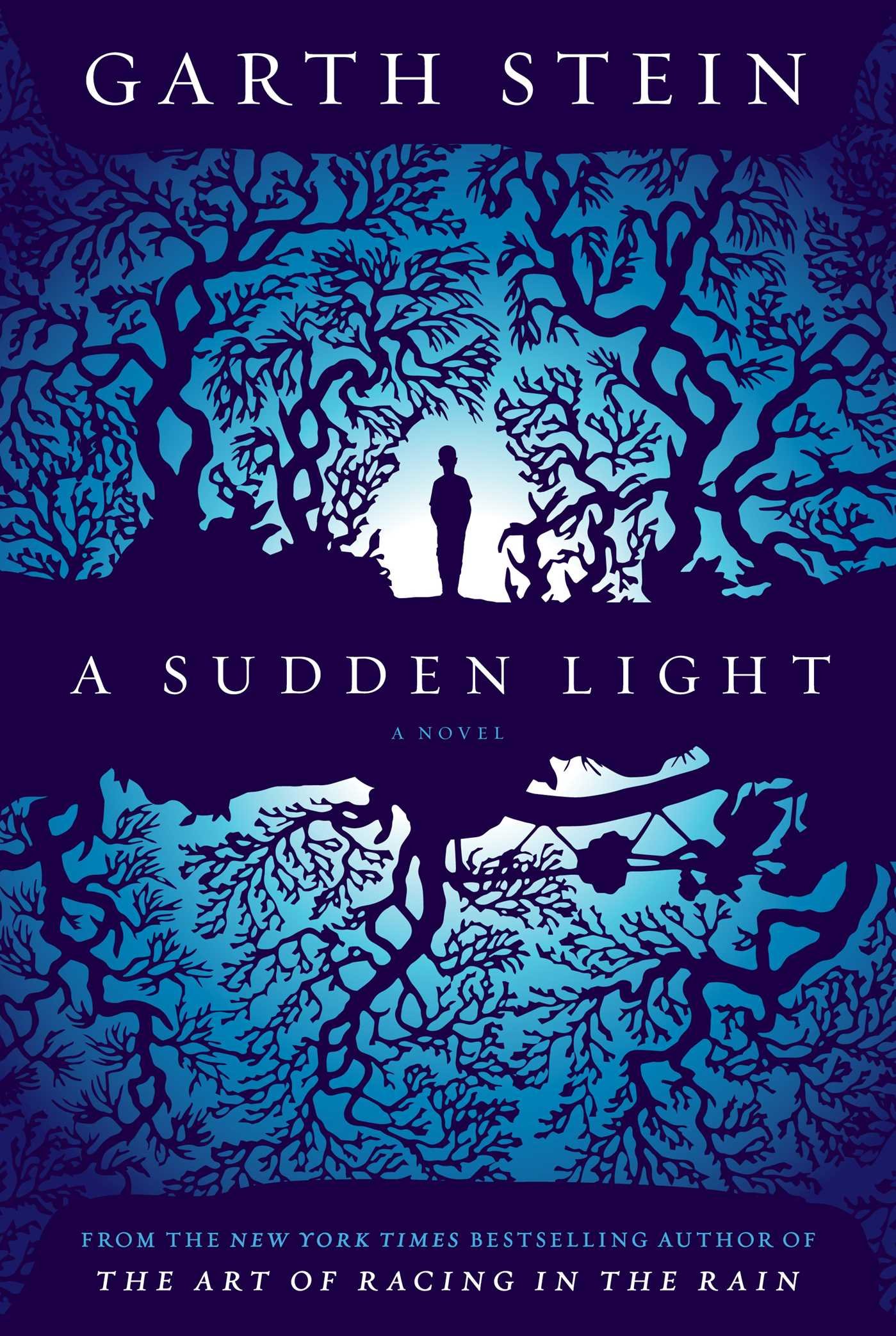
                • Cover of A Sudden Light
                  A Sudden Light

                  Garth Stein · standalone novel · 2014

                  similar byour worldlate 20th century

                  A Sudden Light is the fourth novel by American author Garth Stein published in 2014 by Simon & Schuster, set in 1990 in Washington State.

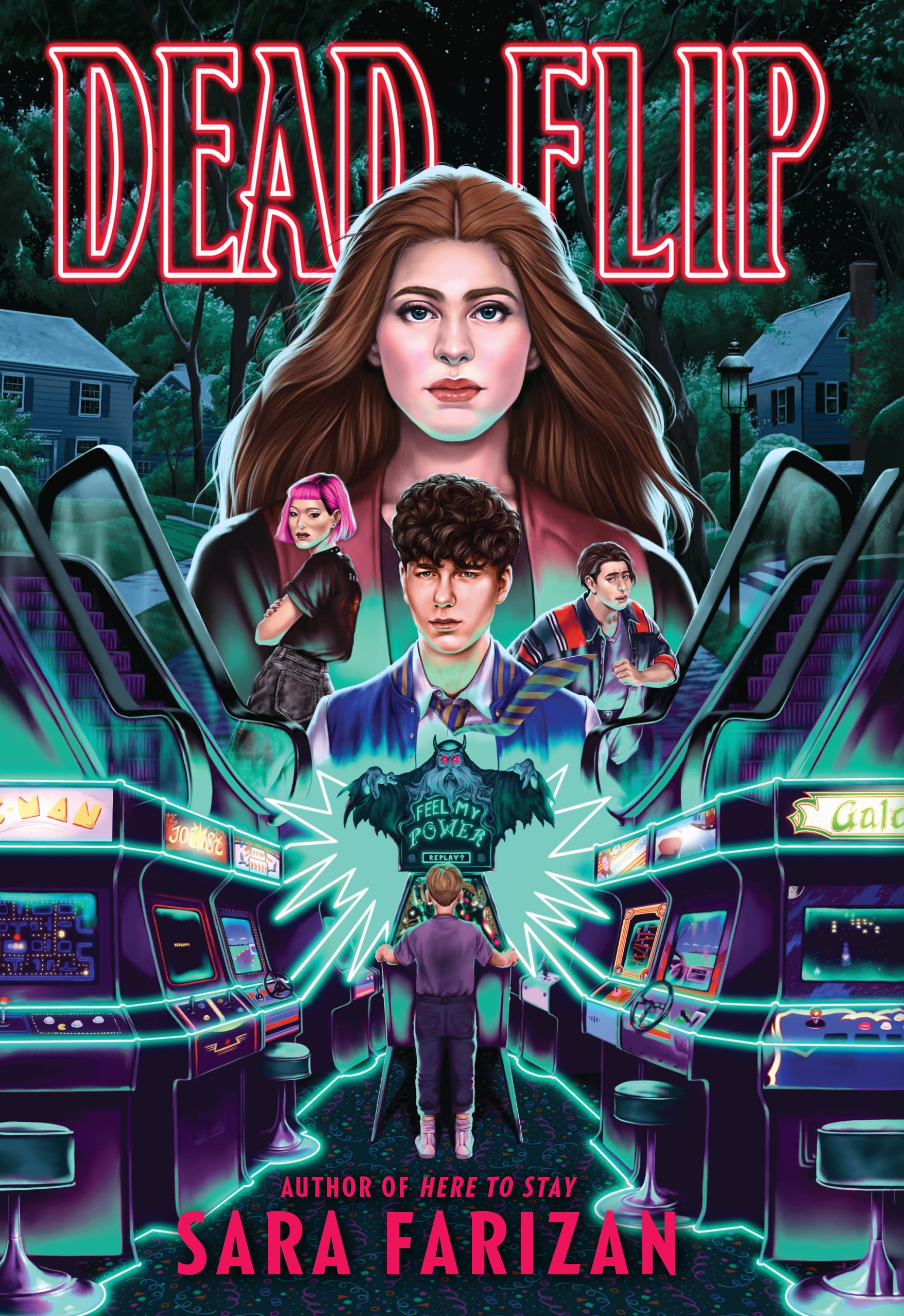
                • Cover of Dead Flip
                  Dead Flip

                  Sara Farizan · standalone novel · 2022

                  similar bylate 20th century

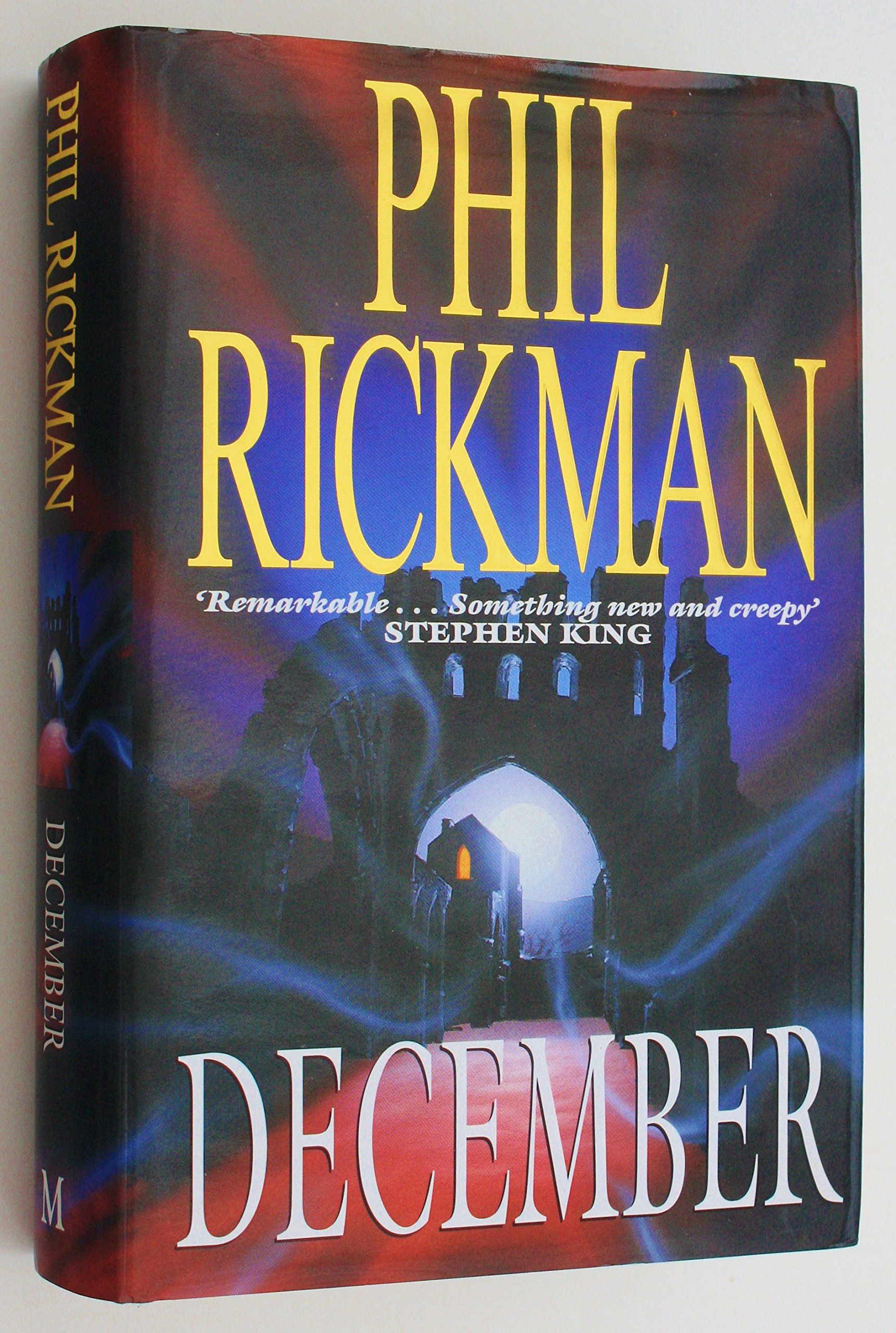
                • Cover of December
                  December

                  Phil Rickman · standalone novel · 1994

                  similar byour worldlate 20th century

                  In the twelfth-century ruins of the Abbey, it is said every stone was cemented in blood. On December 8, 1980, that blood will run again... The Abbey's tower house is now a recording studio, and a hot young band called The Philosopher's Stone has gathered to tap into the site's dark history. But no one could predict the powerful forces that rise the night of December 8. The explosive tragedy. The horrifying death. And in the aftermath of that fateful session, the members of the band agree to destroy their tapes... and never meet again. But thirteen years later, the Abbey tapes—known as The Black Album—resurface. And the scattered members of The Philosopher's Stone know that it's time for a reunion. Time to return to that dark December night—for one last performance...

                • Cover of Schrödinger's Cat
                  Schrödinger's Cat

                  series · 3 books · 1979

                  completed

                  similar byour worldlate 20th century

                  The Schrödinger's Cat Trilogy is a trilogy of novels by American writer Robert Anton Wilson consisting of Schrödinger's Cat: The Universe Next Door (1979), Schrödinger's Cat II: The Trick Top Hat (1980), and Schrödinger's Cat III: The Homing Pigeons (1981), each illustrating a different interpretation of quantum physics. They were collected into an omnibus edition in 1988.

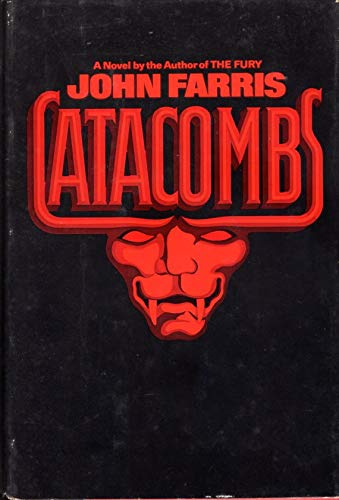
                • Cover of Catacombs
                  Catacombs

                  John Farris · standalone novel · 1981

                  similar byour worldlate 20th century

                  Americans agents, Soviets agents and an archeaological team investigate the catacombs of an ancient advanced civilization in Africa.

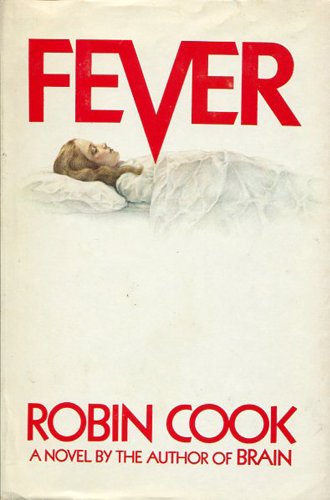
                • Cover of Fever
                  Fever

                  Robin Cook · standalone novel · 1982

                  similar byour worldlate 20th century

                  Fever is a 1982 novel by Robin Cook and is in the category of medical thriller. It was plagiarised by Yandamuri Veerendranath into Prardhana.

                • Cover of Monster Maker
                  Monster Maker

                  Nicholas Fisk · standalone novel · 1979

                  similar byour worldlate 20th century

                  For twelve-year-old Matt, working at a studio where movie monsters are made, fantasy turns into a nightmare when juvenile vandalism seems to bring the monsters to life.

                • Cover of Sacrifice
                  Sacrifice

                  John Farris · standalone novel · 1994

                  similar byour worldlate 20th century

                  A southern TV repairman with a seventeen-year-old daughter turns out to be a creature who achieves immortality by sacrificing a virgin every nineteen years.