More like 2020
anchored on:thriller & suspensebritish islesnear futuretensedystopiapolitical intrigue+2 more
but
- The Children of Men
P. D. Jamesstandalone novel1992
similar bybritish islesnear futurepolitical intriguetotalitarianismdystopiadarktense
"The human race has become infertile, and under the despotic rule of Xan Lyppiatt, the Warden of England the old are despairing and the young cruel. Theo Faren, a cousin of the Warden, lives a solitary life in this ominous atmosphere. That is, until a chance encounter with a young woman leads him into contact with a group of dissenters. Suddenly his life is changed irrevocably, as he faces agonising choices which could affect the future of mankind." (pdjames.co.uk)
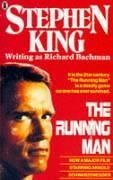
- The Running Man
Stephen Kingstandalone novel1982
similar bynear futuretensetotalitarianismdystopiathriller & suspensedarksurvival
The Running Man is a dystopian thriller novel by American writer Stephen King, first published under the pseudonym Richard Bachman in 1982 as a paperback original. It was collected in 1985 in the omnibus The Bachman Books. The novel is set in a dystopian United States during the year 2025, in which the nation's economy is in ruins and world violence is rising. The story follows protagonist Ben Richards as he participates in the reality show The Running Man, in which contestants win money by evading a team of hitmen sent to kill them.
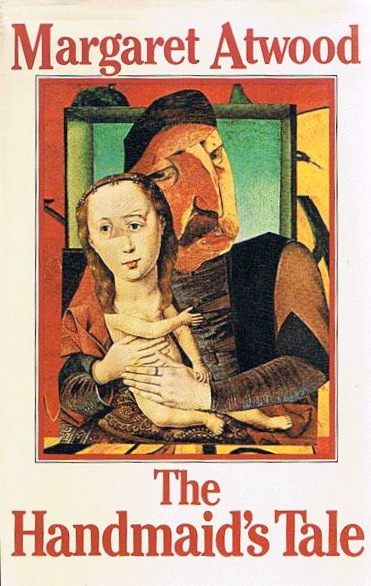
- The Handmaid's Tale
series3 books1985
similar bynear futuretotalitarianismdystopiadarktense+1 more
The Handmaid's Tale is Margaret Atwood's 1985 novel set in Gilead, a totalitarian theocracy that has overthrown the United States and forces fertile women into reproductive servitude as Handmaids; it is narrated by one such woman, Offred. Atwood returned to the world in her 2019 sequel The Testaments, set fifteen years later and narrated by three women, including the regime's Aunt Lydia. Together the two novels move from Gilead's grip on power toward the first cracks in it.
- Final Blackout
L. Ron Hubbardstandalone novel1948
similar bybritish islesnear futuredystopiadarktense+2 more
Final Blackout is a dystopic science fiction novel by American writer L. Ron Hubbard. The novel is set in the future and follows a man known as "the Lieutenant" as he restores order to England after a world war. First published in serialized format in 1940 in the science fiction magazine Astounding Science Fiction, Final Blackout was published in book form in 1948 by The Hadley Publishing Co. Author Services Inc. published a hardcover edition of the book in 1988, and in 1989 the Church of Scientology-affiliated organization Bridge Publications said that a film director named Christopher Cain had signed a contract to write and direct a movie version based on the book.
- A State of Disobedience
Tom Kratmanstandalone novel2003
similar bynear futuretensepolitical intriguetotalitarianismdystopiathriller & suspensedark
During the war against terrorism, the US government had taken on extraordinary powers. Now that the war was won, elements of the government had no intention of giving those powers up, and the country was on the verge of civil war.
- Lesser Evils
series5 books2017
similar bynear futuretensepolitical intriguetotalitarianismdystopiathriller & suspensedarksurvival
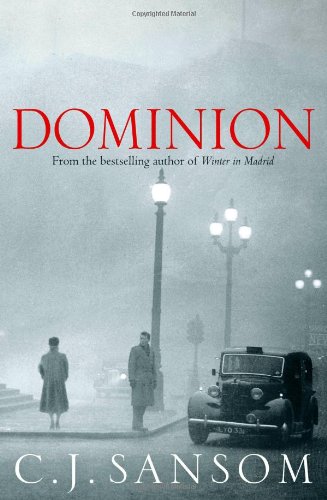
- Dominion
C. J. Sansomstandalone novel2012
similar bybritish islesthriller & suspensetensepolitical intriguetotalitarianismdark
Dominion is a 2012 alternative history novel by British author C. J. Sansom. It is a political thriller set in the early 1950s against the backdrop of a Britain that has become a satellite state of Nazi Germany. The point of divergence from actual history is that Lord Halifax, rather than Winston Churchill, succeeded Neville Chamberlain as Prime Minister in May 1940 leading to an armistice with Germany.
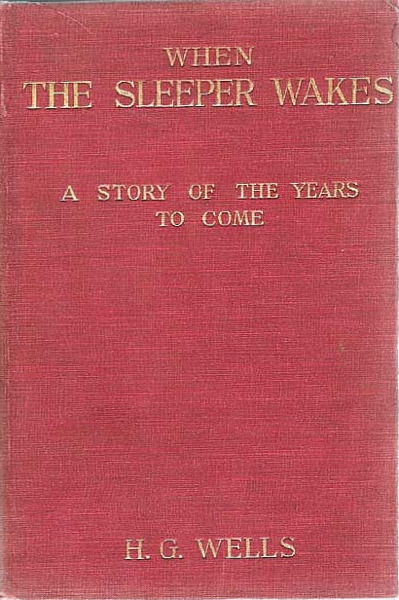
- When the Sleeper Wakes
H. G. Wellsstandalone novel1899
similar bypolitical intriguetotalitarianismbritish islesdystopiadarktense
Graham, an insomniac Englishman in 1890s London, takes a course of sleep-inducing drugs and falls into a coma that lasts two centuries. He wakes in the year 2100 to find his investments have compounded, through a ruling body called the White Council, into effective ownership of most of the world's wealth and power, making him, on paper, humanity's master, and in practice, its prisoner, held under guard while the Council governs in his name. A rebel faction led by a man named Ostrog frees him, hoping to use his symbolic authority to spark an uprising against the Council. An early H. G. Wells dystopia about inherited power and manufactured consent.
- Ruled Britannia
series2 books2021
similar bybritish islesnear futuretensetotalitarianismdystopiadarksurvival
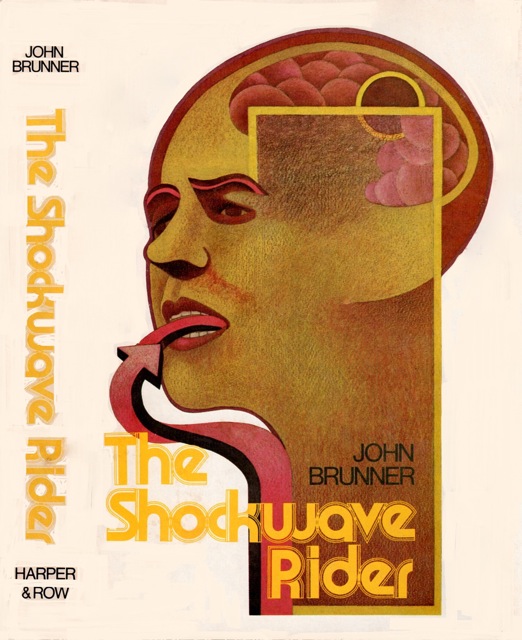
- The Shockwave Rider
John Brunnerstandalone novel1975
similar bynear futuretensetotalitarianismdystopiadark
The Shockwave Rider is a science fiction novel by John Brunner, originally published in 1975. It is notable for its hero's use of computer hacking skills to escape pursuit in a dystopian future, and for the coining of the word "worm" to describe a program that propagates itself through a computer network. It also introduces the concept of a Delphi pool, perhaps derived from the RAND Corporation's Delphi method – a prediction market on world events which bears close resemblance to DARPA's controversial and cancelled Policy Analysis Market.
- The World Jones Made
Philip K. Dickstandalone novel1956
similar bynear futurepolitical intriguedystopiadarktense+1 more
The World Jones Made is a 1956 science fiction novel by American writer Philip K. Dick, examining notions of precognition, humanity, and politics. It was first published by Ace Books as one half of Ace Double D-150, bound dos-à-dos with Agent of the Unknown by Margaret St. Clair.The story takes place after a nuclear war in which society is dominated by relativism, which rejects absolute truths and preaches tolerance as the highest principle. The mutant Floyd Jones, who can see into the future, plans to overthrow the system and colonise space. The story ends with the defeat of Jones, whose plans fail despite his ability to see the future due to the immutability of fate.
- A Clockwork Orange
series4 books1962
completed
similar bynear futuretotalitarianismdystopiadarkbritish isles
Anthony Burgess's 1962 novel is narrated by Alex, a teenage gang leader in a near-future Britain gripped by a youth subculture of extreme violence, recounting his crimes in Nadsat, an invented slang blending English with Russian-derived words. After his crimes catch up with him, Alex is made the subject of a controversial state program meant to forcibly reform his behavior, and the novel uses his ordeal to question whether imposed goodness is worth the loss of free will. It is a standalone novel.
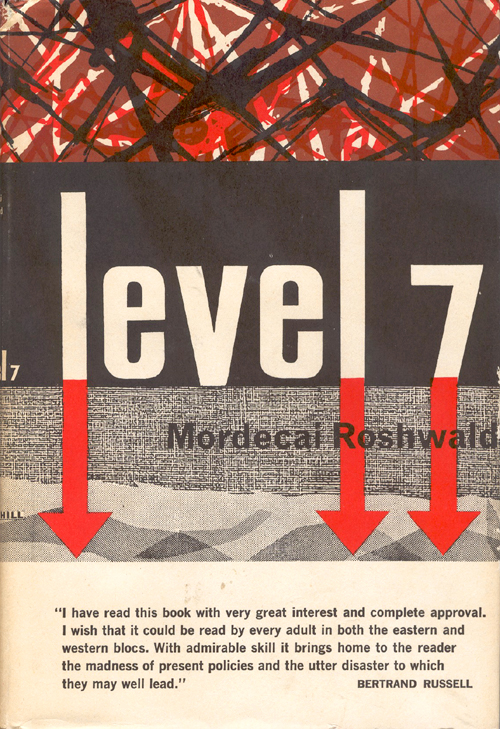
- Level 7
Mordecai Roshwaldstandalone novel1959
similar bynear futuretotalitarianismdystopiadarktensesurvival
Level 7 is a 1959 science fiction novel by American writer Mordecai Roshwald. It is told from the first-person perspective of a modern soldier, X-127, living in the underground military complex Level 7, where he and several hundred others are expected to reside permanently. X-127 fulfills the role of 'push-button' offensive initiator of his nation's nuclear weapons capacity against an unspecified enemy. X-127 narrates life within a deep shelter before, during and after a nuclear war that wipes out the human species.
- Shadow Children
series7 books1998
similar bynear futuretensetotalitarianismdystopiadarksurvival
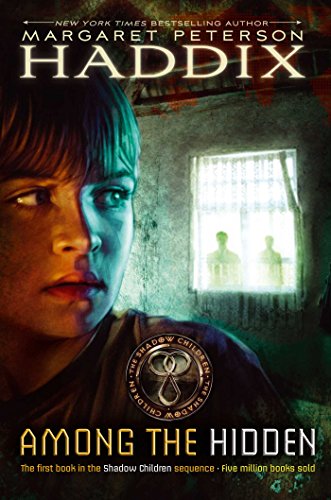
Shadow Children is a series of seven books by Margaret Peterson Haddix about a dystopian country which suffers food shortages due to a drought and the effects of the government's totalitarian attempts to control resources as a way to solidify its power. The Population Police enforce the government's Population Law, killing or imprisoning "shadow children," any child born after their first two siblings. In some cases, a parent may choose to forge a child's identification card so a shadow child can live a normal life.
- The Hopkins Manuscript
R. C. Sherriffstandalone novel1939
similar bybritish islesnear futuredystopiadarktensesurvival
The Hopkins Manuscript is a dystopian science fiction novel by R. C. Sherriff, first published in 1939 by Victor Gollancz. In 1958 it was reissued in a revised edition as a Pan paperback under the title The Cataclysm. The novel was later republished under its original title by The Macmillan Company in 1963 and by Persephone Books in 2002.
- House of Stairs
William Sleatorstandalone novel1974
similar bynear futuretensetotalitarianismdystopiadarksurvival
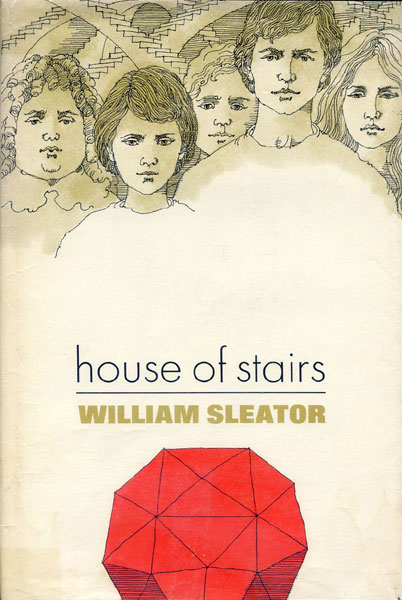
Publisher's description: "Five fifteen-year-old orphans of widely varying personality characteristics are involuntarily placed in a house of endless stairs as subjects for a psychological experiment on conditioned human response."
- Fatherland
Robert Harrisstandalone novel1992
similar bytensepolitical intriguetotalitarianismthriller & suspensedark+1 more
Twenty years after Nazi Germany won the Second World War, Berlin is preparing to celebrate Adolf Hitler's seventy-fifth birthday when detective Xavier March is called to investigate a body pulled from a lake, ostensibly an accident, but one that leads him to a string of suspiciously staged deaths among senior Nazi officials. Ordered off the case by the Gestapo but quietly told to keep going by his own superior, March teams up with an American journalist, Charlie Maguire, and starts following a trail toward Swiss bank accounts and a secret the regime has spent two decades burying. Robert Harris's alternate-history debut novel.
- The Hunger Games Universe
universe5 books2008
Start hereThe Hunger Games · Start here
similar bytotalitarianismtensedystopiadarksurvival+1 more
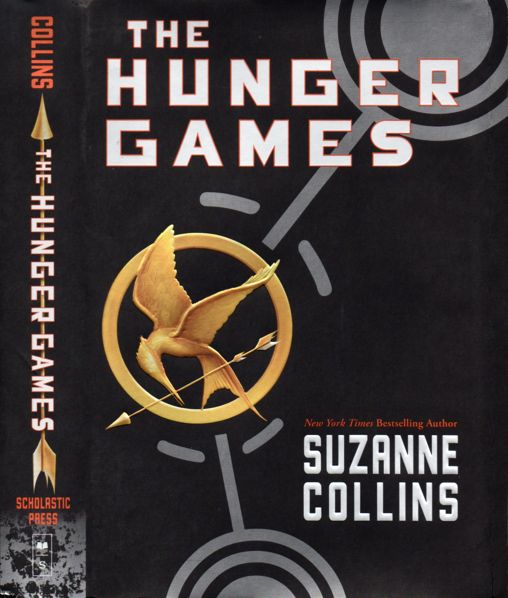
Panem, they call it now — a nation raised on the drowned bones of North America, a glittering Capitol ringed by twelve districts it once starved into obedience. Every year the Capitol collects its debt in children: two tributes from each district, drawn by lottery, dropped into an engineered arena, and made to kill one another on live television while the whole country is required to watch. This is the Hunger Games — entertainment, punishment, and government at once. Suzanne Collins tells it in a compact, unified body of work. The founding trilogy — The Hunger Games, Catching Fire, and Mockingjay — follows Katniss Everdeen, a girl from the coal-mining District 12 who volunteers in her sister's place and becomes something the Capitol never scripted. Two prequels reach back into the same machinery: The Ballad of Songbirds and Snakes traces a young Coriolanus Snow long before he is President, and Sunrise on the Reaping returns to District 12 a generation ahead of Katniss. Begin with the trilogy, in order — it is Katniss's voice, close and present-tense, that makes Panem breathe, and the prequels land hardest once you know how her story ends. Beneath the spectacle sits one steady, uncomfortable question: who profits when we agree to look away.
- Small Change
series4 books2006
similar bytensebritish islespolitical intriguetotalitarianismthriller & suspensedark
The Small Change trilogy is a series of alternate history thriller novels by the author Jo Walton that were published from 2006 to 2008. The series are set in a Europe in which the United Kingdom exits World War II in 1941. As the series begins, Britain itself slides toward fascism. The series has three books:Farthing Tor Books August 8, 2006, ISBN 0-7653-1421-5, ISBN 978-0-7653-1421-5 Ha'penny, Tor Books; Reprint edition July 1, 2008, ISBN 0-7653-5808-5, ISBN 978-0-7653-5808-0 Half a Crown, Tor Books; September 30, 2008, ISBN 0-7653-1621-8, ISBN 978-0-7653-1621-9
- Fugue for a Darkening Island
Christopher Prieststandalone novel1972
similar bybritish islesnear futuredystopiadarktense+2 more
Fugue for a Darkening Island is a dystopian novel by Christopher Priest. First published in 1972, it describes a man's struggle to protect his family and himself in a near-future England ravaged by civil war. The violence is brought about by a new far-right political party entering government, voted in to combat a massive influx of African refugees. Those refugees are aligned with the principal opposition faction, known as the Secessionists, leading to a multi-sided conflict.
- The Little Green Book of Chairman Rahma
Brian Herbertstandalone novel2014
similar bynear futurepolitical intriguetotalitarianismdystopiathriller & suspensedarktense
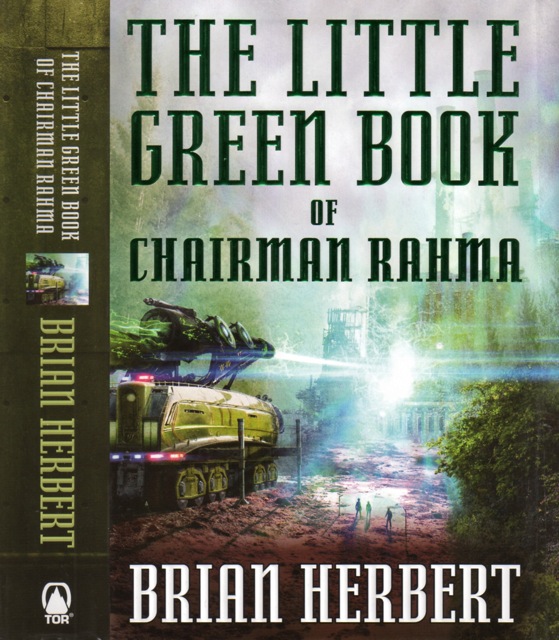
"A revolution has taken over the government of the United States and the environment has been saved. All pollution has been banned and reversed. It's a bright, green new world. But this new world comes with a great cost. The United States is ruled by a dictatorship and the corporations are fighting back. Joining them are an increasing number of rebels angered by the dictatorship of Chairman Rahma. The Chairman's power is absolute and appears strong, but in The Little Green Book of Chairman Rahma by Brian Herbert, cracks are beginning to show as new weapons are developed by the old corporate powers, foreign alliances begin to make inroads into America's influence. and strange reports of mutants filter through the government's censorship"-- After solving the environmental problems of the United States, dictator Chairman Rahma must fight off new weapons being deployed by the corporations and deal with unsettling reports of mutants.
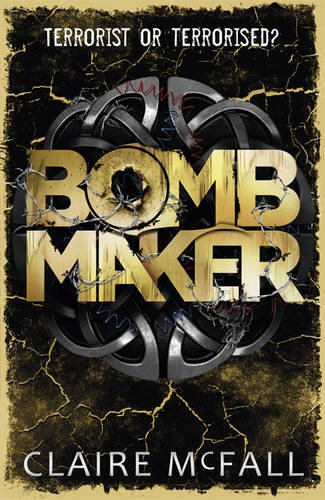
- Bombmaker
Claire McFallstandalone novel2014
similar bynear futurethriller & suspensetensebritish islesdystopiadarksurvival+1 more
The English government have closed the borders with their Celtic neighbours. Any Celt found in England is branded with a tattoo, found twice they are executed. Scottish Lizzie is the 'property' of psychopathic London gang boss Alexander. Can Lizzie escape Alexander's deadly grip and at what price her betrayal?
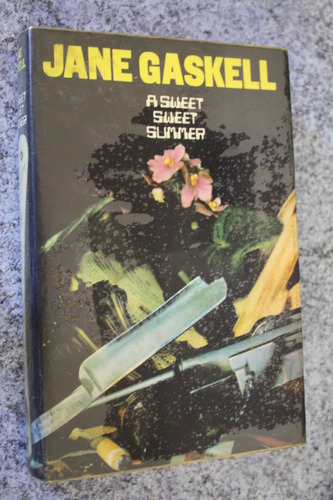
- A Sweet Sweet Summer
Jane Gaskellstandalone novel1969
similar bybritish islesnear futuretotalitarianismdystopiadarktensesurvival
Publisher: "Nobody was safe anymore. Huge ships from outer space hung over major British cities and took command by sending orders (disobeyed at risk of death) in strange bubbles. Anarchy is encouraged in an England totally isolated from everywhere else in the world, and the streets are battle fields for communist and fascist bands. Yet it is a summer of wildflowers on the railtracks when Pel's strange and wild cousin Frijja comes to stay and everyone has to battle against a mob of hoodlum fascists who try to take over the house. Jane Gaskell thus introduces a violent world in the not-so-distant future when Englishmen are forced to fight violent forces of darkness among their own people as well as super-powerful extraterrestrials in order to maintain a semblance of civilization."
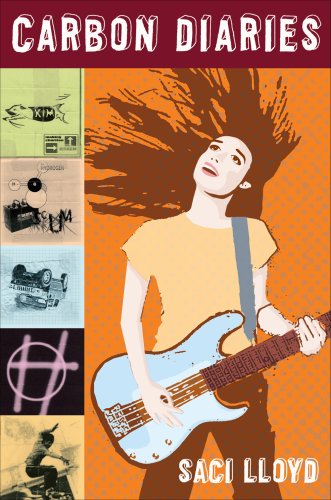
- The Carbon Diaries
series3 books2009
similar bybritish islesnear futuredystopiatensedarksurvival+1 more