More like 36
but
- Kairos
series11 books1962
completed
similar by+1 more
The Time Quintet is a science fantasy series of five young adult novels written by American author Madeleine L'Engle and made up of A Wrinkle in Time (1962), A Wind in the Door (1973), A Swiftly Tilting Planet (1978), Many Waters (1986), and An Acceptable Time (1989).
- Lord of the Flies
William Goldingstandalone novel1954
similar byliterary & generalour world
Lord of the Flies is the 1954 debut novel of British author William Golding. The plot concerns a group of prepubescent British boys who are stranded on an uninhabited island and their disastrous attempts to govern themselves that lead to a descent into savagery. The novel's themes include morality, leadership, and the tension between civility and chaos.
- After Such Knowledge
series7 books1953
completed
similar by+1 more
After Such Knowledge is James Blish's loosely linked trilogy on the costs of forbidden or dangerous knowledge. It opens with A Case of Conscience, in which a Jesuit scientist studying a seemingly sinless alien race is forced to weigh what he finds against his own faith, continues with the historical novel Doctor Mirabilis about the medieval friar and scientist Roger Bacon, and closes with the two-part Black Easter, in which a magician is hired to loose Hell's demons upon the world for a single day. The three books share a theme rather than a continuous plot or cast.
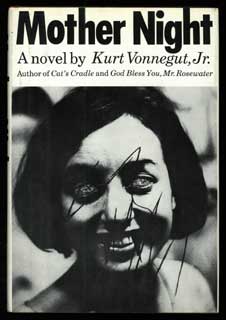
- Mother Night
Kurt Vonnegut & Jr.standalone novel1962
similar byliterary & generalour world
Howard W. Campbell Jr., an American playwright who grew up in Germany, writes his memoirs from an Israeli prison cell awaiting trial for war crimes. As the Nazis rose to power, Campbell stayed on, married a German actress, and was recruited by an American agent to serve as a double agent, broadcasting Nazi propaganda over the radio while secretly passing coded intelligence to the Allies. The catch, as Campbell tells it, is that he became one of the war's most effective propagandists in the process, whatever his loyalties. Kurt Vonnegut's darkest novel asks what a person becomes when the mask he wears for a cause is indistinguishable from his face.
- The Mouse That Roared
series6 books1955
completed
similar by+1 more
The Mouse That Roared launches Leonard Wibberley's satirical series about the tiny fictional Duchy of Grand Fenwick, a European microstate whose leaders declare war on the United States purely to lose quickly and collect the postwar reconstruction aid given to defeated nations. The 1955 novel uses Fenwick's mismatched ambitions to poke fun at Cold War politics and the nuclear arms race, and Wibberley kept the joke going across four more novels into the 1970s. Later entries send the duchy into further absurd confrontations with the wider world, including a race to the Moon and a scheme on Wall Street.
- Crash
J. G. Ballardstandalone novel1973
similar byliterary & generalour world
Crash is a novel by J. G. Ballard, first published in 1973 with a cover designed by Bill Botten. It follows a group of car-crash fetishists who, inspired by the famous crashes of celebrities, become sexually aroused by staging and participating in car accidents.
- VALIS
series4 books1981
completed
similar by+2 more
The VALIS trilogy is a set of science fiction/philosophical novels by author Philip K. Dick which include VALIS (1981), The Divine Invasion (1981), and The Transmigration of Timothy Archer (1982). Dick's first novel about the VALIS concept originally titled "VALISystem A", was published as Radio Free Albemuth after Dick's death in 1985.
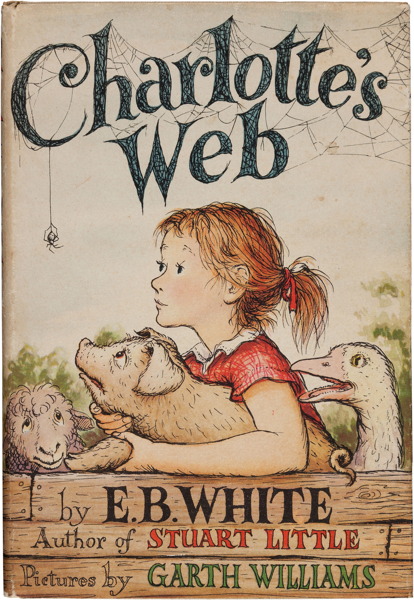
- Charlotte's Web
E. B. Whitestandalone novel1952
similar byliterary & general+1 more
When he discovers that he is destined to be someone's dinner, Wilbur the pig is desolate until his spider friend Charlotte decides to help him. (WorldCat)
- The Collected Science Fiction and Fantasy of Jack London
series6 books1906
completed
similar byour world
- Empire of the Sun
series2 books1984
completed
similar by+2 more
J. G. Ballard's Empire of the Sun draws on his own childhood to follow Jim, a British boy separated from his parents in Japanese-occupied Shanghai during World War II and interned in a civilian camp for the rest of the war. Ballard revisited the same period and a version of the same character years later in The Kindness of Women, a more explicitly fictionalized continuation into Jim's adult life. Empire of the Sun is the more directly autobiographical and better-known of the two.
- Kai Lung
series62 books1900
completed
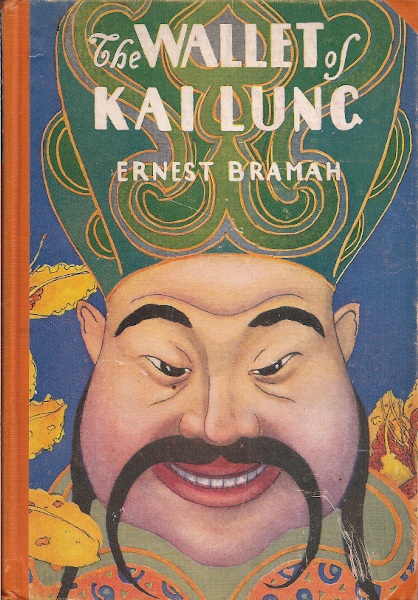
Kai Lung is a fictional character in a series of books by Ernest Bramah, consisting of The Wallet of Kai Lung (1900), Kai Lung's Golden Hours (1922), Kai Lung Unrolls His Mat (1928), The Moon of Much Gladness, Kai Lung Beneath the Mulberry Tree (1940), Kai Lung: Six (1974) and Kai Lung Raises His Voice (2010).
- Ice
Anna Kavanstandalone novel1967
similar byliterary & generalour world
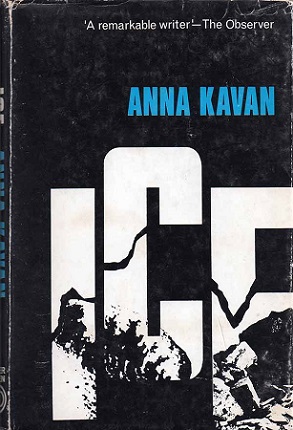
Ice is a novel by British writer Anna Kavan, published in 1967. Ice was Kavan's last work to be published before her death, the first to land her mainstream success, and remains her best-known work. Generally regarded as genre-defying, it has been labelled a work of science fiction, Nouveau roman, and slipstream fiction.
- Station Eleven
Emily St. John Mandelstandalone novel2014
similar byliterary & generalour world
"Set in the days of civilization's collapse, Station Eleven tells the story of a Hollywood star, his would-be savior, and a nomadic group of actors roaming the scattered outposts of the Great Lakes region, risking everything for art and humanity. One snowy night a famous Hollywood actor slumps over and dies onstage during a production of King Lear. Hours later, the world as we know it begins to dissolve. Moving back and forth in time — from the actor's early days as a film star to fifteen years in the future, when a theater troupe known as the Traveling Symphony roams the wasteland of what remains — this suspenseful, elegiac, spellbinding novel charts the strange twists of fate that connect five people: the actor, the man who tried to save him, the actor's first wife, his oldest friend, and a young actress with the Traveling Symphony, caught in the crosshairs of a dangerous self-proclaimed prophet." (source: Goodreads.com)
- Whileaway
series4 books1972
completed
similar by+2 more
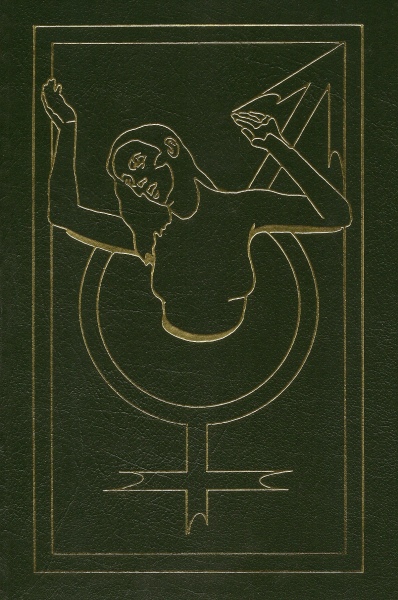
Joanna Russ's The Female Man (1975) is a single feminist science fiction novel, not a multi-book series, built around four women from parallel timelines with very different gender arrangements. One of them, Janet, comes from Whileaway, an all-female utopian Earth ten centuries in the future where men died out in a plague; the other three come from realities closer to Russ's own, and their collisions are used to interrogate what womanhood and equality could mean under different social rules.
- Pym
series5 books1838
similar by+2 more
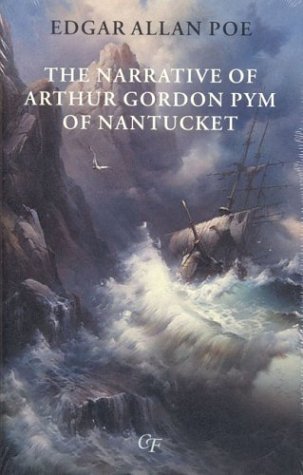
Edgar Allan Poe's The Narrative of Arthur Gordon Pym of Nantucket (1838), his only complete novel, sends a young stowaway through shipwreck, mutiny, and cannibalism toward an increasingly strange voyage to the South Pole that breaks off on a mysterious, unexplained image. Jules Verne wrote an unauthorized 1897 sequel, An Antarctic Mystery, resolving Poe's cliffhanger in more rationalist terms, while Mat Johnson's 2011 novel Pym uses Poe's original as the springboard for a satirical modern story about race.
- The Blue Ant Trilogy
series3 books2003
similar by+2 more
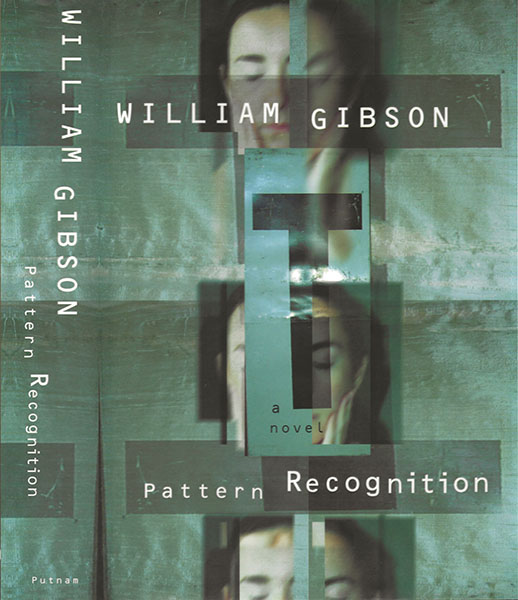
Hubertus Bigend is a fictional character appearing in the third trilogy of novels of science fiction and literary author William Gibson. Bigend is the antihero of Gibson's Pattern Recognition (2003), Spook Country (2007) and Zero History (2010). In an interview Gibson says "I've always had a sense of Bigend as someone who presents himself as though he knows what's going on, but who in fact doesn't. It's just my sense of the subtext of the character: he's bullshitting himself, at the same time as he's bullshitting all of us."
- Cloud Atlas
David Mitchellstandalone novel2004
similar byliterary & generalour world
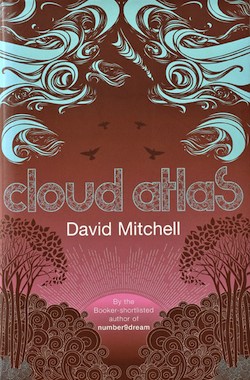
Cloud Atlas, published in 2004, is the third novel by British author David Mitchell. The book combines metafiction, historical fiction, contemporary fiction and science fiction, with interconnected nested stories in different writing styles that take the reader from the remote South Pacific in the 19th century to the island of Hawaii in a distant post-apocalyptic future. Its title references a piece of music by Toshi Ichiyanagi.
- Never Let Me Go
Kazuo Ishigurostandalone novel2005
similar byliterary & generalour world
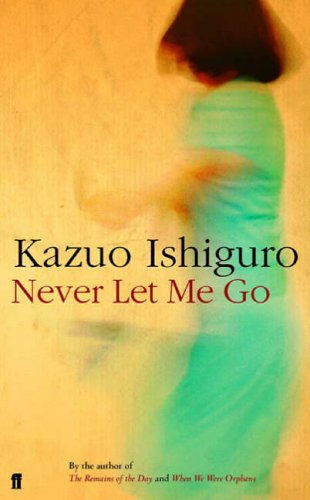
Never Let Me Go is a 2005 science fiction novel by the British author Kazuo Ishiguro. It was shortlisted for the 2005 Man Booker Prize, for the 2006 Arthur C. Clarke Award and the 2005 National Book Critics Circle Award. Time magazine named it the best novel of 2005. It included the novel in its '100 Best English-language novels published since 1923—the beginning of TIME'. It also received an ALA Alex Award in 2006. A film adaptation directed by Mark Romanek was released in 2010.
- The Edible Woman
Margaret Atwoodstandalone novel1969
similar byliterary & generalour world
The Edible Woman is the first published novel by Canadian writer Margaret Atwood, published in 1969. It is the story of a young woman, Marian, whose sane, structured, consumer-oriented world starts to slip out of focus. Following her engagement, Marian feels her body and her self are becoming separated. Marian begins endowing food with human qualities that cause her to identify with it, and finds herself unable to eat, repelled by metaphorical cannibalism. In a foreword written in 1979 for the Virago edition of the novel, Atwood described it as a protofeminist rather than feminist work.
- High-Rise
J. G. Ballardstandalone novel1975
similar byliterary & generalour world
High-Rise is a 1975 novel by British writer J. G. Ballard. The story describes the disintegration of a luxury high-rise building as its affluent residents gradually descend into violent chaos. As with Ballard's previous novels Crash (1973) and Concrete Island (1974), High-Rise inquires into the ways in which modern social and technological landscapes could alter the human psyche in provocative and hitherto unexplored ways. It was adapted into a film of the same name, in 2015, by director Ben Wheatley.
- Messiah
Gore Vidalstandalone novel1954
similar byliterary & generalour world
Messiah is a satirical novel by Gore Vidal, first published in 1954 in the United States by E.P. Dutton. It is the story of the creation of a new religion, Cavism, which quickly comes to replace the established but failing Christian religion.