Loreful
HomeDiscover
Search series, authors…⌘K
Loreful

Reading orders for SF/F series and shared universes — with your place kept in every one.

Explore

UniversesSeriesWorksAuthorsAtlas

Help

FAQAboutSite map

Account & legal

Sign inCreate accountPrivacyTerms

Data

Built on ISFDB, Wikipedia, Wikidata and Open Library. Curated reading orders carry their reasoning on the page; the rest follow publication order. Data sources & licenses

© Loreful · data: ISFDB · CC BY

More like 6 +

anchored on:science fiction

but

Mood

The mood the book leaves you in.

  • The reading experience is propelled by journeys, exploration, and physical risk; excitement and forward momentum dominate over dread or introspection.
  • Joy and loss are deliberately mixed; the resolution grants characters something real while taking something else away, leaving warmth and sorrow together.
  • The book demands work from the reader — dense prose, difficult structure, unfamiliar ideas, or morally uncomfortable material — as part of its intended effect.
  • Grim events, cruelty, or despair dominate the atmosphere, and the book does not soften them with comfort or comic relief.
  • The atmosphere is quietly unsettling — wrongness, unease, and the uncanny pervade the book without necessarily escalating into overt horror.
  • The book is built to move the reader; character feeling is foregrounded and major scenes aim at a strong emotional response.
  • Humor is a primary aim and the prose plays for laughs — comic situations, wit, or dialogue produce sustained comedy, not occasional levity.
  • The book insists that things can improve; effort and decency are shown to matter, and the arc bends toward better outcomes even through hardship.
  • The book teaches as it goes — real facts, history, science, or craft are conveyed in enough depth that learning is part of the reading experience.
  • The book is designed to uplift and motivate, presenting perseverance or achievement in a way that invites the reader to aspire or act.
  • The overall register is cheerful and easygoing; stakes are kept gentle and the book avoids dwelling on pain or dread.
  • Withheld information drives the experience; the book sustains enigmas and secrets the reader wants resolved, whatever its genre.
  • The book is contemplative and inward-looking, giving more weight to thought, memory, and meaning than to external events.
  • The book works as comfort reading — low tension, a soothing pace, and an atmosphere the reader can unwind in.
  • Grief, loss, or melancholy set the dominant register, and the book lets sorrow stand rather than resolving it into comfort.
  • Sustained suspense is the point; the book keeps the reader braced for what happens next through danger, pressure, or impending revelation.
  • Playful invention and charm define the register — fanciful conceits, light absurdity, and a narration that delights in its own oddity.

About

What the story runs on.

  • Stories in which extraterrestrial beings are central — as characters, cultures, or the object of the plot.
  • Stories about venturing into space to explore — survey missions, astronauts, and the frontier of the unknown beyond Earth.
  • Stories about minds with paranormal abilities — telepathy, telekinesis, precognition, empathy — and how societies handle those who have them.
  • Stories structured as a quest — a journey undertaken to find, deliver, or destroy something of great import.
  • Stories in which staying alive against nature, catastrophe, or scarcity is the central problem.
  • Stories of growing up — a young protagonist crossing from childhood into adult knowledge and responsibility.
  • Stories about who a character truly is — self-discovery, doubled lives, and the search for a self.
  • Stories in which a buried family truth — hidden parentage, crimes, or shames — surfaces and reorders the present.
  • Stories driven by maneuvering for power — factions, conspiracies, and statecraft conducted in shadow.
  • Stories about rising against rulers — uprisings, resistance movements, and revolutions and their aftermaths.
  • Stories in which war itself is the subject — combat, occupation, and what warfare does to soldiers and civilians.
  • Stories organized around investigating a killing — the case, the clues, and the pursuit of the killer, in any genre's clothing.

Shelf

Where it sits in the library.

    • Fiction built on magic or other supernatural elements that have no scientific explanation.
    • Secondary-world fantasy at large scale, where the fate of nations or the world turns on the protagonists' struggle.
    • Fantasy set in a recognizably modern city or contemporary world where the supernatural intrudes on everyday life.
    • Fantasy that blends in horror's atmosphere and imagery, keeping a fantastical frame around grim or frightening material.
    • Action-driven fantasy following warriors or rogues with personal stakes against sorcerous threats, rather than world-spanning conflicts.
    • Fantasy set in a real historical period or a close analogue of one, with magic woven into the era.
    • Fantasy in which protagonists cross from the ordinary world into another world through a portal or similar passage.
    • Fiction that retells or reworks a traditional fairy tale in a new form or setting.
    • Fantasy drawing directly on myths, legends, and folklore, retelling them or building on their figures and logic.
    • Fantasy of ghosts, vampires, shapeshifters, psychics, and similar phenomena, usually set in an otherwise ordinary world.
    • Fiction mixing science-fictional trappings with overtly magical or impossible elements in one setting.
    • Low-stakes fantasy emphasizing comfort, community, and everyday pleasures over conflict and peril.
    • Speculative fiction of pervasive moral ambiguity, violence, and cynicism that rejects heroic conventions — fantasy and SF alike.
      • Fiction that extrapolates from science and technology — future societies, space travel, or speculative inventions — within at least nominally natural laws.
      • Science fiction of interstellar scope — starships, galactic polities, and adventure across star systems.
      • Science fiction committed to scientific rigor, where technical plausibility constrains the story.
      • Science fiction centered on armed forces and warfare, told largely from a military point of view.
      • Science fiction of networked, corporate-dominated near futures, pairing high technology with social decay.
      • Science fiction styled on nineteenth-century steam-powered technology, often in a Victorian or pseudo-Victorian setting.
      • Fiction depicting an oppressive or catastrophic society, presented as a warning.
      • Fiction set after civilization's collapse, following survivors in the ruins of the old world.
      • Fiction in which characters move between past and future, and the mechanics or consequences of that travel drive the plot.
      • Fiction exploring a world where a historical event went differently and history diverged from ours.
      • Science fiction about humanity's first encounter and communication with an alien intelligence.
      • Science fiction in which extraterrestrial forces attack or occupy Earth and humanity resists.
      • Fiction whose primary aim is to frighten or unsettle the reader through dread, menace, or the monstrous.
      • Horror of vast, indifferent, incomprehensible entities before which humanity is insignificant, in the Lovecraft tradition.
      • Horror of decaying houses, buried family secrets, and oppressive atmosphere in the Gothic literary tradition.
      • Horror centered on hauntings and the returning dead.
      • Horror located in the mind — paranoia, obsession, and unreliable perception rather than external monsters.
      • Horror built around the reanimated dead and survival amid their outbreaks.
      • Horror defined by explicit, transgressive gore that refuses to cut away from violence.
      • Speculative fiction of the strange and uncanny that resists both natural explanation and standard genre categories.
      • Fiction organized around solving a crime or puzzle, typically following an investigator toward the identification of a culprit.
      • A puzzle-first mystery that lays out clues so the culprit's identity can be deduced before the reveal.
      • Crime fiction of moral ambiguity, fatalism, and hard-edged style, set among the corrupt and the doomed.
      • A mystery following the realistic routines of police work — forensics, interviews, and case-building.
      • A gentle mystery with an amateur sleuth, a small community, and violence kept off the page.
      • A mystery set in a past era, where the investigation works within that period's methods and society.
      • Fast-paced fiction driven by imminent danger, pursuit, or high-stakes conspiracy, built to sustain tension.
      • A thriller of espionage — agents, tradecraft, and intelligence services in conflict.
      • A thriller centered on lawyers and the courtroom, where litigation carries the suspense.
      • A thriller driven by detailed contemporary or near-future technology, often military or scientific.
      • A thriller whose tension comes from mental states and manipulation between characters rather than external action.
      • Fiction whose central plot is a romantic relationship and its development toward an emotionally satisfying resolution.
      • Romance in which one or both partners are supernatural beings, blending fantasy elements into the love story.
      • A fantasy-romance hybrid in which the romantic arc and the fantasy plot carry equal weight.
      • Romance set in a past era, with courtship shaped by the period's society and manners.
      • Romance set in the present day, without supernatural or historical elements.
      • Fiction set in a real past period, where the historical setting materially shapes characters and events.
        • General and literary fiction emphasizing prose style, character interiority, or formal ambition over genre plot conventions.
        • Fiction in a realistic world where magical events occur and are treated as ordinary, in the tradition of Latin American literature.
        • Fiction that ridicules people, institutions, or society in order to criticize them.
        • Fiction of dreamlike, irrational imagery and logic that breaks from realistic representation.
        • Fiction that plays with narrative convention through metafiction, fragmentation, and self-reference.
        • Fiction propelled by journeys, exploration, and physical peril, where action and survival carry the plot.
        • Adventure fiction of ships and seafaring — naval engagements, voyages, and life at sea.
        • Fiction of the American frontier West — gunmen, ranchers, and lawmen, typically in the late nineteenth century.
        • Fiction centered on soldiers, campaigns, and the experience of warfare, historical or imagined.
          • Fiction written primarily to amuse, using comedic situations, wit, or parody as its organizing principle.
            • Multi-generational fiction following a family or dynasty across decades, with inheritance and kinship as the through-line.
              • Fiction whose world runs on explicit game mechanics — levels, stats, and skills that characters can see and exploit.
                • Fiction about costumed or superpowered heroes and their conflicts with comparable villains.

                Practical

                How long a commitment, whether it stands alone, and whether it has finished.

                Tap a chip to ask for it · tap again to rule it out · once more to clear. Numbers show what would be left.

                • Cover of Library of America P. K. Dick Collection
                  Library of America P. K. Dick Collection

                  series · 9 books · 1962

                  completed

                  similar byscience fiction

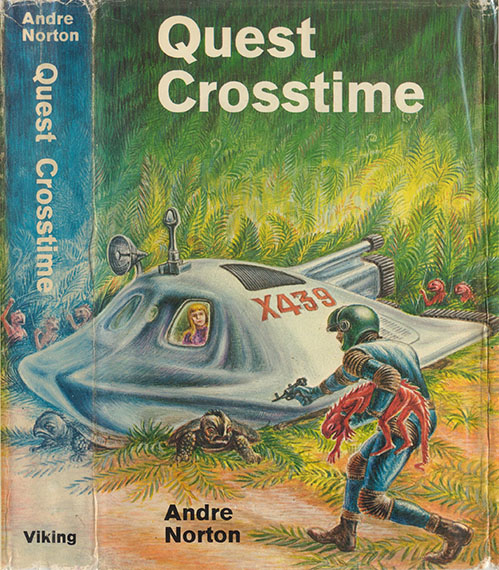
                • Cover of Blake Walker / Crosstime
                  Blake Walker / Crosstime

                  series · 2 books · 1956

                  completed

                  similar byscience fictionalternate earth+2 more

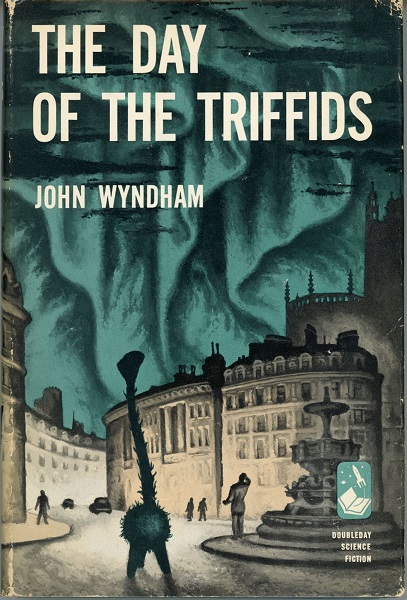
                • Cover of The Triffids
                  The Triffids

                  series · 3 books · 1951

                  similar byscience fiction+2 more

                  John Wyndham's The Day of the Triffids (1951) opens with a meteor-shower-like event that leaves most of Britain's population blind, throwing civilization into collapse just as triffids, an aggressive and mobile species of poisonous plant, become free to hunt the helpless survivors. Simon Clark's authorized sequel The Night of the Triffids (2001) picks up a generation later, narrated by the original protagonist's son as he confronts a new triffid-dominated world, and John Whitbourn's The Age of the Triffids extends the shared setting further still. Together the three novels form a loose post-apocalyptic trilogy built on Wyndham's original premise rather than a tightly plotted single story.

                • Cover of Paratime Police
                  Paratime Police

                  series · 33 books · 1948

                  similar byscience fictionalternate history+1 more

                  The Paratime series written by H. Beam Piper and subsequently by John F. Carr consists of several short stories, one novella, and one novel, all but one of which were originally published in Astounding Science Fiction under the editorship of John W. Campbell. The series deals with an advanced civilization that is able to travel between parallel universes with alternate histories, and uses that ability to trade for goods and services that its own, exhausted Earth cannot provide. The protagonists of the stories are the Paratime Police, the organization that protects the secret of paratime travel.

                • Cover of Alas, Babylon
                  Alas, Babylon

                  Pat Frank · standalone novel · 1959

                  similar bytensescience fictionmid 20th century+1 more

                  Classic novel of nuclear war and aftermath in rural Florida. From the back cover of a Bantam Pathfinder edition: "The day that the bomb dropped the thousands of years of "progress" that had covered the treacheries and weaknesses of ordinary man with a thin veneer of civilization were dissolved and melted like snow on the desert's dusty face. Then - the law of the jungle reigned but in the wreckage a few courageous survivors, men and women with the guts to have hope, were determined to build a new and better world on the ruins of the old. This is their story."

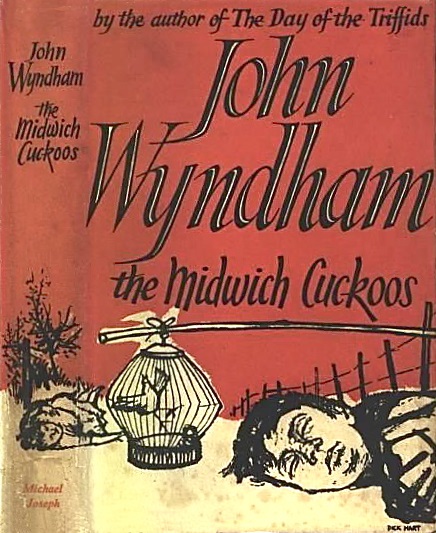
                • Cover of The Midwich Cuckoos
                  The Midwich Cuckoos

                  John Wyndham · standalone novel · 1957

                  similar bytensescience fictionmid 20th century

                  The Midwich Cuckoos is a 1957 science fiction novel written by the English author John Wyndham. It tells the tale of an English village in which the women become pregnant by brood parasitic aliens. The book has been praised by many critics, including the dramatist Dan Rebellato, who called it "a searching novel of moral ambiguities", and the novelist Margaret Atwood, who called the book Wyndham's "chef d'œuvre". The book has been adapted for film, radio, and television.

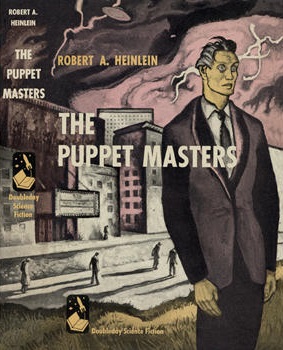
                • Cover of The Puppet Masters
                  The Puppet Masters

                  Robert A. Heinlein · standalone novel · 1951

                  similar bytensescience fictionmid 20th century

                  Parasitical aliens attach themselves to human hosts and take over their bodies. Two spies are sent to find out what's happening, but the extent is much farther than they knew. With access to the humans' memories, the aliens quietly invade the government and start taking over.

                • Cover of H. G. Wells' War of the Worlds
                  H. G. Wells' War of the Worlds

                  universe · 65 books · 1898

                  Start hereThe War of the Worlds · Start here

                  similar byscience fiction+2 more

                  No one would have believed, in the closing years of the nineteenth century, that human affairs were being watched keenly and closely from the timeless worlds of space. And then the cylinders fell. H. G. Wells' War of the Worlds opens in the quiet of the Surrey commons, where a falling star proves to be the first Martian craft — and from the pit rise the towering tripods, the Heat-Ray, the choking Black Smoke and the creeping red weed, wielded by minds that regard mankind much as we regard the creatures we boil for supper. This is invasion rendered as natural disaster: cold, methodical, and vast beyond argument. Wells' 1898 novel is the seed; everything else grows from that Martian soil. The catalogue gathers direct sequels and continuations alongside a wide field of other hands. In War of the Worlds: Global Dispatches the invasion is retold across the whole planet through the eyes of Twain, Verne, Tolstoy, Lowell and Kipling; in the Manly Wade and Wade Wellman crossover, Sherlock Holmes, Watson and Professor Challenger take the field against the machines; and Scott Washburn's Great Martian War stretches the fighting into a decades-long alternate history of steam, artillery and grinding attrition. It is a loose shared world — no single decreed sequence, many voices answering one calamity. What sets this world apart is its refusal of heroics: the invaders fall not to generals but to the smallest things of Earth, humbling and indifferent. Begin, always, with Wells' original novel — it is short, and it is the ground every later book stands upon. From there follow your appetite: Global Dispatches for the panorama, the Holmes campaign for adventure, Washburn for the long war.

                • Cover of Crosstime Traffic
                  Crosstime Traffic

                  series · 6 books · 2003

                  similar byscience fictionalternate earthalternate history+1 more

                  Harry Turtledove's Crosstime Traffic novels are set on an Earth that has discovered travel to alternate timelines where history unfolded differently, exploited commercially by the monopoly company that gives the series its name. Aimed at young-adult readers, the loosely connected books -- including Gunpowder Empire, Curious Notions, and The Disunited States of America -- each send a young protagonist into a different divergent world.

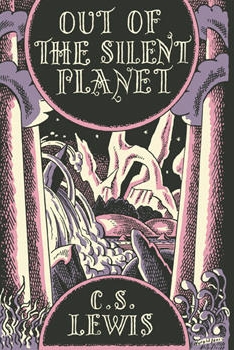
                • Cover of Cosmic Trilogy (C. S. Lewis)
                  Cosmic Trilogy (C. S. Lewis)

                  series · 4 books · 1938

                  completed

                  similar byscience fiction+2 more

                  The Space Trilogy is a series of science fiction novels by British writer C. S. Lewis. The trilogy consists of Out of the Silent Planet (1938), Perelandra (1943), and That Hideous Strength (1945). A philologist named Elwin Ransom is the protagonist of the first two novels and an important character in the third.

                • Cover of Draka (S. M. Stirling)
                  Draka (S. M. Stirling)

                  series · 6 books · 1988

                  similar byscience fictionalternate earthalternate history+1 more

                  The Domination of the Draka is a dystopian science fiction alternate history series by American author S. M. Stirling.

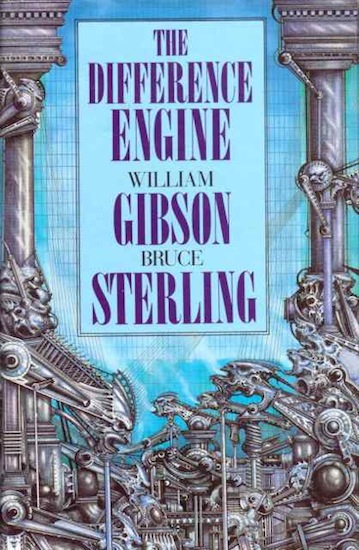
                • Cover of The Difference Engine
                  The Difference Engine

                  William Gibson & Bruce Sterling · standalone novel · 1990

                  similar byscience fictionalternate earthalternate history+1 more

                  The computer age arrives a century early with Babbage's perfection of his 'analytical engine'. The industrial revolution is accelerated by the development of steam-driven cybernetic 'Engines'. An advanced Great Britain prepares to better the world's lot. An example of the 'steampunk' sub-genre of the cyberpunk movement.

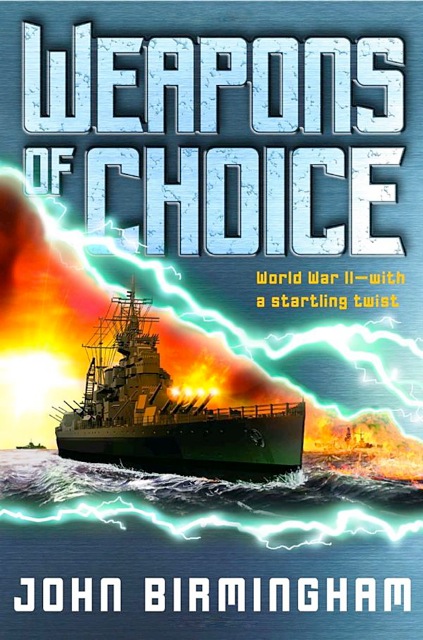
                • Cover of Axis of Time
                  Axis of Time

                  series · 7 books · 2004

                  similar bytensemid 20th centuryscience fictionalternate history+1 more

                  The Axis of Time trilogy is an alternative history series of novels written by Australian journalist and author John Birmingham, from Macmillan Publishing.

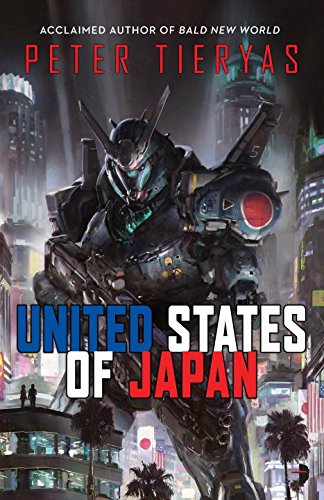
                • Cover of United States of Japan
                  United States of Japan

                  series · 3 books · 2016

                  similar byscience fictionalternate earthalternate history+2 more

                • Cover of Small Change
                  Small Change

                  series · 4 books · 2006

                  similar bytensealternate earthmid 20th centuryscience fictionalternate history

                  The Small Change trilogy is a series of alternate history thriller novels by the author Jo Walton that were published from 2006 to 2008. The series are set in a Europe in which the United Kingdom exits World War II in 1941. As the series begins, Britain itself slides toward fascism. The series has three books:Farthing Tor Books August 8, 2006, ISBN 0-7653-1421-5, ISBN 978-0-7653-1421-5 Ha'penny, Tor Books; Reprint edition July 1, 2008, ISBN 0-7653-5808-5, ISBN 978-0-7653-5808-0 Half a Crown, Tor Books; September 30, 2008, ISBN 0-7653-1621-8, ISBN 978-0-7653-1621-9

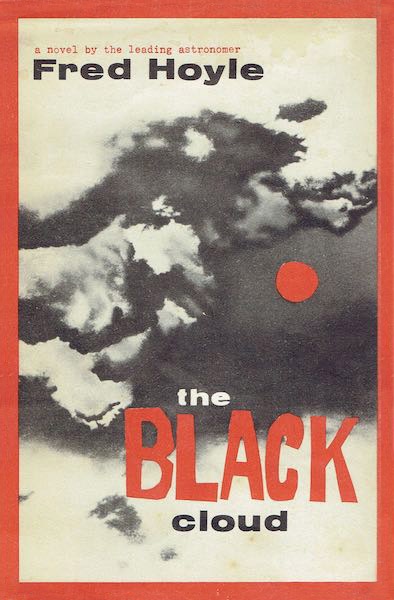
                • Cover of The Black Cloud
                  The Black Cloud

                  Fred Hoyle · standalone novel · 1957

                  similar bytensescience fictionmid 20th century

                  The Black Cloud is a 1957 science fiction novel by British astrophysicist Fred Hoyle. It details the arrival of an enormous cloud of gas that enters the Solar System and appears about to destroy most of the life on Earth by blocking the Sun's radiation.

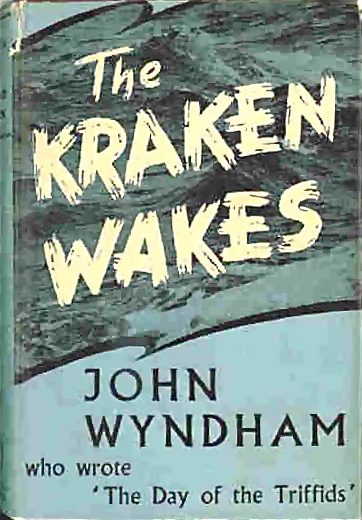
                • Cover of The Kraken Wakes
                  The Kraken Wakes

                  John Wyndham · standalone novel · 1953

                  similar bytensescience fictionmid 20th century

                  " Behind a spectacular meteor shower actually hides the beginning of an invasion by a mysterious and powerful alien race. Earth's life is disrupted by the attacks of extraterrestrials whose war machines, emerging from the depths of the oceans, seem indestructible. The coalitioned forces of the whole world are worthless, powerless in the face of the indecipherable and deadly plans of a superior intelligence, capable of bringing the entire planet to the brink of catastrophe" Goodreads May 20, 2022

                • Cover of Time Traders
                  Time Traders

                  series · 7 books · 1958

                  similar byscience fiction+1 more

                  The Time Traders opens Andre Norton's Cold War-flavored science fiction series, following an American agent recruited to travel into the past and counter a Soviet operation built around ancient technology unearthed from a vanished civilization. Norton, later joined by collaborators Sherwood Smith and P. M. Griffin, expanded the sequence to seven novels published between 1958 and 2002, and revised the opening book herself in 2000. Like several of Norton's other series, it treats leftover technology from a long-gone ancient culture as its central plot engine.

                • Cover of Trouble with Lichen
                  Trouble with Lichen

                  John Wyndham · standalone novel · 1960

                  similar byscience fictionmid 20th century+1 more

                  Biochemists Diana Brackley and Francis Saxover, working independently, both isolate a compound from a rare lichen that appears to dramatically slow the aging process. Francis quietly doses himself and his family and says nothing; Diana takes the opposite approach, opening exclusive beauty spas as cover to give the drug to well-connected women across Britain, reasoning that if longevity becomes known before women have a foothold, men will simply monopolize it as they have everything else. The secret can only hold so long, and the novel's tension builds toward the moment it gets out. A quietly subversive social science-fiction novel from John Wyndham.

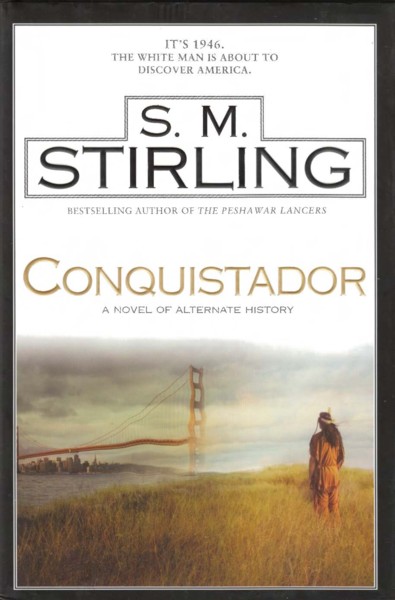
                • Cover of Conquistador
                  Conquistador

                  S. M. Stirling · standalone novel · 2003

                  similar bytensescience fictionalternate earthmid 20th centuryalternate history

                  From the dust jacket flaps of the first edition: Oakland, California, 1946. Ex-soldier John Rolfe, newly back from the Pacific, is about to make a fabulous discovery. It happens with a flip of his shortwave radio switch, a thunder crack of sound, and a blinding light. He blinks his eyes to discover a portal to an alternate world where Europeans have never set foot on the land he knows as America. Able to return a will to the modern world, Rolfe summons the only people with whom he is willing to share his discovery: his war buddies. And tells them to bring their families... What mistakes would you repeat? Los Angeles, twenty-first century. Fish and Game warden Tom Christiansen is involved in the bust of a smuggling operation. What he turns up is something he never anticipated: a photo of authentic Aztec priests decked out in Grateful Dead T-shirts, and a live condor from a gene pool that doesn't correspond to any know in captivity or the wild. These finds soon lead to a woman named Adrienne Rolfe - and a secret that's been hidden for sixty years. As danger brews on both sides, two realities are threatened, and so to are the lives of everyone who crosses the boundary between them...

                • Cover of Fantastic Voyage
                  Fantastic Voyage

                  series · 2 books · 1966

                  completed

                  similar byscience fiction+2 more

                  Fantastic Voyage (1966) is Isaac Asimov's novelization of the film about a submarine crew shrunk to microscopic size and injected into an injured scientist's body to repair damage from the inside. Asimov returned to the same premise of medical miniaturization in the unrelated 1987 novel Fantastic Voyage II: Destination Brain, which follows a different cast and plot rather than continuing the first book's story.

                • Cover of Destiny Times Three
                  Destiny Times Three

                  Fritz Leiber · standalone novel · 1945

                  similar bytensescience fictionalternate earthmid 20th centuryalternate history

                  Destiny Times Three is an alternate timeline 1945 science fiction novel by American writer Fritz Leiber. It first appeared in Astounding Science Fiction in March and April 1945. In 1952 it featured in Five Science Fiction Novels published by Gnome Press. Its first appearance as a standalone novel came in 1957 when published by Galaxy Science Fiction Novels.

                • Cover of NASA Trilogy
                  NASA Trilogy

                  series · 4 books · 1996

                  similar bytensescience fictionalternate history+1 more

                  The NASA Trilogy consists of three hard science fiction novels written by British science fiction author Stephen Baxter. They were published from 1996 to 1998. These books explore the possibilities of the American space program if the circumstances had been different. They have generally darker tones than his other books and are critical of NASA. They consist of:

                • Cover of Eden (Harry Harrison)
                  Eden (Harry Harrison)

                  series · 5 books · 1984

                  completed

                  similar byscience fictionalternate earthalternate history+1 more

                  Harry Harrison's Eden trilogy imagines an Earth where the dinosaurs never died out, evolving instead into the Yilane, a technologically advanced reptilian civilization that shares the planet uneasily with early humans. West of Eden (1984) introduces the clash between the two species; Winter in Eden and Return to Eden carry it forward as a shifting climate forces both sides to adapt or die. It's an alternate-evolution saga more than a conventional dinosaur adventure.