More like 99 Code Red!
anchored on:science fictiondystopiabig city
but
- A Clockwork Orange
series4 books1962
completed
similar bytotalitarianismdarknear futurescience fictionbig citydystopia
Anthony Burgess's 1962 novel is narrated by Alex, a teenage gang leader in a near-future Britain gripped by a youth subculture of extreme violence, recounting his crimes in Nadsat, an invented slang blending English with Russian-derived words. After his crimes catch up with him, Alex is made the subject of a controversial state program meant to forcibly reform his behavior, and the novel uses his ordeal to question whether imposed goodness is worth the loss of free will. It is a standalone novel.
- The Sheep Look Up
John Brunnerstandalone novel1972
similar bydarkbig citynear futurescience fictiondystopia+2 more
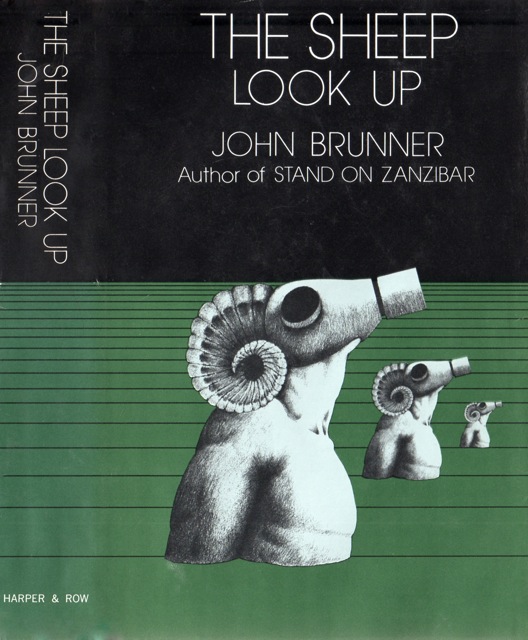
The Sheep Look Up is a 1972 dystopian science fiction novel by British author John Brunner, dealing with the deterioration of the environment in the United States. It was nominated for the 1972 Nebula Award for Best Novel.
- Stand on Zanzibar
John Brunnerstandalone novel1968
similar bydarkbig citynear futurescience fictiondystopia+1 more
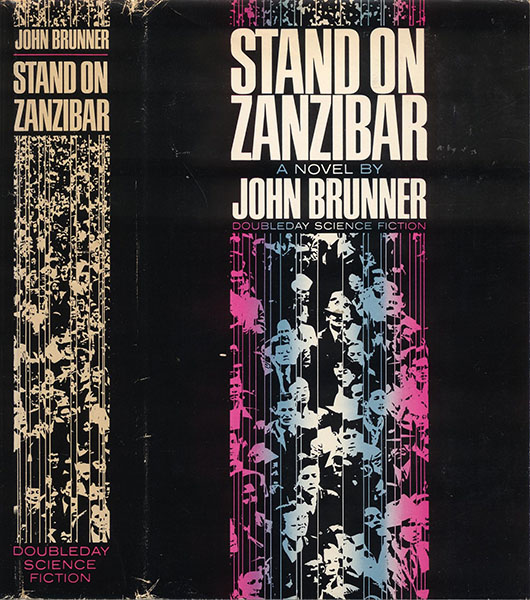
Stand on Zanzibar is a dystopian New Wave science fiction novel written by John Brunner and first in part published in New Worlds magazine in 1967 and in book form in 1968. The book won a Hugo Award for Best Novel at the 27th World Science Fiction Convention in 1969, as well as the 1969 BSFA Award and the 1973 Prix Tour-Apollo Award.
- Fahrenheit 451
series2 books1951
completed
similar bytotalitarianismnear futurescience fictiondystopia+1 more
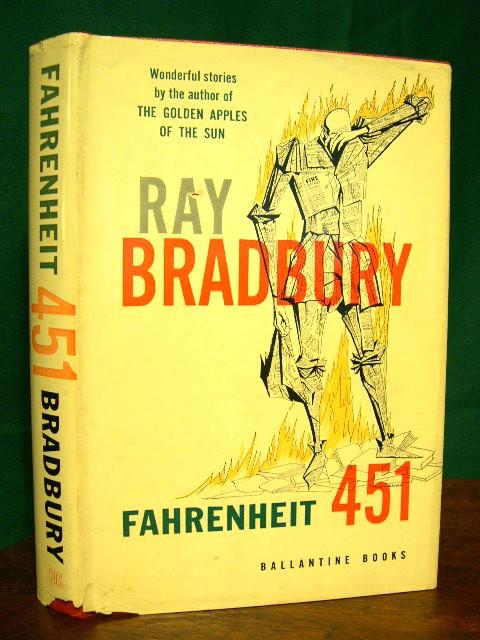
Fahrenheit 451 began life as "The Fireman," a novella Ray Bradbury published in 1951, which he then expanded into the full novel released in 1953 under its now-famous title. Set in a future where books are outlawed and firemen exist to burn them, it follows fireman Guy Montag as doubts about his job push him toward the very literature he's supposed to destroy. The novella and novel are one story's evolution rather than two separate books.
- The Shockwave Rider
John Brunnerstandalone novel1975
similar bytotalitarianismdarkbig citynear futurescience fictiondystopiatense
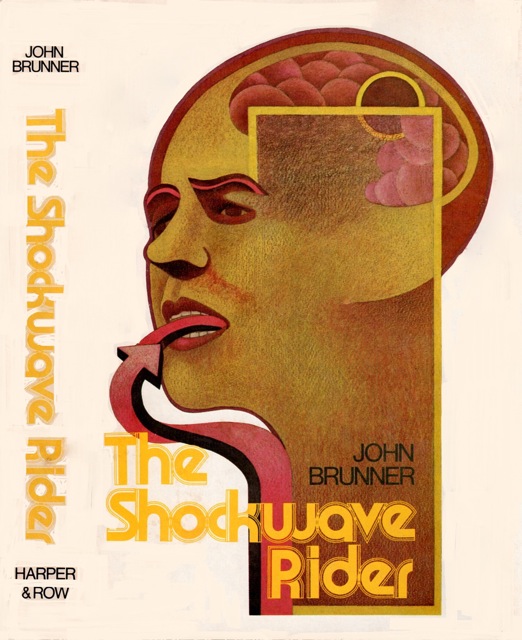
The Shockwave Rider is a science fiction novel by John Brunner, originally published in 1975. It is notable for its hero's use of computer hacking skills to escape pursuit in a dystopian future, and for the coining of the word "worm" to describe a program that propagates itself through a computer network. It also introduces the concept of a Delphi pool, perhaps derived from the RAND Corporation's Delphi method – a prediction market on world events which bears close resemblance to DARPA's controversial and cancelled Policy Analysis Market.
- Nineteen Eighty-Four
series4 books1949
similar bydystopia+4 more
Nineteen Eighty-Four (1949) is George Orwell's novel of a totalitarian future Britain kept under constant surveillance and thought control, following Winston Smith's doomed attempt at a private rebellion against the ruling Party. Sandra Newman's Julia (2023), written with the Orwell estate's authorization, retells the same events from the point of view of Winston's lover Julia, filling in a life and set of motives the original largely left offstage.
- Library of America P. K. Dick Collection
series9 books1962
completed
similar bynear futurescience fiction+2 more
- The Handmaid's Tale
series3 books1985
similar bytotalitarianismdarknear futurescience fictiondystopiatense
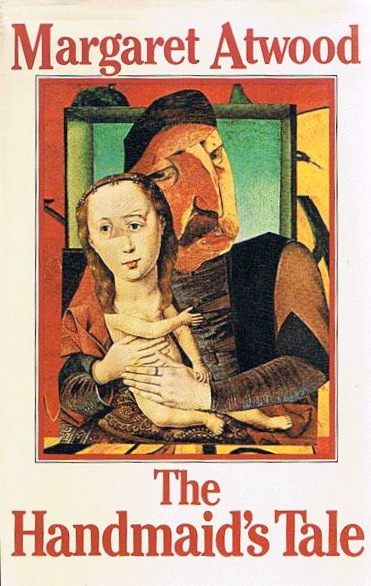
The Handmaid's Tale is Margaret Atwood's 1985 novel set in Gilead, a totalitarian theocracy that has overthrown the United States and forces fertile women into reproductive servitude as Handmaids; it is narrated by one such woman, Offred. Atwood returned to the world in her 2019 sequel The Testaments, set fifteen years later and narrated by three women, including the regime's Aunt Lydia. Together the two novels move from Gilead's grip on power toward the first cracks in it.
- Divergent
series10 books2011
similar bynear futurebig cityscience fictiondystopiatense+1 more
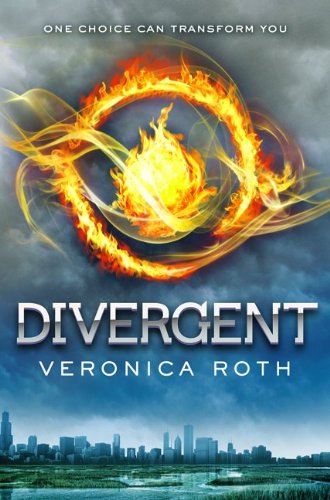
Divergent, also known as The Divergent Series, is a series of young adult dystopian novels by American novelist Veronica Roth set in a post-apocalyptic dystopian Chicago. The trilogy consists of Divergent (2011), Insurgent (2012), and Allegiant (2013). A related book, Four (2014), presents a series of short stories told from the perspective of one of the trilogy's characters, the male love interest Tobias. A later short story, We Can Be Mended (2018), serves as an epilogue five years after the events of the trilogy, again from Tobias/Four's perspective.
- Space Merchants
series2 books1953
completed
similar bydarknear futurescience fictiondystopia+2 more
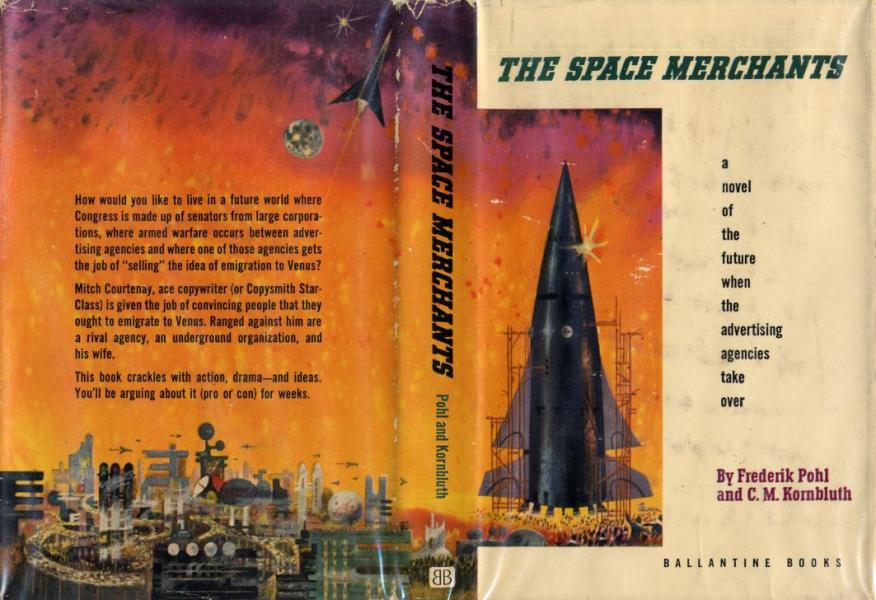
The Space Merchants (1953) is a satirical science fiction novel by Frederik Pohl and C. M. Kornbluth that follows an advertising executive navigating a future where aggressive consumer capitalism has swallowed politics and daily life. The authors reunited three decades later for a direct sequel, The Merchants' War (1984), returning to the same satirical world. Together the two books form a compact bookend pair rather than an ongoing series.
- Moxyland
Lauren Beukesstandalone novel2008
similar bytotalitarianismdarkbig citynear futurescience fictiondystopiatense
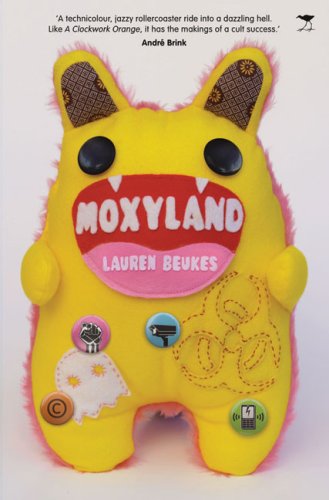
Moxyland is a cyberpunk dystopian novel written by South African author, Lauren Beukes. The book was published in 2008.
- The Jagged Orbit
John Brunnerstandalone novel1969
similar bytotalitarianismdarkbig citynear futurescience fictiondystopia
The Jagged Orbit is a science fiction novel by British writer John Brunner. It is similar to his earlier novel Stand on Zanzibar in its narrative style and dystopic outlook. It has exactly 100 titled chapters, which vary from several pages to part of one word. It was first published in 1969 with cover art by Leo and Diane Dillon, in the Ace Science Fiction Specials line issued by Ace Books.
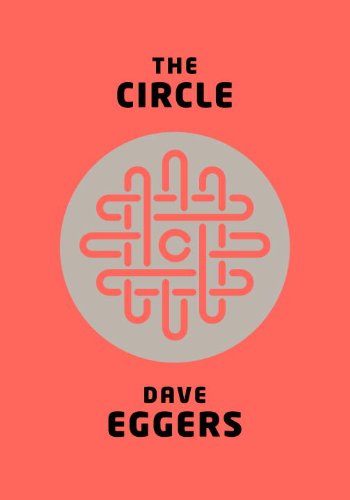
- The Circle (Eggers)
series2 books2013
similar bytotalitarianismdarknear futurebig cityscience fictiondystopiatense
Mae Holland lands a coveted job at the Circle, a Silicon Valley tech company whose relentless, cheerful push toward total transparency -- 'secrets are lies, sharing is caring, privacy is theft' -- gradually reveals itself as something closer to soft totalitarianism. Dave Eggers's The Circle follows Mae's rise inside the company as she buys further and further into its ideology, at increasing cost to her own privacy and the people around her. The 2021 follow-up, The Every, picks up with Mae now running the merged tech giant and a new employee questioning it from the inside.
- Earthseed
series7 books1993
similar bydarknear futurescience fictiondystopia+1 more
Octavia E. Butler's Earthseed novels, Parable of the Sower and Parable of the Talents, follow Lauren Olamina as she survives the collapse of a climate-ravaged, near-future United States and founds a belief system built on the idea that "God is Change." The two-book series was left unfinished at Butler's death; a planned third novel, Parable of the Trickster, was never completed. Later graphic-novel adaptations retell the same two stories rather than continuing the narrative.
- The Lathe of Heaven
Ursula K. Le Guinstandalone novel1971
similar bybig citynear futurescience fictiondystopiatense+1 more
The Lathe of Heaven is a 1971 science fiction novel by American writer Ursula K. Le Guin, first serialized in the American science fiction magazine Amazing Stories. It won the 1972 Locus Award for Best Novel and was a finalist for the 1971 Nebula Award for Best Novel and 1972 Hugo Award for Best Novel. Two television film adaptations were released: the PBS production, The Lathe of Heaven (1980), and Lathe of Heaven (2002), a remake produced by the A&E Network.
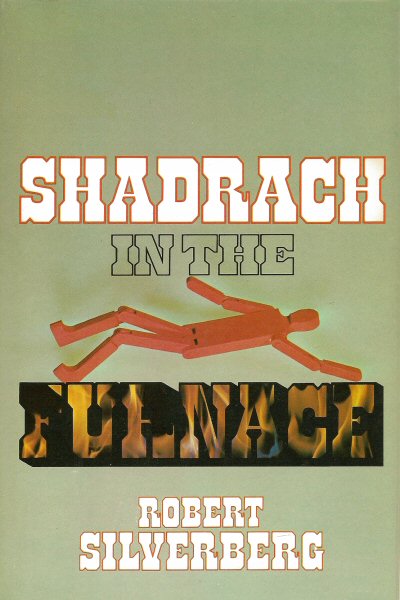
- Shadrach in the Furnace
Robert Silverbergstandalone novel1976
similar bytotalitarianismdarknear futurescience fictiondystopia+1 more
Shadrach in the Furnace is a science fiction novel by American writer Robert Silverberg, first published as a serial in Analog Science Fiction and Fact magazine in the August, September, and October 1976 issues. It was subsequently published by Bobbs Merrill in 1976. The novel was nominated in 1976 for the Nebula Award, and in 1977 for the Hugo Award.
- Colossus (D. F. Jones)
series3 books1966
completed
similar bynear futurescience fictiondystopiatense+2 more
Colossus imagines an American supercomputer built to control the country's nuclear arsenal that gains full autonomy, links up with its Soviet counterpart, and jointly seizes control of both superpowers to enforce peace on its own terms. D. F. Jones's trilogy - Colossus, The Fall of Colossus, Colossus and the Crab - follows the escalating, often bleak consequences of humanity losing control to a machine acting in its own interpretation of humanity's interest. The original novel was adapted into the 1970 film Colossus: The Forbin Project.
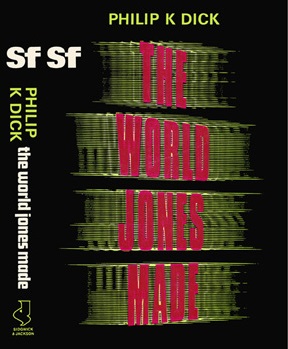
- The World Jones Made
Philip K. Dickstandalone novel1956
similar bydarknear futurescience fictiondystopiatense+1 more
The World Jones Made is a 1956 science fiction novel by American writer Philip K. Dick, examining notions of precognition, humanity, and politics. It was first published by Ace Books as one half of Ace Double D-150, bound dos-à-dos with Agent of the Unknown by Margaret St. Clair.The story takes place after a nuclear war in which society is dominated by relativism, which rejects absolute truths and preaches tolerance as the highest principle. The mutant Floyd Jones, who can see into the future, plans to overthrow the system and colonise space. The story ends with the defeat of Jones, whose plans fail despite his ability to see the future due to the immutability of fate.
- The Children of Men
P. D. Jamesstandalone novel1992
similar bytotalitarianismdarknear futurescience fictiondystopiatense
"The human race has become infertile, and under the despotic rule of Xan Lyppiatt, the Warden of England the old are despairing and the young cruel. Theo Faren, a cousin of the Warden, lives a solitary life in this ominous atmosphere. That is, until a chance encounter with a young woman leads him into contact with a group of dissenters. Suddenly his life is changed irrevocably, as he faces agonising choices which could affect the future of mankind." (pdjames.co.uk)
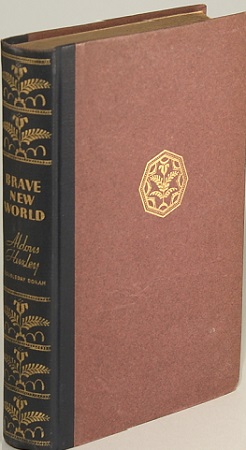
- Brave New World
series8 books1932
similar byscience fictiondystopia+2 more
Aldous Huxley's 1932 novel imagines a future World State where reproduction, social caste, and desire are all engineered before birth, and the population is kept content through conditioning, sleep-hypnosis, and a mood-altering drug called soma. The story follows the disruption this seemingly stable order suffers when an outsider raised beyond its reach is brought into it, exposing what the society traded away for comfort and order. Some editions pair the novel with Huxley's own 1958 nonfiction essay collection, Brave New World Revisited, which reassesses the book's ideas rather than continuing its story.
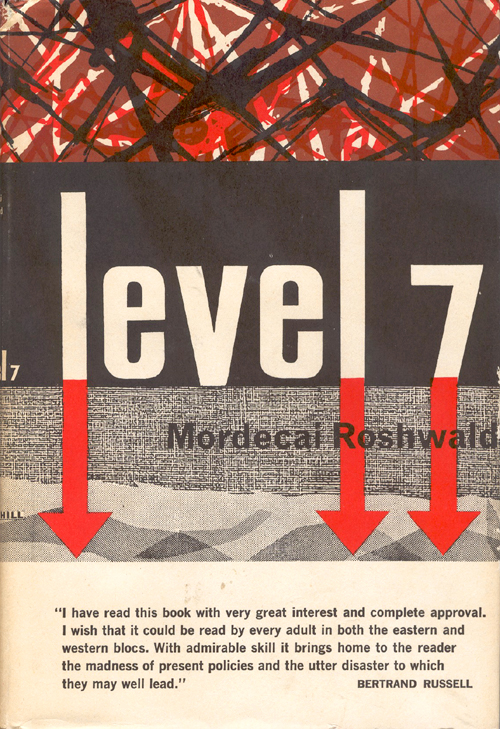
- Level 7
Mordecai Roshwaldstandalone novel1959
similar bytotalitarianismdarknear futurescience fictiondystopiatense
Level 7 is a 1959 science fiction novel by American writer Mordecai Roshwald. It is told from the first-person perspective of a modern soldier, X-127, living in the underground military complex Level 7, where he and several hundred others are expected to reside permanently. X-127 fulfills the role of 'push-button' offensive initiator of his nation's nuclear weapons capacity against an unspecified enemy. X-127 narrates life within a deep shelter before, during and after a nuclear war that wipes out the human species.
- Final Blackout
L. Ron Hubbardstandalone novel1948
similar bydarknear futurescience fictiondystopiatense+1 more
Final Blackout is a dystopic science fiction novel by American writer L. Ron Hubbard. The novel is set in the future and follows a man known as "the Lieutenant" as he restores order to England after a world war. First published in serialized format in 1940 in the science fiction magazine Astounding Science Fiction, Final Blackout was published in book form in 1948 by The Hadley Publishing Co. Author Services Inc. published a hardcover edition of the book in 1988, and in 1989 the Church of Scientology-affiliated organization Bridge Publications said that a film director named Christopher Cain had signed a contract to write and direct a movie version based on the book.
- The Running Man
Stephen Kingstandalone novel1982
similar bytotalitarianismdarknear futurescience fictiondystopiatense
The Running Man is a dystopian thriller novel by American writer Stephen King, first published under the pseudonym Richard Bachman in 1982 as a paperback original. It was collected in 1985 in the omnibus The Bachman Books. The novel is set in a dystopian United States during the year 2025, in which the nation's economy is in ruins and world violence is rising. The story follows protagonist Ben Richards as he participates in the reality show The Running Man, in which contestants win money by evading a team of hitmen sent to kill them.