Loreful
HomeDiscover
Search series, authors…⌘K
Loreful

Reading orders for SF/F series and shared universes — with your place kept in every one.

Explore

UniversesSeriesWorksAuthorsAtlas

Help

FAQAboutSite map

Account & legal

Sign inCreate accountPrivacyTerms

Data

Built on ISFDB, Wikipedia, Wikidata and Open Library. Curated reading orders carry their reasoning on the page; the rest follow publication order. Data sources & licenses

© Loreful · data: ISFDB · CC BY

More like A Midsummer Tempest

anchored on:alternate historyalternate earthfantasypolitical intriguebritish islesadventurous

but

Mood

The mood the book leaves you in.

  • The reading experience is propelled by journeys, exploration, and physical risk; excitement and forward momentum dominate over dread or introspection.
  • Joy and loss are deliberately mixed; the resolution grants characters something real while taking something else away, leaving warmth and sorrow together.
  • The book demands work from the reader — dense prose, difficult structure, unfamiliar ideas, or morally uncomfortable material — as part of its intended effect.
  • Grim events, cruelty, or despair dominate the atmosphere, and the book does not soften them with comfort or comic relief.
  • The atmosphere is quietly unsettling — wrongness, unease, and the uncanny pervade the book without necessarily escalating into overt horror.
  • The book is built to move the reader; character feeling is foregrounded and major scenes aim at a strong emotional response.
  • Humor is a primary aim and the prose plays for laughs — comic situations, wit, or dialogue produce sustained comedy, not occasional levity.
  • The book insists that things can improve; effort and decency are shown to matter, and the arc bends toward better outcomes even through hardship.
  • The book teaches as it goes — real facts, history, science, or craft are conveyed in enough depth that learning is part of the reading experience.
  • The book is designed to uplift and motivate, presenting perseverance or achievement in a way that invites the reader to aspire or act.
  • The overall register is cheerful and easygoing; stakes are kept gentle and the book avoids dwelling on pain or dread.
  • Withheld information drives the experience; the book sustains enigmas and secrets the reader wants resolved, whatever its genre.
  • The book is contemplative and inward-looking, giving more weight to thought, memory, and meaning than to external events.
  • The book works as comfort reading — low tension, a soothing pace, and an atmosphere the reader can unwind in.
  • Grief, loss, or melancholy set the dominant register, and the book lets sorrow stand rather than resolving it into comfort.
  • Sustained suspense is the point; the book keeps the reader braced for what happens next through danger, pressure, or impending revelation.
  • Playful invention and charm define the register — fanciful conceits, light absurdity, and a narration that delights in its own oddity.

About

What the story runs on.

  • Stories in which extraterrestrial beings are central — as characters, cultures, or the object of the plot.
  • Stories about venturing into space to explore — survey missions, astronauts, and the frontier of the unknown beyond Earth.
  • Stories structured as a quest — a journey undertaken to find, deliver, or destroy something of great import.
  • Stories in which staying alive against nature, catastrophe, or scarcity is the central problem.
  • Stories of lovers kept apart by law, family, faith, or station, where the obstacle to love is the plot.
  • Stories in which a friendship — its making, testing, or loss — is the emotional center.
  • Stories of growing up — a young protagonist crossing from childhood into adult knowledge and responsibility.
  • Stories about who a character truly is — self-discovery, doubled lives, and the search for a self.
  • Stories in which a buried family truth — hidden parentage, crimes, or shames — surfaces and reorders the present.
  • Stories driven by maneuvering for power — factions, conspiracies, and statecraft conducted in shadow.
  • Stories in which war itself is the subject — combat, occupation, and what warfare does to soldiers and civilians.
  • Stories organized around investigating a killing — the case, the clues, and the pursuit of the killer, in any genre's clothing.

Shelf

Where it sits in the library.

    • Fiction built on magic or other supernatural elements that have no scientific explanation.
    • Secondary-world fantasy at large scale, where the fate of nations or the world turns on the protagonists' struggle.
    • Fantasy set in a recognizably modern city or contemporary world where the supernatural intrudes on everyday life.
    • Fantasy that blends in horror's atmosphere and imagery, keeping a fantastical frame around grim or frightening material.
    • Action-driven fantasy following warriors or rogues with personal stakes against sorcerous threats, rather than world-spanning conflicts.
    • Fantasy set in a real historical period or a close analogue of one, with magic woven into the era.
    • Fantasy in which protagonists cross from the ordinary world into another world through a portal or similar passage.
    • Fiction that retells or reworks a traditional fairy tale in a new form or setting.
    • Fantasy drawing directly on myths, legends, and folklore, retelling them or building on their figures and logic.
    • Fantasy of ghosts, vampires, shapeshifters, psychics, and similar phenomena, usually set in an otherwise ordinary world.
    • Fiction mixing science-fictional trappings with overtly magical or impossible elements in one setting.
    • Low-stakes fantasy emphasizing comfort, community, and everyday pleasures over conflict and peril.
    • Speculative fiction of pervasive moral ambiguity, violence, and cynicism that rejects heroic conventions — fantasy and SF alike.
      • Fiction that extrapolates from science and technology — future societies, space travel, or speculative inventions — within at least nominally natural laws.
      • Science fiction of interstellar scope — starships, galactic polities, and adventure across star systems.
      • Science fiction committed to scientific rigor, where technical plausibility constrains the story.
      • Science fiction centered on armed forces and warfare, told largely from a military point of view.
      • Science fiction of networked, corporate-dominated near futures, pairing high technology with social decay.
      • Science fiction styled on nineteenth-century steam-powered technology, often in a Victorian or pseudo-Victorian setting.
      • Fiction depicting an oppressive or catastrophic society, presented as a warning.
      • Fiction set after civilization's collapse, following survivors in the ruins of the old world.
      • Fiction in which characters move between past and future, and the mechanics or consequences of that travel drive the plot.
      • Fiction exploring a world where a historical event went differently and history diverged from ours.
      • Science fiction about humanity's first encounter and communication with an alien intelligence.
      • Science fiction in which extraterrestrial forces attack or occupy Earth and humanity resists.
      • Fiction whose primary aim is to frighten or unsettle the reader through dread, menace, or the monstrous.
      • Horror of vast, indifferent, incomprehensible entities before which humanity is insignificant, in the Lovecraft tradition.
      • Horror of decaying houses, buried family secrets, and oppressive atmosphere in the Gothic literary tradition.
      • Horror centered on hauntings and the returning dead.
      • Horror located in the mind — paranoia, obsession, and unreliable perception rather than external monsters.
      • Horror built around the reanimated dead and survival amid their outbreaks.
      • Horror defined by explicit, transgressive gore that refuses to cut away from violence.
      • Speculative fiction of the strange and uncanny that resists both natural explanation and standard genre categories.
      • Fiction organized around solving a crime or puzzle, typically following an investigator toward the identification of a culprit.
      • A puzzle-first mystery that lays out clues so the culprit's identity can be deduced before the reveal.
      • Crime fiction of moral ambiguity, fatalism, and hard-edged style, set among the corrupt and the doomed.
      • A mystery following the realistic routines of police work — forensics, interviews, and case-building.
      • A gentle mystery with an amateur sleuth, a small community, and violence kept off the page.
      • A mystery set in a past era, where the investigation works within that period's methods and society.
      • Fast-paced fiction driven by imminent danger, pursuit, or high-stakes conspiracy, built to sustain tension.
      • A thriller of espionage — agents, tradecraft, and intelligence services in conflict.
      • A thriller centered on lawyers and the courtroom, where litigation carries the suspense.
      • A thriller driven by detailed contemporary or near-future technology, often military or scientific.
      • A thriller whose tension comes from mental states and manipulation between characters rather than external action.
      • Fiction whose central plot is a romantic relationship and its development toward an emotionally satisfying resolution.
      • Romance in which one or both partners are supernatural beings, blending fantasy elements into the love story.
      • A fantasy-romance hybrid in which the romantic arc and the fantasy plot carry equal weight.
      • Romance set in a past era, with courtship shaped by the period's society and manners.
      • Romance set in the present day, without supernatural or historical elements.
      • Fiction set in a real past period, where the historical setting materially shapes characters and events.
        • General and literary fiction emphasizing prose style, character interiority, or formal ambition over genre plot conventions.
        • Fiction in a realistic world where magical events occur and are treated as ordinary, in the tradition of Latin American literature.
        • Fiction that ridicules people, institutions, or society in order to criticize them.
        • Fiction of dreamlike, irrational imagery and logic that breaks from realistic representation.
        • Fiction that plays with narrative convention through metafiction, fragmentation, and self-reference.
        • Fiction propelled by journeys, exploration, and physical peril, where action and survival carry the plot.
        • Adventure fiction of ships and seafaring — naval engagements, voyages, and life at sea.
        • Fiction of the American frontier West — gunmen, ranchers, and lawmen, typically in the late nineteenth century.
        • Fiction centered on soldiers, campaigns, and the experience of warfare, historical or imagined.
          • Fiction written primarily to amuse, using comedic situations, wit, or parody as its organizing principle.
            • Multi-generational fiction following a family or dynasty across decades, with inheritance and kinship as the through-line.
              • Fiction whose world runs on explicit game mechanics — levels, stats, and skills that characters can see and exploit.
                • Fiction about costumed or superpowered heroes and their conflicts with comparable villains.

                Practical

                How long a commitment, whether it stands alone, and whether it has finished.

                Tap a chip to ask for it · tap again to rule it out · once more to clear. Numbers show what would be left.

                • Cover of Bartimaeus
                  Bartimaeus

                  series · 4 books · 2003

                  similar bypolitical intrigueadventurousfantasyalternate historybritish isles+1 more

                  The Bartimaeus Sequence is a series of young adult novels of alternate history, fantasy and magic. It was written by British writer Jonathan Stroud and consists of a trilogy published from 2003 to 2005 and a prequel novel published in 2010. The story follows the career of a teenage magician Nathaniel and a five-thousand-year-old djinni Bartimaeus, whom he has summoned and nominally controls, through the alternate history of the peak of London's domination as a magical oligarchy.

                • Cover of Temeraire
                  Temeraire

                  series · 48 books · 2006

                  similar byadventurousalternate historywarfantasy+1 more

                  Temeraire is a series of nine alternate history fantasy novels written by American author Naomi Novik. The novels follow the adventures of Captain William Laurence and his dragon, the eponymous Temeraire, and reimagine events of the Napoleonic Wars with "an air force of dragons, manned by crews of aviators". His Majesty's Dragon, the first entry in the series, won the Compton Crook Award in 2007 and was nominated for the Hugo Award for Best Novel the same year. Temeraire: In the Service of the King, an omnibus volume collecting the first three novels, won the Locus Award for Best First Novel in 2007. Temeraire was nominated for the Hugo Award for Best Series in 2017.

                • Cover of The Difference Engine
                  The Difference Engine

                  William Gibson & Bruce Sterling · standalone novel · 1990

                  similar bypolitical intriguealternate historyalternate earthbritish islesscience fiction

                  The computer age arrives a century early with Babbage's perfection of his 'analytical engine'. The industrial revolution is accelerated by the development of steam-driven cybernetic 'Engines'. An advanced Great Britain prepares to better the world's lot. An example of the 'steampunk' sub-genre of the cyberpunk movement.

                • Cover of A Transatlantic Tunnel, Hurrah!
                  A Transatlantic Tunnel, Hurrah!

                  Harry Harrison · standalone novel · 1972

                  similar bypolitical intrigueadventurousalternate historyalternate earthscience fiction

                  Tunnel Through the Deeps is a 1972 alternate history/science fiction novel by American writer Harry Harrison. It was serialized in Analog magazine beginning in the April 1972 issue.

                • Cover of The Codex Alera
                  The Codex Alera

                  series · 6 books · 2004

                  similar bypolitical intrigueadventurouswarfantasy

                  Furies of Calderon opens The Codex Alera in a Rome-flavored fantasy world where nearly everyone commands elemental spirits called furies, except Tavi, a teenager with none, whose resourcefulness becomes the series' recurring answer to raw magical power. Jim Butcher's six-book series, continuing through Academ's Fury, Cursor's Fury, Captain's Fury, Princeps' Fury, and First Lord's Fury, builds from small-scale political maneuvering into full-scale war.

                • Cover of Paratime Police
                  Paratime Police

                  series · 33 books · 1948

                  similar byadventurousalternate historyscience fiction+3 more

                  The Paratime series written by H. Beam Piper and subsequently by John F. Carr consists of several short stories, one novella, and one novel, all but one of which were originally published in Astounding Science Fiction under the editorship of John W. Campbell. The series deals with an advanced civilization that is able to travel between parallel universes with alternate histories, and uses that ability to trade for goods and services that its own, exhausted Earth cannot provide. The protagonists of the stories are the Paratime Police, the organization that protects the secret of paratime travel.

                • Cover of SS-GB
                  SS-GB

                  Len Deighton · standalone novel · 1978

                  similar bypolitical intriguealternate historybritish islesscience fiction+1 more

                  It's November 1941 in a Britain that lost the war: Operation Sea Lion succeeded, Churchill was executed, and the King is a prisoner in his own Tower of London. Detective Superintendent Douglas Archer, still working homicide for the Metropolitan Police under German occupation, catches what looks like a routine case, a well-dressed man murdered above an antiques shop, until the body's oddities point toward something far more dangerous than burglary gone wrong. Archer's investigation collides with occupation politics, the British resistance, and rival factions of the SS and the German Army, each wanting the case to go a different way. Len Deighton's alternate-history spy thriller.

                • Cover of Hannibal's Children
                  Hannibal's Children

                  series · 2 books · 2002

                  completed

                  similar bypolitical intrigueadventurousalternate historywaralternate earth

                • Cover of The Leviathan Trilogy
                  The Leviathan Trilogy

                  series · 3 books · 2009

                  similar byadventurouswaralternate historyscience fiction+2 more

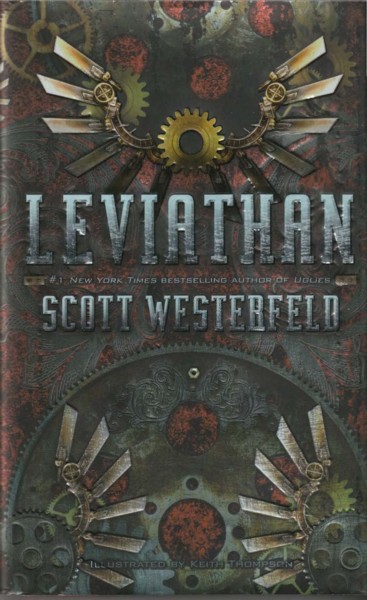
                  Set in an alternate First World War, Leviathan splits the belligerents into Clankers, who fight with mechanical walkers, and Darwinists, who fight with fabricated living creatures built from spliced DNA. Scott Westerfeld follows a British girl disguised as a boy to serve on a living airship and the exiled heir to the Austro-Hungarian throne as their paths collide, continuing across Behemoth and Goliath. Keith Thompson's illustrations are integral to all three books, alternating text chapters with illustrated sequences.

                • Cover of Oswald Bastable
                  Oswald Bastable

                  series · 5 books · 1971

                  part of Moorcock's Multiverse

                  similar byadventurousalternate historywaralternate earthscience fiction

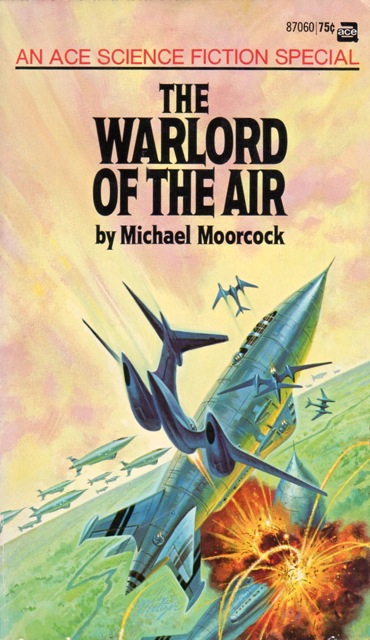
                  Oswald Bastable follows an Edwardian-era British soldier flung into a series of alternate futures where the First World War never happened, opening with The Warlord of the Air (1971). Across the trilogy he drifts between rival empires and airship wars, an early and influential example of what would later be called steampunk. Michael Moorcock's A Nomad of the Time Streams trilogy sits within his wider multiverse of linked worlds and recurring avatars of the Eternal Champion.

                • Cover of The Dragon Waiting
                  The Dragon Waiting

                  John M. Ford · standalone novel · 1983

                  similar bypolitical intriguealternate historyalternate earthfantasy+1 more

                  The Dragon Waiting: A Masque of History is a 1983 historical fantasy novel by American writer John M. Ford. It won the 1984 World Fantasy Award for Best Novel. This book, set in an alternate history, contains such plot elements as vampirism, the House of Medici, and the convoluted English politics surrounding Edward IV and Richard III. It also deals with the fate of the Princes in the Tower.

                • Cover of Whipping Star
                  Whipping Star

                  Frank Herbert · standalone novel · 1970

                  similar bypolitical intrigueadventurousscience fiction+1 more

                  From Amazon: In the far future, humankind has made contact with numerous other species: Gowachin, Laclac, Wreaves, Pan Spechi, Taprisiots, and Caleban, and has helped to form the ConSentiency to govern among the species. After suffering under a tyrannous pure democracy, the sentients of the galaxy find the need for a Bureau of Sabotage (BuSab) to slow the wheels of government, thereby preventing it from legislating recklessly. BuSab is allowed to sabotage and harass the governmental, administrative, and economic powers in the ConSentiency. Private citizens must not be harassed, and vital functions of society are also exempt. Jorj X. McKie is a born troublemaker who has become one of BuSab's best agents. Drafted for the impossible task of establishing meaningful communication with an utterly alien entity who defies understanding, McKie finds himself racing against time to prevent a mad billionairess from wiping out all life in the ConSentiency.

                • Cover of Janissaries
                  Janissaries

                  series · 4 books · 1979

                  similar bypolitical intrigueadventurouswarscience fiction

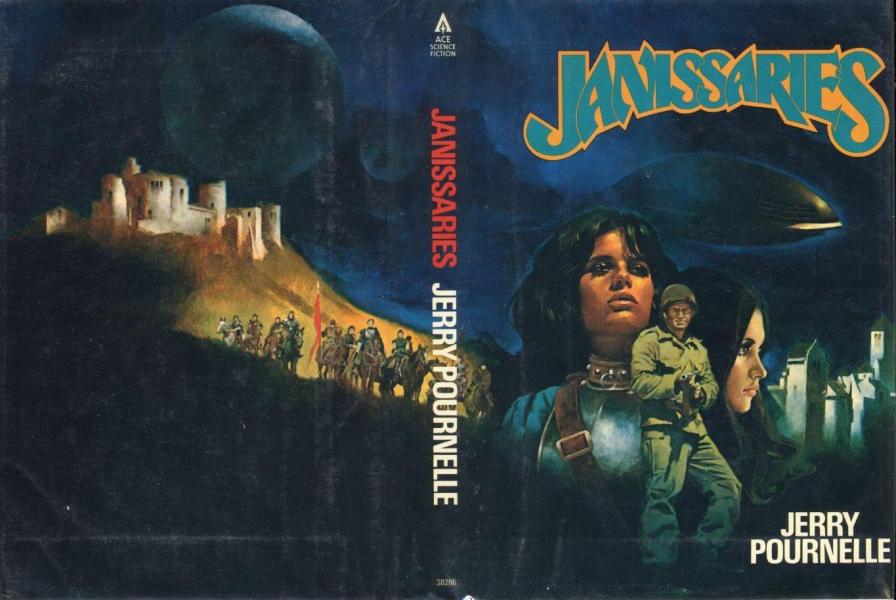
                  Janissaries are an American series of military and political-based science fiction novels are set in an interstellar confederation of races, in which humans are a slave race entrusted with military affairs and law enforcement. They were written by Jerry Pournelle, with Roland J. Green co-authoring the second two books.

                • Cover of The Apollo Murders
                  The Apollo Murders

                  Chris Hadfield · standalone novel · 2021

                  similar bypolitical intrigueadventurousalternate history+1 more

                  The Apollo Murders is a 2021 alternate history, thriller novel by Canadian retired astronaut and writer Chris Hadfield. It was first published in October 2021 in the United States by Little, Brown and Company, and in the United Kingdom by Quercus. The book is Hadfield's debut novel, and is the first in his Apollo Murders series, followed later by The Defector in 2023 and Final Orbit in 2025. Hadfield had previously published three non-fiction books, his first being his autobiography, An Astronaut's Guide to Life on Earth (2013).

                • Cover of 1920: America's Great War
                  1920: America's Great War

                  Robert Conroy · standalone novel · 2013

                  similar bypolitical intrigueadventurousalternate historywarscience fiction

                  1920: America's Great War is an alternate history novel by the Michigan economics professor Robert Conroy. It was first published as an ebook by Baen Books in November 2013. A hardcover edition followed in December of the same year and then a paperback edition in March 2015. The novel depicts a fictional world in which Imperial Germany had emerged victorious early in World War I and launches a surprise invasion of the United States in 1920 from Mexico. The book's premise is based on an actual plan that Germany had proposed to Mexico during the war.

                • Cover of The Bright Sword
                  The Bright Sword

                  Lev Grossman · standalone novel · 2024

                  similar bypolitical intrigueadventurouswarfantasybritish isles

                  The Bright Sword is a fantasy novel written by American author Lev Grossman, published in 2024 by Viking Press. The novel takes place within the King Arthur mythology, and follows a talented young knight named Collum who travels from his backwater home to Camelot, expecting to meet King Arthur and join the Round Table. Collum finds that Arthur and most of the knights of the Round Table died weeks before Collum arrived, in the battle against Mordred, leaving only a handful of leaderless knights to defend Camelot and the throne of Britain from competing warlords, rivals, and the magical forces of Morgan le Fay.

                • Cover of Age of Unreason
                  Age of Unreason

                  series · 4 books · 1998

                  similar bypolitical intrigueadventurousalternate historyfantasy+1 more

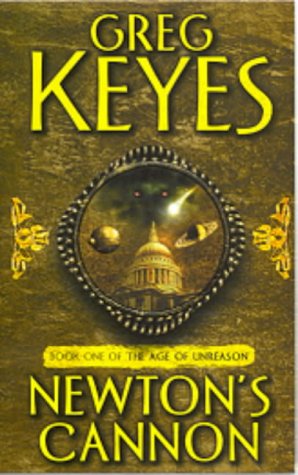
                  The Age of Unreason is a series of four novels in the historical fantasy genre written by Gregory Keyes:Newton's Cannon (1998), ISBN 1-56865-829-X A Calculus of Angels (1999), ISBN 0-7394-0260-9 Empire of Unreason (2000), ISBN 0-345-40609-5 The Shadows of God (2001), ISBN 0-345-43904-X

                • Cover of Westmark
                  Westmark

                  series · 3 books · 1981

                  completed

                  similar bypolitical intrigueadventurousfantasy+1 more

                • Cover of Sten
                  Sten

                  series · 11 books · 1982

                  completed

                  similar bypolitical intrigueadventurouswarscience fiction

                  The Sten Chronicles, also called The Sten Adventures, are a series of eight military science fiction and space opera novels by Chris Bunch and Allan Cole published from 1982 to 1993. The series was originally published by Del Rey and then re-released by Orbit.

                • Cover of Fortress (C. J. Cherryh)
                  Fortress (C. J. Cherryh)

                  series · 5 books · 1995

                  similar bypolitical intrigueadventurousfantasy+1 more

                  Fortress is a series of fantasy novels by American writer C. J. Cherryh, published by HarperCollins. They are set in a medieval fantasy world with a 15th-century feel and feature magic, sorcery, medieval warfare, politics and other elements common to the high fantasy subgenre. The first book in the series, Fortress in the Eye of Time, was published in 1995 and followed by Fortress of Eagles in 1998, Fortress of Owls in 1999, Fortress of Dragons in 2000 and Fortress of Ice in 2006. The books are all sub-titled "A Galasien novel".

                • Cover of A Song of Ice and Fire
                  A Song of Ice and Fire

                  series · 14 books · 1996

                  part of World of Ice and Fire

                  similar bypolitical intriguewarfantasy

                  A Song of Ice and Fire is a series of high fantasy novels by the American author George R. R. Martin. Martin began writing the first volume, A Game of Thrones, in 1991, and published it in 1996. Martin, who originally envisioned the series as a trilogy, has released five out of seven planned volumes. The most recent entry in the series, A Dance with Dragons, was published in 2011. Since then, Martin has been working on the sixth novel, titled The Winds of Winter. A seventh novel, A Dream of Spring, is planned to follow.

                • Cover of Pattern for Conquest
                  Pattern for Conquest

                  George O. Smith · standalone novel · 1949

                  similar bypolitical intrigueadventurousscience fiction+1 more

                  Pattern for Conquest is a science fiction novel by American writer George O. Smith. It was published in 1949 by Gnome Press Reprinted circa 1952 in paper wrappers for distribution to US military personnel. Although a later printing, the first edition statement is retained on the copyright page. [Currey] isfdb Currey

                • Cover of Vatta's War
                  Vatta's War

                  series · 6 books · 2003

                  part of Vatta

                  similar bypolitical intrigueadventurouswarscience fiction

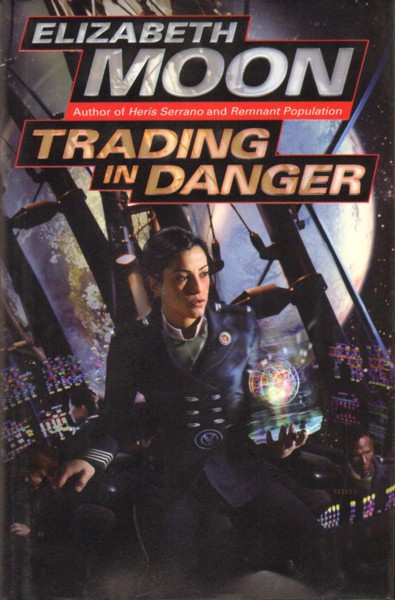
                  Vatta's War is a science fiction series by American writer Elizabeth Moon, comprising five books: Trading in Danger (2003), Marque and Reprisal, Engaging the Enemy (2006), Command Decision (2007), and Victory Conditions (2008). They have been characterized as military science fiction similar in style to the works of Lois McMaster Bujold, David Weber and Walter Jon Williams.

                • Cover of Ascendance (Jennifer A. Nielsen)
                  Ascendance (Jennifer A. Nielsen)

                  series · 5 books · 2012

                  similar bypolitical intrigueadventurousfantasy+1 more

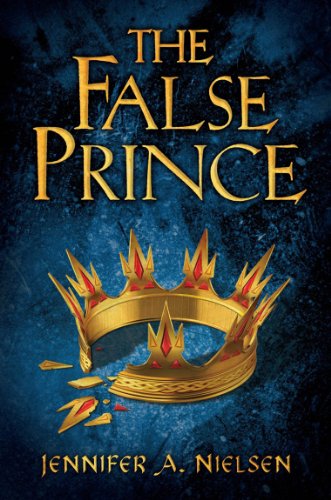
                  The Ascendance Series is a series of juvenile fantasy novels by Jennifer A. Nielsen. In the Ascendance Series, an orphan named Sage is kidnapped and trained to impersonate Prince Jaron, the missing Prince of Carthya. After Sage ascends the throne, he turns out to be prince Jaron, and he has to lead Carthya through a destructive war with multiple neighboring nations.