More like A Stopped Clock
but
- Sprawl Trilogy
series10 books1981
similar byscience fictionnear future
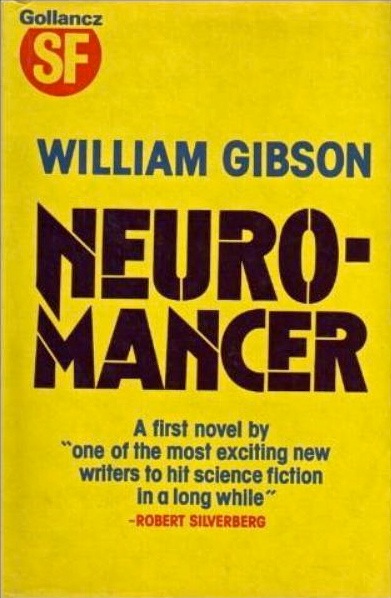
The Sprawl Trilogy is William Gibson's foundational cyberpunk sequence: Neuromancer (1984), in which hacker Case is drawn into a high-stakes heist alongside an artificial intelligence and a damaged ex-soldier, followed by Count Zero (1986) and Mona Lisa Overdrive (1988), which widen the same near-future world of corporate power and networked cyberspace to new characters. Johnny Mnemonic, an early short story set in the same fictional milieu, predates the novels and introduces the courier Molly Millions before her role in the trilogy. Together these works established much of cyberpunk's visual and thematic vocabulary.
- Bridge Trilogy
series4 books1990
similar byscience fictionnear future+1 more
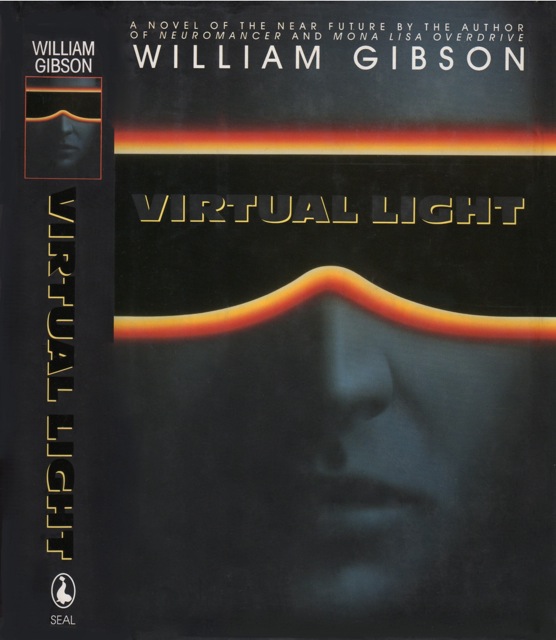
The Bridge trilogy is a series of novels by William Gibson, his second after the successful Sprawl trilogy. The trilogy comprises the novels Virtual Light (1993), Idoru (1996) and All Tomorrow's Parties (1999). A short story, "Skinner's Room", was originally composed for Visionary San Francisco, a 1990 museum exhibition exploring the future of San Francisco.
- The Ministry for the Future
Kim Stanley Robinsonstandalone novel2020
similar byscience fictionnear future+1 more
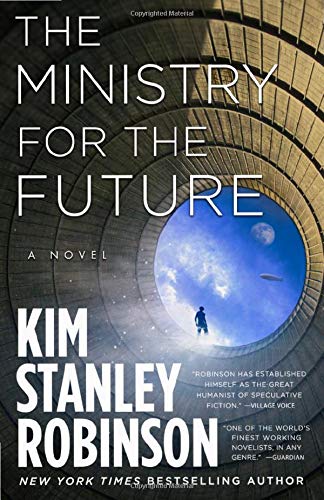
The Ministry for the Future is a climate fiction novel by American science fiction writer Kim Stanley Robinson, published in 2020. Set in the near future, the novel follows a subsidiary body, established under the Paris Agreement, whose mission is to act as an advocate for the world's future generations of citizens as if their rights were as valid as the present generation's. While the ministry pursues various ambitious projects, the effects of climate change are determined to be the most consequential. The plot primarily follows Mary Murphy, the head of the titular Ministry for the Future, and Frank May, an American aid worker traumatized by experiencing a deadly heat wave in India. Many chapters are devoted to other characters' accounts of future events, as well as their ideas about ecology, economics, and other subjects.
- Termination Shock
Neal Stephensonstandalone novel2021
similar byscience fictionnear future+1 more
Termination Shock is a science fiction novel by American writer Neal Stephenson, published in 2021. The book is set in a near-future when climate change has significantly altered human society and follows the attempts of a solar geoengineering scheme. The novel focuses on the geopolitical and social consequences of the rogue fix for climate change, themes common in the growing climate fiction genre.
- Red Moon
Kim Stanley Robinsonstandalone novel2018
similar byscience fictioneast asianear future
Red Moon is a 2018 science fiction novel by American novelist Kim Stanley Robinson. The novel is set in China and on the Moon. It was reviewed in several US media outlets with mixed reception.
- Black Star Rising
Frederik Pohlstandalone novel1985
similar byscience fictionnear future+1 more
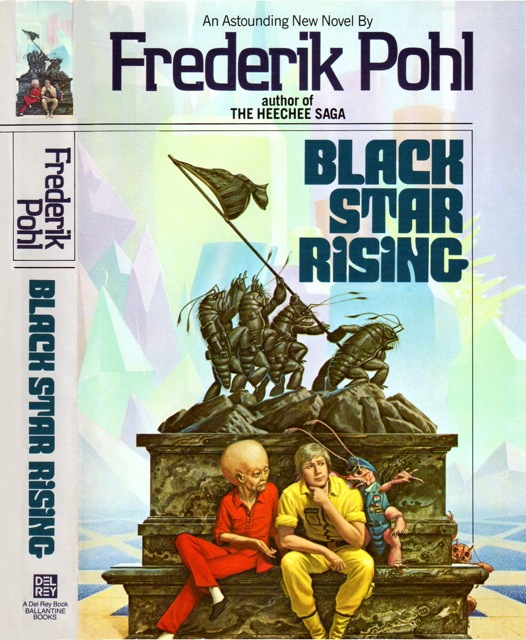
Black Star Rising, published in 1986, is a dystopian science fiction novel by American author Frederik Pohl. It is about a post-nuclear war future in which a conquered United States becomes a Chinese farming colony. The main character is an American who the Chinese send to meet a race of warlike aliens who come to Earth.
- Fahrenheit 451
series2 books1951
completed
similar byscience fictionnear future
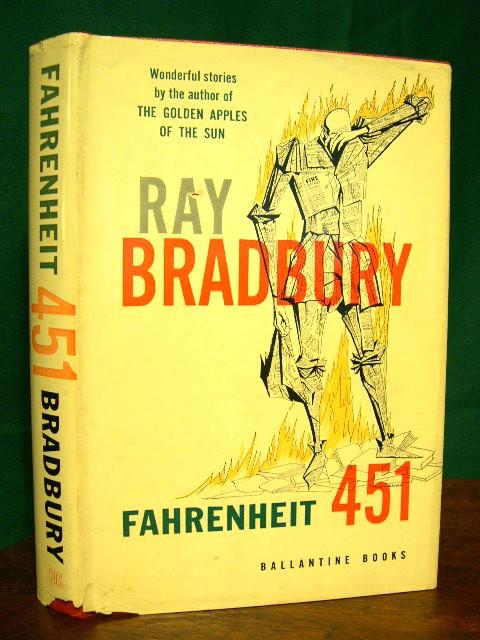
Fahrenheit 451 began life as "The Fireman," a novella Ray Bradbury published in 1951, which he then expanded into the full novel released in 1953 under its now-famous title. Set in a future where books are outlawed and firemen exist to burn them, it follows fireman Guy Montag as doubts about his job push him toward the very literature he's supposed to destroy. The novella and novel are one story's evolution rather than two separate books.
- The Man Who Japed
Philip K. Dickstandalone novel1956
similar byscience fictionnear future+1 more
The Man Who Japed is a science fiction novel by American writer Philip K. Dick, first published in 1956. Although one of Dick's lesser-known novels, it features several of the ideas and themes that recur throughout his later works. The "jape[s]" or practical jokes of the novel begin with a statue's unconventional decapitation.
- Richter 10
Arthur C. Clarke & Mike McQuaystandalone novel1996
similar byscience fictionnear future+1 more
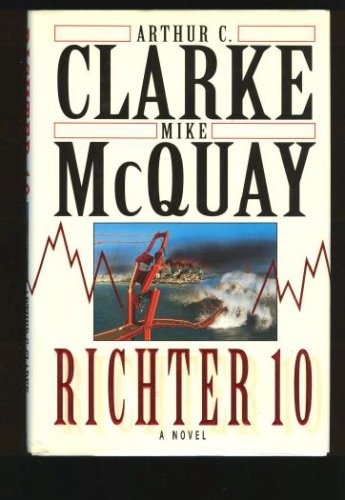
Richter 10 is a 1996 science fiction novel by Arthur C. Clarke and Mike McQuay. The protagonist, Lewis Crane, develops a hatred of earthquakes after his parents are killed and his home destroyed by one when he is seven years old. He devises a way of predicting earthquakes months or years in advance, and eventually banishing them forever by stopping all tectonic activity. The book's title is a reference to the Richter scale, on which 10 was considered to be the most power an earthquake was likely to ever have.
- Library of America P. K. Dick Collection
series9 books1962
completed
similar byscience fictionnear future
- Stranger in a Strange Land
Robert A. Heinleinstandalone novel1961
similar byscience fictionnear future
Stranger in a Strange Land is a 1961 science fiction novel by the American author Robert A. Heinlein. It tells the story of Valentine Michael Smith, a human who comes to Earth in early adulthood after being born on the planet Mars and raised by Martians, and explores his interaction with and eventual transformation of Terran culture.
- The Martian Chronicles
series30 books1946
completed
similar byscience fictionnear future
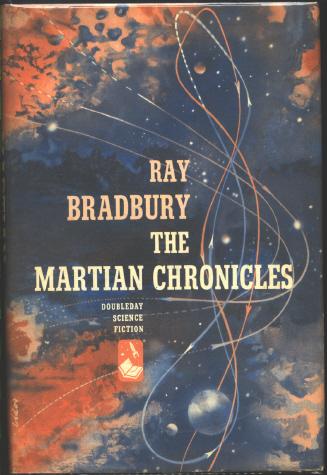
The Martian Chronicles (1950) is Ray Bradbury's fix-up novel, a chain of linked short stories following waves of settlers leaving a troubled Earth to colonize Mars and encountering its native Martians, before Earth itself is ultimately consumed by nuclear war.
- Richard Forthrast
series2 books2011
similar byscience fiction+1 more
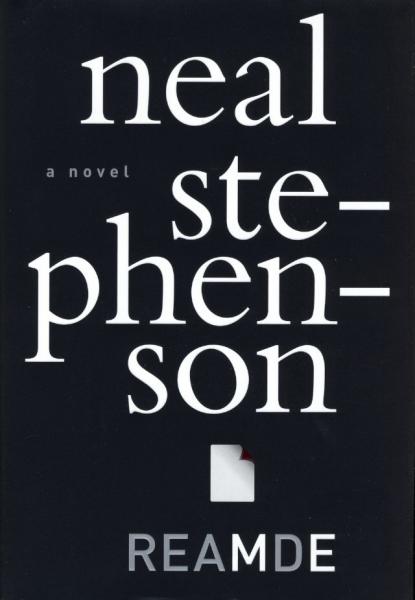
Neal Stephenson's Richard 'Dodge' Forthrast novels open with Reamde, a globe-spanning thriller that starts when ransomware inside an MMORPG economy pulls Richard's extended family into a real-world hostage crisis involving hackers, jihadists and Russian mobsters. The sequel Fall; or, Dodge in Hell shifts registers entirely, following Richard's digitally preserved mind after death into an afterlife simulation built from his scanned brain. The two books share a protagonist and family but differ sharply in genre and scale.
- Luminous
Silvia Parkstandalone novel2025
similar byscience fictioneast asianear future
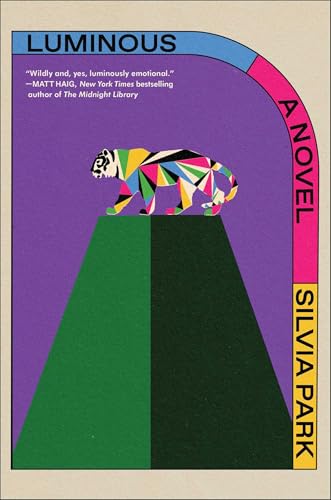
Luminous is a 2025 science fiction novel by Silvia Park. It follows three siblings, two human and one robotic, in a near-future reunified Korea. The novel received critical praise for its exploration of the nature of humanity with relationship to robots.
- These Memories Do Not Belong to Us
Yiming Mastandalone novel2025
similar byscience fictioneast asianear future
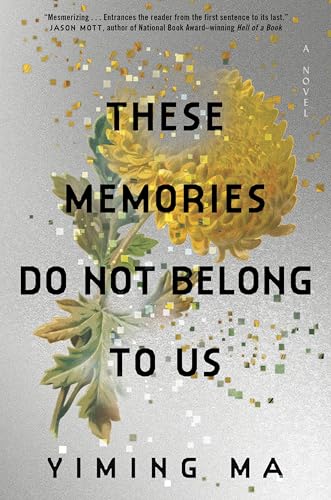
These Memories Do Not Belong To Us is a 2025 science fiction novel by Chinese Canadian author Yiming Ma, set in a world where memories can be transferred between minds, and a reimagined China known as the Qin Empire has become the sole global superpower.
- Childhood's End
Arthur C. Clarkestandalone novel1953
similar byscience fictionnear future
Childhood's End is a 1953 science fiction novel by the British author Arthur C. Clarke. The story follows a peaceful alien invasion of Earth by mysterious Overlords, whose arrival begins decades of apparent utopia under indirect alien rule, at the cost of human identity and culture.
- A Clockwork Orange
series4 books1962
completed
similar byscience fictionnear future
Anthony Burgess's 1962 novel is narrated by Alex, a teenage gang leader in a near-future Britain gripped by a youth subculture of extreme violence, recounting his crimes in Nadsat, an invented slang blending English with Russian-derived words. After his crimes catch up with him, Alex is made the subject of a controversial state program meant to forcibly reform his behavior, and the novel uses his ordeal to question whether imposed goodness is worth the loss of free will. It is a standalone novel.
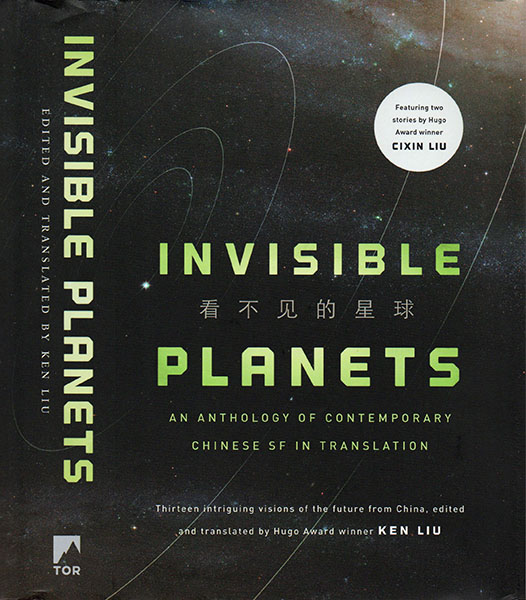
- Contemporary Chinese Science Fiction in Translation
series3 books2016
similar byscience fictioneast asianear future
- Blade Runner Universe
series6 books1968
similar byscience fictionnear future
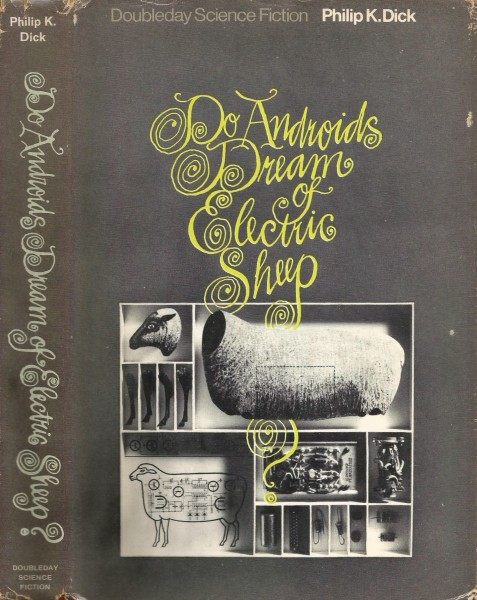
Philip K. Dick's 1968 novel Do Androids Dream of Electric Sheep? follows bounty hunter Rick Deckard as he tracks escaped androids through an irradiated, near-abandoned San Francisco, using the hunt to probe questions of empathy and what separates human from machine. The novel became the basis for Ridley Scott's 1982 film Blade Runner, and Marvel Comics later published an illustrated adaptation of that film. Together the two trace the story's path from prose original to screen and comic-page adaptation.
- The Martian
series2 books2012
similar byscience fictionnear future
Andy Weir's novel The Martian, first self-published in 2011 before a commercial re-release, follows astronaut Mark Watney after he is stranded alone on Mars when his crew presumes him dead and departs. Using scientific improvisation and dark humor, Watney works to keep himself alive long enough for a rescue to reach him. It is a single, self-contained survival story.
- The Handmaid's Tale
series3 books1985
similar byscience fictionnear future
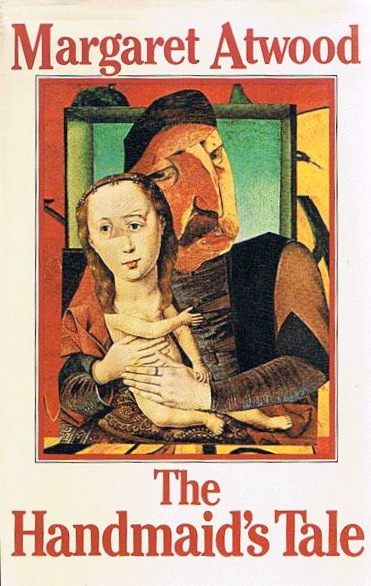
The Handmaid's Tale is Margaret Atwood's 1985 novel set in Gilead, a totalitarian theocracy that has overthrown the United States and forces fertile women into reproductive servitude as Handmaids; it is narrated by one such woman, Offred. Atwood returned to the world in her 2019 sequel The Testaments, set fifteen years later and narrated by three women, including the regime's Aunt Lydia. Together the two novels move from Gilead's grip on power toward the first cracks in it.