More like Abed
but
- I Am Legend
Richard Mathesonstandalone novel1954
similar byhorrorpost-apocalyptic
The last human survivor of the vampire epidemic has to maintain his defences against their onslaught, while attempting to research the cause and possibly solution to the plague. Robert Neville is the last living man on Earth... but he is not alone. Every other man, woman and child on the planet has become a vampire, and they are hungry for Neville's blood. By day he is the hunter, stalking the undead through the ruins of civilization. By night, he barricades himself in his home and prays for the dawn. How long can a man survive like this?
- Cell
Stephen Kingstandalone novel2006
similar byhorrorpost-apocalyptic
In Cell, King taps into readers fears of technological warfare and terrorism. Mobile phones deliver the apocalypse to millions of unsuspecting humans by wiping their brains of any humanity, leaving only aggressive and destructive impulses behind. Those without cell phones, like illustrator Clayton Riddell and his small band of "normies," must fight for survival, and their journey to find Clayton's estranged wife and young son rockets the book toward resolution.
- The Passage
series3 books2010
similar byhorrorpost-apocalyptic
The Passage is a novel series by Justin Cronin. There are three published books in the series. The film rights were acquired by Fox Entertainment Group in 2007 for adaptation into a film trilogy, but after 12 years of development and planning, it was changed to a television series, which premiered in January 2019 and was canceled after the first season.
- Under the Dome
Stephen Kingstandalone novel2009
similar byhorrorpost-apocalyptic
A small town in Maine finds itself suddenly cut off from the outside world by an impenetrable barrier, and the clash of personalities of the trapped people takes its inexorable devastating course.
- Rats
series4 books1974
completed
similar byhorror+1 more
The Rats, James Herbert's 1974 debut novel, imagines a plague of giant mutant rats overrunning London, told through a rotating cast of victims and survivors in the tradition of British disaster horror. It was followed by two sequels, Lair and Domain, which widen the outbreak first to the countryside and then to a besieged, apocalyptic city, completing a three-book trilogy.
- Forest of Hands and Teeth
series9 books2009
similar bypost-apocalyptic+1 more
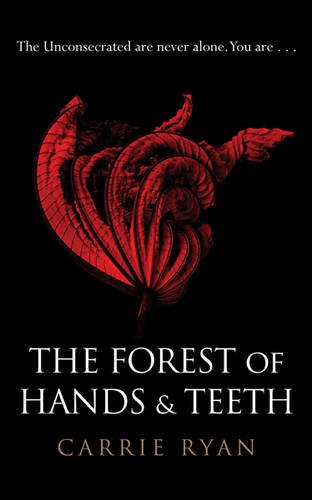
Carrie Ryan's debut trilogy is set generations after an apocalypse turned much of humanity into the mindless, cannibalistic "Unconsecrated," following young women in a small walled village whose protective fence keeps the undead out and its residents locked into a repressive, secretive society. The Forest of Hands and Teeth follows the first heroine's break from that village into the wider, undead-infested world; The Dead-Tossed Waves and The Dark and Hollow Places carry the aftermath forward through new narrators. It is YA horror more concerned with the fear and control inside the fences than with survivalist action.
- Swan Song
Robert R. McCammonstandalone novel1987
similar byhorrorpost-apocalyptic
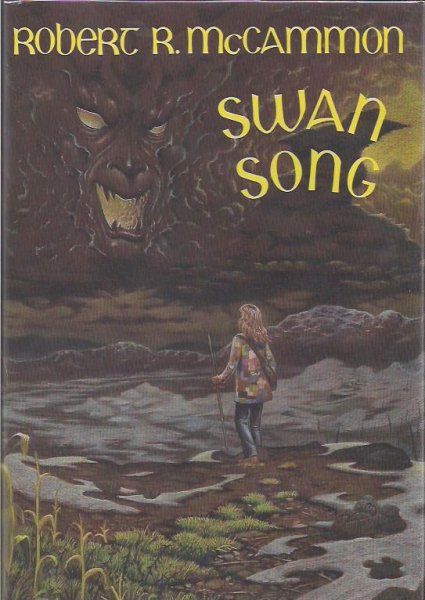
Swan Song is a 1987 post-apocalyptic horror novel by American novelist Robert R. McCammon. Published June 1, 1987, the novel describes the aftermath of a nuclear war that provokes an evolution in humankind. Swan Song won the 1987 Bram Stoker award, tying with Stephen King's Misery.
- The Enemy (Charlie Higson)
series7 books2009
similar byhorrorpost-apocalyptic
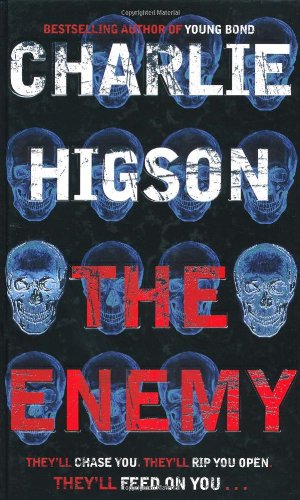
The Enemy opens Charlie Higson's seven-book YA horror series, set in London after a mysterious sickness turns every adult into a voracious, flesh-hungry threat and leaves children to fend for themselves in a city gone feral. Each subsequent book (The Dead, The Fear, The Sacrifice, The Fallen, The Hunted, The End) follows different groups of survivors as the outbreak's scope and cause slowly come into focus. Higson also wrote a short companion book, Geeks vs. Zombies, alongside the main series.
- Zom-B
series12 books2012
similar byhorrorpost-apocalyptic
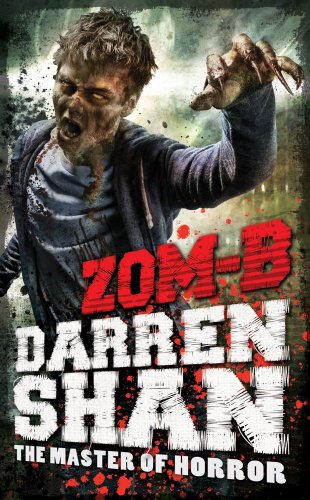
Zom-B is a young adult zombie apocalyptic-thriller novel series by written by Irish author Darren O'Shaughnessy under the pen name Darren Shan. The series is told by first-person perspective of B Smith, a teenager turned into a zombie. Like Shan's previous series, Zom-B is notable for exploring themes of racism, xenophobia, and the sociological concept of "us and them".
- Zone One
Colson Whiteheadstandalone novel2011
similar byhorrorpost-apocalyptic
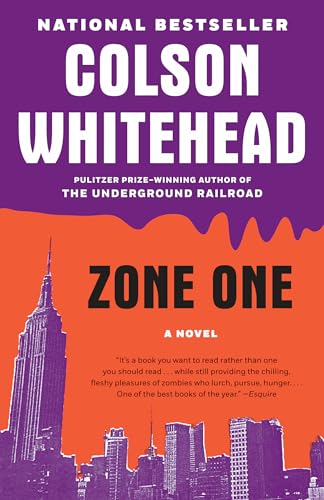
Zone One is a 2011 novel by American author Colson Whitehead. Blending elements of genre fiction and literary fiction, the novel takes place in a post-apocalyptic United States ravaged by zombies. Whitehead has stated that the novel was partly an attempt to return to his adolescent fascination with horror writer Stephen King and science fiction icon Isaac Asimov.
- '48
James Herbertstandalone novel1996
similar byhorrorpost-apocalyptic
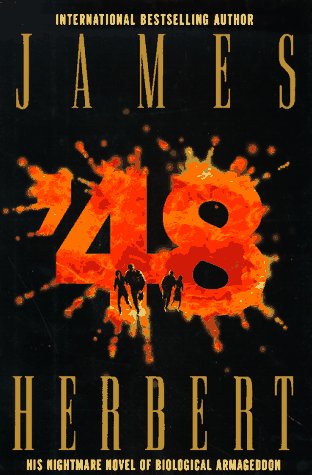
Blood sucking, plague-ridden fascists roam the dark, seething ruins of London. Their prey is the select few who have not fallen victim to the blood-tainting biological warfare dispensed in the final convulsive collapse of the Nazis. A lone hero and his companion dog skirt the corpses, smashed cars, and bitter memories while trying to stay one step ahead of their bloodless fate and complete their mission of obsession. When others who are also relentlessly pursued stumble onto the duo's path, their haunting odyssey takes them underground. Beneath the bowels of a broken city an explosive disaster and a deadly betrayal propel the powers of good into a cataclysmic clash with the forces of evil.
- Rot & Ruin
series22 books2010
part of Night
similar bypost-apocalyptic+1 more
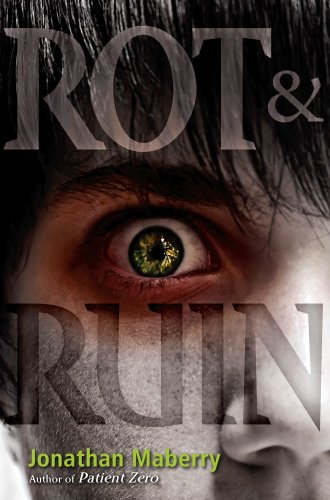
Jonathan Maberry's Rot & Ruin is set fourteen years after a zombie plague, following fifteen-year-old Benny Imura, who reluctantly apprentices to his older half-brother as a bounty hunter clearing the dead beyond his fenced-in California town. The series follows Benny's growing understanding of both the zombies and the living people who prey on the fragile post-apocalyptic order, across four more novels and companion story collections.
- Dracula
universe144 books1897
Start hereDracula · Start here
similar byhorror
"Come freely. Go safely. And leave something of the happiness you bring" — so the Count greets his guest at the threshold of the Carpathians, and the great door shuts behind. Bram Stoker's Dracula (1897) is the wellspring of the modern vampire: the account of a centuries-old Transylvanian nobleman who quits his crumbling castle for the crowded lodging-houses of London, and the handful of ordinary people — a young solicitor, a doctor of the mad, a professor of stranger learning — who must piece together what he is before he makes the whole city his fold. It is told wholly in fragments: journal entries, letters, telegrams, ships' logs, phonograph cylinders, each hand recording only its own sliver of the dark. Around that single novel a whole crypt of continuations has grown, raised by many writers across a century. Fred Saberhagen's Dracula Sequence hands the Count the microphone, retelling the old events from his own wry, aggrieved lips and following him into later intrigues. Robert Lory's brisk 1970s Dracula Horror Series revives him as a reluctant weapon turned against fouler things; Peter Tremayne's trilogy reaches back along his bloodline; and further sequels, a Quincey Morris spin-off, and Dracula's Children carry the shadow onward. This is a loose shared world built upon a public-domain figure, not one governed continuity — each author remakes him as villain, antihero, or sympathetic narrator. Begin, always, with Stoker's original; the letters and the mounting dread stand entirely on their own. From there follow whichever door tempts you — Saberhagen's The Dracula Tape for the monster's own confession, Lory or Tremayne for tales that never glance back at the Borgo Pass again.
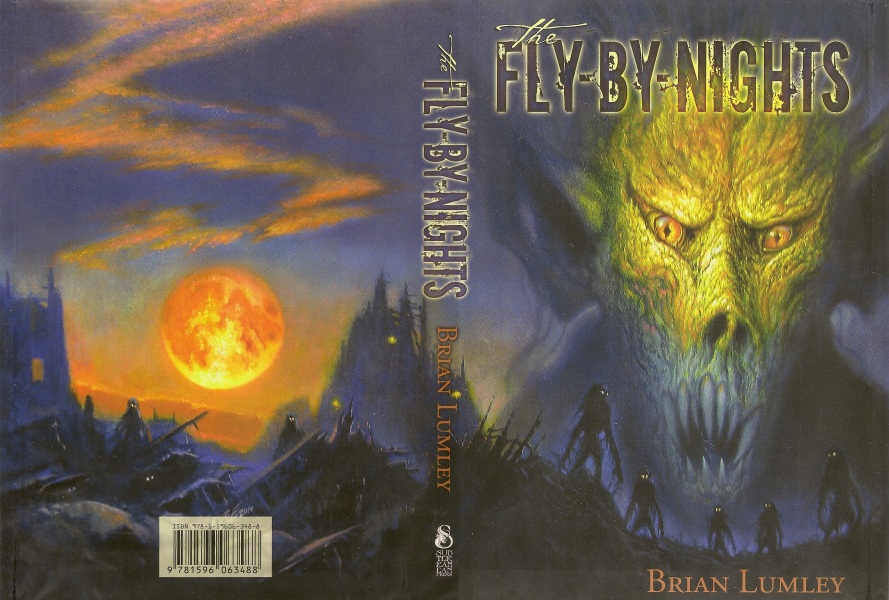
- The Fly-by-Nights
Brian Lumleystandalone novel2011
similar byhorrorpost-apocalyptic
150 years ago the world ended. Bombs fell, winter came, and the survivors fled underground in search of safety. Now they struggle to preserve what's left -- sleeping by day, and battling fearsome vampiric fly-by-nights after sunset.