More like Abigail
anchored on:fantasy
but
- Chronicles of the One
series3 books2017
similar byfantasy+4 more
Nora Roberts's trilogy opens after a pandemic has devastated the world and the survivors find that magic - "the uncanny" - has risen among the population, splitting society between those gifted with it and those who fear and hunt them down. Year One, Of Blood and Bone, and The Rise of Magicks follow a chosen young woman, Fallon Swift, as she is trained toward a confrontation with the story's dark power in a reordered, post-collapse world. It is a departure for Roberts into full post-apocalyptic fantasy rather than her usual contemporary settings.
- Artemis Fowl
series15 books2001
similar byfantasyadventurousfaeour worldcontemporary
Artemis Fowl is a series of eleven fantasy novels by Irish author Eoin Colfer, revolving around various members of the Fowl family. The first cycle, the Artemis Fowl series, consists of eight books, and the second cycle, The Fowl Twins series, is a trilogy. Both releases have received commercial success and positive critical reception in the children's literature genre, and also originated graphic novel adaptations. As of 2013, the novels have sold more than 21 million copies in 44 languages, and are one of the best-selling series of all time. In 2010, Artemis Fowl was voted by readers as their favorite Puffin Books title of all time.
- His Dark Materials Universe
universe13 books1995
Start hereHis Dark Materials · Start here
similar byadventurousfantasy+1 more
In a world like ours and unlike it, every human soul walks outside the body in the shape of an animal — a daemon, who speaks, who cannot be lied to, and who settles into one fixed form only when childhood ends. This is the country of His Dark Materials: a company of parallel worlds across which an invisible dust of consciousness drifts down upon the waking mind; where a Church that calls itself the Magisterium would sooner sever a child's soul than let that Dust be understood; and where a golden instrument, the alethiometer, answers true questions for anyone with the patience to read it. Philip Pullman's design stands in two trilogies and a scatter of shorter tales. His Dark Materials — Northern Lights (published in America as The Golden Compass), The Subtle Knife, and The Amber Spyglass — carries Lyra Belacqua from the rooftops of a shadow Oxford across the borders between worlds. The Book of Dust returns to that same territory: La Belle Sauvage looks back to Lyra as an infant carried through a great flood, while The Secret Commonwealth follows her grown and less certain into adulthood, with a concluding volume closing the arc. Around them sit slim companion books — Lyra's Oxford, Once Upon a Time in the North, Serpentine — and Nicholas Wright's stage adaptation, made with Pullman's blessing. The register is grave and luminous at once, its title lifted from Milton and its quarrel drawn from Blake: a story that takes the side of curiosity, love, and the physical world against any authority that would forbid them. It reads as adventure — armoured bears, aeronauts, knife-cut windows between skies — yet reasons like philosophy. Begin with Northern Lights / The Golden Compass and read the first trilogy through before turning to The Book of Dust, which deepens everything the first has already made you feel.
- Alderley
series4 books1960
similar byfantasycontemporary+3 more
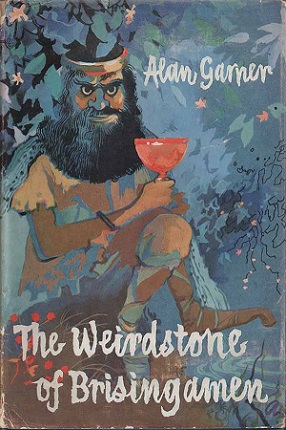
Alan Garner's Alderley books begin with The Weirdstone of Brisingamen (1960) and The Moon of Gomrath (1963), children's fantasies set around the real Cheshire hill of Alderley Edge and drawn from its local legends. Garner returned to the same setting and characters decades later in Boneland (2012), a far darker novel for adults in which the now-grown Colin, afflicted with amnesia covering his entire childhood, tries to piece together what really happened to him and his sister. The three books span most of Garner's writing life rather than forming one continuous trilogy.
- Spiderwick
universe17 books2003
Start hereSpiderwick Chronicles · Start here
similar byfantasycontemporary+3 more
Do not read this book. So warns the note bound into Arthur Spiderwick's Field Guide to the Fantastical World Around You — which is exactly why Jared Grace opens it, and why the hidden world opens onto him. Move into a crumbling family estate with your mother, your twin brother, and your fencing-champion sister, and you may find the walls already occupied: a testy house brownie, goblins with a taste for cats, and an ogre named Mulgarath who wants the Guide for himself. Holly Black writes and Tony DiTerlizzi draws this small, densely illustrated world across two linked cycles. The Spiderwick Chronicles runs five slim volumes — The Field Guide, The Seeing Stone, Lucinda's Secret, The Ironwood Tree, and The Wrath of Mulgarath — a single mounting emergency told at a breathless clip. Beyond the Spiderwick Chronicles carries the danger south to swampy Florida across three more books, where new children meet giants, nixies, and a wyrm stirring underground. The companion Field Guide itself catalogues every sprite and troll in loving naturalist detail. The pleasure here is the specimen-collector's: faerie treated as a taxonomy to be sketched, labelled, and survived, cozy domestic scale shot through with real teeth. Begin with The Field Guide and read straight through in publication order — the five originals first, then the Beyond trilogy. Slender enough to finish in an afternoon, sharp enough to send you checking the cupboard afterward.
- Spiderwick Chronicles
series14 books2003
part of Spiderwick
similar byfantasycontemporary+3 more
Holly Black and Tony DiTerlizzi's Spiderwick Chronicles follow the three Grace children after they move into the run-down Spiderwick Estate and discover a hidden field guide to the fantastical creatures living around them. Their new knowledge draws them into escalating conflicts with dangerous faeries, building to a confrontation with the shapeshifting ogre Mulgarath, who wants the guide's secrets to conquer both the human and faerie worlds.
- Five Children Universe
series27 books1902
completed
similar byfantasy+2 more
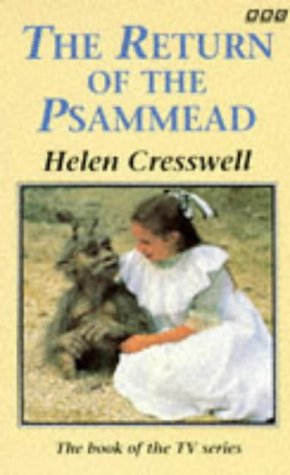
Two separate modern continuations of E. Nesbit's Psammead stories were written decades apart by different authors: Helen Cresswell's The Return of the Psammead (1992) brings the wish-granting sand fairy back for a new set of children, while Kate Saunders's Five Children on the Western Front (2014) follows the now-grown Lamb and his siblings as the First World War arrives, in a more somber sequel to Nesbit's original trilogy. Neither book is by Nesbit herself, and the two have no direct connection to each other beyond both drawing on her creation. Later writers have kept returning to Nesbit's premise long after her own trilogy ended.
- Lewis Barnavelt
series12 books1973
similar byfantasycontemporary+2 more
Lewis Barnavelt is a lonely orphan who moves in with his uncle Jonathan, an amateur wizard, in a rambling old house that turns out to hide a doomsday clock built into its walls by a previous, malevolent owner. John Bellairs introduced the character in The House with a Clock in Its Walls (1973), illustrated by Edward Gorey, and after Bellairs's death Brad Strickland continued the series from his notes and outlines for most of its later volumes. It blends gothic horror atmosphere with a gentler, more whimsical strain of children's fantasy.
- The Land of Stories
series13 books2012
similar byadventurousfantasy
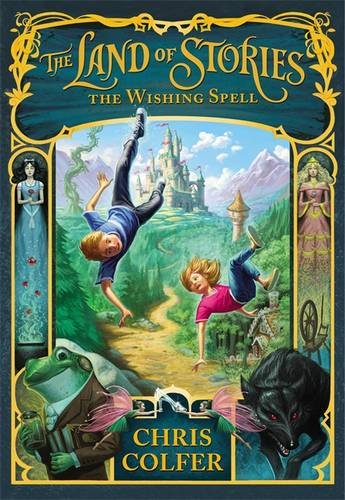
The Land of Stories is a series of children's fiction, adventure, and fantasy books written by American author, actor, and singer Chris Colfer. The first book, The Wishing Spell, was released on July 17, 2012, with the sixth and final book published in July 2017. Colfer started plans for a prequel series in 2016, and has since published three books in this series, beginning with A Tale of Magic... in 2019.
- Faerie Wars
series5 books2003
completed
similar byfantasyadventurousfae+1 more
The Faerie Wars Chronicles is a fantasy action young adult novel series written by James Herbert Brennan. The first book in the series, Faerie Wars was published in the United Kingdom in February 2003 by Bloomsbury Publishing. As of 2011, there are five books in the ongoing series.
- The Hollows
series39 books2004
similar bywitchescontemporary+2 more
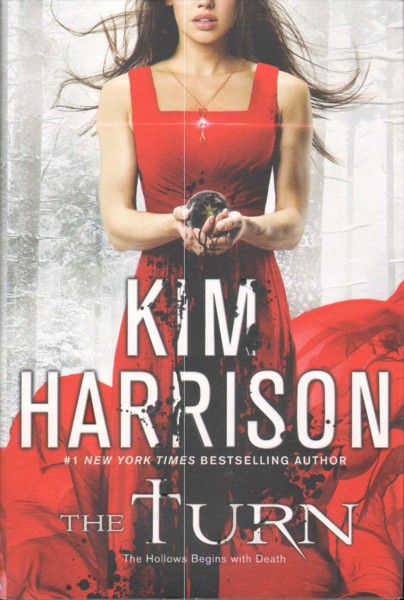
The Hollows is a series of urban fantasy novels by Kim Harrison, originally published by HarperCollins Publishers and by Ace Books since 2020. The series includes 18 novels, numerous novellas and short stories, two graphic novels, and one compendium resource; a 19th novel, Absolute Demon, is forthcoming in 2027.
- Watership Down
series21 books1972
completed
similar byfantasyadventurousour worldcontemporary
Watership Down is Richard Adams's 1972 novel following a group of rabbits who flee the destruction of their warren and cross the English countryside of Hampshire in search of a new home, developing over the journey a full rabbit culture of language, proverbs, and mythology. Adams returned to the same world in 1996 with Tales from Watership Down, a collection of nineteen short stories mixing rabbit folklore with further adventures of characters from the novel.
- The Sisters Grimm
series9 books2005
similar byfantasyadventurousour worldcontemporary+1 more
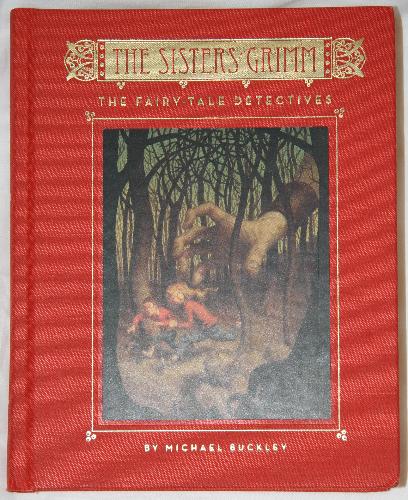
The Sisters Grimm is a children's fantasy series written by Michael Buckley and illustrated by Peter Ferguson. The series is partially based on the works and lives of the Brothers Grimm, with the titular protagonists, Sabrina Grimm and Daphne Grimm, being their fictional descendants, and the supporting cast featuring many characters from the Grimms’ collection of fairytales.
- Stardust
Neil Gaimanstandalone novel1998
similar byfantasyadventurousfae+1 more
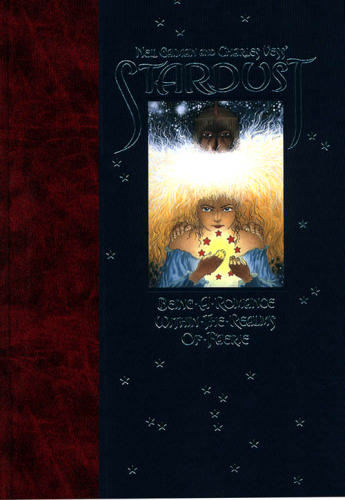
Stardust is a 1999 fantasy novel by British writer Neil Gaiman, usually published with illustrations by Charles Vess. Stardust has a different tone and style from most of Gaiman's prose fiction, being consciously written in the tradition of pre-Tolkien English fantasy, following in the footsteps of authors such as Lord Dunsany and Hope Mirrlees. It is concerned with the adventures of a young man from the village of Wall, which borders the magical land of Faerie.
- Peter Pan Universe
universe112 books1902
Start herePeter Pan · Start here
similar byfantasy
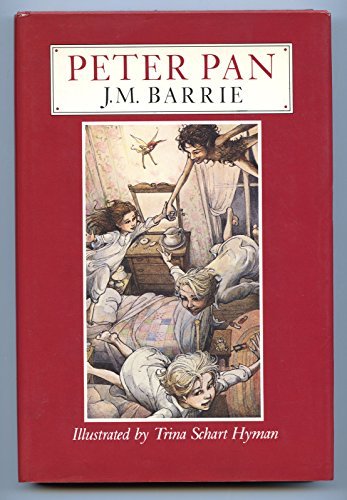
Second star to the right, and straight on till morning — and there it is, the island that every child dreams once and then, growing up, contrives to forget. Neverland: mermaids in the lagoon, a ticking crocodile with a clock in its belly, a pirate nursing his severed hand, and above it all the boy who will not grow up, forever flying, forever heartless in the lovely careless way that only children are. It begins with J. M. Barrie — the 1904 stage play, the chapters of Kensington Gardens, and the novel Peter and Wendy that fixed Peter, Wendy, Tinker Bell, Hook and the Lost Boys in place. From that small window a wide world has flown. Dave Barry and Ridley Pearson supply the how-it-all-began in their Starcatchers books, chasing falling starstuff aboard a doomed ship to explain why one orphan came to fly and never age. A whole bright shelf tends Tinker Bell's Pixie Hollow — the Disney Fairies and Fairy Haven tales, Kiki Thorpe's Never Girls — while Heidi Schulz hands the wheel to Hook's own daughter, and stranger, dimmer corners carry the island into far darker weather. Many hands, one archipelago; no single map governs them all. What sets it apart is the sweetness with a blade in it — wonder shadowed always by the ache of leaving, of mothers who keep the window open and children who fly home too late. Newcomers should begin where it began, with Barrie's Peter and Wendy, then, for the origin, take the Starcatchers books in their own order. The rest of Neverland waits, as it always does, for whoever still remembers how to reach it.
- His Dark Materials
series8 books1995
part of His Dark Materials Universe
similar byadventurousfantasy+1 more
His Dark Materials is a trilogy of fantasy novels by Philip Pullman consisting of Northern Lights, The Subtle Knife (1997), and The Amber Spyglass (2000). It follows the coming of age of two children, Lyra Belacqua and Will Parry, as they wander through a series of parallel universes. The novels have won a number of awards, including the Carnegie Medal in 1995 for Northern Lights and the 2001 Whitbread Book of the Year for The Amber Spyglass. In 2003, the trilogy was ranked third on the BBC's The Big Read poll.
- James and the Giant Peach
Roald Dahlstandalone novel1961
similar byfantasyadventurousour worldcontemporary
James and the Giant Peach is a children's novel written in 1961 by British author Roald Dahl. The first edition, published by Alfred Knopf, featured illustrations by Nancy Ekholm Burkert. There have been re-illustrated versions of it over the years, drawn by Michael Simeon, Emma Chichester Clark, Lane Smith and Quentin Blake. It was adapted into a film of the same name in 1996 which was directed by Henry Selick, and a musical in 2010.
- The Dresden Files
series56 books2000
similar bycontemporary+3 more
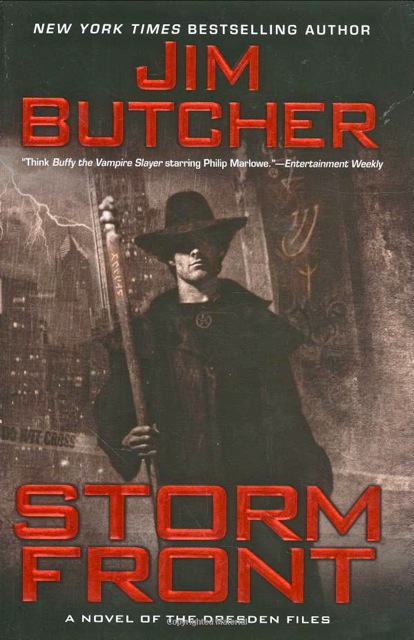
The Dresden Files is an urban fantasy series written by American author Jim Butcher. The novels are narrated from the first-person perspective of Harry Dresden, a private detective and wizard, as he investigates supernatural disturbances in contemporary Chicago. The first entry, Storm Front, was published in 2000 by Roc Books.
- Liddy
series3 books2005
similar byfantasyfaecontemporary+2 more
Kate Thompson's The New Policeman opens what's often called the Liddy series: in the Irish town of Kinvara, teenage J.J. Liddy discovers that time is leaking out of the human world and into Tir na nÓg, the land of the fairies, threatening to unravel both realms. The Last of the High Kings and The White Horse Trick continue the Liddy family's entanglement with that fairy world.
- Modern Tale of Faerie
series4 books2002
similar byfantasyfaeour worldcontemporary+1 more
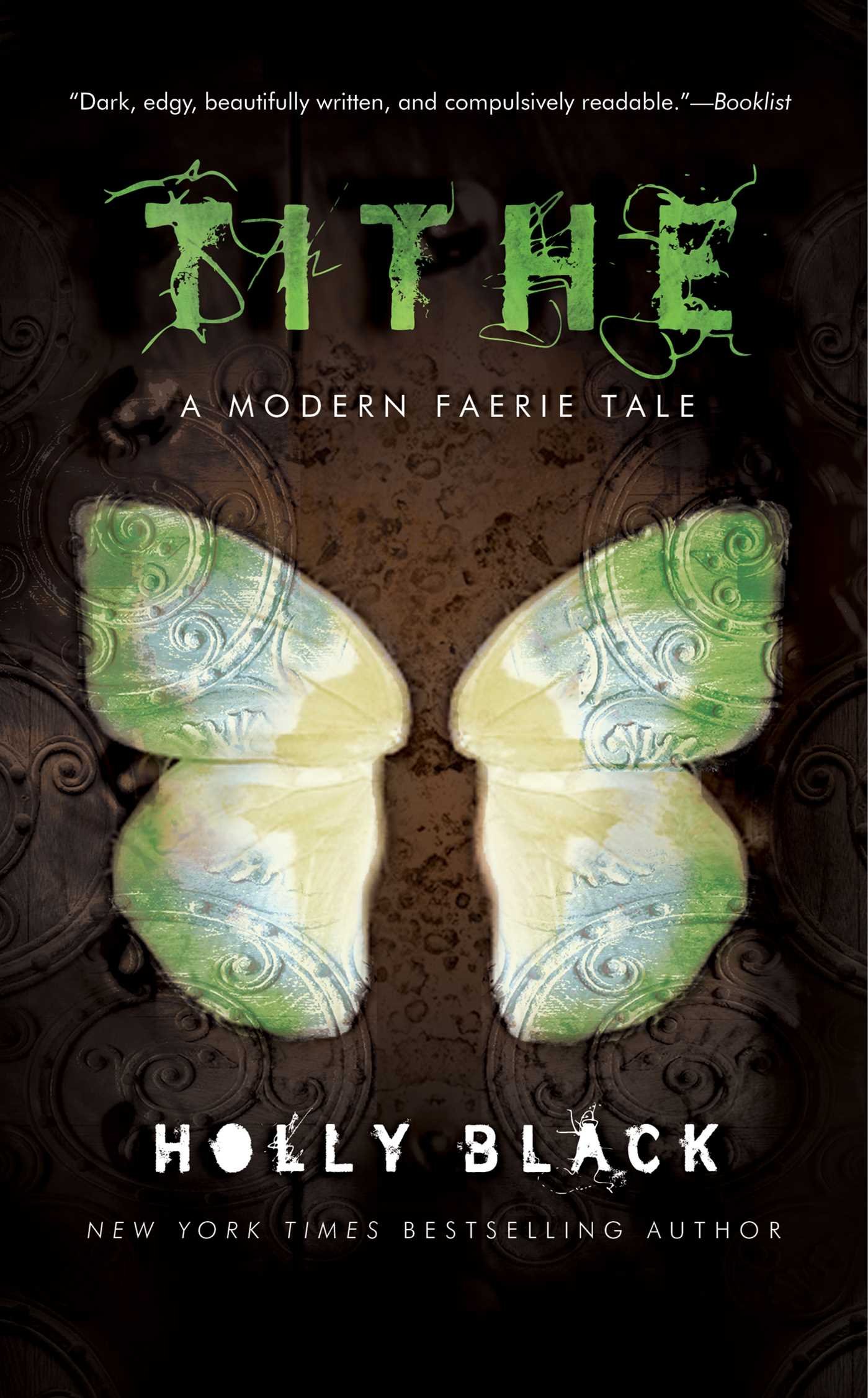
Tithe opens Holly Black's Modern Faerie Tales with Kaye Fierch, a teenage drifter who discovers she's a changeling with real faerie blood after returning to her childhood home on the Jersey Shore, and gets pulled into the political violence of the local faerie courts. The trilogy, continuing through Valiant and Ironside, keeps its "suburban fantasy" grounded in ordinary New Jersey settings rather than a storybook otherworld.
- Gale Family
series3 books2009
similar byadventurousour worldcontemporary+3 more
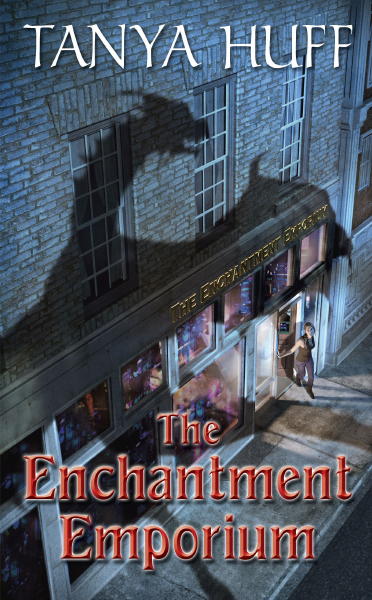
Tanya Huff's urban fantasy trilogy follows Alysha Gale, a member of a Canadian family whose charms can reshape reality, after she inherits her grandmother's junk shop in Calgary and discovers it doubles as a gateway into the fae world. Across The Enchantment Emporium, The Wild Ways, and The Future Falls, different Gale women take the lead as the family is repeatedly called on to contain magical trouble the ordinary world can't handle.