Loreful
HomeDiscover
Search series, authors…⌘K
Loreful

Reading orders for SF/F series and shared universes — with your place kept in every one.

Explore

UniversesSeriesWorksAuthorsAtlas

Help

FAQAboutSite map

Account & legal

Sign inCreate accountPrivacyTerms

Data

Built on ISFDB, Wikipedia, Wikidata and Open Library. Curated reading orders carry their reasoning on the page; the rest follow publication order. Data sources & licenses

© Loreful · data: ISFDB · CC BY

More like About Grace

anchored on:literary & generalour world

but

Mood

The mood the book leaves you in.

  • The reading experience is propelled by journeys, exploration, and physical risk; excitement and forward momentum dominate over dread or introspection.
  • Joy and loss are deliberately mixed; the resolution grants characters something real while taking something else away, leaving warmth and sorrow together.
  • The book demands work from the reader — dense prose, difficult structure, unfamiliar ideas, or morally uncomfortable material — as part of its intended effect.
  • Grim events, cruelty, or despair dominate the atmosphere, and the book does not soften them with comfort or comic relief.
  • The atmosphere is quietly unsettling — wrongness, unease, and the uncanny pervade the book without necessarily escalating into overt horror.
  • The book is built to move the reader; character feeling is foregrounded and major scenes aim at a strong emotional response.
  • Humor is a primary aim and the prose plays for laughs — comic situations, wit, or dialogue produce sustained comedy, not occasional levity.
  • The book insists that things can improve; effort and decency are shown to matter, and the arc bends toward better outcomes even through hardship.
  • The book teaches as it goes — real facts, history, science, or craft are conveyed in enough depth that learning is part of the reading experience.
  • The book is designed to uplift and motivate, presenting perseverance or achievement in a way that invites the reader to aspire or act.
  • The overall register is cheerful and easygoing; stakes are kept gentle and the book avoids dwelling on pain or dread.
  • Withheld information drives the experience; the book sustains enigmas and secrets the reader wants resolved, whatever its genre.
  • The book is contemplative and inward-looking, giving more weight to thought, memory, and meaning than to external events.
  • The book works as comfort reading — low tension, a soothing pace, and an atmosphere the reader can unwind in.
  • Grief, loss, or melancholy set the dominant register, and the book lets sorrow stand rather than resolving it into comfort.
  • Sustained suspense is the point; the book keeps the reader braced for what happens next through danger, pressure, or impending revelation.
  • Playful invention and charm define the register — fanciful conceits, light absurdity, and a narration that delights in its own oddity.

About

What the story runs on.

  • Stories in which extraterrestrial beings are central — as characters, cultures, or the object of the plot.
  • Stories structured as a quest — a journey undertaken to find, deliver, or destroy something of great import.
  • Stories in which staying alive against nature, catastrophe, or scarcity is the central problem.
  • Stories of lovers kept apart by law, family, faith, or station, where the obstacle to love is the plot.
  • Stories in which a friendship — its making, testing, or loss — is the emotional center.
  • Stories of growing up — a young protagonist crossing from childhood into adult knowledge and responsibility.
  • Stories about who a character truly is — self-discovery, doubled lives, and the search for a self.
  • Stories about mourning — living through the death of a loved one and what loss does to the survivors.
  • Stories in which a buried family truth — hidden parentage, crimes, or shames — surfaces and reorders the present.
  • Stories driven by maneuvering for power — factions, conspiracies, and statecraft conducted in shadow.
  • Stories in which war itself is the subject — combat, occupation, and what warfare does to soldiers and civilians.
  • Stories organized around investigating a killing — the case, the clues, and the pursuit of the killer, in any genre's clothing.

Shelf

Where it sits in the library.

    • Fiction built on magic or other supernatural elements that have no scientific explanation.
    • Secondary-world fantasy at large scale, where the fate of nations or the world turns on the protagonists' struggle.
    • Fantasy set in a recognizably modern city or contemporary world where the supernatural intrudes on everyday life.
    • Fantasy that blends in horror's atmosphere and imagery, keeping a fantastical frame around grim or frightening material.
    • Action-driven fantasy following warriors or rogues with personal stakes against sorcerous threats, rather than world-spanning conflicts.
    • Fantasy set in a real historical period or a close analogue of one, with magic woven into the era.
    • Fantasy in which protagonists cross from the ordinary world into another world through a portal or similar passage.
    • Fiction that retells or reworks a traditional fairy tale in a new form or setting.
    • Fantasy drawing directly on myths, legends, and folklore, retelling them or building on their figures and logic.
    • Fantasy of ghosts, vampires, shapeshifters, psychics, and similar phenomena, usually set in an otherwise ordinary world.
    • Fiction mixing science-fictional trappings with overtly magical or impossible elements in one setting.
    • Low-stakes fantasy emphasizing comfort, community, and everyday pleasures over conflict and peril.
    • Speculative fiction of pervasive moral ambiguity, violence, and cynicism that rejects heroic conventions — fantasy and SF alike.
      • Fiction that extrapolates from science and technology — future societies, space travel, or speculative inventions — within at least nominally natural laws.
      • Science fiction of interstellar scope — starships, galactic polities, and adventure across star systems.
      • Science fiction committed to scientific rigor, where technical plausibility constrains the story.
      • Science fiction centered on armed forces and warfare, told largely from a military point of view.
      • Science fiction of networked, corporate-dominated near futures, pairing high technology with social decay.
      • Science fiction styled on nineteenth-century steam-powered technology, often in a Victorian or pseudo-Victorian setting.
      • Fiction depicting an oppressive or catastrophic society, presented as a warning.
      • Fiction set after civilization's collapse, following survivors in the ruins of the old world.
      • Fiction in which characters move between past and future, and the mechanics or consequences of that travel drive the plot.
      • Fiction exploring a world where a historical event went differently and history diverged from ours.
      • Science fiction about humanity's first encounter and communication with an alien intelligence.
      • Science fiction in which extraterrestrial forces attack or occupy Earth and humanity resists.
      • Fiction whose primary aim is to frighten or unsettle the reader through dread, menace, or the monstrous.
      • Horror of vast, indifferent, incomprehensible entities before which humanity is insignificant, in the Lovecraft tradition.
      • Horror of decaying houses, buried family secrets, and oppressive atmosphere in the Gothic literary tradition.
      • Horror centered on hauntings and the returning dead.
      • Horror located in the mind — paranoia, obsession, and unreliable perception rather than external monsters.
      • Horror built around the reanimated dead and survival amid their outbreaks.
      • Horror defined by explicit, transgressive gore that refuses to cut away from violence.
      • Speculative fiction of the strange and uncanny that resists both natural explanation and standard genre categories.
      • Fiction organized around solving a crime or puzzle, typically following an investigator toward the identification of a culprit.
      • A puzzle-first mystery that lays out clues so the culprit's identity can be deduced before the reveal.
      • Crime fiction of moral ambiguity, fatalism, and hard-edged style, set among the corrupt and the doomed.
      • A mystery following the realistic routines of police work — forensics, interviews, and case-building.
      • A gentle mystery with an amateur sleuth, a small community, and violence kept off the page.
      • A mystery set in a past era, where the investigation works within that period's methods and society.
      • Fast-paced fiction driven by imminent danger, pursuit, or high-stakes conspiracy, built to sustain tension.
      • A thriller of espionage — agents, tradecraft, and intelligence services in conflict.
      • A thriller centered on lawyers and the courtroom, where litigation carries the suspense.
      • A thriller driven by detailed contemporary or near-future technology, often military or scientific.
      • A thriller whose tension comes from mental states and manipulation between characters rather than external action.
      • Fiction whose central plot is a romantic relationship and its development toward an emotionally satisfying resolution.
      • Romance in which one or both partners are supernatural beings, blending fantasy elements into the love story.
      • A fantasy-romance hybrid in which the romantic arc and the fantasy plot carry equal weight.
      • Romance set in a past era, with courtship shaped by the period's society and manners.
      • Romance set in the present day, without supernatural or historical elements.
      • Fiction set in a real past period, where the historical setting materially shapes characters and events.
        • General and literary fiction emphasizing prose style, character interiority, or formal ambition over genre plot conventions.
        • Fiction in a realistic world where magical events occur and are treated as ordinary, in the tradition of Latin American literature.
        • Fiction that ridicules people, institutions, or society in order to criticize them.
        • Fiction of dreamlike, irrational imagery and logic that breaks from realistic representation.
        • Fiction that plays with narrative convention through metafiction, fragmentation, and self-reference.
        • Fiction propelled by journeys, exploration, and physical peril, where action and survival carry the plot.
        • Adventure fiction of ships and seafaring — naval engagements, voyages, and life at sea.
        • Fiction of the American frontier West — gunmen, ranchers, and lawmen, typically in the late nineteenth century.
        • Fiction centered on soldiers, campaigns, and the experience of warfare, historical or imagined.
          • Fiction written primarily to amuse, using comedic situations, wit, or parody as its organizing principle.
            • Multi-generational fiction following a family or dynasty across decades, with inheritance and kinship as the through-line.
              • Fiction whose world runs on explicit game mechanics — levels, stats, and skills that characters can see and exploit.
                • Fiction about costumed or superpowered heroes and their conflicts with comparable villains.

                Practical

                How long a commitment, whether it stands alone, and whether it has finished.

                Tap a chip to ask for it · tap again to rule it out · once more to clear. Numbers show what would be left.

                • Cover of Phases of Gravity
                  Phases of Gravity

                  Dan Simmons · standalone novel · 1989

                  similar byliterary & generalgrief and lossour worldlate 20th centuryreflectiveidentity

                  Follows Richard Baedecker, an Apollo astronaut who walked on the moon, through his midlife crisis. He meanders through India, Glen Oak Illinois, the mountains of Colorado, and the coastline of Oregon, checking up on his son and his former Apollo crewmates.

                • Cover of Hearts in Atlantis
                  Hearts in Atlantis

                  series · 6 books · 1994

                  similar byliterary & general+3 more

                  Stephen King's Hearts in Atlantis (1999) is a single book of five linked, chronologically ordered stories rather than a multi-volume series, connected by recurring characters and centered on the Vietnam-era 1960s. The opening novella, Low Men in Yellow Coats, follows young Bobby Garfield's friendship with Ted Brautigan, an old man with psychic powers being hunted by sinister figures called the low men, and sets up the themes of lost innocence and quiet betrayal that run through the rest of the book.

                • Cover of The Mighty Red
                  The Mighty Red

                  Louise Erdrich · standalone novel · 2024

                  similar byliterary & general+2 more

                • Cover of The Ice Queen
                  The Ice Queen

                  Alice Hoffman · standalone novel · 2005

                  similar byliterary & generalgrief and lossour worldemotionalreflectiveidentity

                  The Ice Queen is a 2005 novel by Alice Hoffman, published by Little, Brown.Wishes... burn your tongue the moment they're spoken, and you can never take them back.

                • Cover of A Sudden Light
                  A Sudden Light

                  Garth Stein · standalone novel · 2014

                  similar byliterary & generalour worldlate 20th centuryreflective+1 more

                  A Sudden Light is the fourth novel by American author Garth Stein published in 2014 by Simon & Schuster, set in 1990 in Washington State.

                • Cover of Lost
                  Lost

                  Gregory Maguire · standalone novel · 2001

                  similar byliterary & generalgrief and lossour worldreflectiveidentity

                  Lost is a 2001 novel by American author Gregory Maguire. Unlike many of Maguire's other adult novels, Lost is set in the real world. The novel's concept is that the protagonist is a distant relative of the man who inspired Charles Dickens' character of Ebenezer Scrooge.

                • Cover of The Midnight World
                  The Midnight World

                  series · 2 books · 2020

                  similar bygrief and lossemotionalidentity+3 more

                • Cover of Todd Family
                  Todd Family

                  series · 2 books · 2013

                  similar byliterary & generalgrief and lossreflective+2 more

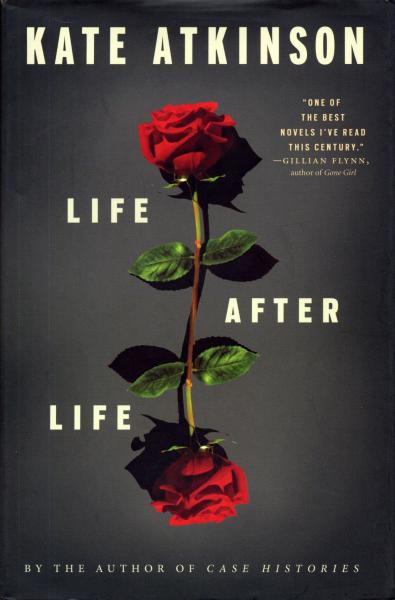
                  Kate Atkinson's Life After Life gives Ursula Todd, born on a snowy night in 1910, a strange gift: whenever she dies, she's born again into a slightly altered version of the same life, gradually piecing together enough intuition across her many deaths to try to change the course of the twentieth century's worst events. The companion novel A God in Ruins turns to Ursula's brother Teddy, a bomber pilot, following his one, single life forward from the war through old age. The two books share a family and a set of preoccupations -- memory, war, chance -- without forming a conventional sequential series.

                • Cover of Replay
                  Replay

                  Ken Grimwood · standalone novel · 1987

                  similar bygrief and lossour worldlate 20th centuryreflectiveidentity

                  Replay is a fantasy novel by American writer Ken Grimwood, first published by Arbor House in 1987. It won the 1988 World Fantasy Award for Best Novel.

                • Cover of Empire of the Sun
                  Empire of the Sun

                  series · 2 books · 1984

                  completed

                  similar byreflective+5 more

                  J. G. Ballard's Empire of the Sun draws on his own childhood to follow Jim, a British boy separated from his parents in Japanese-occupied Shanghai during World War II and interned in a civilian camp for the rest of the war. Ballard revisited the same period and a version of the same character years later in The Kindness of Women, a more explicitly fictionalized continuation into Jim's adult life. Empire of the Sun is the more directly autobiographical and better-known of the two.

                • Cover of Never Let Me Go
                  Never Let Me Go

                  Kazuo Ishiguro · standalone novel · 2005

                  similar bygrief and lossliterary & generalour worldreflectiveidentity

                  Never Let Me Go is a 2005 science fiction novel by the British author Kazuo Ishiguro. It was shortlisted for the 2005 Man Booker Prize, for the 2006 Arthur C. Clarke Award and the 2005 National Book Critics Circle Award. Time magazine named it the best novel of 2005. It included the novel in its '100 Best English-language novels published since 1923—the beginning of TIME'. It also received an ALA Alex Award in 2006. A film adaptation directed by Mark Romanek was released in 2010.

                • Cover of Shark Heart
                  Shark Heart

                  Emily Habeck · standalone novel · 2023

                  similar byliterary & generalgrief and lossour worldemotionalidentity

                  Subtitled "A Love Story"

                • Cover of Click
                  Click

                  Gregory Maguire, Tim Wynne-Jones, David Almond, Eoin Colfer, Margo Lanagan, Nick Hornby, Roddy Doyle, Deborah Ellis, Ruth Ozeki & Linda Sue Park · standalone novel · 2007

                  similar byliterary & generalgrief and lossour worldemotionalreflectiveidentity

                  A camera. Some photographs. A box with seven shells. And many mysteries. Those are the things that Maggie and Jason inherited from their grandfather, the famed photojournalist George "Gee" Keane. Gee traveled from Ireland to Russia, Japan to Australia, taking pictures of people at work, at war, in sports, and at play. Now Jason receives Gee's photographs and camera--though he has no idea what to do with them. And Gee leaves Maggie with the puzzle of the seven shells--one that might take her whole life to solve. As Maggie and Jason use these gifts, they will discover all the people their grandfather was...and all the people they might yet become. All royalties from the sale of this book will benefit Amnesty International.

                • Cover of The Edible Woman
                  The Edible Woman

                  Margaret Atwood · standalone novel · 1969

                  similar byliterary & generalour worldlate 20th centuryreflectiveidentity

                  The Edible Woman is the first published novel by Canadian writer Margaret Atwood, published in 1969. It is the story of a young woman, Marian, whose sane, structured, consumer-oriented world starts to slip out of focus. Following her engagement, Marian feels her body and her self are becoming separated. Marian begins endowing food with human qualities that cause her to identify with it, and finds herself unable to eat, repelled by metaphorical cannibalism. In a foreword written in 1979 for the Virago edition of the novel, Atwood described it as a protofeminist rather than feminist work.

                • Cover of Sacrament
                  Sacrament

                  Clive Barker · standalone novel · 1995

                  similar byliterary & generalreflectiveidentity+2 more

                  Sacrament is a 1996 novel by British author Clive Barker. It follows a wildlife photographer who is obsessed with documenting species of animals that are faced with extinction. It is set in Yorkshire, England, San Francisco and Hudson Bay, Canada and explores how his obsession is connected to his upbringing in Yorkshire. The Author described it as "a story about how we become who we are and how we must deal with what we are by facing up to including the things that happened to us in childhood, good and bad. It's also about what's happening to our planet."

                • Cover of Brazzaville Beach
                  Brazzaville Beach

                  William Boyd · standalone novel · 1990

                  similar byliterary & generallate 20th centuryreflectiveidentity+1 more

                  Brazzaville Beach is a novel by William Boyd, for which he was awarded the James Tait Black Memorial Prize for 1990, and the McVitie's Prize for Scottish Writer of the Year. The book tells the story of a woman, Hope Clearwater, researching chimpanzees, and the circumstances that brought her to Africa. It is Boyd's first novel with a female protagonist and the first to be written, at least in part, from a first person female perspective. Boyd said that rather than try to consider how a woman, as opposed to a man, would respond to certain situations he focused on developing and understanding Hope's character and personality.

                • Cover of Black & White
                  Black & White

                  Lewis Shiner · standalone novel · 2008

                  similar byliterary & generalour worldlate 20th centuryreflective+1 more

                  When Michael follows his dying father to North Carolina, a lifetime of lies begins to unravel. His pursuit of his father's past--haunted by voodoo, adultery and murder--takes him to a place called Hayti, once the most prosperous black community in the South. Now the mysteries of Michael's own heritage become a matter of life and death, as racial conflicts barely restrained since the 1960s erupt again.

                • Cover of Bright's Passage
                  Bright's Passage

                  Josh Ritter · standalone novel · 2011

                  similar byliterary & generalgrief and lossour worldemotionalreflective

                  Bright's Passage is the debut novel by singer/songwriter Josh Ritter. It is published by Dial Press and was released June 28, 2011. The first chapter had been previously released for free download on Ritter's official website.

                • Cover of Violet & Claire
                  Violet & Claire

                  Francesca Lia Block · standalone novel · 1999

                  similar byliterary & generalour worldemotionalreflectiveidentity+1 more

                  This is the story of two girls, racing through space like shadow and light. A photo negative, together they make the perfect image of a girl. Violet is the dark one, dressed in forever black, dreaming Technicolor dreams of spinning the world into her very own silver screen creation. Claire is like a real-life Tinker Bell, radiating love and light, dressing herself in wings of gauze and glitter, writing poems to keep away the darkness. The setting is L.A., a city as beautiful as it is dangerous, and within this landscape of beauty and pain Violet and Claire vow to make their own movie. Together they will show the world the way they want it to be, and maybe then the world will become that place--a place where people no longer hate or fight or want to hurt. But when desire and ambition threaten to rip a seamless friendship apart, only one thing can make two halves whole again--the power of love.Francesca Lia Block's latest novel is a beautifully told story that boldly combines the world of film with the lyrical graceful language of poetry. The voices of two friends--one dark, one light--combine to tell a larger tale of love and loss, and the strength that comes from believing in dreams.

                • Cover of Black Woods, Blue Sky
                  Black Woods, Blue Sky

                  Eowyn Ivey · standalone novel · 2025

                  similar byliterary & generalour world+2 more

                • Cover of The Gargoyle
                  The Gargoyle

                  Andrew Davidson · standalone novel · 2008

                  similar byliterary & generalgrief and lossour worldemotional

                  The Gargoyle is the debut novel by Andrew Davidson. It was published in 2008.

                • Cover of The Vampire Chronicles
                  The Vampire Chronicles

                  series · 15 books · 1976

                  completed

                  similar byour world+2 more

                  The Vampire Chronicles is a series of Gothic vampire novels and a media franchise, created by American author Anne Rice, that revolves around the fictional character Lestat de Lioncourt, a French nobleman turned into a vampire in the 18th century.

                • Cover of Blackbird House
                  Blackbird House

                  Alice Hoffman · standalone novel · 2004

                  similar byliterary & generalgrief and lossour worldreflective+1 more

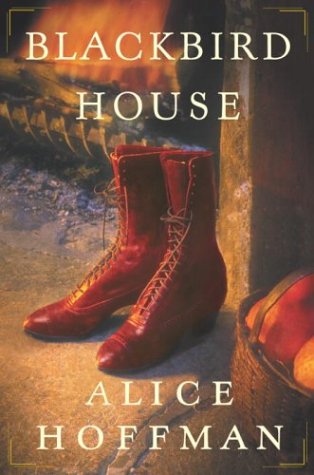
                  Blackbird House is a novel by Alice Hoffman, published by Doubleday in 2004.

                • Cover of Cat's Eye
                  Cat's Eye

                  Margaret Atwood · standalone novel · 1988

                  similar byliterary & generalgrief and lossemotionalreflective

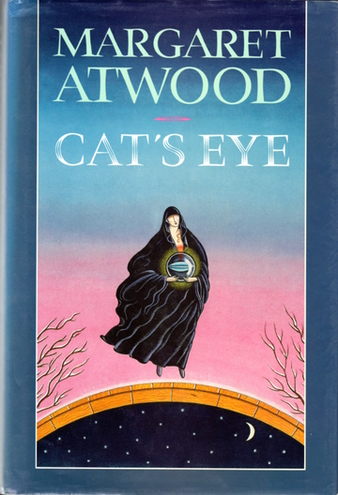
                  Cat's Eye is a 1988 novel by Canadian writer Margaret Atwood about fictional painter Elaine Risley, who vividly reflects on her childhood and teenage years. Her strongest memories are of Cordelia, who was the leader of a trio of girls who were both very cruel and very kind to her in ways that tint Elaine's perceptions of relationships and her world — not to mention her art — into her middle years. The novel unfolds in mid-20th century Canada, from World War II to the late 1980s, and includes a look at many of the cultural elements of that time period, including feminism and various modern art movements. The book was a finalist for the 1988 Governor General's Award and for the 1989 Booker Prize.