More like Accelerando
anchored on:science fictiontechnological singularitynear futureshort story cyclehard science fictionartificial intelligence+3 more
but
- Diaspora
Greg Eganstandalone novel1997
similar bychallengingscience fictionhard science fictionspaceartificial intelligencemind uploadingother star systems+1 more
Diaspora is a hard science fiction novel by the Australian writer Greg Egan which first appeared in print in 1997. It originated as the short story "Wang's Carpets" which originally appeared in the Greg Bear-edited anthology New Legends. The story appears as a chapter of the novel.
- Singularity Sky
series2 books2003
similar bychallengingscience fictiontechnological singularityspaceartificial intelligenceother star systems+1 more
Singularity Sky and its sequel Iron Sunrise are collectively known as the Eschaton novels, after the godlike posthuman intelligence that seeded human colonies across space on the condition they never attempt time travel or threaten causality - rules tested when a low-tech colony world is destabilized by a group calling itself the Festival. Charles Stross uses the setup for a mix of space opera, economics, and diplomatic intrigue.
- Blindsight / Firefall
series3 books2006
similar byscience fictionchallenginghard science fictionspaceartificial intelligence+2 more
Blindsight sends a crew of radically modified posthumans (including a resurrected, genetically restored vampire) out to the Oort cloud after humanity detects an alien signal, only to make contact with something intelligent, wildly capable, and possibly not conscious at all — a first-contact story built around the question of whether self-awareness is actually useful. Peter Watts's Echopraxia is a same-timeframe "sidequel" rather than a direct sequel, following different characters through the fallout of the same first-contact event.
- Seveneves
Neal Stephensonstandalone novel2015
similar bychallengingnear futurescience fictionhard science fictionspacespace colonization
Seveneves is a science fiction novel by Neal Stephenson published in 2015. The story tells of the desperate efforts to preserve Homo sapiens in the wake of apocalyptic events on Earth after the unexplained disintegration of the Moon and the remaking of human society as a space-based civilization after a severe genetic bottleneck.
- Subjective Cosmology
series3 books1992
similar bychallengingnear futurescience fictionhard science fiction+3 more
- Jean le Flambeur
series3 books2010
similar bychallengingscience fictionspacehard science fictionartificial intelligenceother star systems+1 more
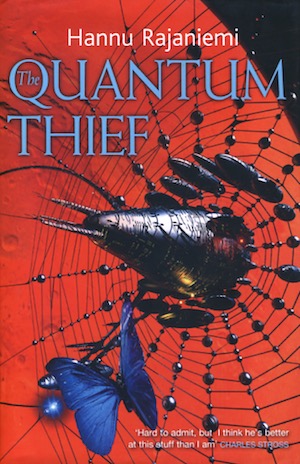
Jean le Flambeur is a master thief broken out of a virtual prison to pull off one more impossible heist, in a solar system reshaped by uploaded minds, post-human factions, and economies built on memory and privacy themselves. Hannu Rajaniemi's trilogy - The Quantum Thief, The Fractal Prince, The Causal Angel - is dense, idea-heavy hard SF that trusts readers to piece its future together from context rather than exposition.
- Blood Music
Greg Bearstandalone novel1985
similar bynear futurescience fictionhard science fictiontechnological singularity+2 more
Blood Music is a 1985 science fiction novel by American writer Greg Bear. It is an expanded version of a short story of the same title, originally published in the June 1983 issue of Analog and the winner of both the 1983 Nebula and 1984 Hugo awards for Best Novelette. The novel won the 1986 Prix Apollo Award, given to the best science fiction novel published in France during the preceding year, under the title La Musique du sang.
- Hegira
Greg Bearstandalone novel1979
similar bychallengingscience fictionhard science fictionspaceartificial intelligenceother star systems+1 more
Hegira is a 1979 science fiction novel by American writer Greg Bear. It deals with themes including cyclic time, artificial intelligence, artificial life, and artificial structures of planetary scale.
- Schild's Ladder
Greg Eganstandalone novel2002
similar bychallengingscience fictionhard science fictionspacetechnological singularity+1 more
Schild's Ladder is a 2002 science fiction novel by Australian author Greg Egan. The book derives its name from Schild's ladder, a construction in differential geometry, devised by the mathematician and physicist Alfred Schild.
- Manifold
series8 books1997
similar byscience fictionchallengingnear futurehard science fictionspace+1 more
Manifold: Time, Manifold: Space, and Manifold: Origin follow overlapping characters through three mutually exclusive answers to the Fermi Paradox - why we appear to be alone in the universe - each book taking one answer seriously enough to build an entire future history around it. Stephen Baxter designed the trilogy to be read in any order, since it plays out across a multiverse rather than a single continuous timeline.
- The Light of Other Days
Arthur C. Clarke & Stephen Baxterstandalone novel2000
similar bychallengingnear futurescience fictiontechnological singularity+2 more
An industrialist devises a technique to use tiny wormholes as light pipes to enable viewing of any event anywhere; and subsequently it becomes possible to use them to view any event in the past as well. The effects on society are enormous.
- Prelude to Space
Arthur C. Clarkestandalone novel1951
similar bynear futurescience fictionhard science fictioninformative+2 more
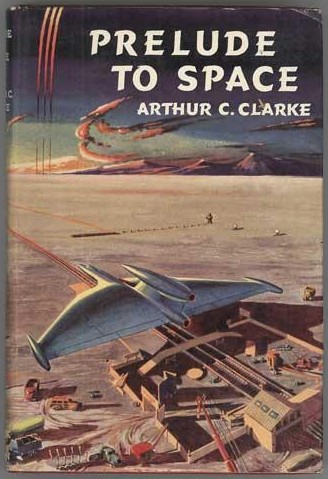
Prelude to Space is a science fiction novel written by British author Arthur C. Clarke in 1947. It appeared for the first time in 1951 as a paperback from World Editions Inc, as number three in its series of Galaxy novels. Sidgwick & Jackson published it in the UK in 1953, followed the next year by a United States hardcover edition from Gnome Press and a paperback from Ballantine Books.
- Transcension
Damien Broderickstandalone novel2002
similar bychallengingnear futurescience fictionhard science fictionartificial intelligencemind uploadingtechnological singularity
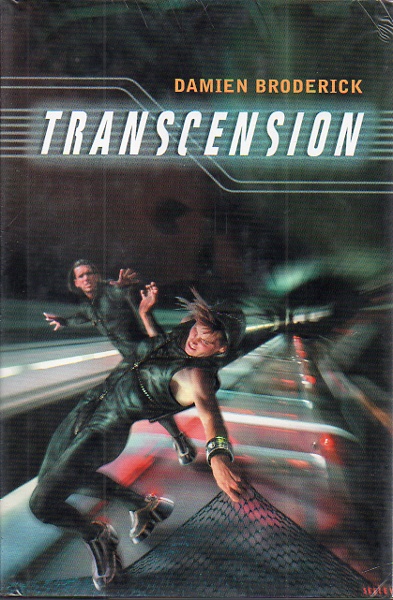
Transcension is a 2002 science fiction novel by Damien Broderick. It follows the story of lawyer Mohammed Kasim Abdel-Malik, whose body is placed in cryonic suspension and his mind used as a source for the artificial intelligence Aleph after he is killed.
- Macx Family
series10 books2001
similar byscience fictionnear future+6 more
Charles Stross's Accelerando follows three generations of the Macx family as human and posthuman intelligence accelerates toward and through a technological singularity, told across nine interlinked stories originally published separately before being combined into a fix-up novel. Its early chapters, following economist Manfred Macx giving away business ideas for a living, give way to increasingly alien later sections as uploaded minds and artificial intelligences outpace human comprehension. It won the Locus Award and remains one of the defining fictional treatments of the singularity concept.
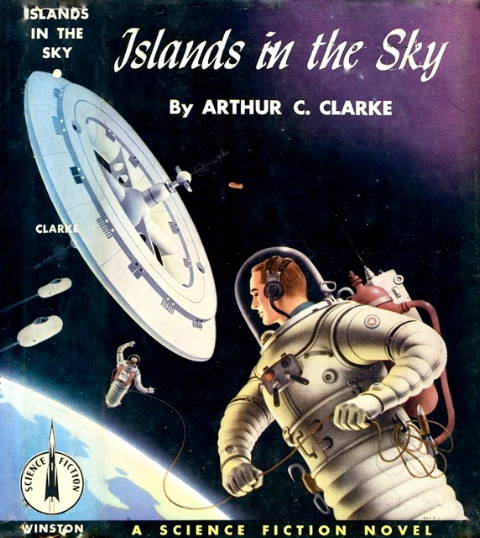
- Islands in the Sky
Arthur C. Clarkestandalone novel1952
similar bynear futurescience fictionspacespace colonization+1 more
Islands in the Sky is a 1952 science fiction novel by British writer Arthur C. Clarke. It is one of his earliest works. Clarke wrote the story as a travelogue of human settlement of cislunar space in the last half of the twenty-first century.
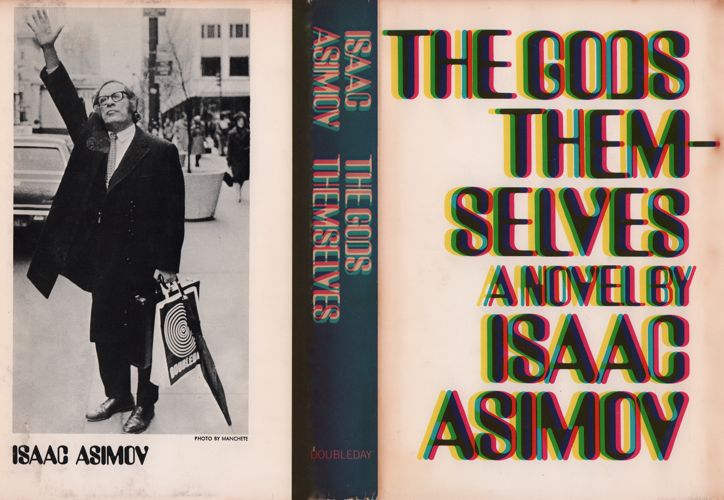
- The Gods Themselves
Isaac Asimovstandalone novel1972
similar bychallengingscience fictionhard science fictionother star systems+1 more
The Gods Themselves is a 1972 science fiction novel written by Isaac Asimov, and his first original novel in fifteen years. It won the Nebula Award for Best Novel in 1972, and the Hugo Award for Best Novel in 1973.
- The Diamond Age
Neal Stephensonstandalone novel1995
similar bynear futurescience fictionhard science fictionartificial intelligence+1 more
The Diamond Age: Or, A Young Lady's Illustrated Primer is a science fiction novel by Neal Stephenson. It is to some extent a Bildungsroman or coming-of-age story, focused on a young girl named Nell, set in a future world in which nanotechnology affects all aspects of life. The novel deals with themes of education, social class, ethnicity, and the nature of artificial intelligence. The Diamond Age was first published in 1995 by Bantam Books, as a Bantam Spectra hardcover edition. In 1996, it won both the Hugo and Locus Awards, and was shortlisted for the Nebula and other awards.
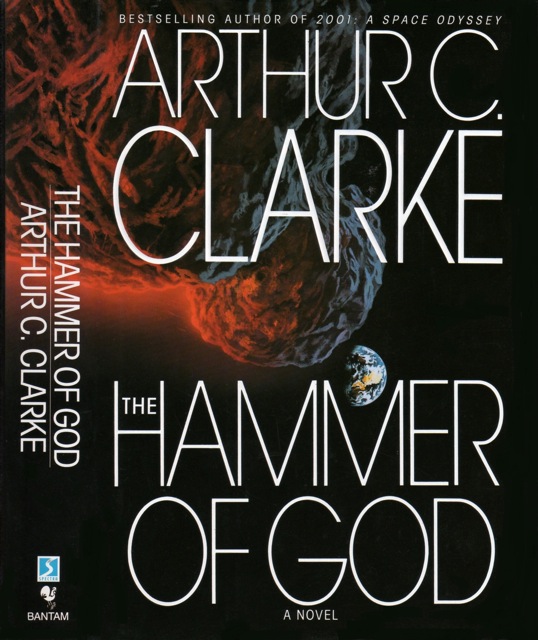
- The Hammer of God
Arthur C. Clarkestandalone novel1993
similar bynear futurescience fictionhard science fictionspaceinformative
The Hammer of God is a science fiction novel by Arthur C. Clarke originally published in 1993. Set in the year 2109, it deals with the discovery of an asteroid to be on course to collide with Earth and depicts the mission for deflecting the asteroid by using fusion thermal rockets.
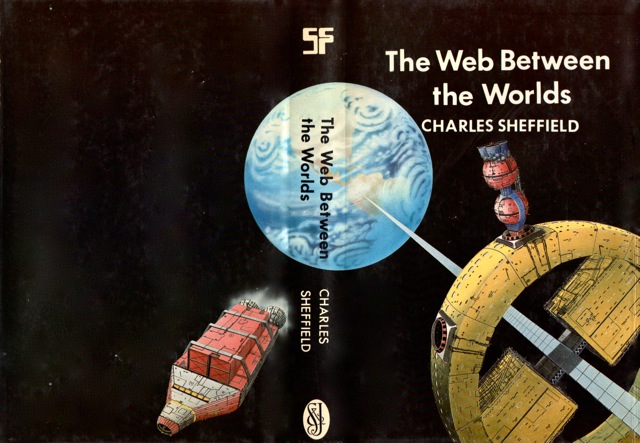
- The Web Between the Worlds
Charles Sheffieldstandalone novel1979
similar bynear futurescience fictionhard science fictionspaceinformativespace colonization
The Web Between the Worlds is the second science fiction novel by Charles Sheffield. It was first published as a trade paperback by Ace Books in 1979, by the first UK edition in hardcover by Sidgwick & Jackson Ltd the following year. Further editions were published by Arrow Books, Ace Books, Del Rey/Ballantyne and others; in 2001 Baen Books issued a revised edition. The novel has also been translated into German and French. This novel and the simultaneously published novel The Fountains of Paradise, by Arthur C. Clarke, are the first popularization of the space elevator.
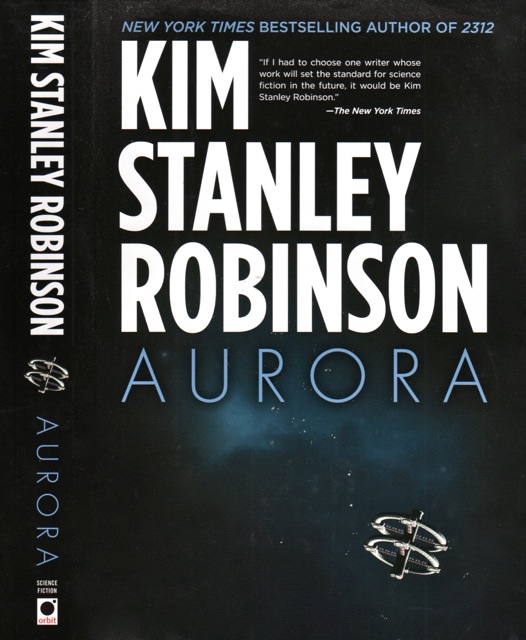
- Aurora
Kim Stanley Robinsonstandalone novel2015
similar bychallengingscience fictionhard science fictionartificial intelligenceother star systemsspace colonization
Aurora is a 2015 novel by American science fiction author Kim Stanley Robinson. The novel concerns a generation ship built in the style of a Stanford torus, traveling to Tau Ceti to start a human colony. The novel's primary narrative voice is that of the starship's artificial intelligence. Aurora was well received by critics.
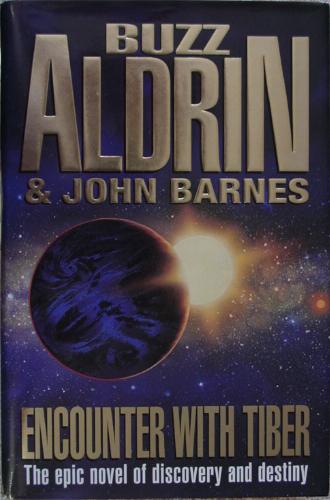
- Encounter with Tiber
John Barnes & Buzz Aldrinstandalone novel1996
similar bynear futurescience fictionhard science fictionspaceinformativeother star systems
Encounter With Tiber (ISBN 0-340-62451-5) is a 1996 science fiction novel written by former astronaut Buzz Aldrin and science fiction writer John Barnes. A working title, used on some advance covers for the British edition, was The Tides of Tiber.
- A Meeting with Medusa
series2 books1971
similar byscience fictionchallenginghard science fictionspaceother star systems+1 more
Arthur C. Clarke's A Meeting with Medusa follows an astronaut, badly injured in an earlier disaster, on a solo balloon expedition into Jupiter's atmosphere, where he encounters vast floating lifeforms unlike anything previously catalogued. Decades later, Stephen Baxter and Alastair Reynolds continued the story in The Medusa Chronicles, following the same protagonist across a much longer span of future history. The original novella won the 1972 Nebula Award.
- Heart of the Comet
David Brin & Gregory Benfordstandalone novel1986
similar bynear futurescience fictionhard science fictionspace+1 more
Heart of the Comet is a novel by David Brin and Gregory Benford about human space travel to Halley's Comet published in 1986. Its publication coincided with the comet's 1986 approach to the Earth.