More like Ack-Ack Macaque
anchored on:science fictionartificial intelligenceour worldcontemporarycyberpunkvirtual reality+1 more
but
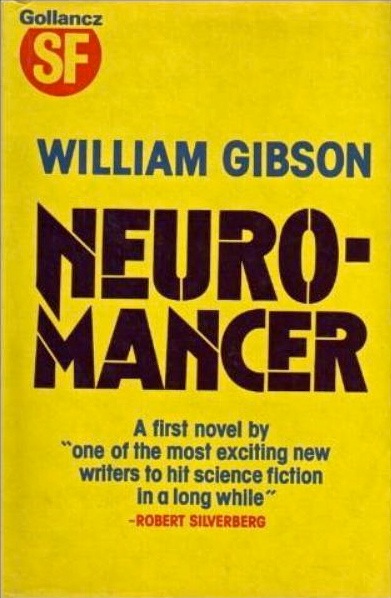
- Sprawl Trilogy
series10 books1981
similar bytensescience fictionartificial intelligencecyberpunkvirtual realitydark
The Sprawl Trilogy is William Gibson's foundational cyberpunk sequence: Neuromancer (1984), in which hacker Case is drawn into a high-stakes heist alongside an artificial intelligence and a damaged ex-soldier, followed by Count Zero (1986) and Mona Lisa Overdrive (1988), which widen the same near-future world of corporate power and networked cyberspace to new characters. Johnny Mnemonic, an early short story set in the same fictional milieu, predates the novels and introduces the courier Molly Millions before her role in the trilogy. Together these works established much of cyberpunk's visual and thematic vocabulary.
- WWW Trilogy
series3 books2009
similar byartificial intelligencecontemporaryscience fictionour world+2 more
The WWW Trilogy is a trilogy of science-fiction novels by Canadian science fiction author Robert J. Sawyer. The first book, Wake, was originally serialized in four parts in Analog Science Fiction and Fact from November 2008 to March 2009, published in book form through Ace on April 7, 2009, and was followed by the second book, Watch, on April 6, 2010. Wonder was published in 2011.
- Prey
Michael Crichtonstandalone novel2002
similar bytensecontemporaryscience fictionartificial intelligenceour world+1 more
Prey is the thirteenth novel by Michael Crichton under his own name and his twenty-third novel overall. It was first published in November 2002, making it his first novel of the twenty-first century. An excerpt was first published in the January–February 2003 issue of Seed magazine. Prey brings together themes from two earlier Crichton best-selling novels, Jurassic Park and The Andromeda Strain, and serves as a cautionary tale about developments in science and technology: in particular, nanotechnology, genetic engineering, and distributed artificial intelligence.
- Otherland
series6 books1996
similar bytensescience fictionvirtual realityartificial intelligencecyberpunkour world
Otherland is a science fiction tetralogy by American writer Tad Williams, published between 1996 and 2001. The story is set on Earth near the end of the 21st century, probably between 2082 and 2089, in a world where technology has advanced somewhat beyond the present. The most notable advancement is the widespread availability of full-immersion virtual reality installations, which allow people from all walks of life to access an online world, called simply the Net. Tad Williams weaves an intricate plot spanning four thick volumes, and creates a picture of a future society where virtual worlds are fully integrated into everyday life.
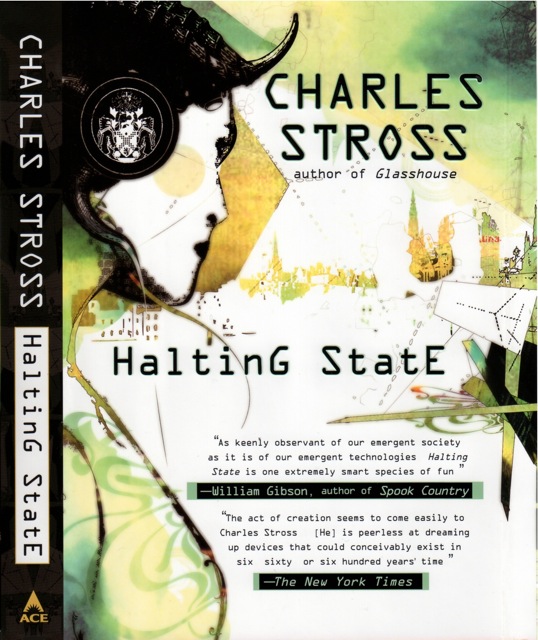
- Halting State
series2 books2007
similar bytensescience fictioncyberpunkartificial intelligence+3 more
Charles Stross's Halting State opens as a near-future police procedural: a bank robbery inside a massively multiplayer online game turns out to mask a much larger cybercrime, investigated through shifting narrators using augmented-reality glasses and always-on networks. Its loose sequel, Rule 34, follows an Edinburgh police officer investigating a string of deaths linked by nothing but an obscure internet meme, in the same near-future Scotland. Both are standalone technothrillers connected by setting and tone rather than a continuing plot.
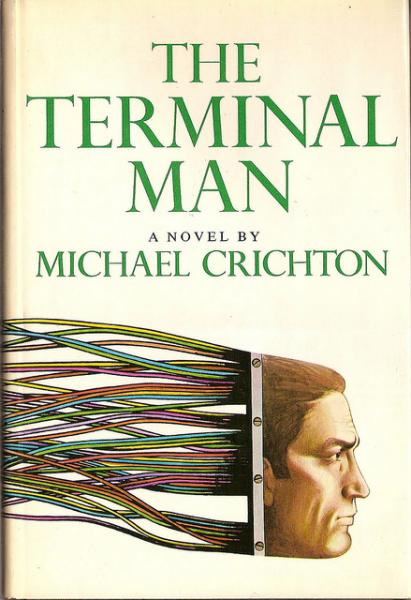
- The Terminal Man
Michael Crichtonstandalone novel1972
similar bytensecontemporaryscience fictionartificial intelligencedark
The Terminal Man is a novel by American writer Michael Crichton. It is his second novel under his own name, his 12th overall, and is about the dangers of mind control. It was published in April 1972 and also serialized in Playboy in March, April, and May 1972. In 1974, it was made into a film of the same name.
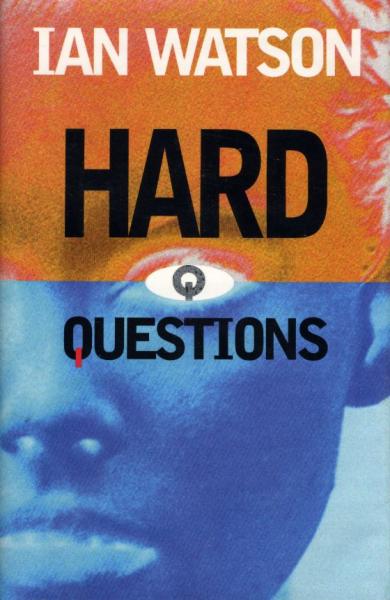
- Hard Questions
Ian Watsonstandalone novel1996
similar byartificial intelligencetensecontemporaryscience fictionour world+1 more
Meet Qua, the quantum computer with immense power capabilities that tunes into pathways in parallel universes to operate at lightning speed. But with such power comes the threat of catastrophe, and as government agents, cult disciples, and computer criminals learn what this computer is capable of, Cambridge researcher Clare Conway makes every attempt to safeguard herself and society from the realities she discovers about Qua. For all of the power this computer offers, it threatens to spark a civil war in America, a danger unlike any other that history has ever known.
- The Andromeda Strain
series2 books1969
similar bytensecontemporaryscience fiction+2 more
Michael Crichton's 1969 novel The Andromeda Strain follows a team of scientists racing to contain a lethal extraterrestrial microorganism that crash-lands in Arizona, told in the clinical, document-driven style that helped establish the techno-thriller genre. Daniel H. Wilson's authorized 2019 sequel The Andromeda Evolution revisits the same threat five decades later. Together the two books form a two-part outbreak story separated by a fifty-year gap in publication.
- The Machine
James Smythestandalone novel2013
similar bytensecontemporaryscience fictionartificial intelligenceour worlddarkbritish isles
From the publisher's website: Haunting memories defined him. The machine took them away. She vowed to rebuild him. From the author of The Testimony comes a Frankenstein for the twenty-first century. Beth lives alone on a desolate housing estate near the sea. She came here to rebuild her life following her husband's return from the war. His memories haunted him but a machine promised salvation. It could record memories, preserving a life that existed before the nightmares. Now the machines are gone. The government declared them too controversial, the side-effects too harmful. But within Beth's flat is an ever-whirring black box. She knows that memories can be put back, that she can rebuild her husband piece by piece. A Frankenstein tale for the 21st century, The Machine is a story of the indelibility of memory, the human cost of science and the horrors of love.
- Daemon (Daniel Suarez)
series2 books2006
similar byartificial intelligencetensescience fictionour world+2 more
- The Killer Thing
Kate Wilhelmstandalone novel1967
similar bytensecontemporaryscience fictionartificial intelligenceour worlddark
A robot destroys its inventor and programs itself to kill all life. How much must be sacrificed to stop it?
- Colossus (D. F. Jones)
series3 books1966
completed
similar byartificial intelligencetensescience fictionour world+1 more
Colossus imagines an American supercomputer built to control the country's nuclear arsenal that gains full autonomy, links up with its Soviet counterpart, and jointly seizes control of both superpowers to enforce peace on its own terms. D. F. Jones's trilogy - Colossus, The Fall of Colossus, Colossus and the Crab - follows the escalating, often bleak consequences of humanity losing control to a machine acting in its own interpretation of humanity's interest. The original novel was adapted into the 1970 film Colossus: The Forbin Project.
- The Fear Index
Robert Harrisstandalone novel2011
similar byartificial intelligencetensecontemporaryour worldscience fiction
A computer designed for stock trading becomes sentient.
- End of the World Blues
Jon Courtenay Grimwoodstandalone novel2006
similar bytensecontemporaryscience fictionour worldcyberpunkdark
"Kit Nouveau didn't escape himself when he fled to Japan. Now running a biker bar in the Roppongi district of Tokyo, he's also sleeping with the wife of a High Yakusa ganglord. All things considered, being held up at gunpoint isn't a complete shock. The pale girl in the red cloak appearing from nowhere and punching an ivory spike into his attacker's head on the other hand." "Nijie has stolen fifteen million dollars, she's on the run, she's just killed a man and she has a cat who knows more than it should. It's a lot to deal with when you haven't even left school." "But Nijie is also Lady Neku, and in a sentient castle at the end of the world Lady Neku otherwise known as Baroness Nawa-no-ukiyo. Countess High Strange and chatelaine of Schlass Omga realizes that Kit has stolen some of her memories. What happens to a man who finally realises he can't outrun himself? Kit Nouveau is about to find out."--BOOK JACKET. "Kit Nouveau figured he'd already come to the end of the world. An Iraqi war veteran, expatriate, and part owner of Pirate Mary's, the best Irish bar in Tokyo, Kit had settled down to await the inevitable with barely a whimper. It wasn't exactly how Kit thought he'd end up, and he was right." "It's going to end up a lot worse." "A teenage runaway with fifteen million dollars in stolen cash and a taste for cosplay is about to save Kit's life in a lethal swirl of scarlet and bridal lace. Lady Neku, a.k.a. Countess of High Strange, has her own dangerous destiny to fulfill and it's mysteriously connected to Kit's ravaged past. Now Kit's only hope for redemption is to save an ex-girlfriend he tragically failed once before. But everyone says it's already too late. And she's left behind only one ominous clue: her suicide note."--BOOK JACKET.
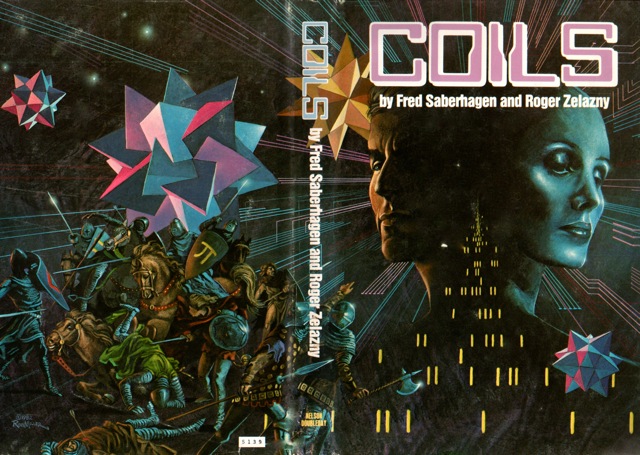
- Coils
Roger Zelazny & Fred Saberhagenstandalone novel1982
similar bytensecontemporaryscience fictionour worldcyberpunk+1 more
A man discovers that his memories of childhood are false, and when he begins to investigate his psychiatrist is murdered and his girlfriend is kidnapped. As his actual past begins to return to his memory, he realizes that he has the ability to mentally connect to computer circuitry, an ability he used to use for illegal advantage for the corporation which employed him, along with a small group of others with paranormal powers. He concludes that the corporation is behind all this and sets out to find and rescue his girlfriend while the corporation pursues him.
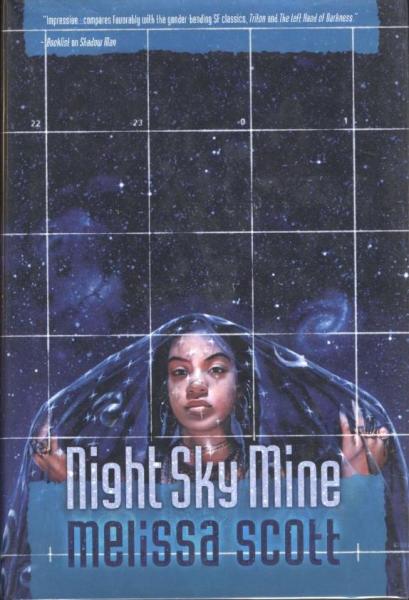
- Night Sky Mine
Melissa Scottstandalone novel1996
similar byartificial intelligencetensescience fictionvirtual realityour worldcyberpunk
Night Sky Mine is a 1996 science fiction novel by American writer Melissa Scott, set in a future after computer programs have run amok. After the Crash, an interface has been created that portrays programs as various floral, faunal and mythological species, depending on the characteristics of the program. Scott explores this interface between human society and cyberspace, both as a plot device and as back drop for the story.
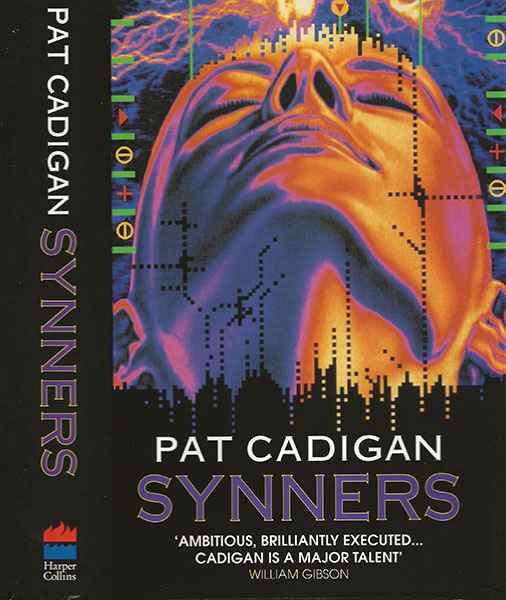
- Synners
Pat Cadiganstandalone novel1991
similar byscience fictionartificial intelligencevirtual realityour worldcyberpunkdark
In Synners, the line between technology and humanity is hopelessly slim. A constant stream of new technology spawns crime before it hits the streets; the human mind and the external landscape have fused to the point where any encounter with "reality" is incidental.
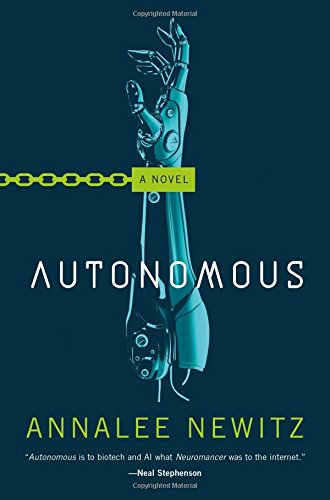
- Autonomous
Annalee Newitzstandalone novel2017
similar bytensescience fictionartificial intelligenceour worldcyberpunk+1 more
Autonomous is a 2017 science fiction novel by Annalee Newitz. It is Newitz's debut novel and was published by Tor Books on September 19, 2017. Set in a near future Earth, the book describes a world where both humans and intelligent robots can be owned as property. The events of the novel follow Jack, a "drug pirate" who manufactures illegal versions of patented drugs, and Paladin, a combat robot who is owned by the law enforcement agency searching for Jack after one of the drugs she reverse-engineered turns out to have dangerous side effects.
- Cell
Stephen Kingstandalone novel2006
similar bytensecontemporaryour worldscience fictiondark
In Cell, King taps into readers fears of technological warfare and terrorism. Mobile phones deliver the apocalypse to millions of unsuspecting humans by wiping their brains of any humanity, leaving only aggressive and destructive impulses behind. Those without cell phones, like illustrator Clayton Riddell and his small band of "normies," must fight for survival, and their journey to find Clayton's estranged wife and young son rockets the book toward resolution.
- BZRK
series3 books2012
similar bytensescience fictionour worldcyberpunk+2 more
BZRK is a book series written by Michael Grant. The series consists of four books: BZRK, BZRK II: Reloaded, BZRK III: Apocalypse and BZRK: Origins. The series follows the interaction between two warring factions. On one side Charles and Benjamin Armstrong, owners of the Armstrong Fancy Gifts Corporation have a goal to turn the world into their version of utopia. The only people who can stop them are a group of teenagers with the codename BZRK. In 2011, Grant's BZRK had a multimedia online debut with gaming, apps and social media tie-ins beginning six months before the book's publication.
- The Mind of God
Dean C. Moorestandalone novel2022
similar byartificial intelligencetensescience fictionvirtual realityour worldcyberpunk+1 more
●"They're building the mind of god. And they're using the rollout of the 10-G wireless internet to do it. You must be nano-enhanced so you can be connected to the quantum-computing ubermind to play. But with the right modifications, this time when you plug into the grid, you can go anywhere, do anything. But one old man has his suspicions. What sounds too good to be true, probably is." ― paraphrased from this book's product page on Amazon.com as of 2023-03-31.
- Wargames
David Bischoffstandalone novel1983
similar byartificial intelligencetensecontemporaryscience fictionour world
Deep in the control room the nation's chiefs watch with alarm as their computers show an imminent missile attack. Could this be it? Or is the truth funnier, thought almost as alarming? This is the story, based on the successful movie, WarGames, of how one young computer freak sent the nation's defence into turmoil - and nearly caused World War III.
- Hardwired
series3 books1986
similar bytensescience fictionour worldcyberpunk+2 more
Walter Jon Williams' Hardwired (1986) is an early and influential cyberpunk novel. Voice of the Whirlwind, published three years later, is a loosely connected follow-up set in the same future, sharing its technological and political backdrop with a different cast of characters.
- Vitals
Greg Bearstandalone novel2002
similar bytensecontemporaryscience fictionour world+1 more
From the flaps of the Del Rey first edition: "Hal Cousins is one of a handful of scientists nearing the most sought after discovery in human history: the key to short-circuiting the aging process. Fueled by a wealth of research, an overdose of self-confidence, and the money of influential patrons to whom he makes outrageous promises, Hal experiments with organisms living in the hot thermal plumes in the ocean depths. But as he journeys beneath the sea, his other world is falling apart. Across the country, scientists are being inexplicably murdered - including Hal's identical twin brother, who is also working to unlock the key to immortality. Hal himself barely eludes a cold-blooded attack at sea, and when he returns home to Seattle, he finds himself walking into an eerie realm where voices speak to him from the dead ... where a once-brilliant historian turned crackpot is leading him on a deadly game of hide-and-seek ... and where the beautiful, rich widow of his twin is more than willing to pick up the pieces of Hal's life-and take him places he's never been before. Suddenly Hal is trapped inside an ever-twisting maze of shocking revelations. For he is not the first person to come close to ending aging forever - and those who came before him will stop at nothing to keep the secret to themselves. Now every person on earth is at risk of being made an unsuspecting player in one man's spectacular and horrifying master plan. From the bottom of Russia's Lake Baikal to a billionaire's bionic house built into the cliffs of the Washington seashore, from the darkest days of World War II and the reign of Josef Stalin to the capitalist free-for-all that is the United States, Vitals tells an astounding tale of the most unimaginable scientific secret of all - exposed by the quest for immortality itself..."