More like Adaptation
anchored on:science fictionpost-apocalypticnear futurenorth america
but
- The Fireman
Joe Hillstandalone novel2016
similar byfound familydarknear futurenorth americascience fictionpost-apocalypticsurvivalplague and pandemic+1 more
The Fireman is a novel set in a post-apocalyptic time by American author Joe Hill. The novel, Hill's fourth, tells the tale of a deadly spore that has infected most of the world's population. Hill first spoke of the novel in 2013 in promotional interviews for his then-new novel NOS4A2. The novel was released on May 17, 2016.
- Earthseed
series7 books1993
similar bydarknear futurenorth americascience fictionpost-apocalypticsurvival+1 more
Octavia E. Butler's Earthseed novels, Parable of the Sower and Parable of the Talents, follow Lauren Olamina as she survives the collapse of a climate-ravaged, near-future United States and founds a belief system built on the idea that "God is Change." The two-book series was left unfinished at Butler's death; a planned third novel, Parable of the Trickster, was never completed. Later graphic-novel adaptations retell the same two stories rather than continuing the narrative.
- The Passage
series3 books2010
similar bydarknear futurenorth americapost-apocalypticscience fictionsurvivaltense+2 more
The Passage is a novel series by Justin Cronin. There are three published books in the series. The film rights were acquired by Fox Entertainment Group in 2007 for adaptation into a film trilogy, but after 12 years of development and planning, it was changed to a television series, which premiered in January 2019 and was canceled after the first season.
- MaddAddam
series3 books2003
similar bydarknear futurenorth americascience fictionpost-apocalypticsurvival+1 more
Margaret Atwood's MaddAddam trilogy (Oryx and Crake, The Year of the Flood, MaddAddam, 2003-2013) is set around a genetically engineered pandemic unleashed deliberately by the brilliant, disillusioned scientist Crake, who intends the deadly 'BlyssPluss' pill to wipe out humanity and clear the way for the gentler, engineered Crakers he has designed to replace it. Told from the perspectives of survivors including Crake's old friend Jimmy (now calling himself Snowman), the trilogy pieces together the pandemic's causes and its aftermath from multiple, overlapping vantage points.
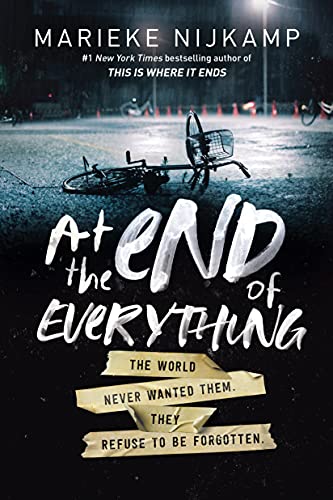
- At the End of Everything
Marieke Nijkampstandalone novel2022
similar byfound familydarknear futurenorth americascience fictionpost-apocalypticsurvivalplague and pandemic+1 more
The Hope Juvenile Treatment Center is ironically named. No one has hope for the delinquent teenagers who have been exiled there; the world barely acknowledges that they exist. Then the guards at Hope start acting strange. And one day…they don't show up. But when the teens band together to make a break from the facility, they encounter soldiers outside the gates. There's a rapidly spreading infectious disease outside, and no one can leave their houses or travel without a permit. Which means that they're stuck at Hope. And this time, no one is watching out for them at all. As supplies quickly dwindle and a deadly plague tears through their ranks, the group has to decide whom among them they can trust and figure out how they can survive in a world that has never wanted them in the first place.
- Monument 14
series6 books2012
similar byfound familydarknear futurenorth americascience fictionpost-apocalypticsurvivaltense+1 more
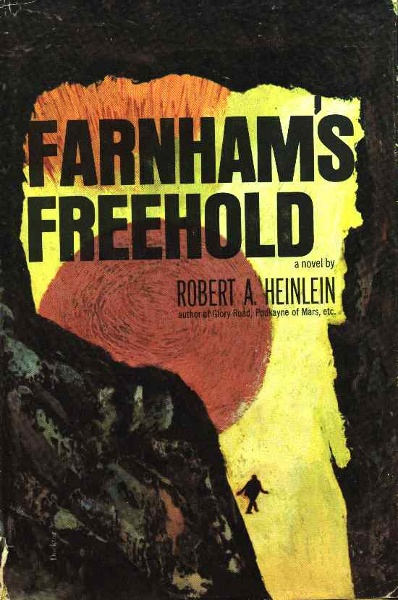
- Farnham's Freehold
Robert A. Heinleinstandalone novel1964
similar bynear futurenorth americascience fictionpost-apocalypticsurvivaltense+1 more
Farnham's Freehold is a science fiction novel by American writer Robert A. Heinlein. A serialized version, edited by Frederik Pohl, appeared in Worlds of If magazine. The complete version was published in novel form by G. P. Putnam later in 1964.
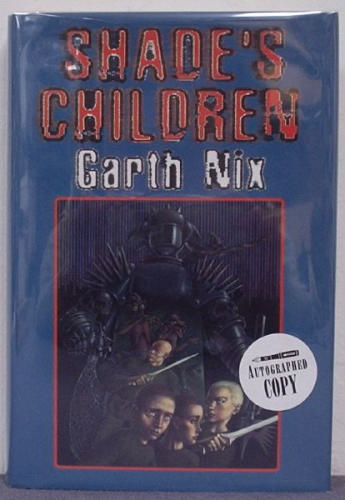
- Shade's Children milieu
series2 books1997
similar bydarknear futurescience fictionpost-apocalypticsurvivaltense+1 more
Shade's Children is set on an Earth where all adults vanished overnight fourteen years earlier, leaving children to be harvested at puberty by the machines that now run the world, unless they escape into hiding with Shade, a mysterious AI-like protector. Garth Nix's 1997 novel is a single, self-contained book rather than a series, though its bleak post-apocalyptic premise has drawn comparisons to his other work.
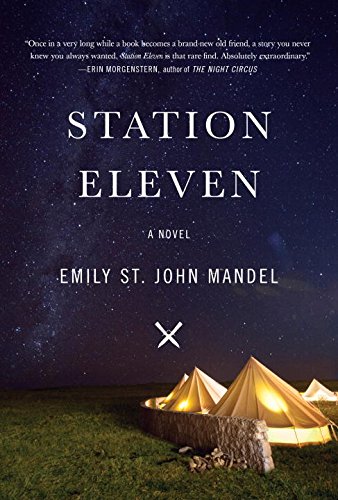
- Station Eleven
Emily St. John Mandelstandalone novel2014
similar byfound familynear futurenorth americascience fictionpost-apocalypticsurvival+1 more
"Set in the days of civilization's collapse, Station Eleven tells the story of a Hollywood star, his would-be savior, and a nomadic group of actors roaming the scattered outposts of the Great Lakes region, risking everything for art and humanity. One snowy night a famous Hollywood actor slumps over and dies onstage during a production of King Lear. Hours later, the world as we know it begins to dissolve. Moving back and forth in time — from the actor's early days as a film star to fifteen years in the future, when a theater troupe known as the Traveling Symphony roams the wasteland of what remains — this suspenseful, elegiac, spellbinding novel charts the strange twists of fate that connect five people: the actor, the man who tried to save him, the actor's first wife, his oldest friend, and a young actress with the Traveling Symphony, caught in the crosshairs of a dangerous self-proclaimed prophet." (source: Goodreads.com)
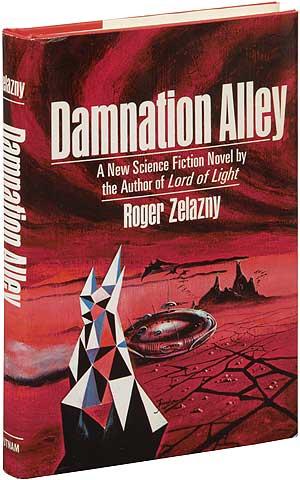
- Damnation Alley
Roger Zelaznystandalone novel1969
similar bynear futurenorth americascience fictionpost-apocalypticsurvival+1 more
Damnation Alley is a 1969 science fiction novel by American writer Roger Zelazny, based on a novella of the same name published in 1967. A film adaptation of the novel was released in 1977.
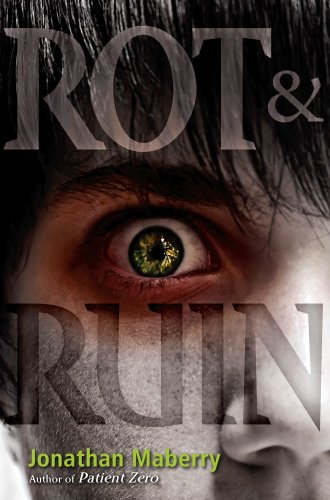
- Rot & Ruin
series22 books2010
part of Night
similar bydarknorth americanear futurepost-apocalypticsurvivaltense+1 more
Jonathan Maberry's Rot & Ruin is set fourteen years after a zombie plague, following fifteen-year-old Benny Imura, who reluctantly apprentices to his older half-brother as a bounty hunter clearing the dead beyond his fenced-in California town. The series follows Benny's growing understanding of both the zombies and the living people who prey on the fragile post-apocalyptic order, across four more novels and companion story collections.
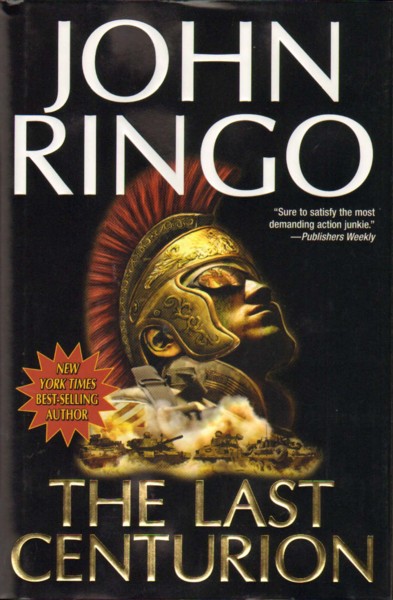
- The Last Centurion
John Ringostandalone novel2008
similar bydarknear futurenorth americascience fictionpost-apocalypticsurvivalplague and pandemictense
The Last Centurion is a 2008 stand-alone novel by John Ringo. It is written in "blog style" from the point of view of a U.S. Army officer known as "Bandit Six". The novel is set in a post apocalyptic world that has been ravaged by a brief ice age and disease.
- War Against the Chtorr
series7 books1983
similar bydarknear futurenorth americascience fictionpost-apocalypticsurvivaltense
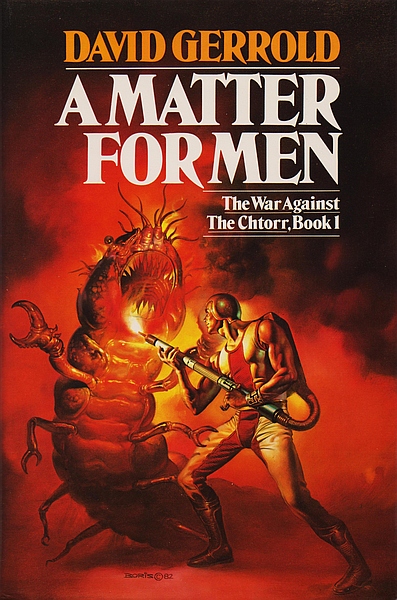
The War Against the Chtorr is a series of science fiction novels by American writer David Gerrold. The Chtorr series was originally planned as a trilogy, but as the story became more intricate, Gerrold realized that three books would not be enough for him to tell the entire story. For a time, he was uncertain how many books there would be in the end but plans on seven. As of 2022, four books have been completed. As of 2017, a fifth and sixth were in the works, 24 years after the publication of the fourth book.
- Lucifer's Hammer
Larry Niven & Jerry Pournellestandalone novel1977
similar bydarknorth americascience fictionpost-apocalypticsurvivaltense+1 more
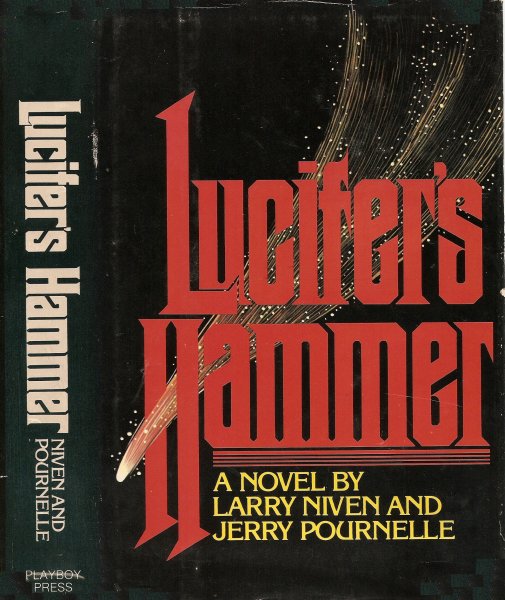
Lucifer's Hammer is a science fiction post-apocalypse-survival novel by American writers Larry Niven and Jerry Pournelle that was first published in 1977. It was nominated for the Hugo Award for Best Novel in 1978.
- American War
Omar El Akkadstandalone novel2017
similar bydarknear futurenorth americascience fictionpost-apocalypticsurvival+2 more
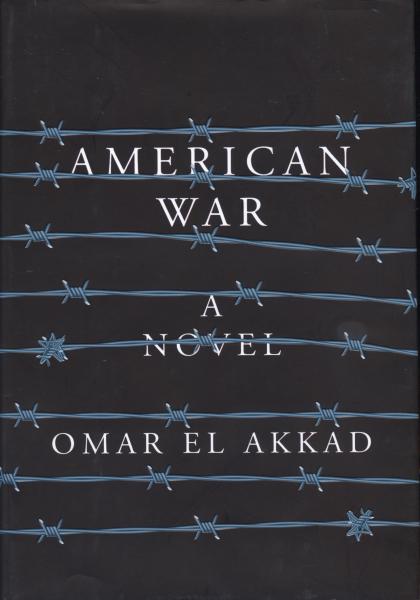
American War is the first novel by the Egyptian-Canadian journalist Omar El Akkad. It is set in the United States in the near future, ravaged by climate change and disease, in which the Second Civil War has broken out over the use of fossil fuels.
- In the After
series2 books2013
similar byfound familydarknear futurenorth americapost-apocalypticscience fictionsurvivaltense
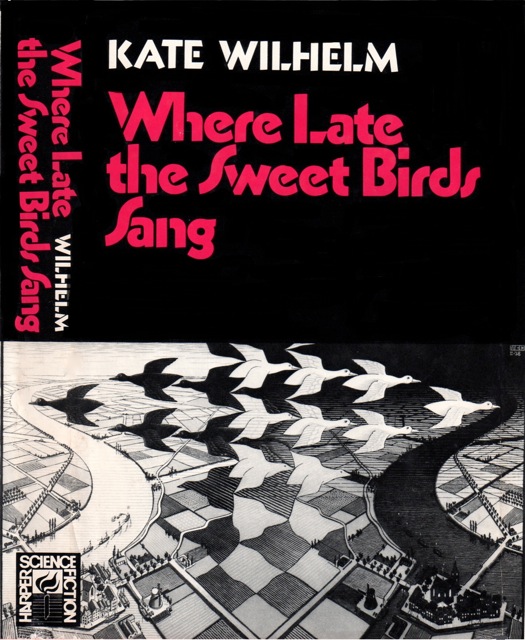
- Where Late the Sweet Birds Sang
Kate Wilhelmstandalone novel1976
similar bydarknear futurenorth americascience fictionpost-apocalypticsurvival
Where Late the Sweet Birds Sang is a science fiction novel by American writer Kate Wilhelm, published in 1976. The novel is composed of three parts, "Where Late the Sweet Birds Sang," "Shenandoah," and "At the Still Point," and is set in a post-apocalyptic era, a concept popular among authors who took part in the New Wave Science Fiction movement in the 1960s.
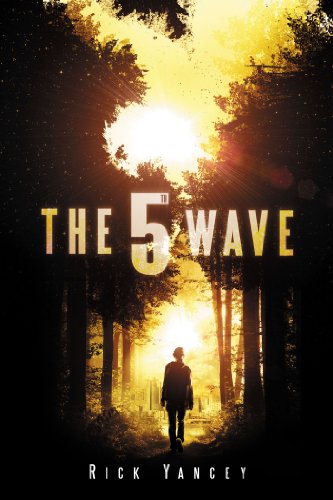
- The 5th Wave
series4 books2013
similar bydarknorth americascience fictionnear futurepost-apocalypticsurvivaltense
Rick Yancey's The 5th Wave opens after a series of escalating alien attacks has already devastated Earth's population and infrastructure, following sixteen-year-old survivor Cassie Sullivan as she searches for her younger brother while trying to work out who, among the remaining humans, can still be trusted. The trilogy is young-adult science fiction that treats its alien-invasion premise as a survival and paranoia story more than a war story.
- I Am Legend
Richard Mathesonstandalone novel1954
similar bydarknorth americapost-apocalypticscience fictionsurvivalplague and pandemictense
The last human survivor of the vampire epidemic has to maintain his defences against their onslaught, while attempting to research the cause and possibly solution to the plague. Robert Neville is the last living man on Earth... but he is not alone. Every other man, woman and child on the planet has become a vampire, and they are hungry for Neville's blood. By day he is the hunter, stalking the undead through the ruins of civilization. By night, he barricades himself in his home and prays for the dawn. How long can a man survive like this?
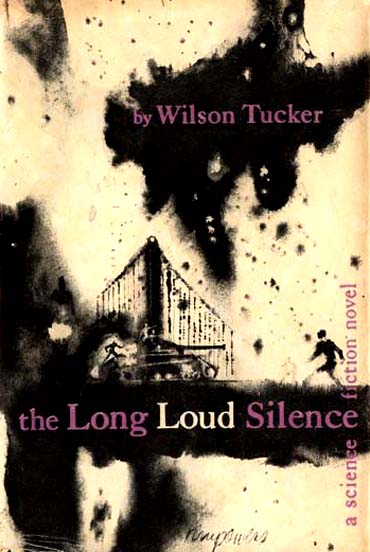
- The Long Loud Silence
Wilson Tuckerstandalone novel1952
similar bydarknear futurenorth americascience fictionpost-apocalypticsurvivalplague and pandemictense
Publisher's description: Tomorrow's war -- the war that could not be. The army of the United States was stationed along the length of the Mississippi River, guns pointed east -- with orders to shoot anyone attempting to cross. For the Final War was not a war of the ultimate bomb, of atomic hell. It was a war of the tiny germ, the filterable virus, the disease that came to conquer a nation -- and stayed to damn a world."
- Directive 51 / Daybreak
series3 books2010
similar bydarknear futurenorth americascience fictionpost-apocalypticsurvivaltense
Directive 51 opens John Barnes's near-future thriller trilogy with government analyst Heather O'Grainn as anti-technology extremists unleash a nanotech plague called Daybreak that destroys petroleum-based materials, rubber, and electrical systems worldwide. The resulting collapse triggers mass death, a crisis over presidential succession, and mysterious Moon-launched fusion strikes on Washington and Chicago, while a shadowy neofeudalist movement moves into the vacuum. Daybreak Zero and The Last President carry the same unraveling-civilization story through the rest of the trilogy.
- The Road
Cormac McCarthystandalone novel2006
similar bydarknear futurenorth americapost-apocalypticscience fictionsurvival
In this post-apocalyptic novel, a father and his son walk alone through burned America. Nothing moves in the ravaged landscape save the ash on the wind. It is cold enough to crack stones, and when the snow falls it is gray. They sky is dark. Their destination is the coast, although they don't know what, if anything, awaits them there. They have nothing; just a pistol to defend themselves against the lawless bands that stalk the road, the clothes they are wearing, a cart of scavenged food--and each other. This book boldly imagines a future in which no hope remains, but in which the father and his son, "each the other's world entire," are sustained by love. It is an unflinching meditation on the worst and the best that we are capable of: ultimate destructiveness, desperate tenacity, and the tenderness that keeps two people alive in the face of total devastation.--From publisher description.
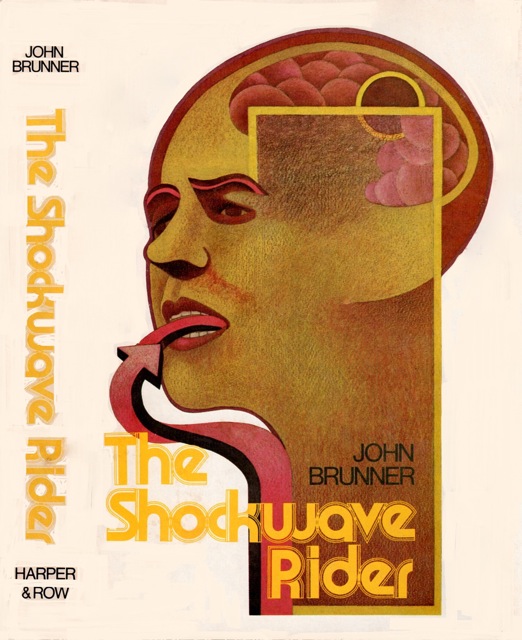
- The Shockwave Rider
John Brunnerstandalone novel1975
similar bydarknear futurenorth americascience fictionpost-apocalyptictense
The Shockwave Rider is a science fiction novel by John Brunner, originally published in 1975. It is notable for its hero's use of computer hacking skills to escape pursuit in a dystopian future, and for the coining of the word "worm" to describe a program that propagates itself through a computer network. It also introduces the concept of a Delphi pool, perhaps derived from the RAND Corporation's Delphi method – a prediction market on world events which bears close resemblance to DARPA's controversial and cancelled Policy Analysis Market.