More like Alien Child
anchored on:science fictionpost-apocalypticlast of their kindour worldfar futurecoming of age+1 more
but
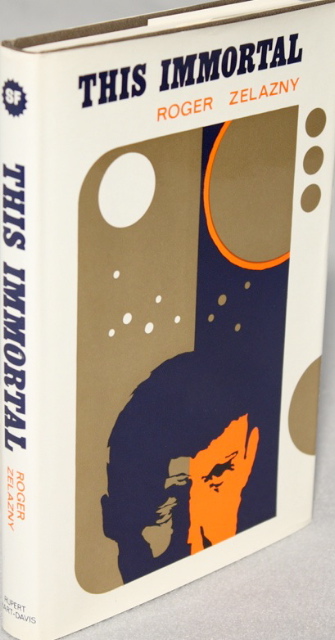
- This Immortal
series2 books1966
similar byreflectiveour worldfar futurescience fictionpost-apocalypticaliens
This Immortal is a single science fiction novel by Roger Zelazny, expanded from his 1965 serial ...And Call Me Conrad. In a depopulated future Earth largely toured by an alien race, its long-lived, secretive protagonist Conrad Nomikos is assigned to guide and protect a visiting alien across the ruins of Greece and Egypt, uncovering old grudges and assassination plots along the way. The novel shared the 1966 Hugo Award for Best Novel with Frank Herbert's Dune.
- The Last Man
Mary Shelleystandalone novel1826
similar byfar futurescience fictionpost-apocalypticlast of their kindsad+1 more
The Last Man is an apocalyptic, dystopian science fiction novel by Mary Shelley, first published in 1826. The narrative concerns Europe in the late 21st century, ravaged by the rise of a bubonic plague pandemic that rapidly sweeps across the entire globe, ultimately resulting in the near-extinction of humanity. It also includes discussion of the British state as a republic, for which Shelley sat in meetings of the House of Commons to gain insight to the governmental system of the Romantic era. The novel includes many fictive allusions to her husband Percy Bysshe Shelley, who drowned in a shipwreck four years before the book's publication, as well as their close friend Lord Byron, who had died two years previously.
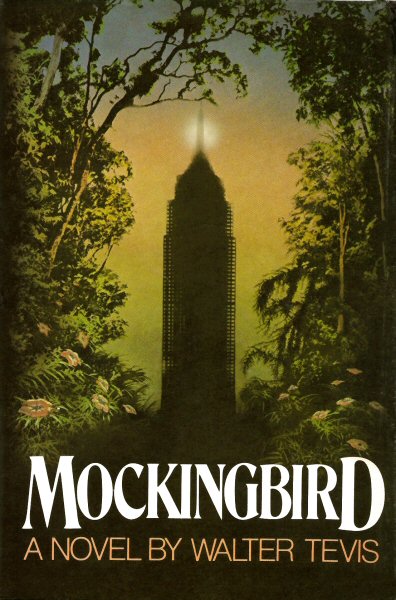
- Mockingbird
Walter Tevisstandalone novel1980
similar byreflectiveour worldfar futurescience fictionsadloneliness
WorldCat: In a future world where mankind is dying, humans wander through life in a drugged electronic bliss. Quick sex is the norm, and some people would rather commit suicide than live in hopelessness. Humanity's salvation rests with an android who has no desire to live, and a man and a woman who must discover love, hope, and dreams of a world reborn.
- Z for Zachariah
Robert C. O'Brienstandalone novel1975
similar byour worldscience fictionpost-apocalypticcoming of ageyoung adultloneliness+1 more
Sixteen-year-old Ann Burden, on an Amish family farm in an isolated valley, believes she is the only survivor of nuclear war and nerve gas. One day a man arrives in a "safe-suit" that he and others have recently developed.
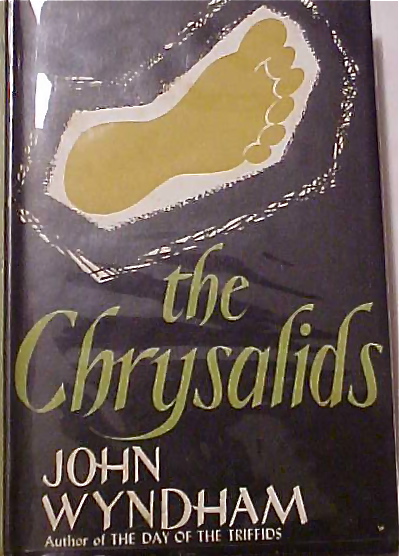
- The Chrysalids
John Wyndhamstandalone novel1955
similar byreflectivefar futurescience fictioncoming of agepost-apocalyptic
The Chrysalids is a science fiction novel by British writer John Wyndham, first published in 1955 by Michael Joseph. It is the least typical of Wyndham's major novels, but regarded by some as his best. An early manuscript version was entitled Time for a Change.
- The Man Who Fell to Earth
Walter Tevisstandalone novel1963
similar byreflectiveour worldscience fictionsadaliensloneliness
The Man Who Fell to Earth is a 1963 science-fiction novel by American writer Walter Tevis. Published by Gold Medal Books as a paperback original, it was Tevis's second novel, following The Hustler. The novel follows Thomas Jerome Newton, an extraterrestrial from the drought-stricken planet Anthea, who comes to Earth hoping to build a spacecraft that can save the surviving members of his species.
- Childhood's End
Arthur C. Clarkestandalone novel1953
similar byreflectiveour worldscience fictionaliens+1 more
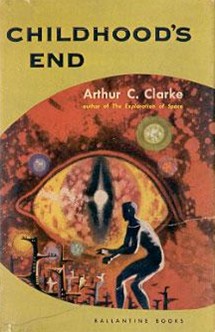
Childhood's End is a 1953 science fiction novel by the British author Arthur C. Clarke. The story follows a peaceful alien invasion of Earth by mysterious Overlords, whose arrival begins decades of apparent utopia under indirect alien rule, at the cost of human identity and culture.
- Beyond This Horizon
Robert A. Heinleinstandalone novel1948
similar byreflectiveour worldfar futurescience fiction
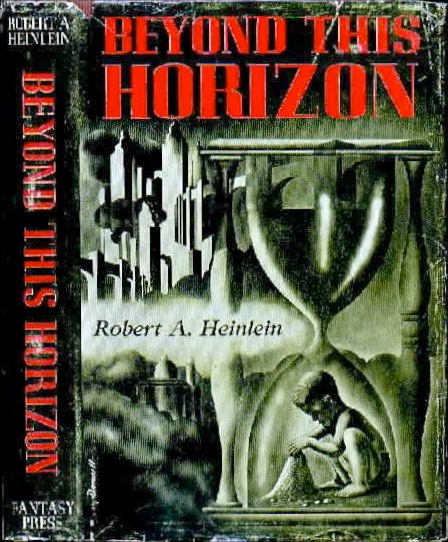
From the front flap of a 2001 Baen reprint: "Utopia has been achieved. For centuries, disease, hunger, poverty, and war have been things found only in the history tapes. And applied genetics has given men and women the bodies of athletes and a lifespan of over a century. They should all have been very happy... But Hamilton Felix is bored. And he is the culmination of a star line, each of his last thirty ancestors chosen for superior genes. Hamilton is, as far as genetics can produce one, the ultimate man. And this ultimate man can see no reason why the human race should survive, and has no intention of continuing the pointless comedy. However, Hamilton's life is about to become less boring. A secret cabal of revolutionaries who find utopia not just boring, but desperately in need of leaders who know just What Needs to be Done, are planning to revolt and put themselves in charge. Knowing of Hamilton's disenchantment with the modern world, they have recruited him to join their Glorious Revolution. Big mistake! The revolutionaries are about to find out that recruiting a superman was definitely not a good idea..."
- Riddley Walker
Russell Hobanstandalone novel1980
similar byour worldfar futurescience fictionpost-apocalypticcoming of age
WorldCat: Composed in an English which has never been spoken and laced with a storytelling tradition that predates the written word, RIDDLEY WALKER is the world waiting for us at the bitter end of the nuclear road. It is desolate, dangerous and harrowing, and a modern masterpiece.
- City
series19 books1944
completed
similar byreflectivefar futurescience fictionour world
City is Clifford D. Simak's fix-up novel, assembling eight linked stories originally published in Astounding Science Fiction during the 1940s and framed as legends dogs tell about a half-mythical creature called Man. It follows humanity's gradual abandonment of its cities and eventual departure from Earth, while the dogs left behind are surgically uplifted into a peaceable, speaking civilization of their own. The book won the International Fantasy Award in 1952.
- Stranger in a Strange Land
Robert A. Heinleinstandalone novel1961
similar byreflectivescience fictionour worldcoming of agealiens
Stranger in a Strange Land is a 1961 science fiction novel by the American author Robert A. Heinlein. It tells the story of Valentine Michael Smith, a human who comes to Earth in early adulthood after being born on the planet Mars and raised by Martians, and explores his interaction with and eventual transformation of Terran culture.
- Tripods
series4 books1967
completed
similar byscience fictionour worldpost-apocalypticyoung adultaliens+2 more
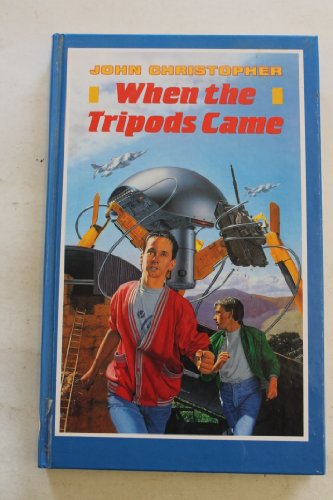
The Tripods is a series of young adult science fiction novels by John Christopher. The series takes place in a post-apocalyptic world where humanity is enslaved by "Tripods"—gigantic three-legged walking machines piloted by an alien race later identified as the "Masters". The first two books were the basis of a science fiction TV series, produced in the United Kingdom in the 1980s.
- Never Let Me Go
Kazuo Ishigurostandalone novel2005
similar byreflectiveour worldscience fictioncoming of agesad
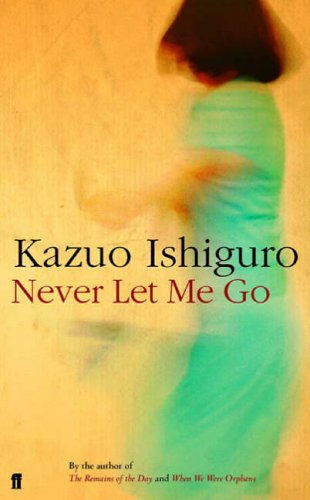
Never Let Me Go is a 2005 science fiction novel by the British author Kazuo Ishiguro. It was shortlisted for the 2005 Man Booker Prize, for the 2006 Arthur C. Clarke Award and the 2005 National Book Critics Circle Award. Time magazine named it the best novel of 2005. It included the novel in its '100 Best English-language novels published since 1923—the beginning of TIME'. It also received an ALA Alex Award in 2006. A film adaptation directed by Mark Romanek was released in 2010.
- Mara and Dann
series2 books1999
completed
similar byfar futurescience fictionpost-apocalypticcoming of age+2 more
- I Am Legend
Richard Mathesonstandalone novel1954
similar byour worldpost-apocalypticlast of their kindscience fictionloneliness
The last human survivor of the vampire epidemic has to maintain his defences against their onslaught, while attempting to research the cause and possibly solution to the plague. Robert Neville is the last living man on Earth... but he is not alone. Every other man, woman and child on the planet has become a vampire, and they are hungry for Neville's blood. By day he is the hunter, stalking the undead through the ruins of civilization. By night, he barricades himself in his home and prays for the dawn. How long can a man survive like this?
- The City and the Stars
Arthur C. Clarkestandalone novel1956
similar byreflectivefar futurescience fiction+2 more
The City and the Stars is a science fiction novel by British writer Arthur C. Clarke, published in 1956. This novel is a complete rewrite of Clarke's earlier Against the Fall of Night, his first novel, which had been published in Startling Stories magazine in 1948 after being rejected by the editor of Astounding Science-Fiction, according to the author.
- The Purple Cloud
M. P. Shielstandalone novel1901
similar byour worldscience fictionpost-apocalypticlast of their kindloneliness
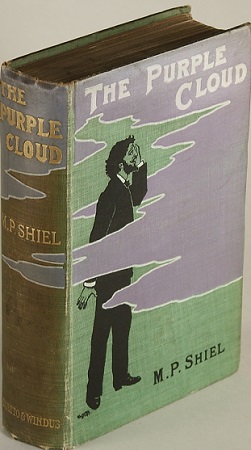
Around 1900, the author receives a packet of writings of a psychic, who recounts her vision of the multi-decade diary of an arctic explorer of the future, the first to reach the north pole; but during his multiyear trek, an unknown eruption temporarily poisons the atmosphere with cyanide, killing all human and animal life, sparing only the arctic latitudes and leaving him the last man on earth.
- Relic
Alan Dean Fosterstandalone novel2018
similar byreflectivefar futurescience fictionpost-apocalypticlast of their kindaliens
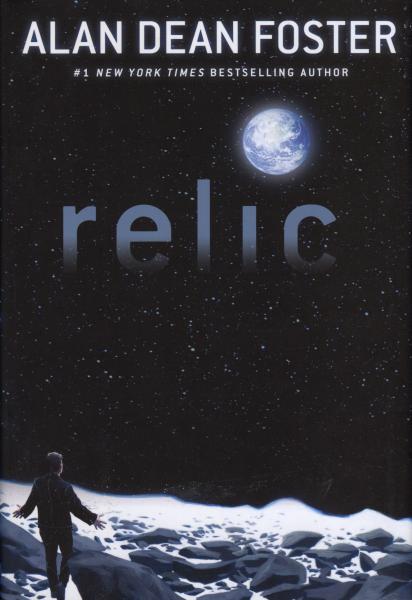
Relic is a 2018 pastoral science fiction novel by Alan Dean Foster. It is about Ruslan, the sole surviving member of the human race after a lethal virus, who is rescued by aliens who study him and seek to recreate the human race and possibly find the mythical home planet of humans.
- A Gift Upon the Shore
M. K. Wrenstandalone novel1990
similar byreflectiveour worldscience fictionpost-apocalyptic+1 more
A post-apocalypse novel, saving books for posterity.
- Maurai
series6 books1959
completed
similar byour worldfar futurescience fictionpost-apocalyptic+1 more
The Maurai series is a series of short stories and a novel by Poul Anderson set in a resource depleted, post-apocalyptic earth several centuries in the future. The series is named after its most frequent protagonists, citizens of the Maurai Federation. The Maurai dominate the Pacific and Indian Oceans. Fearful of the social and ecological implications of a return to large-scale industrial society, they use their considerable might and covert resources to prevent other nations from developing nuclear power.
- The Obernewtyn Chronicles
series9 books1987
similar byfar futurepost-apocalypticscience fictionyoung adult+2 more
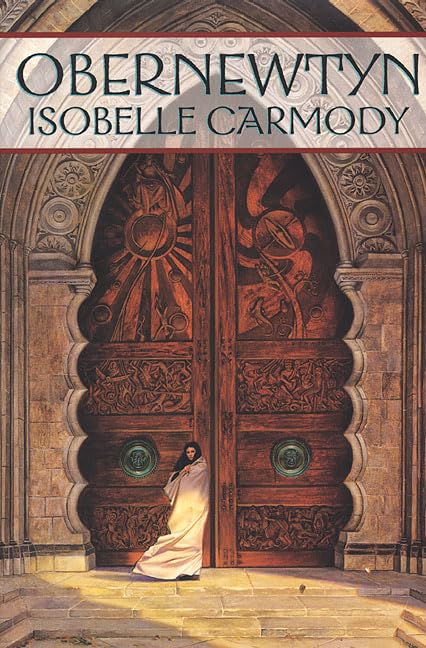
The Obernewtyn Chronicles is a series of science fiction and fantasy novels by Australian author Isobelle Carmody. The series has a post apocalyptic setting and depicts a world long after its destruction by a global nuclear holocaust.
- Saint Leibowitz
series6 books1955
completed
similar byfar futurescience fictionpost-apocalyptic+1 more
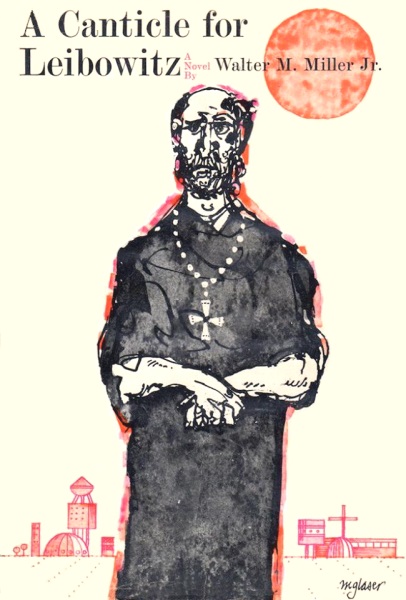
Walter M. Miller Jr.'s A Canticle for Leibowitz (1959), assembled from three novellas he had published earlier in the decade, follows the monks of a Catholic monastery in the post-nuclear American Southwest as they preserve fragments of scientific knowledge across centuries, watching civilization slowly rebuild itself and edge back toward the mistakes that destroyed it. Miller's posthumous sequel, Saint Leibowitz and the Wild Horse Woman, completed by Terry Bisson from his notes after his death and published in 1997, returns to the same abbey and its world decades later. Together the two novels form a sparse, decades-spanning series about memory, faith, and the cycles of civilization.
- Greybeard
Brian W. Aldissstandalone novel1964
similar byreflectiveour worldscience fictionpost-apocalyptic
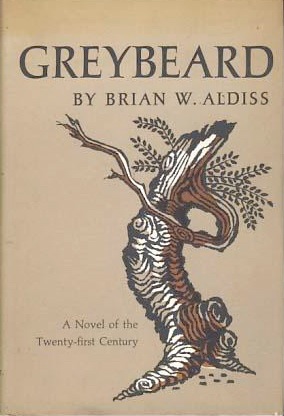
Long after a catastrophe that has sterilized humans and most other mammals, the 54-year-old protagonists—Greybeard and Martha—take a tour of entropic England. In scattered self contained communities only the old survive, while outside these enclaves nature comes back into its own, peopling the land with new animal life.
- To Live Again
Robert Silverbergstandalone novel1969
similar byreflectiveour worldfar futurescience fiction
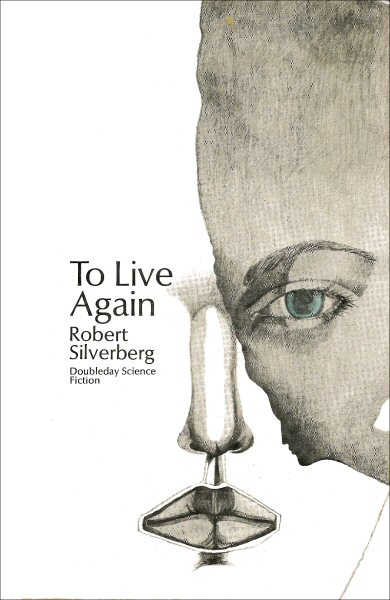
In a future where the very rich can have their personalities recorded before death and then implanted into a living host to share, or dominate, that person's mind and body, owning a recorded soul becomes the ultimate status symbol among the powerful. The practice carries real risk: a strong enough recorded personality can overwhelm its host entirely, a fate the novel calls going dybbuk. Robert Silverberg builds a society around this trade in secondhand immortality, and the people who profit, or don't survive, dealing in it. A standalone novel from Silverberg's prolific late-1960s run.