Loreful
HomeDiscover
Search series, authors…⌘K
Loreful

Reading orders for SF/F series and shared universes — with your place kept in every one.

Explore

UniversesSeriesWorksAuthorsAtlas

Help

FAQAboutSite map

Account & legal

Sign inCreate accountPrivacyTerms

Data

Built on ISFDB, Wikipedia, Wikidata and Open Library. Curated reading orders carry their reasoning on the page; the rest follow publication order. Data sources & licenses

© Loreful · data: ISFDB · CC BY

More like Alien Offer

but

Mood

The mood the book leaves you in.

  • The reading experience is propelled by journeys, exploration, and physical risk; excitement and forward momentum dominate over dread or introspection.
  • Joy and loss are deliberately mixed; the resolution grants characters something real while taking something else away, leaving warmth and sorrow together.
  • The book demands work from the reader — dense prose, difficult structure, unfamiliar ideas, or morally uncomfortable material — as part of its intended effect.
  • Grim events, cruelty, or despair dominate the atmosphere, and the book does not soften them with comfort or comic relief.
  • The atmosphere is quietly unsettling — wrongness, unease, and the uncanny pervade the book without necessarily escalating into overt horror.
  • The book is built to move the reader; character feeling is foregrounded and major scenes aim at a strong emotional response.
  • Humor is a primary aim and the prose plays for laughs — comic situations, wit, or dialogue produce sustained comedy, not occasional levity.
  • The book insists that things can improve; effort and decency are shown to matter, and the arc bends toward better outcomes even through hardship.
  • The book teaches as it goes — real facts, history, science, or craft are conveyed in enough depth that learning is part of the reading experience.
  • The book is designed to uplift and motivate, presenting perseverance or achievement in a way that invites the reader to aspire or act.
  • The overall register is cheerful and easygoing; stakes are kept gentle and the book avoids dwelling on pain or dread.
  • Withheld information drives the experience; the book sustains enigmas and secrets the reader wants resolved, whatever its genre.
  • The book is contemplative and inward-looking, giving more weight to thought, memory, and meaning than to external events.
  • The book works as comfort reading — low tension, a soothing pace, and an atmosphere the reader can unwind in.
  • Grief, loss, or melancholy set the dominant register, and the book lets sorrow stand rather than resolving it into comfort.
  • Sustained suspense is the point; the book keeps the reader braced for what happens next through danger, pressure, or impending revelation.
  • Playful invention and charm define the register — fanciful conceits, light absurdity, and a narration that delights in its own oddity.

About

What the story runs on.

  • Stories in which extraterrestrial beings are central — as characters, cultures, or the object of the plot.
  • Stories structured as a quest — a journey undertaken to find, deliver, or destroy something of great import.
  • Stories in which staying alive against nature, catastrophe, or scarcity is the central problem.
  • Stories of lovers kept apart by law, family, faith, or station, where the obstacle to love is the plot.
  • Stories in which a friendship — its making, testing, or loss — is the emotional center.
  • Stories of growing up — a young protagonist crossing from childhood into adult knowledge and responsibility.
  • Stories about who a character truly is — self-discovery, doubled lives, and the search for a self.
  • Stories driven by the pursuit of vengeance for a wrong, and what the pursuit costs the avenger.
  • Stories that turn on an act of treachery by someone trusted — an ally, friend, or mentor revealed as false.
  • Stories driven by maneuvering for power — factions, conspiracies, and statecraft conducted in shadow.
  • Stories in which war itself is the subject — combat, occupation, and what warfare does to soldiers and civilians.
  • Stories organized around investigating a killing — the case, the clues, and the pursuit of the killer, in any genre's clothing.

Shelf

Where it sits in the library.

    • Fiction built on magic or other supernatural elements that have no scientific explanation.
    • Secondary-world fantasy at large scale, where the fate of nations or the world turns on the protagonists' struggle.
    • Fantasy set in a recognizably modern city or contemporary world where the supernatural intrudes on everyday life.
    • Fantasy that blends in horror's atmosphere and imagery, keeping a fantastical frame around grim or frightening material.
    • Action-driven fantasy following warriors or rogues with personal stakes against sorcerous threats, rather than world-spanning conflicts.
    • Fantasy set in a real historical period or a close analogue of one, with magic woven into the era.
    • Fantasy in which protagonists cross from the ordinary world into another world through a portal or similar passage.
    • Fiction that retells or reworks a traditional fairy tale in a new form or setting.
    • Fantasy drawing directly on myths, legends, and folklore, retelling them or building on their figures and logic.
    • Fantasy of ghosts, vampires, shapeshifters, psychics, and similar phenomena, usually set in an otherwise ordinary world.
    • Fiction mixing science-fictional trappings with overtly magical or impossible elements in one setting.
    • Low-stakes fantasy emphasizing comfort, community, and everyday pleasures over conflict and peril.
    • Speculative fiction of pervasive moral ambiguity, violence, and cynicism that rejects heroic conventions — fantasy and SF alike.
      • Fiction that extrapolates from science and technology — future societies, space travel, or speculative inventions — within at least nominally natural laws.
      • Science fiction of interstellar scope — starships, galactic polities, and adventure across star systems.
      • Science fiction committed to scientific rigor, where technical plausibility constrains the story.
      • Science fiction centered on armed forces and warfare, told largely from a military point of view.
      • Science fiction of networked, corporate-dominated near futures, pairing high technology with social decay.
      • Science fiction styled on nineteenth-century steam-powered technology, often in a Victorian or pseudo-Victorian setting.
      • Fiction depicting an oppressive or catastrophic society, presented as a warning.
      • Fiction set after civilization's collapse, following survivors in the ruins of the old world.
      • Fiction in which characters move between past and future, and the mechanics or consequences of that travel drive the plot.
      • Fiction exploring a world where a historical event went differently and history diverged from ours.
      • Science fiction about humanity's first encounter and communication with an alien intelligence.
      • Science fiction in which extraterrestrial forces attack or occupy Earth and humanity resists.
      • Fiction whose primary aim is to frighten or unsettle the reader through dread, menace, or the monstrous.
      • Horror of vast, indifferent, incomprehensible entities before which humanity is insignificant, in the Lovecraft tradition.
      • Horror of decaying houses, buried family secrets, and oppressive atmosphere in the Gothic literary tradition.
      • Horror centered on hauntings and the returning dead.
      • Horror located in the mind — paranoia, obsession, and unreliable perception rather than external monsters.
      • Horror built around the reanimated dead and survival amid their outbreaks.
      • Speculative fiction of the strange and uncanny that resists both natural explanation and standard genre categories.
      • Fiction organized around solving a crime or puzzle, typically following an investigator toward the identification of a culprit.
      • A puzzle-first mystery that lays out clues so the culprit's identity can be deduced before the reveal.
      • Crime fiction of moral ambiguity, fatalism, and hard-edged style, set among the corrupt and the doomed.
      • A mystery following the realistic routines of police work — forensics, interviews, and case-building.
      • A gentle mystery with an amateur sleuth, a small community, and violence kept off the page.
      • A mystery set in a past era, where the investigation works within that period's methods and society.
      • Fast-paced fiction driven by imminent danger, pursuit, or high-stakes conspiracy, built to sustain tension.
      • A thriller of espionage — agents, tradecraft, and intelligence services in conflict.
      • A thriller centered on lawyers and the courtroom, where litigation carries the suspense.
      • A thriller driven by detailed contemporary or near-future technology, often military or scientific.
      • A thriller whose tension comes from mental states and manipulation between characters rather than external action.
      • Fiction whose central plot is a romantic relationship and its development toward an emotionally satisfying resolution.
      • Romance in which one or both partners are supernatural beings, blending fantasy elements into the love story.
      • A fantasy-romance hybrid in which the romantic arc and the fantasy plot carry equal weight.
      • Romance set in a past era, with courtship shaped by the period's society and manners.
      • Romance set in the present day, without supernatural or historical elements.
      • Fiction set in a real past period, where the historical setting materially shapes characters and events.
        • General and literary fiction emphasizing prose style, character interiority, or formal ambition over genre plot conventions.
        • Fiction in a realistic world where magical events occur and are treated as ordinary, in the tradition of Latin American literature.
        • Fiction that ridicules people, institutions, or society in order to criticize them.
        • Fiction of dreamlike, irrational imagery and logic that breaks from realistic representation.
        • Fiction that plays with narrative convention through metafiction, fragmentation, and self-reference.
        • Fiction propelled by journeys, exploration, and physical peril, where action and survival carry the plot.
        • Adventure fiction of ships and seafaring — naval engagements, voyages, and life at sea.
        • Fiction of the American frontier West — gunmen, ranchers, and lawmen, typically in the late nineteenth century.
        • Fiction centered on soldiers, campaigns, and the experience of warfare, historical or imagined.
          • Fiction written primarily to amuse, using comedic situations, wit, or parody as its organizing principle.
            • Multi-generational fiction following a family or dynasty across decades, with inheritance and kinship as the through-line.
              • Fiction whose world runs on explicit game mechanics — levels, stats, and skills that characters can see and exploit.
                • Fiction about costumed or superpowered heroes and their conflicts with comparable villains.

                Practical

                How long a commitment, whether it stands alone, and whether it has finished.

                Tap a chip to ask for it · tap again to rule it out · once more to clear. Numbers show what would be left.

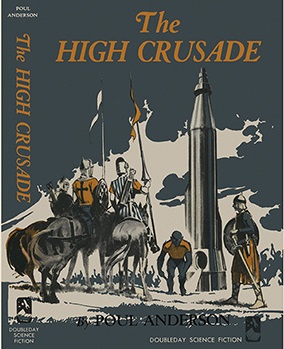
                • Cover of The High Crusade
                  The High Crusade

                  Poul Anderson · standalone novel · 1960

                  similar by+2 more

                  The High Crusade is a science fiction novel by American writer Poul Anderson, about the consequences of an extraterrestrial scoutship landing in medieval England. Poul Anderson described the novel as "one of the most popular things I've ever done, going through many book editions in several languages."

                • Cover of Defenders
                  Defenders

                  Will McIntosh · standalone novel · 2014

                  similar byalien invasion+1 more

                  Summary from copyright page: "When Earth is invaded by telepathic aliens, humanity responds by creating the defenders. They are the perfect warriors - seventeen feet tall,knowing and loving nothing but war, their minds closed to the aliens. The question is, what do you do with millions of genetically engineered warriors once the war is won? A novel of power, alliance, violence, redemption,sacrifice, and yearning for connection, Defenders presents a revolutionary story of invasion, occupation, and resistance."

                • Cover of The Rampart Worlds
                  The Rampart Worlds

                  series · 3 books · 1998

                  completed

                  similar by+2 more

                • Cover of A Song of Ice and Fire
                  A Song of Ice and Fire

                  series · 14 books · 1996

                  part of World of Ice and Fire

                  similar by+1 more

                  A Song of Ice and Fire is a series of high fantasy novels by the American author George R. R. Martin. Martin began writing the first volume, A Game of Thrones, in 1991, and published it in 1996. Martin, who originally envisioned the series as a trilogy, has released five out of seven planned volumes. The most recent entry in the series, A Dance with Dragons, was published in 2011. Since then, Martin has been working on the sixth novel, titled The Winds of Winter. A seventh novel, A Dream of Spring, is planned to follow.

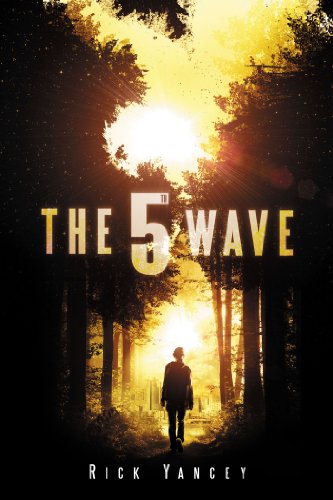
                • Cover of The 5th Wave
                  The 5th Wave

                  series · 4 books · 2013

                  similar byalien invasion

                  Rick Yancey's The 5th Wave opens after a series of escalating alien attacks has already devastated Earth's population and infrastructure, following sixteen-year-old survivor Cassie Sullivan as she searches for her younger brother while trying to work out who, among the remaining humans, can still be trusted. The trilogy is young-adult science fiction that treats its alien-invasion premise as a survival and paranoia story more than a war story.

                • Cover of The Door Into Summer
                  The Door Into Summer

                  Robert A. Heinlein · standalone novel · 1957

                  similar by+1 more

                  From the first page of the Signet 6th printing: "An electronics engineer invents a wizard robot... only to find himself shanghaied by his ruthless partner and his gold-digging fiancee. The crafty pair forces him to submit to the "long sleep" - suspended animation for thirty years. But when he wakes up in the year 2000 A.D. the inventor makes a startling discovery. He learns that it is possible now to twist time forwards or backwards. And so he returns to the past bent on a mission... of revenge."

                • Cover of H. G. Wells' War of the Worlds
                  H. G. Wells' War of the Worlds

                  universe · 65 books · 1898

                  Start hereThe War of the Worlds · Start here

                  similar byalien invasion

                  No one would have believed, in the closing years of the nineteenth century, that human affairs were being watched keenly and closely from the timeless worlds of space. And then the cylinders fell. H. G. Wells' War of the Worlds opens in the quiet of the Surrey commons, where a falling star proves to be the first Martian craft — and from the pit rise the towering tripods, the Heat-Ray, the choking Black Smoke and the creeping red weed, wielded by minds that regard mankind much as we regard the creatures we boil for supper. This is invasion rendered as natural disaster: cold, methodical, and vast beyond argument. Wells' 1898 novel is the seed; everything else grows from that Martian soil. The catalogue gathers direct sequels and continuations alongside a wide field of other hands. In War of the Worlds: Global Dispatches the invasion is retold across the whole planet through the eyes of Twain, Verne, Tolstoy, Lowell and Kipling; in the Manly Wade and Wade Wellman crossover, Sherlock Holmes, Watson and Professor Challenger take the field against the machines; and Scott Washburn's Great Martian War stretches the fighting into a decades-long alternate history of steam, artillery and grinding attrition. It is a loose shared world — no single decreed sequence, many voices answering one calamity. What sets this world apart is its refusal of heroics: the invaders fall not to generals but to the smallest things of Earth, humbling and indifferent. Begin, always, with Wells' original novel — it is short, and it is the ground every later book stands upon. From there follow your appetite: Global Dispatches for the panorama, the Holmes campaign for adventure, Washburn for the long war.

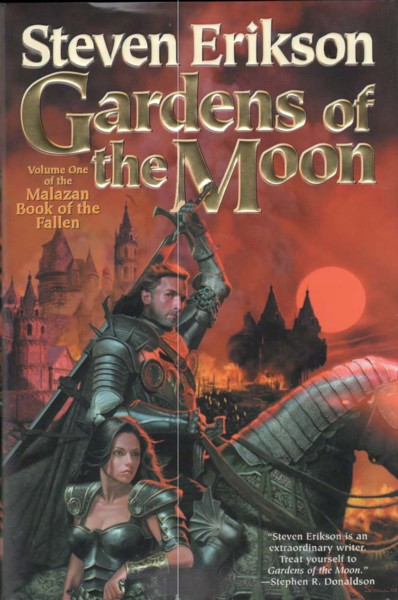
                • Cover of Malazan Book of the Fallen
                  Malazan Book of the Fallen

                  series · 20 books · 1999

                  part of Malazan

                  similar by+1 more

                  The Malazan Book of the Fallen is a series of epic fantasy novels written by the Canadian author Steven Erikson. The series, published by Bantam Books in the U.K. and Tor Books in the U.S., consists of ten volumes, beginning with Gardens of the Moon (1999) and concluding with The Crippled God (2011). Erikson's series presents the narratives of a large cast of characters spanning thousands of years across multiple continents.

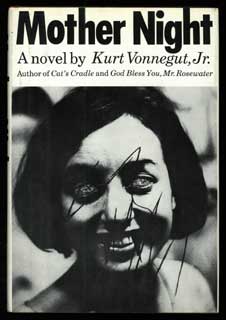
                • Cover of Mother Night
                  Mother Night

                  Kurt Vonnegut & Jr. · standalone novel · 1962

                  similar by+1 more

                  Howard W. Campbell Jr., an American playwright who grew up in Germany, writes his memoirs from an Israeli prison cell awaiting trial for war crimes. As the Nazis rose to power, Campbell stayed on, married a German actress, and was recruited by an American agent to serve as a double agent, broadcasting Nazi propaganda over the radio while secretly passing coded intelligence to the Allies. The catch, as Campbell tells it, is that he became one of the war's most effective propagandists in the process, whatever his loyalties. Kurt Vonnegut's darkest novel asks what a person becomes when the mask he wears for a cause is indistinguishable from his face.

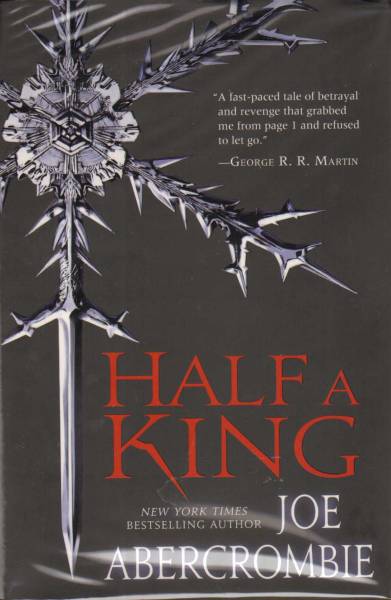
                • Cover of Shattered Sea
                  Shattered Sea

                  series · 4 books · 2014

                  similar by+1 more

                  Shattered Sea is a young adult fantasy series written by the British author Joe Abercrombie. The trilogy was published by Del Rey in the United States and Harper Voyager in the UK.

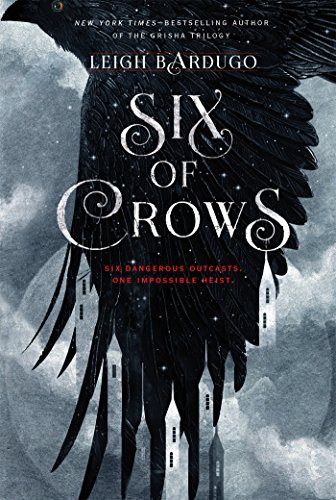
                • Cover of Six of Crows
                  Six of Crows

                  series · 3 books · 2015

                  part of Grishaverse

                  similar by+1 more

                  Leigh Bardugo's Six of Crows duology (2015-2016) follows a crew of six criminal teenagers in Ketterdam, a city modeled on the Dutch Republic, as they pull off a near-impossible heist and then deal with its fallout. Told from multiple points of view, the books lean on the found-family bond between the crew members as much as the caper plotting, and sit within Bardugo's wider Grishaverse alongside her Shadow and Bone books.

                • Cover of The Terror
                  The Terror

                  Dan Simmons · standalone novel · 2007

                  similar by+1 more

                  The Terror is a 2007 novel by American author Dan Simmons. It is a fictionalized account of Captain Sir John Franklin's lost expedition, on HMS Erebus and HMS Terror, to the Arctic, in 1845–1848, to locate the Northwest Passage. In the novel, while Franklin and his crew are plagued by starvation and illness, and forced to contend with mutiny and cannibalism, they are stalked across the bleak Arctic landscape by a monster.

                • Cover of The Private Memoirs and Confessions of a Justified Sinner
                  The Private Memoirs and Confessions of a Justified Sinner

                  James Hogg · standalone novel · 1824

                  similar by+1 more

                  The Private Memoirs and Confessions of a Justified Sinner: Written by Himself: With a detail of curious traditionary facts and other evidence by the editor is a novel by the Scottish author James Hogg, published anonymously in 1824.

                • Cover of The Mysteries of Udolpho
                  The Mysteries of Udolpho

                  Ann Radcliffe · standalone novel · 1794

                  similar by+1 more

                  After the deaths of her loving mother and father, a young 18th century French woman of fine character, intelligence, and sensibility is removed from the company of the young man she has come to love when she becomes the ward of her foolish, vain and materialistic aunt; who brings them both suffering and misery when she marries an Italian count who reveals himself as a treacherous schemer, and brings them to live in the decrepit, desolate, gloomy, remote Castle of Udolpho where he works his unsavory plans.

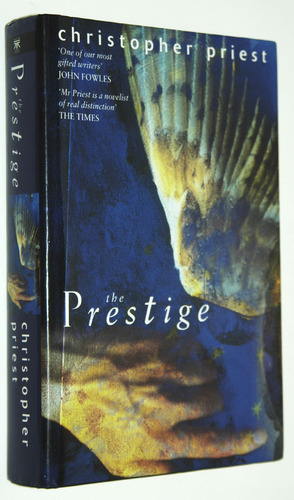
                • Cover of The Prestige
                  The Prestige

                  Christopher Priest · standalone novel · 1995

                  similar by+1 more

                  A magician called Borden (at least in private) writes his own version of his life as a magician. There's a lot of focus on a trick, where he seems to move across any width of stage in an instant, and on a feud with another magician, Angier. The account includes passages, where he can't decide what exactly to write, arguing with himself. 3 generations later a Borden (at least biologically) learns about his ancestor. He's also convinced, he somehow has a twin brother, who's happy about this development.

                • Cover of The Traitor Spy Trilogy
                  The Traitor Spy Trilogy

                  series · 3 books · 2010

                  part of Kyralia series

                  similar by+1 more

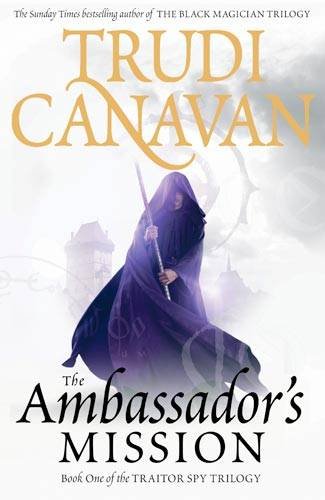
                  Trudi Canavan is an Australian writer of fantasy novels, best known for her best-selling fantasy trilogies The Black Magician and Age of the Five. While establishing her writing career she worked as a graphic designer. She completed her third trilogy, The Traitor Spy trilogy, in August 2012 with The Traitor Queen. Subsequently, Canavan has written a series called Millennium's Rule, with a completely new setting consisting of multiple worlds which characters can cross between. Though originally planned as a trilogy, a fourth and final book in the Millennium's Rule series was published.

                • Cover of The Good Man Jesus and the Scoundrel Christ
                  The Good Man Jesus and the Scoundrel Christ

                  Philip Pullman · standalone novel · 2009

                  similar by+1 more

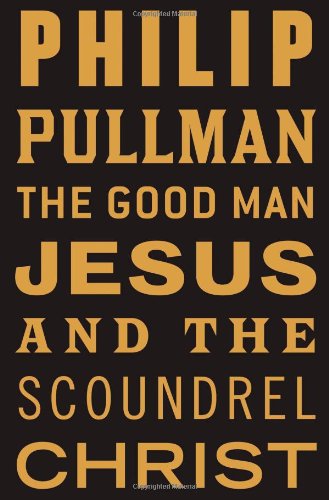
                  Philip Pullman retells the gospel story with one change: Mary gives birth to twin sons, not one. Jesus grows into the moral teacher and healer familiar from scripture, while his brother, given the name Christ, watches from the sidelines, recording and reshaping his brother's story with an eye toward the institution he believes should be built on it. As Jesus preaches humility and doubt, Christ is drawn into a bargain with a mysterious stranger who wants his account shaped into something more useful for the church that will one day claim to speak for both of them. Part of Canongate's Myth series, Pullman's short, provocative reworking of the New Testament.

                • MU
                  Mistworld Universe

                  series · 12 books · 1992

                  similar by+1 more

                • Cover of The Magus
                  The Magus

                  John Fowles · standalone novel · 1965

                  similar by+1 more

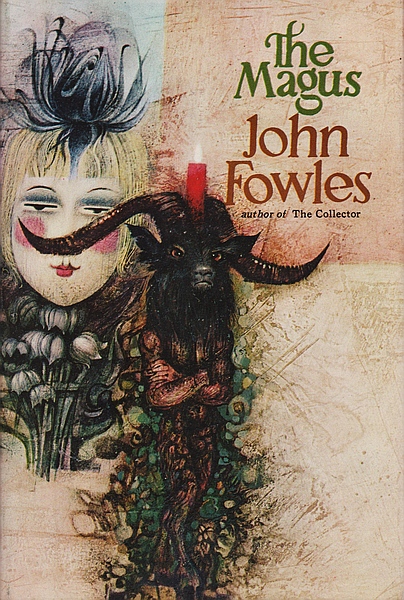
                  The Magus (1965) is a postmodern novel by British author John Fowles, telling the story of Nicholas Urfe, a young British graduate who is teaching English on a small Greek island. Urfe becomes embroiled in the psychological illusions of a master trickster, which become increasingly dark and serious. Considered an example of metafiction, it was the first novel written by Fowles but his third book to be published. A revised edition was published in 1977.

                • Cover of Un Lun Dun
                  Un Lun Dun

                  China Miéville · standalone novel · 2007

                  similar by+1 more

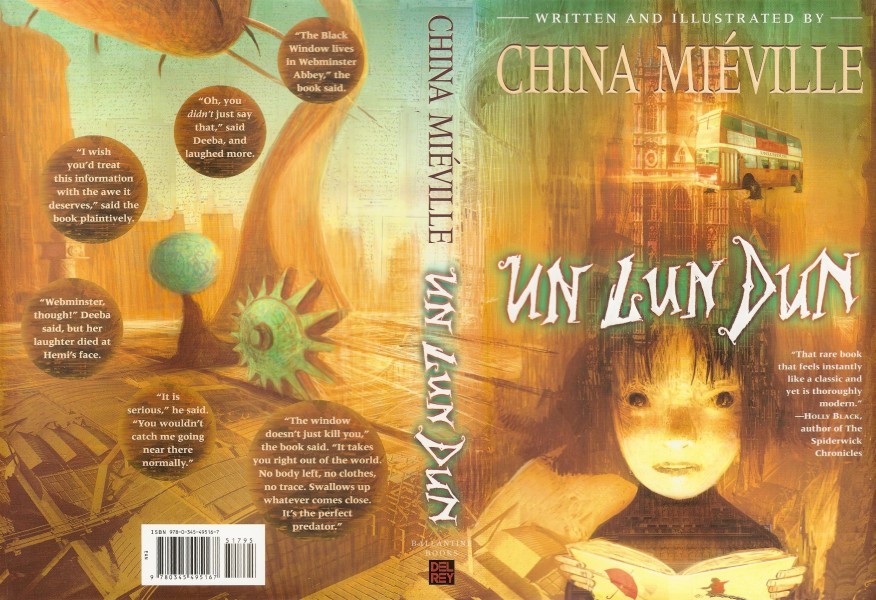
                  Un Lun Dun is a young adult fantasy novel by China Miéville, released in 2007. The title is derived from 'UnLondon,' the name of the alternate realm where the book is set. It also contains illustrations by Miéville. It was first released in January 2007. The novel also won the 2008 Locus Award for Best Young Adult Book.

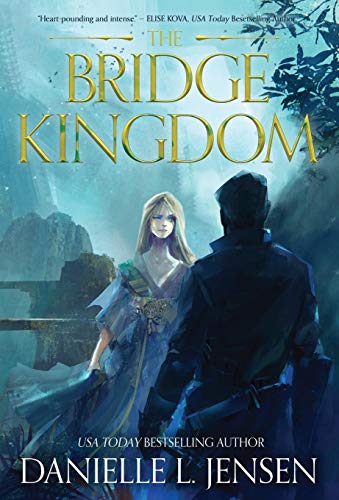
                • Cover of The Bridge Kingdom
                  The Bridge Kingdom

                  series · 7 books · 2018

                  similar by+1 more

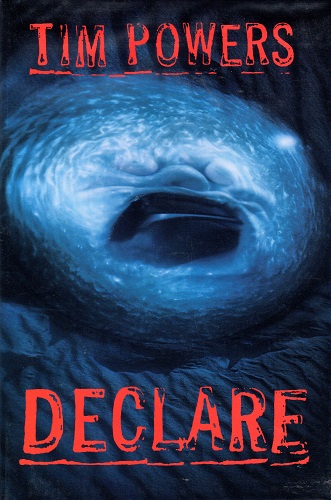
                • Cover of Declare
                  Declare

                  Tim Powers · standalone novel · 2000

                  similar by+1 more

                  Declare (2000) is a supernatural spy novel by American author Tim Powers. The novel presents a secret history of the Cold War, and earned several major fantasy fiction awards.

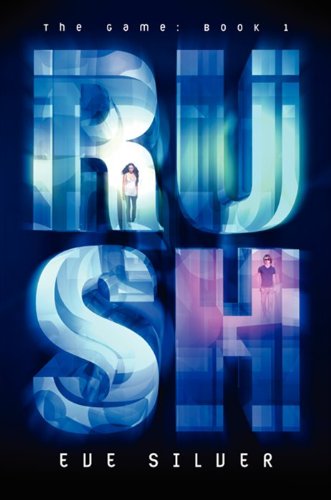
                • Cover of The Game
                  The Game

                  series · 3 books · 2013

                  similar by+1 more

                • Cover of Childhood's End
                  Childhood's End

                  Arthur C. Clarke · standalone novel · 1953

                  similar byalien invasion

                  Childhood's End is a 1953 science fiction novel by the British author Arthur C. Clarke. The story follows a peaceful alien invasion of Earth by mysterious Overlords, whose arrival begins decades of apparent utopia under indirect alien rule, at the cost of human identity and culture.