More like Almost There
anchored on:fairy tale retellingdeal with the devilnorth americaearly 20th centuryhistorical fantasyclass conflict+4 more
but
- This Ravenous Fate
series2 books2024
similar byearly 20th centurynorth americahistorical fantasydarkmultiple povbig cityfantasy
- Siren Queen
Nghi Vostandalone novel2022
similar byearly 20th centuryrace and racismnorth americahistorical fantasydarkbig cityfantasy+1 more
Siren Queen (2022) is a historical fantasy novel by Nghi Vo set in a magical 1930s Los Angeles. The story follows an aspiring actor known as Luli Wei, who hopes to achieve immortality through stardom. Hollywood provides obstacles in the form of racism, sexism, queerphobia, and dark magic. Luli rejects stereotypical roles on-screen and off, instead embracing the power of playing movie monsters. The book was Vo's first novel to be written, but the second to be published, preceded by The Chosen and the Beautiful (2021) in a similar magical universe. It received positive reviews in speculative fiction venues, and was a 2023 finalist for the World Fantasy Award, the Locus Award, and the Ignyte Award.
- The Diviners
series4 books2012
similar byearly 20th centurynorth americahistorical fantasyyoung adultbig cityfantasy+1 more
- The Reformatory
Tananarive Duestandalone novel2023
similar byemotionalearly 20th centuryrace and racismnorth americadark
The Reformatory is a 2023 novel by Tananarive Due which combines elements of horror, historical fiction, and literary fiction. It is loosely based on the Dozier School for Boys and the atrocities committed there. The novel received critical acclaim, including a win for the 2024 Bram Stoker Award for Best Novel and 2024 World Fantasy Award for Best Novel.
- Redwood and Wildfire
Andrea Hairstonstandalone novel2011
similar byemotionalearly 20th centuryrace and racismnorth americahistorical fantasy
Redwood and Wildfire is Andrea Hairston's second novel. It centers on the main characters Redwood and Aidan and their travel from Georgia to Chicago at the turn of the 20th century. It was published in 2011 by Aqueduct Press.
- Thirteen Doorways, Wolves Behind Them All
Laura Rubystandalone novel2019
similar byemotionalearly 20th centurynorth americayoung adultbig city
Thirteen Doorways, Wolves Behind Them All is a young adult novel by Laura Ruby, published October 1, 2019, by Balzer + Bray.
- The Thousandth Floor
series3 books2016
similar byclass conflictnorth americayoung adultmultiple povbig city+2 more
Katharine McGee's trilogy imagines Manhattan in 2118 as a single thousand-story tower housing every stratum of society, following five teenagers whose ambitions collide as they climb toward, or fall from, its highest floors. Across The Thousandth Floor, The Dazzling Heights, and The Towering Sky, addiction, surveillance, genetic privilege, and family betrayal play out as soap-opera drama in a meticulously built near-future setting.
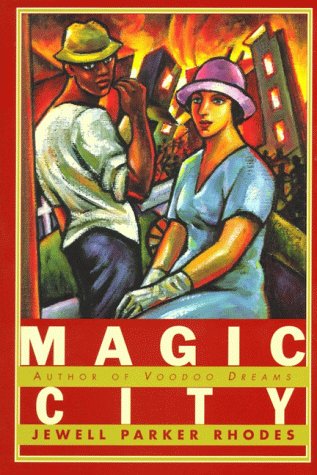
- Magic City
Jewell Parker Rhodesstandalone novel1997
similar byemotionalearly 20th centuryrace and racismnorth americadark
Based on true events, Magic City is the powerful story of two people who unwittingly lit the match that burned the community of Greenwood to the ground and erased it from the history books. Jewell Parker Rhodes imagines this tragedy through the eyes of Joe Samuels and Mary Keane, two people fundamentally divided by race but forever joined by fate. When Joe, a young man entranced by Houdini, is falsely accused of rape, he must perform his greatest escape by eluding a bloodthirsty lynch mob. Haunted by the mystery of his brother's death and the dark truth behind his father's success, Joe soon learns that he has been running all his life and that this may actually be the moment to turn and fight. Mary, the motherless daughter of a poor farmer who tries to marry her off to the farmhand who viciously raped her, is barely able to imagine what life could be like outside the prison of her own home. Now, however, she must unlock the courage to help exonerate the man she has accused with her panicked cry. Magic City, a mythic tale of violent revenge, is a portrait of an era, climaxing in the heroic but doomed stand that ultimately pitted the National Guard against a small band of black men determined to defend the town they had built into the "Negro Wall Street." Depicted against a backdrop of jail escapes, ghosts, family betrayal, and lost loves, it is a tale at once harrowing and redemptive.
- Ragtime
E. L. Doctorowstandalone novel1975
similar byearly 20th centuryclass conflictrace and racismnorth americabig city
Ragtime is a 1975 historiographic metafiction novel by American author E. L. Doctorow. The novel mixes historical figures and fictional characters together in a sweeping narrative set in the New York City area from 1902 to 1915. With its layered storyline, Ragtime explores themes of racial injustice, class division, and the American Dream in American society.
- Tigana
Guy Gavriel Kaystandalone novel1990
similar byemotionalhistorical fantasydarkmultiple povfantasy
Tigana is a 1990 fantasy novel by Canadian writer Guy Gavriel Kay. The novel is set in a region called the Peninsula of the Palm, which somewhat resembles Renaissance Italy as well as the Peloponnese in shape.
- Trouble the Saints
Alaya Dawn Johnsonstandalone novel2020
similar byearly 20th centuryrace and racismnorth americahistorical fantasydarkbig cityfantasy
Trouble the Saints is a 2020 historical fantasy novel by Alaya Dawn Johnson. It was first published by Tor Books/Macmillan Publishers.
- Chime
Franny Billingsleystandalone novel2011
similar byemotionalearly 20th centuryhistorical fantasyyoung adultfantasy
In the early twentieth century in Swampsea, seventeen-year-old Briony, who can see the spirits that haunt the marshes around their town, feels responsible for her twin sister's horrible injury until a young man enters their lives and exposes secrets that even Briony does not know about.
- Heartless
Marissa Meyerstandalone novel2016
similar byemotionalfairy tale retellingyoung adultfantasy+1 more
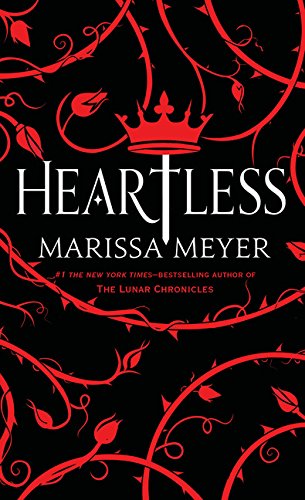
Long before she was the terror of Wonderland—the infamous Queen of Hearts—she was just a girl who wanted to fall in love. Long before she was the terror of Wonderland, she was just a girl who wanted to fall in love. Catherine may be one of the most desired girls in Wonderland, and a favorite of the unmarried King of Hearts, but her interests lie elsewhere. A talented baker, all she wants is to open a shop with her best friend. But according to her mother, such a goal is unthinkable for the young woman who could be the next queen. Then Cath meets Jest, the handsome and mysterious court joker. For the first time, she feels the pull of true attraction. At the risk of offending the king and infuriating her parents, she and Jest enter into an intense, secret courtship. Cath is determined to define her own destiny and fall in love on her terms. But in a land thriving with magic, madness, and monsters, fate has other plans. In her first stand-alone teen novel, the New York Times-bestselling author dazzles us with a prequel to Alice's Adventures in Wonderland.
- Telegraph Avenue
Michael Chabonstandalone novel2012
similar byemotionalnorth americamultiple povbig city+2 more
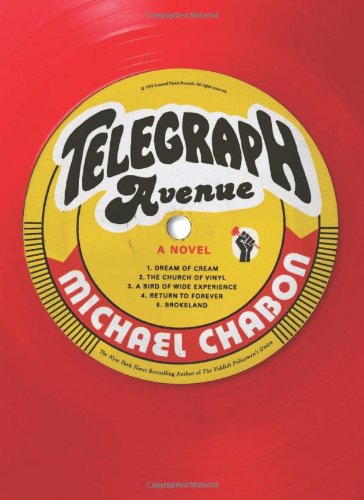
Telegraph Avenue is a novel by Michael Chabon, published on September 11, 2012. An enhanced e-book edition was released online on July 25, 2012. The novel's setting is North Oakland and Berkeley, California. The title refers to Telegraph Avenue, which runs through both cities.
- These Violet Delights Universe
series7 books2020
similar byearly 20th centuryhistorical fantasyyoung adult+3 more
- Anger Is a Gift
Mark Oshirostandalone novel2018
similar byemotionalclass conflictrace and racismnorth americadarkyoung adultbig city
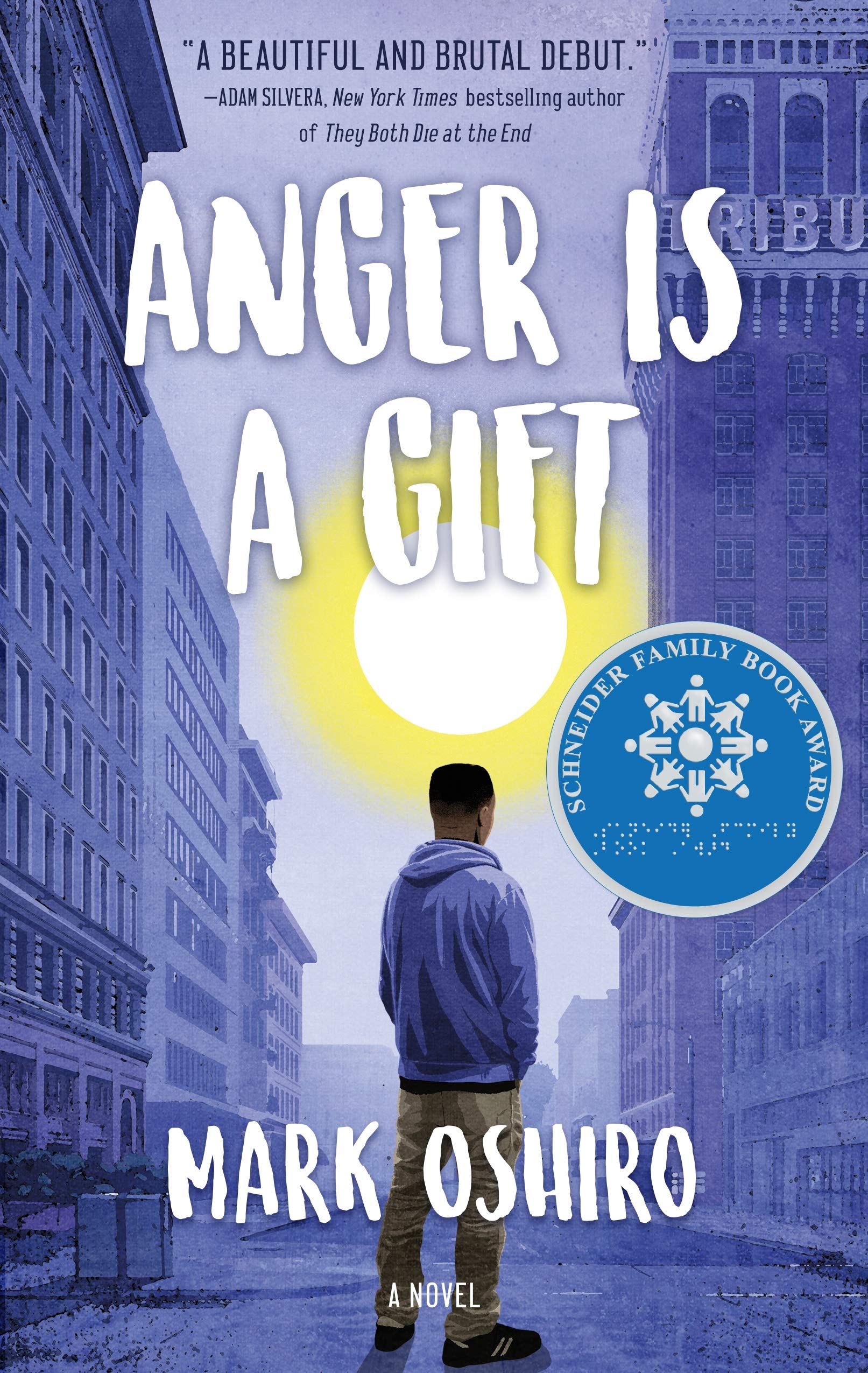
MOSS JEFFRIES is many things--considerate student, devoted son, loyal friend and affectionate boyfriend, enthusiastic nerd. But sometimes Moss still wishes he could be someone else--someone without panic attacks, someone whose father was still alive, someone who hadn't become a rallying point for a community because of one horrible night. And most of all, he wishes he didn't feel so stuck. Moss can't even escape at school--he and his friends are subject to the lack of funds and crumbling infrastructure at West Oakland High, as well as constant intimidation by the resource officer stationed in their halls. It feels sometimes that the students are treated more like criminals. Something needs to change--but who will listen to a group of teens? When tensions hit a fever pitch and tragedy strikes again, Moss must face a difficult choice: give in to fear and hate or realize that anger can actually be a gift. This description comes from the publisher.
- Bitter Greens
Kate Forsythstandalone novel2012
similar byemotionalfairy tale retellinghistorical fantasy+1 more
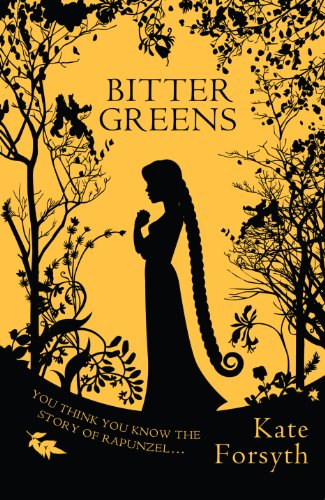
"After Margherita's father steals parsley from the walled garden of the courtesan Selena Leonelli, he is threatened with having both hands cut off, unless he and his wife relinquish their precious little girl. Selena is the famous red-haired muse of the artist Tiziano, first painted by him in 1512 and still inspiring him at the time of his death. She is at the center of Renaissance life in Venice, a world of beauty and danger, seduction and betrayal, love and superstition. Locked away in a tower, Margherita sings in the hope that someone will hear her. One day, a young man does"--Amazon.com.
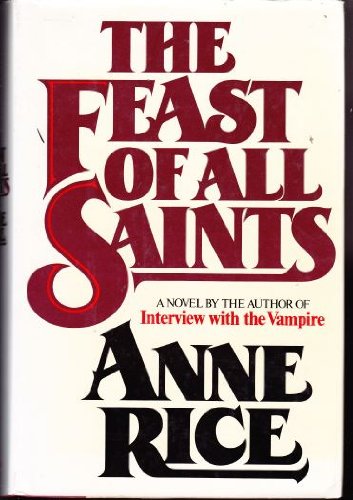
- The Feast of All Saints
Anne Ricestandalone novel1980
similar byemotionalclass conflictrace and racismnorth americabig city
WorldCat: Rice explores a unique but little-known society, the "gens de couleur libre," free people of color, who flourished in New Orleans in the years prior to the Civil War.
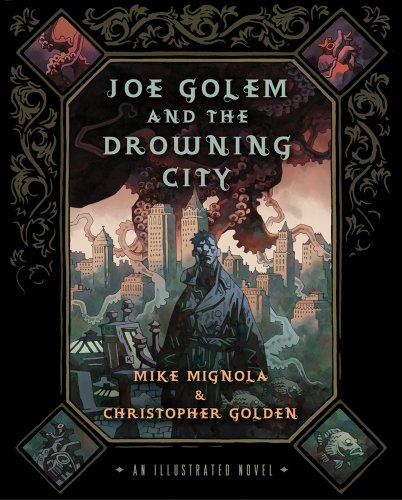
- Joe Golem and the Drowning City
Christopher Golden & Mike Mignolastandalone novel2012
similar byearly 20th centurynorth americadarkbig city+2 more
"An illustrated novel from the acclaimed creator of Hellboy--with over 100 illustrations. In 1925, earthquakes and a rising sea level left Lower Manhattan submerged under more than thirty feet of water, so that its residents began to call it The Drowning City. Those unwilling to abandon their homes created a new life on streets turned to canals and in buildings whose first three stories are underwater. Fifty years have passed since then, and The Drowning City is full of scavengers and water rats, poor people trying to eke out an existence, and those too proud or stubborn to be defeated by circumstance. Among them are fourteen year old Molly McHugh and her friend and employer, Felix Orlov. Once upon a time Orlov the Conjuror was a celebrated stage magician, but now he is an old man, a psychic medium, contacting the spirits of the departed for the grieving loved ones left behind. When a seance goes horribly wrong, Felix Orlov is abducted by strange men wearing gas masks and rubber suits. Molly finds herself on the run. Her flight leads her into the company of Simon Hodge, a Victorian detective who's kept himself alive with magic and steampunk mechanics, and the stalwart sidekick, Joe Golem, whose own past and true identity is a mystery to him, but who walks his own dreams as a man of stone and clay, brought to life for the sole purpose of hunting witches"--Provided by publisher. "In 1925, earthquakes and a rising sea level left Lower Manhattan submerged under more than thirty feet of water, so that its residents began to call it The Drowning City. Those unwilling to abandon their homes created a new life on streets turned to canals and in buildings whose first three stories are underwater. Fifty years have passed since then, and The Drowning City is full of scavengers and water rats, poor people trying to eke out an existence, and those too proud or stubborn to be defeated by circumstance. Among them are fourteen year old Molly McHugh and her friend and employer, Felix Orlov. Once upon a time Orlov the Conjuror was a celebrated stage magician, but now he is an old man, a psychic medium, contacting the spirits of the departed for the grieving loved ones left behind. When a seance goes horribly wrong, Felix Orlov is abducted by strange men wearing gas masks and rubber suits. Molly finds herself on the run. Her flight leads her into the company of Simon Hodge, a Victorian detective who's kept himself alive with magic and steampunk mechanics, and the stalwart sidekick, Joe Golem, whose own past and true identity is a mystery to him, but who walks his own dreams as a man of stone and clay, brought to life for the sole purpose of hunting witches"--Provided by publisher.
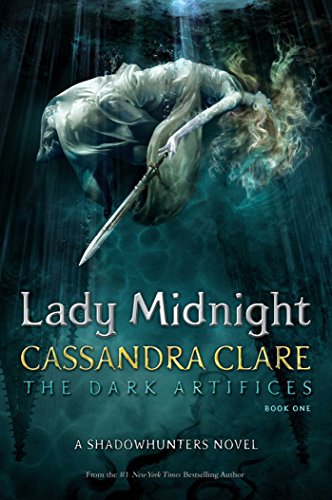
- The Dark Artifices
series4 books2016
part of The Mortal Instruments
similar byemotionalnorth americayoung adultbig cityfantasy
The Dark Artifices is a trilogy written by Cassandra Clare. The series is chronologically the fourth series in The Shadowhunter Chronicles and a sequel to The Mortal Instruments. It is set in Los Angeles. The series consists of three books: Lady Midnight, Lord of Shadows and Queen of Air and Darkness, in that particular order. Centered around the protagonist, Emma Carstairs, the series follows her journey as a Shadowhunter at the Los Angeles Institute, and her life with her best-friend and parabatai, Julian Blackthorn, and his family. The series is about a sacred bond of "parabatai", two bonded Shadowhunters, and it is more valuable than any bond in this world. This bond makes the two more powerful and strong, but there is only one drawback - it is forbidden to fall in love with your parabatai. It so happens that Emma and Julian, two parabatai, have fallen in love. The Dark Artifices is a trilogy about their struggle against their enemies and how the two protagonists deal with their forbidden love and the resulting consequences. The series is told from the point-of-view of the various different characters in the story.
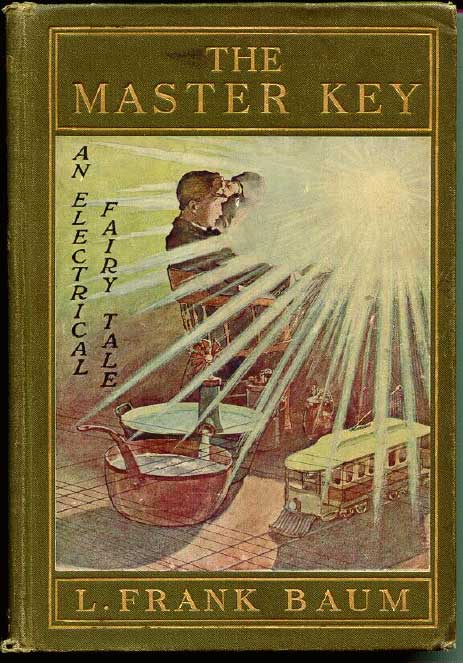
- The Master Key: An Electrical Fairy Tale
L. Frank Baumstandalone novel1901
similar byearly 20th centurydeal with the devilnorth america+2 more
Rob Joslyn is an amateur electrical tinkerer, wiring up batteries and motors with more enthusiasm than skill, when one bungled experiment does something no wiring diagram predicted: it summons the Demon of Electricity. Impressed rather than angry, the Demon offers Rob an extraordinary deal -- three gifts a week for three weeks, devices harnessing electrical power beyond anything on Earth -- and leaves the boy to decide what to do with power most adults could never be trusted with. What follows tests Rob's judgment as much as his ingenuity, gift by increasingly dangerous gift. L. Frank Baum's venture into science fiction, published between Oz books.
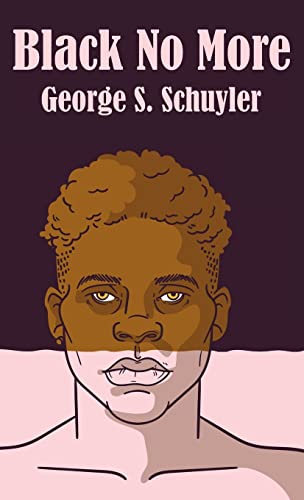
- Black No More
George S. Schuylerstandalone novel1931
similar byearly 20th centuryclass conflictrace and racismnorth america
Black No More: Being an Account of the Strange and Wonderful Workings of Science in the Land of the Free, A.D. 1933-1940 is a 1931 Harlem Renaissance satire on American race relations by George S. Schuyler. In the novel, Schuyler targets both the Ku Klux Klan and NAACP in condemning the ways in which race functions as both an obsession and a commodity in early twentieth-century America. The central premise of the novel is that an African American scientist invents a process that can transform Black people into white people. Those who have internalized white racism, those who are tired of inferior opportunities socially and economically, and those who simply want to expand their sexual horizons, undergo the procedure. As the country "whitens", the economic importance of racial segregation in the South as a means of maintaining elite white economic and social status becomes increasingly apparent, as the South relies on Black labor through sharecropping.
- Pan's Labyrinth: The Labyrinth of the Faun
Cornelia Funke & Guillermo Del Torostandalone novel2019
similar byearly 20th centuryhistorical fantasydark+1 more
Inspired by the film of the same name.