More like Alpha Centauri
anchored on:fantasytime travelbritish islesancient worldsurvivaladventurous
but
- Timeline
Michael Crichtonstandalone novel1999
similar bysurvivaladventuroustime travelbritish islestense
Timeline is a science fiction novel by American writer Michael Crichton, his twelfth under his own name and twenty-second overall, published in November 1999. It tells the story of a group of history students who travel to 14th-century France to rescue their professor. The book follows in Crichton's long history of combining science, technical details, and action in his books, this time addressing quantum and multiverse theory.
- Watership Down
series21 books1972
completed
similar bysurvivaladventurousfantasy+1 more
Watership Down is Richard Adams's 1972 novel following a group of rabbits who flee the destruction of their warren and cross the English countryside of Hampshire in search of a new home, developing over the journey a full rabbit culture of language, proverbs, and mythology. Adams returned to the same world in 1996 with Tales from Watership Down, a collection of nineteen short stories mixing rabbit folklore with further adventures of characters from the novel.
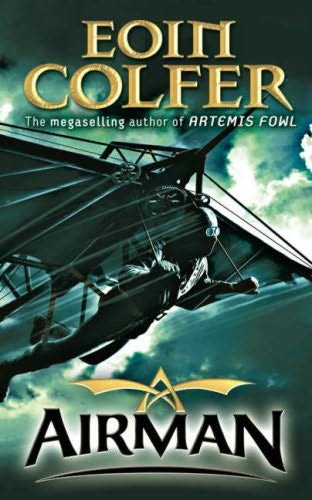
- Airman
Eoin Colferstandalone novel2008
similar bysurvivaladventurousbritish islestense+1 more
Airman, by Eoin Colfer, is a best-selling historical adventure novel set in the 19th century. It was released in the UK, Ireland and US in January 2008. The novel was shortlisted for the 2009 Carnegie Medal.
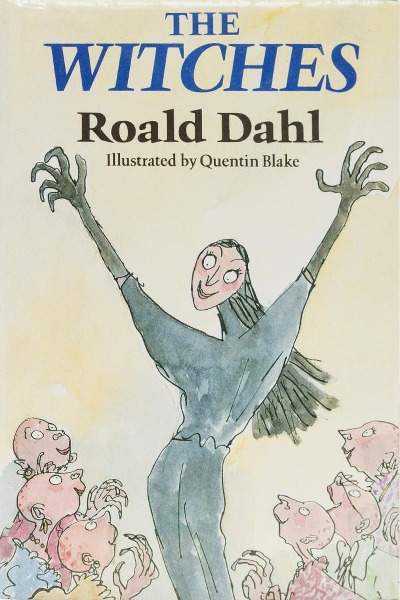
- The Witches
Roald Dahlstandalone novel1983
similar bysurvivalfantasybritish islestense+1 more
The Witches is a 1983 children's novel by British author Roald Dahl. A dark fantasy, the story is set partly in Norway and partly in England, and features the experiences of a young English boy and his Norwegian grandmother in a world where child-hating societies of witches secretly exist in every country. The witches are ruled by the vicious and powerful Grand High Witch, who arrives in England to organise her plan to turn all of the children there into mice.
- The Jaguar Princess
Clare Bellstandalone novel1993
similar bysurvivaladventurousancient worldfantasy+1 more
Mixcati's people are descended from the Olmec Jaguar Gods and she is fated for great things—both wonderful and dangerous. She can, unexpectedly and without warning, turn into a living, wild Jaguar, just as her ancestors have done since time immemorial. Once stolen into slavery, she must struggle to survive and to learn to fulfill her destiny in an Aztec culture that understands her strength, fears her power and wants her dead. She must face destruction at their hands—or come into her true power as The Jaguar Princess.
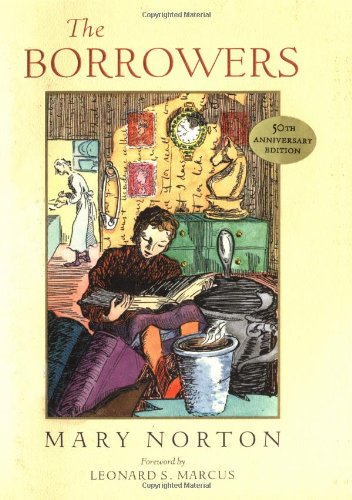
- The Borrowers
series8 books1952
similar bysurvivaladventurousfantasybritish isles
The Borrowers imagines a family of tiny people living secretly beneath the floorboards of an English house, surviving by borrowing pins, stamps, and other small items from the human beans upstairs without ever being seen. Mary Norton's original 1952 novel and its sequels follow the family through discovery, flight, and resettlement across the following decades. Later editions and omnibus volumes gather the novels together, sometimes crediting other writers for introductions or companion material rather than new story content.
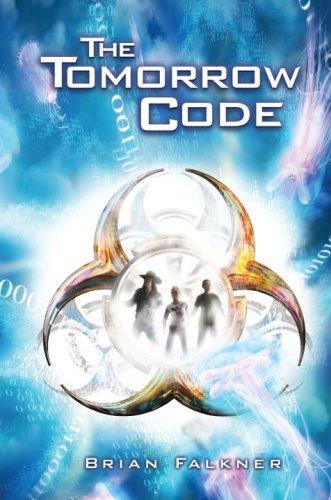
- The Tomorrow Code
Brian Falknerstandalone novel2008
similar bysurvivaladventuroustime traveltenseyoung adult
THE END OF THE WORLD started quietly enough for Tane Williams and Rebecca Richards. . . .Tane and Rebecca aren't sure what to make of it--a sequence of 1s and 0s, the message looks like nothing more than a random collection of alternating digits. Working to decode it, however, Tane and Rebecca discover that the message contains lottery numbers . . . lottery numbers that win the next random draw! Suddenly Tane and Rebecca are rich, but who sent the numbers? And why? More messages follow, and slowly it becomes clear--the messages are being sent back in time from Tane and Rebecca's future. Something there has gone horribly wrong, and it's up to them to prevent it from happening. As they follow the messages' cryptic instructions, Tane and Rebecca begin to suspect the worst--that the very survival of the human race may be at stake.From the Hardcover edition.
- Tunnel in the Sky
Robert A. Heinleinstandalone novel1955
similar bysurvivaladventuroustenseyoung adult
As the final test of a survivalist/explorer class, teenagers are dumped on an alien planet to use their skills while awaiting pickup. But something has gone wrong, and they find they are on their own.
- Have Space Suit - Will Travel
Robert A. Heinleinstandalone novel1958
similar bysurvivaladventuroustenseyoung adult
From the back cover of the Del Rey 9th printing: "Skyjacked - Everything happened at once. One minute Kip Russell was walking about in his own backyard, testing out an old space suit and dreaming about going to the moon - and the next he was out cold and the captive of an insidious space pirate. The whole thing seemed like a very bad dream until he discovered he wasn't the only prisoner on board. Then the reality of the situation became inescapable. He - along with the daughter of a world-renowned scientist and a beautiful creature from an alien planet - had been skyjacked by a monstrous extraterrestrial and they were on their way to the Moon... a journey toward a fate worse than death!"
- Ratha
series6 books1983
similar bysurvivaladventurousfantasyyoung adult
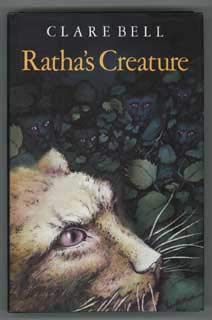
The Books of the Named is a series of young adult xenofictive prehistoric fiction novels by Clare Bell. The books center around a society of sapient prehistoric cats, the Named, who herd prehistoric horses and deer and are in conflict with a non-sentient group of cats called the Unnamed. The series follows Ratha, who discovers the "Red Tongue", fire, permanently changing their society. The series has received positive reviews and has been compared to the book Watership Down.
- The Cockatrice Boys
Joan Aikenstandalone novel1996
similar bysurvivaladventurousbritish islesfantasy
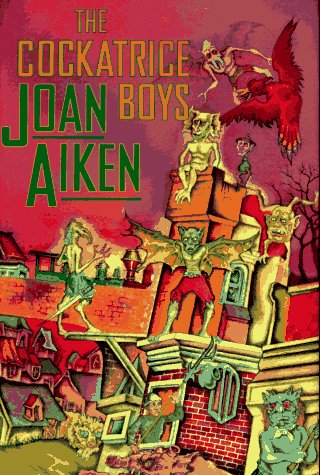
From the flaps of the Tor edition: "Without warning the world is invaded by a myriad of horrible mosters. A little orphaned girl named Sauna sees them first, as oddly shaped packages that disappear from the baggage claim at Manchester Airport. Originating in England, the invasion causes the precipitous downfall of civilization in the British Isles as most of the population is eaten by the monsters. The countryside has become a dangerous wasteland, and the cities isolated fortresses. In a desperate attempt to bring food to the starving people of Manchester, a heroic band known as the Cockatrice Corps sets out aboard an armed and armored train. The last recruit to the Cockatrice Corps was a drummer boy, Dakin Prestwich. When he told his mother that he had been accepted for the anti-monster corps, she burst into floods of tears. "Oh, Dakin, you never! What d'you want to go and do that for? You must be out of your finitical mind!" "I'm sick of living in the strong room of Barclay's Bank, Sheperds Bush." said Dakin "I want to see some daylight." "You'll be killed for sure! You'll be crunched up by a Flying Hammerhead. Or stamped on by a foot-monster. Or the deadly Mirkindale will get you. And I shall be left all alone." wept Mrs. Prestwich. Along the way, through battles of triumph and loos, the intrepid members of the Cockatrice Corps rescue Sauna in Manchester from the clutches of an evil aunt, and discover that they have a further mission; to find the source of the monstrous invasion and end it. Sauna, Dakin, and the rest of the Cockatrice Corps journey northward, toward Scotland and an evil that beckons them to destruction that only Sauna can avert."
- The Paradise Trap
Catherine Jinksstandalone novel2011
similar bysurvivaladventurousfantasytense+1 more
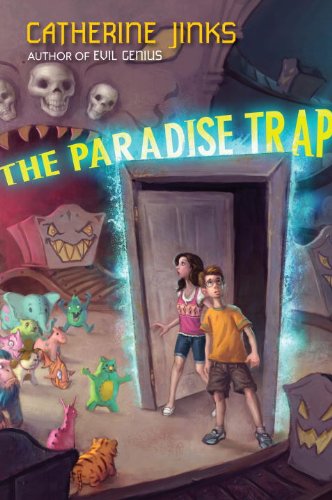
Eleven-year-old Marcus is spending a week at the beach with his mother in a tiny old travel trailer, but boredom turns to terror when a new friend discovers a cellar that has magical doors through which people keep disappearing.
- TimeRiders
series9 books2010
similar bysurvivaladventuroustime traveltenseyoung adult
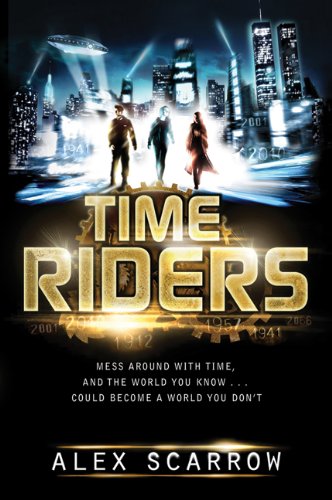
TimeRiders is a series of teen science fiction novels written by Alex Scarrow. The series consists of nine books and is published by Puffin Books.
- Restoree
Anne McCaffreystandalone novel1967
similar bysurvivaladventuroustense+1 more
Torn from Earth by a bizarre and nameless black force, Sara has no idea where she is or why she inhabits a beautiful new body. Controlled by brutal guards and tamed by terror, she can not comprehend her role as a nurse for a man who appears to be an idiot. She discovers that the planet she had been brought to was Lothar and that the man she was caring for was its Regent, Sara knows the restorees had to escape. When they do, they become fugitives on a world of multiple evils. (adapted from the back cover of the Baen edition)
- Hungry City Chronicles / Mortal Engines
series5 books2001
part of Mortal Engines Universe
similar bysurvivaladventurousyoung adult+1 more
The Mortal Engines Quartet, also known as the Predator Cities Quartet, is a series of epic young adult science fiction novels by the English novelist and illustrator Philip Reeve. He began the first volume of the series, Mortal Engines, in the 1980s, and it was published in 2001. Reeve then published three further novels, Predator's Gold (2003), Infernal Devices (2005), and A Darkling Plain (2006).
- Bromeliad
series3 books1989
completed
similar bysurvivaladventurousfantasy
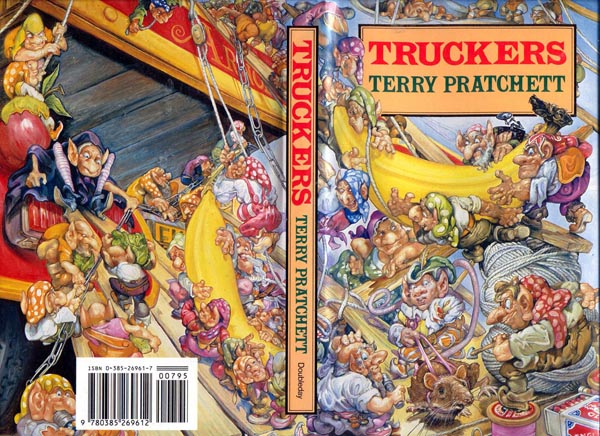
The Nome Trilogy, also known as The Bromeliad, is a trilogy of children's books by British writer Terry Pratchett, consisting of the books Truckers (1989), Diggers (1990) and Wings (1990). The trilogy tells the story of the Nomes, a race of tiny people from another world who now live hidden among humans. Through the books they struggle to survive in the human world and, once they learn of their history from an artefact known as "The Thing", make plans to return home.
- A Fall of Moondust
Arthur C. Clarkestandalone novel1961
similar bysurvivaladventuroustense
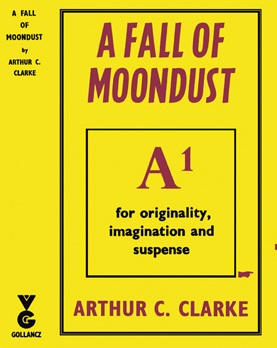
From the back cover of the Harbrace paperback: "The action of A Fall of Moondust takes place almost a century from now when tours on the moon are a common occurrence. One of the high points of each tour is a cruise around the Sea of Thirst, a body of volcanic dust, in a specially designed vessel called the Selene On a perfectly routine voyage one day the Selene suddenly disappears. How do you locate a small tourist "cruiser" buried beneath fifty feet of dust? If you find it, how do you rescue the passengers and crew? If you are on board, how do you feel and what do you do while brave men and expert technicians join forces in a race against time? Sustained excitement, lively humor, and an engaging cast of characters make this one of Arthur C. Clarke's most intriguing novels."
- The People of the Mist
H. Rider Haggardstandalone novel1894
similar bysurvivaladventurousfantasy
The People of the Mist is a classic lost world fantasy novel written by H. Rider Haggard. It was first published serially in the weekly magazine Tit-Bits, between December 1893 and August 1894; the first edition in book form was published in London by Longman in October, 1894. It was reprinted in December, 1973 by Ballantine Books as the sixty-third paperback volume of the Ballantine Adult Fantasy series.
- Oxford Time Travel
series6 books1982
similar bysurvivaltime travelbritish islestense
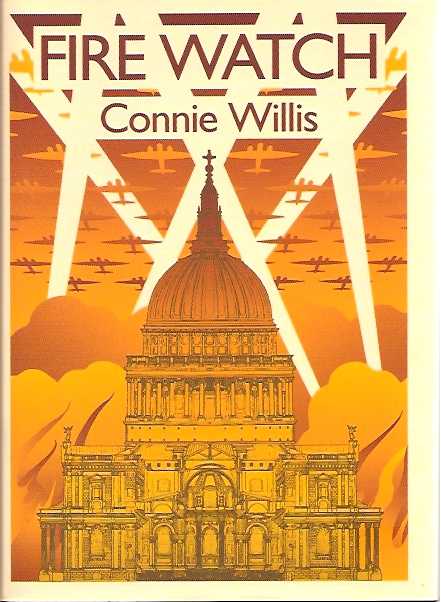
Connie Willis's Oxford Time Travel novels are set at a near-future Oxford University where historians travel into the past as observers, constrained by a version of history that resists any change large enough to alter real events. Doomsday Book sends a medieval historian to what should be 1320 but turns out to be the Black Death year of 1348, intercut with a present-day epidemic at Oxford; To Say Nothing of the Dog returns to the same time-travel program for a lighter, Victorian-set story with different characters. The two novels share their setting and rules rather than a directly continuing plot.
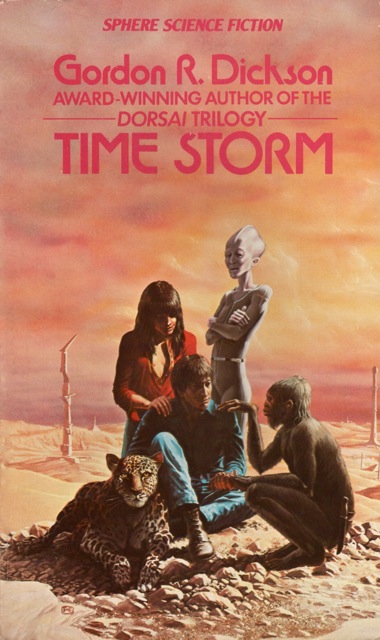
- Time Storm
Gordon R. Dicksonstandalone novel1977
similar bysurvivaladventuroustime traveltense
A time storm has devastated the Earth, and only a small fraction of humankind remains. From the rubble, three survivors form an unlikely alliance: a young man, a young woman, and a leopard. "A masterful science fiction story told by a masterful science fiction writer". -- Milwaukee Journal. A time storm strikes the Earth. The Earth remains, but different parts of the Earth are in different eras. Travel between the different zones is thought to be impossible. The main character, Marc Despard, resolves to fight the time storm. After some struggles, he assembles a small band of people, including one alien, to help him try to understand what has happened and to stop the time storm. He has 2 extraordinary relationships with a older teenaged girl who is speechless for the first part of the book (she was "struck dumb" by the time storm) and with, believe it or not, a leopard. Dickson's writing makes the extraordinary seem quite normal. Ultimately, after being harried by a Mad Max-like group of survivors, he uses a machine found in a different era of time to bring his small band of followers into the future so that he can find those who are trying to fight the time storm. He convinces those future beings that he is capable of fighting the time storm, and ultimately stops it, and gets the girl in the end.
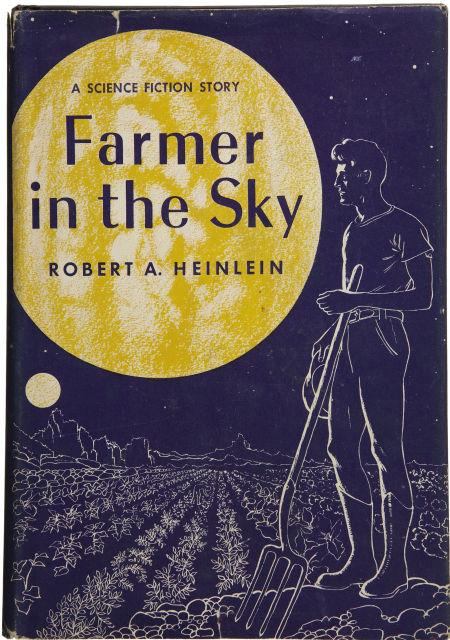
- Farmer in the Sky
Robert A. Heinleinstandalone novel1950
similar bysurvivaladventurousyoung adult
A family emigrates to the new colony on Ganymede, but the existing colonists do not have the resources to support a flood of immigrants. The teenage son, a boy scout, works to invigorate their barren holding without any technological support. Things come to a head when disaster strikes.
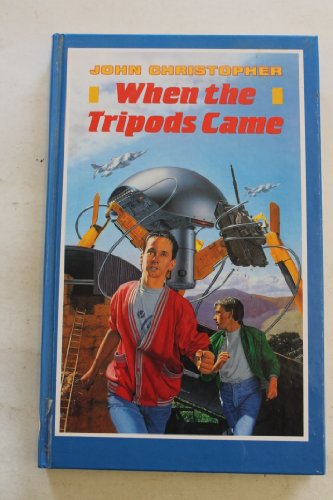
- Tripods
series4 books1967
completed
similar bytenseyoung adult+3 more
The Tripods is a series of young adult science fiction novels by John Christopher. The series takes place in a post-apocalyptic world where humanity is enslaved by "Tripods"—gigantic three-legged walking machines piloted by an alien race later identified as the "Masters". The first two books were the basis of a science fiction TV series, produced in the United Kingdom in the 1980s.
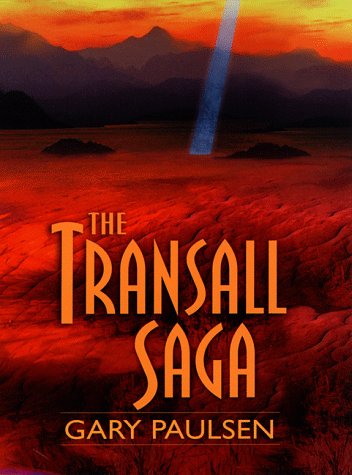
- The Transall Saga
Gary Paulsenstandalone novel1998
similar bysurvivaladventurousyoung adult+2 more
The Transall Saga is a 1998 post-apocalyptic survival novel by American author Gary Paulsen. It is a survival story like most of his other books but also involves the science fiction genre. There are also themes of speculative evolution.
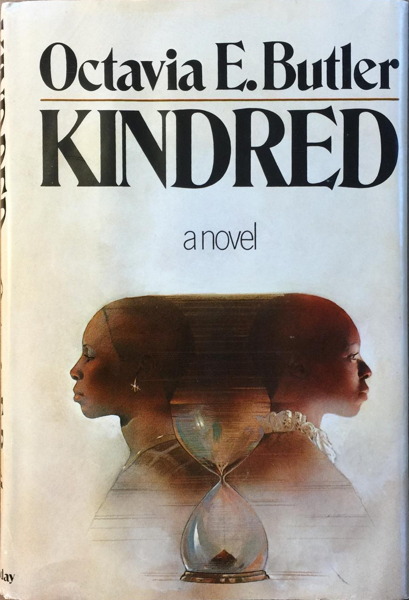
- Kindred
Octavia E. Butlerstandalone novel1979
similar bysurvivaltime traveltense+1 more
Kindred (1979) is a novel by American writer Octavia E. Butler that incorporates time travel and is modeled on slave narratives. Widely popular, it has frequently been chosen as a text by community-wide reading programs and book organizations, and for high school and college courses.