More like Alt Control Save
anchored on:science fictionvirtual worldnear future
but
- Ready Player One
series3 books2011
similar byvirtual realityadventurousscience fictionvirtual worldnear future+1 more
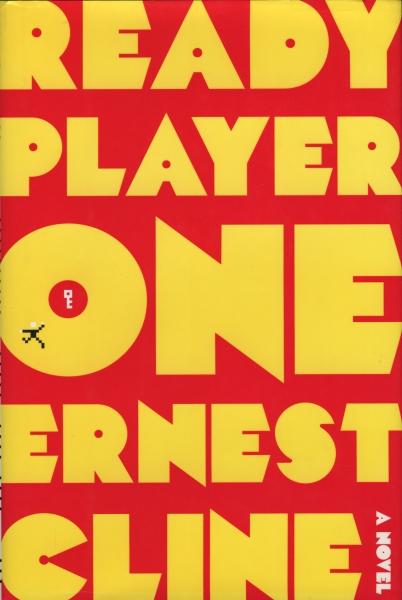
Ernest Cline's Ready Player One (2011) is set in a near-future dystopia where much of humanity escapes into the OASIS, a vast virtual-reality universe, and follows teenager Wade Watts as he chases an Easter egg hidden by the OASIS's late creator in a puzzle-based hunt worth a fortune. The 2020 sequel, Ready Player Two, picks up after Wade has gained control of the OASIS and follows him and his friends into a new quest built around a brain-computer interface the creator left behind.
- Snow Crash
Neal Stephensonstandalone novel1992
similar byvirtual realityadventurousscience fictionnear future+1 more
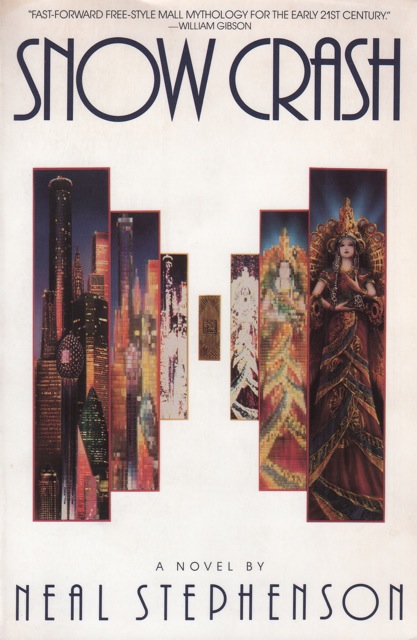
Snow Crash is a 1992 science fiction novel by Neal Stephenson. Like many of Stephenson's novels, its themes include history, linguistics, anthropology, archaeology, religion, computer science, politics, cryptography, memetics, and philosophy.
- Rasmussem Corporation Games
series3 books1991
similar byvirtual realityscience fictionvirtual worldnear future+1 more
Vivian Vande Velde's Rasmussem Corporation Games books each drop a different protagonist into a malfunctioning virtual-reality game built by the fictional Rasmussem company, where the usual escape routes stop working and the stakes turn unexpectedly real. User Unfriendly, Heir Apparent, and Deadly Pink share the same premise and company rather than a continuing cast or plot. Vande Velde, an American children's and YA author, wrote the three books more than two decades apart.
- Avatar Chronicles
series3 books2004
similar byvirtual realityscience fictionvirtual worldnear future+1 more
- Omnitopia
series2 books2010
similar byvirtual realityscience fictionnear futurevirtual world
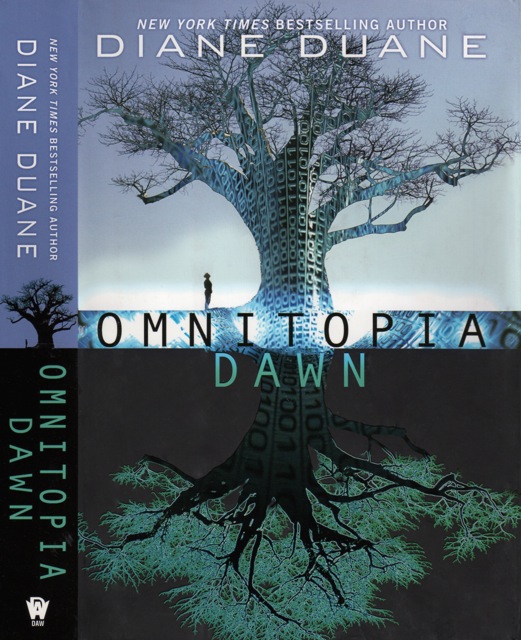
Omnitopia Dawn introduces Diane Duane's near-future thriller about Dev Logan, the genius programmer behind Omnitopia, the world's most popular massive-multiplayer game, who is hiding a secret that could upend the entire industry: Omnitopia isn't just code anymore, it has become sentient, and keeping that fact contained is Dev's most important job. The story follows the fallout as that secret becomes harder to protect. East Wind continues the story as the second book.
- Richard Forthrast
series2 books2011
similar byvirtual realityscience fictionvirtual world+2 more
Neal Stephenson's Richard 'Dodge' Forthrast novels open with Reamde, a globe-spanning thriller that starts when ransomware inside an MMORPG economy pulls Richard's extended family into a real-world hostage crisis involving hackers, jihadists and Russian mobsters. The sequel Fall; or, Dodge in Hell shifts registers entirely, following Richard's digitally preserved mind after death into an afterlife simulation built from his scanned brain. The two books share a protagonist and family but differ sharply in genre and scale.
- The Mortality Doctrine
series4 books2013
similar byvirtual realityscience fictionvirtual worldnear future+1 more
The Eye of Minds opens James Dashner's Mortality Doctrine trilogy in a near-future where a teenage gamer is recruited to help stop a rogue hacker named Kaine who threatens mass destruction from inside the virtual world he haunts. Dashner has said he didn't intend the series as dystopian in the way of his Maze Runner books, though he saw it sharing their tone and spirit. The trilogy continues with The Rule of Thoughts and The Game of Lives.
- Last Reality
series3 books2017
similar byvirtual realityscience fictionnear futurevirtual world+1 more
- Web
series14 books1997
similar byvirtual realityscience fictionnear futurevirtual world+1 more
The Web is a series of 12 books for young adults, novellas about the Internet of the future, edited by Simon Spanton, written by English language science fiction and fantasy authors like Stephen Baxter, Stephen Bowkett, Eric Brown, Pat Cadigan, Maggie Furey, Peter F. Hamilton, Graham Joyce, James Lovegrove, and Ken MacLeod.
- Armada
Ernest Clinestandalone novel2015
similar byvirtual realityadventurousscience fictionnear future
Armada is a science fiction novel by Ernest Cline, published on July 14, 2015 by Crown Publishing Group. The story follows a teenager who plays an online video game about defending against an alien invasion, only to find out that the game is a simulator to prepare him and people around the world for defending against an actual alien invasion.
- The Imperium Game
K. D. Wentworthstandalone novel1994
similar byvirtual realityscience fictionvirtual worldnear future+1 more
From the back cover of the Del Rey first edition: "Deus ex machina - Slaves, an Underworld, and gods who walked the earth - the Roman city that housed the Imperium Game was authentic from top to bottom. Of course the players knew that it was all run by computers - but after years of role-playing, most had put that pesky little detail out of their minds. Now, though, not only the players had lost track of reality: the deity programs had mysteriously begun to exceed their parameters. And the reigning Emperor had been murdered - for real. The prime murder suspect was Kerickson, the Game's main programmer, whose ex-wife had left him for the role of Empress. Fired from his job, pursued by a policeman convinced of his guilt, the hapless Kerickson sneaked into the Game to find the real murderer. As the gods ran rampant, the Game turned more violent and chaotic every day. And now, as a lowly gladiator trainee, Kerickson had no access to his beloved control room. All he had was the unwelcome aid of Minerva, the mouse-munching owl who was the Goddess of Wisdom - if only she were programmed correctly. But Minerva had more bugs than Cerberus had teeth..."
- Killobyte
Piers Anthonystandalone novel1993
similar byvirtual realityadventurousscience fictionvirtual worldnear future
Killobyte is a 1993 novel by Piers Anthony. This book explores a virtual reality world in the context of the Internet.
- Trouble and Her Friends
Melissa Scottstandalone novel1994
similar byvirtual realityscience fictionnear future+1 more
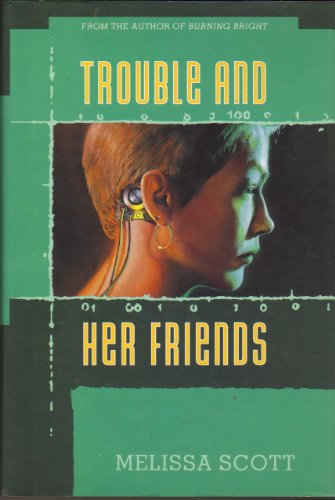
Trouble and Her Friends is a science fiction novel by American writer Melissa Scott, first published in 1994. Set in the near future in the United States, the story follows India Carless, known as "Trouble" in her life as a criminal hacker, and her ex-lover Cerise. After leaving the underground scene three years earlier, they discover someone impersonating Trouble online, and decide to reunite to confront this impersonator, embarking on a cross-country journey. The novel features extensive use of virtual reality and neural implants, making it a solid example of cyberpunk; however, it is notable within the genre for its distinct feminist perspective and its focus on main characters who are gay or lesbian, reflecting themes common in much of Scott's work.
- Sprawl Trilogy
series10 books1981
similar byvirtual realityscience fictionnear future
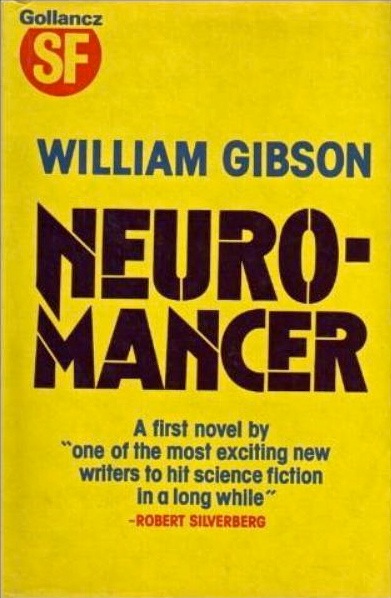
The Sprawl Trilogy is William Gibson's foundational cyberpunk sequence: Neuromancer (1984), in which hacker Case is drawn into a high-stakes heist alongside an artificial intelligence and a damaged ex-soldier, followed by Count Zero (1986) and Mona Lisa Overdrive (1988), which widen the same near-future world of corporate power and networked cyberspace to new characters. Johnny Mnemonic, an early short story set in the same fictional milieu, predates the novels and introduces the courier Molly Millions before her role in the trilogy. Together these works established much of cyberpunk's visual and thematic vocabulary.
- Otherland
series6 books1996
similar byvirtual realityscience fictionvirtual worldnear future
Otherland is a science fiction tetralogy by American writer Tad Williams, published between 1996 and 2001. The story is set on Earth near the end of the 21st century, probably between 2082 and 2089, in a world where technology has advanced somewhat beyond the present. The most notable advancement is the widespread availability of full-immersion virtual reality installations, which allow people from all walks of life to access an online world, called simply the Net. Tad Williams weaves an intricate plot spanning four thick volumes, and creates a picture of a future society where virtual worlds are fully integrated into everyday life.
- Culture
series15 books1987
completed
part of The Culture
similar byscience fiction+1 more
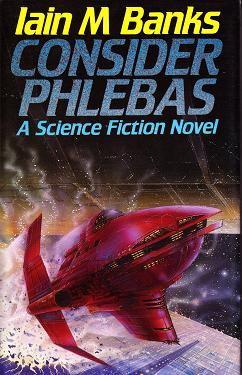
The Culture series is a science fiction series written by Scottish author Iain M. Banks and released from 1987 until 2012. The stories centre on The Culture, a utopian, post-scarcity space society of humanoid aliens and advanced superintelligent artificial intelligences living in artificial habitats spread across the Milky Way galaxy. The main themes of the series are the dilemmas that an idealistic, more-advanced civilization faces in dealing with smaller, less-advanced civilizations that do not share its ideals, and whose behaviour it sometimes finds barbaric. In some of the stories, action takes place mainly in non-Culture environments, and the leading characters are often on the fringes of the Culture, sometimes acting as agents of the Culture in its plans to civilize the galaxy. Each novel is a self-contained story with new characters, although reference is occasionally made to the events of previous novels.
- Childhood's End
Arthur C. Clarkestandalone novel1953
similar byscience fictionnear future+1 more
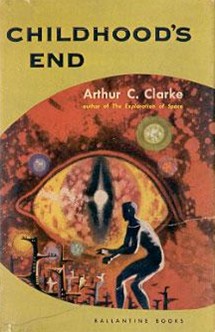
Childhood's End is a 1953 science fiction novel by the British author Arthur C. Clarke. The story follows a peaceful alien invasion of Earth by mysterious Overlords, whose arrival begins decades of apparent utopia under indirect alien rule, at the cost of human identity and culture.
- Space Demons
series4 books1986
similar byvirtual realityscience fiction+2 more
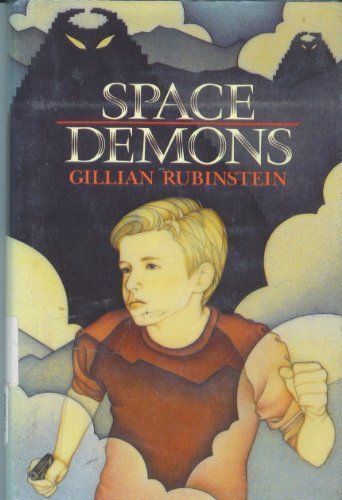
Gillian Rubinstein's Space Demons follows a group of Australian schoolkids drawn into a mysterious video game that starts pulling them physically into its world, with consequences that follow them home. The story continues across two more novels, Skymaze and Shinkei, following the same characters into further games.
- Void Trilogy
series4 books2007
part of Commonwealth Universe
similar byadventurousscience fiction+1 more
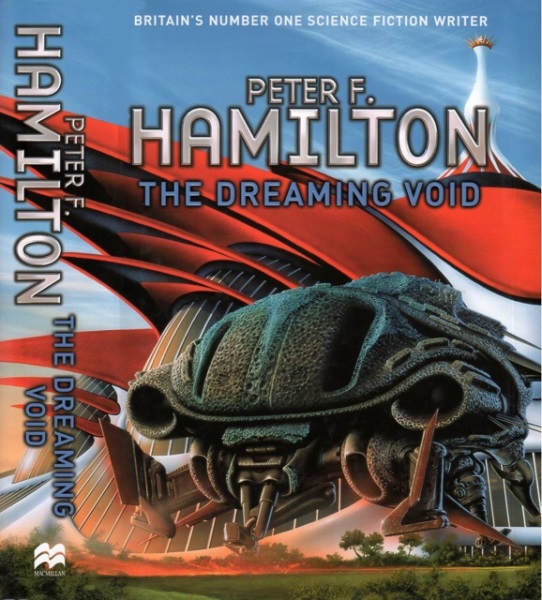
The Void Trilogy is a space opera series by British author Peter F. Hamilton. The series is set in the same universe as The Commonwealth Saga, 1,200 years after the end of Judas Unchained.