More like Altered
anchored on:science fictiongenetic engineeringnorth americanear futuretenseyoung adult+3 more
but
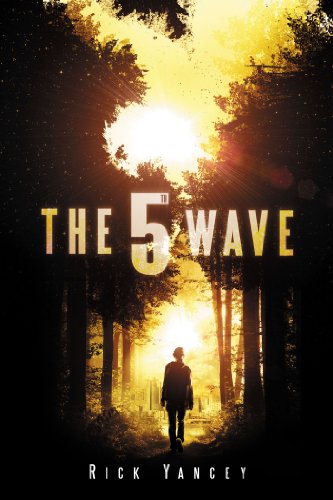
- The 5th Wave
series4 books2013
similar byscience fictiontensenorth americanear futureyoung adultsurvivaldark
Rick Yancey's The 5th Wave opens after a series of escalating alien attacks has already devastated Earth's population and infrastructure, following sixteen-year-old survivor Cassie Sullivan as she searches for her younger brother while trying to work out who, among the remaining humans, can still be trusted. The trilogy is young-adult science fiction that treats its alien-invasion premise as a survival and paranoia story more than a war story.
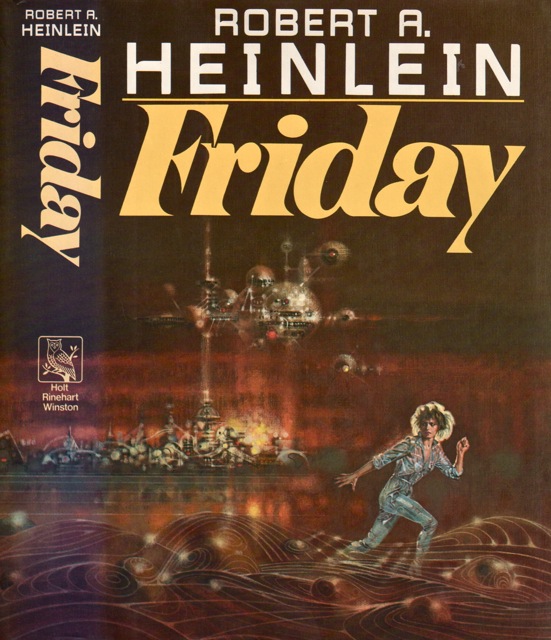
- Friday
Robert A. Heinleinstandalone novel1982
similar byscience fictionnorth americanear futuretensegenetic engineeringidentity
Friday is a 1982 science fiction novel by American writer Robert A. Heinlein. It is the story of a female "artificial person", the eponymous Friday, genetically engineered to be stronger, faster, smarter, and generally better than normal humans. Artificial humans are widely resented, and much of the story deals with Friday's struggle both against prejudice and to conceal her enhanced attributes from other humans. The story is set in a Balkanized 21st century, in which the nations of the North American continent have been split up into a number of smaller states.
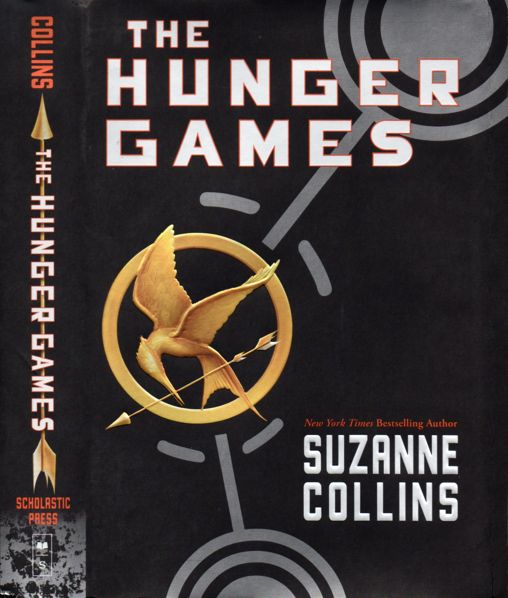
- The Hunger Games
series3 books2008
part of The Hunger Games Universe
similar byscience fictiontensenorth americayoung adultdarksurvival
The Hunger Games is a series of young adult dystopian novels written by American author Suzanne Collins. The series consists of a trilogy that follows teenage protagonist Katniss Everdeen, as well as two prequels. The Hunger Games universe is a dystopia set in Panem, a post-apocalyptic North American country consisting of the wealthy Capitol and 12 districts in varying states of poverty. As punishment for rebellion, the Capitol hosts an annual battle royale competition called The Hunger Games. Each of the 12 districts must send two children between the ages of 12 and 18 to participate, and the last surviving child is dubbed the victor.
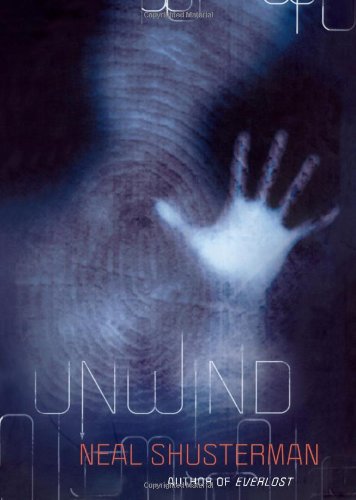
- Unwind Dystology
series5 books2007
similar byscience fictionnear futurenorth americatenseyoung adultdarkgenetic engineering+2 more
Neal Shusterman's Unwind Dystology opens in a United States reshaped by the resolution to a war over reproductive rights: parents can retroactively have a teenager "unwound," their body disassembled for transplant on the premise that nothing technically dies since every part lives on in someone else. The first novel follows three teens fleeing that fate, and the sequels widen the same dystopia's cast and consequences across a four-book arc plus companion material. It is grim speculative fiction built to ask hard bioethical questions rather than offer comfort.
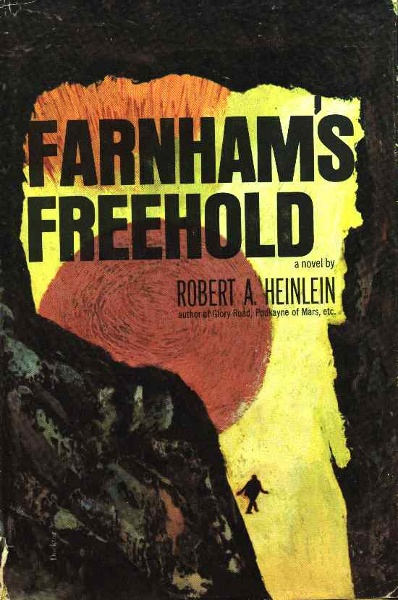
- Farnham's Freehold
Robert A. Heinleinstandalone novel1964
similar byscience fictionnear futuretensenorth americasurvival+1 more
Farnham's Freehold is a science fiction novel by American writer Robert A. Heinlein. A serialized version, edited by Frederik Pohl, appeared in Worlds of If magazine. The complete version was published in novel form by G. P. Putnam later in 1964.
- The Running Man
Stephen Kingstandalone novel1982
similar byscience fictiontensenorth americanear futuresurvivaldark
The Running Man is a dystopian thriller novel by American writer Stephen King, first published under the pseudonym Richard Bachman in 1982 as a paperback original. It was collected in 1985 in the omnibus The Bachman Books. The novel is set in a dystopian United States during the year 2025, in which the nation's economy is in ruins and world violence is rising. The story follows protagonist Ben Richards as he participates in the reality show The Running Man, in which contestants win money by evading a team of hitmen sent to kill them.
- The Chemical Garden Trilogy
series3 books2011
similar byscience fictionnear futuretensenorth americayoung adultsurvivaldarkgenetic engineering
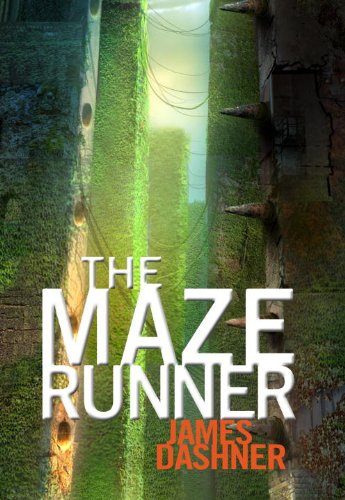
- Maze Runner
series11 books2009
similar byscience fictiontensenear futureyoung adultsurvival+2 more
The Maze Runner is a series of young adult dystopian science fiction novels written by American author James Dashner. The series consists of the trilogy The Maze Runner (2009), The Scorch Trials (2010) and The Death Cure (2011), as well as two prequel novels, The Kill Order (2012) and The Fever Code (2016). A novella titled Crank Palace (2020) and a companion book titled The Maze Runner Files (2013) have also been released. A sequel trilogy in the series titled The Maze Cutter takes place 73 years following the events of The Death Cure and consists of the novels The Maze Cutter (2022), The Godhead Complex (2023), and The Infinite Glade (2025).
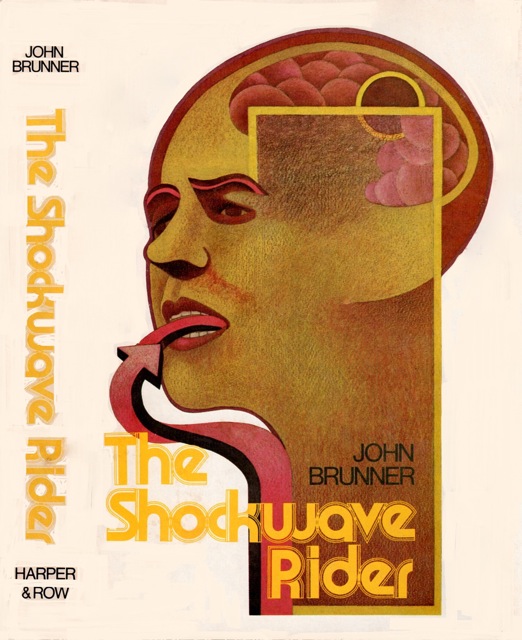
- The Shockwave Rider
John Brunnerstandalone novel1975
similar byscience fictiontensenorth americanear futuredark
The Shockwave Rider is a science fiction novel by John Brunner, originally published in 1975. It is notable for its hero's use of computer hacking skills to escape pursuit in a dystopian future, and for the coining of the word "worm" to describe a program that propagates itself through a computer network. It also introduces the concept of a Delphi pool, perhaps derived from the RAND Corporation's Delphi method – a prediction market on world events which bears close resemblance to DARPA's controversial and cancelled Policy Analysis Market.
- Darwin
series2 books1999
completed
similar byscience fictionnear futurenorth americatensegenetic engineering+1 more
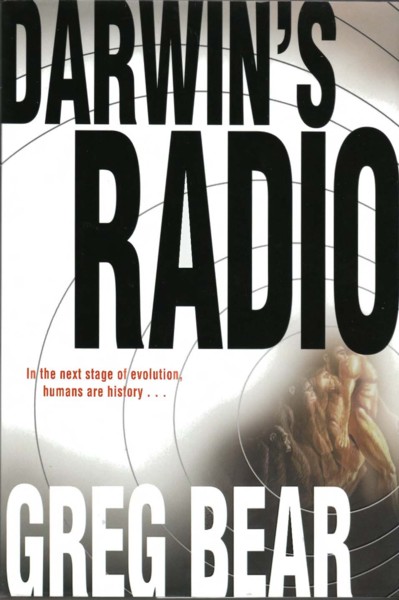
Greg Bear's Darwin's Radio imagines a dormant retrovirus in human DNA activating worldwide, triggering an accelerated leap in human evolution that governments respond to as a plague. The 1999 novel won the Nebula Award; its sequel Darwin's Children follows the first generation of changed children as society decides what to do with them. Together they're speculative near-future science fiction grounded in genetics rather than space opera.
- Have Space Suit - Will Travel
Robert A. Heinleinstandalone novel1958
similar byscience fictionnear futuretensenorth americayoung adultsurvival
From the back cover of the Del Rey 9th printing: "Skyjacked - Everything happened at once. One minute Kip Russell was walking about in his own backyard, testing out an old space suit and dreaming about going to the moon - and the next he was out cold and the captive of an insidious space pirate. The whole thing seemed like a very bad dream until he discovered he wasn't the only prisoner on board. Then the reality of the situation became inescapable. He - along with the daughter of a world-renowned scientist and a beautiful creature from an alien planet - had been skyjacked by a monstrous extraterrestrial and they were on their way to the Moon... a journey toward a fate worse than death!"
- The Hunger Games Universe
universe5 books2008
Start hereThe Hunger Games · Start here
similar byscience fictiontensenorth americayoung adultsurvivaldark
Panem, they call it now — a nation raised on the drowned bones of North America, a glittering Capitol ringed by twelve districts it once starved into obedience. Every year the Capitol collects its debt in children: two tributes from each district, drawn by lottery, dropped into an engineered arena, and made to kill one another on live television while the whole country is required to watch. This is the Hunger Games — entertainment, punishment, and government at once. Suzanne Collins tells it in a compact, unified body of work. The founding trilogy — The Hunger Games, Catching Fire, and Mockingjay — follows Katniss Everdeen, a girl from the coal-mining District 12 who volunteers in her sister's place and becomes something the Capitol never scripted. Two prequels reach back into the same machinery: The Ballad of Songbirds and Snakes traces a young Coriolanus Snow long before he is President, and Sunrise on the Reaping returns to District 12 a generation ahead of Katniss. Begin with the trilogy, in order — it is Katniss's voice, close and present-tense, that makes Panem breathe, and the prequels land hardest once you know how her story ends. Beneath the spectacle sits one steady, uncomfortable question: who profits when we agree to look away.
- The Handmaid's Tale
series3 books1985
similar byscience fictionnorth americanear futuretensedark
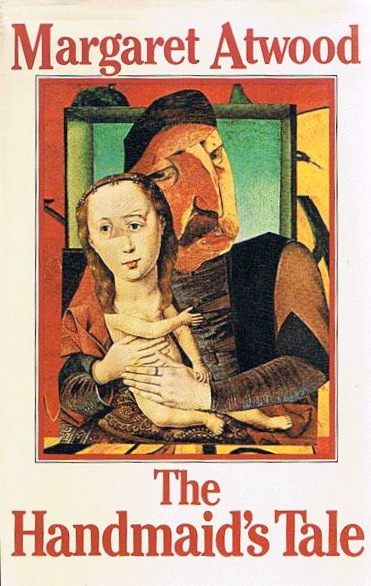
The Handmaid's Tale is Margaret Atwood's 1985 novel set in Gilead, a totalitarian theocracy that has overthrown the United States and forces fertile women into reproductive servitude as Handmaids; it is narrated by one such woman, Offred. Atwood returned to the world in her 2019 sequel The Testaments, set fifteen years later and narrated by three women, including the regime's Aunt Lydia. Together the two novels move from Gilead's grip on power toward the first cracks in it.
- Ship Breaker
series3 books2010
similar byscience fictiontensenorth americanear futureyoung adultdarksurvival+2 more
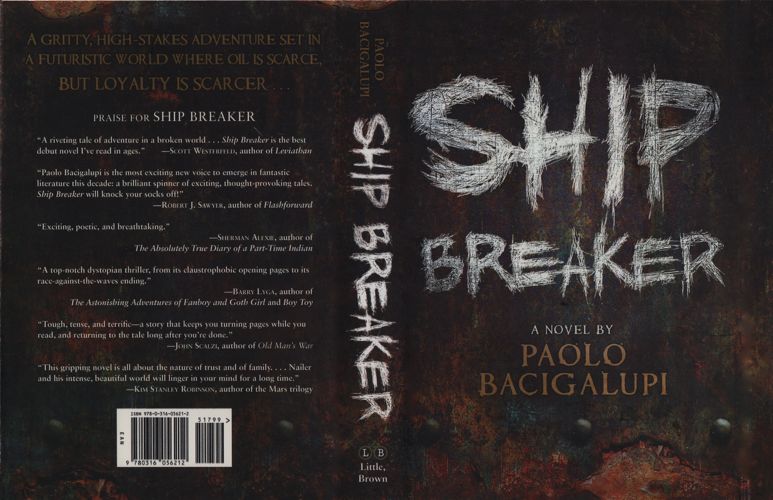
Nailer works a light-crew scavenging copper wire and scrap from beached oil tankers on a Gulf Coast reshaped by rising seas and vanished order, until a wrecked clipper ship washes ashore carrying a half-drowned girl from the wealthy world he'll never belong to. Paolo Bacigalupi's Ship Breaker follows Nailer as helping her pulls him out of his abusive father's orbit and into a much larger, more dangerous game involving her family's fortune. The sequels The Drowned Cities and Tool of War widen the same flooded, resource-scavenging future to new characters and coastlines.
- The Fireman
Joe Hillstandalone novel2016
similar byscience fictionnorth americanear futuretensesurvivaldark
The Fireman is a novel set in a post-apocalyptic time by American author Joe Hill. The novel, Hill's fourth, tells the tale of a deadly spore that has infected most of the world's population. Hill first spoke of the novel in 2013 in promotional interviews for his then-new novel NOS4A2. The novel was released on May 17, 2016.
- Make Room! Make Room!
Harry Harrisonstandalone novel1966
similar byscience fictionnear futuretensenorth americasurvivaldark
Make Room! Make Room! is a 1966 science fiction novel written by Harry Harrison exploring the consequences of both unchecked population growth on society and the hoarding of resources by a wealthy minority. It was originally serialized in Impulse magazine.
- Upgrade
Blake Crouchstandalone novel2022
similar byscience fictiontensenear futurenorth americagenetic engineeringidentity+1 more
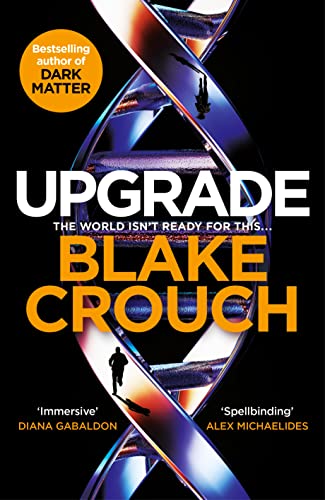
Upgrade is a 2022 novel by Blake Crouch. It is his tenth stand-alone novel, published three years after Summer Frost (2019). The novel explores the ethical and existential ramifications of genetic engineering, set in a near-future world where humanity grapples with the consequences of advanced human genetic enhancement.
- Z for Zachariah
Robert C. O'Brienstandalone novel1975
similar byscience fictionnear futuretensenorth americayoung adultsurvival
Sixteen-year-old Ann Burden, on an Amish family farm in an isolated valley, believes she is the only survivor of nuclear war and nerve gas. One day a man arrives in a "safe-suit" that he and others have recently developed.
- Ill Wind
Kevin J. Anderson & Doug Beasonstandalone novel1995
similar byscience fictionnorth americanear futuretensegenetic engineeringsurvivaldark
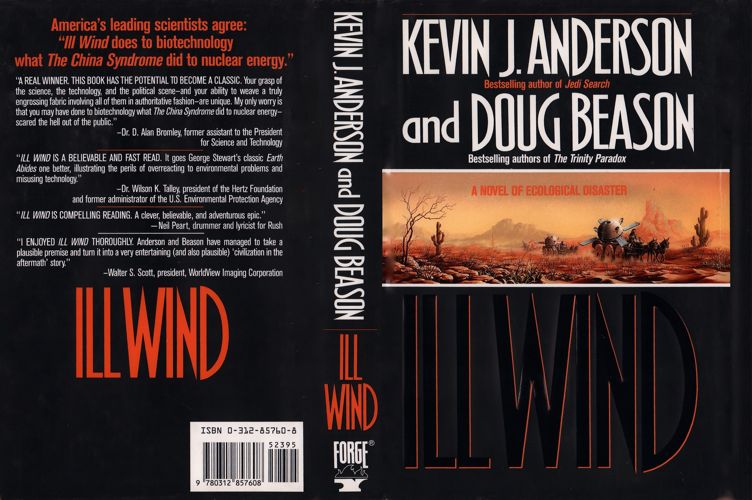
From the flaps of the Forge first printing: "A supertanker has crashed off the shores of San Francisco, producing the largest oil spill in history. Desperate to avert an ecological - and public relations - disaster, a multinational oil company releases an untested virus designed to break up the spill. A virus that spreads like wildfire on the wind, destroying anything made of petroleum - destroying gasoline in automobile tanks, plastics, nylon, the very fabric of modern civilization itself. Dr. Spencer Lockwood, one of the few scientists to recognize the danger, tries to alert government and industry to the impending danger. But his warnings go unheeded and the devastation mounts. As America descends into savagery, Lockwood forges a courageous band of scientists to carry out a daring plan to restore order. But humanity's last hope my be snuffed out by a ruthless general driven by an insatiable desire for power. A riveting and inspiring saga of ecological catastrophe and human survival, Ill Wind is all the more frightening because it could actually happen. Kevin Anderson, a technical consultant for the Air Force, and Doug Beason, a former science advisor o the Reagan administration, have drawn upon the latest breakthroughs in biotechnology to create a disaster scenario that is terrifying in its plausibility."
- The Thousandth Floor
series3 books2016
similar byscience fictionnorth americanear futuretenseyoung adult+2 more
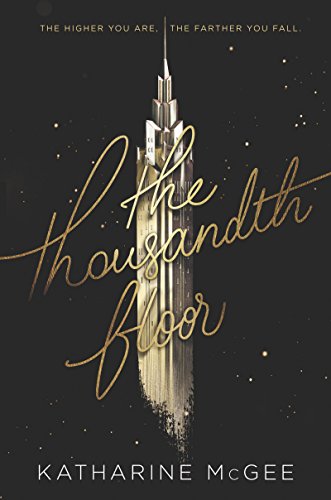
Katharine McGee's trilogy imagines Manhattan in 2118 as a single thousand-story tower housing every stratum of society, following five teenagers whose ambitions collide as they climb toward, or fall from, its highest floors. Across The Thousandth Floor, The Dazzling Heights, and The Towering Sky, addiction, surveillance, genetic privilege, and family betrayal play out as soap-opera drama in a meticulously built near-future setting.
- The Water Knife
Paolo Bacigalupistandalone novel2015
similar byscience fictionnorth americanear futuretensesurvivaldark
The Water Knife is a 2015 science fiction novel by Paolo Bacigalupi. It is Bacigalupi's sixth novel, and is based on his short story, The Tamarisk Hunter, first published in the news magazine High Country News. It takes place in the near future, where drought brought on by climate change has devastated the Southwestern United States.
- When She Woke
Hillary Jordanstandalone novel2011
similar byscience fictionnorth americanear futuretensegenetic engineeringdark+1 more
When She Woke is a science fiction novel by American author Hillary Jordan, published in October 2011. It has been translated into French, Spanish, Turkish, German, Portuguese and Chinese. The novel is a dystopian reimagining of Nathaniel Hawthorne's The Scarlet Letter, set in a future theocratic America where rather than being imprisoned and rehabilitated, criminals are punished by being "chromed" – having their skin color genetically altered to fit their crime – and released into the general population to survive as best they can.
- MaddAddam
series3 books2003
similar byscience fictionnorth americanear futuregenetic engineeringsurvivaldark
Margaret Atwood's MaddAddam trilogy (Oryx and Crake, The Year of the Flood, MaddAddam, 2003-2013) is set around a genetically engineered pandemic unleashed deliberately by the brilliant, disillusioned scientist Crake, who intends the deadly 'BlyssPluss' pill to wipe out humanity and clear the way for the gentler, engineered Crakers he has designed to replace it. Told from the perspectives of survivors including Crake's old friend Jimmy (now calling himself Snowman), the trilogy pieces together the pandemic's causes and its aftermath from multiple, overlapping vantage points.
- Divergent
series10 books2011
similar byscience fictionnear futuretensenorth americayoung adultidentity+1 more
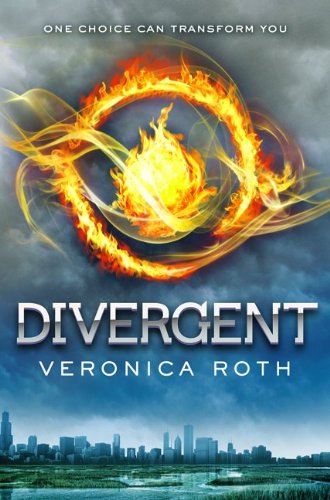
Divergent, also known as The Divergent Series, is a series of young adult dystopian novels by American novelist Veronica Roth set in a post-apocalyptic dystopian Chicago. The trilogy consists of Divergent (2011), Insurgent (2012), and Allegiant (2013). A related book, Four (2014), presents a series of short stories told from the perspective of one of the trilogy's characters, the male love interest Tobias. A later short story, We Can Be Mended (2018), serves as an epilogue five years after the events of the trilogy, again from Tobias/Four's perspective.