More like Amortals
anchored on:science fictioncloningour worldnear futuretensethriller & suspense+2 more
but
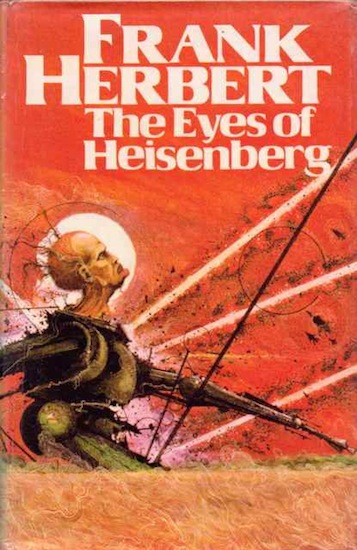
- The Eyes of Heisenberg
Frank Herbertstandalone novel1966
similar bytenseour worldscience fictionthriller & suspenseimmortality+1 more
Tens of thousands of years in the future, Earth is ruled by the Optimen, a genetically engineered aristocracy that has made itself functionally immortal, while ordinary people, the Folk, live under strict reproductive control. When Harvey and Lizbeth Durant arrive to have their embryo genetically screened, the examining doctor finds something in the child no one has seen in a very long time: real potential for both fertility and life span, traits the Optimen have arrogated to themselves. Rather than destroy the embryo as policy demands, the doctor hesitates, setting off a chain of surveillance, suspicion and resistance. A tightly wound Frank Herbert thriller about genetic caste and rebellion.
- Hopscotch
Kevin J. Andersonstandalone novel2002
similar bytenseour worldnear futurescience fictionthriller & suspenseimmortality
From the flaps of the Bantam first edition: "Suppose you could switch bodies with another person? What exciting new experiences would you choose to explore? What forbidden desires would you indulge? Suppose someone stole your life–how far would you go to get it back? From ... author Kevin J. Anderson comes a pure adrenaline thriller of hijacked identities, elusive motives, and deeply buried secrets–a disturbing, thought-provoking excursion into a sleek, hedonistic society where nothing is your own...not even your soul. Hopscotch - For a fee, Eduard Swan will swap bodies with people in distress–those facing surgeries, emotional crises, moments of unpleasantness or discomfort they can't or would rather not deal with. Eduard will experience the suffering for them. It's a lucrative business, and in a world in which no one is required to feel any pain, there is no end of clients. But someone doesn't want to play by the rules. Someone doesn't want to return his body. And, unfortunately for Eduard, that someone is one of the world's most powerful men. Now Eduard has no choice but to steal back his life. He has the perfect alibi–or so he thinks. For even in a world where you can hopscotch from body to body, you always leave a trail. And following that trail is a relentless dispenser of "justice" named Daragon, a childhood friend, now a zealous and ambitious agent of state security, who won't let old friendships stand in the way of doing his duty. When Eduard goes on the run, hounded at every turn by Daragon, his only hope is two other childhood friends: Garth, a tormented artist who gains success beyond his wildest dreams, only to discover the terrible price of fame; and Teresa, a spiritual seeker who risks losing her own body to a fanatical religious cult as she embarks on a harrowing quest to find her true identity. Moving from underground hopscotch pleasure bars to the highest enclaves of power to a seamy underworld of illegal Phantoms, ancient minds who steal younger bodies in a quest for eternal life, Eduard and his friends seek the meaning of identity in a society in which appearances mean everything–and nothing–and where everything is relative...even murder."
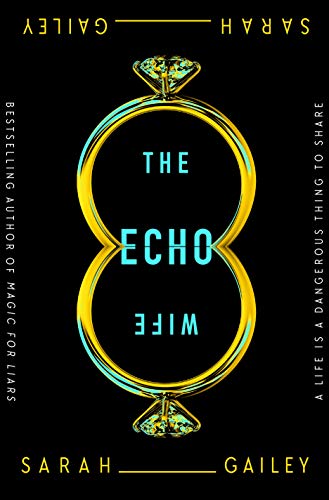
- The Echo Wife
Sarah Gaileystandalone novel2021
similar bytenseour worldnear futurescience fictioncloning+1 more
The Echo Wife is a 2021 science fiction thriller novel by Sarah Gailey, published by Tor Books. It follows Doctor Evelyn Caldwell, an accomplished scientist researching cloning, who has discovered that her husband, Nathan, has used her research to create Martine, a clone of Evelyn who is his ideal wife. When Martine kills Nathan in self-defense, Evelyn must assist in covering up the murder.
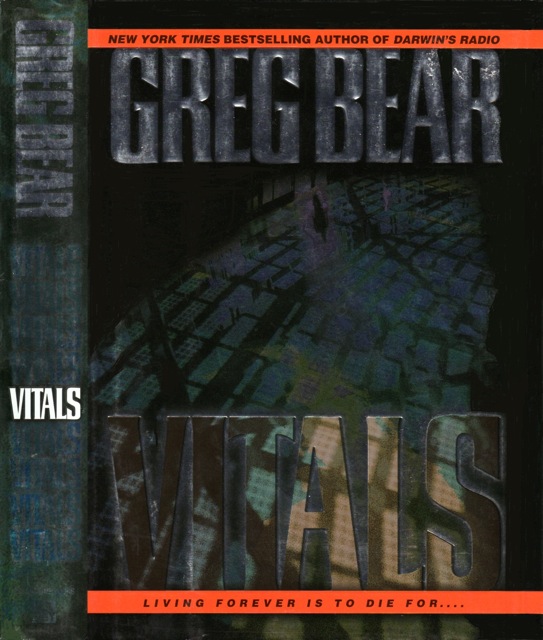
- Vitals
Greg Bearstandalone novel2002
similar bytenseour worldscience fictionthriller & suspenseimmortalitymurder investigation
From the flaps of the Del Rey first edition: "Hal Cousins is one of a handful of scientists nearing the most sought after discovery in human history: the key to short-circuiting the aging process. Fueled by a wealth of research, an overdose of self-confidence, and the money of influential patrons to whom he makes outrageous promises, Hal experiments with organisms living in the hot thermal plumes in the ocean depths. But as he journeys beneath the sea, his other world is falling apart. Across the country, scientists are being inexplicably murdered - including Hal's identical twin brother, who is also working to unlock the key to immortality. Hal himself barely eludes a cold-blooded attack at sea, and when he returns home to Seattle, he finds himself walking into an eerie realm where voices speak to him from the dead ... where a once-brilliant historian turned crackpot is leading him on a deadly game of hide-and-seek ... and where the beautiful, rich widow of his twin is more than willing to pick up the pieces of Hal's life-and take him places he's never been before. Suddenly Hal is trapped inside an ever-twisting maze of shocking revelations. For he is not the first person to come close to ending aging forever - and those who came before him will stop at nothing to keep the secret to themselves. Now every person on earth is at risk of being made an unsuspecting player in one man's spectacular and horrifying master plan. From the bottom of Russia's Lake Baikal to a billionaire's bionic house built into the cliffs of the Washington seashore, from the darkest days of World War II and the reign of Josef Stalin to the capitalist free-for-all that is the United States, Vitals tells an astounding tale of the most unimaginable scientific secret of all - exposed by the quest for immortality itself..."
- Quantum Night
Robert J. Sawyerstandalone novel2016
similar bytenseour worldnear futurescience fictionthriller & suspense+1 more
Quantum Night is a 2016 science-fiction thriller novel written by Canadian novelist Robert J. Sawyer. Set in 2020, the book touches on themes of quantum physics, psychology, current politics and ethics.
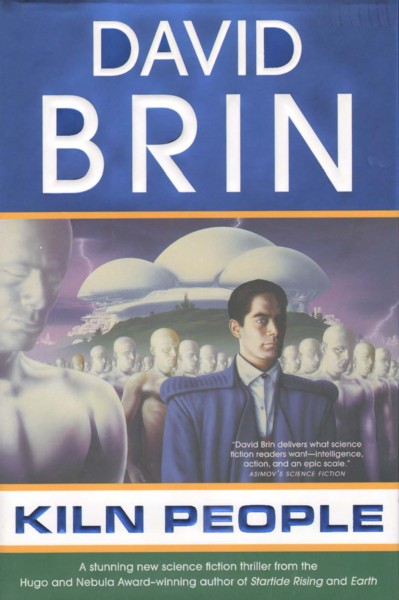
- Kiln People
David Brinstandalone novel2002
similar byour worldnear futurescience fictiontensecloningmurder investigation
When people can just "bake" a temporary replacement body in a kiln (pottery-oven) and "upload" their conscience into it, and when it "expires" just "download" the experiences into their own mind, dangerous jobs and extreme sports lose their danger, but not their appeal.
- Great North Road
Peter F. Hamiltonstandalone novel2012
similar bynear futurescience fictiontenseour worldmurder investigationcloning+1 more
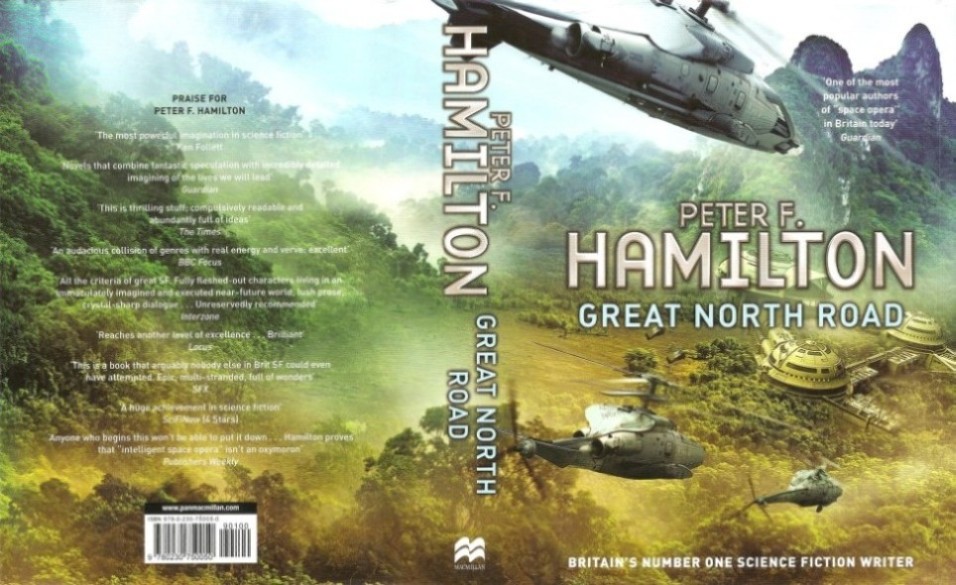
Great North Road is a science fiction novel by Peter F. Hamilton. It was first published in 2012 by Macmillan. Jonathan Wright of SFX magazine said, "Peter F Hamilton’s latest novel may be a standalone tale, but it’s a thuddingly imposing 1,100 pages in length. Not that it seems that way when you’re reading it. Balancing a multi-stranded plot, different exotic locales and a huge cast of characters, Hamilton plunges us straight into a murder mystery set in a near-future Newcastle, a city now adjacent to a portal to another world, the tropical St Libra."
- The Last Gasp
Trevor Hoylestandalone novel1983
similar bytenseour worldnear futurescience fictionthriller & suspense+1 more
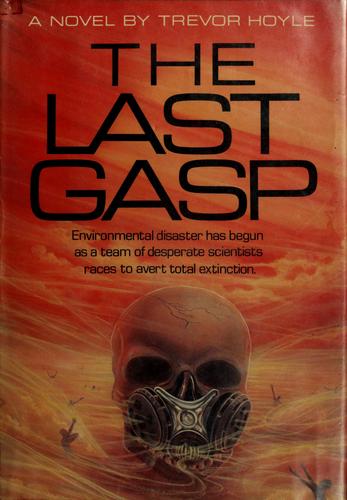
From the flaps of the Crown first edition: "When British marine biologist Gavin Chase stepped out into the windswept wastes at the Halley Bay antarctic research station one morning, the last thing he expected to see was a sled team coming out of nowhere carrying a half-mad, half-frozen Russian scientist babbling an incomprehensible warning. But that warning would threaten the future of the human race and force Chase to make some of the hardest decisions of his life. Months later, at a Geneva environmental conference, Chase meets Cheryl Detrick, the daughter of Theo Detrick, the grand old man of diatom research. Chase, the Detricks, and Soviet scientist Boris Stanovnik theorize that the oxygen-producing microscopic plants of the world's oceans are dying and the level of atmospheric pollutants has finally exceeded the ability of the planet's ecology to recycle them. There is also good reason to believe that the superpowers are planning to wage a new type of environmental warfare. Sooner or later there will be nothing left to breathe. So begins a race against the future. Chase and Cheryl, now lovers, struggle to avert ecological catastrophe as agents of the military-industrial complex hunt them down... and as a growing belt of unbreathable gases spreads outward from the equator, uprooting millions. Their enemies are Lloyd Madden, an insane military mastermind planning to seed the earth with poison and then repopulate it with a race of mutants, and Joseph Earl Gelstrom, a wealthy chemical manufacturer who has Cheryl's father killed to hide his involvement. But Gelstrom himself falls victim to pollution sickness, and he repents. To raise money to finance a research team, Chase must make an unholy alliance with the dying Gelstrom, but this is too much for Cheryl, who leaves him. As more and more of the world becomes uninhabitable, as industries and governments collapse and chaos reigns, as the oceans fill up with dioxin, as the climate changes and mutant life-forms encroach upon the last refuges of humankind, Chase leads a last desperate mission to find and rescue Cheryl and to lead his team of scientists to safety."
- Mother of Storms
John Barnesstandalone novel1994
similar bytenseour worldnear futurescience fictionpolitical intrigue+1 more
From the flaps of the Tor first edition: "It is 2028. A strike to destroy an illegal Arctic weapons cache has a catastrophic side effect. Massive amounts of energy are liberated from the polar ice, suddenly warming the Earth's climate. In the middle of the Pacific, a gigantic hurricane thousands of miles across is forming, larger than any in human history. A storm with winds of supersonic speed. A storm that changes direction at whim. A storm that refuses to die. A storm so vast it spawns dozens more in its wake... Blinded by intrigue, expedience, and greed, the world's politicians and power brokers have ignored the killer storms threat until it is too late. Already the death toll is in the tens of millions, as it savages the Pacific coast, while its devil's brood of smaller storms are wreaking havoc across the face of the planet. While the survivors scramble for advantage, a handful of courageous men and women undertake a daring, desperate plan to save humanity from total destruction - a plan so visionary it may alter forever the future of the human race."
- Fractured Futures
S. Y. Thompsonstandalone novel2013
similar bytenseour worldnear futurescience fictionthriller & suspensemurder investigation+1 more
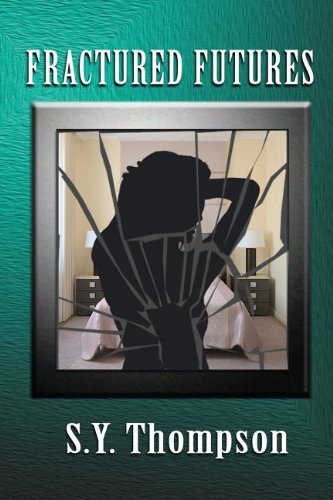
Publisher: Detective Ronan Lee has just solved the crime of the century, or has she? The case of the copycat killer plunges her into an ancient mystery, but solving the murders raises questions about the world government's true objectives. An unexpected invention gives her the chance to travel to the past. Her target is the 21st century and her mission is to save the woman at the heart of issue. This same woman, Sidney Weaver, is a warm, personable and accomplished actress that Ronan would give her life to protect. Unaware of what fate has in store, Sidney's life is boringly predictable until a mysterious stranger comes out of the darkness of night to protect her. She knows there's something unusual about Ronan, but despite her misgivings, she can't deny the mutual attraction. All of this takes a backseat when she's plunged into a harrowing game of cat and mouse that could destroy everything she holds dear.
- Tin Men
Christopher Goldenstandalone novel2015
similar bytenseour worldnear futurescience fictionthriller & suspense+1 more
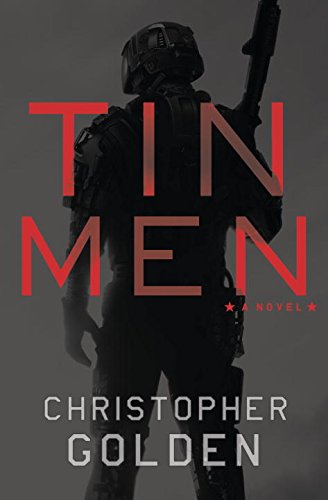
"In the near future, the U.S. has deployed the Remote Infantry Corps: thousands of robots remote-piloted by soldiers whose bodies lie hidden in underground bases. But the worst occurs when anarchists set off a global pulse that shorts out electrical connections. In Damascus, Private Danny Kelso, Corporal Kate Wade, and their platoon realize they are trapped inside the Tin Men--something the government never warned them could happen. In Athens, the G20 Summit comes under fire, and a band of security soldiers and advisors risk everything in an effort to shepherd the President to safety. As chaos descends, and with anarchist Bot Killers on their trail, the Tin Men must survive a gauntlet of violence on the road from Damascus to the heart of Europe, half of them determined to stay true to their mission and save their president, half of them hellbent to save themselves.."--
- The Boys from Brazil
Ira Levinstandalone novel1976
similar bytenseour worldcloningthriller & suspensemurder investigation+1 more
The Boys from Brazil is a 1976 thriller novel by American writer Ira Levin. It was made into a film of the same title that was released in 1978.
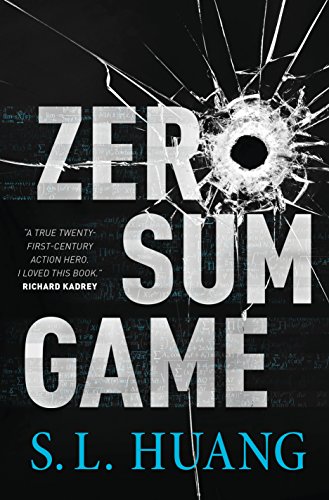
- Cas Russell / Russell's Attic
series5 books2014
similar bytenseour worldscience fictionthriller & suspensenear futureadventurous
- Clone
Richard Cowperstandalone novel1972
similar byour worldnear futurescience fictiontensecloning
History's first clones: Alvin, Bruce, Colin, and Desmond - Spawned in a dangerous 21st century experiment, there were brought into a world where educated apes did manual labor and the government encouraged suicide as a method of population control. Their existence as clones was unknown to anyone - even to each other - known only to their creator. But then came the strange, haunting visions, the peculiar psychic sensations that drew them closer and closer together - revealing one and for all the mysterious secret they shared that would change the world! (from the back cover of the Pocket Books edition)
- Nexus 5
series3 books2012
similar bytenseour worldnear futurescience fiction+2 more
Nexus opens Ramez Naam's postcyberpunk trilogy in 2040 with scientist Kaden Lane, who works on Nexus, an experimental nano-drug that lets human minds be networked and reprogrammed, and finds himself caught between government and corporate interests once the technology's implications become clear. The trilogy continues through Crux and Apex, following the same central conflict over who controls the technology. Nexus tied for Best Novel at the 2014 Prometheus Awards and Apex won the 2015 Philip K. Dick Award.
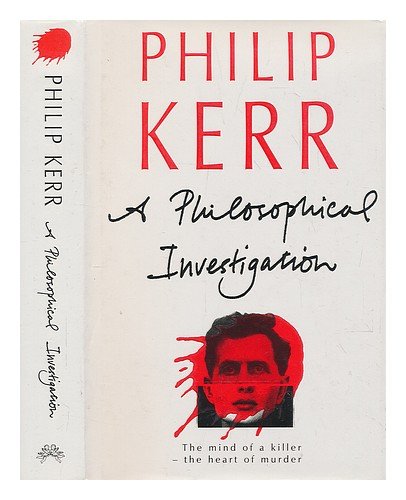
- A Philosophical Investigation
Philip Kerrstandalone novel1992
similar bytenseour worldnear futurescience fictionthriller & suspense+1 more
A near future thriller about a medical breakthrough that allows to identify violent sociopaths and the social changes that it triggers.
- The Lathe of Heaven
Ursula K. Le Guinstandalone novel1971
similar byour worldnear futurescience fictiontense
The Lathe of Heaven is a 1971 science fiction novel by American writer Ursula K. Le Guin, first serialized in the American science fiction magazine Amazing Stories. It won the 1972 Locus Award for Best Novel and was a finalist for the 1971 Nebula Award for Best Novel and 1972 Hugo Award for Best Novel. Two television film adaptations were released: the PBS production, The Lathe of Heaven (1980), and Lathe of Heaven (2002), a remake produced by the A&E Network.
- Make Room! Make Room!
Harry Harrisonstandalone novel1966
similar byour worldnear futurescience fictiontense+1 more
Make Room! Make Room! is a 1966 science fiction novel written by Harry Harrison exploring the consequences of both unchecked population growth on society and the hoarding of resources by a wealthy minority. It was originally serialized in Impulse magazine.
- The Oracle Year
Charles Soulestandalone novel2018
similar byour worldnear futurescience fictiontensethriller & suspensepolitical intrigue
Awakening from a dream with more than one hundred predictions about the future in his head, an unassuming Manhattan bassist becomes one of the world's most powerful men and hides his identity behind an online persona that is targeted by greedy corporations and dangerous enemies.
- Aftermath (Charles Sheffield)
series2 books1998
completed
similar bynear futuretensescience fictionour world+2 more
Charles Sheffield's Aftermath duology opens with a near-future Earth devastated by a nearby supernova's radiation, which knocks out electronics and forces survivors to rebuild without most modern technology. Starfire continues years later as a second, larger stellar threat approaches and humanity must recover enough capability to respond. Sheffield, a physicist by training, grounds both books in hard-science consequences of the disaster rather than treating it as mere backdrop.
- The Light of Other Days
Arthur C. Clarke & Stephen Baxterstandalone novel2000
similar byour worldnear futurescience fictiontense+1 more
An industrialist devises a technique to use tiny wormholes as light pipes to enable viewing of any event anywhere; and subsequently it becomes possible to use them to view any event in the past as well. The effects on society are enormous.
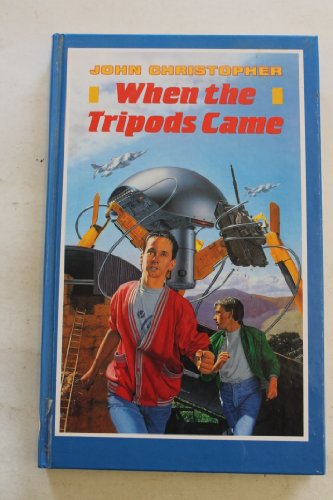
- Tripods
series4 books1967
completed
similar byscience fictiontenseour worldnear future+1 more
The Tripods is a series of young adult science fiction novels by John Christopher. The series takes place in a post-apocalyptic world where humanity is enslaved by "Tripods"—gigantic three-legged walking machines piloted by an alien race later identified as the "Masters". The first two books were the basis of a science fiction TV series, produced in the United Kingdom in the 1980s.
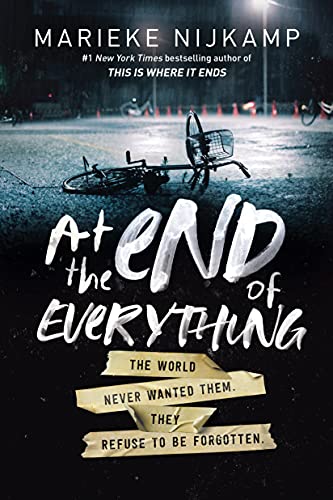
- At the End of Everything
Marieke Nijkampstandalone novel2022
similar bytenseour worldnear futurescience fictionthriller & suspense
The Hope Juvenile Treatment Center is ironically named. No one has hope for the delinquent teenagers who have been exiled there; the world barely acknowledges that they exist. Then the guards at Hope start acting strange. And one day…they don't show up. But when the teens band together to make a break from the facility, they encounter soldiers outside the gates. There's a rapidly spreading infectious disease outside, and no one can leave their houses or travel without a permit. Which means that they're stuck at Hope. And this time, no one is watching out for them at all. As supplies quickly dwindle and a deadly plague tears through their ranks, the group has to decide whom among them they can trust and figure out how they can survive in a world that has never wanted them in the first place.
- Deception Point
Dan Brownstandalone novel2001
similar bytenseour worldthriller & suspensemurder investigationpolitical intrigue+1 more
Deception Point is a 2001 mystery-thriller novel by American author Dan Brown. It is Brown's third novel. It was published by Simon & Schuster.