More like An Imperial Rescript
anchored on:steampunk19th centurynorth america
but
- The Handmaid's Tale
series3 books1985
similar byrebellion and revolutiondarknorth americatense+1 more
The Handmaid's Tale is Margaret Atwood's 1985 novel set in Gilead, a totalitarian theocracy that has overthrown the United States and forces fertile women into reproductive servitude as Handmaids; it is narrated by one such woman, Offred. Atwood returned to the world in her 2019 sequel The Testaments, set fifteen years later and narrated by three women, including the regime's Aunt Lydia. Together the two novels move from Gilead's grip on power toward the first cracks in it.
- The Hunger Games Universe
universe5 books2008
Start hereThe Hunger Games · Start here
similar byrebellion and revolutiondarknorth americatense+1 more
Panem, they call it now — a nation raised on the drowned bones of North America, a glittering Capitol ringed by twelve districts it once starved into obedience. Every year the Capitol collects its debt in children: two tributes from each district, drawn by lottery, dropped into an engineered arena, and made to kill one another on live television while the whole country is required to watch. This is the Hunger Games — entertainment, punishment, and government at once. Suzanne Collins tells it in a compact, unified body of work. The founding trilogy — The Hunger Games, Catching Fire, and Mockingjay — follows Katniss Everdeen, a girl from the coal-mining District 12 who volunteers in her sister's place and becomes something the Capitol never scripted. Two prequels reach back into the same machinery: The Ballad of Songbirds and Snakes traces a young Coriolanus Snow long before he is President, and Sunrise on the Reaping returns to District 12 a generation ahead of Katniss. Begin with the trilogy, in order — it is Katniss's voice, close and present-tense, that makes Panem breathe, and the prequels land hardest once you know how her story ends. Beneath the spectacle sits one steady, uncomfortable question: who profits when we agree to look away.
- The Hunger Games
series3 books2008
part of The Hunger Games Universe
similar byrebellion and revolutiondarknorth americatense
The Hunger Games is a series of young adult dystopian novels written by American author Suzanne Collins. The series consists of a trilogy that follows teenage protagonist Katniss Everdeen, as well as two prequels. The Hunger Games universe is a dystopia set in Panem, a post-apocalyptic North American country consisting of the wealthy Capitol and 12 districts in varying states of poverty. As punishment for rebellion, the Capitol hosts an annual battle royale competition called The Hunger Games. Each of the 12 districts must send two children between the ages of 12 and 18 to participate, and the last surviving child is dubbed the victor.
- Fire on the Mountain
Terry Bissonstandalone novel1988
similar byrebellion and revolution19th centurynorth americatensealternate history+1 more
Alternate history, where John Brown's raid on Harper's Ferry succeeds and sparks a slave rebellion in 1859.
- It Can't Happen Here
Sinclair Lewisstandalone novel1935
similar byrebellion and revolutiondarknorth americapolitical intriguetense+1 more
It Can't Happen Here is a 1935 dystopian political novel by the American author Sinclair Lewis. Set in a fictionalized version of the 1930s United States, it follows an American politician, Berzelius "Buzz" Windrip, who quickly rises to power to become the country's first outright dictator, and Doremus Jessup, a newspaper editor who sees Windrip's fascist policies for what they are ahead of time and who becomes Windrip's most ardent critic.
- Divergent
series10 books2011
similar bynorth americatense+2 more
Divergent, also known as The Divergent Series, is a series of young adult dystopian novels by American novelist Veronica Roth set in a post-apocalyptic dystopian Chicago. The trilogy consists of Divergent (2011), Insurgent (2012), and Allegiant (2013). A related book, Four (2014), presents a series of short stories told from the perspective of one of the trilogy's characters, the male love interest Tobias. A later short story, We Can Be Mended (2018), serves as an epilogue five years after the events of the trilogy, again from Tobias/Four's perspective.
- Imperium in Imperio: A Study of the Negro Race Problem
Sutton E. Griggsstandalone novel1899
similar byrebellion and revolution19th centurynorth americapolitical intrigue+1 more
"Self-published in 1899 and sold door-to-door by the author, this classic African-American novel -- a gripping exploration of oppression, miscegenation, exploitation, and black empowerment -- was a major bestseller in its day. The dramatic story of a conciliatory black man and a mulatto nationalist who grow up in a racist America and are driven to join a radical movement dedicated to the creation of an all-black nation in Texas, Imperium in Imperio had a profound influence on the development of black nationalism." description.
- The Difference Engine
William Gibson & Bruce Sterlingstandalone novel1990
similar bysteampunk19th centurypolitical intriguealternate history+2 more
The computer age arrives a century early with Babbage's perfection of his 'analytical engine'. The industrial revolution is accelerated by the development of steam-driven cybernetic 'Engines'. An advanced Great Britain prepares to better the world's lot. An example of the 'steampunk' sub-genre of the cyberpunk movement.
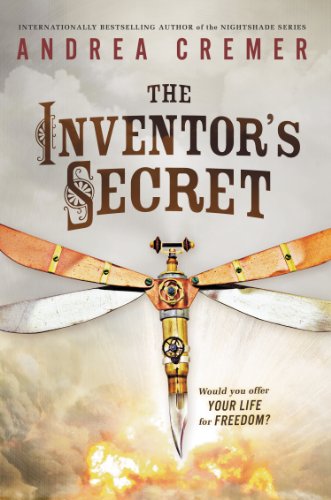
- The Inventor's Secret
series3 books2014
similar byrebellion and revolution19th centurynorth americasteampunktensealternate history+1 more
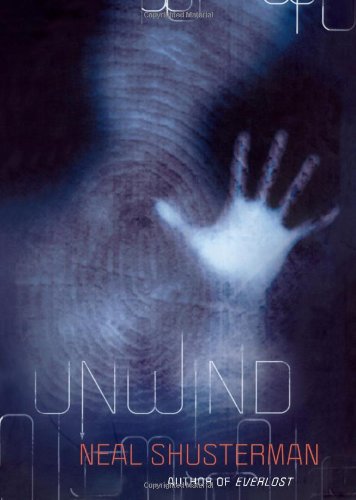
- Unwind Dystology
series5 books2007
similar byrebellion and revolutiondarknorth americatense
Neal Shusterman's Unwind Dystology opens in a United States reshaped by the resolution to a war over reproductive rights: parents can retroactively have a teenager "unwound," their body disassembled for transplant on the premise that nothing technically dies since every part lives on in someone else. The first novel follows three teens fleeing that fate, and the sequels widen the same dystopia's cast and consequences across a four-book arc plus companion material. It is grim speculative fiction built to ask hard bioethical questions rather than offer comfort.
- Player Piano
Kurt Vonnegut & Jr.standalone novel1952
similar byrebellion and revolutiondarknorth america
In the near future, when cybernetic automation has effectively separated people into two castes, the "engineers and managers", and the remainder of the population who can find work only in "recycling and reclamation" or the largely useless military, an underground movement arises with the intention of rolling back those changes and giving the masses the dignity of owning their own, productive, work once more.
- The Alchemy Wars
series4 books2015
similar byrebellion and revolutiondarksteampunkalternate history+2 more
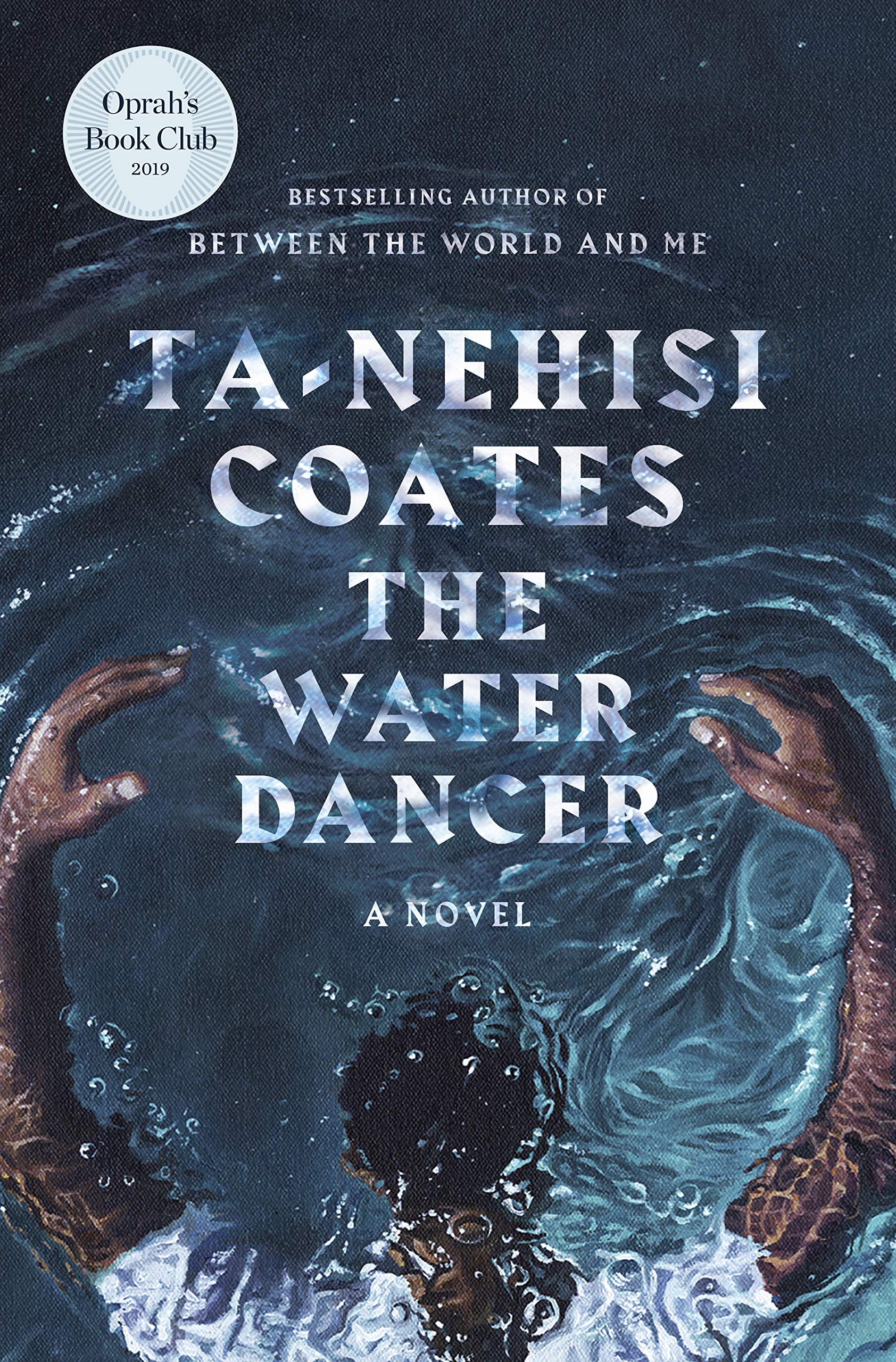
- The Water Dancer
Ta-Nehisi Coatesstandalone novel2019
similar byrebellion and revolutiondark19th centurynorth america
A Virginia slave narrowly escapes a drowning death through the intervention of a mysterious force that compels his escape and personal underground war against slavery.
- Empire (Orson Scott Card)
series2 books2006
similar byrebellion and revolutionnorth americapolitical intriguetense+1 more
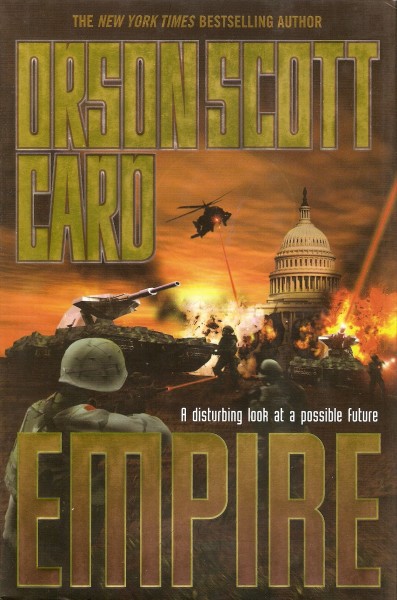
The Empire Duet is a two-book series written by Orson Scott Card under license from Chair Entertainment, beginning with Empire in 2006. The sequel Hidden Empire was released December 22, 2009.
- The Circle (Eggers)
series2 books2013
similar bydarknorth americatense+1 more
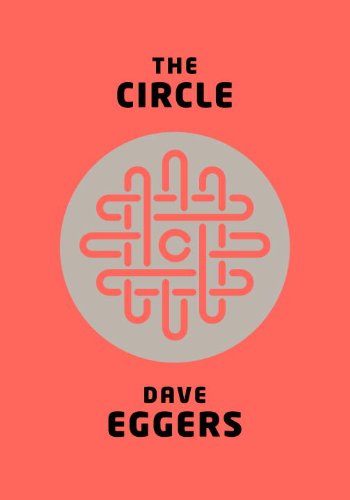
Mae Holland lands a coveted job at the Circle, a Silicon Valley tech company whose relentless, cheerful push toward total transparency -- 'secrets are lies, sharing is caring, privacy is theft' -- gradually reveals itself as something closer to soft totalitarianism. Dave Eggers's The Circle follows Mae's rise inside the company as she buys further and further into its ideology, at increasing cost to her own privacy and the people around her. The 2021 follow-up, The Every, picks up with Mae now running the merged tech giant and a new employee questioning it from the inside.
- Clockwork Century Universe
series8 books2008
similar bysteampunk19th centurynorth america+1 more
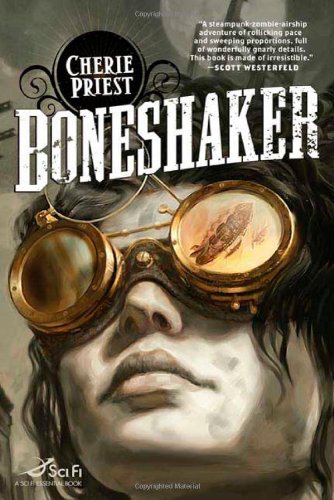
Boneshaker opens Cherie Priest's Clockwork Century, a steampunk alternate history that reimagines Seattle after a mining disaster releases a toxic gas that turns people into the walking dead, forcing survivors behind a massive wall around the poisoned city. The series expands out from that starting point across the American Civil War era, following different characters and cities in each book (Clementine, Dreadnought, Ganymede, The Inexplicables, Fiddlehead, Jacaranda) rather than one continuous plot. Boneshaker was nominated for the Nebula Award and won the 2010 Locus Award for Best Science Fiction Novel.
- The Guns of the South
Harry Turtledovestandalone novel1992
similar by19th centurynorth americatensealternate history+2 more
The Guns of the South is an alternate history science fiction novel set during the American Civil War by Harry Turtledove. It was released in the United States on September 22, 1992.
- The Shockwave Rider
John Brunnerstandalone novel1975
similar bydarknorth americatense+1 more
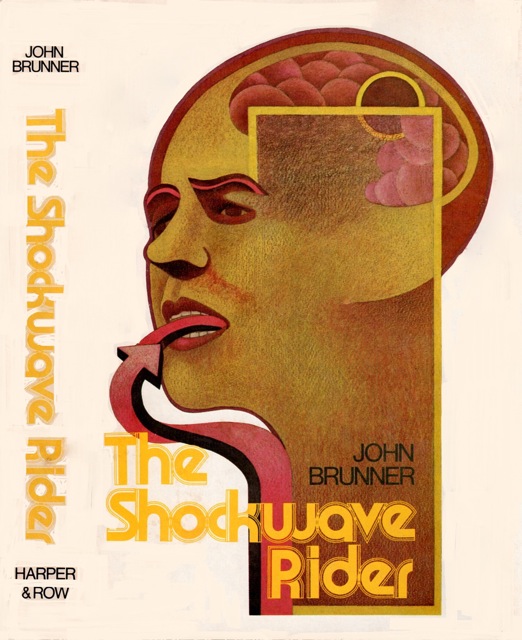
The Shockwave Rider is a science fiction novel by John Brunner, originally published in 1975. It is notable for its hero's use of computer hacking skills to escape pursuit in a dystopian future, and for the coining of the word "worm" to describe a program that propagates itself through a computer network. It also introduces the concept of a Delphi pool, perhaps derived from the RAND Corporation's Delphi method – a prediction market on world events which bears close resemblance to DARPA's controversial and cancelled Policy Analysis Market.
- The Gate to Women's Country
Sheri S. Tepperstandalone novel1988
similar bydarknorth america+1 more
The Gate to Women's Country is a post-apocalyptic novel by American writer Sheri S. Tepper, published in 1988. It describes a world set three hundred years into the future after a catastrophic war which has fractured the United States into several nations.
- A State of Disobedience
Tom Kratmanstandalone novel2003
similar byrebellion and revolutiondarknorth americapolitical intriguetense
During the war against terrorism, the US government had taken on extraordinary powers. Now that the war was won, elements of the government had no intention of giving those powers up, and the country was on the verge of civil war.
- The Dosadi Experiment
Frank Herbertstandalone novel1977
similar bypolitical intriguetense+2 more
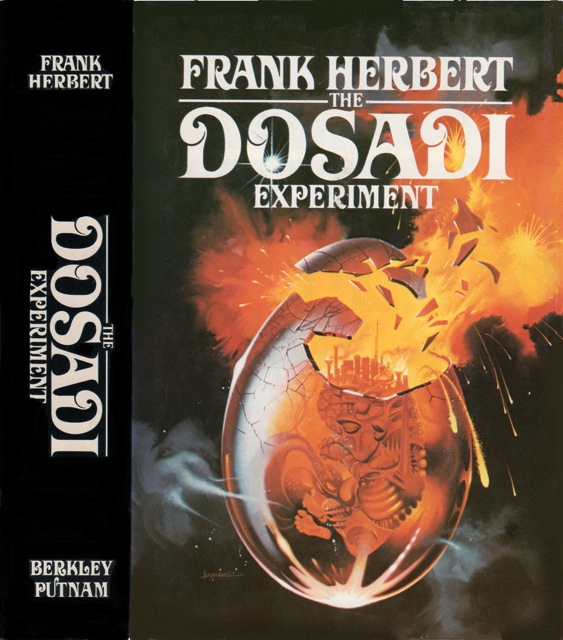
From the flaps of the Berkley Putnam first edition: "In his first new work of science fiction since the best-selling Children of Dune, Frank Herbert returns to his world of Whipping Star, and involves Jorj X. McKie, Saboteur Extraordinary, in a new intrigue. In Whipping Star, McKie discovered that some of the stars in the universe are actually intelligent, super-powerful beings, and was able to befriend one of them, the star Alcyone - affectionately known as Fannie Mae. As The Dosadi Experiment opens, McKie is assigned to investigate the planet Dosadi, which is isolated from the rest of the galaxy by a "god-wall," a barrier set up by one of the intelligent stars. Dosadi is rumored to be an experimental planet, and the experimenters are the froglike Gowachin, whose culture is founded upon a strange legal system in which McKie is the only human ever trained. He learns that humans and Gowachin have been placed on Dosadi, without their consent, for an experiment that could last centuries: an experiment in extreme overcrowding. But this monstrous plot is apparently out of control, and it seems the Gowachin may be prepared to destroy Dosadi rather than expose its secret, thus breaking the peace among the races, and starting the first interstellar war. But this is just the beginning. When McKie finally reaches Dosadi he discovers that the Dosadis have taken control of their own evolution and produced a competitive, highly evolved elite, of both humans and Gowachin, who have been able to extrapolate the existence of a universe beyond the god-wall and hate whoever has imprisoned them like this. They plan to break out and avenge themselves on the galaxy."
- Babel, or, The Necessity of Violence: An Arcane History of the Oxford Translators' Revolution
R. F. Kuangstandalone novel2022
similar byrebellion and revolutiondark19th century
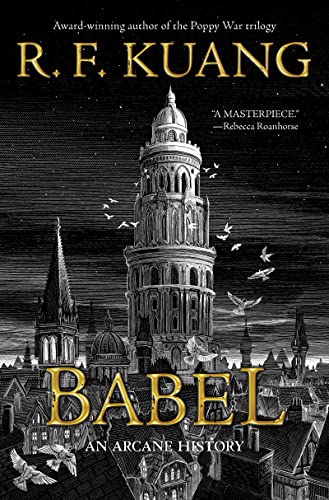
Babel, or The Necessity of Violence: An Arcane History of the Oxford Translators' Revolution is a 2022 novel of speculative fiction by R. F. Kuang set in a fantastical version of Oxford in 1830s England. Thematically similar to The Poppy War (2018–20), Kuang's first book series, the book criticizes British imperialism, racism and capitalism, and the complicity of academia, knowledge, and language in perpetuating and enabling them.
- Beyond This Horizon
Robert A. Heinleinstandalone novel1948
similar byrebellion and revolutionnorth america+2 more
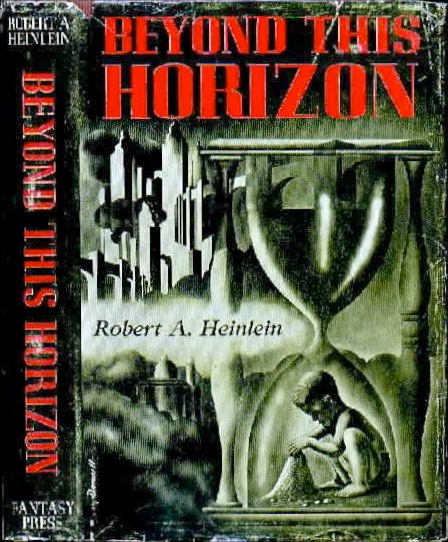
From the front flap of a 2001 Baen reprint: "Utopia has been achieved. For centuries, disease, hunger, poverty, and war have been things found only in the history tapes. And applied genetics has given men and women the bodies of athletes and a lifespan of over a century. They should all have been very happy... But Hamilton Felix is bored. And he is the culmination of a star line, each of his last thirty ancestors chosen for superior genes. Hamilton is, as far as genetics can produce one, the ultimate man. And this ultimate man can see no reason why the human race should survive, and has no intention of continuing the pointless comedy. However, Hamilton's life is about to become less boring. A secret cabal of revolutionaries who find utopia not just boring, but desperately in need of leaders who know just What Needs to be Done, are planning to revolt and put themselves in charge. Knowing of Hamilton's disenchantment with the modern world, they have recruited him to join their Glorious Revolution. Big mistake! The revolutionaries are about to find out that recruiting a superman was definitely not a good idea..."