Loreful
HomeDiscover
Search series, authors…⌘K
Loreful

Reading orders for SF/F series and shared universes — with your place kept in every one.

Explore

UniversesSeriesWorksAuthorsAtlas

Help

FAQAboutSite map

Account & legal

Sign inCreate accountPrivacyTerms

Data

Built on ISFDB, Wikipedia, Wikidata and Open Library. Curated reading orders carry their reasoning on the page; the rest follow publication order. Data sources & licenses

© Loreful · data: ISFDB · CC BY

More like Angel Maker

anchored on:steampunknorth america19th centuryadventuroushistorical fantasymystery & detective+2 more

but

Mood

The mood the book leaves you in.

  • The reading experience is propelled by journeys, exploration, and physical risk; excitement and forward momentum dominate over dread or introspection.
  • Joy and loss are deliberately mixed; the resolution grants characters something real while taking something else away, leaving warmth and sorrow together.
  • The book demands work from the reader — dense prose, difficult structure, unfamiliar ideas, or morally uncomfortable material — as part of its intended effect.
  • Grim events, cruelty, or despair dominate the atmosphere, and the book does not soften them with comfort or comic relief.
  • The atmosphere is quietly unsettling — wrongness, unease, and the uncanny pervade the book without necessarily escalating into overt horror.
  • The book is built to move the reader; character feeling is foregrounded and major scenes aim at a strong emotional response.
  • Humor is a primary aim and the prose plays for laughs — comic situations, wit, or dialogue produce sustained comedy, not occasional levity.
  • The book insists that things can improve; effort and decency are shown to matter, and the arc bends toward better outcomes even through hardship.
  • The book teaches as it goes — real facts, history, science, or craft are conveyed in enough depth that learning is part of the reading experience.
  • The book is designed to uplift and motivate, presenting perseverance or achievement in a way that invites the reader to aspire or act.
  • The overall register is cheerful and easygoing; stakes are kept gentle and the book avoids dwelling on pain or dread.
  • Withheld information drives the experience; the book sustains enigmas and secrets the reader wants resolved, whatever its genre.
  • The book is contemplative and inward-looking, giving more weight to thought, memory, and meaning than to external events.
  • The book works as comfort reading — low tension, a soothing pace, and an atmosphere the reader can unwind in.
  • Grief, loss, or melancholy set the dominant register, and the book lets sorrow stand rather than resolving it into comfort.
  • Sustained suspense is the point; the book keeps the reader braced for what happens next through danger, pressure, or impending revelation.
  • Playful invention and charm define the register — fanciful conceits, light absurdity, and a narration that delights in its own oddity.

About

What the story runs on.

  • Stories in which extraterrestrial beings are central — as characters, cultures, or the object of the plot.
  • Stories about venturing into space to explore — survey missions, astronauts, and the frontier of the unknown beyond Earth.
  • Stories structured as a quest — a journey undertaken to find, deliver, or destroy something of great import.
  • Stories in which staying alive against nature, catastrophe, or scarcity is the central problem.
  • Stories of lovers kept apart by law, family, faith, or station, where the obstacle to love is the plot.
  • Stories in which a friendship — its making, testing, or loss — is the emotional center.
  • Stories of growing up — a young protagonist crossing from childhood into adult knowledge and responsibility.
  • Stories about who a character truly is — self-discovery, doubled lives, and the search for a self.
  • Stories in which a buried family truth — hidden parentage, crimes, or shames — surfaces and reorders the present.
  • Stories driven by maneuvering for power — factions, conspiracies, and statecraft conducted in shadow.
  • Stories in which war itself is the subject — combat, occupation, and what warfare does to soldiers and civilians.
  • Stories organized around investigating a killing — the case, the clues, and the pursuit of the killer, in any genre's clothing.

Shelf

Where it sits in the library.

    • Fiction built on magic or other supernatural elements that have no scientific explanation.
    • Secondary-world fantasy at large scale, where the fate of nations or the world turns on the protagonists' struggle.
    • Fantasy set in a recognizably modern city or contemporary world where the supernatural intrudes on everyday life.
    • Fantasy that blends in horror's atmosphere and imagery, keeping a fantastical frame around grim or frightening material.
    • Action-driven fantasy following warriors or rogues with personal stakes against sorcerous threats, rather than world-spanning conflicts.
    • Fantasy set in a real historical period or a close analogue of one, with magic woven into the era.
    • Fantasy in which protagonists cross from the ordinary world into another world through a portal or similar passage.
    • Fiction that retells or reworks a traditional fairy tale in a new form or setting.
    • Fantasy drawing directly on myths, legends, and folklore, retelling them or building on their figures and logic.
    • Fantasy of ghosts, vampires, shapeshifters, psychics, and similar phenomena, usually set in an otherwise ordinary world.
    • Fiction mixing science-fictional trappings with overtly magical or impossible elements in one setting.
    • Low-stakes fantasy emphasizing comfort, community, and everyday pleasures over conflict and peril.
    • Speculative fiction of pervasive moral ambiguity, violence, and cynicism that rejects heroic conventions — fantasy and SF alike.
      • Fiction that extrapolates from science and technology — future societies, space travel, or speculative inventions — within at least nominally natural laws.
      • Science fiction of interstellar scope — starships, galactic polities, and adventure across star systems.
      • Science fiction committed to scientific rigor, where technical plausibility constrains the story.
      • Science fiction centered on armed forces and warfare, told largely from a military point of view.
      • Science fiction of networked, corporate-dominated near futures, pairing high technology with social decay.
      • Science fiction styled on nineteenth-century steam-powered technology, often in a Victorian or pseudo-Victorian setting.
      • Fiction depicting an oppressive or catastrophic society, presented as a warning.
      • Fiction set after civilization's collapse, following survivors in the ruins of the old world.
      • Fiction in which characters move between past and future, and the mechanics or consequences of that travel drive the plot.
      • Fiction exploring a world where a historical event went differently and history diverged from ours.
      • Science fiction about humanity's first encounter and communication with an alien intelligence.
      • Science fiction in which extraterrestrial forces attack or occupy Earth and humanity resists.
      • Fiction whose primary aim is to frighten or unsettle the reader through dread, menace, or the monstrous.
      • Horror of vast, indifferent, incomprehensible entities before which humanity is insignificant, in the Lovecraft tradition.
      • Horror of decaying houses, buried family secrets, and oppressive atmosphere in the Gothic literary tradition.
      • Horror centered on hauntings and the returning dead.
      • Horror located in the mind — paranoia, obsession, and unreliable perception rather than external monsters.
      • Horror built around the reanimated dead and survival amid their outbreaks.
      • Horror defined by explicit, transgressive gore that refuses to cut away from violence.
      • Speculative fiction of the strange and uncanny that resists both natural explanation and standard genre categories.
      • Fiction organized around solving a crime or puzzle, typically following an investigator toward the identification of a culprit.
      • A puzzle-first mystery that lays out clues so the culprit's identity can be deduced before the reveal.
      • Crime fiction of moral ambiguity, fatalism, and hard-edged style, set among the corrupt and the doomed.
      • A mystery following the realistic routines of police work — forensics, interviews, and case-building.
      • A gentle mystery with an amateur sleuth, a small community, and violence kept off the page.
      • A mystery set in a past era, where the investigation works within that period's methods and society.
      • Fast-paced fiction driven by imminent danger, pursuit, or high-stakes conspiracy, built to sustain tension.
      • A thriller of espionage — agents, tradecraft, and intelligence services in conflict.
      • A thriller centered on lawyers and the courtroom, where litigation carries the suspense.
      • A thriller driven by detailed contemporary or near-future technology, often military or scientific.
      • A thriller whose tension comes from mental states and manipulation between characters rather than external action.
      • Fiction whose central plot is a romantic relationship and its development toward an emotionally satisfying resolution.
      • Romance in which one or both partners are supernatural beings, blending fantasy elements into the love story.
      • A fantasy-romance hybrid in which the romantic arc and the fantasy plot carry equal weight.
      • Romance set in a past era, with courtship shaped by the period's society and manners.
      • Romance set in the present day, without supernatural or historical elements.
      • Fiction set in a real past period, where the historical setting materially shapes characters and events.
        • General and literary fiction emphasizing prose style, character interiority, or formal ambition over genre plot conventions.
        • Fiction in a realistic world where magical events occur and are treated as ordinary, in the tradition of Latin American literature.
        • Fiction that ridicules people, institutions, or society in order to criticize them.
        • Fiction of dreamlike, irrational imagery and logic that breaks from realistic representation.
        • Fiction that plays with narrative convention through metafiction, fragmentation, and self-reference.
        • Fiction propelled by journeys, exploration, and physical peril, where action and survival carry the plot.
        • Adventure fiction of ships and seafaring — naval engagements, voyages, and life at sea.
        • Fiction of the American frontier West — gunmen, ranchers, and lawmen, typically in the late nineteenth century.
        • Fiction centered on soldiers, campaigns, and the experience of warfare, historical or imagined.
          • Fiction written primarily to amuse, using comedic situations, wit, or parody as its organizing principle.
            • Multi-generational fiction following a family or dynasty across decades, with inheritance and kinship as the through-line.
              • Fiction whose world runs on explicit game mechanics — levels, stats, and skills that characters can see and exploit.
                • Fiction about costumed or superpowered heroes and their conflicts with comparable villains.

                Practical

                How long a commitment, whether it stands alone, and whether it has finished.

                Tap a chip to ask for it · tap again to rule it out · once more to clear. Numbers show what would be left.

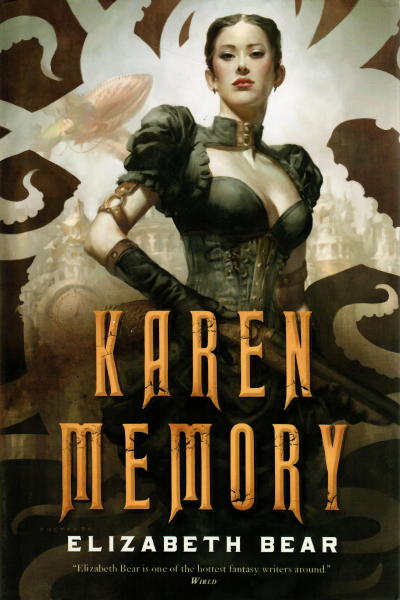
                • Cover of Karen Memory
                  Karen Memory

                  series · 4 books · 2014

                  similar byadventurous19th centurynorth americasteampunk+5 more

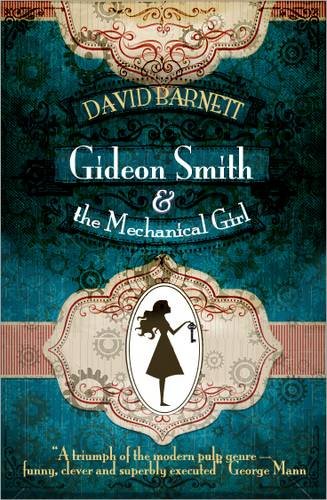
                • Cover of Gideon Smith
                  Gideon Smith

                  series · 7 books · 2013

                  similar byadventurous19th centurysteampunk+4 more

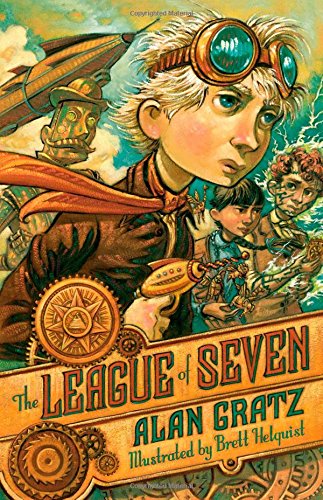
                • Cover of The League of Seven
                  The League of Seven

                  series · 4 books · 2014

                  similar byadventurous19th centurynorth americasteampunk+1 more

                • Cover of Henry Sturges
                  Henry Sturges

                  series · 2 books · 2010

                  similar byadventurous19th centurynorth americahistorical fantasy

                • Cover of The Door Into Summer
                  The Door Into Summer

                  Robert A. Heinlein · standalone novel · 1957

                  similar byadventurousnorth americarobots

                  From the first page of the Signet 6th printing: "An electronics engineer invents a wizard robot... only to find himself shanghaied by his ruthless partner and his gold-digging fiancee. The crafty pair forces him to submit to the "long sleep" - suspended animation for thirty years. But when he wakes up in the year 2000 A.D. the inventor makes a startling discovery. He learns that it is possible now to twist time forwards or backwards. And so he returns to the past bent on a mission... of revenge."

                • Cover of The Bandit of Hell's Bend
                  The Bandit of Hell's Bend

                  Edgar Rice Burroughs · standalone novel · 1925

                  similar byadventurousnorth america19th century

                  The Bandit of Hell's Bend is a Western fiction novel by American writer Edgar Rice Burroughs, published in serial form in the Argosy All-Story Weekly in September and October 1924. The book version was first published by A. C. McClurg on June 4, 1925.

                • Cover of The War Chief
                  The War Chief

                  series · 3 books · 1927

                  completed

                  similar byadventurousnorth america19th century

                • Cover of Temeraire
                  Temeraire

                  series · 48 books · 2006

                  similar byadventurous19th centuryhistorical fantasy+1 more

                  Temeraire is a series of nine alternate history fantasy novels written by American author Naomi Novik. The novels follow the adventures of Captain William Laurence and his dragon, the eponymous Temeraire, and reimagine events of the Napoleonic Wars with "an air force of dragons, manned by crews of aviators". His Majesty's Dragon, the first entry in the series, won the Compton Crook Award in 2007 and was nominated for the Hugo Award for Best Novel the same year. Temeraire: In the Service of the King, an omnibus volume collecting the first three novels, won the Locus Award for Best First Novel in 2007. Temeraire was nominated for the Hugo Award for Best Series in 2017.

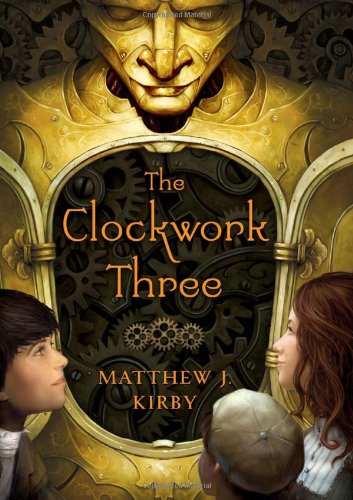
                • Cover of The Clockwork Three
                  The Clockwork Three

                  Matthew J. Kirby · standalone novel · 2010

                  similar byadventurousnorth america19th centuryfriendship

                  The Clockwork Three is a 2010 novel by American author Matthew J. Kirby. Set in a fictional coastal city in the late nineteenth century, it follows three children: Giuseppe, Hannah, and Frederick who work to solve each other's problems.

                • Cover of Fevre Dream
                  Fevre Dream

                  George R. R. Martin · standalone novel · 1982

                  similar byadventurousnorth america19th century

                  Fevre Dream is a 1982 vampire novel written by American author George R. R. Martin. It is set on the antebellum Mississippi River, beginning in 1857, and has been described by critics and Martin himself as "Bram Stoker meets Mark Twain". About writing the novel, Martin said that "It was strongly influenced by the time I spent in Dubuque, Iowa, where river steamboats were once built".

                • Cover of Clockwork Century Universe
                  Clockwork Century Universe

                  series · 8 books · 2008

                  similar by19th centuryadventurousnorth americasteampunk

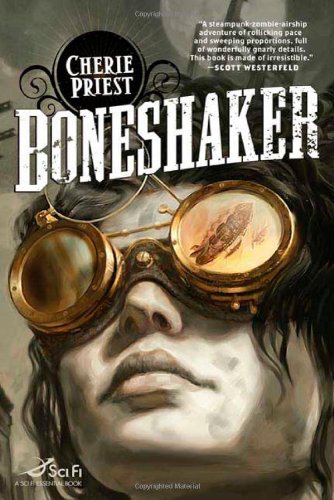
                  Boneshaker opens Cherie Priest's Clockwork Century, a steampunk alternate history that reimagines Seattle after a mining disaster releases a toxic gas that turns people into the walking dead, forcing survivors behind a massive wall around the poisoned city. The series expands out from that starting point across the American Civil War era, following different characters and cities in each book (Clementine, Dreadnought, Ganymede, The Inexplicables, Fiddlehead, Jacaranda) rather than one continuous plot. Boneshaker was nominated for the Nebula Award and won the 2010 Locus Award for Best Science Fiction Novel.

                • Cover of Buckskin Brigades
                  Buckskin Brigades

                  L. Ron Hubbard · standalone novel · 1937

                  similar byadventurousnorth america19th century

                  Buckskin Brigades is a Western novel written by L. Ron Hubbard, first published July 30, 1937. The work was Hubbard's first hard-covered book, and his first published novel. The next year he became a contributor to Astounding Science Fiction. Winfred Blevins wrote the introduction to the book. Some sources state that as a young man, Hubbard became a blood brother to the Piegan Blackfeet Native American tribe while living in Montana, though this claim is disputed. Hubbard incorporates historical background from the Blackfeet tribe into the book.

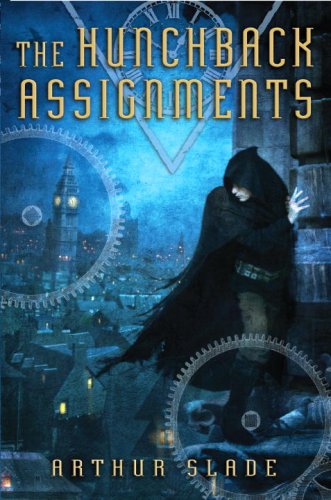
                • Cover of Hunchback Assignments / Modo: Mission Clockwork
                  Hunchback Assignments / Modo: Mission Clockwork

                  series · 5 books · 2009

                  similar byadventurous19th centurysteampunk

                • Cover of The Root Cellar
                  The Root Cellar

                  Janet Lunn · standalone novel · 1981

                  similar byadventurousnorth america19th centuryhistorical fantasy

                  The Root Cellar is a children's historical novel by Janet Lunn that is set in the 1980s, although much of the action takes place in the 1860s. It follows Rose Larkin, an orphan, who travels temporally back and forth between Ontario, Canada, of the 1980s and various settings of U.S. Civil War in the 1860s. This time travel is done through the root cellar of the title.

                • Cover of The Boundless
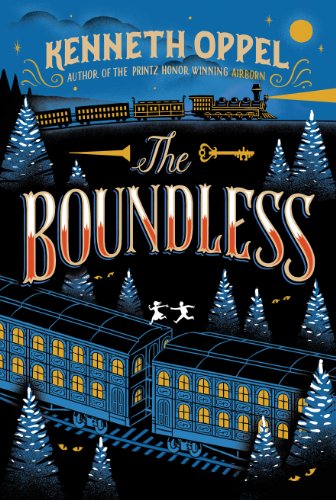
                  The Boundless

                  Kenneth Oppel · standalone novel · 2014

                  similar byadventurousnorth america19th century

                  Aboard "The Boundless," the greatest train ever built, on its maiden voyage across Canada, teenaged Will enlists the aid of a traveling circus to save the train from villains.

                • Cover of Gold Seer Trilogy
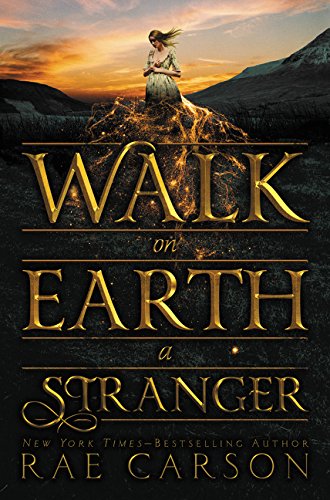
                  Gold Seer Trilogy

                  series · 3 books · 2015

                  similar byadventurousnorth america19th centuryhistorical fantasy

                • Cover of The Alvin Maker Saga
                  The Alvin Maker Saga

                  series · 15 books · 1986

                  similar by19th centurynorth americahistorical fantasy+1 more

                  The Tales of Alvin Maker is a series of seven alternate history fantasy novels written by American novelist Orson Scott Card, published from 1987 to 2026. They explore the experiences of a young man, Alvin Miller, who realizes he has incredible powers for creating and shaping things around him.

                • Cover of Veins of Gold
                  Veins of Gold

                  Charlie N. Holmberg · standalone novel · 2018

                  similar byadventurousnorth america19th centuryhistorical fantasy

                  "Abandoned by their father for the gold rush, Gentry and her siblings labor to survive alone in the inhospitable west. When bizarre natural disasters begin wreaking havoc on the land, Gentry discovers a world of magic. Desperate for help, she accepts aid from a mysterious stranger. Winn not only sees the magic, but controls its hunger by feeding it gold--the very thing Gentry's father left to acquire. But the earth's unrest only grows worse, and Gentry's fear leads her to a terrible choice: marry a wealthy man she does not love, or trust in Winn's unpredictable power to save her family."--Amazon.com.

                • Cover of The Detective & The Unicorn
                  The Detective & The Unicorn

                  Michael Angel · standalone novel · 2011

                  similar byadventurousmurder investigationnorth americamystery & detective+1 more

                  When a warlock from the magical world of the Morning Land murders Derek Ridder's friend, the LAPD detective gets a new partner. Her name's Tavia, and she's a brash, driven unicorn filly. She identifies the killer as Sir William Teach, the one man she's sworn to capture or kill at all cost. Together, Derek and Tavia race to uncover Teach's dark plans to unleash an ancient evil in order to conquer both of their worlds. Their path takes them through Los Angeles and deep into the fantasy realm of the Morning Land. Along the way, they discover what can break a mythical creature's heart, what can heal death itself, and whether or not one needs to be virgin-pure in order to touch a unicorn.

                • Cover of The Chinatown Death Cloud Peril
                  The Chinatown Death Cloud Peril

                  Paul Malmont · standalone novel · 2006

                  similar byadventurousnorth americamurder investigationmystery & detective

                  From the flaps of the S&S first edition: "The Chinatown Death Cloud Peril casts the rivalry between two of pulp fiction's most legendary writers into its own amazing saga, which bursts from the pages with blood, cruelty, fear, mystery, vengeance, courageous heroes, evil villains, dames in distress, secret identities and disguises, global schemes, hideous deaths, beautiful psychics, deadly superweapons, cliffhanging escapes, and other outrageous pulp lies that just might be completely Ravaged by the devastation of the Great Depression, America turned to the pulp novels for relief, for hope, for heroes. And the pulps delivered in spades. The science fiction story, the hard-boiled detective, and the superhero were all born on these cheap yellow pages, found behind blood-drenched covers dripping with sex and violence. Return now to those thrilling days of yesteryear, enter at your own risk into the dark and dank lair known as the White Horse Tavern, and meet Walter Gibson, the mind behind The Shadow, and Lester Dent, creator of Doc Savage, as they challenge one another to discover what is real and what is pulp. For Gibson, writing a new novel about The Shadow every month is a way to evade his own dark past. For his rival, Dent, creating Doc Savage is an attempt to bring the light of better days to desperate millions. In their lives and loves they are as different from one another as the heroes they've created. But now the hideous murder of the fringe pulp writer H. P. Lovecraft - victim of a mysterious death that literally makes the skin crawl - will set these two men on a collision course with each other, and face to face with a terrifying and very real evil that could have sprung from the pages of their own pulps. From the palaces and battlefields of warlord-plagued China to the seedy waterfronts of Providence, Rhode Island; from frozen seas and cursed islands to the labyrinthine tunnels and secret temples of New York's Chinatown, Dent and Gibson will find themselves in a dangerous race to stop a madman destined to create a new empire of pure evil. Together with the young pulp writer L. Ron Hubbard, a mysterious stranger, and a sexy psychic with a chicken, they will finally step out from behind their creations to take part in a heroic journey far greater than any story they have imagined. Their quest will force Gibson to look beyond the shadows and discover the true evil that lurks in the hearts of men, while Dent will learn that the nature of a true hero is not found in a fictional superman, but in the faith of the woman who challenges death itself to love him. The Chinatown Death Cloud Peril is a swashbuckling, breathtaking romantic epic of magic and love, marriage and fatherhood, ambition and loss, and writers who never forget their deadlines even when facing the end of the world. In its pages is a tale that deftly weaves the lives of its real-life characters into a lie of outrageous proportions that just may tell the truth, but is always thrillingly, unapologetically pulp."

                • Cover of The Wolf Is My Brother
                  The Wolf Is My Brother

                  Chad Oliver · standalone novel · 1967

                  similar byadventurousnorth america19th century+1 more

                  Western. Winner of the 1967 Golden Spur Award for Best Historical Novel.

                • Cover of Blue Dawn Over Gettysburg
                  Blue Dawn Over Gettysburg

                  Joe DeSantis · standalone novel · 2008

                  similar byadventurousnorth america19th centuryhistorical fantasy

                  A newly turned vampire escapes from his master and tries to use his abilities to win the battle of Gettysburg and the US Civil War for the North.

                • Cover of Allan Quatermain
                  Allan Quatermain

                  series · 25 books · 1885

                  similar byadventurous19th century

                  Allan Quatermain is the protagonist of H. Rider Haggard's 1885 novel King Solomon's Mines, its one sequel Allan Quatermain (1887), twelve prequel novels and four prequel short stories, totalling eighteen works. An English professional big game hunter and adventurer, in film and television he has been portrayed by Richard Chamberlain, Sean Connery, Cedric Hardwicke, Patrick Swayze and Stewart Granger among others.

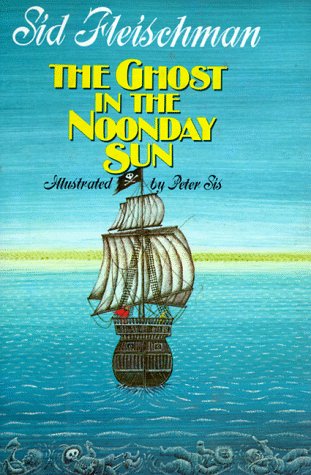
                • Cover of The Ghost in the Noonday Sun
                  The Ghost in the Noonday Sun

                  Sid Fleischman · standalone novel · 1965

                  similar byadventurous19th centurynorth america

                  "Because Captain Scratch thinks Oliver Finch can see ghosts, he shanghais the boy abroad a pirate ship bound from Nantucket in search of buried treasure. Devious methods enable Oliver to outwit Scratch." --summary, Worldcat library record {{OCLC|429575904}} "firmly rooted in fantasy and exaggeration" --Mark Taylor LA Times 1965-12-26 m25 "this rollicking tale has more than enough humor and suspense" --Robert Berkvist NY Times 1965-10-24 pBR34