Loreful
HomeDiscover
Search series, authors…⌘K
Loreful

Reading orders for SF/F series and shared universes — with your place kept in every one.

Explore

UniversesSeriesWorksAuthorsAtlas

Help

FAQAboutSite map

Account & legal

Sign inCreate accountPrivacyTerms

Data

Built on ISFDB, Wikipedia, Wikidata and Open Library. Curated reading orders carry their reasoning on the page; the rest follow publication order. Data sources & licenses

© Loreful · data: ISFDB · CC BY

More like Animate Objects

anchored on:short story cyclefantasydark fantasyweird fictionart and artistsdark+1 more

but

Mood

The mood the book leaves you in.

  • The reading experience is propelled by journeys, exploration, and physical risk; excitement and forward momentum dominate over dread or introspection.
  • Joy and loss are deliberately mixed; the resolution grants characters something real while taking something else away, leaving warmth and sorrow together.
  • The book demands work from the reader — dense prose, difficult structure, unfamiliar ideas, or morally uncomfortable material — as part of its intended effect.
  • Grim events, cruelty, or despair dominate the atmosphere, and the book does not soften them with comfort or comic relief.
  • The atmosphere is quietly unsettling — wrongness, unease, and the uncanny pervade the book without necessarily escalating into overt horror.
  • The book is built to move the reader; character feeling is foregrounded and major scenes aim at a strong emotional response.
  • Humor is a primary aim and the prose plays for laughs — comic situations, wit, or dialogue produce sustained comedy, not occasional levity.
  • The book insists that things can improve; effort and decency are shown to matter, and the arc bends toward better outcomes even through hardship.
  • The book teaches as it goes — real facts, history, science, or craft are conveyed in enough depth that learning is part of the reading experience.
  • The book is designed to uplift and motivate, presenting perseverance or achievement in a way that invites the reader to aspire or act.
  • The overall register is cheerful and easygoing; stakes are kept gentle and the book avoids dwelling on pain or dread.
  • Withheld information drives the experience; the book sustains enigmas and secrets the reader wants resolved, whatever its genre.
  • The book is contemplative and inward-looking, giving more weight to thought, memory, and meaning than to external events.
  • The book works as comfort reading — low tension, a soothing pace, and an atmosphere the reader can unwind in.
  • Grief, loss, or melancholy set the dominant register, and the book lets sorrow stand rather than resolving it into comfort.
  • Sustained suspense is the point; the book keeps the reader braced for what happens next through danger, pressure, or impending revelation.
  • Playful invention and charm define the register — fanciful conceits, light absurdity, and a narration that delights in its own oddity.

About

What the story runs on.

  • Stories in which extraterrestrial beings are central — as characters, cultures, or the object of the plot.
  • Stories structured as a quest — a journey undertaken to find, deliver, or destroy something of great import.
  • Stories in which staying alive against nature, catastrophe, or scarcity is the central problem.
  • Stories of lovers kept apart by law, family, faith, or station, where the obstacle to love is the plot.
  • Stories in which a friendship — its making, testing, or loss — is the emotional center.
  • Stories of growing up — a young protagonist crossing from childhood into adult knowledge and responsibility.
  • Stories about who a character truly is — self-discovery, doubled lives, and the search for a self.
  • Stories about mourning — living through the death of a loved one and what loss does to the survivors.
  • Stories in which a buried family truth — hidden parentage, crimes, or shames — surfaces and reorders the present.
  • Stories driven by maneuvering for power — factions, conspiracies, and statecraft conducted in shadow.
  • Stories in which war itself is the subject — combat, occupation, and what warfare does to soldiers and civilians.
  • Stories organized around investigating a killing — the case, the clues, and the pursuit of the killer, in any genre's clothing.

Shelf

Where it sits in the library.

    • Fiction built on magic or other supernatural elements that have no scientific explanation.
    • Secondary-world fantasy at large scale, where the fate of nations or the world turns on the protagonists' struggle.
    • Fantasy set in a recognizably modern city or contemporary world where the supernatural intrudes on everyday life.
    • Fantasy that blends in horror's atmosphere and imagery, keeping a fantastical frame around grim or frightening material.
    • Action-driven fantasy following warriors or rogues with personal stakes against sorcerous threats, rather than world-spanning conflicts.
    • Fantasy set in a real historical period or a close analogue of one, with magic woven into the era.
    • Fantasy in which protagonists cross from the ordinary world into another world through a portal or similar passage.
    • Fiction that retells or reworks a traditional fairy tale in a new form or setting.
    • Fantasy drawing directly on myths, legends, and folklore, retelling them or building on their figures and logic.
    • Fantasy of ghosts, vampires, shapeshifters, psychics, and similar phenomena, usually set in an otherwise ordinary world.
    • Fiction mixing science-fictional trappings with overtly magical or impossible elements in one setting.
    • Low-stakes fantasy emphasizing comfort, community, and everyday pleasures over conflict and peril.
    • Speculative fiction of pervasive moral ambiguity, violence, and cynicism that rejects heroic conventions — fantasy and SF alike.
      • Fiction that extrapolates from science and technology — future societies, space travel, or speculative inventions — within at least nominally natural laws.
      • Science fiction of interstellar scope — starships, galactic polities, and adventure across star systems.
      • Science fiction committed to scientific rigor, where technical plausibility constrains the story.
      • Science fiction centered on armed forces and warfare, told largely from a military point of view.
      • Science fiction of networked, corporate-dominated near futures, pairing high technology with social decay.
      • Science fiction styled on nineteenth-century steam-powered technology, often in a Victorian or pseudo-Victorian setting.
      • Fiction depicting an oppressive or catastrophic society, presented as a warning.
      • Fiction set after civilization's collapse, following survivors in the ruins of the old world.
      • Fiction in which characters move between past and future, and the mechanics or consequences of that travel drive the plot.
      • Fiction exploring a world where a historical event went differently and history diverged from ours.
      • Science fiction about humanity's first encounter and communication with an alien intelligence.
      • Science fiction in which extraterrestrial forces attack or occupy Earth and humanity resists.
      • Fiction whose primary aim is to frighten or unsettle the reader through dread, menace, or the monstrous.
      • Horror of vast, indifferent, incomprehensible entities before which humanity is insignificant, in the Lovecraft tradition.
      • Horror of decaying houses, buried family secrets, and oppressive atmosphere in the Gothic literary tradition.
      • Horror centered on hauntings and the returning dead.
      • Horror located in the mind — paranoia, obsession, and unreliable perception rather than external monsters.
      • Horror built around the reanimated dead and survival amid their outbreaks.
      • Horror defined by explicit, transgressive gore that refuses to cut away from violence.
      • Speculative fiction of the strange and uncanny that resists both natural explanation and standard genre categories.
      • Fiction organized around solving a crime or puzzle, typically following an investigator toward the identification of a culprit.
      • A puzzle-first mystery that lays out clues so the culprit's identity can be deduced before the reveal.
      • Crime fiction of moral ambiguity, fatalism, and hard-edged style, set among the corrupt and the doomed.
      • A mystery following the realistic routines of police work — forensics, interviews, and case-building.
      • A gentle mystery with an amateur sleuth, a small community, and violence kept off the page.
      • A mystery set in a past era, where the investigation works within that period's methods and society.
      • Fast-paced fiction driven by imminent danger, pursuit, or high-stakes conspiracy, built to sustain tension.
      • A thriller of espionage — agents, tradecraft, and intelligence services in conflict.
      • A thriller centered on lawyers and the courtroom, where litigation carries the suspense.
      • A thriller driven by detailed contemporary or near-future technology, often military or scientific.
      • A thriller whose tension comes from mental states and manipulation between characters rather than external action.
      • Fiction whose central plot is a romantic relationship and its development toward an emotionally satisfying resolution.
      • Romance in which one or both partners are supernatural beings, blending fantasy elements into the love story.
      • A fantasy-romance hybrid in which the romantic arc and the fantasy plot carry equal weight.
      • Romance set in a past era, with courtship shaped by the period's society and manners.
      • Romance set in the present day, without supernatural or historical elements.
      • Fiction set in a real past period, where the historical setting materially shapes characters and events.
        • General and literary fiction emphasizing prose style, character interiority, or formal ambition over genre plot conventions.
        • Fiction in a realistic world where magical events occur and are treated as ordinary, in the tradition of Latin American literature.
        • Fiction that ridicules people, institutions, or society in order to criticize them.
        • Fiction of dreamlike, irrational imagery and logic that breaks from realistic representation.
        • Fiction that plays with narrative convention through metafiction, fragmentation, and self-reference.
        • Fiction propelled by journeys, exploration, and physical peril, where action and survival carry the plot.
        • Adventure fiction of ships and seafaring — naval engagements, voyages, and life at sea.
        • Fiction of the American frontier West — gunmen, ranchers, and lawmen, typically in the late nineteenth century.
        • Fiction centered on soldiers, campaigns, and the experience of warfare, historical or imagined.
          • Fiction written primarily to amuse, using comedic situations, wit, or parody as its organizing principle.
            • Multi-generational fiction following a family or dynasty across decades, with inheritance and kinship as the through-line.
              • Fiction whose world runs on explicit game mechanics — levels, stats, and skills that characters can see and exploit.
                • Fiction about costumed or superpowered heroes and their conflicts with comparable villains.

                Practical

                How long a commitment, whether it stands alone, and whether it has finished.

                Tap a chip to ask for it · tap again to rule it out · once more to clear. Numbers show what would be left.

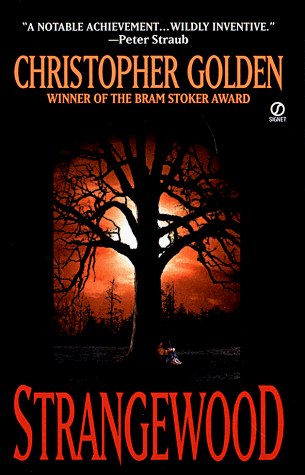
                • Strangewood

                  Christopher Golden · standalone novel · 1999

                  similar byart and artistsour worldcontemporarydarkeeriefantasydark fantasy

                  A fantasy horror novel. Strangewood is the name of the fantasy world that made T. J. Randall a bestselling children's writer. But sometimes his imagination goes too far. Sometimes the story is too dark. Sometimes the creatures are too real. And now, they've taken away Randall's son...

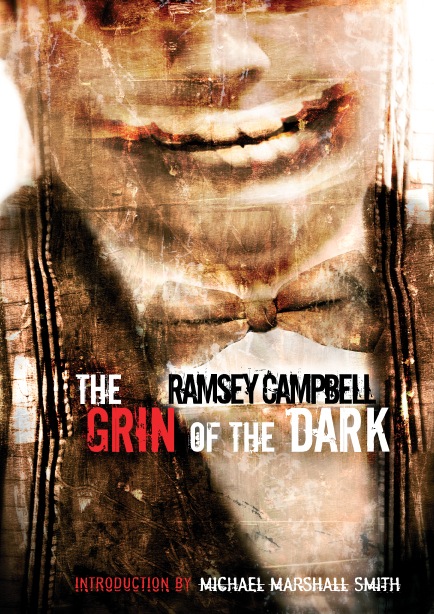
                • The Grin of the Dark

                  series · 2 books · 2007

                  similar byart and artistsour worldcontemporarydarkeerieweird fiction

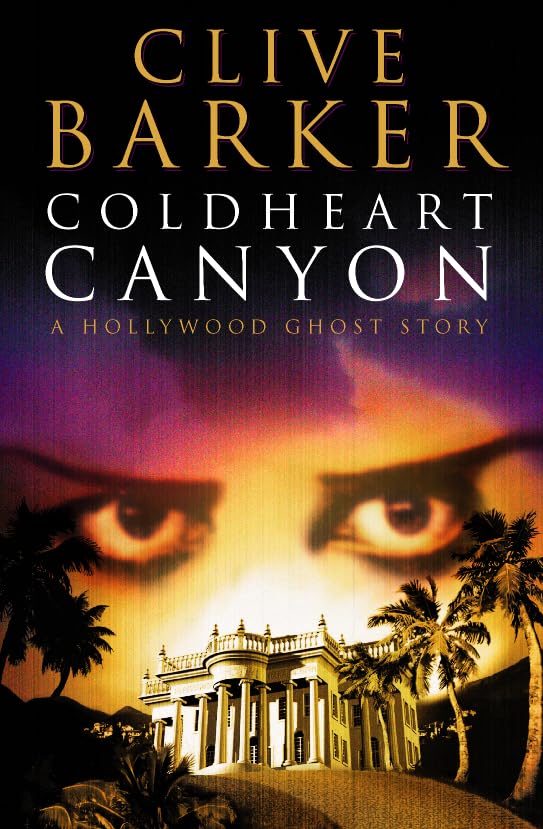
                • Coldheart Canyon

                  Clive Barker · standalone novel · 2001

                  similar byart and artistsour worldcontemporarydarkeerie

                  Coldheart Canyon is a novel by Clive Barker, published in 2001 by HarperCollins. The story centers on Todd Pickett, a failing movie star, and Tammy Lauper, Todd's obsessive fan.

                • Weaveworld

                  Clive Barker · standalone novel · 1987

                  similar byour worldcontemporarydarkeeriedark fantasyfantasy

                  Weaveworld is a 1987 dark fantasy novel by English writer Clive Barker. It is about a magical world, known as the Fugue, which has been hidden inside a carpet to safeguard it from both inquisitive humans and hostile supernatural foes. Two humans become embroiled in the fate of the Fugue, attempting to save it from those who seek to destroy it. The book was nominated in 1988 for the World Fantasy Award for Best Novel.

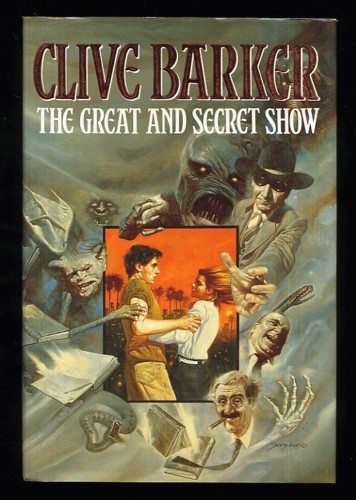
                • Book of the Art

                  series · 3 books · 1989

                  similar bycontemporarydarkeeriefantasydark fantasy+1 more

                  The Art was meant to be a trilogy about a hidden order guarding the boundary between our world and Quiddity, a dream-sea shared by all sleeping minds, but Clive Barker only completed two of its three volumes. The Great and Secret Show follows a decades-long feud between two men who discover Quiddity's power - one seeking to harness it, the other to protect it - with consequences that distort reality itself; Everville continues the story a generation later. The planned third volume was never published.

                • The Devil's Own Work

                  Alan Judd · standalone novel · 1991

                  similar byart and artistsour worldcontemporarydark

                  The Devil's Own Work is a 1991 novella by Alan Judd which won the Guardian Fiction Award. A modern version of the Faust legend, it was inspired by a dinner with Graham Greene, and tells of a pact an author makes with the devil as told by his lifelong friend. In style the work was compared by Publishers Weekly with that of Henry James.

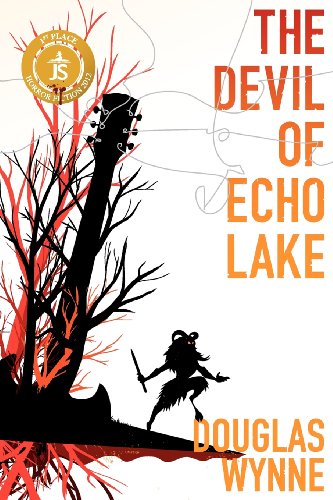
                • The Devil of Echo Lake

                  Douglas Wynne · standalone novel · 2012

                  similar byart and artistscontemporarydarkeeriedark fantasy

                  Billy Moon would have given his life for rock 'n' roll stardom, but the Devil doesn't come that cheap. Goth rock idol Billy Moon has it all: money, fame, and a different girl in every city. But he also has a secret, one that goes all the way back to the night he almost took his own life. The night Trevor Rail, a shadowy record producer with a flair for the dark and esoteric, agreed to make him a star ... for a price. Now Billy has come to Echo Lake Studios to create the record that will make him a legend. A dark masterpiece like only Trevor Rail can fashion. But the woods of Echo Lake have a dark past, a past that might explain the mysterious happenings in the haunted church that serves as Rail's main studio. As the pressure mounts on Billy to fulfill Rail's vision, it becomes clear that not everyone will survive the project. It's time the Devil of Echo Lake had his due, and someone will have to pay.

                • Mrs. God

                  Peter Straub · standalone novel · 1990

                  similar byour worldcontemporarydarkeeriefantasydark fantasy

                  Mrs. God is a fantasy novel by American writer Peter Straub. It was first published in 1990 by Donald M. Grant, Publisher, Inc. in an edition of 1,350 copies, of which 600 copies were signed by the author and the artist, bound in quarter leather and slipcased as a deluxe edition. The novel is expanded from the short novel of the same name that appeared in Straub's collection Houses Without Doors. A trade edition hardcover was issued later.

                • The Ocean at the End of the Lane

                  Neil Gaiman · standalone novel · 2013

                  similar byour worldcontemporaryeeriefantasydark fantasy

                  A seven year old farm boy becomes friends with an eleven year old neighbor girl, who he discovers is ancient and powerful and intervenes when a nonhuman entity attempts to make a home in earthly reality.

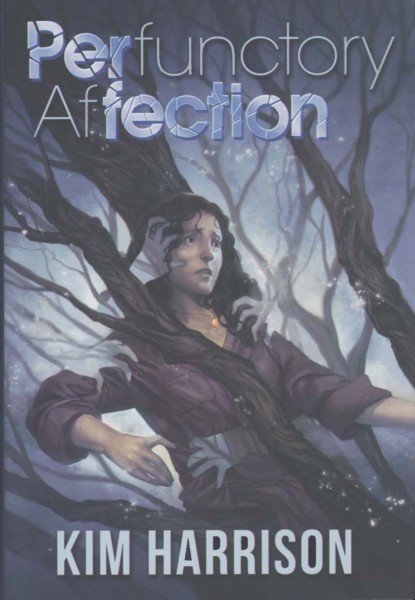
                • Perfunctory Affection

                  Kim Harrison · standalone novel · 2019

                  similar byart and artistsour worldcontemporarydark

                  Is it better to live a lie of perfection when the truth is too ugly to survive? Meg wants a normal life. Her new artistic style, born in the depression of her mother’s death, is poised to take the art world by storm, if she could just overcome the debilitating anxiety caused by the car accident that scarred her boyfriend, Austin. Encouraged by her therapist, Meg pushes outside her comfort zone to befriend Haley, a guest instructor at the university where Meg teaches. Haley is everything Meg wants to be: charismatic, confident, and perfect, but when Austin expresses his worry that Haley is changing Meg too fast and leads her to realize that Austin is trying to keep her afraid and needing him, Meg kicks him out of her life. Or at least, she tries. Kim Harrison, author of the number one bestselling Urban Fantasy Hollows series, brings to life a world terrifyingly near to our own, where what’s real and what shouldn’t exist twine together in the madness of a troubled mind desperate for a way out. But when the truth is revealed, the question remains, is it better to live a lie of perfection, or cleave to an ugly reality that will destroy you?

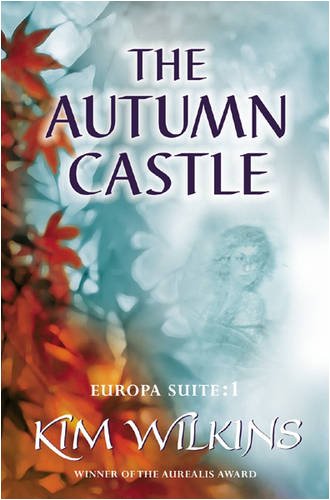
                • Europa Suite

                  series · 2 books · 2003

                  similar byour worldcontemporaryeeriedarkfantasy+1 more

                  Kim Wilkins' Europa Suite opens with The Autumn Castle, in which a woman's ordinary life is upended when the childhood friend she lost — abducted as a girl into a realm of magic and myth — unexpectedly returns, bringing old jealousies and betrayals that threaten to destroy them both. Giants of the Frost continues the loosely linked suite in the same vein.

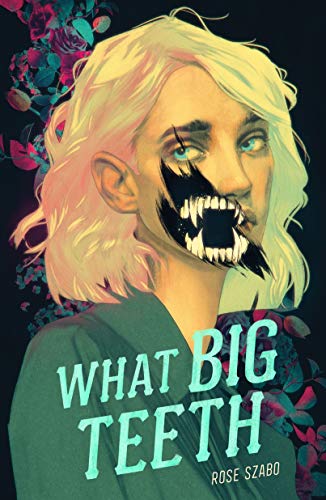
                • What Big Teeth

                  Rose Szabo · standalone novel · 2021

                  similar byour worldcontemporarydarkeeriedark fantasyfantasy

                  What Big Teeth is a 2021 young adult gothic dark fantasy novel by Rose Szabo and marks their debut novel.

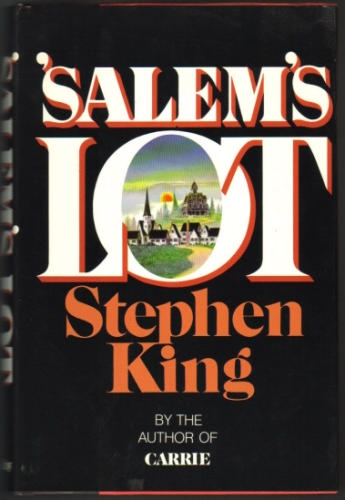
                • Jerusalem's Lot

                  series · 3 books · 1975

                  similar byour worldcontemporarydarkeerie

                  Stephen King's 1975 novel 'Salem's Lot follows writer Ben Mears as he returns to his childhood town of Jerusalem's Lot, Maine, only to discover that its residents are being turned into vampires by a newly arrived stranger. It transplants Gothic vampire horror into a small New England community, tracking that community's collapse under a supernatural siege. It is a single, self-contained novel.

                • The Replacement

                  Brenna Yovanoff · standalone novel · 2010

                  similar byour worldcontemporarydarkeeriefantasydark fantasy

                  Mackie Doyle is not one of us. Though he lives in the small town of Gentry, he comes from a world of tunnels and black murky water, a world of living dead girls ruled by a little tattooed princess. He is a Replacement—left in the crib of a human baby sixteen years ago. Now, he's slowly dying in the human world. Mackie would give anything to live a normal life, play his bass, and find out more about an oddly intriguing girl named Tate. But when Tate's baby sister goes missing, Mackie is drawn into the underworld of Gentry, known as Mayhem. He must face the dark creatures of the Slag Heaps and find his rightful place, in our world—or theirs.

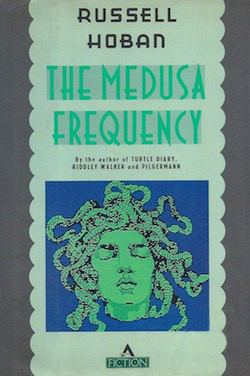
                • The Medusa Frequency

                  Russell Hoban · standalone novel · 1987

                  similar byart and artistsour worldcontemporaryfantasy

                  The Medusa Frequency is a 1987 novel by Russell Hoban. Written in a lyrical, often magic realist style, it crosses a number of genres including comedy and fantasy. It uses the story of Orpheus to "meditate on art and reality and love and fear and fidelity and betrayal".

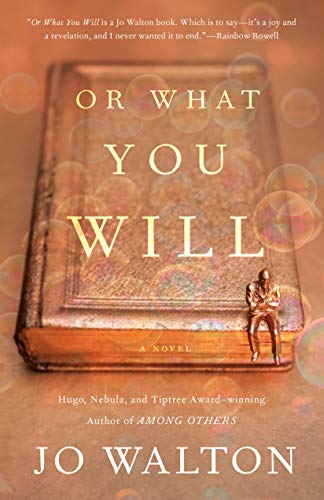
                • Or What You Will

                  Jo Walton · standalone novel · 2020

                  similar byart and artistsour worldcontemporaryfantasy

                  Or What You Will is a 2020 metafictional fantasy novel by Jo Walton, about immortality and creativity. It was first published by Tor Books.

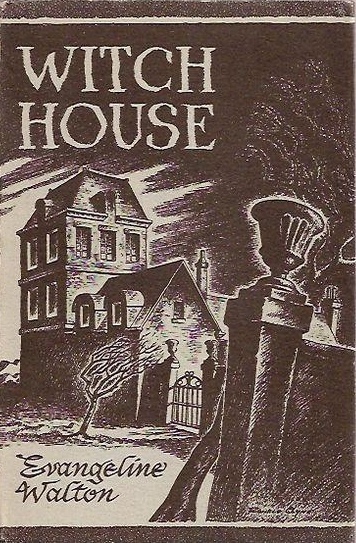
                • Witch House

                  Evangeline Walton · standalone novel · 1945

                  similar byour worldcontemporarydarkeeriefantasy+1 more

                  Witch House is a fantasy novel by American writer Evangeline Walton. It was published in 1945 by Arkham House in an edition of 3,000 copies. It was the first full-length novel to be published by Arkham House and was listed as the initial book in the Library of Arkham House Novels of Fantasy and Terror. An expanded version, with a newly written 20,000-word prologue, was published in England in 1950. In 2013, Centipede Press issued the first American edition of this revised version, also including previously unpublished writings by Walton and several of her short stories.

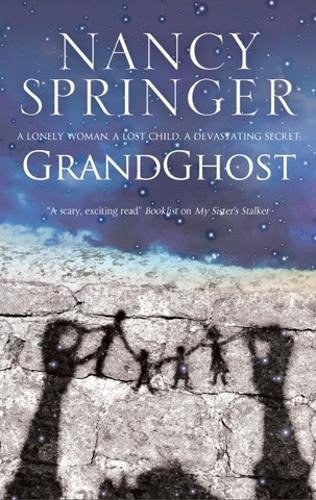
                • Grandghost

                  Nancy Springer · standalone novel · 2018

                  similar byart and artistsour worldcontemporaryeerie

                  "Artist Beverly Vernon gets the shock of her life when she discovers the skeletal human remains of a child while digging in her backyard. Then, while painting her imaginary grandchild, a series of strange events hit her studio. Does Beverly have a ghost, and could the odd events be linked to the discovery in her yard?"--Publisher's description.

                • The Body Artist

                  Don DeLillo · standalone novel · 2001

                  similar byart and artistsour worldcontemporaryeerie

                  The Body Artist is a novella written in 2001 by Don DeLillo. It explores the grieving process of a young performance artist, Lauren Hartke, following the suicide of her significantly older husband. The novella is sometimes described as a ghost story due to the appearance of an enigmatic figure that Lauren discovers hiding in an upstairs room of the house following her husband's death.

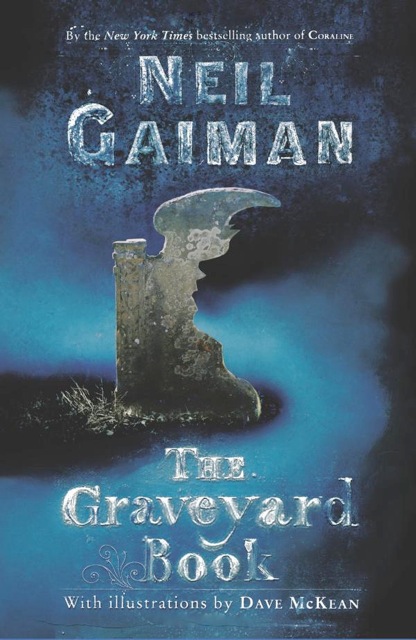
                • Bod Owens

                  series · 3 books · 2007

                  similar byour worldcontemporaryeeriefantasydark fantasy

                  The Graveyard Book follows Nobody "Bod" Owens, a toddler who escapes the murder of his family and is raised among the ghosts of an old English graveyard, absorbing their otherworldly customs while a threat from his past waits beyond the gates. Neil Gaiman's 2008 novel won both the Newbery and Carnegie Medals, and illustrator P. Craig Russell later adapted it into a two-volume graphic novel. Bod's story spans the original novel and that graphic-novel retelling rather than continuing in a prose sequel.

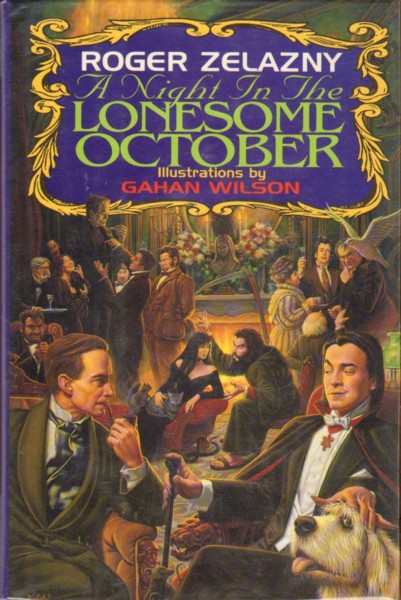
                • A Night in the Lonesome October

                  Roger Zelazny · standalone novel · 1993

                  similar byour worldcontemporaryeeriedark fantasyfantasy

                  A Night in the Lonesome October is a novel by American writer Roger Zelazny published in 1993, near the end of his life. It was his final book, and one of his five personal favorites.

                • It Happened in Boston?

                  Russell H. Greenan · standalone novel · 1968

                  similar byart and artistsour worlddarkeerie

                  It Happened in Boston? (1968) is a novel by Russell H. Greenan. It tells the story of an unreliable narrator, who is a disillusioned, paranoid painter, whose goal in life is to someday meet God and destroy him. He decided he wanted to hold God accountable for the evils in the world. The book follows a bizarre series of events in the lives of him and his painter friends and effectively documents his descent into paranoid delusions as he becomes more and more unreliable as a narrator leaving the reader to become more and more unsure about what exactly is happening in Boston.

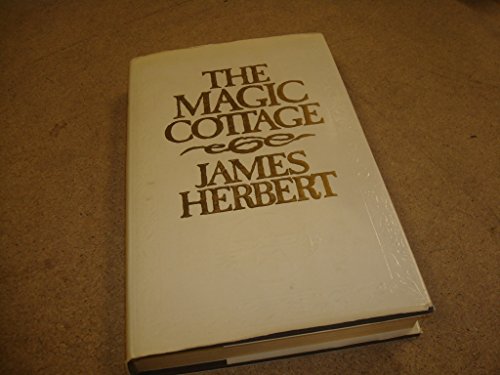
                • The Magic Cottage

                  James Herbert · standalone novel · 1986

                  similar bycontemporarydarkeeriefantasy+1 more

                  you have 13 copies what to know ?

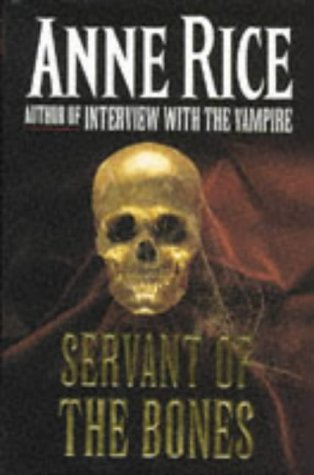
                • Servant of the Bones

                  Anne Rice · standalone novel · 1996

                  similar byour worldcontemporarydarkdark fantasyfantasy+1 more

                  Servant of the Bones (1996) is a historical horror novel by Anne Rice.