More like Ark
anchored on:science fictionhard science fictionsurvivalnear futurespace explorationspace colonization+6 more
but
- The Martian
series2 books2012
similar bynear futuretensescience fictionhard science fictionsurvivalspace explorationour world
Andy Weir's novel The Martian, first self-published in 2011 before a commercial re-release, follows astronaut Mark Watney after he is stranded alone on Mars when his crew presumes him dead and departs. Using scientific improvisation and dark humor, Watney works to keep himself alive long enough for a rescue to reach him. It is a single, self-contained survival story.
- Seveneves
Neal Stephensonstandalone novel2015
similar bynear futuretensescience fictionhard science fictionsurvivalspace colonizationecological collapsespace+1 more
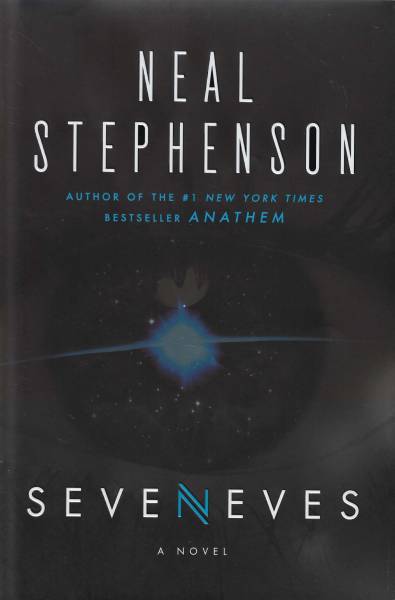
Seveneves is a science fiction novel by Neal Stephenson published in 2015. The story tells of the desperate efforts to preserve Homo sapiens in the wake of apocalyptic events on Earth after the unexplained disintegration of the Moon and the remaking of human society as a space-based civilization after a severe genetic bottleneck.
- Forge of God
series2 books1987
completed
similar bydarktensescience fictionsurvival+7 more
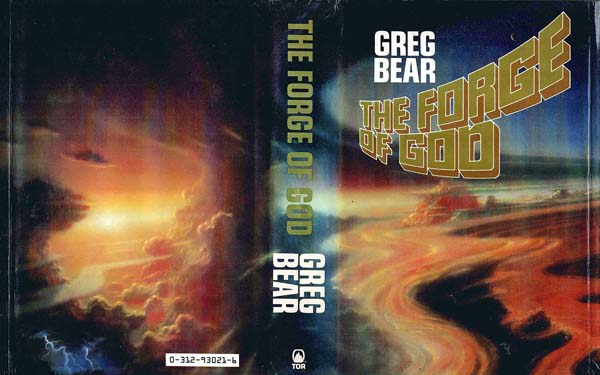
The Forge of God (1987) is Greg Bear's science fiction novel about Earth's discovery that it is the target of an incomprehensible, overwhelming alien attack, following scientists and ordinary people as they try to understand what is destroying the planet. Its 1992 sequel, Anvil of Stars, follows a group of young survivors sent on a mission of interstellar retaliation, continuing directly from the first book's ending.
- Make Room! Make Room!
Harry Harrisonstandalone novel1966
similar bynear futuredarktensescience fictionsurvivalecological collapseour world
Make Room! Make Room! is a 1966 science fiction novel written by Harry Harrison exploring the consequences of both unchecked population growth on society and the hoarding of resources by a wealthy minority. It was originally serialized in Impulse magazine.
- The Hammer of God
Arthur C. Clarkestandalone novel1993
similar bynear futuretensescience fictionhard science fictionspace explorationsurvivalspace+1 more
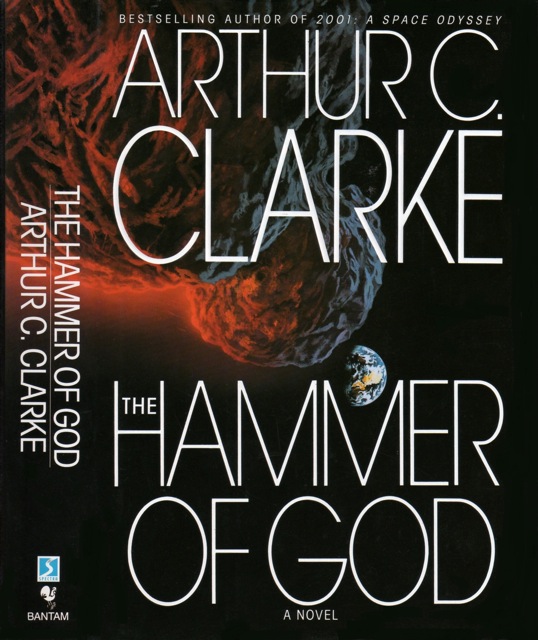
The Hammer of God is a science fiction novel by Arthur C. Clarke originally published in 1993. Set in the year 2109, it deals with the discovery of an asteroid to be on course to collide with Earth and depicts the mission for deflecting the asteroid by using fusion thermal rockets.
- A Fall of Moondust
Arthur C. Clarkestandalone novel1961
similar bynear futuretensescience fictionsurvivalhard science fiction+1 more
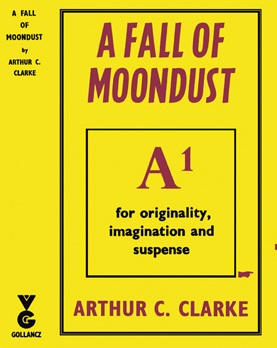
From the back cover of the Harbrace paperback: "The action of A Fall of Moondust takes place almost a century from now when tours on the moon are a common occurrence. One of the high points of each tour is a cruise around the Sea of Thirst, a body of volcanic dust, in a specially designed vessel called the Selene On a perfectly routine voyage one day the Selene suddenly disappears. How do you locate a small tourist "cruiser" buried beneath fifty feet of dust? If you find it, how do you rescue the passengers and crew? If you are on board, how do you feel and what do you do while brave men and expert technicians join forces in a race against time? Sustained excitement, lively humor, and an engaging cast of characters make this one of Arthur C. Clarke's most intriguing novels."
- Cold People
Tom Rob Smithstandalone novel2023
similar bynear futuredarktensescience fictionsurvivalspace colonization+1 more
A novel about a colony of global apocalypse survivors seeking to reinvent civilisation under the most extreme conditions imaginable: without warning, a mysterious and omnipotent force has claimed Earth for their own; there are no negotiations, no demands, no reasons given for their actions; humanity has thirty days to reach the one place on Earth where they will be allowed to exist... Antarctica.
- Have Space Suit - Will Travel
Robert A. Heinleinstandalone novel1958
similar bynear futuretensescience fictionspace explorationsurvivalspacespace opera+1 more
From the back cover of the Del Rey 9th printing: "Skyjacked - Everything happened at once. One minute Kip Russell was walking about in his own backyard, testing out an old space suit and dreaming about going to the moon - and the next he was out cold and the captive of an insidious space pirate. The whole thing seemed like a very bad dream until he discovered he wasn't the only prisoner on board. Then the reality of the situation became inescapable. He - along with the daughter of a world-renowned scientist and a beautiful creature from an alien planet - had been skyjacked by a monstrous extraterrestrial and they were on their way to the Moon... a journey toward a fate worse than death!"
- The Killing Star
George Zebrowski & Charles Pellegrinostandalone novel1995
similar bynear futuredarktensescience fictionhard science fictionsurvivalspaceother star systems
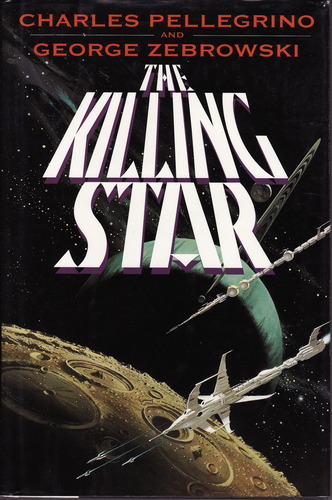
The Killing Star is a hard science fiction novel by American writers Charles R. Pellegrino and George Zebrowski, published in April 1995. It chronicles a sudden alien invasion in a late 21st century technological utopia, while covering several other speculative fiction ideas such as sublight interstellar travel, genetic cloning, virtual reality and advanced robotics.
- Flood
series6 books2008
similar bynear futurescience fictionsurvivalecological collapse+9 more
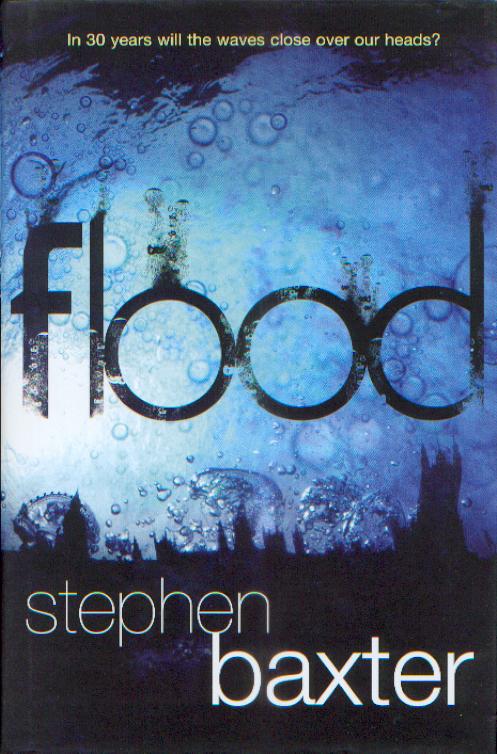
In Stephen Baxter's Flood, sudden seismic upheaval releases immense reservoirs of water trapped deep beneath Earth's crust, and sea levels begin climbing far faster than anyone can adapt to, forcing a handful of survivors to watch coastlines and then continents disappear. The 2009 sequel, Ark, follows a parallel thread of people who instead gamble everything on a desperate escape from the drowning planet. Together the two books trace roughly a half-century of civilizational collapse and reinvention as dry land runs out.
- NASA Trilogy
series4 books1996
similar bytensescience fictionhard science fictionspace exploration+7 more
The NASA Trilogy consists of three hard science fiction novels written by British science fiction author Stephen Baxter. They were published from 1996 to 1998. These books explore the possibilities of the American space program if the circumstances had been different. They have generally darker tones than his other books and are critical of NASA. They consist of:
- Gravity
Tess Gerritsenstandalone novel1999
similar bynear futuredarktensescience fictionspace explorationsurvivalspace
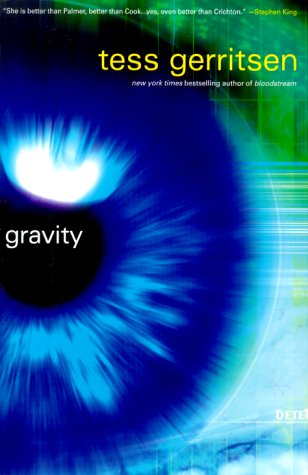
Medical thriller set aboard the International Space Station where astronauts are dying one by one from a mysterious disease. Dr Emma Watson is a research physician on a mission to study living organisms in space. But the mission aboard the space station turns into a nightmare.
- The Hopkins Manuscript
R. C. Sherriffstandalone novel1939
similar bynear futuredarktensescience fictionsurvivalecological collapseour world
The Hopkins Manuscript is a dystopian science fiction novel by R. C. Sherriff, first published in 1939 by Victor Gollancz. In 1958 it was reissued in a revised edition as a Pan paperback under the title The Cataclysm. The novel was later republished under its original title by The Macmillan Company in 1963 and by Persephone Books in 2002.
- Colony
Ben Bovastandalone novel1978
similar bynear futuretensescience fictionspace colonizationsurvival+3 more
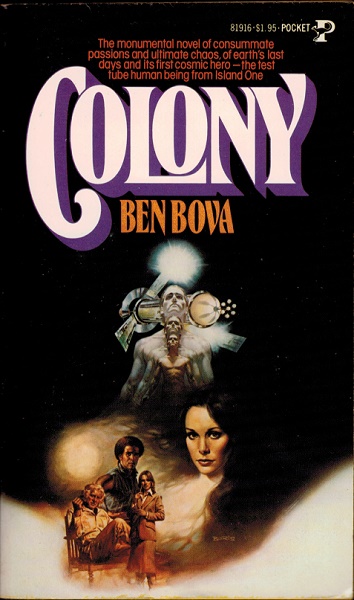
Colony continues the story Ben Bova began in Millennium, following astronaut-turned-administrator Chet Kinsman years later as the head of an orbiting space habitat that has become Earth's only real refuge from a planet buckling under overpopulation, food shortages and unrest. Getting a place in the habitat is a matter of life and death for millions who will never be chosen, and as Earth's governments grow more desperate to control or dismantle the colony outright, Kinsman has to decide how far he'll go to protect the world he's built off-world. Bova later folded both novels together into the omnibus The Kinsman Saga. Part of Ben Bova's Chet Kinsman series.
- Blindsight / Firefall
series3 books2006
similar bytensedarkscience fictionhard science fictionspace+4 more
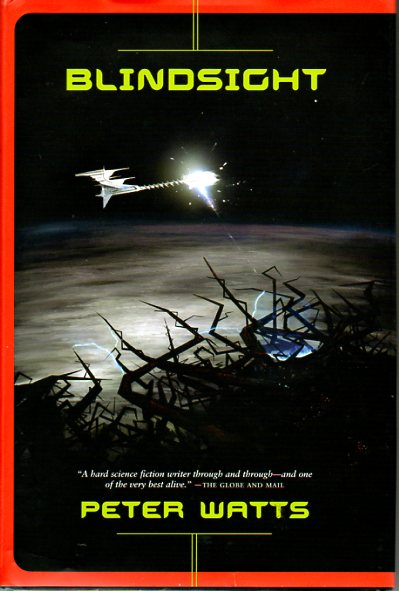
Blindsight sends a crew of radically modified posthumans (including a resurrected, genetically restored vampire) out to the Oort cloud after humanity detects an alien signal, only to make contact with something intelligent, wildly capable, and possibly not conscious at all — a first-contact story built around the question of whether self-awareness is actually useful. Peter Watts's Echopraxia is a same-timeframe "sidequel" rather than a direct sequel, following different characters through the fallout of the same first-contact event.
- Project Hail Mary
Andy Weirstandalone novel2021
similar bynear futurescience fictionhard science fictionspace explorationsurvivalspaceshipour world+2 more
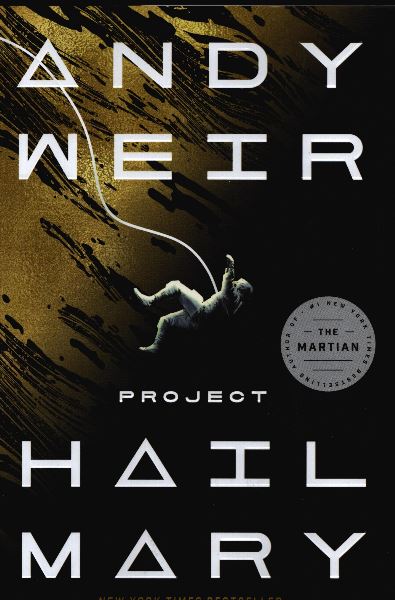
Project Hail Mary is a 2021 hard science fiction novel by American writer Andy Weir. It centers on science teacher and former biologist Ryland Grace, who wakes up aboard a spacecraft, afflicted with amnesia.
- Adventures of Viktor & Julia
series2 books1999
similar bynear futuretensescience fictionhard science fictionspace explorationsurvival+2 more
- The Water Knife
Paolo Bacigalupistandalone novel2015
similar bynear futuredarktensescience fictionsurvivalecological collapse
The Water Knife is a 2015 science fiction novel by Paolo Bacigalupi. It is Bacigalupi's sixth novel, and is based on his short story, The Tamarisk Hunter, first published in the news magazine High Country News. It takes place in the near future, where drought brought on by climate change has devastated the Southwestern United States.
- The Fireman
Joe Hillstandalone novel2016
similar bynear futuredarktensescience fictionsurvivalour world
The Fireman is a novel set in a post-apocalyptic time by American author Joe Hill. The novel, Hill's fourth, tells the tale of a deadly spore that has infected most of the world's population. Hill first spoke of the novel in 2013 in promotional interviews for his then-new novel NOS4A2. The novel was released on May 17, 2016.
- Aftermath (Charles Sheffield)
series2 books1998
completed
similar bynear futuredarktensescience fictionsurvivalspaceour world
Charles Sheffield's Aftermath duology opens with a near-future Earth devastated by a nearby supernova's radiation, which knocks out electronics and forces survivors to rebuild without most modern technology. Starfire continues years later as a second, larger stellar threat approaches and humanity must recover enough capability to respond. Sheffield, a physicist by training, grounds both books in hard-science consequences of the disaster rather than treating it as mere backdrop.
- Rogue Moon
Algis Budrysstandalone novel1960
similar bynear futuretensescience fictionhard science fictionsurvival+1 more
A project to transport humans by matter transmission becomes the means to send explorers to the Moon when the US discovers an alien artifact on the dark side, but anyone who enters dies, so a hardened adventurer is given the job.
- Pushing Ice
Alastair Reynoldsstandalone novel2005
similar bytensescience fictionhard science fictionspace explorationsurvivalspacespaceshipother star systems+1 more
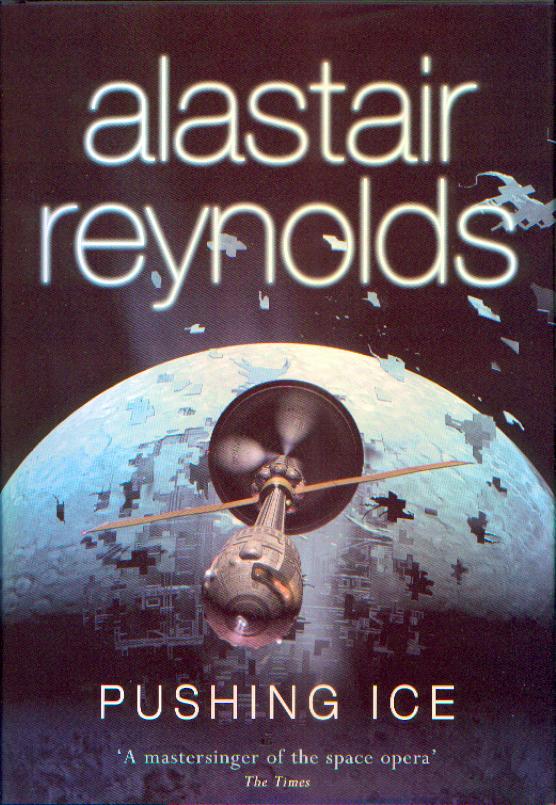
When Saturn's moon Janus suddenly takes off into interstellar space, an ice mining spaceship sent to investigate finds itself swept along into distant space until it ends up trapped in a gigantic alien structure, wherein the crew must prepare to reside for the foreseeable future.
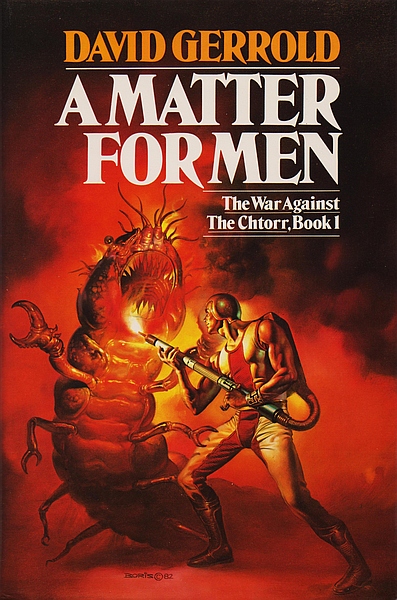
- War Against the Chtorr
series7 books1983
similar bynear futuretensedarkscience fictionsurvivalecological collapse+1 more
The War Against the Chtorr is a series of science fiction novels by American writer David Gerrold. The Chtorr series was originally planned as a trilogy, but as the story became more intricate, Gerrold realized that three books would not be enough for him to tell the entire story. For a time, he was uncertain how many books there would be in the end but plans on seven. As of 2022, four books have been completed. As of 2017, a fifth and sixth were in the works, 24 years after the publication of the fourth book.
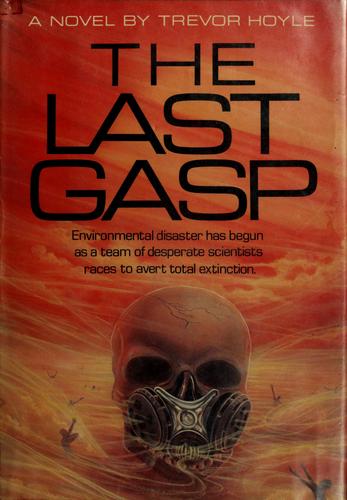
- The Last Gasp
Trevor Hoylestandalone novel1983
similar bynear futuredarktensescience fictionsurvivalecological collapseour world
From the flaps of the Crown first edition: "When British marine biologist Gavin Chase stepped out into the windswept wastes at the Halley Bay antarctic research station one morning, the last thing he expected to see was a sled team coming out of nowhere carrying a half-mad, half-frozen Russian scientist babbling an incomprehensible warning. But that warning would threaten the future of the human race and force Chase to make some of the hardest decisions of his life. Months later, at a Geneva environmental conference, Chase meets Cheryl Detrick, the daughter of Theo Detrick, the grand old man of diatom research. Chase, the Detricks, and Soviet scientist Boris Stanovnik theorize that the oxygen-producing microscopic plants of the world's oceans are dying and the level of atmospheric pollutants has finally exceeded the ability of the planet's ecology to recycle them. There is also good reason to believe that the superpowers are planning to wage a new type of environmental warfare. Sooner or later there will be nothing left to breathe. So begins a race against the future. Chase and Cheryl, now lovers, struggle to avert ecological catastrophe as agents of the military-industrial complex hunt them down... and as a growing belt of unbreathable gases spreads outward from the equator, uprooting millions. Their enemies are Lloyd Madden, an insane military mastermind planning to seed the earth with poison and then repopulate it with a race of mutants, and Joseph Earl Gelstrom, a wealthy chemical manufacturer who has Cheryl's father killed to hide his involvement. But Gelstrom himself falls victim to pollution sickness, and he repents. To raise money to finance a research team, Chase must make an unholy alliance with the dying Gelstrom, but this is too much for Cheryl, who leaves him. As more and more of the world becomes uninhabitable, as industries and governments collapse and chaos reigns, as the oceans fill up with dioxin, as the climate changes and mutant life-forms encroach upon the last refuges of humankind, Chase leads a last desperate mission to find and rescue Cheryl and to lead his team of scientists to safety."