More like Armadale
anchored on:literary & generalbritish isles19th centurymystery & detectiveidentityfamily secrets+2 more
but
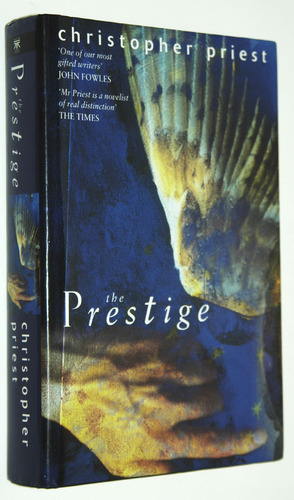
- The Prestige
Christopher Prieststandalone novel1995
similar by19th centuryidentityfamily secretsliterary & generalmysteriousbritish isles
A magician called Borden (at least in private) writes his own version of his life as a magician. There's a lot of focus on a trick, where he seems to move across any width of stage in an instant, and on a feud with another magician, Angier. The account includes passages, where he can't decide what exactly to write, arguing with himself. 3 generations later a Borden (at least biologically) learns about his ancestor. He's also convinced, he somehow has a twin brother, who's happy about this development.
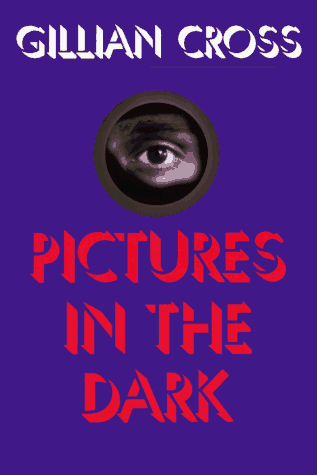
- Pictures in the Dark
Gillian Crossstandalone novel1996
similar bybritish islesidentityfamily secretsliterary & generalmysterious+1 more
A chance photograph taken for the school Camera Club draws Charlie into the emotionally troubled lives of his classmate Jennifer's family, especially that of her younger brother who harbors an astounding secret.
- Castle Barebane
Joan Aikenstandalone novel1976
similar bybritish isles19th centuryfamily secretsmysterioustensemystery & detective
Near the top of a three-hundred-foot crag perched a roofless ruin with crumbling battlements and shattered buttresses....Apart from the ruined castle there seemed to be no other sign of human life, unless you counted a couple of fishing boats well out to sea.... Val Montgomery, young, warm-hearted, and confident -- but no lady, according to the grande dames of New York in the 1880's -- had abandoned a promising job on a newspaper and a claustrophobic engagement to a society lawyer and sailed to England to help her spendthrift half-brother, Nils, whose Scottish heiress wife, Kirstie, had fallen ill. Arrived in a London terrorized by a series of lurid murders, Val can find no trace of Nils or Kirstie. Horrified, she discovers that her small nephew and niece seem to have been callously abandoned in a London slum. Seeking a safe domicile for the children, Val travels to Edinburgh, intending to leave them with their mother's old nurse at Ardnacarrig, the family home on the Scottish coast -- but she soon begins to doubt that old Elspie is the loving guardian she had hoped for. In the quest for her brother, Val encounters four men destined to change her life forever: Lord Clanreydon, slated as England's next prime minister -- a man of mysterious origins and enigmatic habits; Sir Marcus Cusack, an editor who befriends her; Davie, a brilliant young Scottish doctor; and Mungo, an old sailor. Soon the apparent peach of Ardnacarrig (known as Castle Barebane by the locals) is threatened by dark emanations from London's underworld, and Val begins to apprehend that it might be better for all if Nils were never seen again. But her realization comes too late. Guilty and innocent alike are whirled in a wild eruption of violence as events more quickly to a terrifying climax in a savage confrontation between the forces of good and evil on the cliffs of Ardnacarrig. In this, her most compelling and suspenseful novel to date, Joan Aiken has created a variety of memorable characters: from the deserted children and their hostile great-aunt, the Marchioness of Stroma, to cab drivers and sailors, London clubmen and music-hall singers.
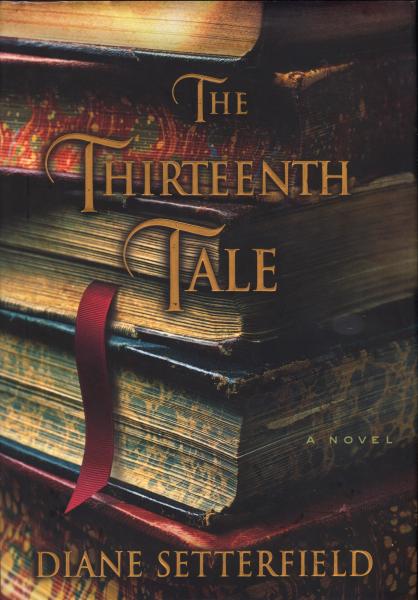
- The Thirteenth Tale
Diane Setterfieldstandalone novel2006
similar bybritish islesidentityfamily secretsmysteriousmystery & detective
The Thirteenth Tale (2006) by Diane Setterfield is a gothic suspense novel; it was the author's debut book.
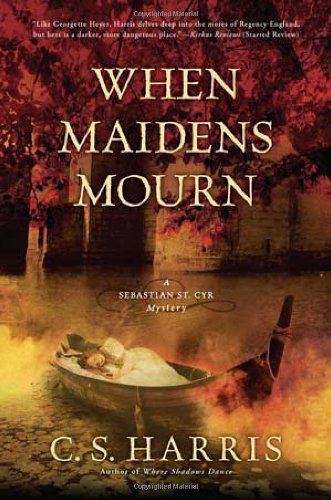
- Sebastian St. Cyr
series1 book2012
similar bybritish isles19th centuryfamily secretsmysterioustensemystery & detective
- Fire, Burn!
John Dickson Carrstandalone novel1957
similar bybritish isles19th centurymysterioustensemystery & detective
Fire, Burn! is a 1957 historical mystery novel by John Dickson Carr. Carr considered this one of his best impossible crime novels.
- The Mystery of the Sea
Bram Stokerstandalone novel1902
similar bybritish isles19th centurymysterioustensemystery & detective
"When Archibald Hunter comes to Cruden Bay, Aberdeenshire, for his annual holiday, he looks forward to a tranquil few days by the sea. But as he sits by the bridge he is disturbed by a strange vision of a couple he had seen earlier, the man now carrying a small black coffin. Shortly afterwards he discovers their child has drowned. The following day, speaking to a fisherman, he is again confronted by a portent of doom. As he sets out to sea, the other men speak his name - Lauchlane Macleod: the very same whose death Gormala had foretold. But how can this gaunt old woman know such things? Where are these terrible visions, whose force he seems unable to counter, taking him? What is the significance of the pages of cipher which once belonged to Don de Escoban? Can he solve the Mystery of the Sea?" --quoted from this book's product page at Amazon UK as of 2017-08-29 --found 2019-05-10 as "From the Back Cover" at {{ASIN|B079558GC5}}, 2018 Jovian Press ebook --Google Books 2019-05-10 quotes the same description for its display of the 1902 Doubleday, Page edition (as W. Heinemann, 1902) "What is the significance of the pages of cipher which once belonged to Don de Escoban? The cipher used is a Bacon biliteral cipher. Appendices to the novel contain an explanation of the Bacon biliteral cipher and of the solution process used. The main purpose of the novel seems to be not the plot, but the exposition of the cipher system and the solution of the cipher messages." --Original Crypto Fiction #120 (faculty.knox.edu/jdooley/Crypto/Crypto1.htm)
- The Dead Secret
Wilkie Collinsstandalone novel1857
similar bybritish isles19th centuryfamily secretsmysteriousmystery & detective
The late Mrs. Treverton and her maid Sarah Leeson had a secret between them. When young Rosamond Treverton marries, the secret will trouble her marriage, and Sarah Leeson (who carries a ghost with her everywhere she goes) will not find rest until matters are resolved.
- The Private Memoirs and Confessions of a Justified Sinner
James Hoggstandalone novel1824
similar bybritish isles19th centuryidentityliterary & general
The Private Memoirs and Confessions of a Justified Sinner: Written by Himself: With a detail of curious traditionary facts and other evidence by the editor is a novel by the Scottish author James Hogg, published anonymously in 1824.
- The Luminaries
Eleanor Cattonstandalone novel2013
similar by19th centurymysterioustensemystery & detectiveliterary & general+1 more
The Luminaries is a 2013 novel by Eleanor Catton. Set in New Zealand's South Island in 1866, the novel follows Walter Moody, a prospector who travels to the West Coast settlement of Hokitika to make his fortune on the goldfields. Instead, he stumbles into a tense meeting between twelve local men, and is drawn into a complex mystery involving a series of unsolved crimes. The novel's complex structure is based on the system of Western astrology, with each of the twelve local men representing one of the twelve signs of the zodiac, and with another set of characters representing planets in the Solar System.
- Once Upon a River
Diane Setterfieldstandalone novel2018
similar bybritish isles19th centuryfamily secretsliterary & generalmysteriousmystery & detective
On a dark midwinter's night in an ancient inn on the river Thames, an extraordinary event takes place. The regulars are telling stories to while away the dark hours, when the door bursts open on a grievously wounded stranger. In his arms is the lifeless body of a small child. Hours later, the girl stirs, takes a breath and returns to life. Is it a miracle? Is it magic? Or can science provide an explanation? These questions have many answers, some of them quite dark indeed.
- Sally Lockhart
series4 books1985
similar by19th centurybritish islesmystery & detective+3 more
Philip Pullman's Sally Lockhart quartet follows a resourceful, unconventional heroine navigating Victorian London - a sharpshooting, mathematically gifted young orphan who builds an improbable career as a financial consultant against the era's expectations for women. The Ruby in the Smoke opens with Sally investigating her father's death and a mysterious jewel; the following novels widen out into fraud, opium-trade crime, and international intrigue, tracking Sally's evolving relationships, including with the journalist Daniel Goldberg, across four Victorian-set mysteries.
- Houses of Stone
Barbara Michaelsstandalone novel1993
similar byfamily secretsmysterioustensebritish isles19th centurymystery & detective
It is a find of inestimable value for Karen Holloway. The battered manuscript she holds in her hand—written in the nineteenth century and bearing the mysterious attribution "Ismene"—could prove a boon to the eager young English professor's career. But Karen's search for the author's true identity is carrying her into the gray shadows of the past, to places fraught with danger and terror. For the deeper she delves into Ismene's strange tale of gothic horror, the more she is haunted by the suspicion that the long-dead author was writing the truth . . . and that even now she is guiding Karen's investigation, leading her to terrible secrets hidden behind the cold walls of houses of stone.
- Pastworld
Ian Beckstandalone novel2009
similar bybritish islesidentitymysterioustensemystery & detective
What if all of London were really an amusement park—a whole city returned to Victorian times to entertain visitors from the twenty-first century? That's the wildly original premise of Ian Beck's Pastworld, a high-stakes mystery set in a simulated past. Eve is a lifelong resident of Pastworld who doesn’t know she’s living in a theme park until a mysterious threat forces her to leave home. Caleb is a visiting tourist who finds the lawlessness of the past thrilling—until he suddenly becomes a fugitive from an antiquated justice system. And in the midst of it all, in the thick London fog a dark and deadly figure prowls, claiming victim after victim. He’s the Fantom, a creature both of the past and of the present, in whose dark purpose Caleb and Eve will find their destinies combined. Page-turning, complex, and haunting, Pastworld masterfully exposes the human experience of the past, of violence, of technology, and of entertainment.
- The Mystery of Cloomber
Arthur Conan Doylestandalone novel1889
similar bybritish isles19th centuryfamily secretsmysteriousmystery & detective
"What dark deed from the past put a lifelong curse on Major Heatherstone of Cloomber Hall? The master of detective fiction and creator of the Sherlock Holmes mysteries reveals his deep fascination with spiritualism and the paranormal in this gripping tale of mystery and the supernatural, set on the remote Scottish coast." — quoted from the product description that is found on the Dover edition's product page on Amazon.com.
- An American Story
Christopher Prieststandalone novel2018
similar byidentityliterary & generalmysterioustensemystery & detective+1 more
Ben Matson lost someone he loved in the 9/11 attacks. Or thinks he did - no body has been recovered, and she shouldn't have been on that particular plane on that day. But he knows she was. The world has moved on from that terrible day. Nearly 20 years later, it has faded into a dull memory for most people. But a chance encounter rekindles Ben's interest in the event, and the inconsistencies that always bugged him. Then the announcement of the recovery of an unidentified plane crash sets off a chain of events that will lead Ben to question everything he thought he knew.
- Red Shift
Alan Garnerstandalone novel1973
similar bybritish islesidentityliterary & generalmysterious
Quoting that 1978 review article by Brian Lee: Red Shift [after The Owl Service] was again about the relationship between two adolescents, but interwoven in their love story were two other strands: one about a group of Roman legionaires 'going tribal' among warring factions of the British (the parallel and the brutal language are obviously those of the Americans among the Viet Cong and the Viet Minh); the other strand is about the massacre of a village on the Welsh border during the Civil War.{{BREAK}} Undoubtedly, Red Shift is a brilliantly written and gripping book. The difficulty about it is that Garner makes no concessions to his readers (and on the book jacket he makes it clear that it is for children). It is told almost entirely in cryptic conversation with minimal clues to the identity of the speakers. He switches from strand to strand of the story without warning. The book cannot be understood and appreciated at one hasty reading. It is worth serious study, but will children persevere? In her introduction to the 1973 edition of Children's Books of the Year, critic and reviewer Elaine Moss says: Spurred on by the publication of Alan Garner's literary crossword puzzle Red Shift ... many of us asked ourselves where children's publishing should end and adult begin? For Children's Books of the Year I have drawn the line below Red Shift and excluded it ... Alan Garner, in deliberately choosing an avant-garde form, is also choosing an advanced, sophisticated audience for his book. Alan Garner himself seems to have come around to this view. This year a television adaptation of Red Shift was screened at peak viewing time with no mention of the fact that it was originally published as a children's novel. [end quotation from the review article; ellipses by Lee]
- The Time of the Ghost
Diana Wynne Jonesstandalone novel1981
similar bybritish islesidentityfamily secretsmysterious
The Time of the Ghost is a supernatural English-language children's novel by Diana Wynne Jones, published by Macmillan in 1981. Set in the English countryside, it features a teenage ghost who is one of four sisters, and observes the family, unable to remember which one she is. She is from seven years in the future, in the aftermath of her "accident", so it is a kind of a time slip story, but she has no memories of those seven years.
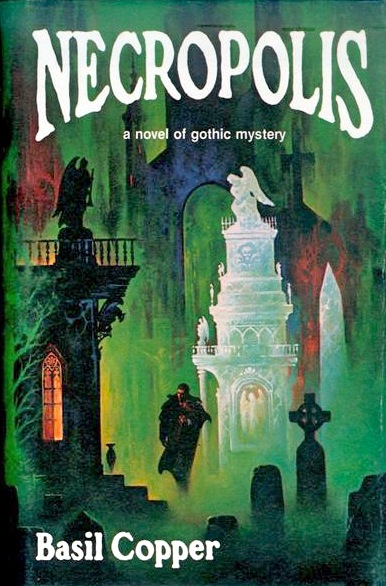
- Necropolis
Basil Copperstandalone novel1980
similar bybritish isles19th centuryfamily secretsmysteriousmystery & detective
Amazon: Set in an alternate Victorian London, where Sherlock Holmes and Dr. Watson are not just fictional characters, Basil Copper's Necropolis (1980) is a tale of mystery and intrigue worthy of Arthur Conan Doyle or Wilkie Collins. Private detective Clyde Beatty, a rival of the great Holmes, has been hired by the lovely Angela Meredith to inquire into her father's suspicious death. As Beatty's investigation unfolds, the danger intensifies: more murders ensue, and attempts are made on his life. It is clear there is more to Mr. Meredith's death than meets the eye, and it may have something to do with the brazen robbery of a fortune in gold bullion. The clues lead Beatty to the eerie Brookwood Cemetery, where fatal secrets lie hidden in the catacombs beneath a city of the dead....
- The History of Mr. Polly
H. G. Wellsstandalone novel1910
similar bybritish isles19th centuryidentityliterary & general
The History of Mr. Polly is a 1910 comic novel by H. G. Wells.
- The Lying Game
series6 books2010
similar byidentityfamily secretsmysterioustensemystery & detective
The Lying Game is a series of young adult novels by Sara Shepard published by HarperTeen. The first novel in the series, The Lying Game, was released in hardcover on December 7, 2010. The series follows a teenager, Emma Paxton, who assumes the identity of her long-lost twin, Sutton Mercer, to uncover her sister’s killer.
- Before I Go to Sleep
S. J. Watsonstandalone novel2011
similar bybritish islesidentitymysterioustense
Before I Go to Sleep is the first novel by S. J. Watson, published in the spring of 2011. It became both a Sunday Times and The New York Times bestseller and has been translated into over 40 languages. It has become a bestseller in France, Canada, Bulgaria and the Netherlands. It reached number 7 on the U.S. bestseller list, the highest position for a debut novel by a British author since J. K. Rowling. The New York Times described the author as an "out-of-nowhere literary sensation". He wrote the novel between shifts whilst working as a National Health Service (NHS) audiologist.
- The Seven Deaths of Evelyn Hardcastle
Stuart Turtonstandalone novel2018
similar byidentitymysterioustensebritish islesmystery & detective
The Seven Deaths of Evelyn Hardcastle is a novel by Stuart Turton which won the Best First Novel prize in the 2018 Costa Book Awards and reached number one on The Saturday Times Bestseller list.
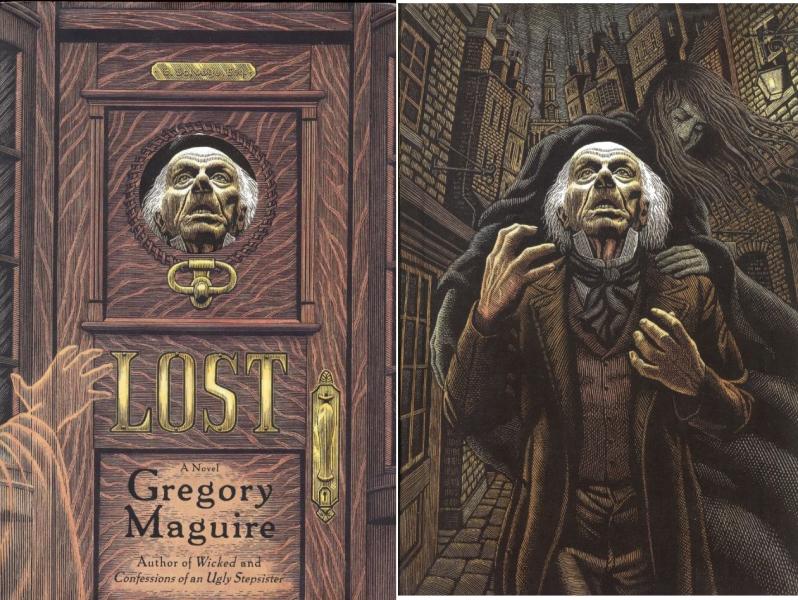
- Lost
Gregory Maguirestandalone novel2001
similar byidentityfamily secretsliterary & generalbritish isles
Lost is a 2001 novel by American author Gregory Maguire. Unlike many of Maguire's other adult novels, Lost is set in the real world. The novel's concept is that the protagonist is a distant relative of the man who inspired Charles Dickens' character of Ebenezer Scrooge.