More like Artifact
anchored on:science fictionalienseuropecontemporaryhard science fictionmagical artifacts+3 more
but
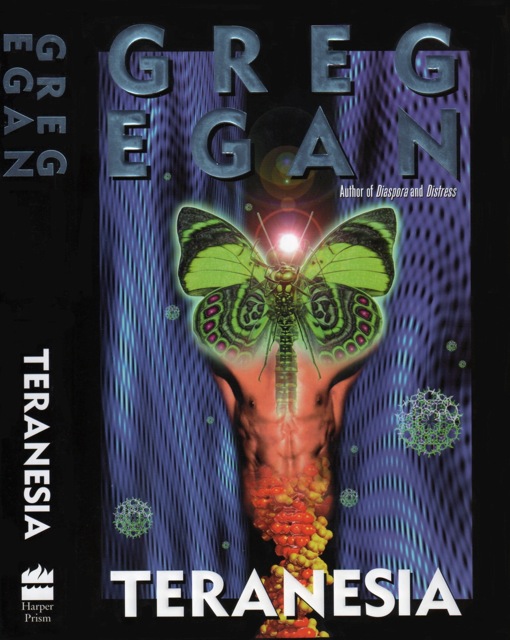
- Teranesia
Greg Eganstandalone novel1999
similar bymysteriouscontemporaryscience fictionhard science fictionexpeditions+1 more
from the flaps of the HarperPrism first printing: "Welcome to Teranesia, the island of butterflies, where evolution has stopped making sense. Prabir Suresh lives in paradise, a nine-year-old boy with an island all his own to name, to explore, and to populate with imaginary monsters stranger than any tropical wildlife. Teranesia is his kingdom, shared only by his biologist parents and baby sister, Madhusree. The unexplained genetic mutation of the island's butterflies that brought his family to the remote South Moluccas barely touches Prabir; his own life revolves around the beaches, the jungle, and the schooling and friendship made possible by the net. When civil war breaks out across Indonesia, this paradise comes to a violent end and his family is broken apart, leaving Prabir with nagging feelings of guilt and an overwhelming, almost irrational sense of responsibility for his sister. The mystery of the butterflies remains unsolved but nearly twenty years later reports begin to appear of strange new species of plants and animals appearing throughout the region - species separated from their known cousins by recent, dramatic mutations that seem far too efficient and functional to have arisen by chance from pollution, disease, or any other random catastrophe. Madhusree is now a biology student; proud of her parents' unacknowledged work, and with no memories of the trauma of the war to discourage her, she decides to join a multinational expedition being mounted to investigate the new phenomenon. Unable to cast off his fears for her safety, Prabir reluctantly follows her. But travel between the scattered islands is difficult, and Madhusree's expedition is out of contact. In the hope of finding her, Prabir joins up with an independent scientist, Martha Grant, who has come to search for clues to the evolutionary mystery and whatever commercial benefits it might bring to her sponsor. As Prabir and Martha begin to untangle the secret of Teranesia, Prabir is forced to confront his past, and to face the painful realities that have shaped his life while also dealing with the implications of an unprecedented biological revolution. A Scientific mystery, an adventure story, and a meditation on the origins of love, Teranesia is Greg Egan's most ambitious and accessible novel yet."
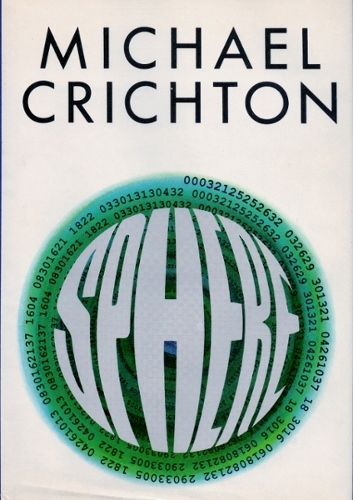
- Sphere
Michael Crichtonstandalone novel1987
similar bymysteriouscontemporaryscience fictionalienstense
Keeping Top Secret, the US Navy is guarding a gigantic spaceship that has been lying on the Pacific ocean floor for centuries, overgrown with corals. A group of highly qualified scientists is assembled to investigate this mysterious discovery. When the team boards the ship via an underwater station, they come into confrontation with the evil.
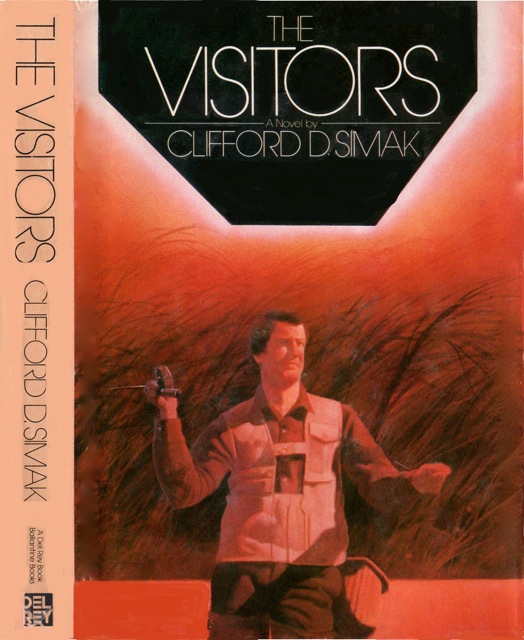
- The Visitors
Clifford D. Simakstandalone novel1980
similar bymysteriouscontemporaryscience fictionalienstense
WorldCat: Intelligent, alien creatures arrive on Earth from outer space, threatening world stability and presaging the destruction of civilization.
- Sinister Barrier
Eric Frank Russellstandalone novel1939
similar bymysteriouscontemporaryscience fictionalienstense
Sinister Barrier is an English-language science fiction novel by British writer Eric Frank Russell. The novel originally appeared in the magazine Unknown in 1939, the first novel to appear in its pages. It was first published in book form in 1943 by The World's Work, Ltd. Russell revised and expanded the book for its first US publication by Fantasy Press in 1948. Most subsequent editions were based on the Fantasy Press version.
- The Long Twilight
Keith Laumerstandalone novel1969
similar bymysteriouscontemporaryscience fictionalienstense
An intelligent interstellar ship containing two immortal humanoid aliens crashes on earth 1200 years ago and retains just enough energy to conceal itself; a broadcast power station coming online activates the ship, and brings the deadly rivalry which has built up between the two aliens to a head.
- The Santaroga Barrier
Frank Herbertstandalone novel1968
similar bymysteriouscontemporaryscience fiction+1 more
Santaroga seemed to be nothing more than a prosperous farm community. But there was something . .. different . .. about Santaroga. Santaroga had no juvenile delinquency, or any crime at all. Outsiders found no house for sale or rent in this valley, and no one ever moved out. No one bought cigarettes in Santaroga. No cheese, wine, beer or produce from outside the valley could be sold there. The list went on and on and grew stranger and stranger.Maybe Santaroga was the last outpost of American individualism. Maybe they were just a bunch of religious kooks... Or maybe there was something extraordinary at work in Santaroga. Something far more disturbing than anyone could imagine. (Publisher's blurb)
- Chocky
series2 books1968
similar bycontemporaryscience fictionmysteriousaliens
Chocky (1968) is John Wyndham's science fiction novel about an eleven-year-old boy, Matthew, whose parents grow alarmed by his conversations with an unseen presence that feeds him unsettling insights into mathematics and human progress, building toward the reveal of what, or who, Chocky really is. Mark Daniel's Chocky's Challenge (1986), published after Wyndham's death, is an authorized continuation that carries the story forward.
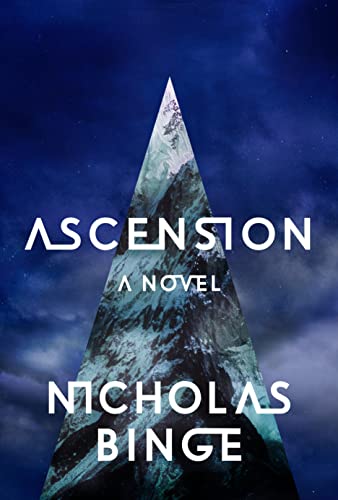
- Ascension
Nicholas Bingestandalone novel2023
similar bymysteriouscontemporaryscience fictionexpeditionstense
Ascension is a 2023 novel by Nicholas Binge, published in the UK by Harper Voyager, and in the US by Riverhead Books. It is published or forthcoming in twelve languages, and a film adaptation is in development. The novel tells the story of Harold Tunmore, a physicist, who joins a team to climb a mountain that has appeared in the middle of the Pacific Ocean.
- The Stonehenge Gate
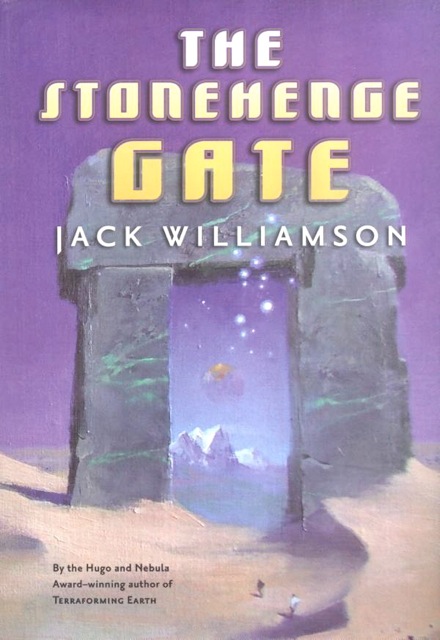
Jack Williamsonstandalone novel2005
similar bymysteriouscontemporaryscience fictionexpeditions+1 more
Stumbling on ancient stones in the Sahara Desert, four adventurous excavators and poker buddies realize that they have discovered a gateway to other worlds, from technologically advanced planets to primitive civilizations.
- The Blue Ant Trilogy
series3 books2003
similar bymysteriouscontemporaryscience fiction+2 more
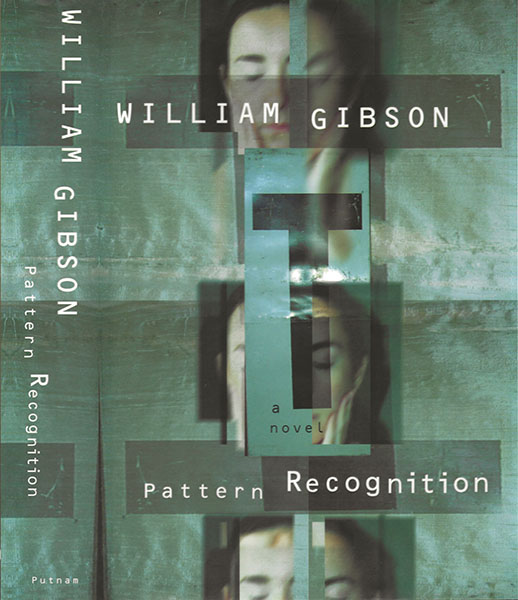
Hubertus Bigend is a fictional character appearing in the third trilogy of novels of science fiction and literary author William Gibson. Bigend is the antihero of Gibson's Pattern Recognition (2003), Spook Country (2007) and Zero History (2010). In an interview Gibson says "I've always had a sense of Bigend as someone who presents himself as though he knows what's going on, but who in fact doesn't. It's just my sense of the subtext of the character: he's bullshitting himself, at the same time as he's bullshitting all of us."
- Contact
Carl Saganstandalone novel1985
similar bycontemporaryscience fictionalienshard science fiction
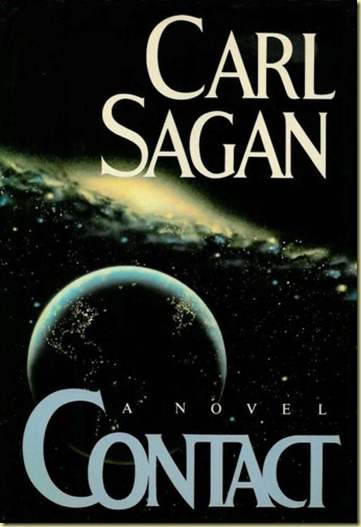
From the front flap of the Simon and Schuster first edition: For centuries humanity has dreamed of life and intelligence beyond the Earth; for decades scientists have searched for it in every corner of the sky; for years Project Argus, a vast, sophisticated complex of radio telescopes, has listened for a signal indicating the existence, somewhere in the universe, of extraterrestrial intelligence. Then, one afternoon, the course of human history is changed, abruptly and forever. The Message, awaited for so long, its very possibility doubted by so many, arrives. Contact has been made. Life, intelligence, someone, something beyond Earth, 26 light-years away, in the vicinity of the star Vega, is calling, beaming across space a wholly unexpected message to say that we are not - have never been - alone. In Contact, Carl Sagan, whose Cosmos enthralled millions of readers and television viewers, has brilliantly employed the freedom of fiction to imagine the greatest adventure of all - humanity's first encounter with other intelligent beings. But the novel is not only about contact between humans and extraterrestrials; it is also about contact, down here on Earth, with each other and ourselves. At its center is a brilliant scientist, Eleanor Arroway, director of Project Argos, who is the first to realize that chapter one of human history is over. It is she who is instrumental in decoding the Message - and in persuading world leaders not to treat it as a threat - she who finds her own life changed by the immense challenge of responding to the Message; she who finally journeys out to experience, in circumstances at once profoundly religious and scientific, the most fateful encounter in human history.
- The Fear Index
Robert Harrisstandalone novel2011
similar bymysteriouscontemporaryscience fictiontenseeurope
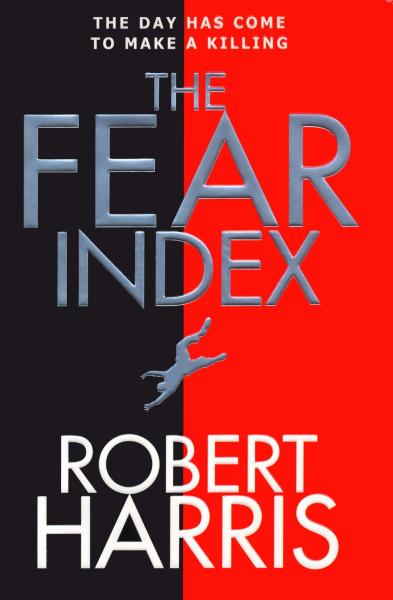
A computer designed for stock trading becomes sentient.
- The Immortal
Christopher Pikestandalone novel1993
similar bymysteriouscontemporarymagical artifactseuropetensemediterranean
Josie is on vacation in Greece with her friend, her father and his girlfriend. While visiting the sacred island of Delos, she stumbles upon a statue of a goddess. She takes it with her when she leaves the island. The trouble starts. The Goddess wants something from Josie she doesn't want to give.
- Minervan Experiment / Giants
series5 books1977
completed
similar bymysteriousscience fictionalienshard science fiction
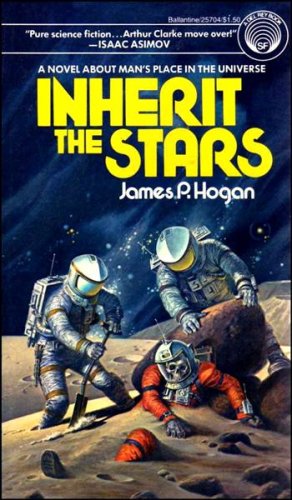
The Giants series is a quintet of science fiction novels by James P. Hogan, published between 1977 and 2005. The series began with Inherit the Stars, published by Del Rey Books in May 1977.
- Footfall
Larry Niven & Jerry Pournellestandalone novel1985
similar bycontemporaryscience fictionalienstense
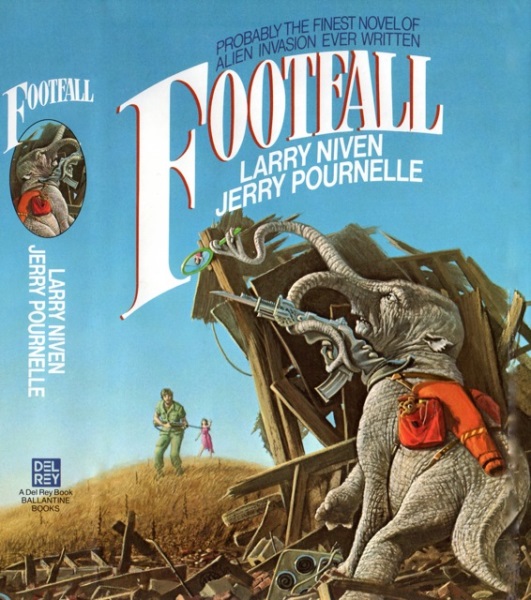
When aliens travel to Earth from Alpha Centauri, differences between alien and human psychology result in an unprovoked invasion, and the resulting resistance results in the aliens' use of a devastating weapon.
- The Andromeda Strain
series2 books1969
similar bycontemporaryscience fictiontense+1 more
Michael Crichton's 1969 novel The Andromeda Strain follows a team of scientists racing to contain a lethal extraterrestrial microorganism that crash-lands in Arizona, told in the clinical, document-driven style that helped establish the techno-thriller genre. Daniel H. Wilson's authorized 2019 sequel The Andromeda Evolution revisits the same threat five decades later. Together the two books form a two-part outbreak story separated by a fifty-year gap in publication.
- Decipher
Stel Pavloustandalone novel2001
similar bymysteriouscontemporaryscience fictionexpeditionstense
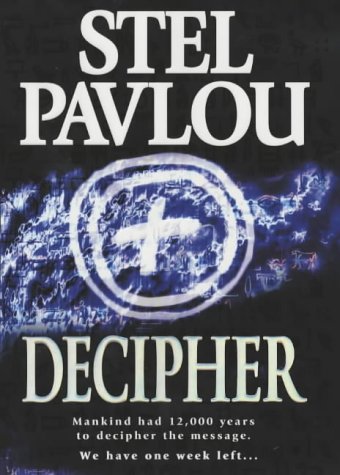
Decipher is a speculative fiction novel by British author Stel Pavlou, published in 2001 in England by Simon & Schuster and 2002 in the United States by St. Martin's Press. The novel is about a fictional linguist, Richard Scott, and an assembled team of specialists who are in a race against time to crack a code found on ancient monuments around the world before an impending cataclysm predicted in mythology can strike. The story centers on the ancient city of Atlantis and features other mythical sites such as the Hall of Records.
- The Themis Files
series3 books2015
similar byscience fictionmysteriouscontemporaryalienstense
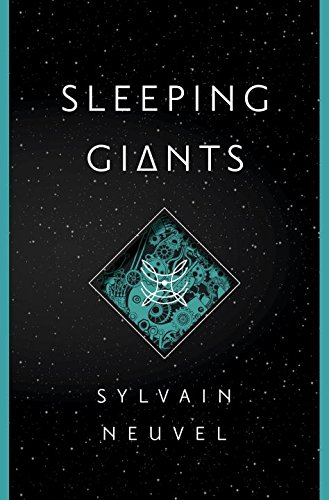
Sylvain Neuvel's Themis Files opens when a girl falls into a hole in South Dakota and lands on the palm of a giant metal hand buried underground; the trilogy picks up years later as she leads the team trying to determine what the hand is part of and why it's there. Sleeping Giants and its sequels are told almost entirely through interview transcripts conducted by an unnamed, evasive interrogator, giving the series a documentary, oral-history feel unusual for first-contact SF. The mystery escalates from an archaeological puzzle into a question of who else is looking for the same answer.
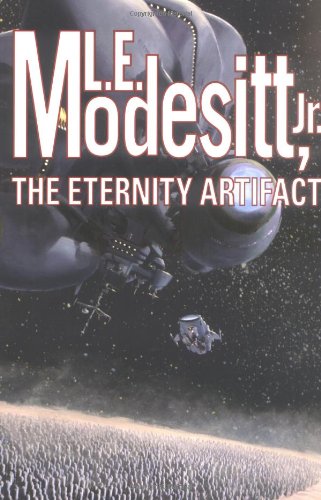
- The Eternity Artifact
L. E. Modesitt & Jr.standalone novel2005
similar bymysteriousscience fictionaliensexpeditions+1 more
The Eternity Artifact is a science fiction novel by American writer L. E. Modesitt, Jr., published in 2005. It is set in a future approximately 3,000 years hence, in a galaxy largely colonized by humans but divided into disparate polities who strive against each other in a manner similar to that of modern-day nations. Once such group, the Comity, discovers a planet that may be the first evidence of nonhuman intelligent life. The Comity mounts an expedition to investigate this world, and certain of the other groups attempt to interfere in various ways and for various reasons. The story discusses the expedition from the perspective of four viewpoint characters. It details the progress of the explorers and touches on the differences between the various human groups and how those inform their response to this discovery, and their goals regarding it.
- The Hercules Text
Jack McDevittstandalone novel1986
similar bymysteriouscontemporaryscience fictionaliens
The Hercules Text is a 1986 science fiction novel by American writer Jack McDevitt. It tells the story of a message of intelligent extraterrestrial origin received by SETI scientists. The Hercules Text was nominated for the Philip K. Dick Award in 1986.
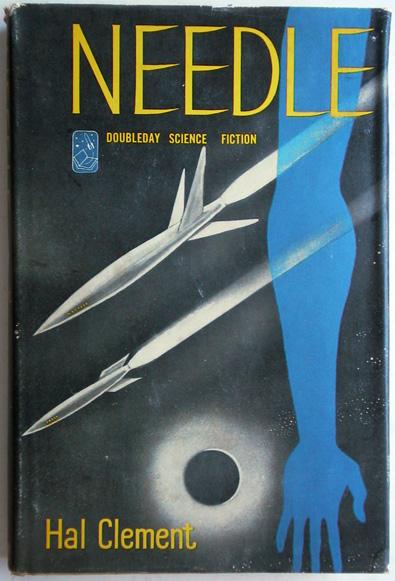
- Needle
series2 books1950
completed
similar byscience fictionalienshard science fiction+2 more
Hal Clement's Needle follows an alien detective nicknamed the Hunter, a shapeless symbiotic being that can live inside a host body, as it crash-lands on Earth pursuing a fugitive of its own kind and takes refuge inside an American teenager, Robert Kinnaird. Together the mismatched pair must learn to communicate and cooperate, first to survive and later to track down the second alien, which has hidden inside another human in the same Pacific island community. The sequel, Through the Eye of a Needle, published nearly three decades later, continues the Hunter's story.
- Heechee
series19 books1972
completed
similar byscience fictionaliens+2 more
The Heechee Saga, also known as the Gateway series, is a series of science fiction novels and short stories by Frederik Pohl. The Heechee are an advanced alien race that visited the Solar System hundreds of millennia ago and then mysteriously disappeared. They left behind bases containing artifacts, including working starships, which are discovered and exploited by humanity.
- Southern Reach Trilogy
series4 books2014
similar bycontemporaryscience fiction+3 more
The Southern Reach Series is a series of novels by the American author Jeff VanderMeer first published in 2014—Annihilation, Authority, Acceptance, and Absolution. The series takes its name from the secret agency that is central to the plot. In 2013, Paramount Pictures bought the movie rights for the series, and a film adaptation of Annihilation was made with Alex Garland as writer-director. The film was released in 2018. The most recent book in the series, Absolution, was released on 22 October 2024.