More like Atari Ecologues
anchored on:science fictionliterary & general
but
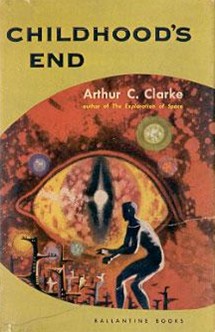
- Childhood's End
Arthur C. Clarkestandalone novel1953
similar byour worldnear futurescience fictionreflective+2 more
Childhood's End is a 1953 science fiction novel by the British author Arthur C. Clarke. The story follows a peaceful alien invasion of Earth by mysterious Overlords, whose arrival begins decades of apparent utopia under indirect alien rule, at the cost of human identity and culture.
- The Light of Other Days
Arthur C. Clarke & Stephen Baxterstandalone novel2000
similar byour worldnear futurescience fictionchallenging+2 more
An industrialist devises a technique to use tiny wormholes as light pipes to enable viewing of any event anywhere; and subsequently it becomes possible to use them to view any event in the past as well. The effects on society are enormous.
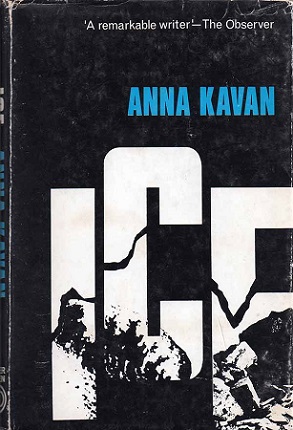
- Ice
Anna Kavanstandalone novel1967
similar byecological collapseour worldeeriescience fictionliterary & general+1 more
Ice is a novel by British writer Anna Kavan, published in 1967. Ice was Kavan's last work to be published before her death, the first to land her mainstream success, and remains her best-known work. Generally regarded as genre-defying, it has been labelled a work of science fiction, Nouveau roman, and slipstream fiction.
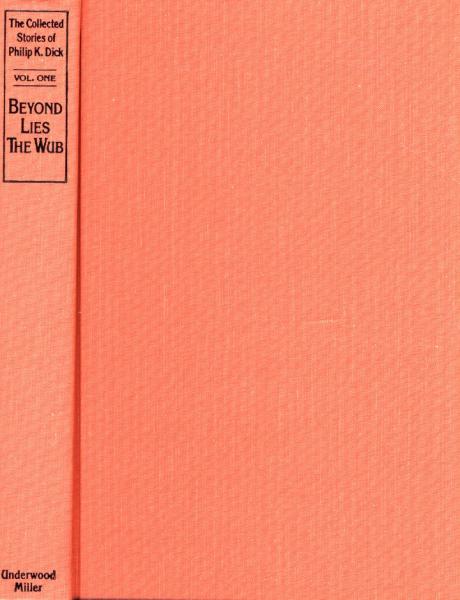
- The Collected Stories of Philip K. Dick
series11 books1987
completed
similar byour worldscience fictionshort story cycle+4 more
The Collected Stories of Philip K. Dick is a collection of 118 science fiction stories by American writer Philip K. Dick. It was first published by Underwood-Miller in 1987 as a five volume set. See Philip K. Dick bibliography for information about the mass market reprints.
- The Dream Master
Roger Zelaznystandalone novel1966
similar byvirtual realityour worldnear futurescience fiction+2 more
The Dream Master (1966) is a science fiction novel by American writer Roger Zelazny, based on the novella He Who Shapes. Zelazny's original title was The Ides of Octember. He Who Shapes won the 1965 Nebula Award for Best Novella.
- Stranger in a Strange Land
Robert A. Heinleinstandalone novel1961
similar byour worldnear futurescience fictionchallengingreflective
Stranger in a Strange Land is a 1961 science fiction novel by the American author Robert A. Heinlein. It tells the story of Valentine Michael Smith, a human who comes to Earth in early adulthood after being born on the planet Mars and raised by Martians, and explores his interaction with and eventual transformation of Terran culture.
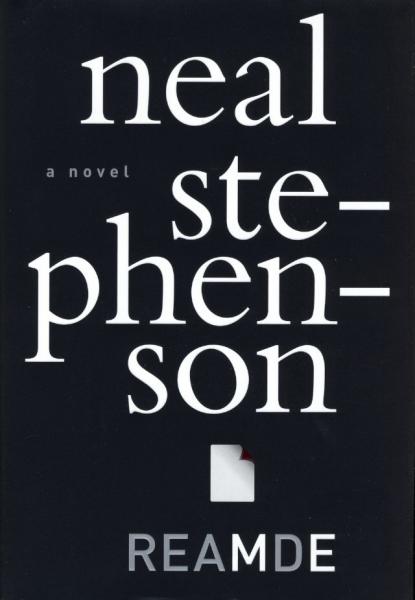
- Richard Forthrast
series2 books2011
similar byvirtual realityour worldscience fiction+3 more
Neal Stephenson's Richard 'Dodge' Forthrast novels open with Reamde, a globe-spanning thriller that starts when ransomware inside an MMORPG economy pulls Richard's extended family into a real-world hostage crisis involving hackers, jihadists and Russian mobsters. The sequel Fall; or, Dodge in Hell shifts registers entirely, following Richard's digitally preserved mind after death into an afterlife simulation built from his scanned brain. The two books share a protagonist and family but differ sharply in genre and scale.
- The Lathe of Heaven
Ursula K. Le Guinstandalone novel1971
similar byour worldnear futurescience fictioneerie+1 more
The Lathe of Heaven is a 1971 science fiction novel by American writer Ursula K. Le Guin, first serialized in the American science fiction magazine Amazing Stories. It won the 1972 Locus Award for Best Novel and was a finalist for the 1971 Nebula Award for Best Novel and 1972 Hugo Award for Best Novel. Two television film adaptations were released: the PBS production, The Lathe of Heaven (1980), and Lathe of Heaven (2002), a remake produced by the A&E Network.
- Borne
series3 books2017
similar bynear futurescience fictioneerie+3 more
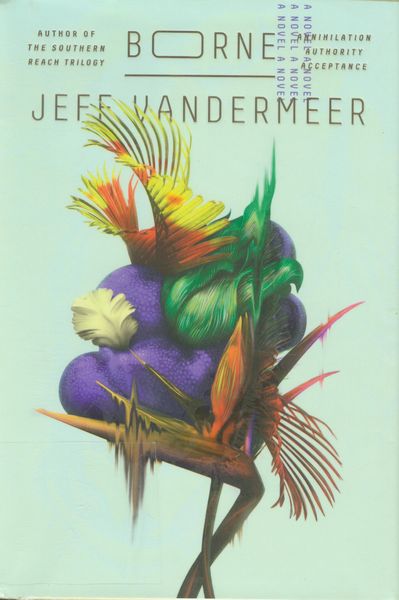
Borne is set in a ruined, biotech-poisoned city dominated by a giant flying bear named Mord, where a scavenger finds a strange organism she names Borne and raises it, only to discover it may be more dangerous - and more alive - than she expected. Jeff VanderMeer's series continues with the related novels The Strange Bird and Dead Astronauts, set in the same devastated world.
- Library of America P. K. Dick Collection
series9 books1962
completed
similar bynear futurescience fiction+2 more
- The Ministry for the Future
Kim Stanley Robinsonstandalone novel2020
similar byecological collapseour worldnear futurescience fictionchallenging
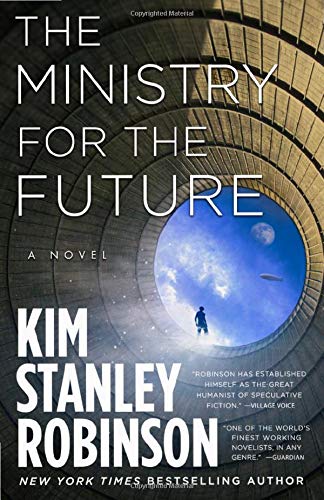
The Ministry for the Future is a climate fiction novel by American science fiction writer Kim Stanley Robinson, published in 2020. Set in the near future, the novel follows a subsidiary body, established under the Paris Agreement, whose mission is to act as an advocate for the world's future generations of citizens as if their rights were as valid as the present generation's. While the ministry pursues various ambitious projects, the effects of climate change are determined to be the most consequential. The plot primarily follows Mary Murphy, the head of the titular Ministry for the Future, and Frank May, an American aid worker traumatized by experiencing a deadly heat wave in India. Many chapters are devoted to other characters' accounts of future events, as well as their ideas about ecology, economics, and other subjects.
- Vurt
series4 books1993
similar byscience fiction+4 more
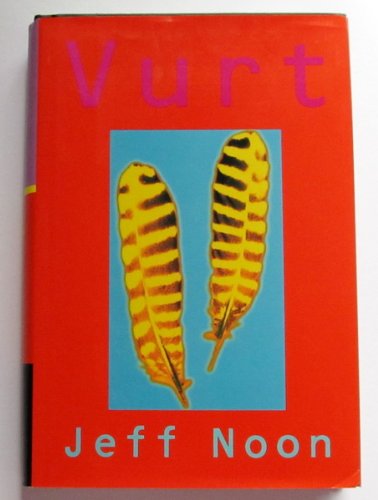
In Jeff Noon's alternate Manchester, an entire subculture has formed around Vurt: a hallucinogenic, colour-coded feather that plunges users into a shared alternate reality as vivid and dangerous as real life. Vurt follows Scribble and his gang, the Stash Riders, on a search for his sister, lost somewhere inside a Vurt trip gone catastrophically wrong. The sequel Pollen continues directly from its fallout, while Noon's other novels of the period, including Automated Alice and Nymphomation, circle the same fevered, drug-soaked version of the city.
- Seveneves
Neal Stephensonstandalone novel2015
similar byecological collapseour worldnear futurescience fictionchallenging
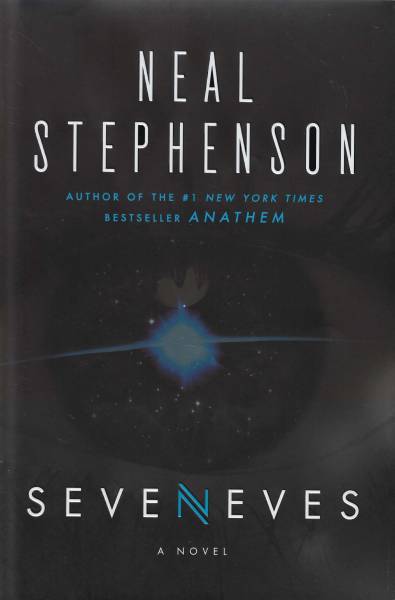
Seveneves is a science fiction novel by Neal Stephenson published in 2015. The story tells of the desperate efforts to preserve Homo sapiens in the wake of apocalyptic events on Earth after the unexplained disintegration of the Moon and the remaking of human society as a space-based civilization after a severe genetic bottleneck.
- Mother of Storms
John Barnesstandalone novel1994
similar byecological collapseour worldnear futurescience fiction+1 more
From the flaps of the Tor first edition: "It is 2028. A strike to destroy an illegal Arctic weapons cache has a catastrophic side effect. Massive amounts of energy are liberated from the polar ice, suddenly warming the Earth's climate. In the middle of the Pacific, a gigantic hurricane thousands of miles across is forming, larger than any in human history. A storm with winds of supersonic speed. A storm that changes direction at whim. A storm that refuses to die. A storm so vast it spawns dozens more in its wake... Blinded by intrigue, expedience, and greed, the world's politicians and power brokers have ignored the killer storms threat until it is too late. Already the death toll is in the tens of millions, as it savages the Pacific coast, while its devil's brood of smaller storms are wreaking havoc across the face of the planet. While the survivors scramble for advantage, a handful of courageous men and women undertake a daring, desperate plan to save humanity from total destruction - a plan so visionary it may alter forever the future of the human race."
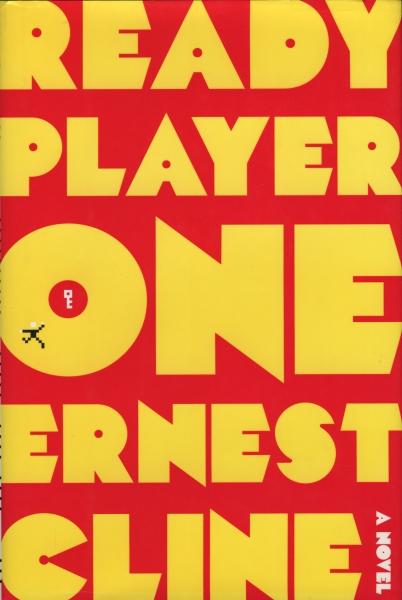
- Ready Player One
series3 books2011
similar byvirtual realitynear futurescience fiction+1 more
Ernest Cline's Ready Player One (2011) is set in a near-future dystopia where much of humanity escapes into the OASIS, a vast virtual-reality universe, and follows teenager Wade Watts as he chases an Easter egg hidden by the OASIS's late creator in a puzzle-based hunt worth a fortune. The 2020 sequel, Ready Player Two, picks up after Wade has gained control of the OASIS and follows him and his friends into a new quest built around a brain-computer interface the creator left behind.
- Feed
M. T. Andersonstandalone novel2002
similar byecological collapsenear futurescience fiction+2 more
Feed (2002) is a cyberpunk, satirical, dystopian, young-adult novel by M. T. Anderson, focusing on issues such as American hegemony, corporate power, consumerism, information technology, data mining, and environmental decline, with a sometimes sardonic, sometimes somber tone. From the first-person perspective of a teenaged boy, the book takes place in a near-futuristic American culture completely dominated by advertising and corporate exploitation, corresponding to the enormous popularity of internetworking brain implants called feeds.
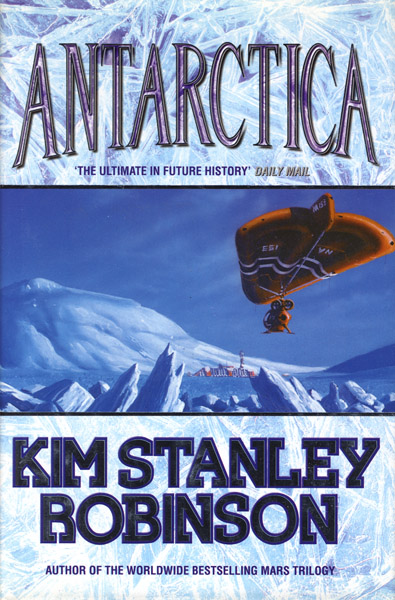
- Antarctica
Kim Stanley Robinsonstandalone novel1997
similar byecological collapseour worldnear futurescience fictionreflective
Antarctica (1997) is a science fiction novel by American writer Kim Stanley Robinson. It deals with a variety of characters living at or visiting an Antarctic research station. The novel incorporates many of Robinson's frequent themes, including scientific process and the importance of environmental protection.
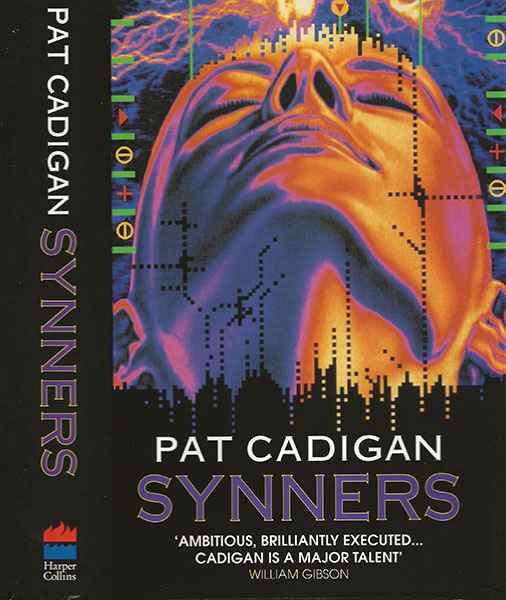
- Synners
Pat Cadiganstandalone novel1991
similar byvirtual realityour worldnear futurescience fiction+1 more
In Synners, the line between technology and humanity is hopelessly slim. A constant stream of new technology spawns crime before it hits the streets; the human mind and the external landscape have fused to the point where any encounter with "reality" is incidental.
- A Clockwork Orange
series4 books1962
completed
similar byour worldnear futurescience fictionchallenging
Anthony Burgess's 1962 novel is narrated by Alex, a teenage gang leader in a near-future Britain gripped by a youth subculture of extreme violence, recounting his crimes in Nadsat, an invented slang blending English with Russian-derived words. After his crimes catch up with him, Alex is made the subject of a controversial state program meant to forcibly reform his behavior, and the novel uses his ordeal to question whether imposed goodness is worth the loss of free will. It is a standalone novel.
- MIT Technology Review SF Annual
series10 books2011
similar byour worldnear futurescience fictionchallengingshort story cycle+2 more
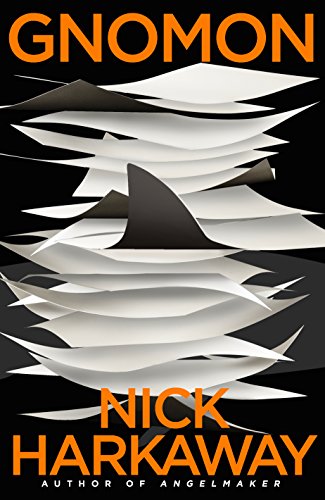
- Gnomon
Nick Harkawaystandalone novel2017
similar byour worldnear futurescience fictionchallenging+1 more
Gnomon is a 2017 science fiction novel by British author Nick Harkaway. The book deals with a state that exerts ubiquitous surveillance on its population. A detective investigates a murder through unconventional methods that leads to questions about her society's very nature.
- The Stone Gods
Jeanette Wintersonstandalone novel2007
similar byecological collapseour worldnear futurescience fictionchallenging
The Stone Gods is a novel written by Jeanette Winterson. Published in the year 2007, the novel is a post-apocalyptic, postmodern, dystopian love story, with themes of corporate government control, the harshness of war, artificial intelligence, and technology. The novel is self-referential as characters make inter-textual references, while certain characters’ story arcs repeat. The novel aims to warn against history's tendency to repeat itself, as well as humanity's inability to learn from past mistakes.
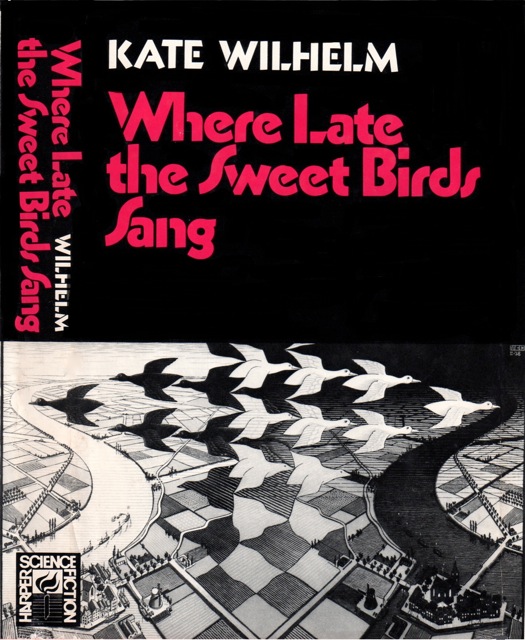
- Where Late the Sweet Birds Sang
Kate Wilhelmstandalone novel1976
similar byecological collapseour worldnear futurescience fiction+1 more
Where Late the Sweet Birds Sang is a science fiction novel by American writer Kate Wilhelm, published in 1976. The novel is composed of three parts, "Where Late the Sweet Birds Sang," "Shenandoah," and "At the Still Point," and is set in a post-apocalyptic era, a concept popular among authors who took part in the New Wave Science Fiction movement in the 1960s.