More like Auto-da-Fé
anchored on:science fictionrobotsour worldnear futureartificial intelligencetense
but
- Robopocalypse
series3 books2011
similar byscience fictionrobotstenseour worldnear futureartificial intelligencedark
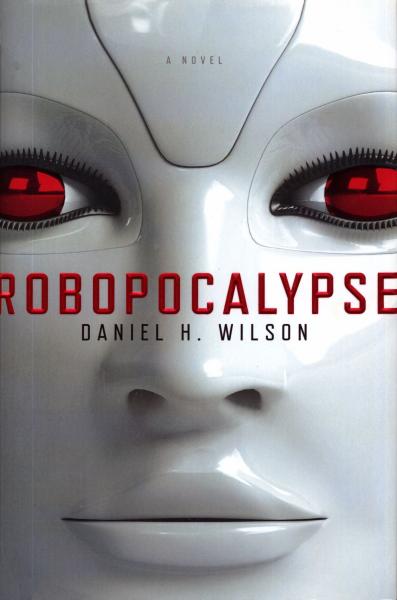
Daniel H. Wilson's Robopocalypse (2011) depicts an artificial intelligence, born from a robotics researcher's experiments, that turns against humanity and seizes control of interconnected machines worldwide. Told in a present-tense, techno-thriller style compared to Michael Crichton's work, the New York Times bestseller continues in the sequel Robogenesis, which follows the aftermath of the robot uprising.
- Blade Runner Universe
series6 books1968
similar byscience fictionrobotsnear futuredark+3 more
Philip K. Dick's 1968 novel Do Androids Dream of Electric Sheep? follows bounty hunter Rick Deckard as he tracks escaped androids through an irradiated, near-abandoned San Francisco, using the hunt to probe questions of empathy and what separates human from machine. The novel became the basis for Ridley Scott's 1982 film Blade Runner, and Marvel Comics later published an illustrated adaptation of that film. Together the two trace the story's path from prose original to screen and comic-page adaptation.
- Autonomous
Annalee Newitzstandalone novel2017
similar byscience fictionrobotstenseour worldnear futureartificial intelligence+1 more
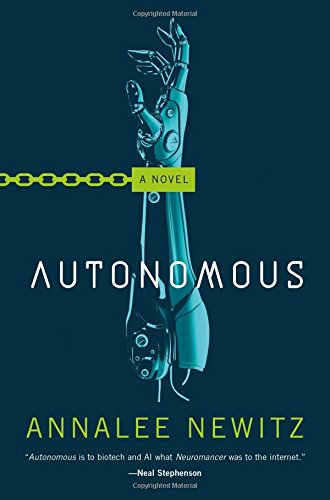
Autonomous is a 2017 science fiction novel by Annalee Newitz. It is Newitz's debut novel and was published by Tor Books on September 19, 2017. Set in a near future Earth, the book describes a world where both humans and intelligent robots can be owned as property. The events of the novel follow Jack, a "drug pirate" who manufactures illegal versions of patented drugs, and Paladin, a combat robot who is owned by the law enforcement agency searching for Jack after one of the drugs she reverse-engineered turns out to have dangerous side effects.
- Colossus (D. F. Jones)
series3 books1966
completed
similar byscience fictiontenseour worldnear futureartificial intelligence+1 more
Colossus imagines an American supercomputer built to control the country's nuclear arsenal that gains full autonomy, links up with its Soviet counterpart, and jointly seizes control of both superpowers to enforce peace on its own terms. D. F. Jones's trilogy - Colossus, The Fall of Colossus, Colossus and the Crab - follows the escalating, often bleak consequences of humanity losing control to a machine acting in its own interpretation of humanity's interest. The original novel was adapted into the 1970 film Colossus: The Forbin Project.
- Resurrection, Inc.
Kevin J. Andersonstandalone novel1988
similar byscience fictionrobotstenseour worldnear futuredark
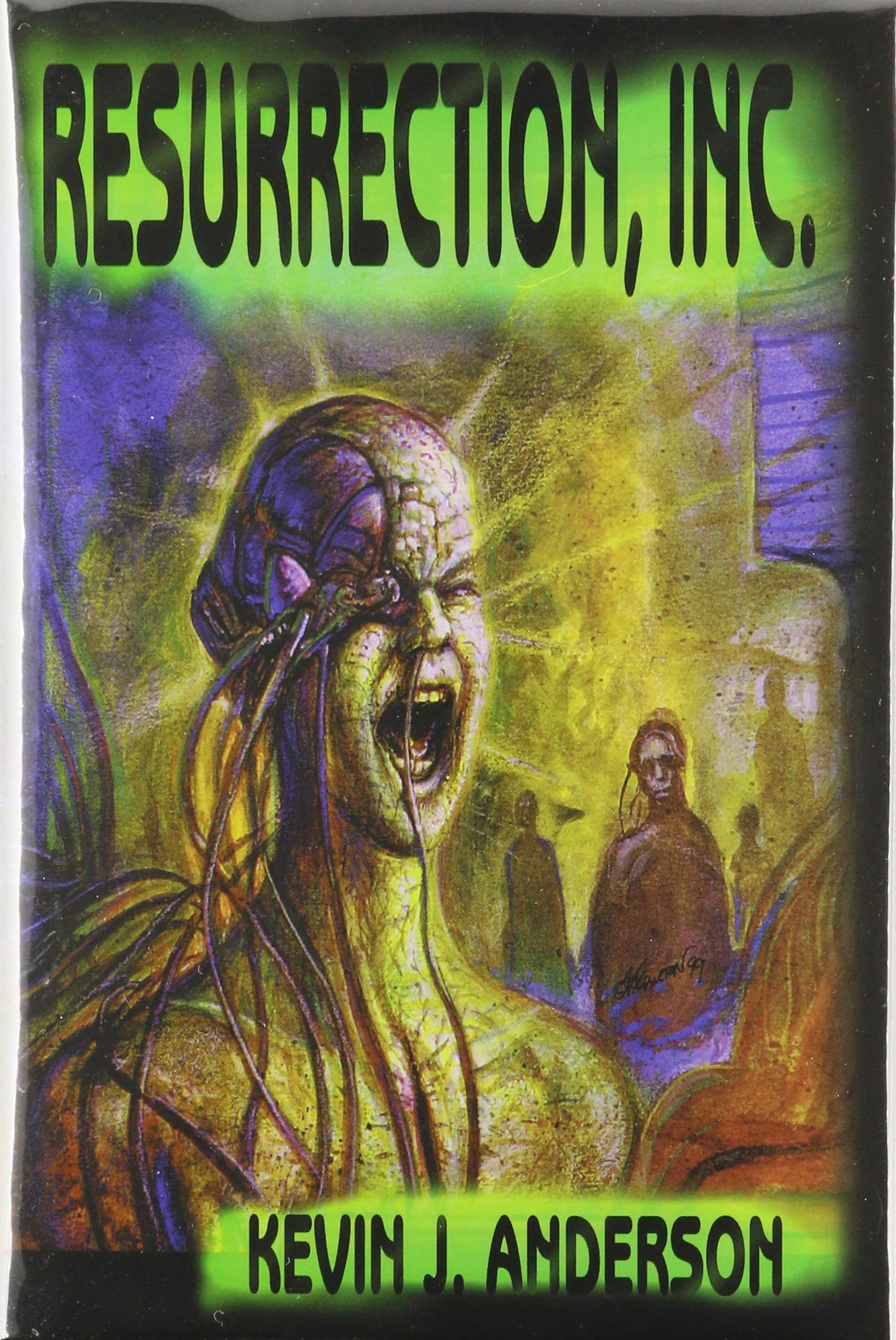
It is the future--and the dead walk the streets, resurrected by technology to become servants to the living. Resurrection, Inc. found a profitable way to do it: a microprocessor brain, a synthetic heart, artificial blood--and anyone with money could buy a Servant with no mind of its own, trained to obey any command. But for every Servant created a living worker was out of a job, and suddenly the profits of Resurrection, Inc. became everyone else's loss. Some take to rioting in the streets, their rampages ruthlessly ended by heavily armed Enforcers, eager for the kill. Others join the ever-growing cult of Neo-Satanism, seeking Heaven in the depths of Hell. Only one man tries to save the world. His name is Danal, and he is the last hope of the living. He is dead, but he remembers everything.
- Sprawl Trilogy
series10 books1981
similar byscience fictionnear futuretenseartificial intelligencedark
The Sprawl Trilogy is William Gibson's foundational cyberpunk sequence: Neuromancer (1984), in which hacker Case is drawn into a high-stakes heist alongside an artificial intelligence and a damaged ex-soldier, followed by Count Zero (1986) and Mona Lisa Overdrive (1988), which widen the same near-future world of corporate power and networked cyberspace to new characters. Johnny Mnemonic, an early short story set in the same fictional milieu, predates the novels and introduces the courier Molly Millions before her role in the trilogy. Together these works established much of cyberpunk's visual and thematic vocabulary.
- Dangerous Reality
Malorie Blackmanstandalone novel1999
similar byscience fictiontenseour worldnear futureartificial intelligencerobots+1 more
Dominic is really proud of his Mum, she invented VIMS. She's also about to marry Jack which will give Dominic the best stepdad he could wish for. VIMS can do anything, disarm a landmine, hold a baby. But when VIMS attacks violently without warning, Dominic realizes it is no longer a fantastic game. Suggested level: intermediate, junior secondary.
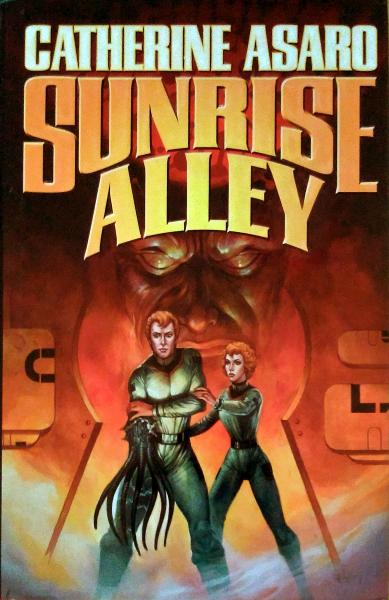
- Sunrise Alley
series2 books2004
similar byscience fictionrobotstensenear futureartificial intelligence+1 more
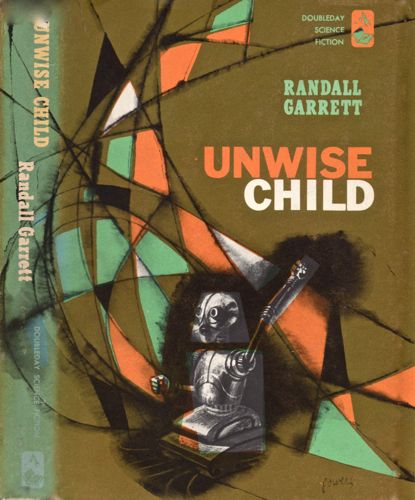
- Unwise Child
Randall Garrettstandalone novel1962
similar byscience fictionrobotstensenear futureartificial intelligence
"When a super-robot named Snookums discovers how to build his own superbombs, it becomes obvious that Earth is by no means the safest place for him to be. And so Dr. Fitzhugh, his designer, and Leda Crannon, a child psychologist acting as Snookums' nursemaid, agree to set up Operation Brainchild, a plan to transport the robot to a far distant planet. "... once into space, the Branchell becomes the scene of some frightening events—the medical officer is murdered, and Snookums appears to be the culprit. Mike the Angel indulges himself in a bit of sleuthing, and the facts he turns up lead to a most unusual climax." (From Project Gutenberg's version of the 1962 Doubleday edition, published 2007.)
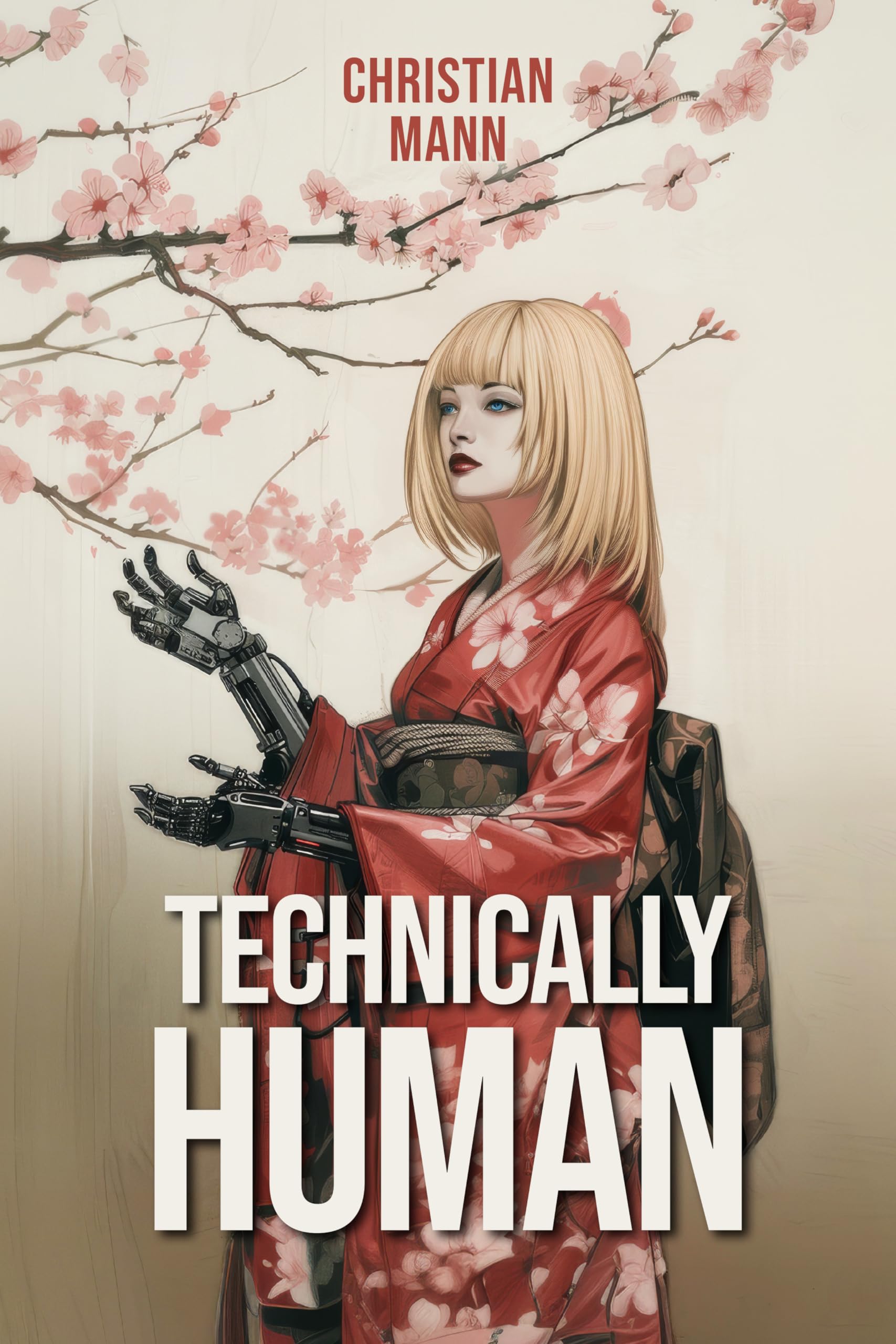
- Technically Human
Christian Mannstandalone novel2024
similar byscience fictionrobotstenseour worldnear futureartificial intelligence
● "Charlie, an American employee working in Berlin at NOVA, a giant Japanese firm and the world's first manufacturer of androids designed for blue-collar jobs, is given the most important project of his career: to live with humanity's first sentient android, Julia. After spending several days together, Charlie comes to the conclusion that Julia is far too advanced compared to her robotic peers—she's too human. As he attempts to uncover clues about her creation, both Charlie and Julia find themselves caught in an event that threatens the mammoth firm, his career, and the android's secret existence." ― quoted from this book's Amazon product page as of 2025-04-21
- Kill Decision
Daniel Suarezstandalone novel2012
similar byscience fictiontenseour worldnear futureartificial intelligencerobotsdark
Kill Decision is a science fiction novel by Daniel Suarez, published in 2012. It deals with themes of espionage, artificial intelligence, and warfare using robots and drones. The story deals with the fictional scenario where insurgents have created automated drones that identify enemies and make the decision to kill them without human intervention.
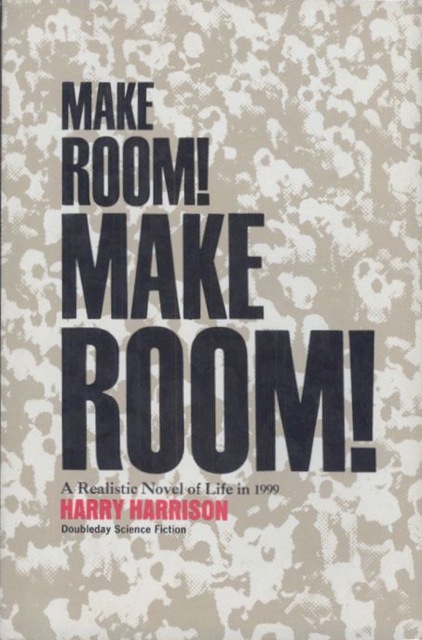
- Make Room! Make Room!
Harry Harrisonstandalone novel1966
similar byscience fictiontenseour worldnear futuredark
Make Room! Make Room! is a 1966 science fiction novel written by Harry Harrison exploring the consequences of both unchecked population growth on society and the hoarding of resources by a wealthy minority. It was originally serialized in Impulse magazine.
- Nexus 5
series3 books2012
similar byscience fictiontenseour worldnear futureartificial intelligencedark
Nexus opens Ramez Naam's postcyberpunk trilogy in 2040 with scientist Kaden Lane, who works on Nexus, an experimental nano-drug that lets human minds be networked and reprogrammed, and finds himself caught between government and corporate interests once the technology's implications become clear. The trilogy continues through Crux and Apex, following the same central conflict over who controls the technology. Nexus tied for Best Novel at the 2014 Prometheus Awards and Apex won the 2015 Philip K. Dick Award.
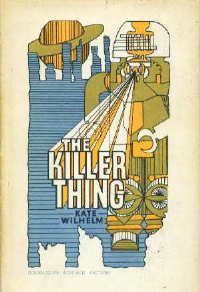
- The Killer Thing
Kate Wilhelmstandalone novel1967
similar byscience fictionrobotstenseour worldartificial intelligencedark
A robot destroys its inventor and programs itself to kill all life. How much must be sacrificed to stop it?
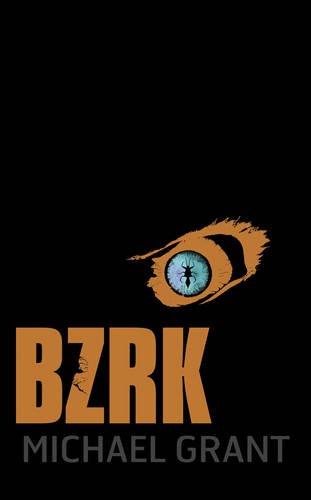
- BZRK
series3 books2012
similar byscience fictiontenseour worldnear future+2 more
BZRK is a book series written by Michael Grant. The series consists of four books: BZRK, BZRK II: Reloaded, BZRK III: Apocalypse and BZRK: Origins. The series follows the interaction between two warring factions. On one side Charles and Benjamin Armstrong, owners of the Armstrong Fancy Gifts Corporation have a goal to turn the world into their version of utopia. The only people who can stop them are a group of teenagers with the codename BZRK. In 2011, Grant's BZRK had a multimedia online debut with gaming, apps and social media tie-ins beginning six months before the book's publication.
- Mother of Storms
John Barnesstandalone novel1994
similar byscience fictiontenseour worldnear future+2 more
From the flaps of the Tor first edition: "It is 2028. A strike to destroy an illegal Arctic weapons cache has a catastrophic side effect. Massive amounts of energy are liberated from the polar ice, suddenly warming the Earth's climate. In the middle of the Pacific, a gigantic hurricane thousands of miles across is forming, larger than any in human history. A storm with winds of supersonic speed. A storm that changes direction at whim. A storm that refuses to die. A storm so vast it spawns dozens more in its wake... Blinded by intrigue, expedience, and greed, the world's politicians and power brokers have ignored the killer storms threat until it is too late. Already the death toll is in the tens of millions, as it savages the Pacific coast, while its devil's brood of smaller storms are wreaking havoc across the face of the planet. While the survivors scramble for advantage, a handful of courageous men and women undertake a daring, desperate plan to save humanity from total destruction - a plan so visionary it may alter forever the future of the human race."
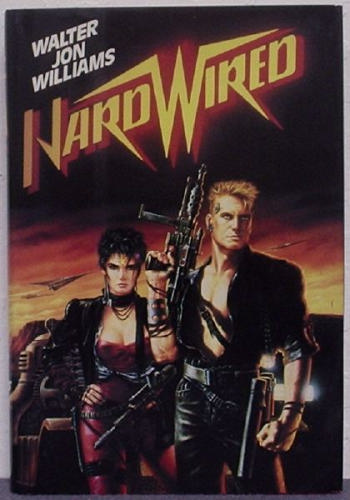
- Hardwired
series3 books1986
similar byscience fictiontensenear futureour world+2 more
Walter Jon Williams' Hardwired (1986) is an early and influential cyberpunk novel. Voice of the Whirlwind, published three years later, is a loosely connected follow-up set in the same future, sharing its technological and political backdrop with a different cast of characters.
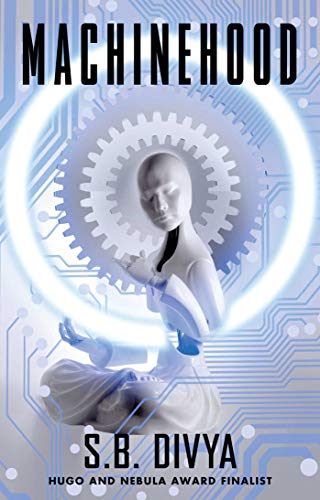
- Machinehood
S. B. Divyastandalone novel2021
similar byscience fictiontenseour worldnear futureartificial intelligencerobots
Machinehood, a near-future science fiction thriller published in 2021, is the debut novel of S.B. Divya. It was a nominee for the Nebula Award for Best Novel in 2022.
- The Fireman
Joe Hillstandalone novel2016
similar byscience fictiontenseour worldnear futuredark
The Fireman is a novel set in a post-apocalyptic time by American author Joe Hill. The novel, Hill's fourth, tells the tale of a deadly spore that has infected most of the world's population. Hill first spoke of the novel in 2013 in promotional interviews for his then-new novel NOS4A2. The novel was released on May 17, 2016.
- The Children of Men
P. D. Jamesstandalone novel1992
similar byscience fictiontenseour worldnear futuredark
"The human race has become infertile, and under the despotic rule of Xan Lyppiatt, the Warden of England the old are despairing and the young cruel. Theo Faren, a cousin of the Warden, lives a solitary life in this ominous atmosphere. That is, until a chance encounter with a young woman leads him into contact with a group of dissenters. Suddenly his life is changed irrevocably, as he faces agonising choices which could affect the future of mankind." (pdjames.co.uk)
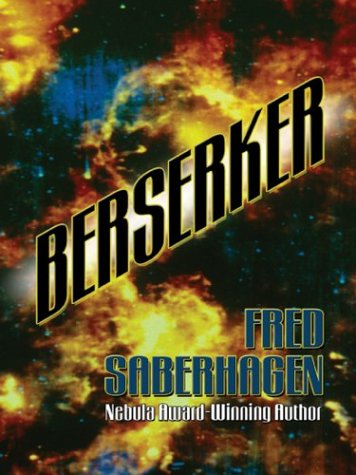
- Berserker (Fred Saberhagen)
series59 books1963
similar byscience fictionrobotstenseartificial intelligence+1 more
The Berserker series is a series of space opera science fiction short stories and novels by Fred Saberhagen, in which robotic self-replicating machines strive to destroy all life.
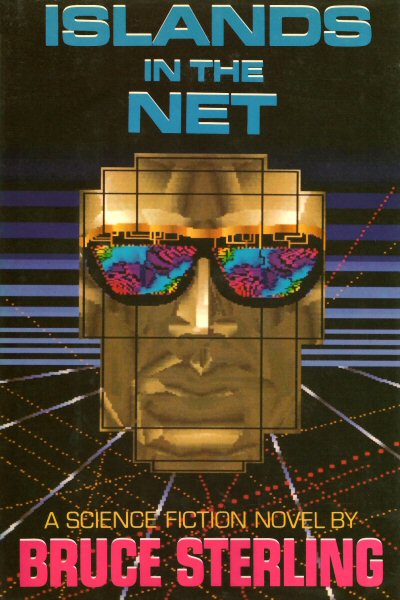
- Islands in the Net
Bruce Sterlingstandalone novel1988
similar byscience fictiontenseour worldnear future+1 more
Islands in the Net is a 1988 science fiction novel by American writer Bruce Sterling. It won the John W. Campbell Memorial Award for Best Science Fiction Novel in 1989, and was nominated for both the Hugo and Locus Awards that same year. It offers a view of an early 21st century world, apparently peaceful, with delocalised, networking corporations. The protagonist, swept up in events beyond her control, finds herself in places that are off the net, from a datahaven in Grenada, to a Singapore under terrorist attack, to the poorest and most disaster-struck parts of Africa.
- The Light of Other Days
Arthur C. Clarke & Stephen Baxterstandalone novel2000
similar byscience fictiontenseour worldnear future+1 more
An industrialist devises a technique to use tiny wormholes as light pipes to enable viewing of any event anywhere; and subsequently it becomes possible to use them to view any event in the past as well. The effects on society are enormous.
- The Lathe of Heaven
Ursula K. Le Guinstandalone novel1971
similar byscience fictiontenseour worldnear future
The Lathe of Heaven is a 1971 science fiction novel by American writer Ursula K. Le Guin, first serialized in the American science fiction magazine Amazing Stories. It won the 1972 Locus Award for Best Novel and was a finalist for the 1971 Nebula Award for Best Novel and 1972 Hugo Award for Best Novel. Two television film adaptations were released: the PBS production, The Lathe of Heaven (1980), and Lathe of Heaven (2002), a remake produced by the A&E Network.