More like Aztecs
anchored on:science fiction
but
- Hainish
series33 books1964
completed
similar byscience fictionreflective+2 more
The Hainish Cycle consists of a number of science fiction novels and stories by Ursula K. Le Guin. The cycle is set in a future history that features civilizations of human beings on planets orbiting a number of nearby stars, including Terra ("Earth"); these humans are contacting each other for the first time and establishing diplomatic relations, as well as setting up a confederacy under the guidance of the oldest of the human worlds, the peaceful planet Hain. In this history, human beings did not evolve on Earth, but they were instead the result of interstellar colonies planted by Hain in the distant past, after which interstellar travel ceased for an extended period. Some of the human races have new genetic traits, a result of ancient Hainish experiments in genetic engineering; this includes people who can dream while awake, and a world of hermaphroditic people who only enter active sexuality once per month, not knowing which sex will manifest in them. In keeping with Le Guin's narrative approach, she uses varied social and environmental settings to explore the anthropological and sociological outcomes of human evolution in those environments. The author often discounted the characterization of a so-called "Hainish Cycle".
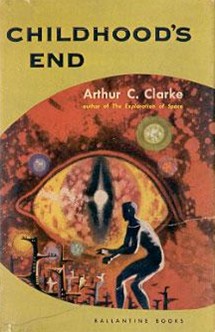
- Childhood's End
Arthur C. Clarkestandalone novel1953
similar byscience fictionidentityreflective+1 more
Childhood's End is a 1953 science fiction novel by the British author Arthur C. Clarke. The story follows a peaceful alien invasion of Earth by mysterious Overlords, whose arrival begins decades of apparent utopia under indirect alien rule, at the cost of human identity and culture.
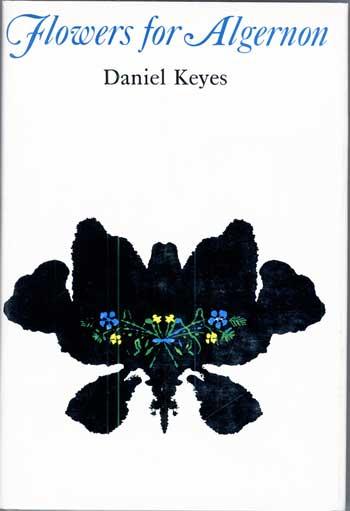
- Flowers for Algernon
Daniel Keyesstandalone novel1966
similar byscience fictionemotionalidentity
A man with a low IQ becomes the subject of an experimental medical procedure which raises his IQ well over genius level.
- The Dreaming Jewels
Theodore Sturgeonstandalone novel1950
similar byscience fictionemotionalidentity+1 more
The Dreaming Jewels (1950), also known as The Synthetic Man, is a science fiction novel by American writer Theodore Sturgeon. It was his first published novel.
- No Enemy But Time
Michael Bishopstandalone novel1982
similar byscience fictionemotionalreflective+1 more
No Enemy But Time is a 1982 science fiction novel by Michael Bishop. It won the 1982 Nebula Award for Best Novel, and was also nominated for the 1983 John W. Campbell Memorial Award. It was included in David Pringle's book Science Fiction: The 100 Best Novels.
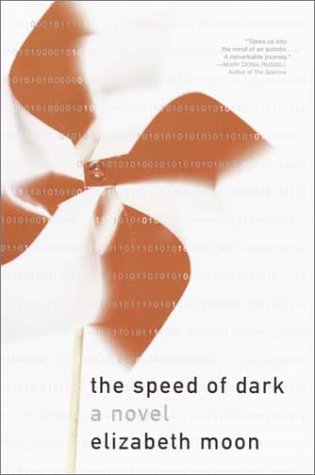
- The Speed of Dark
Elizabeth Moonstandalone novel2002
similar byscience fictionemotionalidentityreflective
From the Penguin Random House website In the near future, disease will be a condition of the past. Most genetic defects will be removed at birth; the remaining during infancy. Lou Arrendale, a high-functioning autistic adult, is a member of the lost generation, born at the wrong time to reap the rewards of medical science. He lives a low-key, independent life. But then he is offered a chance to try a brand-new experimental "cure" for his condition. With this treatment Lou would think and act and be just like everyone else. But if he was suddenly free of autism, would he still be himself? Would he still love the same classical music — with its complications and resolutions? Would he still see the same colors and patterns in the world—shades and hues that others cannot see? Most important, would he still love Marjory, a woman who may never be able to reciprocate his feelings? Now Lou must decide if he should submit to a surgery that might completely change the way he views the world ... and the very essence of who he is.
- Stranger in a Strange Land
Robert A. Heinleinstandalone novel1961
similar byscience fictionidentityreflective+1 more
Stranger in a Strange Land is a 1961 science fiction novel by the American author Robert A. Heinlein. It tells the story of Valentine Michael Smith, a human who comes to Earth in early adulthood after being born on the planet Mars and raised by Martians, and explores his interaction with and eventual transformation of Terran culture.
- Ender Wiggin
series14 books1977
part of Ender's Game Universe
similar byscience fiction+2 more
Orson Scott Card's Ender's Game (1985, expanded from his 1977 novella) follows child prodigy Andrew "Ender" Wiggin as he is recruited into a military training program built to prepare Earth's defenses for an anticipated third war against an insectoid alien species known as the Formics. The saga continues years later through Speaker for the Dead and Xenocide, following an older Ender as he confronts the moral weight of his role in that earlier conflict, and concludes the core arc in Children of the Mind, with Ender in Exile filling in the years between the first two books. Set within the wider Ender's Game universe, the series shifts from military coming-of-age story to slower, more philosophical science fiction as it progresses.
- Kindred
Octavia E. Butlerstandalone novel1979
similar byscience fictionemotional+1 more
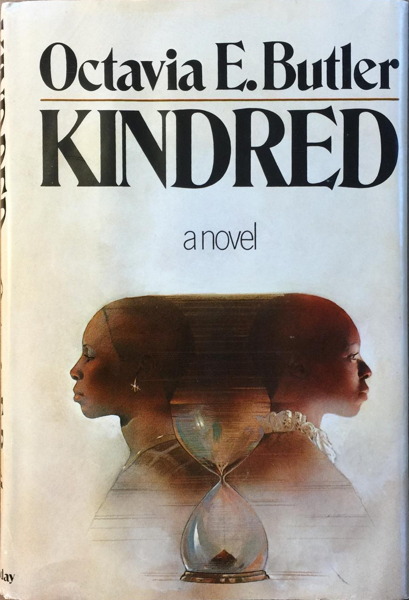
Kindred (1979) is a novel by American writer Octavia E. Butler that incorporates time travel and is modeled on slave narratives. Widely popular, it has frequently been chosen as a text by community-wide reading programs and book organizations, and for high school and college courses.
- Godbody
Theodore Sturgeonstandalone novel1986
similar byscience fictionemotionalidentityreflective
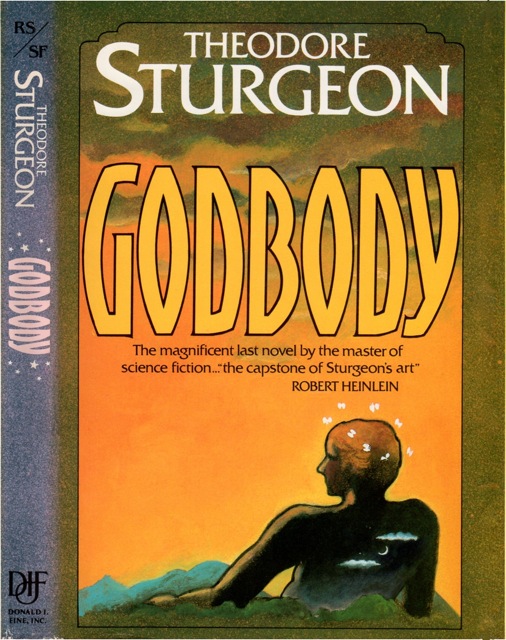
Godbody is a science fiction novel by American writer Theodore Sturgeon, published posthumously in 1986. A foreword, "Agape and Eros: The Art of Theodore Sturgeon", was contributed by Robert A. Heinlein and an afterword was contributed by Stephen R. Donaldson.
- Stardance
series5 books1977
similar byscience fiction+2 more
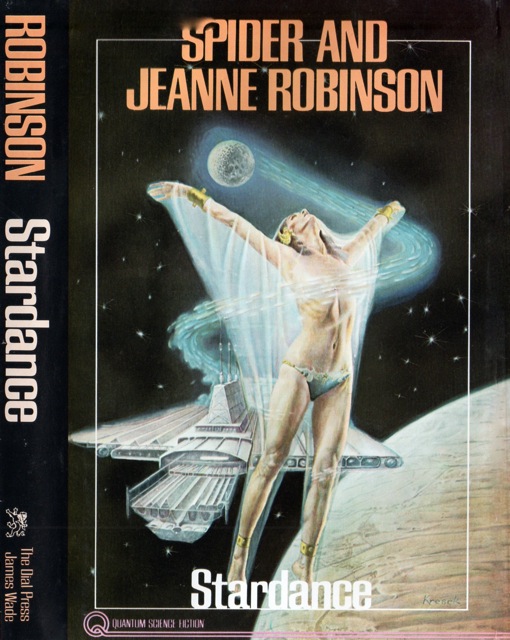
Stardance began as Spider Robinson and Jeanne Robinson's Hugo- and Nebula-winning novella before growing into a trilogy about the birth of dance choreographed for zero gravity, and the human and, later, alien audiences it reaches. Jeanne Robinson was herself a professional dancer, and the books carry that grounding into their depiction of movement as art once freed from gravity. The sequels, Starseed and Starmind, push the premise outward from one dancer's breakthrough into first-contact territory.
- The Whole Man
John Brunnerstandalone novel1964
similar byscience fictionidentityreflective+1 more
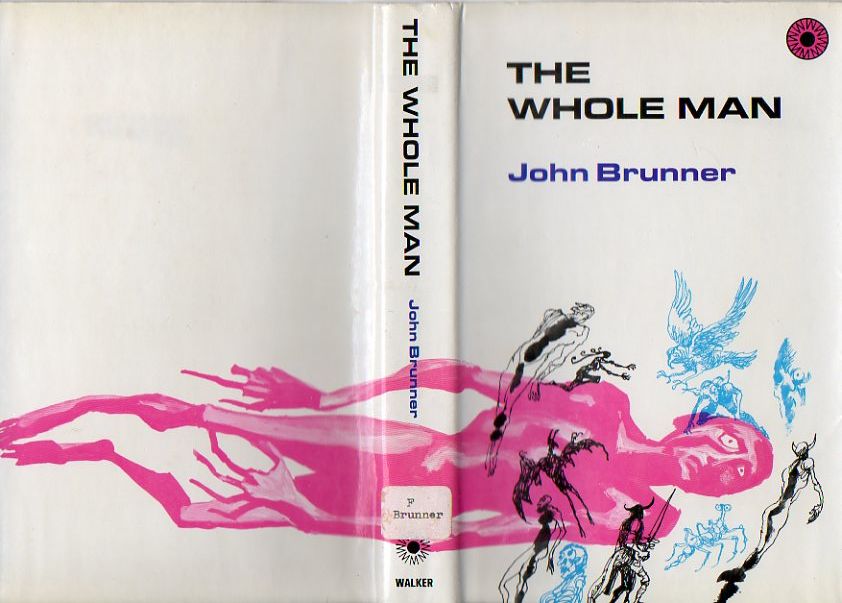
The Whole Man is a 1964 science fiction novel by John Brunner. It was nominated for a Hugo Award for Best Novel in 1965. In the UK, it was published under the title Telepathist.
- Landline
Rainbow Rowellstandalone novel2014
similar byscience fictionemotionalidentityreflective
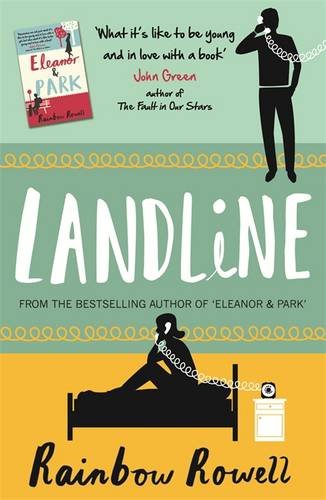
Landline is a 2014 American sci-fi novel by Rainbow Rowell. It tells the story of 37-year-old Georgie McCool who discovers that she is able to call her husband's 22-year-old self through his landline. Rowell stated that aspects from the novel are loosely based on her own life such as the fact that Georgie is incredibly career-driven while her husband is a stay-at-home dad. The character of Georgie McCool was named after the song Georgy Girl and the village of McCool Junction.
- The Martian Inca
Ian Watsonstandalone novel1977
similar byscience fictionlatin america+2 more
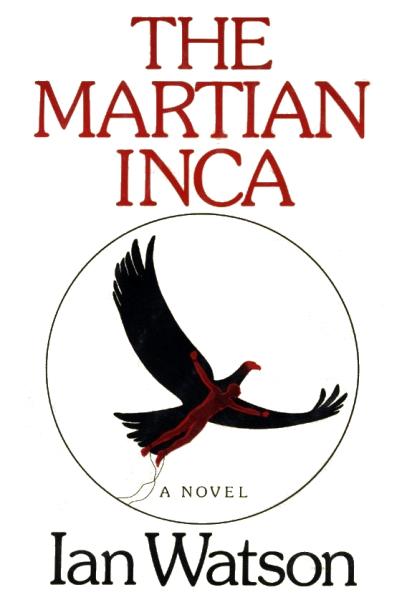
From the front flap of the Scribner first American edition: "An unmanned Russian spacecraft, containing soil samples gathered from the surface of Mars, crashes near a remote Bolivian village. The Indians who salvage the remains of the spacecraft fall into a mysterious comatose condition, and only two recover: Julio, young proud, ambitious, and Angelina, his beloved. Reawakening, they are conscious of a strange new awareness of themselves and the world outside. Julio believes himself to be the Inca - the divine imperial ruler - reborn, with the duty of restoring to the Indians their former dignity and glory. At the same time that the Martian soil has so oddly affected the two Bolivians, a manned American spacecraft is on its way to Mars to deploy a device that will render the planet suitable for human habitation. It is essential that the three-man crew be warned of the unexpected danger the planet's soil presents. Inside the ship tension is high after the 240-million-mile voyage, and when at last Mars is reached, the deadly soil adds an extra dimension to an already explosive situation. What constituent of the Martian soil causes its uncanny effects? The answer may be the clue to a vital discovery about human evolutionary potential."
- Contact
Carl Saganstandalone novel1985
similar byscience fictionspace explorationreflective+1 more
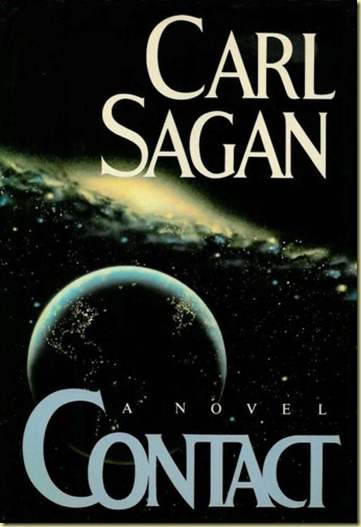
From the front flap of the Simon and Schuster first edition: For centuries humanity has dreamed of life and intelligence beyond the Earth; for decades scientists have searched for it in every corner of the sky; for years Project Argus, a vast, sophisticated complex of radio telescopes, has listened for a signal indicating the existence, somewhere in the universe, of extraterrestrial intelligence. Then, one afternoon, the course of human history is changed, abruptly and forever. The Message, awaited for so long, its very possibility doubted by so many, arrives. Contact has been made. Life, intelligence, someone, something beyond Earth, 26 light-years away, in the vicinity of the star Vega, is calling, beaming across space a wholly unexpected message to say that we are not - have never been - alone. In Contact, Carl Sagan, whose Cosmos enthralled millions of readers and television viewers, has brilliantly employed the freedom of fiction to imagine the greatest adventure of all - humanity's first encounter with other intelligent beings. But the novel is not only about contact between humans and extraterrestrials; it is also about contact, down here on Earth, with each other and ourselves. At its center is a brilliant scientist, Eleanor Arroway, director of Project Argos, who is the first to realize that chapter one of human history is over. It is she who is instrumental in decoding the Message - and in persuading world leaders not to treat it as a threat - she who finds her own life changed by the immense challenge of responding to the Message; she who finally journeys out to experience, in circumstances at once profoundly religious and scientific, the most fateful encounter in human history.
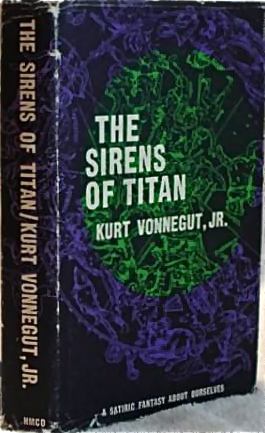
- The Sirens of Titan
Kurt Vonnegut & Jr.standalone novel1959
similar byscience fiction+2 more
The Sirens of Titan is a comic science fiction novel by Kurt Vonnegut Jr., first published in 1959. His second novel, it involves issues of free will, omniscience, and the overall purpose of human history, with much of the story revolving around a Martian invasion of Earth.
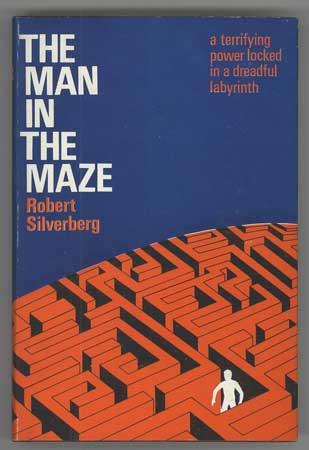
- The Man in the Maze
Robert Silverbergstandalone novel1969
similar byscience fictionidentityreflective+1 more
The Man in the Maze is a science fiction novel by American writer Robert Silverberg, originally serialized in the magazine Worlds of If in April and May 1968, and published in bookstores the following year. It tells the tale of a man rendered incapable of interacting normally with other human beings by his uncontrollable psychic abilities. The novel is inspired by Sophocles' play Philoctetes, with the roles of Odysseus, Neoptolemus and Philoctetes played by Boardman, Rawlins, and Muller, respectively.
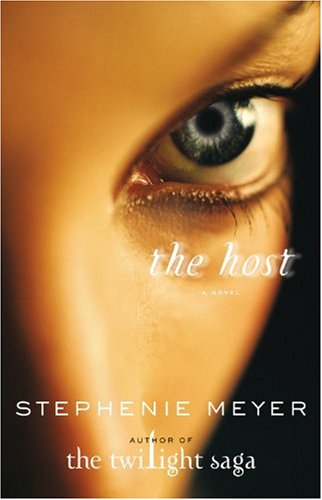
- The Host
Stephenie Meyerstandalone novel2008
similar byscience fictionemotionalidentity
The earth has been invaded by a species that take over the minds of their human hosts while leaving their bodies intact, and most of humanity has succumbed. But Melanie Stryder refuses to fade away. Wanderer, the invading "soul" who has been given Melanie's body, knew about the challenges of living inside a human: the overwhelming emotions, the too vivid memories. But there was one difficulty Wanderer didn't expect: the former tenant of her body refusing to relinquish possession of her mind. Melanie fills Wanderer's thoughts with visions of the man Melanie loves--Jared, a human who still lives in hiding. Unable to separate herself from her body's desires, Wanderer yearns for a man she's never met. As outside forces make Wanderer and Melanie unwilling allies, they set off to search for the man they both love.--From publisher description.
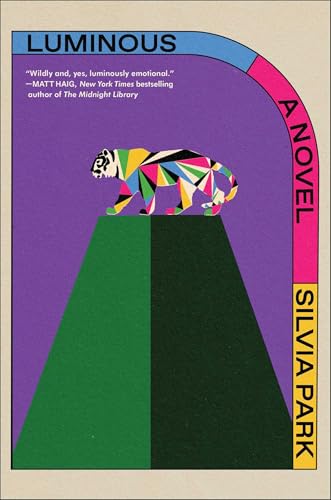
- Luminous
Silvia Parkstandalone novel2025
similar byscience fictionemotionalidentity+1 more
Luminous is a 2025 science fiction novel by Silvia Park. It follows three siblings, two human and one robotic, in a near-future reunified Korea. The novel received critical praise for its exploration of the nature of humanity with relationship to robots.
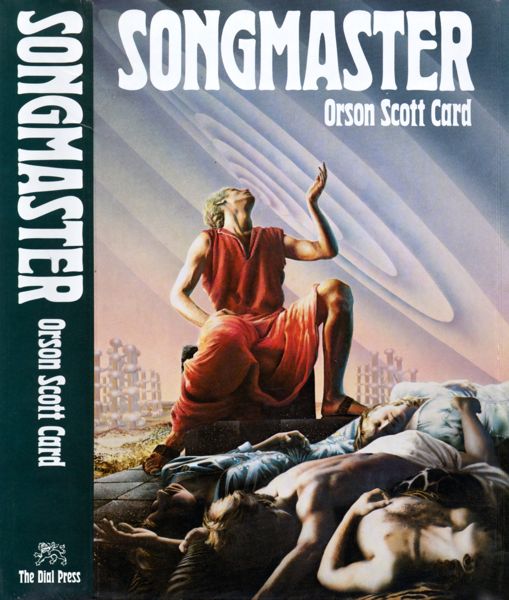
- Songmaster
series3 books1978
similar byscience fiction+2 more
Ansset is a boy with a singing voice so perfect it can reach straight into people's emotions, raised from infancy at the Songhouse to become a 'Songbird' -- a living gift bestowed on the powerful until he comes of age. Orson Scott Card's Songmaster follows Ansset once he's given to the ambitious young emperor of a Rome-like galactic empire, where his voice becomes a tool of influence and vulnerability in equally dangerous measure. The novel grew out of Card's earlier stories 'Mikal's Songbird' and 'Songhouse,' which the catalog also lists under this same series.
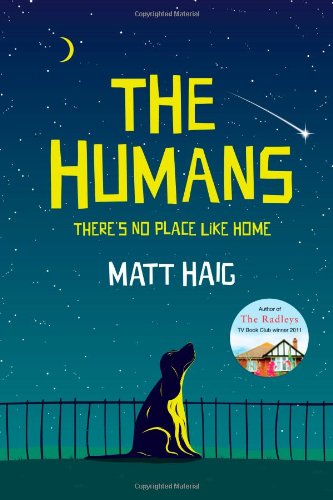
- The Humans
Matt Haigstandalone novel2013
similar byscience fictionemotionalidentity
When an extraterrestrial arrives on Earth, his first impressions of humans are less than positive. Taking the form of Professor Andrew Martin at Cambridge University, the visitor is eager to complete his task and hurry back to his own utopian planet. Disgusted by the way humans look, what they eat, their capacity for murder and war, he is equally baffled by the concepts of love and family. But as time goes on, he starts to reconsider.