Loreful
HomeDiscover
Search series, authors…⌘K
Loreful

Reading orders for SF/F series and shared universes — with your place kept in every one.

Explore

UniversesSeriesWorksAuthorsAtlas

Help

FAQAboutSite map

Account & legal

Sign inCreate accountPrivacyTerms

Data

Built on ISFDB, Wikipedia, Wikidata and Open Library. Curated reading orders carry their reasoning on the page; the rest follow publication order. Data sources & licenses

© Loreful · data: ISFDB · CC BY

More like Barbarossa

anchored on:historical fantasyimmortalityour worldearly 20th centurywar & militarycurses+2 more

but

Mood

The mood the book leaves you in.

  • The reading experience is propelled by journeys, exploration, and physical risk; excitement and forward momentum dominate over dread or introspection.
  • Joy and loss are deliberately mixed; the resolution grants characters something real while taking something else away, leaving warmth and sorrow together.
  • The book demands work from the reader — dense prose, difficult structure, unfamiliar ideas, or morally uncomfortable material — as part of its intended effect.
  • Grim events, cruelty, or despair dominate the atmosphere, and the book does not soften them with comfort or comic relief.
  • The atmosphere is quietly unsettling — wrongness, unease, and the uncanny pervade the book without necessarily escalating into overt horror.
  • The book is built to move the reader; character feeling is foregrounded and major scenes aim at a strong emotional response.
  • Humor is a primary aim and the prose plays for laughs — comic situations, wit, or dialogue produce sustained comedy, not occasional levity.
  • The book insists that things can improve; effort and decency are shown to matter, and the arc bends toward better outcomes even through hardship.
  • The book teaches as it goes — real facts, history, science, or craft are conveyed in enough depth that learning is part of the reading experience.
  • The book is designed to uplift and motivate, presenting perseverance or achievement in a way that invites the reader to aspire or act.
  • The overall register is cheerful and easygoing; stakes are kept gentle and the book avoids dwelling on pain or dread.
  • Withheld information drives the experience; the book sustains enigmas and secrets the reader wants resolved, whatever its genre.
  • The book is contemplative and inward-looking, giving more weight to thought, memory, and meaning than to external events.
  • The book works as comfort reading — low tension, a soothing pace, and an atmosphere the reader can unwind in.
  • Grief, loss, or melancholy set the dominant register, and the book lets sorrow stand rather than resolving it into comfort.
  • Sustained suspense is the point; the book keeps the reader braced for what happens next through danger, pressure, or impending revelation.
  • Playful invention and charm define the register — fanciful conceits, light absurdity, and a narration that delights in its own oddity.

About

What the story runs on.

  • Stories in which extraterrestrial beings are central — as characters, cultures, or the object of the plot.
  • Stories structured as a quest — a journey undertaken to find, deliver, or destroy something of great import.
  • Stories in which staying alive against nature, catastrophe, or scarcity is the central problem.
  • Stories of lovers kept apart by law, family, faith, or station, where the obstacle to love is the plot.
  • Stories in which a friendship — its making, testing, or loss — is the emotional center.
  • Stories of growing up — a young protagonist crossing from childhood into adult knowledge and responsibility.
  • Stories about who a character truly is — self-discovery, doubled lives, and the search for a self.
  • Stories about mourning — living through the death of a loved one and what loss does to the survivors.
  • Stories in which a buried family truth — hidden parentage, crimes, or shames — surfaces and reorders the present.
  • Stories driven by maneuvering for power — factions, conspiracies, and statecraft conducted in shadow.
  • Stories in which war itself is the subject — combat, occupation, and what warfare does to soldiers and civilians.
  • Stories organized around investigating a killing — the case, the clues, and the pursuit of the killer, in any genre's clothing.

Shelf

Where it sits in the library.

    • Fiction built on magic or other supernatural elements that have no scientific explanation.
    • Secondary-world fantasy at large scale, where the fate of nations or the world turns on the protagonists' struggle.
    • Fantasy set in a recognizably modern city or contemporary world where the supernatural intrudes on everyday life.
    • Fantasy that blends in horror's atmosphere and imagery, keeping a fantastical frame around grim or frightening material.
    • Action-driven fantasy following warriors or rogues with personal stakes against sorcerous threats, rather than world-spanning conflicts.
    • Fantasy set in a real historical period or a close analogue of one, with magic woven into the era.
    • Fantasy in which protagonists cross from the ordinary world into another world through a portal or similar passage.
    • Fiction that retells or reworks a traditional fairy tale in a new form or setting.
    • Fantasy drawing directly on myths, legends, and folklore, retelling them or building on their figures and logic.
    • Fantasy of ghosts, vampires, shapeshifters, psychics, and similar phenomena, usually set in an otherwise ordinary world.
    • Fiction mixing science-fictional trappings with overtly magical or impossible elements in one setting.
    • Low-stakes fantasy emphasizing comfort, community, and everyday pleasures over conflict and peril.
    • Speculative fiction of pervasive moral ambiguity, violence, and cynicism that rejects heroic conventions — fantasy and SF alike.
      • Fiction that extrapolates from science and technology — future societies, space travel, or speculative inventions — within at least nominally natural laws.
      • Science fiction of interstellar scope — starships, galactic polities, and adventure across star systems.
      • Science fiction committed to scientific rigor, where technical plausibility constrains the story.
      • Science fiction centered on armed forces and warfare, told largely from a military point of view.
      • Science fiction of networked, corporate-dominated near futures, pairing high technology with social decay.
      • Science fiction styled on nineteenth-century steam-powered technology, often in a Victorian or pseudo-Victorian setting.
      • Fiction depicting an oppressive or catastrophic society, presented as a warning.
      • Fiction set after civilization's collapse, following survivors in the ruins of the old world.
      • Fiction in which characters move between past and future, and the mechanics or consequences of that travel drive the plot.
      • Fiction exploring a world where a historical event went differently and history diverged from ours.
      • Science fiction about humanity's first encounter and communication with an alien intelligence.
      • Science fiction in which extraterrestrial forces attack or occupy Earth and humanity resists.
      • Fiction whose primary aim is to frighten or unsettle the reader through dread, menace, or the monstrous.
      • Horror of vast, indifferent, incomprehensible entities before which humanity is insignificant, in the Lovecraft tradition.
      • Horror of decaying houses, buried family secrets, and oppressive atmosphere in the Gothic literary tradition.
      • Horror centered on hauntings and the returning dead.
      • Horror located in the mind — paranoia, obsession, and unreliable perception rather than external monsters.
      • Horror built around the reanimated dead and survival amid their outbreaks.
      • Horror defined by explicit, transgressive gore that refuses to cut away from violence.
      • Speculative fiction of the strange and uncanny that resists both natural explanation and standard genre categories.
      • Fiction organized around solving a crime or puzzle, typically following an investigator toward the identification of a culprit.
      • A puzzle-first mystery that lays out clues so the culprit's identity can be deduced before the reveal.
      • Crime fiction of moral ambiguity, fatalism, and hard-edged style, set among the corrupt and the doomed.
      • A mystery following the realistic routines of police work — forensics, interviews, and case-building.
      • A gentle mystery with an amateur sleuth, a small community, and violence kept off the page.
      • A mystery set in a past era, where the investigation works within that period's methods and society.
      • Fast-paced fiction driven by imminent danger, pursuit, or high-stakes conspiracy, built to sustain tension.
      • A thriller of espionage — agents, tradecraft, and intelligence services in conflict.
      • A thriller centered on lawyers and the courtroom, where litigation carries the suspense.
      • A thriller driven by detailed contemporary or near-future technology, often military or scientific.
      • A thriller whose tension comes from mental states and manipulation between characters rather than external action.
      • Fiction whose central plot is a romantic relationship and its development toward an emotionally satisfying resolution.
      • Romance in which one or both partners are supernatural beings, blending fantasy elements into the love story.
      • A fantasy-romance hybrid in which the romantic arc and the fantasy plot carry equal weight.
      • Romance set in a past era, with courtship shaped by the period's society and manners.
      • Romance set in the present day, without supernatural or historical elements.
      • Fiction set in a real past period, where the historical setting materially shapes characters and events.
        • General and literary fiction emphasizing prose style, character interiority, or formal ambition over genre plot conventions.
        • Fiction in a realistic world where magical events occur and are treated as ordinary, in the tradition of Latin American literature.
        • Fiction that ridicules people, institutions, or society in order to criticize them.
        • Fiction of dreamlike, irrational imagery and logic that breaks from realistic representation.
        • Fiction that plays with narrative convention through metafiction, fragmentation, and self-reference.
        • Fiction propelled by journeys, exploration, and physical peril, where action and survival carry the plot.
        • Adventure fiction of ships and seafaring — naval engagements, voyages, and life at sea.
        • Fiction of the American frontier West — gunmen, ranchers, and lawmen, typically in the late nineteenth century.
        • Fiction centered on soldiers, campaigns, and the experience of warfare, historical or imagined.
          • Fiction written primarily to amuse, using comedic situations, wit, or parody as its organizing principle.
            • Multi-generational fiction following a family or dynasty across decades, with inheritance and kinship as the through-line.
              • Fiction whose world runs on explicit game mechanics — levels, stats, and skills that characters can see and exploit.
                • Fiction about costumed or superpowered heroes and their conflicts with comparable villains.

                Practical

                How long a commitment, whether it stands alone, and whether it has finished.

                Tap a chip to ask for it · tap again to rule it out · once more to clear. Numbers show what would be left.

                • Cover of Casca
                  Casca

                  series · 60 books · 1979

                  similar byadventurousour worldhistorical fantasyimmortalitycurseswar+2 more

                  Casca is a series of historical fantasy novels created by American author Barry Sadler in 1979. The series follows Casca Rufio Longinus, a Roman legionary who pierces the side of Jesus during the Crucifixion and is cursed with immortality, condemned to wander through history as a soldier until the Second Coming. The character draws upon traditions associated with Longinus and the Wandering Jew.

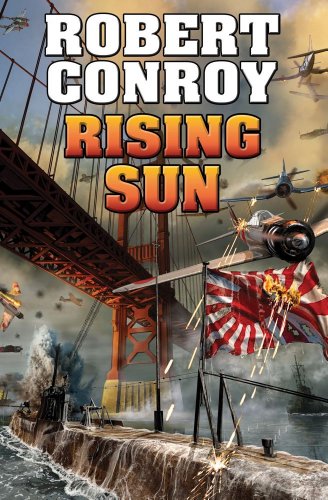
                • Cover of Rising Sun
                  Rising Sun

                  Robert Conroy · standalone novel · 2012

                  similar byadventurousour worldearly 20th centurywar & militarywar

                  "1942: what should have been a decisive victory for the Allies in the Battle of Midway has become a horrendous disaster instead. America's handful of carriers in the Pacific have blundered into a Japanese submarine picket line and most have been sunk. The United States has only one carrier remaining, while the ragtag remnants of U.S. battleships - an armada still reeling from the defeat at Pearl Harbor - are in even worse shape. The Pacific belongs to the Japanese. Yet, despite disaster, the U.S. is determined to strike back. And now a grand plan is put forth to lure the Japanese into an ambush that could restore the balance in the Pacific and give the forces of freedom a fighting chance once more." Goodreads Oct 20, 2022

                • Cover of Johnny Got His Gun
                  Johnny Got His Gun

                  Dalton Trumbo · standalone novel · 1939

                  similar byour worldearly 20th centurywar & militarywardark

                  Johnny Got His Gun is a war novel written in 1938 by American novelist Dalton Trumbo and published in September 1939 by J. B. Lippincott. The novel won one of the early National Book Awards: the Most Original Book of 1939. A 1971 film adaptation was written and directed by Trumbo.

                • Cover of The Sorcerers of WWI
                  The Sorcerers of WWI

                  series · 2 books · 2018

                  similar byearly 20th centuryhistorical fantasywar & militarywar+1 more

                • Cover of Temeraire
                  Temeraire

                  series · 48 books · 2006

                  similar byadventuroushistorical fantasywar+1 more

                  Temeraire is a series of nine alternate history fantasy novels written by American author Naomi Novik. The novels follow the adventures of Captain William Laurence and his dragon, the eponymous Temeraire, and reimagine events of the Napoleonic Wars with "an air force of dragons, manned by crews of aviators". His Majesty's Dragon, the first entry in the series, won the Compton Crook Award in 2007 and was nominated for the Hugo Award for Best Novel the same year. Temeraire: In the Service of the King, an omnibus volume collecting the first three novels, won the Locus Award for Best First Novel in 2007. Temeraire was nominated for the Hugo Award for Best Series in 2017.

                • Cover of The War in the Air
                  The War in the Air

                  H. G. Wells · standalone novel · 1908

                  similar byour worldearly 20th centurywar+1 more

                  The War in the Air: And Particularly How Mr. Bert Smallways Fared While It Lasted is a military science fiction novel written by H. G. Wells and published in 1908.

                • Cover of This Immortal
                  This Immortal

                  series · 2 books · 1966

                  similar byadventurousour worldimmortality

                  This Immortal is a single science fiction novel by Roger Zelazny, expanded from his 1965 serial ...And Call Me Conrad. In a depopulated future Earth largely toured by an alien race, its long-lived, secretive protagonist Conrad Nomikos is assigned to guide and protect a visiting alien across the ruins of Greece and Egypt, uncovering old grudges and assassination plots along the way. The novel shared the 1966 Hugo Award for Best Novel with Frank Herbert's Dune.

                • Cover of The Scholar and the Last Faerie Door
                  The Scholar and the Last Faerie Door

                  H. G. Parry · standalone novel · 2024

                  similar byearly 20th centuryhistorical fantasycurseswardark

                  The Scholar and the Last Faerie Door is a 2024 historical fantasy novel by New Zealand author H. G. Parry. It was first published in October 2024 in the United Kingdom by Orbit Books and in the United States by its imprint, Redhook Books. The story takes place during and immediately after World War I, and concerns a faerie who kills hundreds of soldiers and curses a number of others during the Battle of Amiens in 1918.

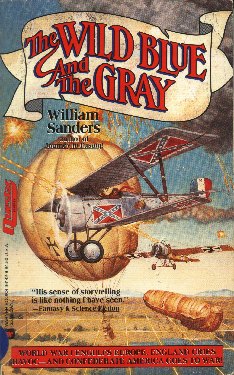
                • Cover of The Wild Blue and the Gray
                  The Wild Blue and the Gray

                  William Sanders · standalone novel · 1991

                  similar byadventurousearly 20th centurywar & militarywar+1 more

                  Fifty years after the South won the Civil War, a representative of the Cherokee Nation is attached to a Confederate air squadron fighting in France.

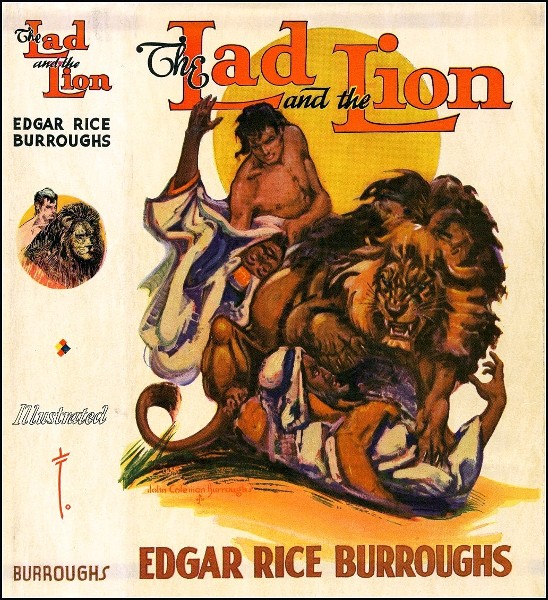
                • Cover of The Lad and the Lion
                  The Lad and the Lion

                  Edgar Rice Burroughs · standalone novel · 1938

                  similar byadventurousour worldearly 20th century

                  The Lad and the Lion is an adventure novel by American writer Edgar Rice Burroughs, written in February 1914. His working title for the piece was "Men and Beasts." It was first published as a three-part serial in All-Story Weekly in the issues for June 30, July 7, and July 14, 1917. The story was the first by Burroughs adapted to film, the movie appearing about the same time as the print serial. Despite this distinction, the story did not appear in book form for over twenty years; only after a remake of the film appeared was the first book edition published, by Burroughs's own publishing firm, Edgar Rice Burroughs, Inc., in February 1938. The text was apparently expanded for book publication, as certain incidentals of the story reflect the political situation of Europe in the late 1930s rather than the mid-1910s. The book was reprinted by Grosset & Dunlap in 1939 and Canaveral Press in 1964. The first paperback edition was issued by Ballantine Books in September 1964, with a second appearing from Ace Books in May 1974, reprinted in June 1982.

                • Cover of World War of the Dead
                  World War of the Dead

                  Eric S. Brown · standalone novel · 2009

                  similar byadventurousour worldearly 20th centurywardark

                  A zombie apocalypse interrupts World War II and a group of superheros must band together to stop it.

                • Cover of Ludis Kristaps
                  Ludis Kristaps

                  series · 3 books · 2011

                  similar byearly 20th centuryhistorical fantasywar & militarywardark

                • Cover of Forever
                  Forever

                  Pete Hamill · standalone novel · 2002

                  similar byour worldearly 20th centuryimmortalitycurses

                  A Druid & Irishman, immigrating to the American Colonies gets "cursed" to live forever as long as he remains on Manhattan Island — the story of his journey through time from the mid 1600's through the aftermath of the World Trade Center on 9-11.

                • Cover of Volk
                  Volk

                  Piers Anthony · standalone novel · 1996

                  similar byour worldearly 20th centurywar & militarywar

                  Set During World War II, Volk is the story of friendship that transcends politics and war. Lane is an American fighter pilot; Quality, an American pacifist Quaker; and Ernst, a Nazi.

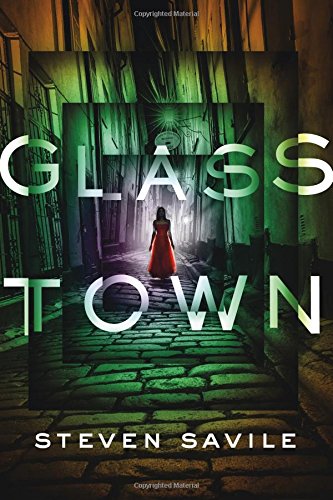
                • Cover of Glass Town
                  Glass Town

                  Steven Savile · standalone novel · 2017

                  similar byour worldearly 20th centuryhistorical fantasydark

                  "In 1924, two brothers both loved Eleanor Raines, a promising young actress from the East End of London. She disappeared during the filming of Alfred Hitchcock's debut, Number 13, which itself is now lost. It was the crime of the age, capturing the imagination of the city: the beautiful actress never seen again, and the gangster who disappeared the same day. Generations have passed. Everyone involved is long dead. But even now their dark, twisted secret threatens to tear the city apart. Joshua Raines is about to enter a world of macabre beauty, of glittering celluloid and the silver screen, of illusion and deception, of impossibly old gangsters and the fiendish creatures they command, and most frighteningly of all, of genuine magic." --

                • Cover of Brytewood
                  Brytewood

                  series · 3 books · 2009

                  similar byearly 20th centuryhistorical fantasyour worldwar+2 more

                • Cover of Henry Sturges
                  Henry Sturges

                  series · 2 books · 2010

                  similar byadventuroushistorical fantasydark

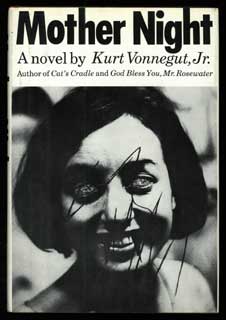
                • Cover of Mother Night
                  Mother Night

                  Kurt Vonnegut & Jr. · standalone novel · 1962

                  similar byour worldwardark+1 more

                  Howard W. Campbell Jr., an American playwright who grew up in Germany, writes his memoirs from an Israeli prison cell awaiting trial for war crimes. As the Nazis rose to power, Campbell stayed on, married a German actress, and was recruited by an American agent to serve as a double agent, broadcasting Nazi propaganda over the radio while secretly passing coded intelligence to the Allies. The catch, as Campbell tells it, is that he became one of the war's most effective propagandists in the process, whatever his loyalties. Kurt Vonnegut's darkest novel asks what a person becomes when the mask he wears for a cause is indistinguishable from his face.

                • Cover of The World Set Free
                  The World Set Free

                  H. G. Wells · standalone novel · 1914

                  similar byour worldwardark+1 more

                  The World Set Free is a novel written in 1913 and published in 1914 by H. G. Wells. The book is based on a prediction of a more destructive and uncontrollable sort of weapon than the world has yet seen. It had appeared first in serialised form with a different ending as A Prophetic Trilogy, consisting of three books: A Trap to Catch the Sun, The Last War in the World and The World Set Free.

                • Cover of The Edge of Running Water
                  The Edge of Running Water

                  William Sloane · standalone novel · 1939

                  similar byour worldearly 20th centurydark+1 more

                  After the death of his beloved wife, a physicist tries to build a machine that will enable him to communicate with the dead, with horrible consequences.

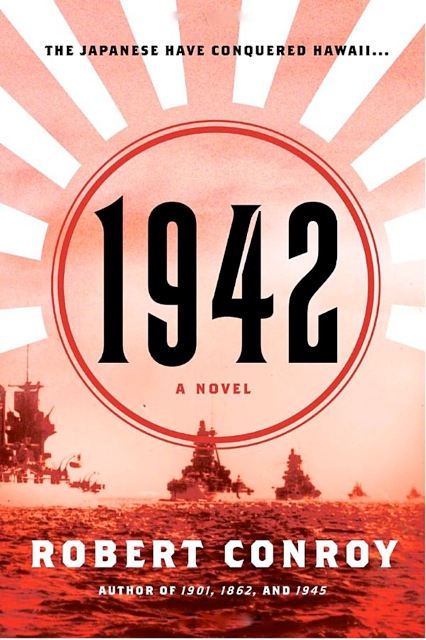
                • Cover of 1942
                  1942

                  Robert Conroy · standalone novel · 2009

                  similar byour worldearly 20th centurywar+1 more

                  1942 is an alternate history novel written by Robert Conroy. It was first published, as an e- book, by Ballantine Books on February 24, 2009, with a hardcover edition following from the same publisher in March 2009. The novel won the 2009 Sidewise Award for Alternate History.

                • Cover of The Secrets of the Immortal Nicholas Flamel
                  The Secrets of the Immortal Nicholas Flamel

                  series · 15 books · 2007

                  similar byadventurousour worldimmortality

                  The Secrets of the Immortal Nicholas Flamel is a series of six fantasy novels written by Irish author Michael Scott, completed in 2012. The first book in the series, The Alchemyst, was released in 2007, and the sequels were released at the rate of one per year, concluding with The Enchantress in 2012. The cover artist for the series is Michael Wagner.

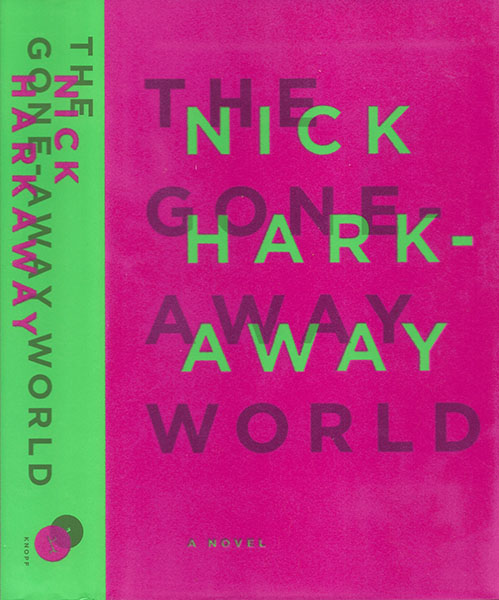
                • Cover of The Gone-Away World
                  The Gone-Away World

                  Nick Harkaway · standalone novel · 2008

                  similar byadventurousour worldwar+1 more

                  The Gone-Away World is the debut novel of British author Nick Harkaway, a science fiction story set in a post-apocalyptic world crippled by the 'Go-Away War'. The book was first published in June 2008 by Heinemann.

                • Cover of Trouble the Saints
                  Trouble the Saints

                  Alaya Dawn Johnson · standalone novel · 2020

                  similar byour worldearly 20th centuryhistorical fantasydark

                  Trouble the Saints is a 2020 historical fantasy novel by Alaya Dawn Johnson. It was first published by Tor Books/Macmillan Publishers.