More like Battleborn
anchored on:near future
but
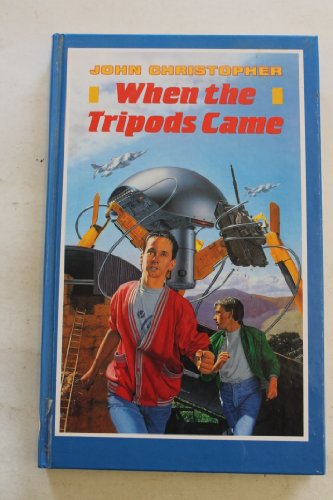
- Tripods
series4 books1967
completed
similar bytensescience fictionpost-apocalypticnear futureour world+2 more
The Tripods is a series of young adult science fiction novels by John Christopher. The series takes place in a post-apocalyptic world where humanity is enslaved by "Tripods"—gigantic three-legged walking machines piloted by an alien race later identified as the "Masters". The first two books were the basis of a science fiction TV series, produced in the United Kingdom in the 1980s.
- Reckoners
series6 books2013
similar bynear futureadventuroustensescience fictionnorth america+3 more
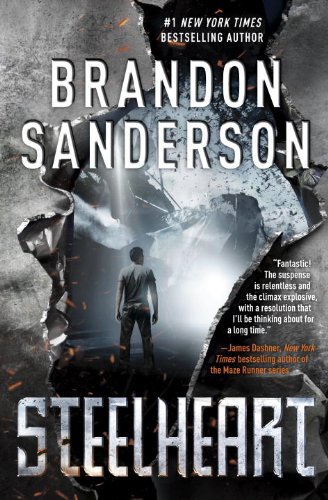
The Reckoners is a series of young adult superhero novels written by American author Brandon Sanderson. The series consists of Steelheart (2013), Firefight (2015), Calamity (2016) and Lux (2021). The series depicts a post-apocalyptic world in which the appearance of an orbiting cosmic phenomenon known as Calamity has given random people superhuman powers in apparent defiance of known physical laws, turning them into "Epics". These Epics prey upon or enslave the rest of humanity, causing the collapse of traditional governments. One young man orphaned by a High Epic joins a group that is killing Epics.
- Maze Runner
series11 books2009
similar bysurvivaltensescience fictionpost-apocalypticnear future+2 more
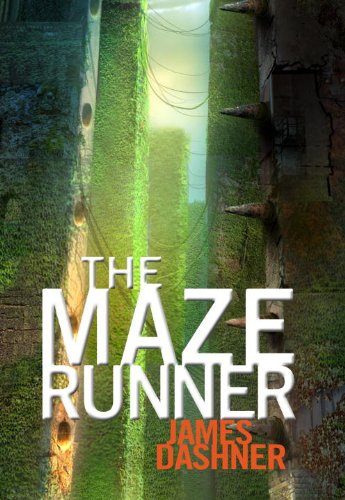
The Maze Runner is a series of young adult dystopian science fiction novels written by American author James Dashner. The series consists of the trilogy The Maze Runner (2009), The Scorch Trials (2010) and The Death Cure (2011), as well as two prequel novels, The Kill Order (2012) and The Fever Code (2016). A novella titled Crank Palace (2020) and a companion book titled The Maze Runner Files (2013) have also been released. A sequel trilogy in the series titled The Maze Cutter takes place 73 years following the events of The Death Cure and consists of the novels The Maze Cutter (2022), The Godhead Complex (2023), and The Infinite Glade (2025).
- Z for Zachariah
Robert C. O'Brienstandalone novel1975
similar bysurvivalnear futuretensescience fictionpost-apocalypticour worldnorth america
Sixteen-year-old Ann Burden, on an Amish family farm in an isolated valley, believes she is the only survivor of nuclear war and nerve gas. One day a man arrives in a "safe-suit" that he and others have recently developed.
- Farnham's Freehold
Robert A. Heinleinstandalone novel1964
similar bysurvivalnear futuretensescience fictionpost-apocalypticnorth america
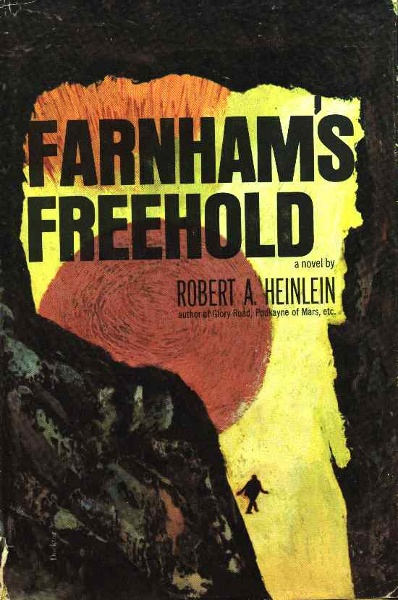
Farnham's Freehold is a science fiction novel by American writer Robert A. Heinlein. A serialized version, edited by Frederik Pohl, appeared in Worlds of If magazine. The complete version was published in novel form by G. P. Putnam later in 1964.
- The Change / The Event
series41 books1998
similar byadventurousscience fictionpost-apocalypticnorth america+3 more
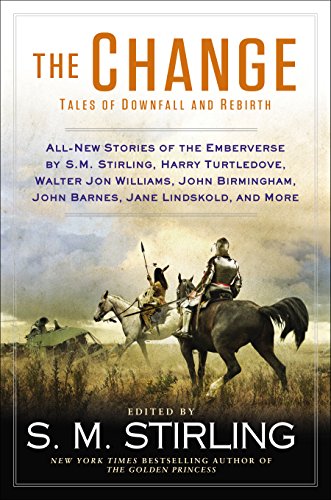
The Change: Tales of Downfall and Rebirth is a shared-world anthology of stories set in the years right after a mysterious global event instantly disables gunpowder, electricity, and combustion engines, the founding premise of S. M. Stirling's Emberverse. Sixteen different authors, coordinated by Stirling, each contribute stories set in various corners of the suddenly de-industrialized world as survivors scramble to rebuild. It's a companion volume to the Change/Emberverse novels rather than a novel itself.
- Time Storm
Gordon R. Dicksonstandalone novel1977
similar bysurvivalnear futureadventuroustensescience fictionpost-apocalypticour world
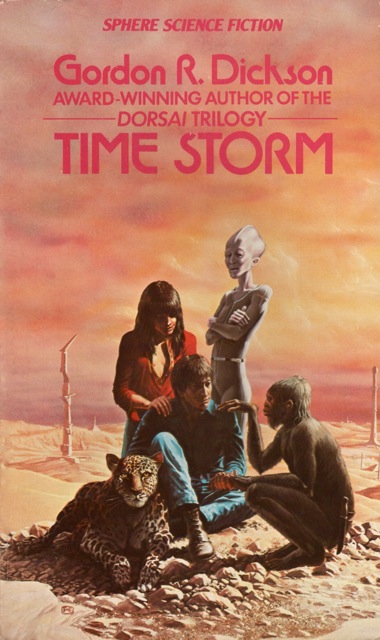
A time storm has devastated the Earth, and only a small fraction of humankind remains. From the rubble, three survivors form an unlikely alliance: a young man, a young woman, and a leopard. "A masterful science fiction story told by a masterful science fiction writer". -- Milwaukee Journal. A time storm strikes the Earth. The Earth remains, but different parts of the Earth are in different eras. Travel between the different zones is thought to be impossible. The main character, Marc Despard, resolves to fight the time storm. After some struggles, he assembles a small band of people, including one alien, to help him try to understand what has happened and to stop the time storm. He has 2 extraordinary relationships with a older teenaged girl who is speechless for the first part of the book (she was "struck dumb" by the time storm) and with, believe it or not, a leopard. Dickson's writing makes the extraordinary seem quite normal. Ultimately, after being harried by a Mad Max-like group of survivors, he uses a machine found in a different era of time to bring his small band of followers into the future so that he can find those who are trying to fight the time storm. He convinces those future beings that he is capable of fighting the time storm, and ultimately stops it, and gets the girl in the end.
- The Fireman
Joe Hillstandalone novel2016
similar bysurvivalnear futuretensescience fictionpost-apocalypticour worldnorth america
The Fireman is a novel set in a post-apocalyptic time by American author Joe Hill. The novel, Hill's fourth, tells the tale of a deadly spore that has infected most of the world's population. Hill first spoke of the novel in 2013 in promotional interviews for his then-new novel NOS4A2. The novel was released on May 17, 2016.
- Damnation Alley
Roger Zelaznystandalone novel1969
similar bysurvivalnear futureadventurousscience fictionpost-apocalypticnorth america
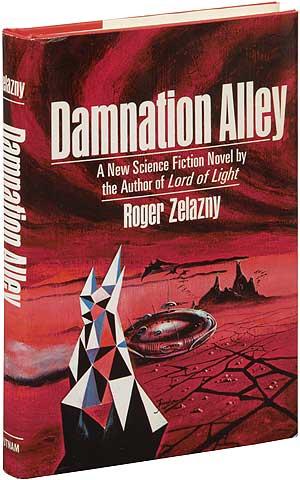
Damnation Alley is a 1969 science fiction novel by American writer Roger Zelazny, based on a novella of the same name published in 1967. A film adaptation of the novel was released in 1977.
- Have Space Suit - Will Travel
Robert A. Heinleinstandalone novel1958
similar bysurvivalnear futureadventuroustensescience fictionnorth america
From the back cover of the Del Rey 9th printing: "Skyjacked - Everything happened at once. One minute Kip Russell was walking about in his own backyard, testing out an old space suit and dreaming about going to the moon - and the next he was out cold and the captive of an insidious space pirate. The whole thing seemed like a very bad dream until he discovered he wasn't the only prisoner on board. Then the reality of the situation became inescapable. He - along with the daughter of a world-renowned scientist and a beautiful creature from an alien planet - had been skyjacked by a monstrous extraterrestrial and they were on their way to the Moon... a journey toward a fate worse than death!"
- Survivalist
series41 books1981
similar bysurvivaltensescience fictionpost-apocalypticnear futurenorth america
The Survivalist is the generic title of Jerry Ahern's long-lived series of 29 pulp novels centering around John Rourke, an ex-CIA officer turned weapons and survival expert, in the aftermath of a nuclear war.
- Mother of Storms
John Barnesstandalone novel1994
similar bysurvivalnear futuretensescience fictionpost-apocalypticour world+1 more
From the flaps of the Tor first edition: "It is 2028. A strike to destroy an illegal Arctic weapons cache has a catastrophic side effect. Massive amounts of energy are liberated from the polar ice, suddenly warming the Earth's climate. In the middle of the Pacific, a gigantic hurricane thousands of miles across is forming, larger than any in human history. A storm with winds of supersonic speed. A storm that changes direction at whim. A storm that refuses to die. A storm so vast it spawns dozens more in its wake... Blinded by intrigue, expedience, and greed, the world's politicians and power brokers have ignored the killer storms threat until it is too late. Already the death toll is in the tens of millions, as it savages the Pacific coast, while its devil's brood of smaller storms are wreaking havoc across the face of the planet. While the survivors scramble for advantage, a handful of courageous men and women undertake a daring, desperate plan to save humanity from total destruction - a plan so visionary it may alter forever the future of the human race."
- The Passage
series3 books2010
similar bysurvivalnear futuretensescience fictionpost-apocalypticnorth america
The Passage is a novel series by Justin Cronin. There are three published books in the series. The film rights were acquired by Fox Entertainment Group in 2007 for adaptation into a film trilogy, but after 12 years of development and planning, it was changed to a television series, which premiered in January 2019 and was canceled after the first season.
- Pax / Astra
series2 books1954
completed
similar bysurvivaladventuroustensescience fiction+2 more
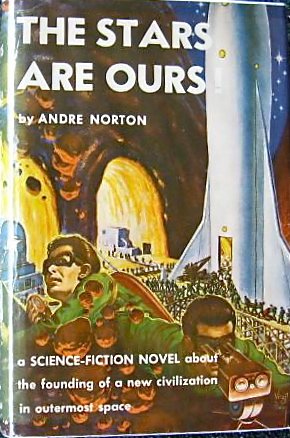
Andre Norton's The Stars Are Ours! (1954) and its sequel Star Born (1957) follow a group of scientists and their families who flee a repressive future Earth to colonize a distant world they name Astra, and then the next generation, who must contend with that world's original inhabitants. Star Flight appears to be a later omnibus or reissue rather than a third original novel.
- The Arrest
Jonathan Lethemstandalone novel2020
similar bysurvivalnear futurescience fictionpost-apocalypticour worldnorth america+1 more
The Arrest is the 12th novel by Jonathan Lethem, published in November 2020. It is a post-apocalyptic and pastoral science fiction story set in a small Maine town following the global collapse of technology. The pastoral life of the town is challenged when a nuclear-powered vehicle arrives, carrying the novel's antagonist. Reception of the novel was largely positive.
- A Fall of Moondust
Arthur C. Clarkestandalone novel1961
similar bysurvivalnear futureadventuroustensescience fiction
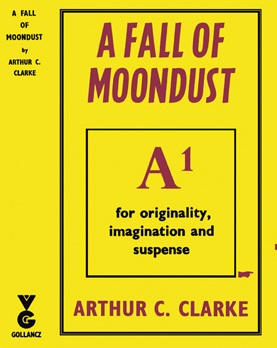
From the back cover of the Harbrace paperback: "The action of A Fall of Moondust takes place almost a century from now when tours on the moon are a common occurrence. One of the high points of each tour is a cruise around the Sea of Thirst, a body of volcanic dust, in a specially designed vessel called the Selene On a perfectly routine voyage one day the Selene suddenly disappears. How do you locate a small tourist "cruiser" buried beneath fifty feet of dust? If you find it, how do you rescue the passengers and crew? If you are on board, how do you feel and what do you do while brave men and expert technicians join forces in a race against time? Sustained excitement, lively humor, and an engaging cast of characters make this one of Arthur C. Clarke's most intriguing novels."
- I Am Legend
Richard Mathesonstandalone novel1954
similar bysurvivaltensescience fictionpost-apocalypticour worldnorth america
The last human survivor of the vampire epidemic has to maintain his defences against their onslaught, while attempting to research the cause and possibly solution to the plague. Robert Neville is the last living man on Earth... but he is not alone. Every other man, woman and child on the planet has become a vampire, and they are hungry for Neville's blood. By day he is the hunter, stalking the undead through the ruins of civilization. By night, he barricades himself in his home and prays for the dawn. How long can a man survive like this?
- The Dire Earth
series6 books2013
similar bysurvivalnear futuretensescience fictionpost-apocalypticour world+1 more
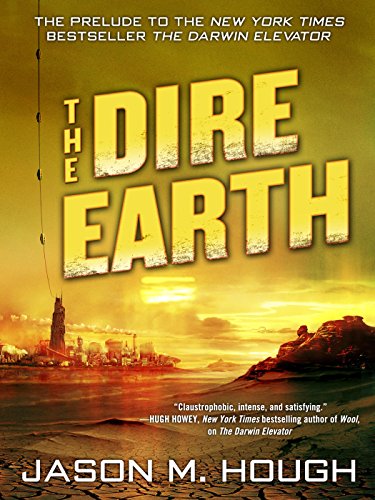
The Dire Earth Cycle is a trilogy of science fiction novels written by American author Jason M. Hough. The series was simultaneously released in both the United States and the United Kingdom. The first book in the series, The Darwin Elevator, was released in July 2013, and the two sequels, The Exodus Towers and The Plague Forge, were released later that same year. An eBook-only release, The Dire Earth: A Novella, acts as a prequel to the trilogy and reveals more of the main characters' backgrounds.
- The Triffids
series3 books1951
similar bysurvivalscience fictionpost-apocalypticour world+1 more
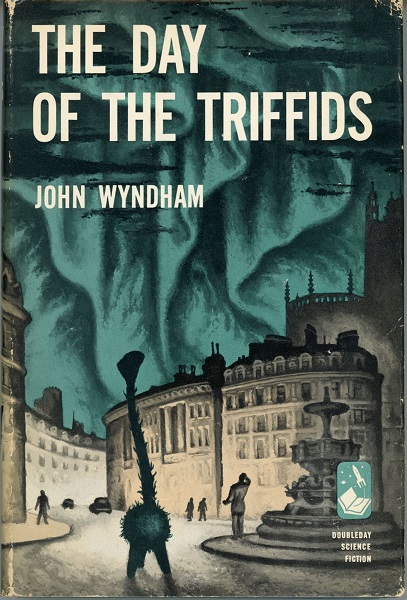
John Wyndham's The Day of the Triffids (1951) opens with a meteor-shower-like event that leaves most of Britain's population blind, throwing civilization into collapse just as triffids, an aggressive and mobile species of poisonous plant, become free to hunt the helpless survivors. Simon Clark's authorized sequel The Night of the Triffids (2001) picks up a generation later, narrated by the original protagonist's son as he confronts a new triffid-dominated world, and John Whitbourn's The Age of the Triffids extends the shared setting further still. Together the three novels form a loose post-apocalyptic trilogy built on Wyndham's original premise rather than a tightly plotted single story.
- War Against the Chtorr
series7 books1983
similar bysurvivalnear futuretensescience fictionpost-apocalypticnorth america+1 more
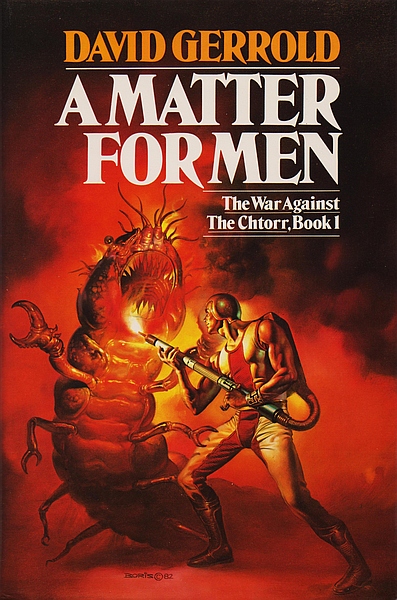
The War Against the Chtorr is a series of science fiction novels by American writer David Gerrold. The Chtorr series was originally planned as a trilogy, but as the story became more intricate, Gerrold realized that three books would not be enough for him to tell the entire story. For a time, he was uncertain how many books there would be in the end but plans on seven. As of 2022, four books have been completed. As of 2017, a fifth and sixth were in the works, 24 years after the publication of the fourth book.
- Down to a Sunless Sea
David Grahamstandalone novel1979
similar bysurvivalnear futuretensescience fictionpost-apocalypticour worldnorth america
David Graham's Down to a Sunless Sea (1979) is a post-apocalyptic novel about a planeload of people during and after a short nuclear war, set in a near-future world where the USA is critically short of oil. The title of the book is taken from a line of the poem Kubla Khan by Samuel Taylor Coleridge.
- Ship Breaker
series3 books2010
similar bysurvivaltensescience fictionpost-apocalypticnear futurenorth america+1 more
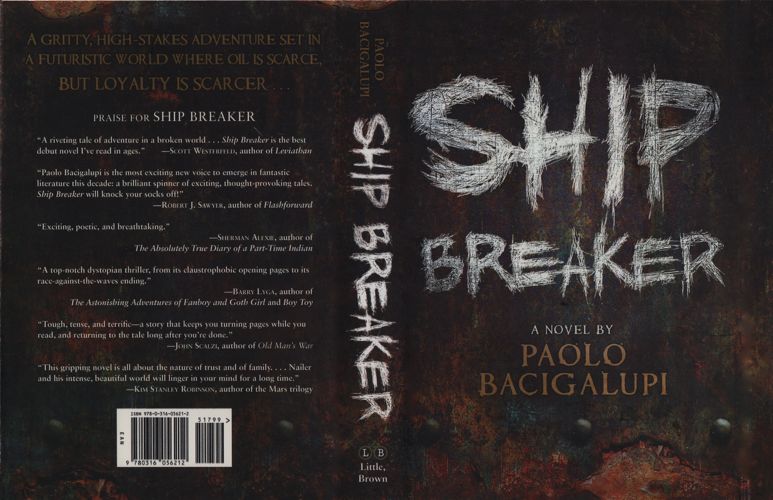
Nailer works a light-crew scavenging copper wire and scrap from beached oil tankers on a Gulf Coast reshaped by rising seas and vanished order, until a wrecked clipper ship washes ashore carrying a half-drowned girl from the wealthy world he'll never belong to. Paolo Bacigalupi's Ship Breaker follows Nailer as helping her pulls him out of his abusive father's orbit and into a much larger, more dangerous game involving her family's fortune. The sequels The Drowned Cities and Tool of War widen the same flooded, resource-scavenging future to new characters and coastlines.
- Rot & Ruin
series22 books2010
part of Night
similar bysurvivalnear futuretensepost-apocalypticnorth america
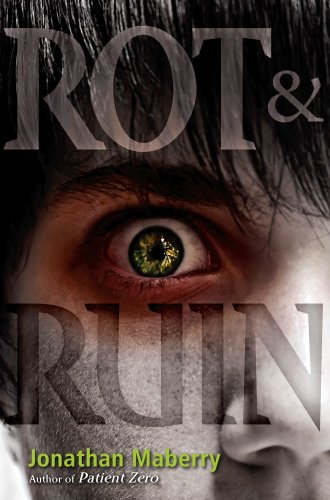
Jonathan Maberry's Rot & Ruin is set fourteen years after a zombie plague, following fifteen-year-old Benny Imura, who reluctantly apprentices to his older half-brother as a bounty hunter clearing the dead beyond his fenced-in California town. The series follows Benny's growing understanding of both the zombies and the living people who prey on the fragile post-apocalyptic order, across four more novels and companion story collections.
- The Martian
series2 books2012
similar bysurvivalnear futuretensescience fictionour world
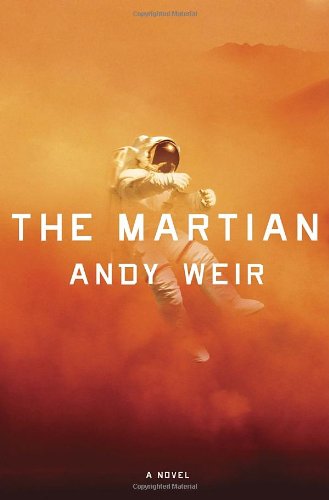
Andy Weir's novel The Martian, first self-published in 2011 before a commercial re-release, follows astronaut Mark Watney after he is stranded alone on Mars when his crew presumes him dead and departs. Using scientific improvisation and dark humor, Watney works to keep himself alive long enough for a rescue to reach him. It is a single, self-contained survival story.