More like Bearable
anchored on:science fictionother star systemsfar future
but
- Dune
series20 books1963
part of Dune Universe
similar byscience fictionfar futureother star systems+2 more
Frank Herbert's Dune Chronicles opens with 1965's Dune, set on the desert planet Arrakis where House Atreides takes control of the only source of the vital spice melange and young Paul Atreides is pulled into a struggle over its politics and religion. Herbert carried the story forward across five further novels — Dune Messiah, Children of Dune, God Emperor of Dune, Heretics of Dune, and Chapterhouse: Dune — following Paul's line over the following millennia, before Brian Herbert and Kevin J. Anderson later extended the saga. Many other editions of these six novels are omnibus and box-set repackagings rather than separate stories.
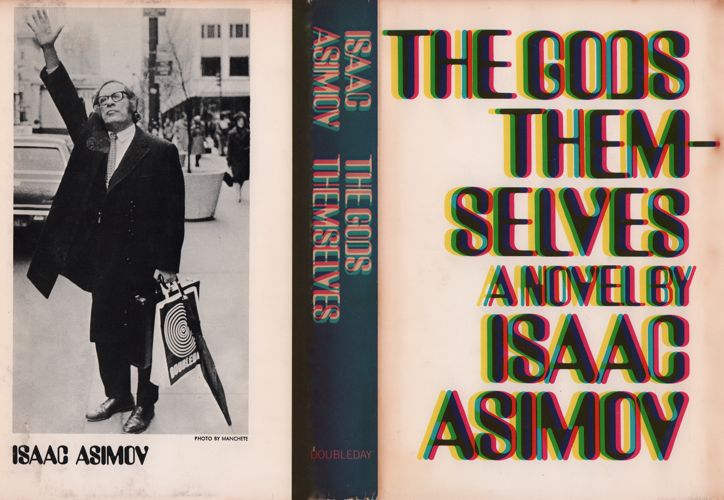
- The Gods Themselves
Isaac Asimovstandalone novel1972
similar byscience fictionchallengingfar futureother star systemsaliens+1 more
The Gods Themselves is a 1972 science fiction novel written by Isaac Asimov, and his first original novel in fifteen years. It won the Nebula Award for Best Novel in 1972, and the Hugo Award for Best Novel in 1973.
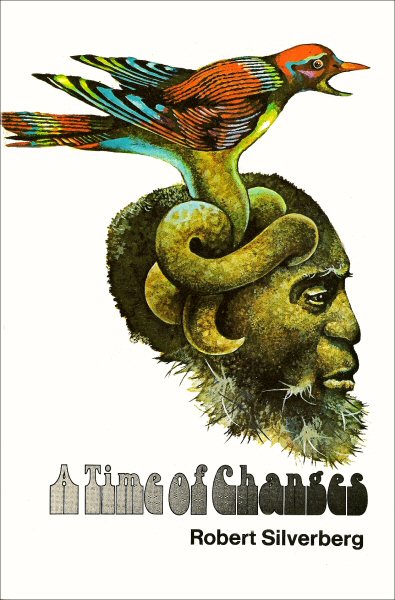
- A Time of Changes
Robert Silverbergstandalone novel1971
similar byscience fictionother star systemsfar futurereflective+1 more
A Time of Changes is a 1971 science fiction novel by American writer Robert Silverberg. It won the Nebula Award for that year, and was also nominated for the 1972 Hugo and Locus Awards.
- Hainish
series33 books1964
completed
similar byscience fictionfar futureother star systemsreflective+1 more
The Hainish Cycle consists of a number of science fiction novels and stories by Ursula K. Le Guin. The cycle is set in a future history that features civilizations of human beings on planets orbiting a number of nearby stars, including Terra ("Earth"); these humans are contacting each other for the first time and establishing diplomatic relations, as well as setting up a confederacy under the guidance of the oldest of the human worlds, the peaceful planet Hain. In this history, human beings did not evolve on Earth, but they were instead the result of interstellar colonies planted by Hain in the distant past, after which interstellar travel ceased for an extended period. Some of the human races have new genetic traits, a result of ancient Hainish experiments in genetic engineering; this includes people who can dream while awake, and a world of hermaphroditic people who only enter active sexuality once per month, not knowing which sex will manifest in them. In keeping with Le Guin's narrative approach, she uses varied social and environmental settings to explore the anthropological and sociological outcomes of human evolution in those environments. The author often discounted the characterization of a so-called "Hainish Cycle".
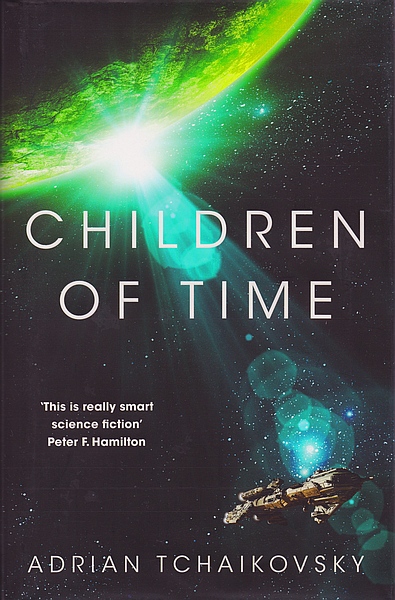
- Children of Time
series6 books2015
similar byscience fictionfar futureother star systems+3 more
Adrian Tchaikovsky's Children of Time follows two threads: a terraformed planet where an experimental nanovirus meant to accelerate primate evolution instead uplifts a species of spiders into a technological civilization guided by the recorded personality of a human scientist, and the last survivors of Earth aboard a generation ark ship searching for a new home. The two threads collide across mismatched timescales as the ark ship's crew, cycling in and out of cryosleep, finally reach the spiders' world. It's the first of a loosely connected series that applies the same premise to different alien biologies in each subsequent book.
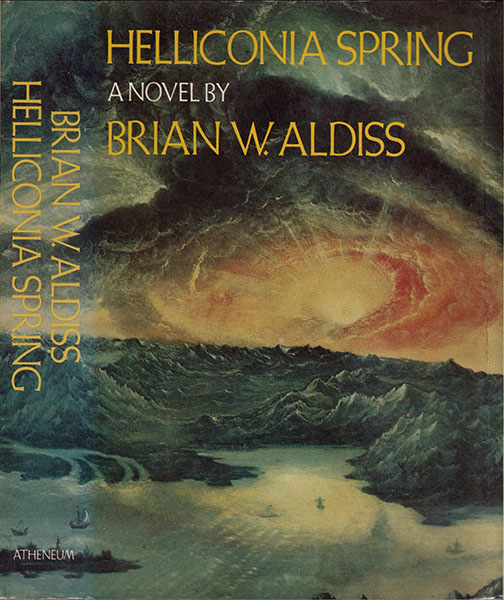
- Helliconia
series4 books1982
completed
similar byscience fictionchallengingother star systemsfar futurereflective+1 more
The Helliconia trilogy is a series of science fiction books by British writer Brian W. Aldiss, set on the Earth-like planet Helliconia. It is an epic chronicling the rise and fall of a civilisation over thousands of years as the planet progresses through its incredibly long seasons, which last for centuries.
- Dune Universe
universe78 books1963
Start hereDune · Start here
similar byscience fictionfar futureother star systems
Arrakis. Dune. The desert planet, where empire runs on a single substance: the spice melange, which folds space, prolongs life, and unlocks prescience, and which exists nowhere else in the known universe. Frank Herbert's saga is a meditation dressed as an adventure — feudal houses and a secret sisterhood, engineered messiahs and the patient ecology of a world without water, all turning on the terrible gravity of who commands the spice. It reads like scripture and schemes like a war room, ten thousand years hence, among people who have outlawed the thinking machine and made instruments of themselves instead. At its heart stand Herbert's original six — Dune, Dune Messiah, Children of Dune, God Emperor of Dune, Heretics of Dune, Chapterhouse: Dune — a single deepening arc across millennia, arguing the whole way between prophecy and free will. Around that spine his son Brian Herbert and Kevin J. Anderson have raised a vast prequel architecture: Prelude to Dune, tracing the great houses a generation before Paul; Legends of Dune, reaching back to the crusade that broke the machines; the Schools of Dune cycle on the founding of Bene Gesserit, Mentat, and Navigator; the Caladan Trilogy and Heroes of Dune filling years the originals left in shadow. Many hands, dozens of volumes, one desert. What sets Dune apart is its refusal of the simple: religion is manufactured, heroes are hazards, and the sand itself — worm, water, ecology — acts as a political power. Begin where the universe did, with Frank Herbert's Dune (1965), and read the original six in order; you need nothing else to feel the full weight. The prequels are a country to explore afterward, taken by era. Beginnings are delicate times.
- Starship Troopers
Robert A. Heinleinstandalone novel1959
similar byscience fictionfar futureother star systemsaliens+1 more
Starship Troopers is a military science fiction novel by American writer Robert A. Heinlein. Written in a few weeks in reaction to the US suspending nuclear tests, the story was first published as a two-part serial in The Magazine of Fantasy & Science Fiction as Starship Soldier, and published as a book by G. P. Putnam's Sons on November 5, 1959.
- Ender Wiggin
series14 books1977
part of Ender's Game Universe
similar byscience fictionfar futureother star systemsaliens+1 more
Orson Scott Card's Ender's Game (1985, expanded from his 1977 novella) follows child prodigy Andrew "Ender" Wiggin as he is recruited into a military training program built to prepare Earth's defenses for an anticipated third war against an insectoid alien species known as the Formics. The saga continues years later through Speaker for the Dead and Xenocide, following an older Ender as he confronts the moral weight of his role in that earlier conflict, and concludes the core arc in Children of the Mind, with Ender in Exile filling in the years between the first two books. Set within the wider Ender's Game universe, the series shifts from military coming-of-age story to slower, more philosophical science fiction as it progresses.
- Triton
Samuel R. Delanystandalone novel1976
similar byscience fictionchallengingother star systemsfar futurereflective
Trouble on Triton: An Ambiguous Heterotopia (1976) is a science fiction novel by American writer Samuel R. Delany. It was nominated for the 1976 Nebula Award for Best Novel, and was shortlisted for a retrospective James Tiptree, Jr. Award in 1995. It was originally published under the shorter title Triton.
- The Algebraist
Iain M. Banksstandalone novel2004
similar byscience fictionother star systemsfar futurealiens+1 more
The Algebraist is a science fiction novel by Scottish writer Iain M. Banks, published in print in 2004. It was nominated for a Hugo Award for Best Novel in 2005.
- Manseed
Jack Williamsonstandalone novel1982
similar byscience fictionother star systemsfar futurereflectivegenetic engineering+2 more
In the decades since i've read this novel somehow i forgot almost everything about it, except the powerful force it had on me. However, the the following description from http://www.fictiondb.com/author/jack-williamson~manseed~117359~b.htm seems to match my long ago reading experience: Egan Drake was a wealthy but unhappy visionary who died early and left behind only a powerful dream. He proposed to spread Mankind among the stars. Then there was Megan Drake. She took her brother's vision and made it real. At the Raven Foundation's New Mexico headquarters, she gathered around her experts in astronautics, biology, computer science, defense, and fusion propulsion. The project was simple in design yet grandiose in its aim: a thousand tiny ships would crawl to the stars; each that landed on an Earth-type planet would produce several dozen colonists; each colonist would be a product of the genes derived from Megan and her experts. Every ship would manufacture cyborgs for repairs and self-protection. But much of the technology was new and untried; no one could predict what might really occur at a millennia-long journey's end if, say, a cyborg fell in love or aliens were met or...
- The Crucible of Time
John Brunnerstandalone novel1983
similar byscience fictionchallengingother star systemsfar futurealiens+1 more
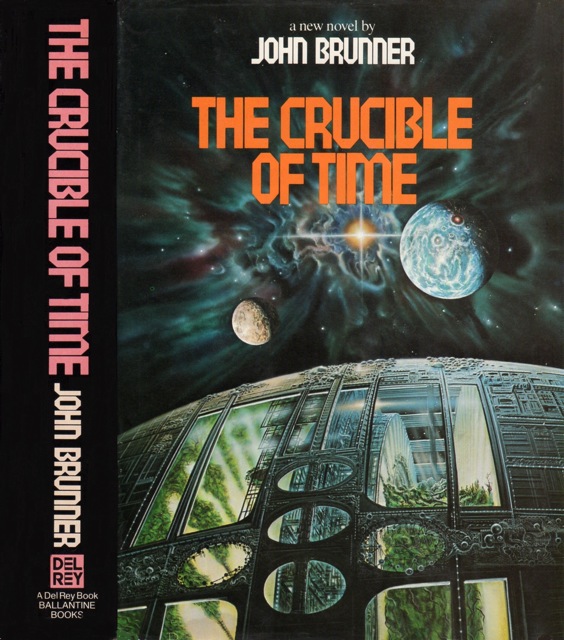
The Crucible of Time is a fix-up science fiction novel by John Brunner. It was first published in 1983.
- Glory Season
David Brinstandalone novel1993
similar byscience fictionchallengingother star systemsfar futuregenetic engineering
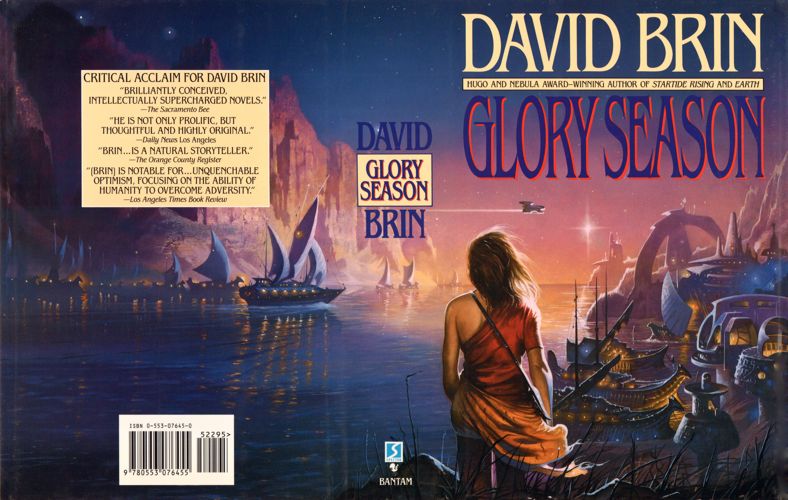
Glory Season is a 1993 science fiction novel by David Brin. It was nominated for both the Hugo and Locus Awards in 1994. An announcement in the back of one edition of Earth is for a novel titled Stratos, to be released in the spring of 1992. It seems likely that this was delayed, and renamed Glory Season.
- Semiosis
series3 books2018
similar byscience fictionother star systemsfar future+3 more
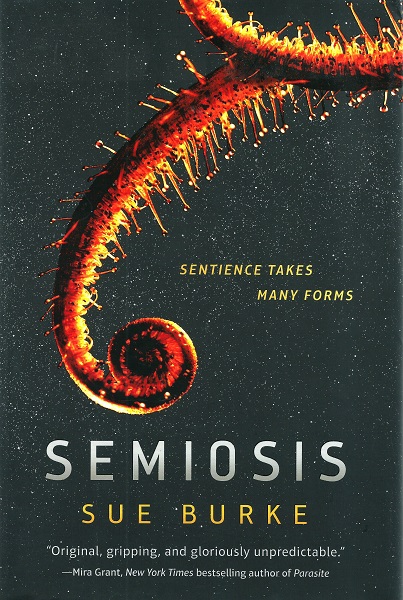
Semiosis is Sue Burke's science fiction trilogy: Semiosis (2018), Interference and Usurpation. It follows generations of human colonists on an alien world forming an uneasy, evolving relationship with Stevland, a highly intelligent sentient plant, as the colony's survival comes to depend on cooperating with a fundamentally non-animal intelligence. The trilogy follows one continuous colony's history across decades of story time.
- Radix Tetrad
series4 books1981
similar byscience fictionchallengingfar future+2 more
The Radix Tetrad is a group of four science fiction books by A. A. Attanasio. The first novel, the Nebula Award-nominated Radix, was published in 1981, and the last novel, The Last Legends of Earth, was published in 1989.
- Wyrms
Orson Scott Cardstandalone novel1987
similar byscience fictionother star systemsfar futurereflective+1 more
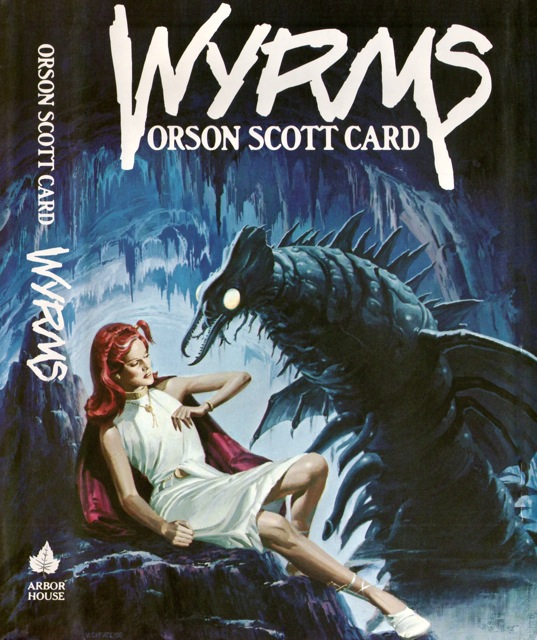
Wyrms (1987) is a science fiction novel by American writer Orson Scott Card. The story examines desire, wisdom, and human will. Card describes a version of the tri-partite soul, similar to that articulated by Plato in the Republic.
- Beyond Infinity
Gregory Benfordstandalone novel2004
similar byscience fictionfar futureother star systemsgenetic engineering+3 more
From the flaps of the Warner Aspect first edition: "Billions of years from now, the last true human must find her place - and her destiny - within the inconceivable vastness of multiple universes. ... Cley is an Original, a genetically pure member of the most ancient Ur-Human beings. Like others of her forest-dwelling tribe, she expects to spend her few centuries working in the great subterranean Library of Life. Then catastrophe strikes when strange transdimensional life-forms obliterate the Library and kill all of Earth's Originals - except for Cley. These uncanny beings also attack the planet's most advanced human species, the highly evolved Supras, who cannot reconstruct the knowledge and DNA lost in the Library's ruins. Nor can they protect Cley... Forced to flee, Cley must begin a desperate quest for survival, answers, and hope. Joined by a raccoonlike companion called Seeker, she will journey across the myriad environments of her wildly transformed world... and then far, far beyond. For somewhere - past planets that have been reengineered, past sentient ship-worlds evolving deep between stars, past creatures the size of solar systems - waits the Malign. A being so powerful that it can escape a black hole, the Malign is destroying the galaxy as it hunts down the one thing it fears... Cley."
- The Man in the Maze
Robert Silverbergstandalone novel1969
similar byscience fictionother star systemsfar futurelonelinessreflective+1 more
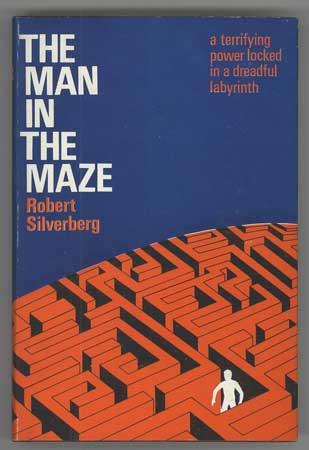
The Man in the Maze is a science fiction novel by American writer Robert Silverberg, originally serialized in the magazine Worlds of If in April and May 1968, and published in bookstores the following year. It tells the tale of a man rendered incapable of interacting normally with other human beings by his uncontrollable psychic abilities. The novel is inspired by Sophocles' play Philoctetes, with the roles of Odysseus, Neoptolemus and Philoctetes played by Boardman, Rawlins, and Muller, respectively.
- Wess'har Wars
series7 books2004
similar byscience fictionother star systemsfar futurealiens+1 more
The Wess'har Wars series is a six-book science fiction novel series written by author Karen Traviss and is set several hundred years in the future. It involves humanity's contact with a number of alien species with conflicting interests and beliefs, while her central character, Shan Frankland, is caught in the middle of a coming conflict. The series has a focus on environmental impact. All six novels were published by Eos, an imprint of HarperCollins: City of Pearl, Crossing the Line, The World Before, Matriarch and Ally. The last book of the series, Judge was released on March 25, 2008.
- The Fifth Head of Cerberus
series4 books1972
similar byscience fictionfar futureother star systems+1 more
- Kefahuchi Tract Trilogy
series3 books2002
similar byscience fictionchallengingfar futureother star systems+1 more
M. John Harrison's Kefahuchi Tract trilogy circles a strange, physics-breaking anomaly in deep space that draws scientists, smugglers, and drifters into its pull across different eras. Light moves between a near-future timeline and a far-future one drawn to the Tract itself; its sequel Nova Swing stays within one future period, where a fragment of the anomaly's altered space bleeds into the run-down port city of Saudade, giving the book a noir, Roadside-Picnic-like atmosphere; Empty Space concludes the sequence. The three novels share a setting and mood more than a continuous plot or cast.
- Pantropy
series6 books1942
completed
similar byscience fictionother star systemsfar futuregenetic engineering+1 more
Pantropy collects James Blish's linked stories about adapting humans genetically to survive unaltered on alien worlds, rather than terraforming those worlds to suit humans — a concept the stories helped popularize under the name 'pantropy.' The stories were assembled into the 1957 collection The Seedling Stars.