Loreful
HomeDiscover
Search series, authors…⌘K
Loreful

Reading orders for SF/F series and shared universes — with your place kept in every one.

Explore

UniversesSeriesWorksAuthorsAtlas

Help

FAQAboutSite map

Account & legal

Sign inCreate accountPrivacyTerms

Data

Built on ISFDB, Wikipedia, Wikidata and Open Library. Curated reading orders carry their reasoning on the page; the rest follow publication order. Data sources & licenses

© Loreful · data: ISFDB · CC BY

More like Before Egypt

but

Mood

The mood the book leaves you in.

  • The reading experience is propelled by journeys, exploration, and physical risk; excitement and forward momentum dominate over dread or introspection.
  • Joy and loss are deliberately mixed; the resolution grants characters something real while taking something else away, leaving warmth and sorrow together.
  • The book demands work from the reader — dense prose, difficult structure, unfamiliar ideas, or morally uncomfortable material — as part of its intended effect.
  • Grim events, cruelty, or despair dominate the atmosphere, and the book does not soften them with comfort or comic relief.
  • The atmosphere is quietly unsettling — wrongness, unease, and the uncanny pervade the book without necessarily escalating into overt horror.
  • The book is built to move the reader; character feeling is foregrounded and major scenes aim at a strong emotional response.
  • Humor is a primary aim and the prose plays for laughs — comic situations, wit, or dialogue produce sustained comedy, not occasional levity.
  • The book insists that things can improve; effort and decency are shown to matter, and the arc bends toward better outcomes even through hardship.
  • The book teaches as it goes — real facts, history, science, or craft are conveyed in enough depth that learning is part of the reading experience.
  • The book is designed to uplift and motivate, presenting perseverance or achievement in a way that invites the reader to aspire or act.
  • The overall register is cheerful and easygoing; stakes are kept gentle and the book avoids dwelling on pain or dread.
  • Withheld information drives the experience; the book sustains enigmas and secrets the reader wants resolved, whatever its genre.
  • The book is contemplative and inward-looking, giving more weight to thought, memory, and meaning than to external events.
  • The book works as comfort reading — low tension, a soothing pace, and an atmosphere the reader can unwind in.
  • Grief, loss, or melancholy set the dominant register, and the book lets sorrow stand rather than resolving it into comfort.
  • Sustained suspense is the point; the book keeps the reader braced for what happens next through danger, pressure, or impending revelation.
  • Playful invention and charm define the register — fanciful conceits, light absurdity, and a narration that delights in its own oddity.

About

What the story runs on.

  • Stories in which a machine intelligence — an AI, computer mind, or sentient program — is a central character or the story's driving problem.
  • Stories in which extraterrestrial beings are central — as characters, cultures, or the object of the plot.
  • Stories driven by deliberate modification of genomes — designer organisms, engineered humans, and the consequences of remaking life.
  • Stories about venturing into space to explore — survey missions, astronauts, and the frontier of the unknown beyond Earth.
  • Stories about settling other planets or habitats — founding, sustaining, and governing colonies off Earth.
  • Stories about minds with paranormal abilities — telepathy, telekinesis, precognition, empathy — and how societies handle those who have them.
  • Stories in which staying alive against nature, catastrophe, or scarcity is the central problem.
  • Stories of growing up — a young protagonist crossing from childhood into adult knowledge and responsibility.
  • Stories about who a character truly is — self-discovery, doubled lives, and the search for a self.
  • Stories driven by maneuvering for power — factions, conspiracies, and statecraft conducted in shadow.
  • Stories about rising against rulers — uprisings, resistance movements, and revolutions and their aftermaths.
  • Stories in which war itself is the subject — combat, occupation, and what warfare does to soldiers and civilians.

Shelf

Where it sits in the library.

    • Fiction built on magic or other supernatural elements that have no scientific explanation.
    • Secondary-world fantasy at large scale, where the fate of nations or the world turns on the protagonists' struggle.
    • Fantasy set in a recognizably modern city or contemporary world where the supernatural intrudes on everyday life.
    • Fantasy that blends in horror's atmosphere and imagery, keeping a fantastical frame around grim or frightening material.
    • Action-driven fantasy following warriors or rogues with personal stakes against sorcerous threats, rather than world-spanning conflicts.
    • Fantasy set in a real historical period or a close analogue of one, with magic woven into the era.
    • Fantasy in which protagonists cross from the ordinary world into another world through a portal or similar passage.
    • Fiction that retells or reworks a traditional fairy tale in a new form or setting.
    • Fantasy drawing directly on myths, legends, and folklore, retelling them or building on their figures and logic.
    • Fantasy of ghosts, vampires, shapeshifters, psychics, and similar phenomena, usually set in an otherwise ordinary world.
    • Fiction mixing science-fictional trappings with overtly magical or impossible elements in one setting.
    • Low-stakes fantasy emphasizing comfort, community, and everyday pleasures over conflict and peril.
    • Speculative fiction of pervasive moral ambiguity, violence, and cynicism that rejects heroic conventions — fantasy and SF alike.
      • Fiction that extrapolates from science and technology — future societies, space travel, or speculative inventions — within at least nominally natural laws.
      • Science fiction of interstellar scope — starships, galactic polities, and adventure across star systems.
      • Science fiction committed to scientific rigor, where technical plausibility constrains the story.
      • Science fiction centered on armed forces and warfare, told largely from a military point of view.
      • Science fiction of networked, corporate-dominated near futures, pairing high technology with social decay.
      • Science fiction styled on nineteenth-century steam-powered technology, often in a Victorian or pseudo-Victorian setting.
      • Fiction depicting an oppressive or catastrophic society, presented as a warning.
      • Fiction set after civilization's collapse, following survivors in the ruins of the old world.
      • Fiction in which characters move between past and future, and the mechanics or consequences of that travel drive the plot.
      • Fiction exploring a world where a historical event went differently and history diverged from ours.
      • Science fiction about humanity's first encounter and communication with an alien intelligence.
      • Science fiction in which extraterrestrial forces attack or occupy Earth and humanity resists.
      • Fiction whose primary aim is to frighten or unsettle the reader through dread, menace, or the monstrous.
      • Horror of vast, indifferent, incomprehensible entities before which humanity is insignificant, in the Lovecraft tradition.
      • Horror of decaying houses, buried family secrets, and oppressive atmosphere in the Gothic literary tradition.
      • Horror centered on hauntings and the returning dead.
      • Horror located in the mind — paranoia, obsession, and unreliable perception rather than external monsters.
      • Horror built around the reanimated dead and survival amid their outbreaks.
      • Horror defined by explicit, transgressive gore that refuses to cut away from violence.
      • Speculative fiction of the strange and uncanny that resists both natural explanation and standard genre categories.
      • Fiction organized around solving a crime or puzzle, typically following an investigator toward the identification of a culprit.
      • A puzzle-first mystery that lays out clues so the culprit's identity can be deduced before the reveal.
      • Crime fiction of moral ambiguity, fatalism, and hard-edged style, set among the corrupt and the doomed.
      • A mystery following the realistic routines of police work — forensics, interviews, and case-building.
      • A gentle mystery with an amateur sleuth, a small community, and violence kept off the page.
      • A mystery set in a past era, where the investigation works within that period's methods and society.
      • Fast-paced fiction driven by imminent danger, pursuit, or high-stakes conspiracy, built to sustain tension.
      • A thriller of espionage — agents, tradecraft, and intelligence services in conflict.
      • A thriller centered on lawyers and the courtroom, where litigation carries the suspense.
      • A thriller driven by detailed contemporary or near-future technology, often military or scientific.
      • A thriller whose tension comes from mental states and manipulation between characters rather than external action.
      • Fiction whose central plot is a romantic relationship and its development toward an emotionally satisfying resolution.
      • Romance in which one or both partners are supernatural beings, blending fantasy elements into the love story.
      • A fantasy-romance hybrid in which the romantic arc and the fantasy plot carry equal weight.
      • Romance set in a past era, with courtship shaped by the period's society and manners.
      • Romance set in the present day, without supernatural or historical elements.
      • Fiction set in a real past period, where the historical setting materially shapes characters and events.
        • General and literary fiction emphasizing prose style, character interiority, or formal ambition over genre plot conventions.
        • Fiction in a realistic world where magical events occur and are treated as ordinary, in the tradition of Latin American literature.
        • Fiction that ridicules people, institutions, or society in order to criticize them.
        • Fiction of dreamlike, irrational imagery and logic that breaks from realistic representation.
        • Fiction that plays with narrative convention through metafiction, fragmentation, and self-reference.
        • Fiction propelled by journeys, exploration, and physical peril, where action and survival carry the plot.
        • Adventure fiction of ships and seafaring — naval engagements, voyages, and life at sea.
        • Fiction of the American frontier West — gunmen, ranchers, and lawmen, typically in the late nineteenth century.
        • Fiction centered on soldiers, campaigns, and the experience of warfare, historical or imagined.
          • Fiction written primarily to amuse, using comedic situations, wit, or parody as its organizing principle.
            • Multi-generational fiction following a family or dynasty across decades, with inheritance and kinship as the through-line.
              • Fiction whose world runs on explicit game mechanics — levels, stats, and skills that characters can see and exploit.
                • Fiction about costumed or superpowered heroes and their conflicts with comparable villains.

                Practical

                How long a commitment, whether it stands alone, and whether it has finished.

                Tap a chip to ask for it · tap again to rule it out · once more to clear. Numbers show what would be left.

                • Cover of Karl Glogauer
                  Karl Glogauer

                  series · 2 books · 1969

                  similar byscience fiction+2 more

                  Michael Moorcock's two Karl Glogauer novels share a character rather than a plot. In Behold the Man (1969), Glogauer travels back in time seeking the historical Jesus, discovers the real man is severely disabled, and takes on the role of Christ himself, engineering his own crucifixion to fulfill the story he grew up reading. Breakfast in the Ruins (1972) recasts him across seventeen variant lives spanning 1871 to 1990, each one crueler than the last, framed around a present-day encounter in London -- using the same protagonist for a different formal experiment rather than continuing a single narrative.

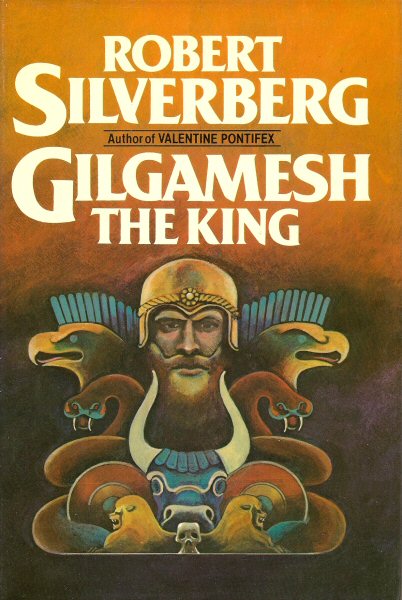
                • Cover of Gilgamesh
                  Gilgamesh

                  series · 12 books · 1984

                  similar bymiddle eastancient world

                • Cover of Roma Eterna
                  Roma Eterna

                  series · 11 books · 1989

                  similar by+2 more

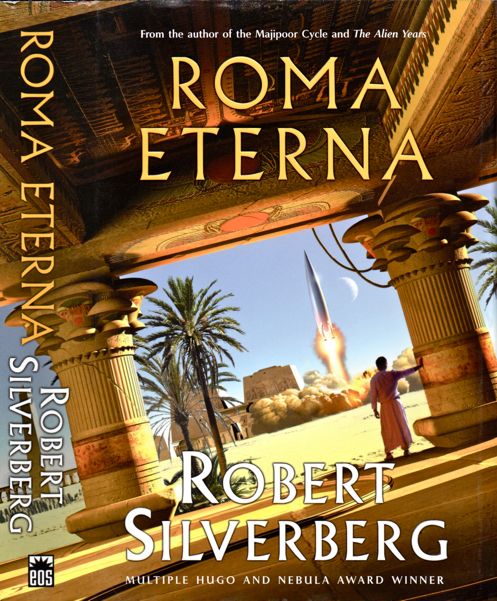
                  Robert Silverberg's Roma Eterna imagines an alternate history in which the Roman Empire never fell and endures into the present day, tracing its long, uneven survival through a sequence of pivotal moments across two millennia. Rather than one continuous plot, the book is a fix-up of ten linked stories, most first published in Asimov's Science Fiction over a fourteen-year span, each set in a different era of this unbroken Rome. It reads as the chronicle of a civilization rather than a story following a single cast of characters.

                • Cover of Both Sides of Time
                  Both Sides of Time

                  series · 4 books · 1995

                  similar by+1 more

                  Time Travelers Quartet is a series of four young adult time-travel romance books by Caroline B. Cooney.

                • Cover of Belisarius
                  Belisarius

                  series · 7 books · 1998

                  completed

                  similar byscience fictionancient world+1 more

                • Cover of Danger Boy
                  Danger Boy

                  series · 4 books · 2001

                  similar byscience fiction+2 more

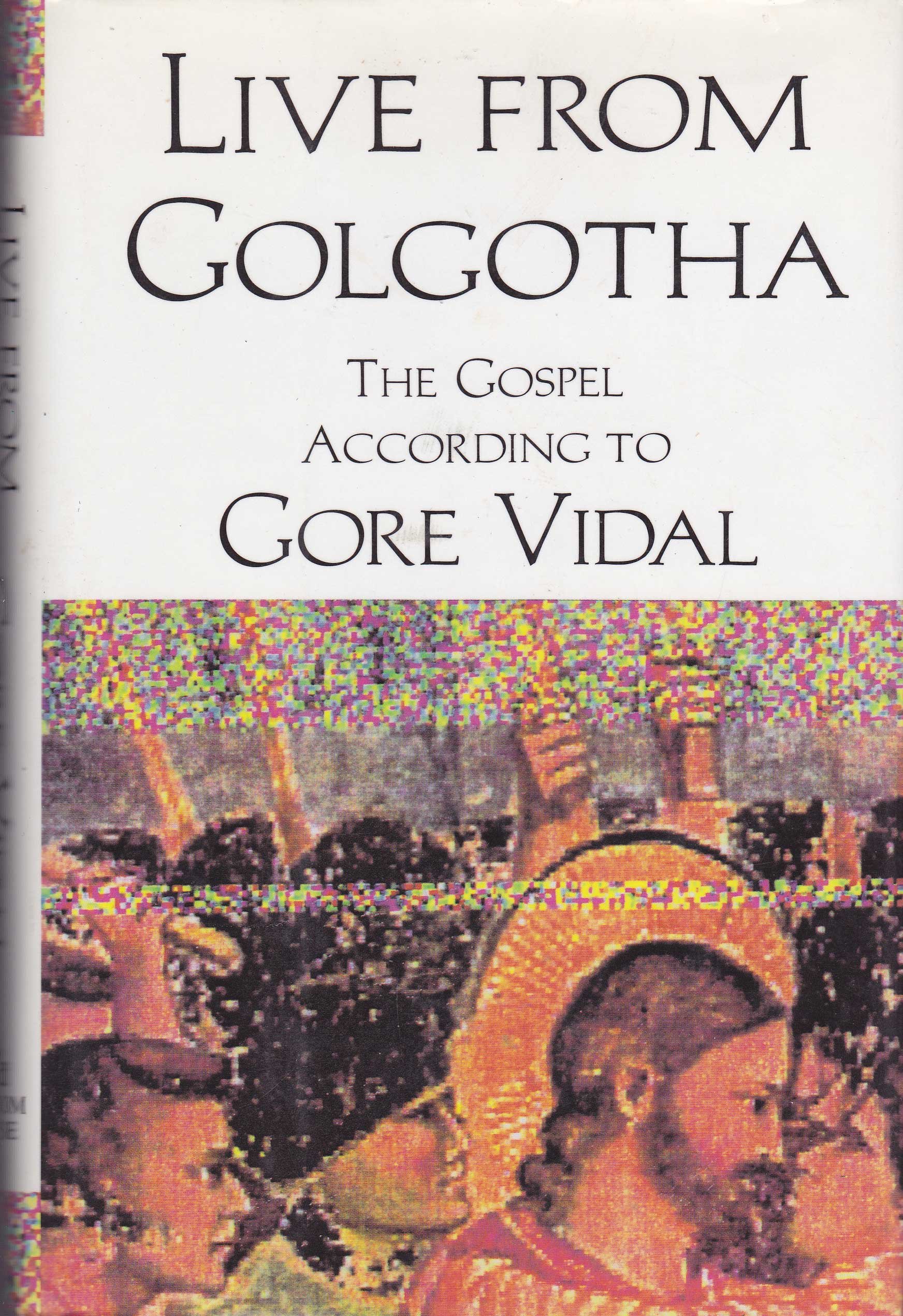
                • Cover of Live from Golgotha
                  Live from Golgotha

                  Gore Vidal · standalone novel · 1992

                  similar byancient world

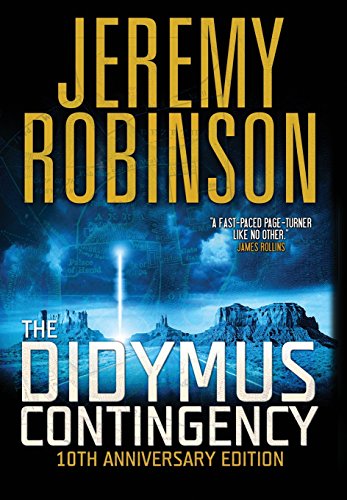
                • Cover of The Didymus Contingency
                  The Didymus Contingency

                  Jeremy Robinson · standalone novel · 2007

                  similar byscience fictionmiddle eastancient world

                  IF YOU COULD GO BACK IN TIME, AND WITNESS ANY EVENT, WHERE WOULD YOU GO? When Dr. Tom Greenbaum faces that question after successfully discovering the secret to time travel, he knows the time, place and event he will witness: the death and failed resurrection of Jesus Christ. Dr. David Goodman, Tom's colleague and closest friend follows Tom into the past, attempting to avert a time-space catastrophe, but forces beyond their control toss them into a dangerous end game where they are tempted by evil characters, betrayed by friends, pursued by an assassin from the future and haunted by a demon that cannot be killed.

                • Cover of Pilgrim (Fred Saberhagen)
                  Pilgrim (Fred Saberhagen)

                  series · 2 books · 1987

                  completed

                  similar by+3 more

                • Cover of Aquila
                  Aquila

                  series · 7 books · 1982

                  similar byscience fiction+1 more

                • Cover of Patternist
                  Patternist

                  series · 6 books · 1976

                  completed

                  similar byscience fiction

                  The Patternist series is a group of science fiction novels by Octavia E. Butler that detail a secret history continuing from the Ancient Egyptian period to the far future that involves telepathic mind control and an extraterrestrial plague. A profile of Butler in Black Women in America notes that the themes of the series include "racial and gender-based animosity, the ethical implications of biological engineering, the question of what it means to be human, ethical and unethical uses of power, and how the assumption of power changes people."

                • Cover of Walter Goodwin
                  Walter Goodwin

                  series · 3 books · 1918

                  completed

                  similar by+1 more

                  The Moon Pool (1919) and The Metal Monster (1920) are connected fantasy-adventure novels by A. Merritt, both narrated by the same character, Dr. Walter Goodwin, as he encounters hidden ancient civilizations and forces beyond ordinary science. The Moon Pool began as two related stories serialized in All-Story Weekly before being combined into a novel, and its success led Merritt to send Goodwin into a second, similarly strange discovery in The Metal Monster the following year. The two books follow Goodwin from one uncanny expedition to the next rather than forming a tightly plotted continuing saga.

                • Cover of The Golden Hour
                  The Golden Hour

                  series · 3 books · 2004

                  similar by+3 more

                • Cover of Time Jumpers
                  Time Jumpers

                  series · 4 books · 2018

                  similar by+2 more

                • Cover of The Anubis Gates
                  The Anubis Gates

                  series · 3 books · 1983

                  similar by+2 more

                  The Anubis Gates is a single time-travel fantasy novel by Tim Powers, following a present-day academic who takes part in a time-travel experiment and ends up stranded in early nineteenth-century London. It won the Philip K. Dick Award in 1983 and the Science Fiction Chronicle Award the following year.

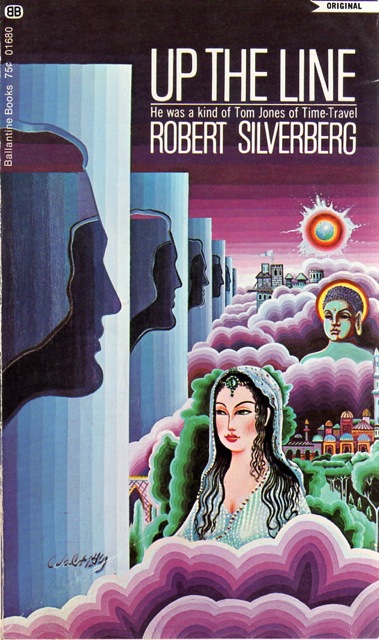
                • Cover of Up the Line
                  Up the Line

                  Robert Silverberg · standalone novel · 1969

                  similar byscience fiction+1 more

                  Up the Line (1969) is a time travel novel by American science fiction author Robert Silverberg. The plot revolves mainly around the paradoxes brought about by time travel and is considered an example of the more sexually-permissive era of late 1960s American science-fiction, a reflection of the counterculture of its day. It was nominated for a Nebula Award for Best Novel in 1969 and a Hugo Award for Best Novel in 1970 but lost to Ursula K. Le Guin's The Left Hand of Darkness both times.

                • QL
                  Quantum Logic

                  series · 7 books · 1990

                  completed

                  similar byscience fiction

                • Cover of Time Patrol
                  Time Patrol

                  series · 24 books · 1955

                  similar byscience fiction+1 more

                  Poul Anderson's Time Patrol stories follow Manson Everard, recruited in 1957 into a secret organization that polices time travel, hunting down unauthorized travelers and anyone who would alter history. The series ranges from the waterfall that once refilled the dry Mediterranean basin to Gothic-era Ukraine and Phoenician Tyre, treating each era as a crime scene the Patrol must protect from tampering.

                • Cover of The Manuscripts of the Richards' Trust
                  The Manuscripts of the Richards' Trust

                  series · 3 books · 2011

                  similar byscience fictionmiddle east

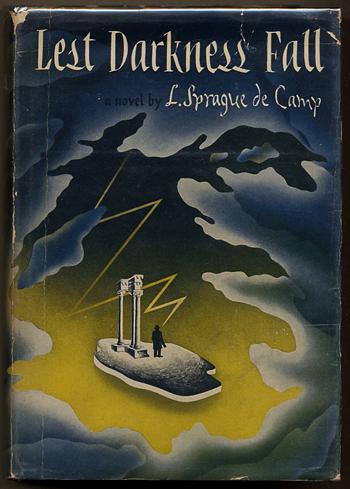
                • Cover of Lest Darkness Fall
                  Lest Darkness Fall

                  series · 4 books · 1941

                  similar byscience fictionancient world

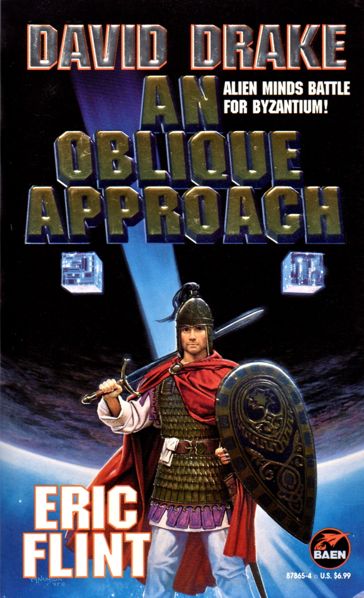
                  L. Sprague de Camp's Lest Darkness Fall (1939) is a single alternate-history novel in which archaeologist Martin Padway is thrown by a lightning strike from 1938 Rome back to Ostrogothic Italy in 535 AD, where he uses his knowledge of later history and technology -- distilling brandy, building a printing press, reworking military tactics -- to try to head off Europe's slide into the Dark Ages. David Drake's later novella To Bring the Light, sometimes packaged alongside it, borrows the same time-travel-to-Rome premise with a different protagonist.

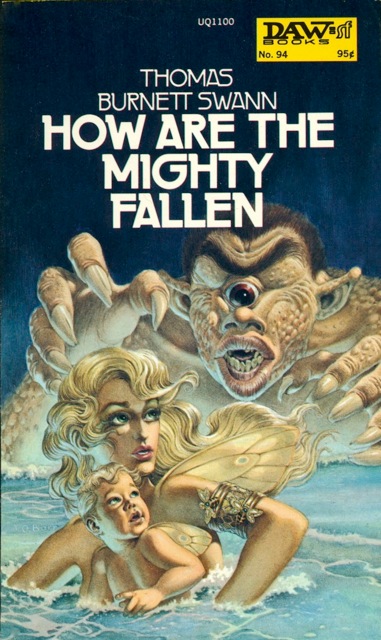
                • Cover of How Are the Mighty Fallen
                  How Are the Mighty Fallen

                  Thomas Burnett Swann · standalone novel · 1974

                  similar bymiddle eastancient world+1 more

                  From the back cover of the DAW paperback: "Cyclops and sirens, halfmen and godlings... That of which myths are made and that from which worship arises - these are the materials Thomas Burnett Swann weaves together in the fantasy-historical tapestry of this new novel, which he considers to be his most important work to date. For the author of Green Phoenix and The Forest of Forever now tells of a queen of ancient Judea who was more than human, of her son who became legend, of their Cyclopean nemesis whose name became synonymous with Colossus, and of loves and loyalties and combats fixed forever in the foundations of human society. The ever-growing audience that Thomas Burnett Swann has gathered for his unique novels will find How Are the Mighty Fallen a new fantasy fiction experience."

                • Cover of The Change / The Event
                  The Change / The Event

                  series · 41 books · 1998

                  similar byscience fiction

                  The Change: Tales of Downfall and Rebirth is a shared-world anthology of stories set in the years right after a mysterious global event instantly disables gunpowder, electricity, and combustion engines, the founding premise of S. M. Stirling's Emberverse. Sixteen different authors, coordinated by Stirling, each contribute stories set in various corners of the suddenly de-industrialized world as survivors scramble to rebuild. It's a companion volume to the Change/Emberverse novels rather than a novel itself.

                • Cover of Time Odyssey
                  Time Odyssey

                  series · 3 books · 2003

                  similar byscience fiction

                  A Time Odyssey is a trilogy of science fiction novels co-written by Arthur C. Clarke and Stephen Baxter. As of 2008, the series consists of:Vol. 1 – Time's Eye Vol. 2 – Sunstorm Vol. 3 – Firstborn

                • Cover of The Dancer from Atlantis
                  The Dancer from Atlantis

                  Poul Anderson · standalone novel · 1971

                  similar byscience fictionancient world

                  The Dancer from Atlantis is a science fiction novel by American writer Poul Anderson, first published in 1971 by Doubleday.