More like Bellwether
anchored on:science fictionour worldcontemporarynorth americareflective
but
- Stranger in a Strange Land
Robert A. Heinleinstandalone novel1961
similar byidentityscience fictionreflectivenorth americaour world
Stranger in a Strange Land is a 1961 science fiction novel by the American author Robert A. Heinlein. It tells the story of Valentine Michael Smith, a human who comes to Earth in early adulthood after being born on the planet Mars and raised by Martians, and explores his interaction with and eventual transformation of Terran culture.
- Dying Inside
Robert Silverbergstandalone novel1972
similar byidentityscience fictionreflectivecontemporarynorth americabig city
Dying Inside is a 1972 science fiction novel by American writer Robert Silverberg. It was first serialized in Galaxy in 1972 and published in book form by Charles Scribner's Sons later that year. The novel follows David Selig, a middle-aged telepath in contemporary New York City, as the mind-reading ability that has shaped his life begins to disappear.
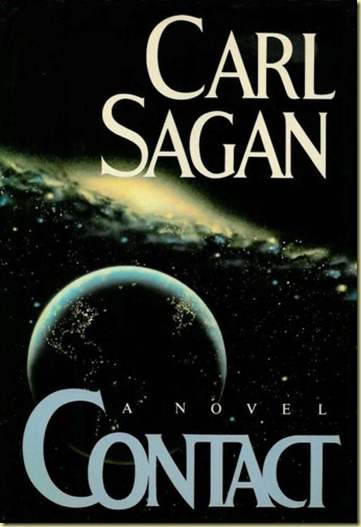
- Contact
Carl Saganstandalone novel1985
similar byscience fictionreflectivecontemporaryour world+2 more
From the front flap of the Simon and Schuster first edition: For centuries humanity has dreamed of life and intelligence beyond the Earth; for decades scientists have searched for it in every corner of the sky; for years Project Argus, a vast, sophisticated complex of radio telescopes, has listened for a signal indicating the existence, somewhere in the universe, of extraterrestrial intelligence. Then, one afternoon, the course of human history is changed, abruptly and forever. The Message, awaited for so long, its very possibility doubted by so many, arrives. Contact has been made. Life, intelligence, someone, something beyond Earth, 26 light-years away, in the vicinity of the star Vega, is calling, beaming across space a wholly unexpected message to say that we are not - have never been - alone. In Contact, Carl Sagan, whose Cosmos enthralled millions of readers and television viewers, has brilliantly employed the freedom of fiction to imagine the greatest adventure of all - humanity's first encounter with other intelligent beings. But the novel is not only about contact between humans and extraterrestrials; it is also about contact, down here on Earth, with each other and ourselves. At its center is a brilliant scientist, Eleanor Arroway, director of Project Argos, who is the first to realize that chapter one of human history is over. It is she who is instrumental in decoding the Message - and in persuading world leaders not to treat it as a threat - she who finds her own life changed by the immense challenge of responding to the Message; she who finally journeys out to experience, in circumstances at once profoundly religious and scientific, the most fateful encounter in human history.
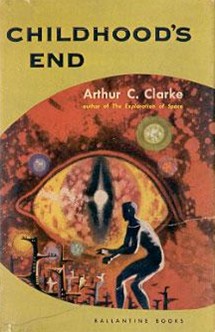
- Childhood's End
Arthur C. Clarkestandalone novel1953
similar byidentityscience fictionreflectiveour world
Childhood's End is a 1953 science fiction novel by the British author Arthur C. Clarke. The story follows a peaceful alien invasion of Earth by mysterious Overlords, whose arrival begins decades of apparent utopia under indirect alien rule, at the cost of human identity and culture.
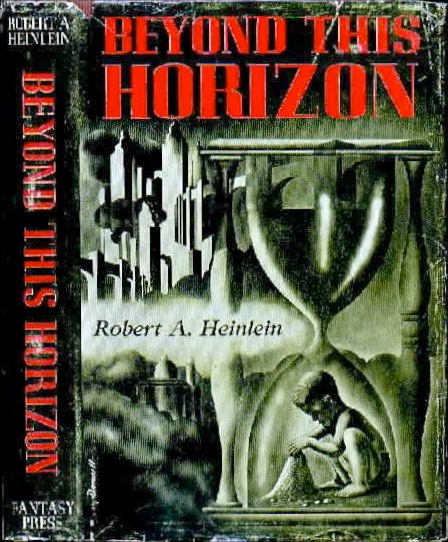
- Beyond This Horizon
Robert A. Heinleinstandalone novel1948
similar byscience fictionreflectiveour worldnorth america+1 more
From the front flap of a 2001 Baen reprint: "Utopia has been achieved. For centuries, disease, hunger, poverty, and war have been things found only in the history tapes. And applied genetics has given men and women the bodies of athletes and a lifespan of over a century. They should all have been very happy... But Hamilton Felix is bored. And he is the culmination of a star line, each of his last thirty ancestors chosen for superior genes. Hamilton is, as far as genetics can produce one, the ultimate man. And this ultimate man can see no reason why the human race should survive, and has no intention of continuing the pointless comedy. However, Hamilton's life is about to become less boring. A secret cabal of revolutionaries who find utopia not just boring, but desperately in need of leaders who know just What Needs to be Done, are planning to revolt and put themselves in charge. Knowing of Hamilton's disenchantment with the modern world, they have recruited him to join their Glorious Revolution. Big mistake! The revolutionaries are about to find out that recruiting a superman was definitely not a good idea..."
- Crosstalk
Connie Willisstandalone novel2016
similar byscience fictioncontemporaryfunnyour worldnorth america+2 more
Crosstalk is a science fiction novel by Connie Willis, published in 2016. It is a romantic comedy that explores the intersection of telephones and telepathy. In a similar situation to Bellwether and Passage, the main character, Briddey Flannigan, is part of a larger institution who gets caught up in series of escalating events. Additionally, Crosstalk like Bellwether and Passage feature themes of neuroscience, communication and technology.
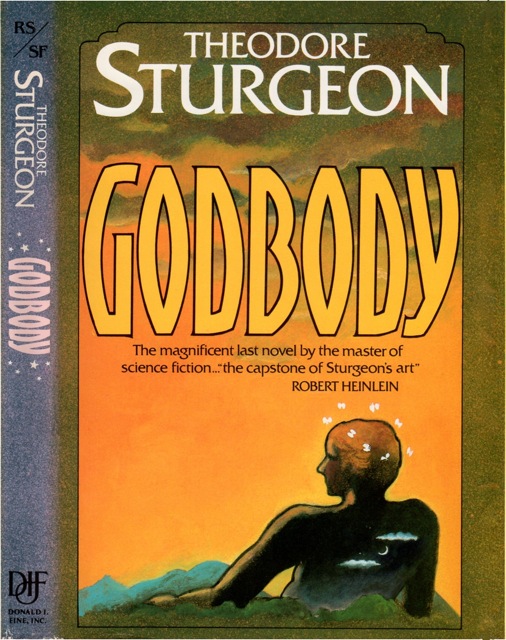
- Godbody
Theodore Sturgeonstandalone novel1986
similar byidentityscience fictionreflectivecontemporaryour world+1 more
Godbody is a science fiction novel by American writer Theodore Sturgeon, published posthumously in 1986. A foreword, "Agape and Eros: The Art of Theodore Sturgeon", was contributed by Robert A. Heinlein and an afterword was contributed by Stephen R. Donaldson.
- The Dreaming Jewels
Theodore Sturgeonstandalone novel1950
similar byidentityscience fictioncontemporaryour world+1 more
The Dreaming Jewels (1950), also known as The Synthetic Man, is a science fiction novel by American writer Theodore Sturgeon. It was his first published novel.
- More Than Human
Theodore Sturgeonstandalone novel1953
similar byidentityscience fictionreflectiveour world
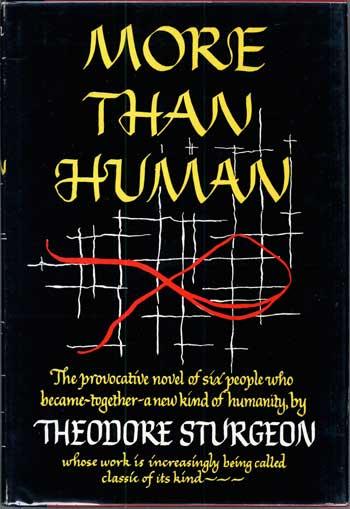
More Than Human is a 1953 science fiction fix-up novel by American writer Theodore Sturgeon. It is a revision and expansion of his 1952 novella Baby Is Three, which is bracketed by two additional parts written for the novel, "The Fabulous Idiot" and "Morality". It won the 1954 International Fantasy Award, which was also given to works in science fiction. It was additionally nominated in 2004 for a "Retro Hugo" award for the year 1954. Science fiction critic and editor David Pringle included it in his book Science Fiction: The 100 Best Novels.
- The Man Who Folded Himself
David Gerroldstandalone novel1973
similar byidentityscience fictionreflectivecontemporaryour world
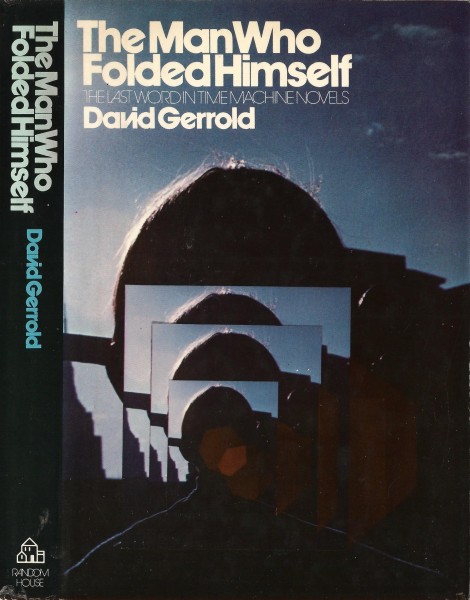
The Man Who Folded Himself is a 1973 science fiction novel by American writer David Gerrold. It was nominated for the Nebula Award for Best Novel in 1974 and the Hugo Award for Best Novel in 1974. The book explores the psychological, physical, and personal challenges that manifest when time travel is possible for a single individual at the touch of a button.
- Camouflage
Joe Haldemanstandalone novel2004
similar byidentityscience fictionreflectivecontemporaryour world
Camouflage is a 2004 science fiction novel by American writer Joe Haldeman. It won the James Tiptree, Jr. Award in 2004 and the Nebula Award for Best Novel in 2005.
- The Boat of a Million Years
Poul Andersonstandalone novel1989
similar byidentityscience fictionreflectiveour world+1 more
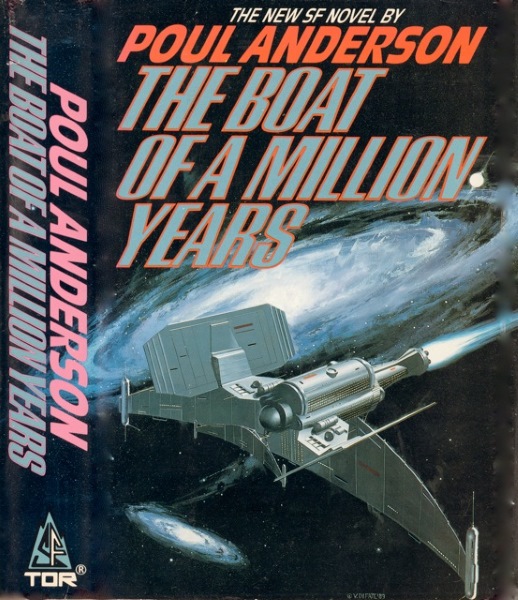
The Boat of a Million Years is a science fiction novel by American writer Poul Anderson, first published in 1989 and nominated for the Nebula Award for Best Novel that same year. It was also nominated for the Hugo Award for Best Novel and the Prometheus Award in 1990.
- Flowers for Algernon
Daniel Keyesstandalone novel1966
similar byidentityscience fictioncontemporarynorth america
A man with a low IQ becomes the subject of an experimental medical procedure which raises his IQ well over genius level.
- Hard Landing
Algis Budrysstandalone novel1993
similar byidentityscience fictionreflectivecontemporaryour worldnorth america
When an alien spacecraft crashes into a swamp on the US Atlantic coast, the fates of the humanoid surviving crew members are described as they separate and attempt to avoid discovery by blending into the American public.
- I Will Fear No Evil
Robert A. Heinleinstandalone novel1970
similar byidentityscience fictionreflectiveour world
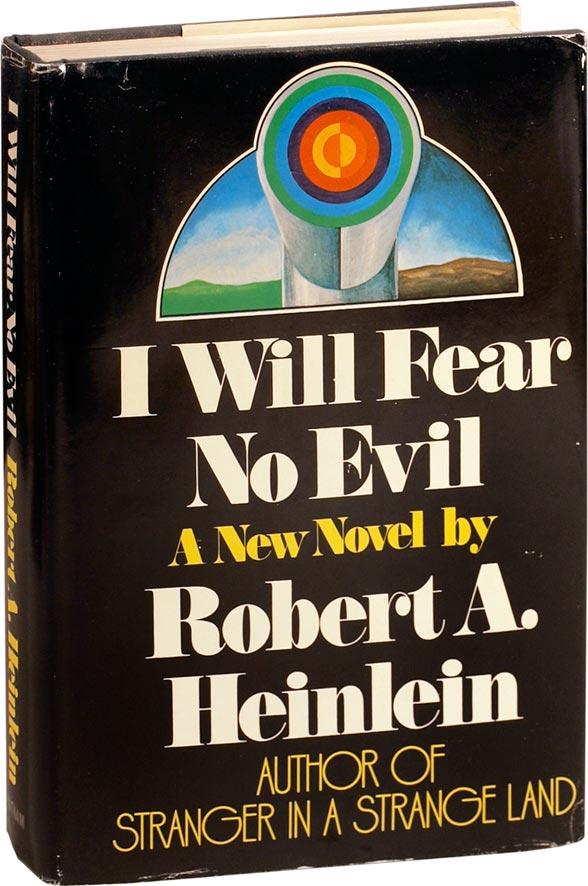
I Will Fear No Evil is a science fiction novel by American writer Robert A. Heinlein, originally serialised in Galaxy and published in hardcover in 1970. The title is taken from Psalm 23:4.
- Whileaway
series4 books1972
completed
similar byscience fictionreflectivecontemporary+2 more
Joanna Russ's The Female Man (1975) is a single feminist science fiction novel, not a multi-book series, built around four women from parallel timelines with very different gender arrangements. One of them, Janet, comes from Whileaway, an all-female utopian Earth ten centuries in the future where men died out in a plague; the other three come from realities closer to Russ's own, and their collisions are used to interrogate what womanhood and equality could mean under different social rules.
- The Jonah Kit
Ian Watsonstandalone novel1975
similar byscience fictionreflectivecontemporaryour world+1 more
The Jonah Kit is a 1975 science fiction novel by English writer Ian Watson. In 1977, The Jonah Kit won the BSFA Award for Best Novel.
- Memoirs of an Invisible Man
H. F. Saintstandalone novel1987
similar byidentityscience fictioncontemporaryour worldnorth america+2 more
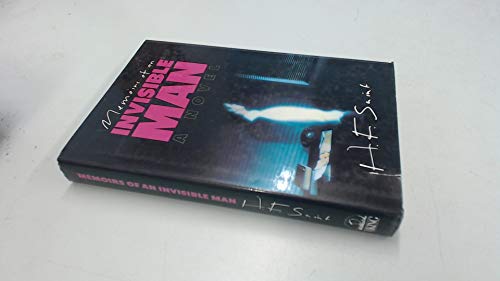
Memoirs of an Invisible Man is a 1987 science fiction novel by H. F. Saint.
- We Can Build You
Philip K. Dickstandalone novel1972
similar byidentityscience fictionreflectiveour worldnorth america
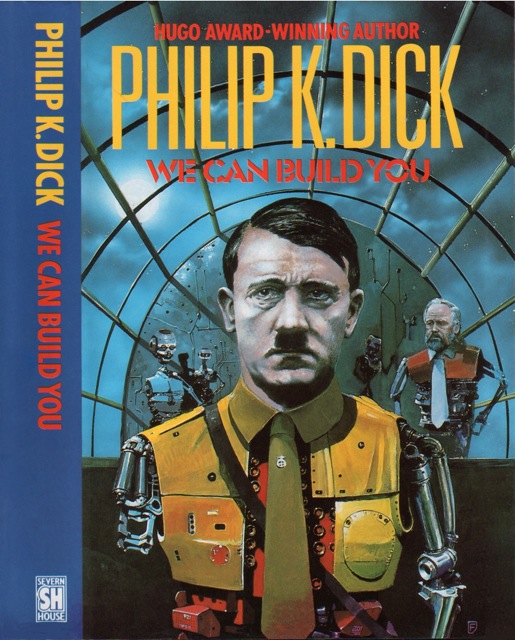
We Can Build You is a 1972 science fiction novel by American writer Philip K. Dick. Written in 1962 as The First in Our Family, it remained unpublished until appearing in serial form as A. Lincoln, Simulacrum in the November 1969 and January 1970 issues of Amazing Stories magazine, re-titled by editor Ted White. The novel was issued as a mass market paperback original by DAW Books in 1972, its final title provided by publisher Donald A. Wollheim. Its first hardcover edition was published in Italy in 1976, and Vintage issued a trade paperback in 1994.
- Landline
Rainbow Rowellstandalone novel2014
similar byidentityscience fictionreflectivecontemporarynorth america
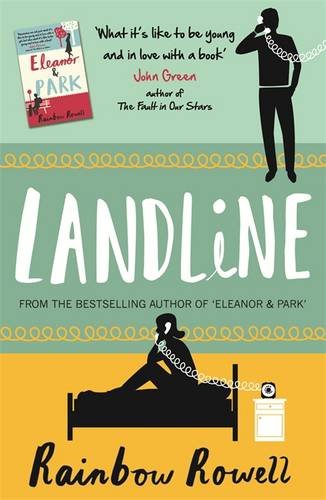
Landline is a 2014 American sci-fi novel by Rainbow Rowell. It tells the story of 37-year-old Georgie McCool who discovers that she is able to call her husband's 22-year-old self through his landline. Rowell stated that aspects from the novel are loosely based on her own life such as the fact that Georgie is incredibly career-driven while her husband is a stay-at-home dad. The character of Georgie McCool was named after the song Georgy Girl and the village of McCool Junction.
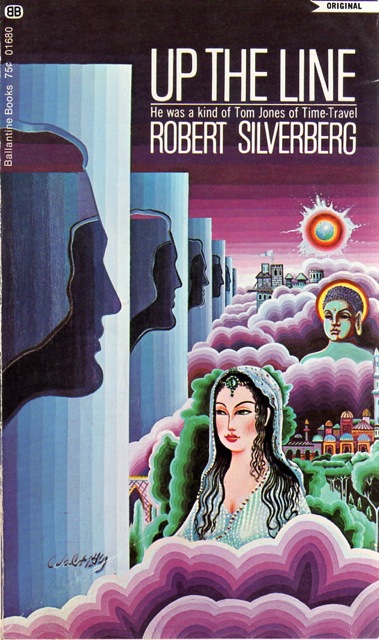
- Up the Line
Robert Silverbergstandalone novel1969
similar byidentityscience fictionfunnyour world+2 more
Up the Line (1969) is a time travel novel by American science fiction author Robert Silverberg. The plot revolves mainly around the paradoxes brought about by time travel and is considered an example of the more sexually-permissive era of late 1960s American science-fiction, a reflection of the counterculture of its day. It was nominated for a Nebula Award for Best Novel in 1969 and a Hugo Award for Best Novel in 1970 but lost to Ursula K. Le Guin's The Left Hand of Darkness both times.
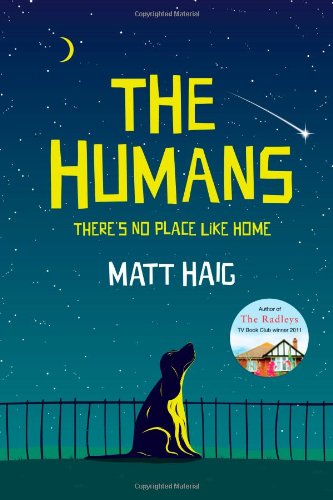
- The Humans
Matt Haigstandalone novel2013
similar byidentityscience fictioncontemporaryour world+1 more
When an extraterrestrial arrives on Earth, his first impressions of humans are less than positive. Taking the form of Professor Andrew Martin at Cambridge University, the visitor is eager to complete his task and hurry back to his own utopian planet. Disgusted by the way humans look, what they eat, their capacity for murder and war, he is equally baffled by the concepts of love and family. But as time goes on, he starts to reconsider.
- WWW Trilogy
series3 books2009
similar byscience fictioncontemporaryour worldnorth america+1 more
The WWW Trilogy is a trilogy of science-fiction novels by Canadian science fiction author Robert J. Sawyer. The first book, Wake, was originally serialized in four parts in Analog Science Fiction and Fact from November 2008 to March 2009, published in book form through Ace on April 7, 2009, and was followed by the second book, Watch, on April 6, 2010. Wonder was published in 2011.
- Beyond the Labyrinth
Gillian Rubinsteinstandalone novel1988
similar byidentityscience fictionreflectivecontemporaryour world
Fourteen-year-old Brenton questions the choices in his life when an alien anthropologist arrives to study an ancient Aboriginal tribe that once lived in the area around his home.