Loreful
HomeDiscover
Search series, authors…⌘K
Loreful

Reading orders for SF/F series and shared universes — with your place kept in every one.

Explore

UniversesSeriesWorksAuthorsAtlas

Help

FAQAboutSite map

Account & legal

Sign inCreate accountPrivacyTerms

Data

Built on ISFDB, Wikipedia, Wikidata and Open Library. Curated reading orders carry their reasoning on the page; the rest follow publication order. Data sources & licenses

© Loreful · data: ISFDB · CC BY

More like Belshazzar

anchored on:historical fictionmiddle eastancient worldpolitical intrigue

but

Mood

The mood the book leaves you in.

  • The reading experience is propelled by journeys, exploration, and physical risk; excitement and forward momentum dominate over dread or introspection.
  • Joy and loss are deliberately mixed; the resolution grants characters something real while taking something else away, leaving warmth and sorrow together.
  • The book demands work from the reader — dense prose, difficult structure, unfamiliar ideas, or morally uncomfortable material — as part of its intended effect.
  • Grim events, cruelty, or despair dominate the atmosphere, and the book does not soften them with comfort or comic relief.
  • The atmosphere is quietly unsettling — wrongness, unease, and the uncanny pervade the book without necessarily escalating into overt horror.
  • The book is built to move the reader; character feeling is foregrounded and major scenes aim at a strong emotional response.
  • Humor is a primary aim and the prose plays for laughs — comic situations, wit, or dialogue produce sustained comedy, not occasional levity.
  • The book insists that things can improve; effort and decency are shown to matter, and the arc bends toward better outcomes even through hardship.
  • The book teaches as it goes — real facts, history, science, or craft are conveyed in enough depth that learning is part of the reading experience.
  • The book is designed to uplift and motivate, presenting perseverance or achievement in a way that invites the reader to aspire or act.
  • The overall register is cheerful and easygoing; stakes are kept gentle and the book avoids dwelling on pain or dread.
  • Withheld information drives the experience; the book sustains enigmas and secrets the reader wants resolved, whatever its genre.
  • The book is contemplative and inward-looking, giving more weight to thought, memory, and meaning than to external events.
  • The book works as comfort reading — low tension, a soothing pace, and an atmosphere the reader can unwind in.
  • Grief, loss, or melancholy set the dominant register, and the book lets sorrow stand rather than resolving it into comfort.
  • Sustained suspense is the point; the book keeps the reader braced for what happens next through danger, pressure, or impending revelation.
  • Playful invention and charm define the register — fanciful conceits, light absurdity, and a narration that delights in its own oddity.

About

What the story runs on.

  • Stories in which extraterrestrial beings are central — as characters, cultures, or the object of the plot.
  • Stories structured as a quest — a journey undertaken to find, deliver, or destroy something of great import.
  • Stories in which staying alive against nature, catastrophe, or scarcity is the central problem.
  • Stories of growing up — a young protagonist crossing from childhood into adult knowledge and responsibility.
  • Stories about who a character truly is — self-discovery, doubled lives, and the search for a self.
  • Stories about mourning — living through the death of a loved one and what loss does to the survivors.
  • Stories in which belief, doubt, and religious life are the central subject, from crises of faith to life inside a religious community.
  • Stories in which a buried family truth — hidden parentage, crimes, or shames — surfaces and reorders the present.
  • Stories driven by maneuvering for power — factions, conspiracies, and statecraft conducted in shadow.
  • Stories about rising against rulers — uprisings, resistance movements, and revolutions and their aftermaths.
  • Stories in which war itself is the subject — combat, occupation, and what warfare does to soldiers and civilians.
  • Stories organized around investigating a killing — the case, the clues, and the pursuit of the killer, in any genre's clothing.

Shelf

Where it sits in the library.

    • Fiction built on magic or other supernatural elements that have no scientific explanation.
    • Secondary-world fantasy at large scale, where the fate of nations or the world turns on the protagonists' struggle.
    • Fantasy set in a recognizably modern city or contemporary world where the supernatural intrudes on everyday life.
    • Fantasy that blends in horror's atmosphere and imagery, keeping a fantastical frame around grim or frightening material.
    • Action-driven fantasy following warriors or rogues with personal stakes against sorcerous threats, rather than world-spanning conflicts.
    • Fantasy set in a real historical period or a close analogue of one, with magic woven into the era.
    • Fantasy in which protagonists cross from the ordinary world into another world through a portal or similar passage.
    • Fiction that retells or reworks a traditional fairy tale in a new form or setting.
    • Fantasy drawing directly on myths, legends, and folklore, retelling them or building on their figures and logic.
    • Fantasy of ghosts, vampires, shapeshifters, psychics, and similar phenomena, usually set in an otherwise ordinary world.
    • Fiction mixing science-fictional trappings with overtly magical or impossible elements in one setting.
    • Low-stakes fantasy emphasizing comfort, community, and everyday pleasures over conflict and peril.
    • Speculative fiction of pervasive moral ambiguity, violence, and cynicism that rejects heroic conventions — fantasy and SF alike.
      • Fiction that extrapolates from science and technology — future societies, space travel, or speculative inventions — within at least nominally natural laws.
      • Science fiction of interstellar scope — starships, galactic polities, and adventure across star systems.
      • Science fiction committed to scientific rigor, where technical plausibility constrains the story.
      • Science fiction centered on armed forces and warfare, told largely from a military point of view.
      • Science fiction of networked, corporate-dominated near futures, pairing high technology with social decay.
      • Science fiction styled on nineteenth-century steam-powered technology, often in a Victorian or pseudo-Victorian setting.
      • Fiction depicting an oppressive or catastrophic society, presented as a warning.
      • Fiction set after civilization's collapse, following survivors in the ruins of the old world.
      • Fiction in which characters move between past and future, and the mechanics or consequences of that travel drive the plot.
      • Fiction exploring a world where a historical event went differently and history diverged from ours.
      • Science fiction about humanity's first encounter and communication with an alien intelligence.
      • Science fiction in which extraterrestrial forces attack or occupy Earth and humanity resists.
      • Fiction whose primary aim is to frighten or unsettle the reader through dread, menace, or the monstrous.
      • Horror of vast, indifferent, incomprehensible entities before which humanity is insignificant, in the Lovecraft tradition.
      • Horror of decaying houses, buried family secrets, and oppressive atmosphere in the Gothic literary tradition.
      • Horror centered on hauntings and the returning dead.
      • Horror located in the mind — paranoia, obsession, and unreliable perception rather than external monsters.
      • Horror built around the reanimated dead and survival amid their outbreaks.
      • Horror defined by explicit, transgressive gore that refuses to cut away from violence.
      • Speculative fiction of the strange and uncanny that resists both natural explanation and standard genre categories.
      • Fiction organized around solving a crime or puzzle, typically following an investigator toward the identification of a culprit.
      • A puzzle-first mystery that lays out clues so the culprit's identity can be deduced before the reveal.
      • Crime fiction of moral ambiguity, fatalism, and hard-edged style, set among the corrupt and the doomed.
      • A mystery following the realistic routines of police work — forensics, interviews, and case-building.
      • A gentle mystery with an amateur sleuth, a small community, and violence kept off the page.
      • A mystery set in a past era, where the investigation works within that period's methods and society.
      • Fast-paced fiction driven by imminent danger, pursuit, or high-stakes conspiracy, built to sustain tension.
      • A thriller of espionage — agents, tradecraft, and intelligence services in conflict.
      • A thriller centered on lawyers and the courtroom, where litigation carries the suspense.
      • A thriller driven by detailed contemporary or near-future technology, often military or scientific.
      • A thriller whose tension comes from mental states and manipulation between characters rather than external action.
      • Fiction whose central plot is a romantic relationship and its development toward an emotionally satisfying resolution.
      • Romance in which one or both partners are supernatural beings, blending fantasy elements into the love story.
      • A fantasy-romance hybrid in which the romantic arc and the fantasy plot carry equal weight.
      • Romance set in a past era, with courtship shaped by the period's society and manners.
      • Romance set in the present day, without supernatural or historical elements.
      • Fiction set in a real past period, where the historical setting materially shapes characters and events.
        • General and literary fiction emphasizing prose style, character interiority, or formal ambition over genre plot conventions.
        • Fiction in a realistic world where magical events occur and are treated as ordinary, in the tradition of Latin American literature.
        • Fiction that ridicules people, institutions, or society in order to criticize them.
        • Fiction of dreamlike, irrational imagery and logic that breaks from realistic representation.
        • Fiction that plays with narrative convention through metafiction, fragmentation, and self-reference.
        • Fiction propelled by journeys, exploration, and physical peril, where action and survival carry the plot.
        • Adventure fiction of ships and seafaring — naval engagements, voyages, and life at sea.
        • Fiction of the American frontier West — gunmen, ranchers, and lawmen, typically in the late nineteenth century.
        • Fiction centered on soldiers, campaigns, and the experience of warfare, historical or imagined.
          • Fiction written primarily to amuse, using comedic situations, wit, or parody as its organizing principle.
            • Multi-generational fiction following a family or dynasty across decades, with inheritance and kinship as the through-line.
              • Fiction whose world runs on explicit game mechanics — levels, stats, and skills that characters can see and exploit.
                • Fiction about costumed or superpowered heroes and their conflicts with comparable villains.

                Practical

                How long a commitment, whether it stands alone, and whether it has finished.

                Tap a chip to ask for it · tap again to rule it out · once more to clear. Numbers show what would be left.

                • Cover of Creation
                  Creation

                  Gore Vidal · standalone novel · 1981

                  similar byhistorical fictionreflectivepolitical intrigueancient worldmiddle eastfaith and religion

                  Creation is an epic historical fiction novel by Gore Vidal published in 1981. In 2002 he published a restored version, reinstating four chapters that a previous editor had cut and adding a brief foreword explaining what had happened and why he had restored the cut chapters.

                • Cover of Stone Tables
                  Stone Tables

                  Orson Scott Card · standalone novel · 1997

                  similar byhistorical fictionreflectivemiddle eastancient worldfaith and religion+1 more

                  What would it be like to be Moses? To grow up as royalty, and then give it all up on principle? To go from palaces to wilderness? To go from being considered a god, to coming to know the real God?

                • Cover of Christ the Lord
                  Christ the Lord

                  series · 2 books · 2005

                  completed

                  similar byhistorical fictionreflectivemiddle eastancient worldfaith and religion

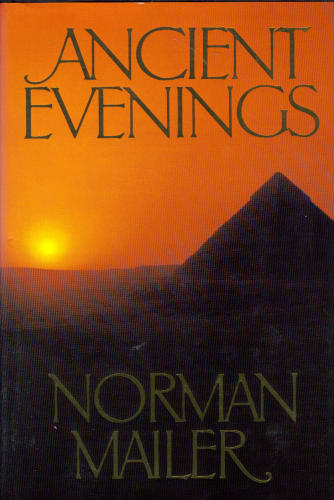
                • Cover of Ancient Evenings
                  Ancient Evenings

                  Norman Mailer · standalone novel · 1983

                  similar byhistorical fictionreflectivemiddle eastancient worldfaith and religion

                  Ancient Evenings is a 1983 historical novel by American author Norman Mailer. Set in ancient Egypt and dealing with the lives of the characters Menenhetet One and Meni, the novel received mixed reviews. Reviewers noted the historical research that went into writing it and considered Mailer successful at conveying the nature of ancient Egyptian life. However, they also criticized the novel's narration and questioned its literary merit. Ancient Evenings has been compared to the work of the poet James Merrill and the novelist Thomas Pynchon, as well as to Mailer's novel Harlot's Ghost (1991). Some have suggested that its opening passage is its strongest part. Ancient Evenings served as an inspiration for the artist Matthew Barney's operatic film River of Fundament (2014).

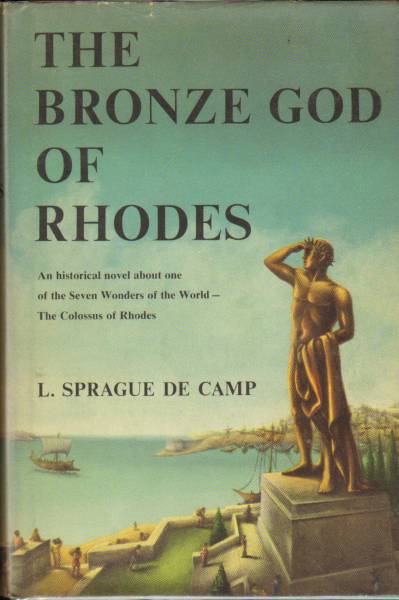
                • Cover of The Bronze God of Rhodes
                  The Bronze God of Rhodes

                  L. Sprague de Camp · standalone novel · 1960

                  similar byhistorical fictionpolitical intrigueancient world+1 more

                  The Bronze God of Rhodes is a historical novel by American writer L. Sprague de Camp. It was first published in hardcover by Doubleday in 1960, and in paperback by Bantam Books in 1963. A trade paperback edition was projected by The Donning Company for 1983, but never published. The book was reissued with a new introduction by Harry Turtledove as a trade paperback and ebook by Phoenix Pick in June 2013. It is the second of de Camp's historical novels in order of writing, and fourth in internal chronology.

                • Cover of The Kingdom of the Wicked
                  The Kingdom of the Wicked

                  Anthony Burgess · standalone novel · 1985

                  similar byhistorical fictionpolitical intrigueancient world+2 more

                  An almost alternate history of the glory days of Rome

                • Cover of Light of the World
                  Light of the World

                  series · 2 books · 2013

                  similar byhistorical fictionreflectivepolitical intriguefaith and religion

                • Cover of Women of Genesis
                  Women of Genesis

                  series · 3 books · 2000

                  similar byhistorical fictionmiddle eastancient worldfaith and religion+1 more

                  Women of Genesis is a series of novels by Orson Scott Card that began in 2000. The novels in this series are centred on the wives of the Biblical Patriarchs of the Book of Genesis. As of December 2024, three books have been published, and the fourth and fifth books in the series are currently listed as works in progress on Card's website.

                • Cover of Lavinia
                  Lavinia

                  Ursula K. Le Guin · standalone novel · 2008

                  similar byhistorical fictionreflectiveancient world+1 more

                  Lavinia is a Locus Award-winning novel by American author Ursula K. Le Guin. Published in 2008, it was Le Guin's last novel. It is written in a first-person, self-conscious style that recounts the life of Lavinia, a minor character in Virgil's epic poem the Aeneid.

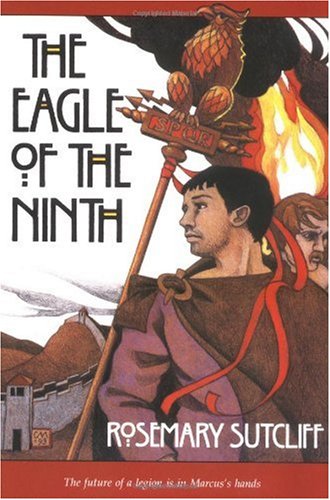
                • Cover of Marcus
                  Marcus

                  series · 4 books · 1954

                  completed

                  similar byhistorical fictionancient world+1 more

                  Rosemary Sutcliff's linked Roman Britain novels follow several generations of one family across centuries of the Roman occupation and its aftermath, opening with The Eagle of the Ninth, in which the young centurion Marcus Aquila sets out to recover his lost father's legion standard. Later books, including The Silver Branch and The Lantern Bearers, follow his descendants through Britain's slow slide out of the Empire.

                • Cover of Winged Pharaoh
                  Winged Pharaoh

                  Joan Grant · standalone novel · 1937

                  similar byhistorical fictionreflectivemiddle eastancient world

                  Winged Pharaoh is a historical novel by English writer Joan Grant, first published in 1937. Grant attributed the source of her information in this novel to her "Far Memory" extrasensory abilities, particularly the ability to remember her own past lives.

                • Cover of The Three Queens
                  The Three Queens

                  series · 3 books · 1994

                  similar bypolitical intriguehistorical fictionancient worldmiddle east+1 more

                • Cover of Three Marys
                  Three Marys

                  Paul Park · standalone novel · 2003

                  similar byhistorical fictionreflectivemiddle eastancient worldfaith and religion

                  The exposition of the faith of Mary, the mother of Jesus; Mary, the sister of Martha and Lazarus of Bethany; and Mary Magdalene and their lives after the crucifixion.

                • Cover of Pilgermann
                  Pilgermann

                  Russell Hoban · standalone novel · 1983

                  similar byhistorical fictionreflectivemiddle eastfaith and religion

                  Pilgermann is a 1983 novel by Russell Hoban, set in the Middle Ages and depicting the journey of a Jew across Europe and North Africa on his way to the Holy Land. The novel was reissued in January 2002.

                • Cover of The Gospel of Corax
                  The Gospel of Corax

                  Paul Park · standalone novel · 1996

                  similar byhistorical fictionreflectiveancient worldmiddle eastfaith and religion

                  The Gospel of Corax is a 1996 novel by Paul Park about an escaped Roman slave (Corax) who travels from Caesarea to India with a burly Essene man named Jeshua.

                • Cover of The Dovekeepers
                  The Dovekeepers

                  Alice Hoffman · standalone novel · 2011

                  similar byhistorical fictionmiddle eastancient worldfaith and religion

                  The Dovekeepers is a 2011 historical novel by American writer Alice Hoffman. The novel tells a fictionalized account of the Siege of Masada by troops of the Roman Empire towards the end of the First Jewish–Roman War.

                • Cover of Between the Wars
                  Between the Wars

                  series · 4 books · 1981

                  similar byhistorical fiction+2 more

                  The Pyat Quartet, also known as Between the Wars, is a tetralogy of historical fiction novels by English author Michael Moorcock comprising Byzantium Endures, The Laughter of Carthage, Jerusalem Commands and The Vengeance of Rome published from 1981 to 2006.

                • Cover of The Good Man Jesus and the Scoundrel Christ
                  The Good Man Jesus and the Scoundrel Christ

                  Philip Pullman · standalone novel · 2009

                  similar byreflectiveancient worldmiddle eastfaith and religion

                  Philip Pullman retells the gospel story with one change: Mary gives birth to twin sons, not one. Jesus grows into the moral teacher and healer familiar from scripture, while his brother, given the name Christ, watches from the sidelines, recording and reshaping his brother's story with an eye toward the institution he believes should be built on it. As Jesus preaches humility and doubt, Christ is drawn into a bargain with a mysterious stranger who wants his account shaped into something more useful for the church that will one day claim to speak for both of them. Part of Canongate's Myth series, Pullman's short, provocative reworking of the New Testament.

                • Cover of Pavane
                  Pavane

                  series · 9 books · 1966

                  completed

                  similar byreflectivefaith and religion+2 more

                  Keith Roberts' Pavane (1968) is a single fix-up novel built from linked stories rather than a multi-book series: in an alternate 20th century where Elizabeth I was assassinated and Spain conquered England, the Catholic Church suppresses Protestantism and keeps technology frozen at a steam-powered, feudal level. The interconnected stories follow different Dorset families across generations as long-suppressed dissent against Church rule begins to stir.

                • Cover of The Jesus Chronicles
                  The Jesus Chronicles

                  series · 2 books · 2006

                  similar byhistorical fictionancient worldfaith and religion+2 more

                • Cover of The Betrayal: The Lost Life of Jesus
                  The Betrayal: The Lost Life of Jesus

                  W. Michael Gear & Kathleen O'Neal Gear · standalone novel · 2008

                  similar byhistorical fictionpolitical intriguemiddle eastancient worldfaith and religion

                  There is an alternate story of the life of Jesus. One the early Church fathers found so menacing they outlawed the books that documented it, ordered them burned, and threatened anyone found copying them with death. International bestselling authors and award-winning archaeologists Kathleen O'Neal Gear and W. Michael Gear put more than thirty years of exhaustive research into this fascinating novel. In A.D. 325, Brother Barnabas is a student of the ancient holy texts. These books paint a portrait of Jesus that is radical, heretical, and irresistible. In the writings of Mary Magdalene, Phillip, and James, Barnabas finds clues to a secret he must protect at all costs. But the Ecumenical Council of Bishops has just declared his cherished books "a hotbed of manifold perversity." Emperor Constantine has decreed that the documents must be burned and that anyone found copying them will be executed as a heretic. Barnabas's monastery is attacked. Brother Barnabas flees with his trusted companions, but they are being followed, for the True Church cannot allow them to find the most sacred place on Earth. In fact, it will do anything to stop them...

                • Cover of The Double Tongue
                  The Double Tongue

                  William Golding · standalone novel · 1995

                  similar byhistorical fictionreflectiveancient worldfaith and religion

                  The Double Tongue is a novel by William Golding. It was found in draft form after his death and published posthumously.

                • Cover of The Waters of Sul
                  The Waters of Sul

                  Moyra Caldecott · standalone novel · 1998

                  similar byhistorical fictionancient worldfaith and religion+1 more

                  It is 72 AD, and most of Britain is under Roman domination. At Aquae Sulis, a place of pilgrimage and healing, hot waters gush ceaselessly from the earth. Since ancient times the waters have been associated with the supernatural, and are under the protection of the Celtic Goddess Sul. The Romans have renamed her Sulis Minerva, and have tamed the steaming waters to form a complex of public baths.A statue of the hated Emperor Claudius is being erected in the precincts of the Temple of Sulis Minerva. The centurion Decius Brutus, a Celt, is ordered to return to his home town to protect the statue and prevent trouble. But the local people, led by his proud father and his fiery daughter, Megan, are threatening rebellion...Meanwhile, Megan's twin sister Ethne is torn between her destiny as Oracle of Sul, and her love for Lucius, who is caught up in his own quest for spiritual enlightenment, with the help of the Orphic priest Demosthenes.Twenty miles away, on Glastonia Island, a small Christian community struggles to establish a new religion in a hostile land, away from Roman persecution.Cults from Rome, Greece, Egypt and Judaea vie with the native Celtic beliefs and form a rich backdrop to the human dramas that unfold.The Waters of Sul is set in a time of transition and adjustment, when beliefs are questioned and loyalties are tested. Love and hate, conflict and reconciliation, troubled romance and an uneasy traffic with the supernatural all feature in this brilliantly conceived novel from a masterful storyteller.

                • Cover of Karl Glogauer
                  Karl Glogauer

                  series · 2 books · 1969

                  similar byreflective+4 more

                  Michael Moorcock's two Karl Glogauer novels share a character rather than a plot. In Behold the Man (1969), Glogauer travels back in time seeking the historical Jesus, discovers the real man is severely disabled, and takes on the role of Christ himself, engineering his own crucifixion to fulfill the story he grew up reading. Breakfast in the Ruins (1972) recasts him across seventeen variant lives spanning 1871 to 1990, each one crueler than the last, framed around a present-day encounter in London -- using the same protagonist for a different formal experiment rather than continuing a single narrative.