More like Bend Sinister
anchored on:dystopiatotalitarianismmid 20th centurydarkliterary & generalidentity+1 more
but
- A Clockwork Orange
series4 books1962
completed
similar bydystopiatotalitarianismdarkchallenging+2 more
Anthony Burgess's 1962 novel is narrated by Alex, a teenage gang leader in a near-future Britain gripped by a youth subculture of extreme violence, recounting his crimes in Nadsat, an invented slang blending English with Russian-derived words. After his crimes catch up with him, Alex is made the subject of a controversial state program meant to forcibly reform his behavior, and the novel uses his ordeal to question whether imposed goodness is worth the loss of free will. It is a standalone novel.
- Ape and Essence
Aldous Huxleystandalone novel1948
similar bymid 20th centurydystopiadarktotalitarianismchallenging
Ape and Essence (1948) is a novel by Aldous Huxley, first published in August 1948 by Harper & Brothers in the US, and then in 1949 by Chatto & Windus in the UK. It is set in a dystopia, as is Brave New World, Huxley's more famous work. It is largely a satire of the rise of large-scale warfare and warmongering in the 20th century, and presents a pessimistic view of the politics of mutually assured destruction. The book makes extensive use of surreal imagery, depicting humans as apes who, as a whole, will inevitably kill themselves.
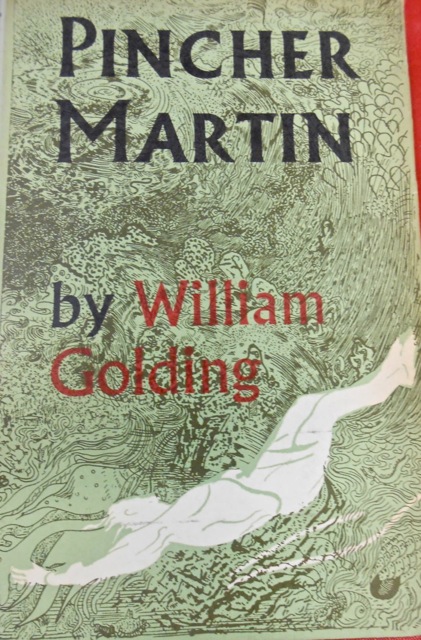
- Pincher Martin
William Goldingstandalone novel1956
similar bymid 20th centuryidentityliterary & generalchallengingdarkmadness
Pincher Martin is a novel by British writer William Golding, first published in 1956. It is Golding's third novel, following The Inheritors and his debut Lord of the Flies. It is one of Golding's best-known novels, noted for being existential and minimalistic in setting.
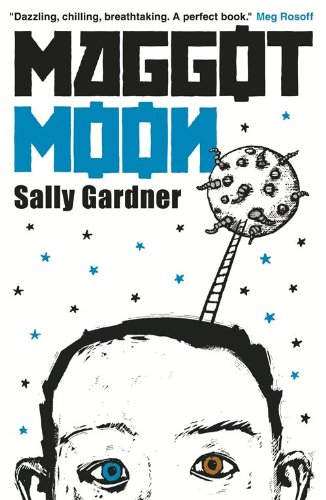
- Maggot Moon
Sally Gardnerstandalone novel2012
similar bymid 20th centurytotalitarianismdystopiadark
Maggot Moon is a young adult novel written by Sally Gardner, illustrated by Julian Crouch, and published February 12, 2013 by Candlewick Press. The book takes place in an alternate timeline of 1956 as the characters live in "The Motherland," telling a tale of what could have happened had the Nazis won the Second World War.
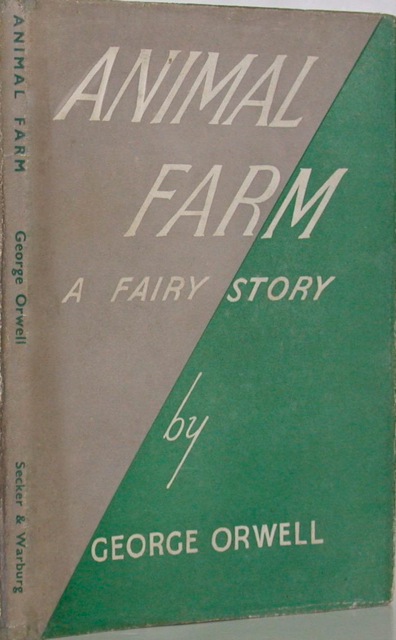
- Animal Farm: A Fairy Story
George Orwellstandalone novel1945
similar bymid 20th centurytotalitarianismdark+2 more
WorldCat: "Fueled by Orwell's intense disillusionment with Soviet Communism, Animal Farm is a nearly perfect piece of writing, both an engaging story and an allegory that actually works. When the downtrodden beasts of Manor Farm oust their drunken human master and take over management of the land, all are awash in collectivist zeal."
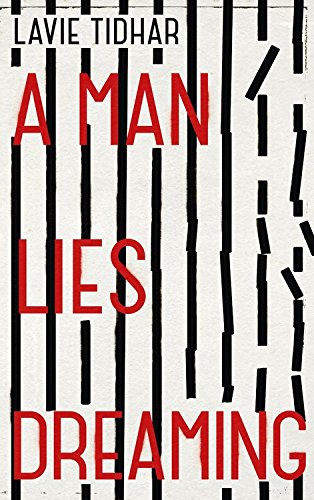
- A Man Lies Dreaming
series3 books2014
similar bydarkidentityliterary & generalchallengingtotalitarianism+1 more
Lavie Tidhar's A Man Lies Dreaming imagines Adolf Hitler as a washed-up private detective working the seedy edges of 1930s London, in a timeline where the Nazi party never took power in Germany, framed by chapters narrated from within a concentration camp. The Lunacy Commission returns to related alternate-history material. The novel uses pulp-noir pastiche to force an uncomfortable historical inversion rather than playing it for straightforward genre fun.
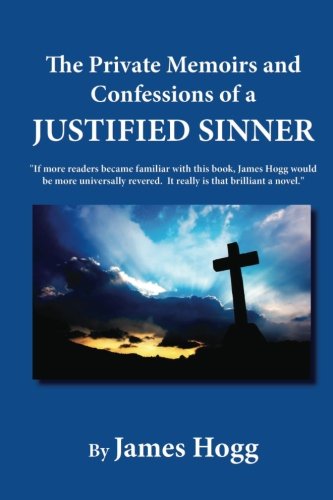
- The Private Memoirs and Confessions of a Justified Sinner
James Hoggstandalone novel1824
similar bydarkidentityliterary & generalchallengingmadness
The Private Memoirs and Confessions of a Justified Sinner: Written by Himself: With a detail of curious traditionary facts and other evidence by the editor is a novel by the Scottish author James Hogg, published anonymously in 1824.
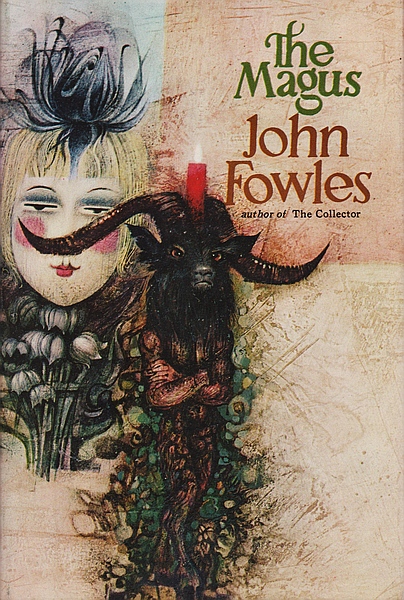
- The Magus
John Fowlesstandalone novel1965
similar bymid 20th centuryidentityliterary & generalchallenging+1 more
The Magus (1965) is a postmodern novel by British author John Fowles, telling the story of Nicholas Urfe, a young British graduate who is teaching English on a small Greek island. Urfe becomes embroiled in the psychological illusions of a master trickster, which become increasingly dark and serious. Considered an example of metafiction, it was the first novel written by Fowles but his third book to be published. A revised edition was published in 1977.
- Lord of the Flies
William Goldingstandalone novel1954
similar bymid 20th centurydarkliterary & general+1 more
Lord of the Flies is the 1954 debut novel of British author William Golding. The plot concerns a group of prepubescent British boys who are stranded on an uninhabited island and their disastrous attempts to govern themselves that lead to a descent into savagery. The novel's themes include morality, leadership, and the tension between civility and chaos.
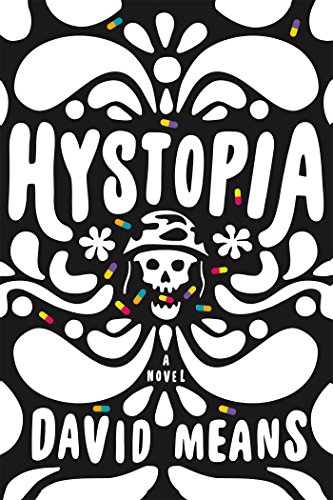
- Hystopia
David Meansstandalone novel2016
similar bymid 20th centuryliterary & generalchallengingdarkmadness+1 more
Hystopia is a 2016 novel by David Means. Literary critic Christian Lorentzen described the novel as "a counterfactual narrative by a Vietnam veteran, named Eugene Allen about his experience in a therapeutic, psychedelics-based trauma recovery program initiated, in the novel's alternate history, by John F. Kennedy." In July 2016, it was longlisted for the 2016 Man Booker Prize.
- This Perfect Day
Ira Levinstandalone novel1970
similar bytotalitarianismdystopiaidentitydark
This Perfect Day is a science fiction novel by American writer Ira Levin, about a technocratic dystopia. Levin won a Prometheus Award in 1992 for this novel. This Perfect Day is one of two Levin novels yet to be adapted to film.
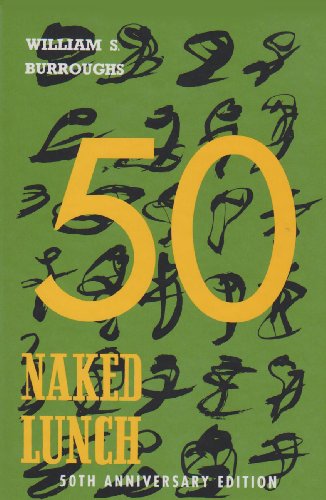
- Naked Lunch
William S. Burroughsstandalone novel1959
similar bymid 20th centuryliterary & generalchallengingdarkmadness
Naked Lunch is a 1959 antinovel by American author William S. Burroughs. The novel does not follow a clear linear plot, but is instead structured as a series of non-chronological "routines". Many of these routines follow William Lee, an opioid addict who travels to the surreal city of Interzone and begins working for the organization "Islam Inc."
- Camp Concentration
Thomas M. Dischstandalone novel1968
similar bymid 20th centurydarkchallengingmadness+1 more
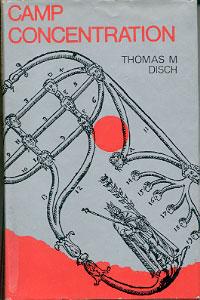
Camp Concentration is a science fiction novel by American writer Thomas M. Disch. It was first serialized in four parts in New Worlds from July to October 1967 and was published in book form in the United Kingdom in 1968, followed by a first U.S. edition in 1969.
- Mother Night
Kurt Vonnegut & Jr.standalone novel1962
similar bymid 20th centuryidentityliterary & generaldark
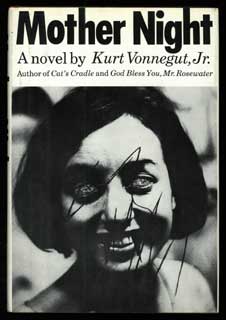
Howard W. Campbell Jr., an American playwright who grew up in Germany, writes his memoirs from an Israeli prison cell awaiting trial for war crimes. As the Nazis rose to power, Campbell stayed on, married a German actress, and was recruited by an American agent to serve as a double agent, broadcasting Nazi propaganda over the radio while secretly passing coded intelligence to the Allies. The catch, as Campbell tells it, is that he became one of the war's most effective propagandists in the process, whatever his loyalties. Kurt Vonnegut's darkest novel asks what a person becomes when the mask he wears for a cause is indistinguishable from his face.
- Nova Trilogy
series3 books1961
completed
similar bymid 20th centuryliterary & generalchallenging+3 more
William S. Burroughs's Nova Trilogy -- The Soft Machine, The Ticket That Exploded, and Nova Express -- extends the fragmented cut-up and fold-in techniques he developed with Brion Gysin into a paranoid, hallucinatory sequence about control itself. Across the three books, the shadowy Nova Mob, personified as viral, parasitic forces of language and image, is opposed by an equally strange Nova Police, in an allegory for how societies are manipulated through media and addiction. It continues directly from the world and method of Naked Lunch rather than telling a conventional linear story.
- Crash
J. G. Ballardstandalone novel1973
similar bydarkliterary & generalchallengingmadness+1 more
Crash is a novel by J. G. Ballard, first published in 1973 with a cover designed by Bill Botten. It follows a group of car-crash fetishists who, inspired by the famous crashes of celebrities, become sexually aroused by staging and participating in car accidents.
- Hangsaman
Shirley Jacksonstandalone novel1951
similar bymid 20th centuryidentityliterary & generaldarkmadness
Hangsaman is a 1951 gothic novel by American author Shirley Jackson. The second of Jackson's published novels, Hangsaman is a bildungsroman centering on lonely college freshman Natalie Waite, who descends into madness after enrolling in a liberal arts college.
- Brave New World
series8 books1932
similar bydystopia+4 more
Aldous Huxley's 1932 novel imagines a future World State where reproduction, social caste, and desire are all engineered before birth, and the population is kept content through conditioning, sleep-hypnosis, and a mood-altering drug called soma. The story follows the disruption this seemingly stable order suffers when an outsider raised beyond its reach is brought into it, exposing what the society traded away for comfort and order. Some editions pair the novel with Huxley's own 1958 nonfiction essay collection, Brave New World Revisited, which reassesses the book's ideas rather than continuing its story.
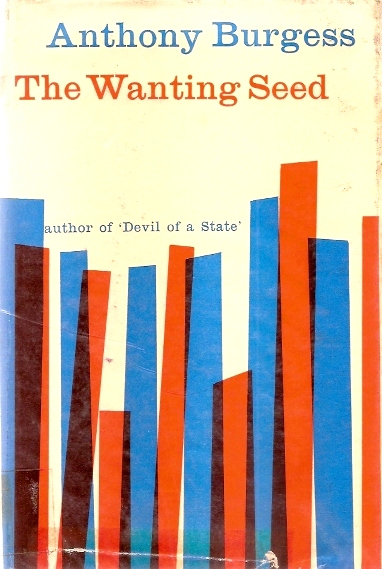
- The Wanting Seed
Anthony Burgessstandalone novel1962
similar bytotalitarianismdystopiachallengingdark
The Wanting Seed is a dystopian novel by the English author Anthony Burgess, written in 1962.
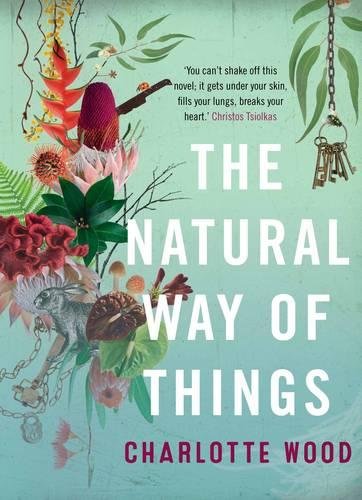
- The Natural Way of Things
Charlotte Woodstandalone novel2016
similar bydarktotalitarianismdystopialiterary & generalchallenging
The Natural Way of Things (2015) is a novel by Australian writer Charlotte Wood. It won the Stella Prize, for writing by Australian women, in 2016.
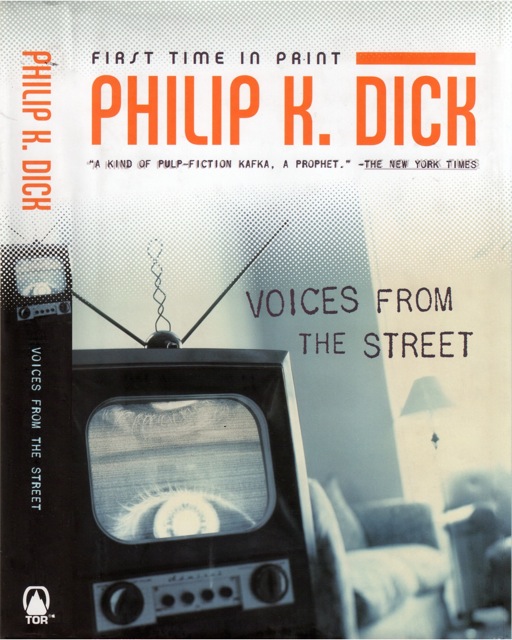
- Voices from the Street
Philip K. Dickstandalone novel2007
similar bymid 20th centuryidentityliterary & generaldarkmadness
A young salesman in a San Francisco radio and electronics store in 1952 feels a vague dissatisfaction with his job, his wife, and newborn son, wishing for better things. He encounters religious revivalists, Nazi magazine editors, socialists, and spirited women, but rather than provide an answer they just exacerbate his emotional pain, and he finally has a complete emotional breakdown.
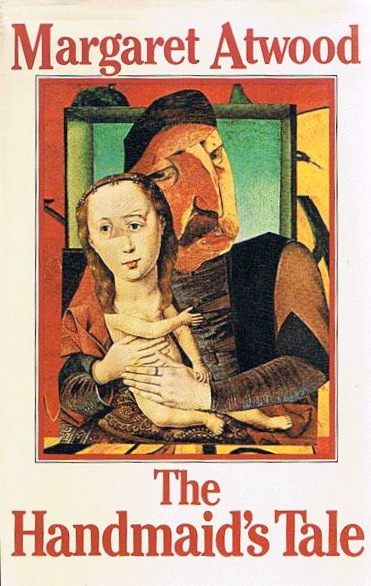
- The Handmaid's Tale
series3 books1985
similar bytotalitarianismdystopiadark
The Handmaid's Tale is Margaret Atwood's 1985 novel set in Gilead, a totalitarian theocracy that has overthrown the United States and forces fertile women into reproductive servitude as Handmaids; it is narrated by one such woman, Offred. Atwood returned to the world in her 2019 sequel The Testaments, set fifteen years later and narrated by three women, including the regime's Aunt Lydia. Together the two novels move from Gilead's grip on power toward the first cracks in it.
- Time's Arrow
Martin Amisstandalone novel1991
similar bydarkidentityliterary & generalchallenging+1 more
From Amazon description: In this icy, knife's-edge story of a life that progresses backward through time, unfolding into one of the darkest episodes of the 20th century, Amis ("at his intriguing, heedful, and powerful best" —Time Out), finds a chillingly original approach to the Holocaust in fiction • From the acclaimed author of Zone of Interest "The narrative moves with irresistible momentum.... [Amis is] a daring, exacting writer willing to defy the odds in pursuit of his art." —Newsday Tod. T. Friendly is living his life in reverse. Doctor Friendly has just died, but he moves "out of blackest sleep" to find himself surrounded by doctors and on the deathbed of a man in whose body he is imprisoned. After weeks of improving in the hospital, he is sent home to his affable, melting-pot, primary-colors existence in suburban America. As Friendly breaks up with his lovers in a prelude to seducing them and mangles his patients before he sends them home, his life races backward toward the one appalling moment in modern history when such reversals make sense. From the fresh-cut lawns of his retirement to the hustle of New York, and then back to the boat which reverses his course to the war-torn Europe Friendly came from, Amis brings the steeliest nerve to the job of realizing the novel's inevitable logic. Trapped in his body from grave to cradle, Friendly's consciousness can only watch as he struggles to make sense of the good doctor's most ambitious project yet—the final solution.
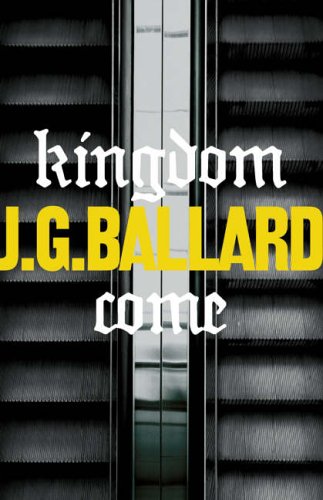
- Kingdom Come
J. G. Ballardstandalone novel2006
similar bytotalitarianismdystopialiterary & generalchallengingdark
In contemporary Britain, the suburban population falls prey to a combination of boredom, consumerism, xenophobia, sports hooliganism, and resentment of authority leading to the rise of a new fascism centered around a giant enclosed shopping mall.