More like Beyond Apollo
anchored on:science fictionnear futureunreliable narratorspace explorationmadnessspaceship+3 more
but
- A Clockwork Orange
series4 books1962
completed
similar byscience fictionnear futuredarkchallenging+2 more
Anthony Burgess's 1962 novel is narrated by Alex, a teenage gang leader in a near-future Britain gripped by a youth subculture of extreme violence, recounting his crimes in Nadsat, an invented slang blending English with Russian-derived words. After his crimes catch up with him, Alex is made the subject of a controversial state program meant to forcibly reform his behavior, and the novel uses his ordeal to question whether imposed goodness is worth the loss of free will. It is a standalone novel.
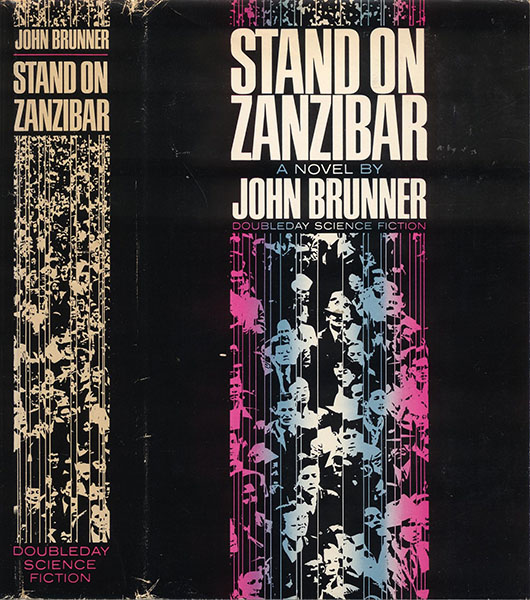
- Stand on Zanzibar
John Brunnerstandalone novel1968
similar byscience fictionnear futurechallengingdark
Stand on Zanzibar is a dystopian New Wave science fiction novel written by John Brunner and first in part published in New Worlds magazine in 1967 and in book form in 1968. The book won a Hugo Award for Best Novel at the 27th World Science Fiction Convention in 1969, as well as the 1969 BSFA Award and the 1973 Prix Tour-Apollo Award.
- The Falling Astronauts
Barry N. Malzbergstandalone novel1971
similar byscience fictionspace explorationmadnessnear futuredark
The Falling Astronauts is a science fiction novel by American writer Barry N. Malzberg, first published in 1971 in a paperback edition by Ace Books.
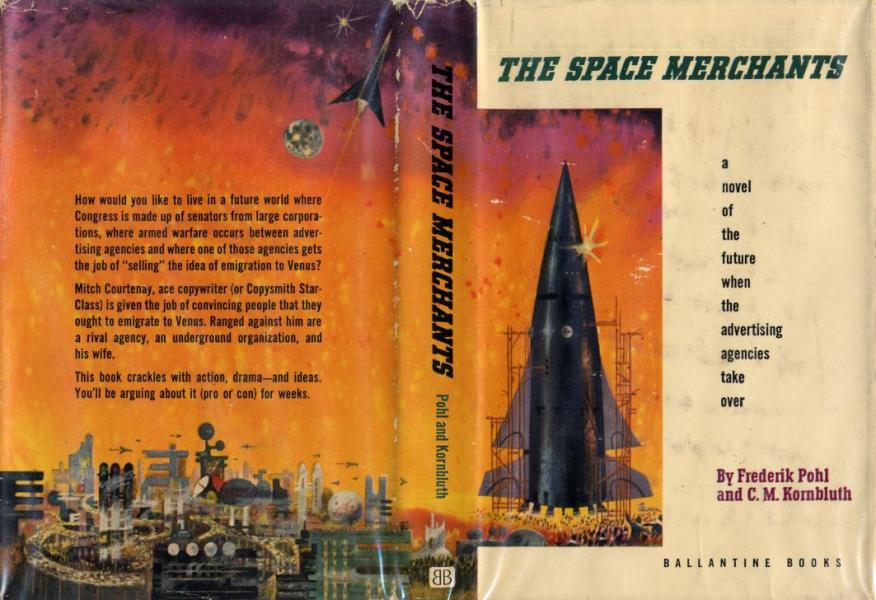
- Space Merchants
series2 books1953
completed
similar byscience fictionnear futuredarkvenus & inner planets
The Space Merchants (1953) is a satirical science fiction novel by Frederik Pohl and C. M. Kornbluth that follows an advertising executive navigating a future where aggressive consumer capitalism has swallowed politics and daily life. The authors reunited three decades later for a direct sequel, The Merchants' War (1984), returning to the same satirical world. Together the two books form a compact bookend pair rather than an ongoing series.
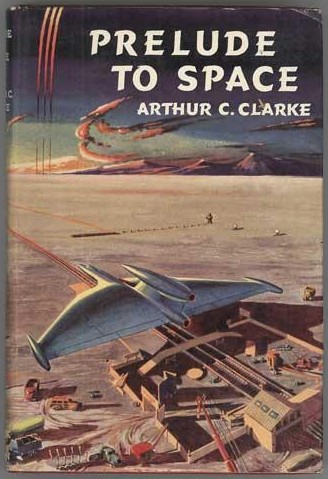
- Prelude to Space
Arthur C. Clarkestandalone novel1951
similar byscience fictionspace explorationnear futurethe moon+1 more
Prelude to Space is a science fiction novel written by British author Arthur C. Clarke in 1947. It appeared for the first time in 1951 as a paperback from World Editions Inc, as number three in its series of Galaxy novels. Sidgwick & Jackson published it in the UK in 1953, followed the next year by a United States hardcover edition from Gnome Press and a paperback from Ballantine Books.
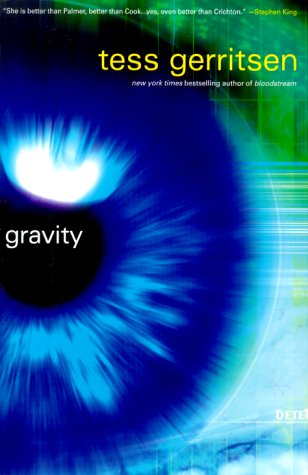
- Gravity
Tess Gerritsenstandalone novel1999
similar byscience fictionspace explorationnear futuredark
Medical thriller set aboard the International Space Station where astronauts are dying one by one from a mysterious disease. Dr Emma Watson is a research physician on a mission to study living organisms in space. But the mission aboard the space station turns into a nightmare.
- Project Hail Mary
Andy Weirstandalone novel2021
similar byscience fictionspace explorationnear futurespaceship
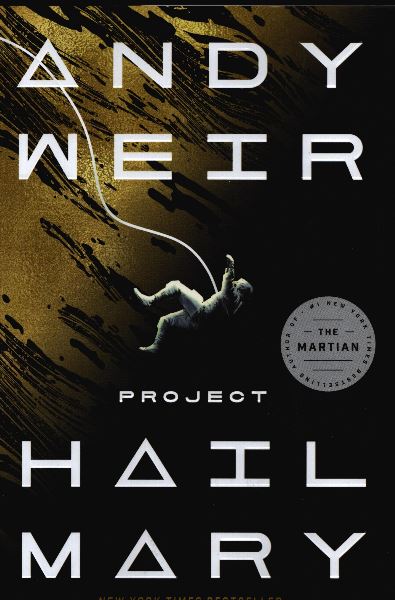
Project Hail Mary is a 2021 hard science fiction novel by American writer Andy Weir. It centers on science teacher and former biologist Ryland Grace, who wakes up aboard a spacecraft, afflicted with amnesia.
- Rocket Ship Galileo
Robert A. Heinleinstandalone novel1947
similar byscience fictionspace explorationnear futurethe moon+1 more
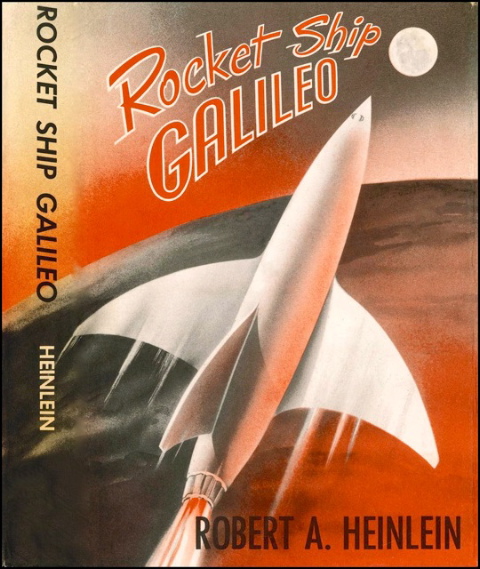
Three teenage boys do backyard experiments on powerful model rockets. An uncle who is an atomic engineer enlists them to make and fly the first rocket to the moon.
- Islands in the Sky
Arthur C. Clarkestandalone novel1952
similar byscience fictionspace explorationnear future+1 more
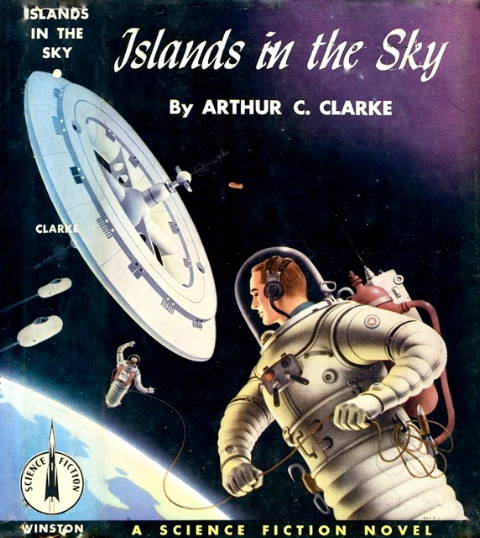
Islands in the Sky is a 1952 science fiction novel by British writer Arthur C. Clarke. It is one of his earliest works. Clarke wrote the story as a travelogue of human settlement of cislunar space in the last half of the twenty-first century.
- The Martian
series2 books2012
similar byscience fictionspace explorationnear future
Andy Weir's novel The Martian, first self-published in 2011 before a commercial re-release, follows astronaut Mark Watney after he is stranded alone on Mars when his crew presumes him dead and departs. Using scientific improvisation and dark humor, Watney works to keep himself alive long enough for a rescue to reach him. It is a single, self-contained survival story.
- Blood Music
Greg Bearstandalone novel1985
similar byscience fictionnear futuredark+1 more
Blood Music is a 1985 science fiction novel by American writer Greg Bear. It is an expanded version of a short story of the same title, originally published in the June 1983 issue of Analog and the winner of both the 1983 Nebula and 1984 Hugo awards for Best Novelette. The novel won the 1986 Prix Apollo Award, given to the best science fiction novel published in France during the preceding year, under the title La Musique du sang.
- The Season of Passage
Christopher Pikestandalone novel1992
similar byscience fictionspace explorationnear futuredark+1 more
Dr. Lauren Wagner was a celebrity. She was involved with the most exciting adventure mankind had ever undertaken. The whole world admired and respected her. But Lauren knew fear. Inside--voices entreating her to love them. Outside--the mystery of the missing group that had gone before her. The dead group. But were they simply dead? Or something else? A terrifying novel of horror--and, surprisingly, of salvation--from one of America's bestselling writers. A novel you won't forget.
- Camp Concentration
Thomas M. Dischstandalone novel1968
similar byscience fictionmadnesschallengingdark
Camp Concentration is a science fiction novel by American writer Thomas M. Disch. It was first serialized in four parts in New Worlds from July to October 1967 and was published in book form in the United Kingdom in 1968, followed by a first U.S. edition in 1969.
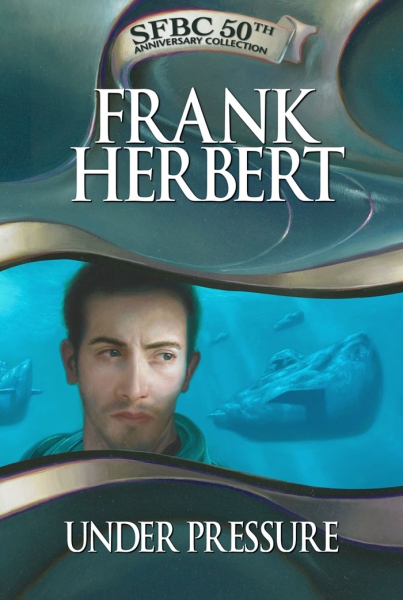
- Under Pressure
Frank Herbertstandalone novel1956
similar byscience fictionmadnessnear futuredark
From back cover Del Rey paperback September 1978: FOUR MEN Were on board the atomic subtug Fenian Ram S1881. They were on a mission to steal vitally needed oil from underwater deposits in enemy territory -- a mission from which none of the last twenty tugs had returned... FOUR MEN Fighting a war a mile and half under the ocean, isolated by the unrelenting pressure of the water and by their own hellish fears... FOUR MEN Who knew everything they had to know about one another -- except which one of them was the saboteur who could destroy them all!
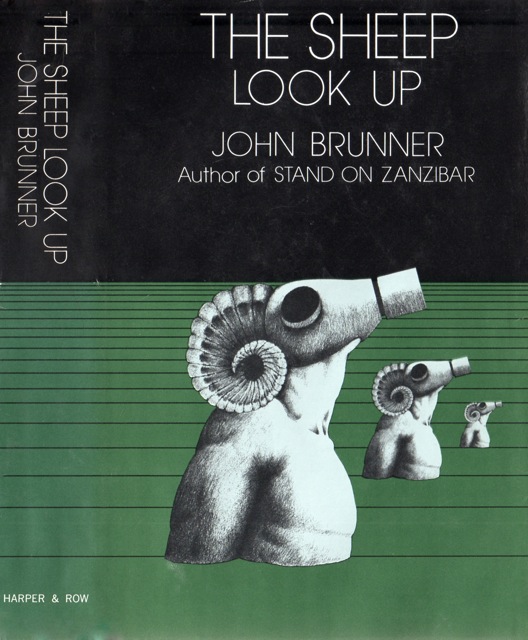
- The Sheep Look Up
John Brunnerstandalone novel1972
similar byscience fictionnear futuredark+1 more
The Sheep Look Up is a 1972 dystopian science fiction novel by British author John Brunner, dealing with the deterioration of the environment in the United States. It was nominated for the 1972 Nebula Award for Best Novel.
- Have Space Suit - Will Travel
Robert A. Heinleinstandalone novel1958
similar byscience fictionspace explorationnear futurethe moon
From the back cover of the Del Rey 9th printing: "Skyjacked - Everything happened at once. One minute Kip Russell was walking about in his own backyard, testing out an old space suit and dreaming about going to the moon - and the next he was out cold and the captive of an insidious space pirate. The whole thing seemed like a very bad dream until he discovered he wasn't the only prisoner on board. Then the reality of the situation became inescapable. He - along with the daughter of a world-renowned scientist and a beautiful creature from an alien planet - had been skyjacked by a monstrous extraterrestrial and they were on their way to the Moon... a journey toward a fate worse than death!"
- The Wanting Seed
Anthony Burgessstandalone novel1962
similar byscience fictionnear futurechallengingdark
The Wanting Seed is a dystopian novel by the English author Anthony Burgess, written in 1962.
- The R-Master
Gordon R. Dicksonstandalone novel1973
similar byscience fictionmadnessnear futuredark+1 more
The World Economic Council said the world had become Utopia. There should be no cause for dissatisfaction. But for those who were still restless, there was the new mind-stimulating drug R-47. Those who took R-47 were engaging in a sort of lottery whose rare winners would be super-geniuses and whose losers might be fit only for asylums. Etter Ho, whose brother was one of the losers, took the drug on the chance that, if he won, he could cure his brother. But what he became when he emerged from the mainlining was something none expected. For he became a menace to Utopian order, a danger to those who knew him, and the only man who might, just possibly, diagnose the real illnesses of the world. (from the back cover of the DAW Books first printing)
- The Jagged Orbit
John Brunnerstandalone novel1969
similar byscience fictionnear futurechallengingdark
The Jagged Orbit is a science fiction novel by British writer John Brunner. It is similar to his earlier novel Stand on Zanzibar in its narrative style and dystopic outlook. It has exactly 100 titled chapters, which vary from several pages to part of one word. It was first published in 1969 with cover art by Leo and Diane Dillon, in the Ace Science Fiction Specials line issued by Ace Books.
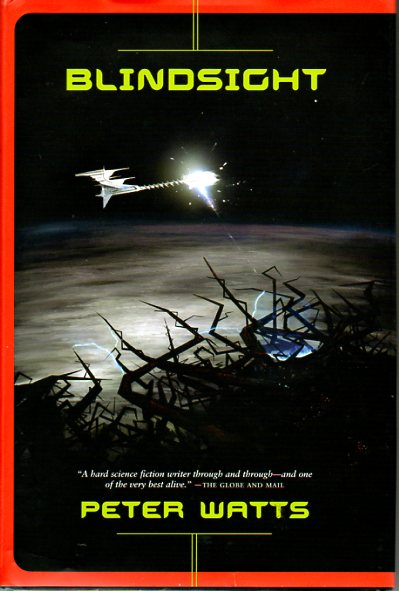
- Blindsight / Firefall
series3 books2006
similar byscience fictiondarkchallenging+2 more
Blindsight sends a crew of radically modified posthumans (including a resurrected, genetically restored vampire) out to the Oort cloud after humanity detects an alien signal, only to make contact with something intelligent, wildly capable, and possibly not conscious at all — a first-contact story built around the question of whether self-awareness is actually useful. Peter Watts's Echopraxia is a same-timeframe "sidequel" rather than a direct sequel, following different characters through the fallout of the same first-contact event.
- The Power
Naomi Aldermanstandalone novel2016
similar byscience fictionnear futurechallengingdark
The Power is a 2016 science fiction novel by the British writer Naomi Alderman. Its central premise is of women developing the ability to release electrical jolts from their fingers, which allows them to become the dominant sex. In 2017, it won the Baileys Women's Prize for Fiction.
- The Drowned World
J. G. Ballardstandalone novel1962
similar byscience fictionmadnessnear future
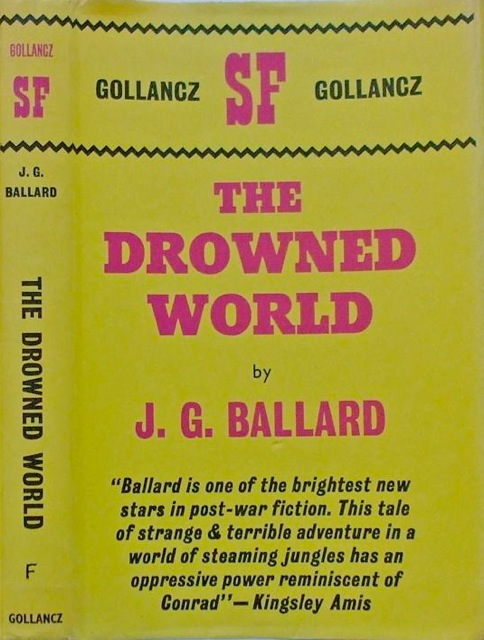
The Drowned World is a 1962 science fiction novel by J. G. Ballard. It first appeared in shortened form in the January 1962 issue of the UK edition of Science Fiction Adventures and was published in book form later that year by Victor Gollancz Ltd in London; an American edition followed from Berkley Medallion. Critics have grouped The Drowned World with Ballard's early science-fiction novels as part of an "ambiguous apocalypse" sequence that also includes The Drought and The Crystal World, from the period in which he was developing the ideas he described as "inner space". Set in a future in which solar radiation has melted the polar ice caps and transformed London into a flooded tropical lagoon, the novel follows biologist Robert Kerans as he becomes increasingly drawn toward the altered environment rather than toward restoring the old social order.
- Earthseed
series7 books1993
similar byscience fictionnear futuredark
Octavia E. Butler's Earthseed novels, Parable of the Sower and Parable of the Talents, follow Lauren Olamina as she survives the collapse of a climate-ravaged, near-future United States and founds a belief system built on the idea that "God is Change." The two-book series was left unfinished at Butler's death; a planned third novel, Parable of the Trickster, was never completed. Later graphic-novel adaptations retell the same two stories rather than continuing the narrative.
- The Thanatos Syndrome
Walker Percystandalone novel1987
similar byscience fictionmadnessnear futuredark
The Thanatos Syndrome (1987) was Walker Percy's last novel. It is a sequel to Love in the Ruins. Set in the near future in Feliciana, it tells the story of an imprisoned psychiatrist who is freed and returns to his town with the active members demonstrating new mysterious behaviors. He suspects that something or someone is making everyone in his town crazy and reversing them to be like primitive apes.