More like Beyond Bedlam
anchored on:science fiction
but
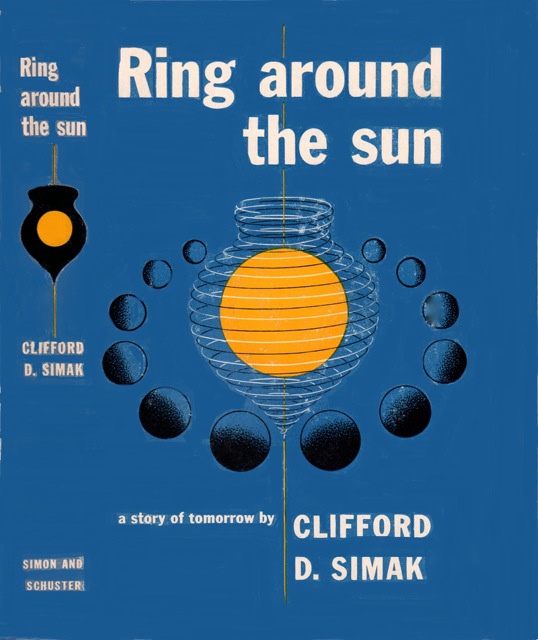
- Ring Around the Sun
Clifford D. Simakstandalone novel1953
similar byscience fictionour worldmid 20th century+1 more
Ring Around the Sun is a science fiction novel by American writer Clifford D. Simak. Its anti-urban and pro-agrarian sentiments are typical of much of Simak's work.
- Stranger in a Strange Land
Robert A. Heinleinstandalone novel1961
similar bypsychic powersscience fictionour world
Stranger in a Strange Land is a 1961 science fiction novel by the American author Robert A. Heinlein. It tells the story of Valentine Michael Smith, a human who comes to Earth in early adulthood after being born on the planet Mars and raised by Martians, and explores his interaction with and eventual transformation of Terran culture.
- Fantastic Voyage
series2 books1966
completed
similar byscience fiction+2 more
Fantastic Voyage (1966) is Isaac Asimov's novelization of the film about a submarine crew shrunk to microscopic size and injected into an injured scientist's body to repair damage from the inside. Asimov returned to the same premise of medical miniaturization in the unrelated 1987 novel Fantastic Voyage II: Destination Brain, which follows a different cast and plot rather than continuing the first book's story.
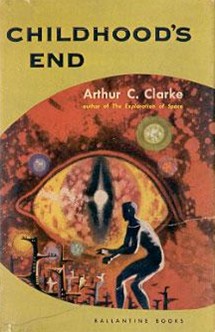
- Childhood's End
Arthur C. Clarkestandalone novel1953
similar byscience fictionour world+1 more
Childhood's End is a 1953 science fiction novel by the British author Arthur C. Clarke. The story follows a peaceful alien invasion of Earth by mysterious Overlords, whose arrival begins decades of apparent utopia under indirect alien rule, at the cost of human identity and culture.
- Dr. Patrick Cory
series3 books1942
completed
similar byscience fictionour world+2 more
Donovan's Brain (1942) is one of the earliest and most influential 'brain in a jar' stories: Dr. Patrick Cory keeps the disembodied brain of a dead millionaire alive in his lab, only to find it telepathically overriding his own mind and will. Curt Siodmak revisited the same premise and character in Hauser's Memory, where Cory absorbs a dying spy's memories through an experimental serum, with consequences of his own. Both were adapted for film and television, and the 1942 original is often cited as a formative influence on later mad-science and body-horror fiction.
- The Collected Stories of Philip K. Dick
series11 books1987
completed
similar byscience fictionour world+1 more
The Collected Stories of Philip K. Dick is a collection of 118 science fiction stories by American writer Philip K. Dick. It was first published by Underwood-Miller in 1987 as a five volume set. See Philip K. Dick bibliography for information about the mass market reprints.
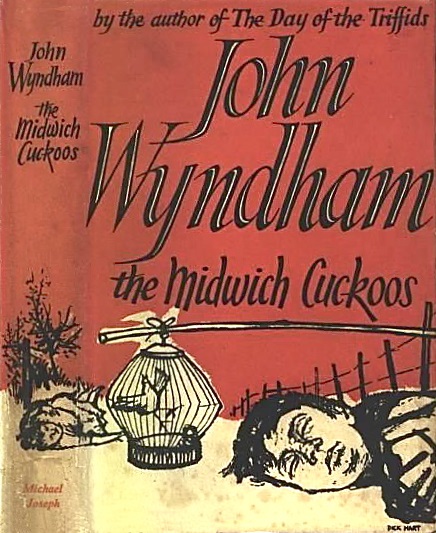
- The Midwich Cuckoos
John Wyndhamstandalone novel1957
similar byscience fictionmid 20th century+1 more
The Midwich Cuckoos is a 1957 science fiction novel written by the English author John Wyndham. It tells the tale of an English village in which the women become pregnant by brood parasitic aliens. The book has been praised by many critics, including the dramatist Dan Rebellato, who called it "a searching novel of moral ambiguities", and the novelist Margaret Atwood, who called the book Wyndham's "chef d'œuvre". The book has been adapted for film, radio, and television.
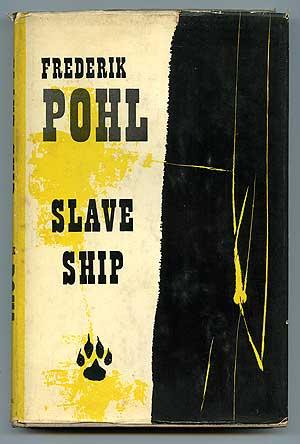
- Slave Ship
Frederik Pohlstandalone novel1957
similar bypsychic powersscience fictionour worldmid 20th century
Slave Ship is a 1956 short science fiction novel by American writer Frederik Pohl, originally serialized in Galaxy. The scene is a world in the throes of a low-intensity global war, which appears to be an amplified representation of the Vietnam War, in which the U.S. was just beginning to be involved. The plot involves telepathy, speaking to animals, and, in the last few pages, an invasion by extraterrestrials.
- The People
series33 books1952
completed
similar byscience fiction+3 more
The People follows a group of telepathic, gifted humanoids who crash-landed in the American frontier generations ago and now live quietly scattered among ordinary humans, hiding their abilities while raising children who must learn to control powers that frighten their neighbors. Zenna Henderson told their story mostly through linked short fiction, gathered into the fix-up novels Pilgrimage and The People: No Different Flesh and later omnibus collections. It's less a plotted series than a mosaic of related stories about faith, belonging, and exile.
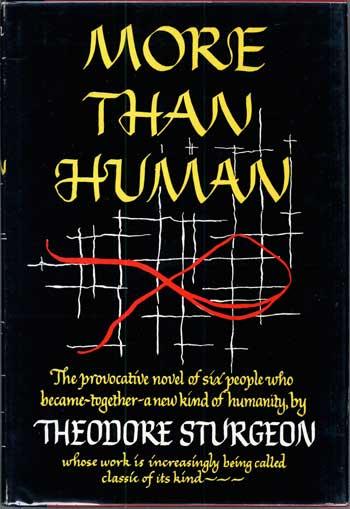
- More Than Human
Theodore Sturgeonstandalone novel1953
similar bypsychic powersscience fictionour world
More Than Human is a 1953 science fiction fix-up novel by American writer Theodore Sturgeon. It is a revision and expansion of his 1952 novella Baby Is Three, which is bracketed by two additional parts written for the novel, "The Fabulous Idiot" and "Morality". It won the 1954 International Fantasy Award, which was also given to works in science fiction. It was additionally nominated in 2004 for a "Retro Hugo" award for the year 1954. Science fiction critic and editor David Pringle included it in his book Science Fiction: The 100 Best Novels.
- The Demolished Man
Alfred Besterstandalone novel1953
similar bypsychic powersscience fictionour world
In the year 2301, guns are only museum pieces and benign telepaths sweep the minds of the populace to detect crimes before they happen. In 2301 murder is virtually impossible, but one man is about to change that..
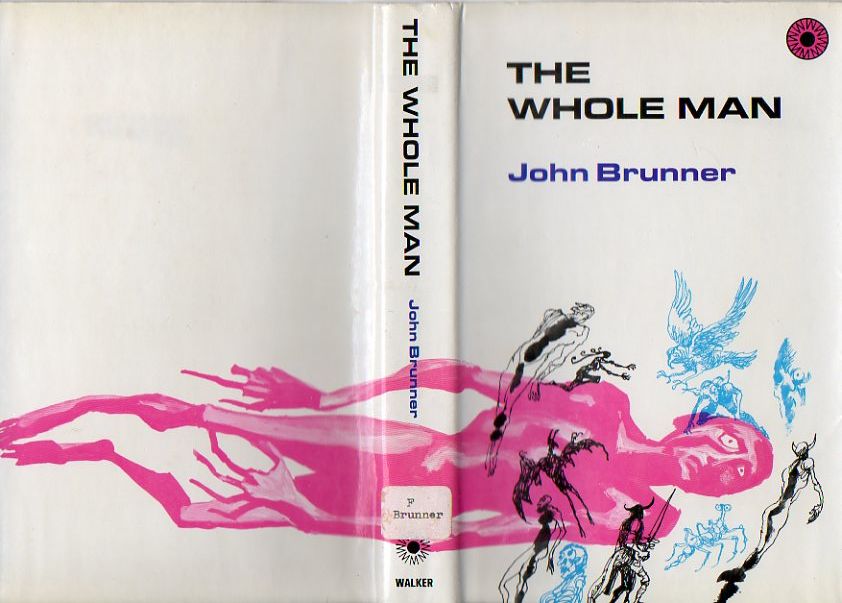
- The Whole Man
John Brunnerstandalone novel1964
similar bypsychic powersscience fictionour worldmid 20th century
The Whole Man is a 1964 science fiction novel by John Brunner. It was nominated for a Hugo Award for Best Novel in 1965. In the UK, it was published under the title Telepathist.
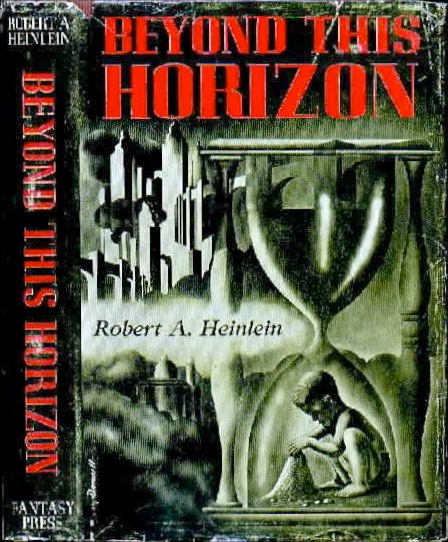
- Beyond This Horizon
Robert A. Heinleinstandalone novel1948
similar byscience fictionour world+1 more
From the front flap of a 2001 Baen reprint: "Utopia has been achieved. For centuries, disease, hunger, poverty, and war have been things found only in the history tapes. And applied genetics has given men and women the bodies of athletes and a lifespan of over a century. They should all have been very happy... But Hamilton Felix is bored. And he is the culmination of a star line, each of his last thirty ancestors chosen for superior genes. Hamilton is, as far as genetics can produce one, the ultimate man. And this ultimate man can see no reason why the human race should survive, and has no intention of continuing the pointless comedy. However, Hamilton's life is about to become less boring. A secret cabal of revolutionaries who find utopia not just boring, but desperately in need of leaders who know just What Needs to be Done, are planning to revolt and put themselves in charge. Knowing of Hamilton's disenchantment with the modern world, they have recruited him to join their Glorious Revolution. Big mistake! The revolutionaries are about to find out that recruiting a superman was definitely not a good idea..."
- The Master
T. H. Whitestandalone novel1957
similar bypsychic powersscience fictionour worldmid 20th century
Set on and inside Rockall, a small island more than 200 miles northwest of Ireland that Britain claimed in September 1955 (and later annexed) --purportedly in response to the world-threatening events featured in this adventure story, which occurred there that summer --on and inside the rock. Twelve-year-old twins and their pet dog discover a plot to dominate the world, led by a 157-year-old genius physicist and telepath (mad scientist).
- Slan
series2 books1946
similar byscience fictionour world+1 more
Slan (1946) is A. E. van Vogt's science fiction novel about slans, a persecuted race of telepathic superbeings living hidden among ordinary humans, first serialized in Astounding Science Fiction before its Arkham House hardcover edition. More than sixty years later, Kevin J. Anderson completed Slan Hunter (2007), an authorized sequel built from van Vogt's notes to continue the story left unfinished at the original author's death. The two novels together bracket a single continuing narrative rather than an ongoing series.
- The Lathe of Heaven
Ursula K. Le Guinstandalone novel1971
similar bypsychic powersscience fictionour world
The Lathe of Heaven is a 1971 science fiction novel by American writer Ursula K. Le Guin, first serialized in the American science fiction magazine Amazing Stories. It won the 1972 Locus Award for Best Novel and was a finalist for the 1971 Nebula Award for Best Novel and 1972 Hugo Award for Best Novel. Two television film adaptations were released: the PBS production, The Lathe of Heaven (1980), and Lathe of Heaven (2002), a remake produced by the A&E Network.
- Chocky
series2 books1968
similar byscience fiction+2 more
Chocky (1968) is John Wyndham's science fiction novel about an eleven-year-old boy, Matthew, whose parents grow alarmed by his conversations with an unseen presence that feeds him unsettling insights into mathematics and human progress, building toward the reveal of what, or who, Chocky really is. Mark Daniel's Chocky's Challenge (1986), published after Wyndham's death, is an authorized continuation that carries the story forward.
- Galactic Milieu
series10 books1981
completed
similar bypsychic powersscience fiction+1 more
Galactic Milieu is a series of science fiction novels by Julian May. It is linked to her previously published series, the Saga of Pliocene Exile; and through the fantastical device of time-travel, acts as both a prequel and a sequel to this earlier series. The "Galactic Milieu" of the title is an interplanetary federation, and Earth's membership of it is a central plot concern.
- Three to Conquer
Eric Frank Russellstandalone novel1956
similar bypsychic powersscience fictionour worldmid 20th century
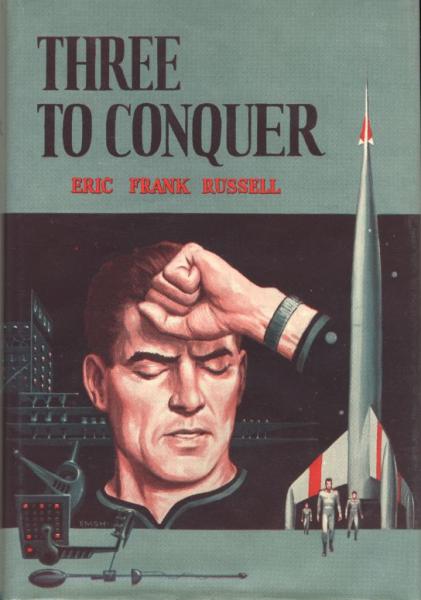
Three to Conquer is a novel by Eric Frank Russell published in 1956.
- The Complete Stories of Theodore Sturgeon
series24 books1947
completed
similar byscience fictionour worldmid 20th century
- Patternist
series6 books1976
completed
similar byscience fiction+2 more
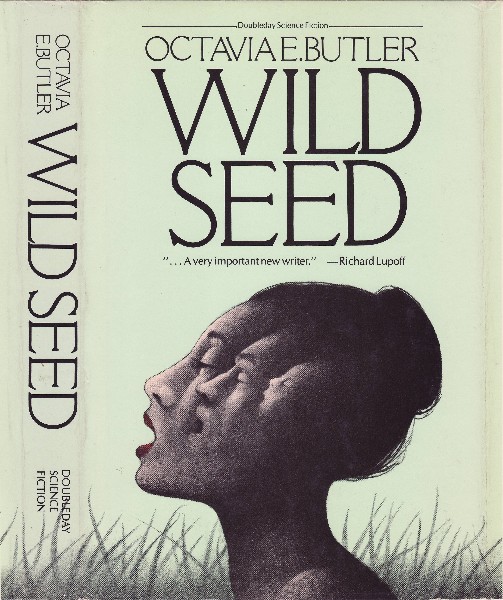
The Patternist series is a group of science fiction novels by Octavia E. Butler that detail a secret history continuing from the Ancient Egyptian period to the far future that involves telepathic mind control and an extraterrestrial plague. A profile of Butler in Black Women in America notes that the themes of the series include "racial and gender-based animosity, the ethical implications of biological engineering, the question of what it means to be human, ethical and unethical uses of power, and how the assumption of power changes people."
- The Dream Master
Roger Zelaznystandalone novel1966
similar bypsychic powersscience fictionour world
The Dream Master (1966) is a science fiction novel by American writer Roger Zelazny, based on the novella He Who Shapes. Zelazny's original title was The Ides of Octember. He Who Shapes won the 1965 Nebula Award for Best Novella.
- Time for the Stars
Robert A. Heinleinstandalone novel1956
similar bypsychic powersscience fiction+1 more
Explorer spaceships need a way to communicate back to earth in a timely manner when they are light years away. When telepathy is found to have no delay, pairs of twins are hired. One twin stays on Earth to receive reports, and the other twin goes into space.