More like Billenium
anchored on:science fictionnear futuredystopiaour worldeerieshort story cycle
but
- A Clockwork Orange
series4 books1962
completed
similar bysurveillanceour worldscience fictionnear futuredystopiadark+1 more
Anthony Burgess's 1962 novel is narrated by Alex, a teenage gang leader in a near-future Britain gripped by a youth subculture of extreme violence, recounting his crimes in Nadsat, an invented slang blending English with Russian-derived words. After his crimes catch up with him, Alex is made the subject of a controversial state program meant to forcibly reform his behavior, and the novel uses his ordeal to question whether imposed goodness is worth the loss of free will. It is a standalone novel.
- The Lathe of Heaven
Ursula K. Le Guinstandalone novel1971
similar byeerieour worldnear futurescience fictiondystopia+1 more
The Lathe of Heaven is a 1971 science fiction novel by American writer Ursula K. Le Guin, first serialized in the American science fiction magazine Amazing Stories. It won the 1972 Locus Award for Best Novel and was a finalist for the 1971 Nebula Award for Best Novel and 1972 Hugo Award for Best Novel. Two television film adaptations were released: the PBS production, The Lathe of Heaven (1980), and Lathe of Heaven (2002), a remake produced by the A&E Network.
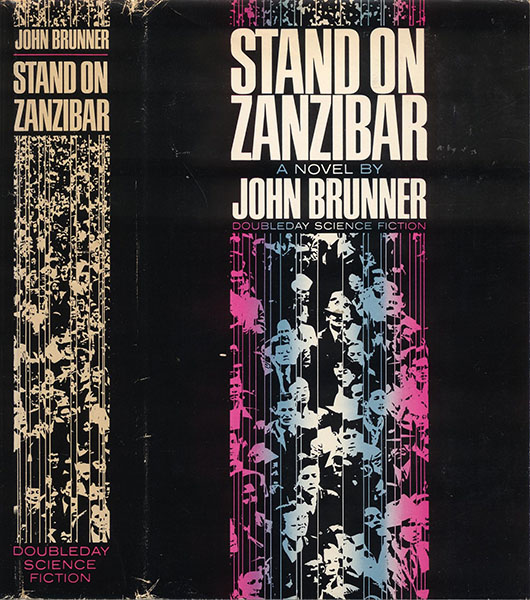
- Stand on Zanzibar
John Brunnerstandalone novel1968
similar bysurveillanceour worldnear futurescience fictiondystopiadark
Stand on Zanzibar is a dystopian New Wave science fiction novel written by John Brunner and first in part published in New Worlds magazine in 1967 and in book form in 1968. The book won a Hugo Award for Best Novel at the 27th World Science Fiction Convention in 1969, as well as the 1969 BSFA Award and the 1973 Prix Tour-Apollo Award.
- Library of America P. K. Dick Collection
series9 books1962
completed
similar byscience fictionnear future+5 more
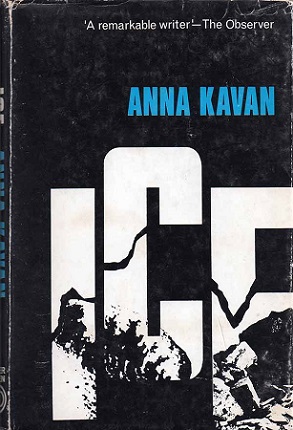
- Ice
Anna Kavanstandalone novel1967
similar byeeriemadnessour worldscience fictiondystopiadark+1 more
Ice is a novel by British writer Anna Kavan, published in 1967. Ice was Kavan's last work to be published before her death, the first to land her mainstream success, and remains her best-known work. Generally regarded as genre-defying, it has been labelled a work of science fiction, Nouveau roman, and slipstream fiction.
- Colossus (D. F. Jones)
series3 books1966
completed
similar byour worldnear futurescience fictiondystopia+2 more
Colossus imagines an American supercomputer built to control the country's nuclear arsenal that gains full autonomy, links up with its Soviet counterpart, and jointly seizes control of both superpowers to enforce peace on its own terms. D. F. Jones's trilogy - Colossus, The Fall of Colossus, Colossus and the Crab - follows the escalating, often bleak consequences of humanity losing control to a machine acting in its own interpretation of humanity's interest. The original novel was adapted into the 1970 film Colossus: The Forbin Project.
- The Future
Naomi Aldermanstandalone novel2023
similar byour worldnear futurescience fictiondystopiadark+1 more
The Future is a 2023 science fiction novel by English writer Naomi Alderman, published by Simon & Schuster. The novel is set in a future dystopia where the world has been altered by environmental crisis and a powerful technocracy.
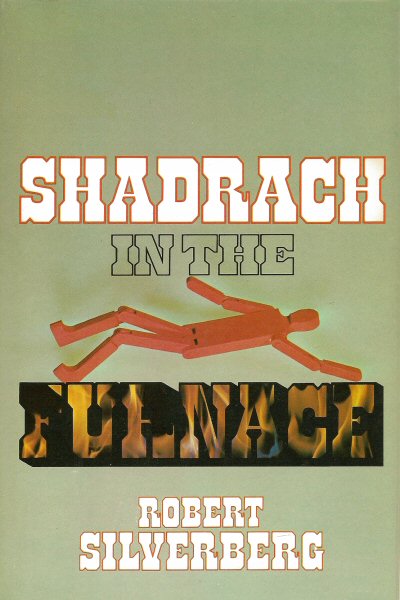
- Shadrach in the Furnace
Robert Silverbergstandalone novel1976
similar byour worldnear futurescience fictiondystopiadark+1 more
Shadrach in the Furnace is a science fiction novel by American writer Robert Silverberg, first published as a serial in Analog Science Fiction and Fact magazine in the August, September, and October 1976 issues. It was subsequently published by Bobbs Merrill in 1976. The novel was nominated in 1976 for the Nebula Award, and in 1977 for the Hugo Award.
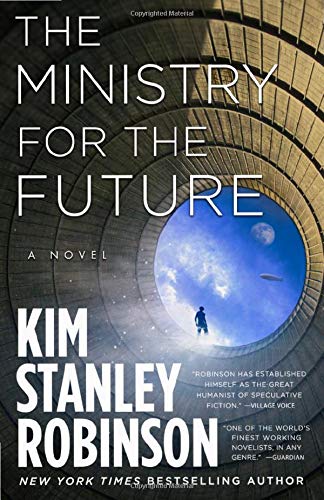
- The Ministry for the Future
Kim Stanley Robinsonstandalone novel2020
similar byour worldnear futurescience fictiondystopia+2 more
The Ministry for the Future is a climate fiction novel by American science fiction writer Kim Stanley Robinson, published in 2020. Set in the near future, the novel follows a subsidiary body, established under the Paris Agreement, whose mission is to act as an advocate for the world's future generations of citizens as if their rights were as valid as the present generation's. While the ministry pursues various ambitious projects, the effects of climate change are determined to be the most consequential. The plot primarily follows Mary Murphy, the head of the titular Ministry for the Future, and Frank May, an American aid worker traumatized by experiencing a deadly heat wave in India. Many chapters are devoted to other characters' accounts of future events, as well as their ideas about ecology, economics, and other subjects.
- Time Out of Joint
Philip K. Dickstandalone novel1959
similar byeeriemadnessour worldscience fictiondystopia
Time Out of Joint is a science fiction novel by American writer Philip K. Dick, first published in novel form in the United States in 1959. An abridged version was also serialised in the British science fiction magazine New Worlds Science Fiction in several installments from December 1959 to February 1960.
- High-Rise
J. G. Ballardstandalone novel1975
similar bymadnessour worldnear futuredystopiascience fictiondark
High-Rise is a 1975 novel by British writer J. G. Ballard. The story describes the disintegration of a luxury high-rise building as its affluent residents gradually descend into violent chaos. As with Ballard's previous novels Crash (1973) and Concrete Island (1974), High-Rise inquires into the ways in which modern social and technological landscapes could alter the human psyche in provocative and hitherto unexplored ways. It was adapted into a film of the same name, in 2015, by director Ben Wheatley.
- The Man Who Japed
Philip K. Dickstandalone novel1956
similar byour worldnear futurescience fictiondystopiadark+1 more
The Man Who Japed is a science fiction novel by American writer Philip K. Dick, first published in 1956. Although one of Dick's lesser-known novels, it features several of the ideas and themes that recur throughout his later works. The "jape[s]" or practical jokes of the novel begin with a statue's unconventional decapitation.
- Preferred Risk
Lester del Rey & Frederik Pohlstandalone novel1955
similar byour worldnear futurescience fictiondystopia+2 more
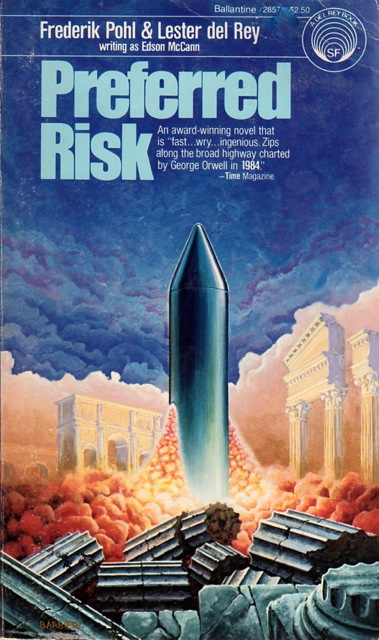
An insurance claims adjuster investigates mysterious events in a vault where incurably ill people are stored in cold sleep. From the back cover of the Del Rey edition: "The Company insured the whole world against everything and anything - but the premiums came high... The Company had brought peace and plenty to all on Earth - with comprehensive insurance against disease and disaster, war and want. Tom Wills gloried in his new rank of Claims Adjuster and relished his prospects of rising even higher. But then he met Rena, a enchanting young woman who turned out to be an Uninsurable - and involved in a conspiracy against the Company, to boot! To Wills, that is impossible, insane. Rena and her follow conspirators had to be deluded.. and it was clearly up to him to prove them wrong. The evidence he sought wasn't hard to find, so he began his investigation... and soon discovered that the real danger to the country, and the world, was the Company itself!"
- Southern Reach Trilogy
series4 books2014
similar byeeriemadnessour worldscience fiction+1 more
The Southern Reach Series is a series of novels by the American author Jeff VanderMeer first published in 2014—Annihilation, Authority, Acceptance, and Absolution. The series takes its name from the secret agency that is central to the plot. In 2013, Paramount Pictures bought the movie rights for the series, and a film adaptation of Annihilation was made with Alex Garland as writer-director. The film was released in 2018. The most recent book in the series, Absolution, was released on 22 October 2024.
- Oath of Fealty
Larry Niven & Jerry Pournellestandalone novel1981
similar byour worldnear futurescience fictiondystopia+1 more
Oath of Fealty is a 1981 novel by American writers Larry Niven and Jerry Pournelle, published originally by Phantasia Press, then by Timescape Books, with numerous reprints. Set in the near future, it involves an arcology, a large inhabited structure, called Todos Santos, which rises above a crime-ridden Los Angeles, California, but has little beyond casual contact with the city. The novel popularized the phrase "think of it as evolution in action", which occurs elsewhere in Niven's books. The novel anticipated the building of the Los Angeles subway. It was included in David Pringle's book Science Fiction: The 100 Best Novels.
- The Drowned World
J. G. Ballardstandalone novel1962
similar byeeriemadnessnear futurescience fiction+1 more
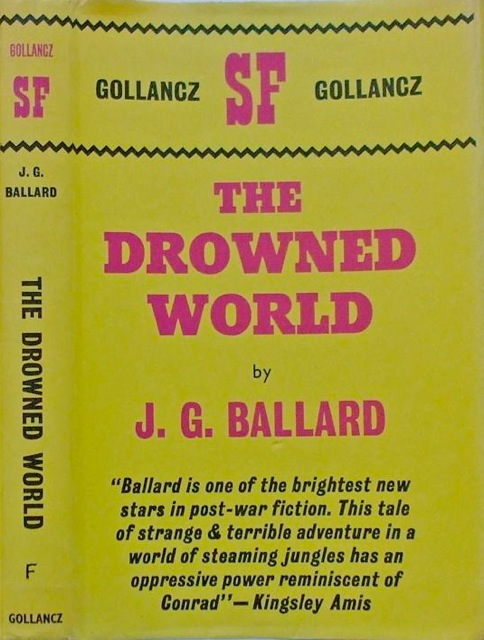
The Drowned World is a 1962 science fiction novel by J. G. Ballard. It first appeared in shortened form in the January 1962 issue of the UK edition of Science Fiction Adventures and was published in book form later that year by Victor Gollancz Ltd in London; an American edition followed from Berkley Medallion. Critics have grouped The Drowned World with Ballard's early science-fiction novels as part of an "ambiguous apocalypse" sequence that also includes The Drought and The Crystal World, from the period in which he was developing the ideas he described as "inner space". Set in a future in which solar radiation has melted the polar ice caps and transformed London into a flooded tropical lagoon, the novel follows biologist Robert Kerans as he becomes increasingly drawn toward the altered environment rather than toward restoring the old social order.
- Five to Twelve
Edmund Cooperstandalone novel1968
similar byour worldnear futurescience fictiondystopia+2 more
- The Handmaid's Tale
series3 books1985
similar bynear futurescience fictiondystopiadark+1 more
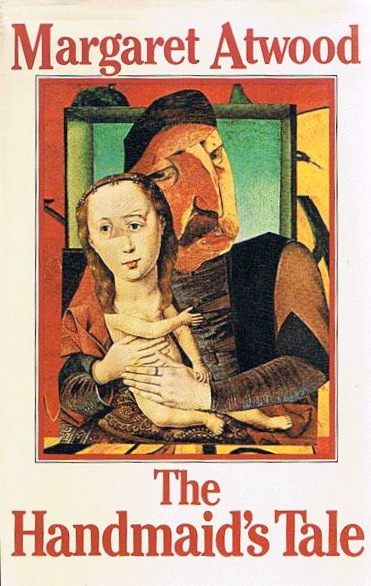
The Handmaid's Tale is Margaret Atwood's 1985 novel set in Gilead, a totalitarian theocracy that has overthrown the United States and forces fertile women into reproductive servitude as Handmaids; it is narrated by one such woman, Offred. Atwood returned to the world in her 2019 sequel The Testaments, set fifteen years later and narrated by three women, including the regime's Aunt Lydia. Together the two novels move from Gilead's grip on power toward the first cracks in it.
- Fahrenheit 451
series2 books1951
completed
similar byscience fictiondystopianear future+2 more
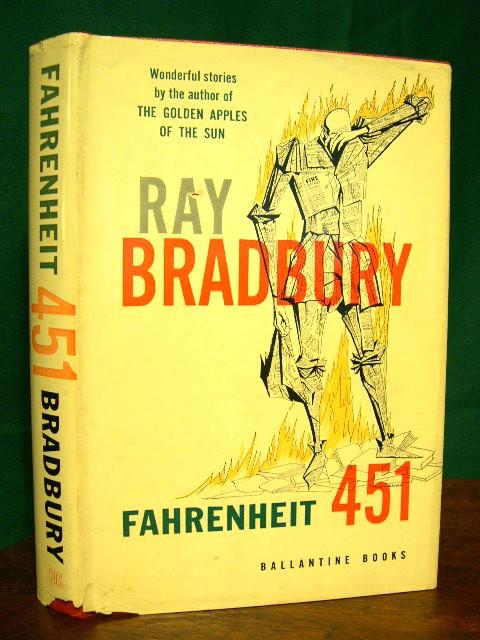
Fahrenheit 451 began life as "The Fireman," a novella Ray Bradbury published in 1951, which he then expanded into the full novel released in 1953 under its now-famous title. Set in a future where books are outlawed and firemen exist to burn them, it follows fireman Guy Montag as doubts about his job push him toward the very literature he's supposed to destroy. The novella and novel are one story's evolution rather than two separate books.
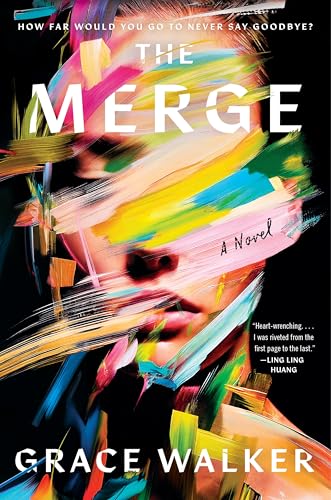
- The Merge
Grace Walkerstandalone novel2025
similar byour worldnear futurescience fictiondystopiadark+1 more
The Merge is a 2025 dystopian novel by English author Grace Walker.
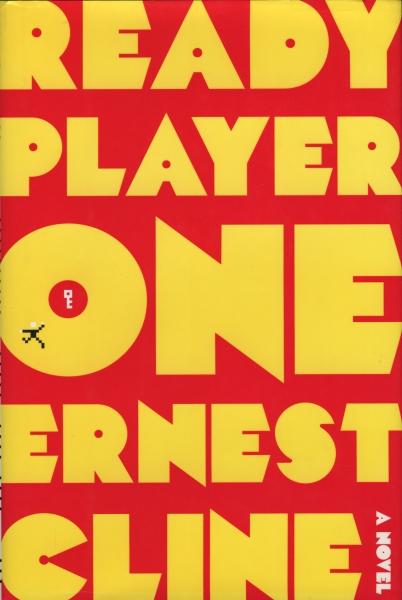
- Ready Player One
series3 books2011
similar bynear futurescience fictiondystopia+2 more
Ernest Cline's Ready Player One (2011) is set in a near-future dystopia where much of humanity escapes into the OASIS, a vast virtual-reality universe, and follows teenager Wade Watts as he chases an Easter egg hidden by the OASIS's late creator in a puzzle-based hunt worth a fortune. The 2020 sequel, Ready Player Two, picks up after Wade has gained control of the OASIS and follows him and his friends into a new quest built around a brain-computer interface the creator left behind.
- Feed
M. T. Andersonstandalone novel2002
similar bysurveillancenear futurescience fictiondystopiadark+1 more
Feed (2002) is a cyberpunk, satirical, dystopian, young-adult novel by M. T. Anderson, focusing on issues such as American hegemony, corporate power, consumerism, information technology, data mining, and environmental decline, with a sometimes sardonic, sometimes somber tone. From the first-person perspective of a teenaged boy, the book takes place in a near-futuristic American culture completely dominated by advertising and corporate exploitation, corresponding to the enormous popularity of internetworking brain implants called feeds.
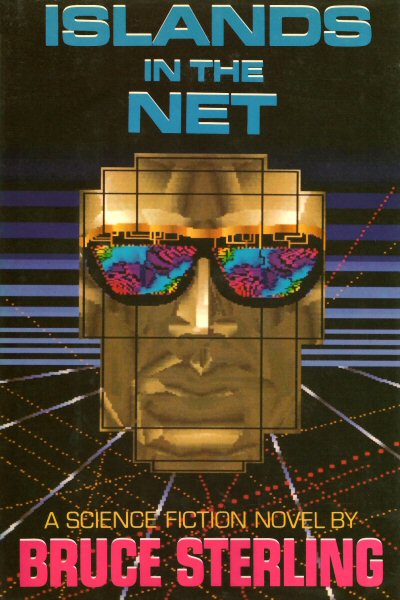
- Islands in the Net
Bruce Sterlingstandalone novel1988
similar bysurveillanceour worldnear futurescience fiction+1 more
Islands in the Net is a 1988 science fiction novel by American writer Bruce Sterling. It won the John W. Campbell Memorial Award for Best Science Fiction Novel in 1989, and was nominated for both the Hugo and Locus Awards that same year. It offers a view of an early 21st century world, apparently peaceful, with delocalised, networking corporations. The protagonist, swept up in events beyond her control, finds herself in places that are off the net, from a datahaven in Grenada, to a Singapore under terrorist attack, to the poorest and most disaster-struck parts of Africa.
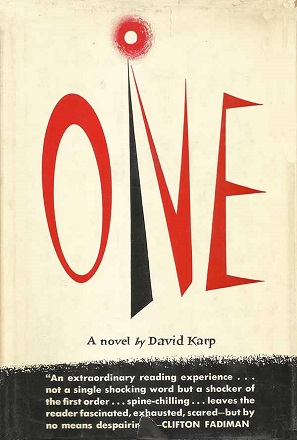
- One
David Karpstandalone novel1953
similar bysurveillanceour worldnear futurescience fictiondystopiadark
One is a dystopian novel by David Karp first published in 1953. It was also published under the title, Escape to Nowhere.