Loreful
HomeDiscover
Search series, authors…⌘K
Loreful

Reading orders for SF/F series and shared universes — with your place kept in every one.

Explore

UniversesSeriesWorksAuthorsAtlas

Help

FAQAboutSite map

Account & legal

Sign inCreate accountPrivacyTerms

Data

Built on ISFDB, Wikipedia, Wikidata and Open Library. Curated reading orders carry their reasoning on the page; the rest follow publication order. Data sources & licenses

© Loreful · data: ISFDB · CC BY

More like Black Eons

but

Mood

The mood the book leaves you in.

  • The reading experience is propelled by journeys, exploration, and physical risk; excitement and forward momentum dominate over dread or introspection.
  • Joy and loss are deliberately mixed; the resolution grants characters something real while taking something else away, leaving warmth and sorrow together.
  • The book demands work from the reader — dense prose, difficult structure, unfamiliar ideas, or morally uncomfortable material — as part of its intended effect.
  • Grim events, cruelty, or despair dominate the atmosphere, and the book does not soften them with comfort or comic relief.
  • The atmosphere is quietly unsettling — wrongness, unease, and the uncanny pervade the book without necessarily escalating into overt horror.
  • The book is built to move the reader; character feeling is foregrounded and major scenes aim at a strong emotional response.
  • Humor is a primary aim and the prose plays for laughs — comic situations, wit, or dialogue produce sustained comedy, not occasional levity.
  • The book insists that things can improve; effort and decency are shown to matter, and the arc bends toward better outcomes even through hardship.
  • The book teaches as it goes — real facts, history, science, or craft are conveyed in enough depth that learning is part of the reading experience.
  • The book is designed to uplift and motivate, presenting perseverance or achievement in a way that invites the reader to aspire or act.
  • The overall register is cheerful and easygoing; stakes are kept gentle and the book avoids dwelling on pain or dread.
  • Withheld information drives the experience; the book sustains enigmas and secrets the reader wants resolved, whatever its genre.
  • The book is contemplative and inward-looking, giving more weight to thought, memory, and meaning than to external events.
  • The book works as comfort reading — low tension, a soothing pace, and an atmosphere the reader can unwind in.
  • Grief, loss, or melancholy set the dominant register, and the book lets sorrow stand rather than resolving it into comfort.
  • Sustained suspense is the point; the book keeps the reader braced for what happens next through danger, pressure, or impending revelation.
  • Playful invention and charm define the register — fanciful conceits, light absurdity, and a narration that delights in its own oddity.

About

What the story runs on.

  • Stories centered on witches and the practice of witchcraft — covens, hedge magic, familiars, and the witch's place in her community.
  • Stories in which gods and deities act as characters — walking the world, meddling in mortal lives, or dying.
  • Stories driven by a curse laid on a person, family, or place, and the struggle to live under it or break it.
  • Stories structured as a quest — a journey undertaken to find, deliver, or destroy something of great import.
  • Stories in which staying alive against nature, catastrophe, or scarcity is the central problem.
  • Stories of lovers kept apart by law, family, faith, or station, where the obstacle to love is the plot.
  • Stories in which a friendship — its making, testing, or loss — is the emotional center.
  • Stories of growing up — a young protagonist crossing from childhood into adult knowledge and responsibility.
  • Stories about who a character truly is — self-discovery, doubled lives, and the search for a self.
  • Stories in which a buried family truth — hidden parentage, crimes, or shames — surfaces and reorders the present.
  • Stories driven by maneuvering for power — factions, conspiracies, and statecraft conducted in shadow.
  • Stories in which war itself is the subject — combat, occupation, and what warfare does to soldiers and civilians.

Shelf

Where it sits in the library.

    • Fiction built on magic or other supernatural elements that have no scientific explanation.
    • Secondary-world fantasy at large scale, where the fate of nations or the world turns on the protagonists' struggle.
    • Fantasy set in a recognizably modern city or contemporary world where the supernatural intrudes on everyday life.
    • Fantasy that blends in horror's atmosphere and imagery, keeping a fantastical frame around grim or frightening material.
    • Action-driven fantasy following warriors or rogues with personal stakes against sorcerous threats, rather than world-spanning conflicts.
    • Fantasy set in a real historical period or a close analogue of one, with magic woven into the era.
    • Fantasy in which protagonists cross from the ordinary world into another world through a portal or similar passage.
    • Fiction that retells or reworks a traditional fairy tale in a new form or setting.
    • Fantasy drawing directly on myths, legends, and folklore, retelling them or building on their figures and logic.
    • Fantasy of ghosts, vampires, shapeshifters, psychics, and similar phenomena, usually set in an otherwise ordinary world.
    • Fiction mixing science-fictional trappings with overtly magical or impossible elements in one setting.
    • Low-stakes fantasy emphasizing comfort, community, and everyday pleasures over conflict and peril.
    • Speculative fiction of pervasive moral ambiguity, violence, and cynicism that rejects heroic conventions — fantasy and SF alike.
      • Fiction that extrapolates from science and technology — future societies, space travel, or speculative inventions — within at least nominally natural laws.
      • Science fiction of interstellar scope — starships, galactic polities, and adventure across star systems.
      • Science fiction committed to scientific rigor, where technical plausibility constrains the story.
      • Science fiction centered on armed forces and warfare, told largely from a military point of view.
      • Science fiction of networked, corporate-dominated near futures, pairing high technology with social decay.
      • Science fiction styled on nineteenth-century steam-powered technology, often in a Victorian or pseudo-Victorian setting.
      • Fiction depicting an oppressive or catastrophic society, presented as a warning.
      • Fiction set after civilization's collapse, following survivors in the ruins of the old world.
      • Fiction in which characters move between past and future, and the mechanics or consequences of that travel drive the plot.
      • Fiction exploring a world where a historical event went differently and history diverged from ours.
      • Science fiction about humanity's first encounter and communication with an alien intelligence.
      • Science fiction in which extraterrestrial forces attack or occupy Earth and humanity resists.
      • Fiction whose primary aim is to frighten or unsettle the reader through dread, menace, or the monstrous.
      • Horror of vast, indifferent, incomprehensible entities before which humanity is insignificant, in the Lovecraft tradition.
      • Horror of decaying houses, buried family secrets, and oppressive atmosphere in the Gothic literary tradition.
      • Horror centered on hauntings and the returning dead.
      • Horror located in the mind — paranoia, obsession, and unreliable perception rather than external monsters.
      • Horror built around the reanimated dead and survival amid their outbreaks.
      • Horror defined by explicit, transgressive gore that refuses to cut away from violence.
      • Speculative fiction of the strange and uncanny that resists both natural explanation and standard genre categories.
      • Fiction organized around solving a crime or puzzle, typically following an investigator toward the identification of a culprit.
      • A puzzle-first mystery that lays out clues so the culprit's identity can be deduced before the reveal.
      • Crime fiction of moral ambiguity, fatalism, and hard-edged style, set among the corrupt and the doomed.
      • A mystery following the realistic routines of police work — forensics, interviews, and case-building.
      • A gentle mystery with an amateur sleuth, a small community, and violence kept off the page.
      • A mystery set in a past era, where the investigation works within that period's methods and society.
      • Fast-paced fiction driven by imminent danger, pursuit, or high-stakes conspiracy, built to sustain tension.
      • A thriller of espionage — agents, tradecraft, and intelligence services in conflict.
      • A thriller centered on lawyers and the courtroom, where litigation carries the suspense.
      • A thriller driven by detailed contemporary or near-future technology, often military or scientific.
      • A thriller whose tension comes from mental states and manipulation between characters rather than external action.
      • Fiction whose central plot is a romantic relationship and its development toward an emotionally satisfying resolution.
      • Romance in which one or both partners are supernatural beings, blending fantasy elements into the love story.
      • A fantasy-romance hybrid in which the romantic arc and the fantasy plot carry equal weight.
      • Romance set in a past era, with courtship shaped by the period's society and manners.
      • Romance set in the present day, without supernatural or historical elements.
      • Fiction set in a real past period, where the historical setting materially shapes characters and events.
        • General and literary fiction emphasizing prose style, character interiority, or formal ambition over genre plot conventions.
        • Fiction in a realistic world where magical events occur and are treated as ordinary, in the tradition of Latin American literature.
        • Fiction that ridicules people, institutions, or society in order to criticize them.
        • Fiction of dreamlike, irrational imagery and logic that breaks from realistic representation.
        • Fiction that plays with narrative convention through metafiction, fragmentation, and self-reference.
        • Fiction propelled by journeys, exploration, and physical peril, where action and survival carry the plot.
        • Adventure fiction of ships and seafaring — naval engagements, voyages, and life at sea.
        • Fiction of the American frontier West — gunmen, ranchers, and lawmen, typically in the late nineteenth century.
        • Fiction centered on soldiers, campaigns, and the experience of warfare, historical or imagined.
          • Fiction written primarily to amuse, using comedic situations, wit, or parody as its organizing principle.
            • Multi-generational fiction following a family or dynasty across decades, with inheritance and kinship as the through-line.
              • Fiction whose world runs on explicit game mechanics — levels, stats, and skills that characters can see and exploit.
                • Fiction about costumed or superpowered heroes and their conflicts with comparable villains.

                Practical

                How long a commitment, whether it stands alone, and whether it has finished.

                Tap a chip to ask for it · tap again to rule it out · once more to clear. Numbers show what would be left.

                • Cover of Tall Stones / Sacred Stones
                  Tall Stones / Sacred Stones

                  series · 4 books · 1977

                  completed

                  similar byfantasy+2 more

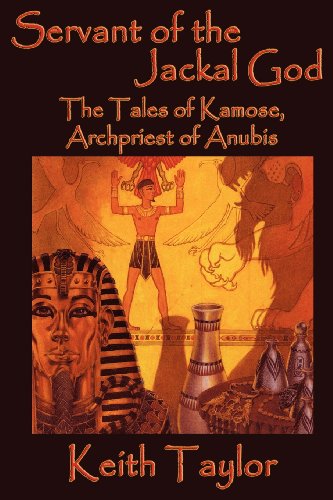
                • Cover of Kamose the Magician
                  Kamose the Magician

                  series · 12 books · 1999

                  similar bymiddle east+3 more

                • Cover of Ziska
                  Ziska

                  Marie Corelli · standalone novel · 1897

                  similar bymiddle eastreincarnationfantasy

                  A story of reincarnation, from ancient Egypt to Victorian Cairo, with a vengeful heroine who is both the vamp and the vampire.

                • Cover of The Eternal Lover
                  The Eternal Lover

                  series · 3 books · 1914

                  completed

                  similar byprehistoricreincarnationfantasy

                  The Eternal Lover began as "Nu of the Niocene," a 1914 serialized story by Edgar Rice Burroughs, before expanding with a sequel, "Sweetheart Primeval," serialized the following year and eventually collected into a single novel published in 1925. The prehistoric-adventure premise carries Burroughs's pulp-era fascination with lost eras and ancient survivors into an early standalone work. It predates most of his better-known series by less than a decade but stands apart from them.

                • Cover of Atlan / Cija
                  Atlan / Cija

                  series · 4 books · 1963

                  similar byfantasy+2 more

                • Cover of The Collected Science Fiction and Fantasy of Jack London
                  The Collected Science Fiction and Fantasy of Jack London

                  series · 6 books · 1906

                  completed

                  similar by+2 more

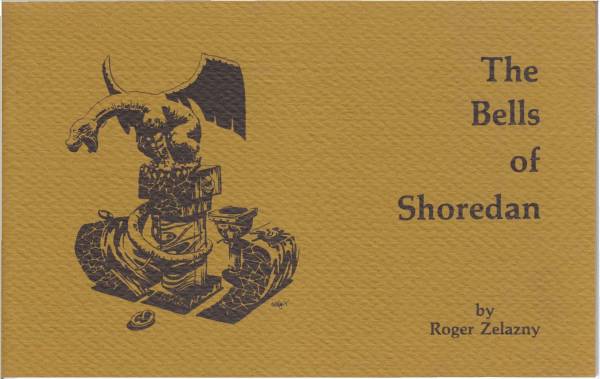
                • Cover of Dilvish
                  Dilvish

                  series · 13 books · 1965

                  completed

                  similar byfantasysword and sorcery+1 more

                  Centuries ago, the half-elf warrior Dilvish tried to stop a dark sorcerer named Jelerak from completing a terrible ritual, and paid for it by being turned to stone and having his soul cast into Hell. Roger Zelazny's Dilvish the Damned stories bring him back when the people he once protected need him again, reuniting him with his strange metal steed Black for a string of sword-and-sorcery adventures built around his long-delayed vengeance against Jelerak. The tales run as short, episodic quests rather than one continuous plot.

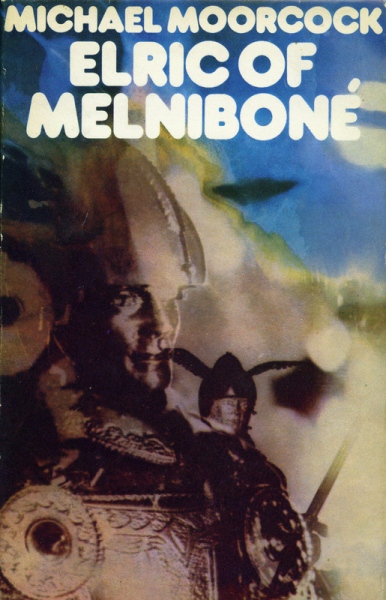
                • Cover of The Elric Saga
                  The Elric Saga

                  series · 72 books · 1961

                  part of Moorcock's Multiverse

                  similar byfantasy+1 more

                  The Elric Saga is Michael Moorcock's sequence of sword-and-sorcery novels about Elric, the frail, sorcery-dependent last emperor of the ancient island empire of Melniboné, who abandons his throne to wander a violent, magic-soaked world carrying a sentient, soul-drinking black sword. Core entries such as Elric of Melniboné, The Sailor on the Seas of Fate, and Stormbringer trace his path toward a self-destructive destiny, and Elric was later folded into Moorcock's wider Eternal Champion multiverse, of which this saga is one strand.

                • Cover of Eternal Champion
                  Eternal Champion

                  series · 6 books · 1962

                  part of Moorcock's Multiverse

                  similar byfantasy+2 more

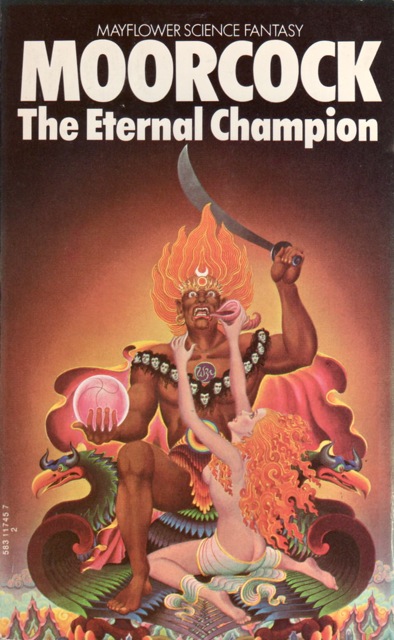
                  The Eternal Champion introduces Erekosë, a modern man drawn out of his own life to become a warrior fated to fight across many worlds and identities — the seed of Michael Moorcock's whole multiverse concept, in which the same doomed hero recurs under different names. First published as a 1962 novella and expanded to a novel in 1970, it heads a trilogy completed by Phoenix in Obsidian and The Dragon in the Sword; within the wider moorcocks-multiverse this is the sequence that names and anchors the Eternal Champion idea itself.

                • Cover of Bartimaeus
                  Bartimaeus

                  series · 4 books · 2003

                  similar byfantasywizards+1 more

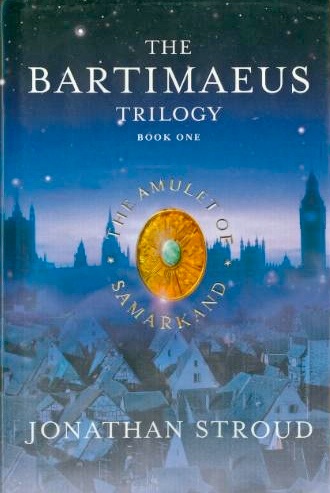
                  The Bartimaeus Sequence is a series of young adult novels of alternate history, fantasy and magic. It was written by British writer Jonathan Stroud and consists of a trilogy published from 2003 to 2005 and a prequel novel published in 2010. The story follows the career of a teenage magician Nathaniel and a five-thousand-year-old djinni Bartimaeus, whom he has summoned and nominally controls, through the alternate history of the peak of London's domination as a magical oligarchy.

                • Cover of The Chronicle of Sword and Sand
                  The Chronicle of Sword and Sand

                  series · 15 books · 2004

                  completed

                  similar bymiddle east+1 more

                • Cover of Dying Earth
                  Dying Earth

                  series · 27 books · 1950

                  similar byfantasywizards+1 more

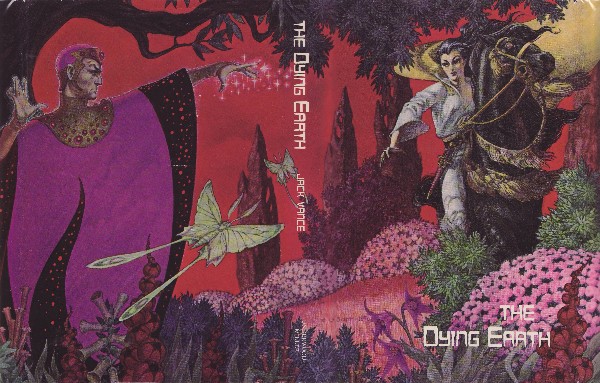
                  Dying Earth is a speculative fiction series by the American author Jack Vance, comprising four books originally published from 1950 to 1984. Some have been called picaresque. The series includes short story collections, fix-ups, and novels.

                • Cover of Chronicles of Ancient Darkness
                  Chronicles of Ancient Darkness

                  series · 9 books · 2004

                  similar byprehistoricfantasy+1 more

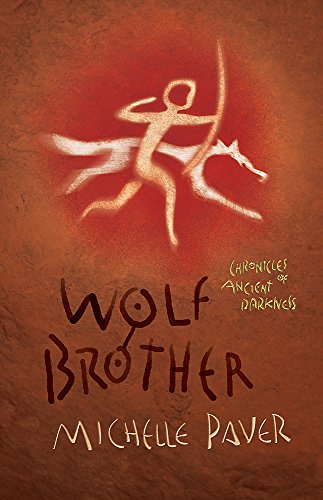
                  Chronicles of Ancient Darkness is a series of historical fantasy novels by the British author Michelle Paver and her first books for children. The books chronicle the adventures of Torak, an adolescent boy, and his friends Renn and Wolf. The main story arc revolves around Torak and his quest to defeat the Soul Eaters, a group of power hungry mages who seek to destroy all life in the forest. Paver has called it simply "a single story: the tale of Torak's discovery of himself and his world."

                • Cover of Wrath & Dawn
                  Wrath & Dawn

                  series · 5 books · 2015

                  similar bymiddle eastfantasy+1 more

                  The Wrath & the Dawn reimagines One Thousand and One Nights: Shahrzad volunteers to marry Khalid, the young caliph who takes a new bride each dawn and has her executed at sunrise, intending to avenge a friend's death, but instead begins to fall for him as she uncovers the truth behind his cruelty. Renée Ahdieh's duology concludes with The Rose & the Dagger.

                • Cover of Ministry of Alchemy
                  Ministry of Alchemy

                  series · 5 books · 2016

                  similar bymiddle eastfantasy+1 more

                • Cover of Sun Wolf and Starhawk
                  Sun Wolf and Starhawk

                  series · 7 books · 1984

                  similar byfantasysword and sorcerywizards

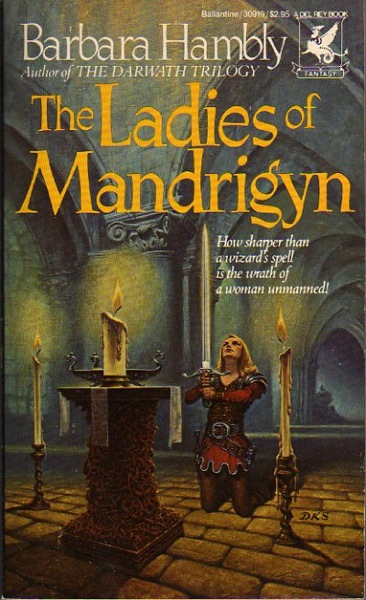
                  Barbara Hambly's series begins with the city of Mandrigyn conquered and its men enslaved in the mines of the wizard-king Altiokis, forcing surviving noblewoman Sheera Galernas to kidnap the mercenary captain Sun Wolf and press him into training the city's women as fighters. Sun Wolf's partnership with his lieutenant Starhawk carries across The Ladies of Mandrigyn, The Witches of Wenshar, and further volumes as both are drawn deeper into magic neither originally wanted.

                • Cover of Pusadian
                  Pusadian

                  series · 9 books · 1951

                  completed

                  similar byfantasysword and sorcery+1 more

                  The Pusadian series is a sequence of fantasy stories by L. Sprague de Camp, begun in the early 1950s and written under the influence of Robert E. Howard's Conan stories. The series, also known as the Poseidonis series, prefigured the numerous sword & sorcery settings of the 1960s and 1970s.

                • Cover of Raffalon
                  Raffalon

                  series · 10 books · 2012

                  part of Archonate

                  similar byfantasy+2 more

                • Cover of The Troy Game
                  The Troy Game

                  series · 4 books · 2002

                  completed

                  similar byreincarnationfantasy+1 more

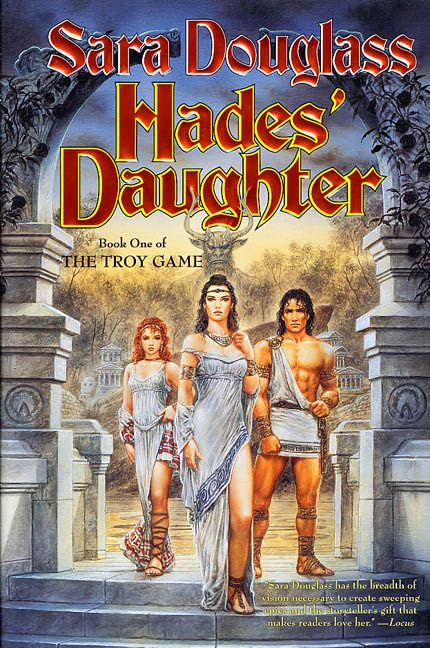
                  The Troy Game is a quartet of fantasy novels by Australian author Sara Douglass consisting of four books: Hades' Daughter, God's Concubine, Darkwitch Rising and Druid's Sword. It centres on a group of characters who are reincarnated at the end of each book and take the form of renowned historical figures from different ages. The entire series is set in London and focuses on the characters trying to complete the Troy Game, a kind of spell cast in the first book to protect the city.

                • Cover of Sir Hereward and Mister Fitz
                  Sir Hereward and Mister Fitz

                  series · 11 books · 2007

                  similar byfantasysword and sorcerywizards

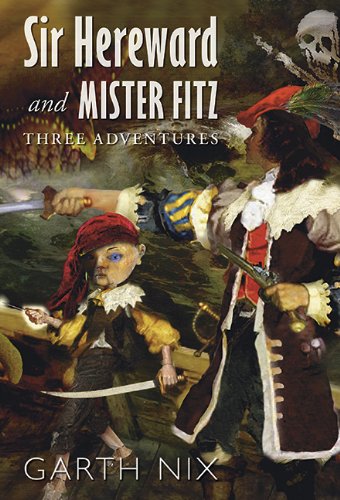
                  Garth Nix's Sir Hereward and Mister Fitz stories follow a scarred mercenary swordsman and his constant companion, a sentient puppet animated by the spirit of a formidable sorcerer, sent as agents to put down dangerous rogue gods across a wide fantasy world. Rather than one continuous novel, the series unfolds through linked novellas and short stories gathered into standalone collections, mixing swashbuckling action with dry, understated humor. The two collections compile stories published from 2007 into the early 2020s.

                • Cover of The Red Stone of Jubbah
                  The Red Stone of Jubbah

                  Donald Tyson · standalone novel · 2020

                  similar bymiddle eastfantasysword and sorcery

                  "H. P. Lovecraft's fabled character, Alhazred, the mad Arab who wrote the infamous Necronomicon is back in a new and startling tale of sword and sorcery, horror, and adventure. The infamous author of the Necronomicon, Abdul Alhazred, is sent by the Caliph, Muawiya II, from Damascus to the distant Oasis of Jubbah, which lies in the midst of the Nefud Desert, to search of a fabled red stone that fell from the heavens many ages ago. The stone is mystically linked to the black stone in the Ka'bah at Mecca, and has the power to transform the man who holds it into a conqueror of nations, making him invulnerable in battle. It was once possessed by Alexander the Great, but was lost in Persia after Alexander's death. Rumor has it that the stone was carried westward into Arabia by the mysterious cliff-dwelling clan of wanderers known as the Thamud. The last mention of the stone in ancient written records intimates that it was hidden by the Thamud at Jubbah. Alhazred must locate the stone before it can be found by the agents of the Caliph's arch rival, Marwan ibn al-Hakam, who seeks to overthrow Muawiya and create a new ruling dynasty. Marwan's agents in Jubbah are deceitful and dangerous, leaving Alhazred to wonder who he can trust. Does the stone lie forgotten in a cave on the mountain Jebel Umm Sanman, which looms over the oasis like a thundercloud, or is this only a rumor to mislead fools? The witch of the mountain, Salamagoogah, is ancient beyond the memory of men. She knows the secrets of the red stone, but will she share them with Alhazred or lead him to his death? Who will find the red stone of Jubbah first? The Caliph, Muawiya, in Damascus? His rival Marwan? The witch Salamagoogah? Or will it be another? The fate of the entire Caliphate hangs in the balance, for the man who holds the red stone holds the world on the palm of his hand." Weird House Press Aug 10, 2022

                • Cover of The Crescent Moon Kingdoms
                  The Crescent Moon Kingdoms

                  series · 1 book · 2012

                  similar byfantasysword and sorcerywizards

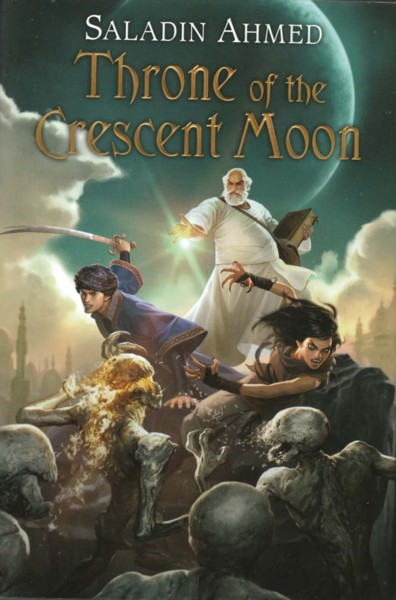
                  Saladin Ahmed's The Crescent Moon Kingdoms opens with Throne of the Crescent Moon, set in a realm of djenn and ghuls where a power struggle between an iron-fisted Khalif and a mysterious master thief called the Falcon Prince erupts alongside a series of brutal, supernatural murders. A handful of reluctant heroes must uncover the truth behind the killings before the kingdom tears itself apart.

                • Cover of Ancient Egypt
                  Ancient Egypt

                  series · 4 books · 1986

                  completed

                  similar bymiddle east+1 more

                • Cover of The Kingkiller Chronicle
                  The Kingkiller Chronicle

                  series · 8 books · 2002

                  similar byfantasy+2 more

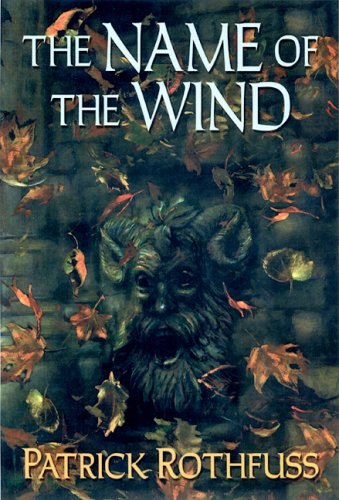
                  The Kingkiller Chronicle is a planned fantasy trilogy by the American writer Patrick Rothfuss. The first two books, The Name of the Wind and The Wise Man's Fear, were released in 2007 and 2011. The books released in the series have sold over 10 million copies.