More like Blackhawk
anchored on:superhero
but
- H. G. Wells' War of the Worlds
universe65 books1898
Start hereThe War of the Worlds · Start here
similar by+3 more
No one would have believed, in the closing years of the nineteenth century, that human affairs were being watched keenly and closely from the timeless worlds of space. And then the cylinders fell. H. G. Wells' War of the Worlds opens in the quiet of the Surrey commons, where a falling star proves to be the first Martian craft — and from the pit rise the towering tripods, the Heat-Ray, the choking Black Smoke and the creeping red weed, wielded by minds that regard mankind much as we regard the creatures we boil for supper. This is invasion rendered as natural disaster: cold, methodical, and vast beyond argument. Wells' 1898 novel is the seed; everything else grows from that Martian soil. The catalogue gathers direct sequels and continuations alongside a wide field of other hands. In War of the Worlds: Global Dispatches the invasion is retold across the whole planet through the eyes of Twain, Verne, Tolstoy, Lowell and Kipling; in the Manly Wade and Wade Wellman crossover, Sherlock Holmes, Watson and Professor Challenger take the field against the machines; and Scott Washburn's Great Martian War stretches the fighting into a decades-long alternate history of steam, artillery and grinding attrition. It is a loose shared world — no single decreed sequence, many voices answering one calamity. What sets this world apart is its refusal of heroics: the invaders fall not to generals but to the smallest things of Earth, humbling and indifferent. Begin, always, with Wells' original novel — it is short, and it is the ground every later book stands upon. From there follow your appetite: Global Dispatches for the panorama, the Holmes campaign for adventure, Washburn for the long war.
- Duke de Richleau
series4 books1933
completed
similar bytenseearly 20th century+2 more
The Duke de Richleau novels follow Dennis Wheatley's aristocratic adventurer and occultist across four decades of twentieth-century intrigue, moving from a 1930s rescue thriller in The Forbidden Territory into Satanist set-pieces such as The Devil Rides Out and Strange Conflict, then a later case in Gateway to Hell. Wheatley wrote the books out of order over nearly forty years, but their internal chronology matches the order they were published in.
- Reckoners
series6 books2013
similar bysuperherotenseadventurous+1 more
The Reckoners is a series of young adult superhero novels written by American author Brandon Sanderson. The series consists of Steelheart (2013), Firefight (2015), Calamity (2016) and Lux (2021). The series depicts a post-apocalyptic world in which the appearance of an orbiting cosmic phenomenon known as Calamity has given random people superhuman powers in apparent defiance of known physical laws, turning them into "Epics". These Epics prey upon or enslave the rest of humanity, causing the collapse of traditional governments. One young man orphaned by a High Epic joins a group that is killing Epics.
- Gregory Sallust
series4 books1934
completed
similar bytense+4 more
Dennis Wheatley's Gregory Sallust novels follow a resourceful, ruthless British secret agent operating against Nazi Germany, beginning with Black August's vision of a Britain collapsing into anarchy and continuing through wartime espionage across occupied Europe. The series, spanning the 1930s to the 1960s, mixes political thriller with Wheatley's taste for scheming villains and narrow escapes.
- The War in the Air
H. G. Wellsstandalone novel1908
similar bywartenseearly 20th centuryour worldeurope
The War in the Air: And Particularly How Mr. Bert Smallways Fared While It Lasted is a military science fiction novel written by H. G. Wells and published in 1908.
- Axis of Time
series7 books2004
similar bywartense+3 more
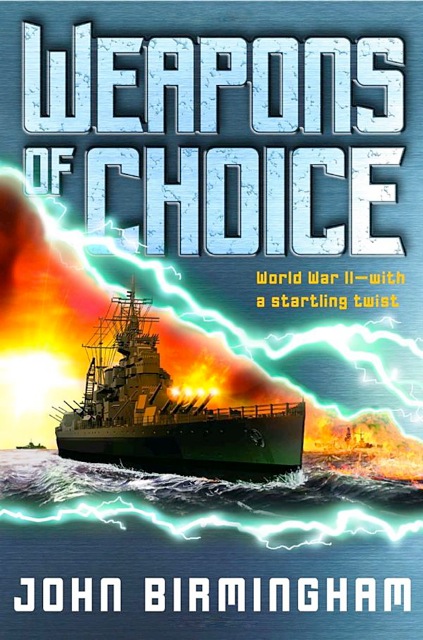
The Axis of Time trilogy is an alternative history series of novels written by Australian journalist and author John Birmingham, from Macmillan Publishing.
- Oxford Time Travel
series6 books1982
similar bytenseeurope+2 more
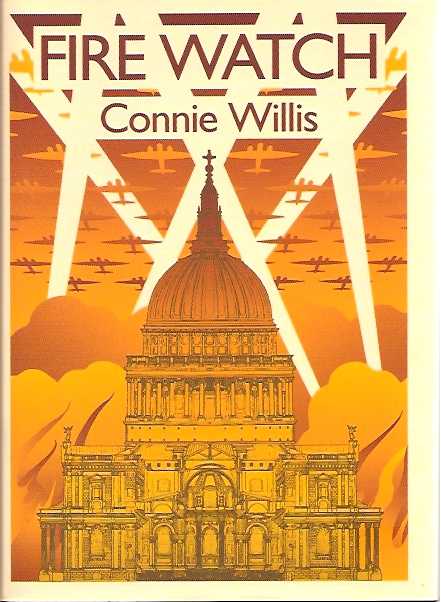
Connie Willis's Oxford Time Travel novels are set at a near-future Oxford University where historians travel into the past as observers, constrained by a version of history that resists any change large enough to alter real events. Doomsday Book sends a medieval historian to what should be 1320 but turns out to be the Black Death year of 1348, intercut with a present-day epidemic at Oxford; To Say Nothing of the Dog returns to the same time-travel program for a lighter, Victorian-set story with different characters. The two novels share their setting and rules rather than a directly continuing plot.
- Five Children Universe
series27 books1902
completed
similar byearly 20th century+2 more
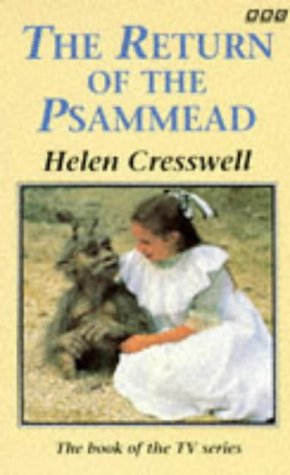
Two separate modern continuations of E. Nesbit's Psammead stories were written decades apart by different authors: Helen Cresswell's The Return of the Psammead (1992) brings the wish-granting sand fairy back for a new set of children, while Kate Saunders's Five Children on the Western Front (2014) follows the now-grown Lamb and his siblings as the First World War arrives, in a more somber sequel to Nesbit's original trilogy. Neither book is by Nesbit herself, and the two have no direct connection to each other beyond both drawing on her creation. Later writers have kept returning to Nesbit's premise long after her own trilogy ended.
- The Leviathan Trilogy
series3 books2009
similar bywarearly 20th centuryeuropeadventurous+1 more
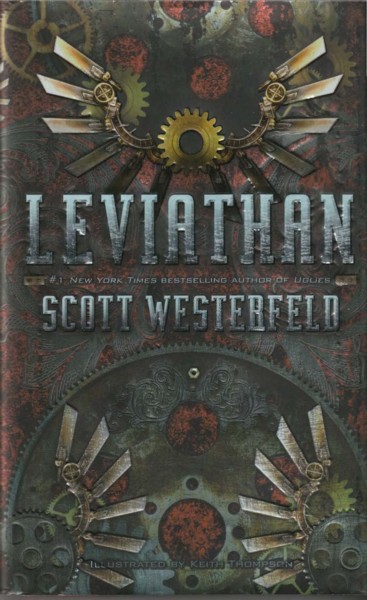
Set in an alternate First World War, Leviathan splits the belligerents into Clankers, who fight with mechanical walkers, and Darwinists, who fight with fabricated living creatures built from spliced DNA. Scott Westerfeld follows a British girl disguised as a boy to serve on a living airship and the exiled heir to the Austro-Hungarian throne as their paths collide, continuing across Behemoth and Goliath. Keith Thompson's illustrations are integral to all three books, alternating text chapters with illustrated sequences.
- Barney Custer
series3 books1914
completed
similar bytenseearly 20th centuryeuropeadventurous+1 more
Barney Custer is an American farmer from Nebraska who travels to the small European kingdom of Lutha only to discover he's the spitting image of its unstable ruler, King Leopold. Edgar Rice Burroughs's The Mad King drops him into court intrigue on the eve of World War I, as a scheming uncle's plot for the throne and a budding romance with a princess force Barney to impersonate the king he resembles. It's a standalone Ruritanian adventure rather than an ongoing series.
- Dominion of the Fallen
series16 books2015
similar byearly 20th centuryeurope+2 more
The House of Shattered Wings opens Aliette de Bodard's Dominion of the Fallen in a Paris devastated by a magical war between rival Houses of fallen angels, its streets and ruins still haunted by the fighting. The series follows uneasy alliances within House Silverspires as its members contend with old secrets and Annamese magic traditions colliding with European angelic power politics. It continues across further novels and a number of shorter linked stories.
- James Asher Chronicles
series8 books1988
similar by+3 more
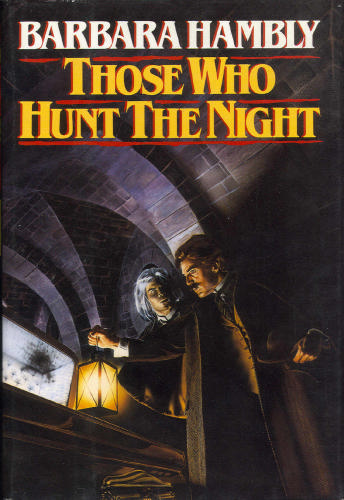
The James Asher Chronicles opens with Those Who Hunt the Night, in which the vampire Don Simon Ysidro coerces a former British spy, Oxford professor James Asher, into finding out who is killing London's vampires in their sleep - forcing Asher and his physician wife Lydia into an uneasy alliance with the undead. Barbara Hambly's series follows the trio across eight books and three decades of settings as new supernatural and human threats draw Asher back into Ysidro's world.
- Dune
series20 books1963
part of Dune Universe
similar by+1 more
Frank Herbert's Dune Chronicles opens with 1965's Dune, set on the desert planet Arrakis where House Atreides takes control of the only source of the vital spice melange and young Paul Atreides is pulled into a struggle over its politics and religion. Herbert carried the story forward across five further novels — Dune Messiah, Children of Dune, God Emperor of Dune, Heretics of Dune, and Chapterhouse: Dune — following Paul's line over the following millennia, before Brian Herbert and Kevin J. Anderson later extended the saga. Many other editions of these six novels are omnibus and box-set repackagings rather than separate stories.
- Michael Gallatin
series8 books1989
similar bytenseearly 20th centuryeurope+1 more
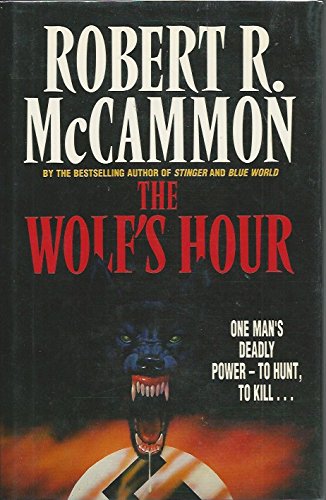
Robert R. McCammon's Michael Gallatin is a British intelligence agent working behind German lines in the Second World War who is secretly a werewolf, introduced in The Wolf's Hour on a mission to stop a Nazi superweapon. McCammon returned to the character decades later in The Hunter from the Woods, a set of interlinked stories filling in the years around the first book.
- Red Inferno: 1945
Robert Conroystandalone novel2010
similar bywartenseearly 20th centuryeurope+1 more
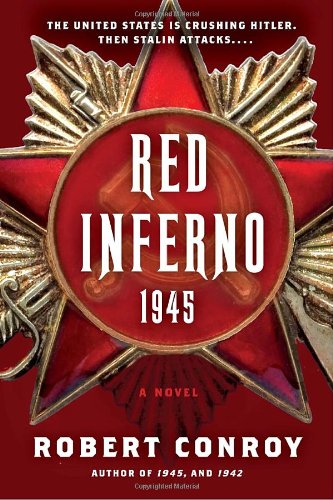
Red Inferno: 1945 is a 2010 novel written by Robert Conroy, the author of other alternate history novels.
- Languedoc Trilogy
series3 books2005
similar bytenseeurope+2 more
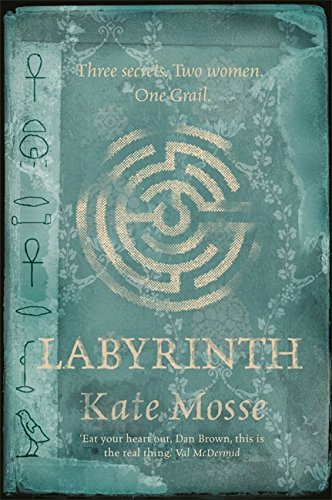
Kate Mosse's Languedoc Trilogy opens with Labyrinth, alternating between a present-day archaeologist in southern France and a woman living through the Cathar crusades eight centuries earlier, both entangled with the same hidden, grail-like relic. Sepulchre and Citadel repeat the dual-timeline structure with different centuries and protagonists, all tied to the same Languedoc region. The books share setting and structural device rather than a continuous cast.
- Dune Universe
universe78 books1963
Start hereDune · Start here
similar by+1 more
Arrakis. Dune. The desert planet, where empire runs on a single substance: the spice melange, which folds space, prolongs life, and unlocks prescience, and which exists nowhere else in the known universe. Frank Herbert's saga is a meditation dressed as an adventure — feudal houses and a secret sisterhood, engineered messiahs and the patient ecology of a world without water, all turning on the terrible gravity of who commands the spice. It reads like scripture and schemes like a war room, ten thousand years hence, among people who have outlawed the thinking machine and made instruments of themselves instead. At its heart stand Herbert's original six — Dune, Dune Messiah, Children of Dune, God Emperor of Dune, Heretics of Dune, Chapterhouse: Dune — a single deepening arc across millennia, arguing the whole way between prophecy and free will. Around that spine his son Brian Herbert and Kevin J. Anderson have raised a vast prequel architecture: Prelude to Dune, tracing the great houses a generation before Paul; Legends of Dune, reaching back to the crusade that broke the machines; the Schools of Dune cycle on the founding of Bene Gesserit, Mentat, and Navigator; the Caladan Trilogy and Heroes of Dune filling years the originals left in shadow. Many hands, dozens of volumes, one desert. What sets Dune apart is its refusal of the simple: religion is manufactured, heroes are hazards, and the sand itself — worm, water, ecology — acts as a political power. Begin where the universe did, with Frank Herbert's Dune (1965), and read the original six in order; you need nothing else to feel the full weight. The prequels are a country to explore afterward, taken by era. Beginnings are delicate times.
- The Beardless Warriors
Richard Mathesonstandalone novel1960
similar bywarearly 20th centuryeurope+1 more
The Beardless Warriors is a 1960 World War II novel by American writer Richard Matheson. It was based on his experiences as a young infantryman in the 87th Division in France and Germany.