More like Bleeding Edge
anchored on:mystery & detectiveour worldnorth americaliterary & generalpolitical intriguesurveillance+4 more
but
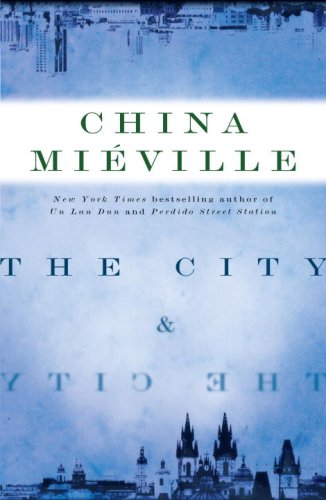
- The City & the City
China Miévillestandalone novel2009
similar bypolitical intriguesurveillancemysteriousmystery & detectivebig city+1 more
Inspector Tyador Borlú must travel to Ul Qoma to search for answers in the murder of a woman found in the city of Besźel. (Source: OCLC record)
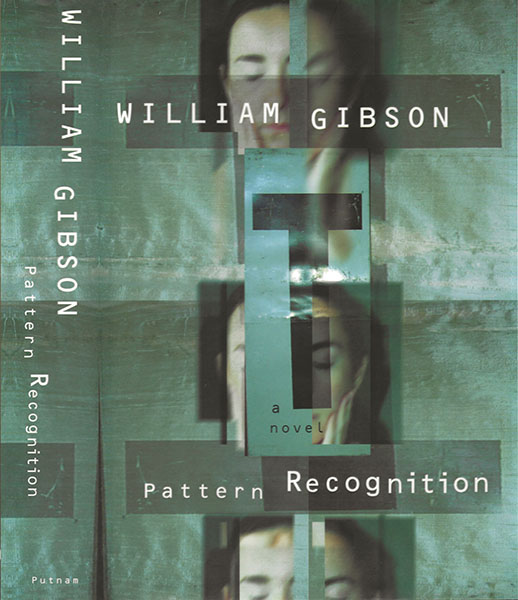
- The Blue Ant Trilogy
series3 books2003
similar bysurveillancemysteriousscience fictionbig city+5 more
Hubertus Bigend is a fictional character appearing in the third trilogy of novels of science fiction and literary author William Gibson. Bigend is the antihero of Gibson's Pattern Recognition (2003), Spook Country (2007) and Zero History (2010). In an interview Gibson says "I've always had a sense of Bigend as someone who presents himself as though he knows what's going on, but who in fact doesn't. It's just my sense of the subtext of the character: he's bullshitting himself, at the same time as he's bullshitting all of us."
- A Clockwork Orange
series4 books1962
completed
similar bysurveillancechallengingfirst personour worldscience fictionbig city
Anthony Burgess's 1962 novel is narrated by Alex, a teenage gang leader in a near-future Britain gripped by a youth subculture of extreme violence, recounting his crimes in Nadsat, an invented slang blending English with Russian-derived words. After his crimes catch up with him, Alex is made the subject of a controversial state program meant to forcibly reform his behavior, and the novel uses his ordeal to question whether imposed goodness is worth the loss of free will. It is a standalone novel.
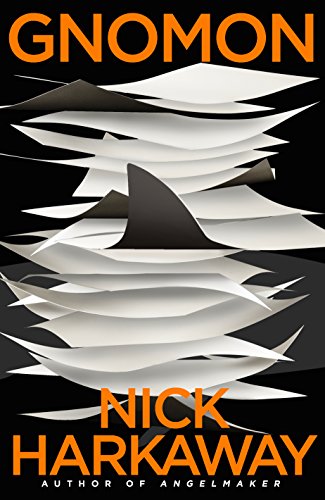
- Gnomon
Nick Harkawaystandalone novel2017
similar bysurveillancechallengingmysteriousmystery & detectiveour worldscience fiction
Gnomon is a 2017 science fiction novel by British author Nick Harkaway. The book deals with a state that exerts ubiquitous surveillance on its population. A detective investigates a murder through unconventional methods that leads to questions about her society's very nature.
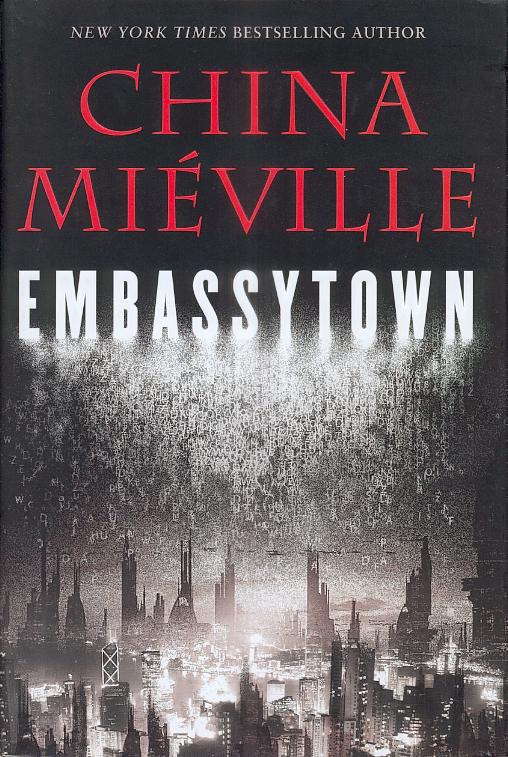
- Embassytown
China Miévillestandalone novel2011
similar bypolitical intriguechallengingmysteriousfirst personscience fiction
In the far future, humans have colonized a distant planet, home to the enigmatic Ariekei, sentient beings famed for a language unique in the universe, one that only a few altered human ambassadors can speak. Avice Benner Cho, a human colonist, has returned to Embassytown after years of deep-space adventure. She cannot speak the Ariekei tongue, but she is an indelible part of it, having long ago been made a figure of speech, a living simile in their language. When distant political machinations deliver a new ambassador to Arieka, the fragile equilibrium between humans and aliens is violently upset. Catastrophe looms, and Avice is torn between competing loyalties—to a husband she no longer loves, to a system she no longer trusts, and to her place in a language she cannot speak yet speaks through her.
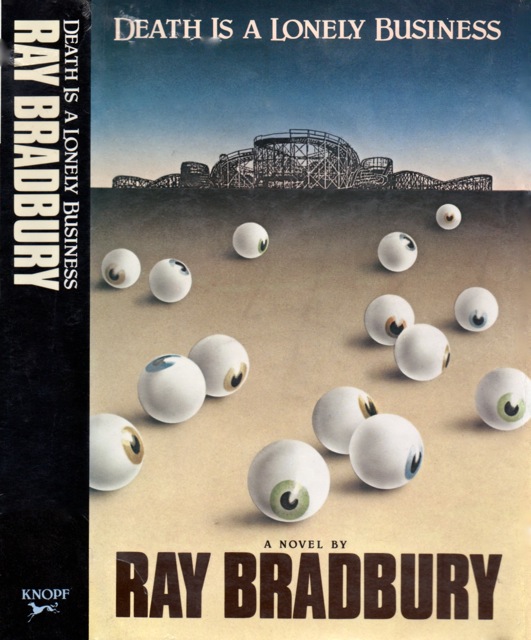
- Death Is a Lonely Business
Ray Bradburystandalone novel1985
similar bymysteriousmystery & detectivefirst personnorth americabig city+1 more
Death Is a Lonely Business is a mystery novel by American writer Ray Bradbury, published in 1985. The story, set in 1949, is about a series of murders that happen in Venice, California, then a declining seaside community in Los Angeles where Bradbury lived from 1942 to 1950. The main character and narrator is a sensitive, modest writer, with a girlfriend studying in Mexico City. In the course of the story he meets Elmo Crumley, a detective who helps him solve the mystery behind all the semi-murders occurring among a series of eccentric characters in the forgotten town.
- The Oracle Year
Charles Soulestandalone novel2018
similar bypolitical intriguemysteriousour worldscience fictionnorth americabig city+1 more
Awakening from a dream with more than one hundred predictions about the future in his head, an unassuming Manhattan bassist becomes one of the world's most powerful men and hides his identity behind an online persona that is targeted by greedy corporations and dangerous enemies.
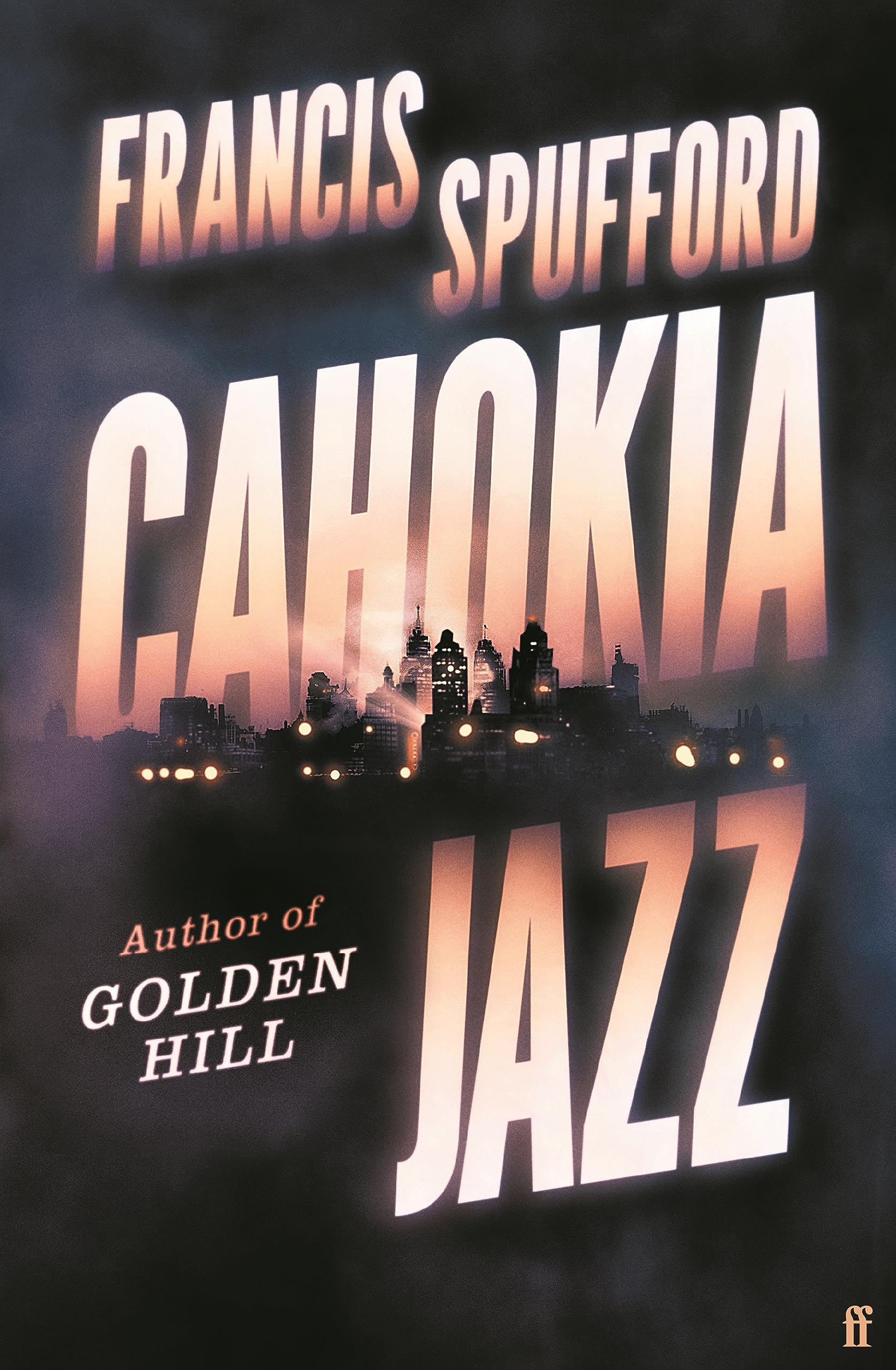
- Cahokia Jazz
Francis Spuffordstandalone novel2023
similar bypolitical intriguemysteriousmystery & detectivenorth americabig city+1 more
Cahokia Jazz is an alternate-history detective novel by Francis Spufford released in Great Britain in 2023 and the United States in 2024.
- Messiah
Gore Vidalstandalone novel1954
similar bypolitical intriguechallengingliterary & generalour worldnorth america
Messiah is a satirical novel by Gore Vidal, first published in 1954 in the United States by E.P. Dutton. It is the story of the creation of a new religion, Cavism, which quickly comes to replace the established but failing Christian religion.
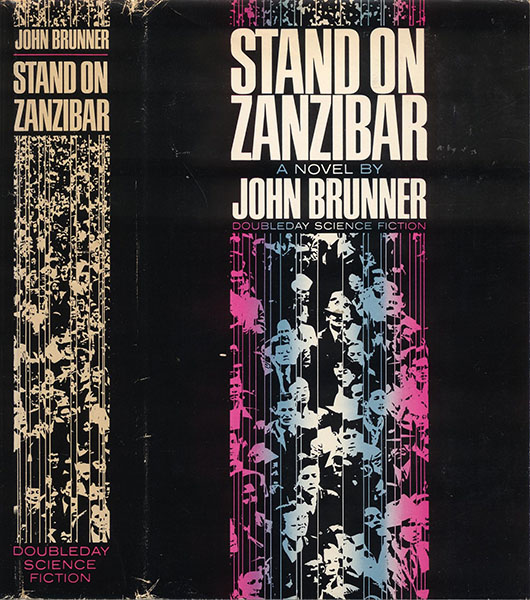
- Stand on Zanzibar
John Brunnerstandalone novel1968
similar bysurveillancechallengingour worldscience fictionbig city
Stand on Zanzibar is a dystopian New Wave science fiction novel written by John Brunner and first in part published in New Worlds magazine in 1967 and in book form in 1968. The book won a Hugo Award for Best Novel at the 27th World Science Fiction Convention in 1969, as well as the 1969 BSFA Award and the 1973 Prix Tour-Apollo Award.
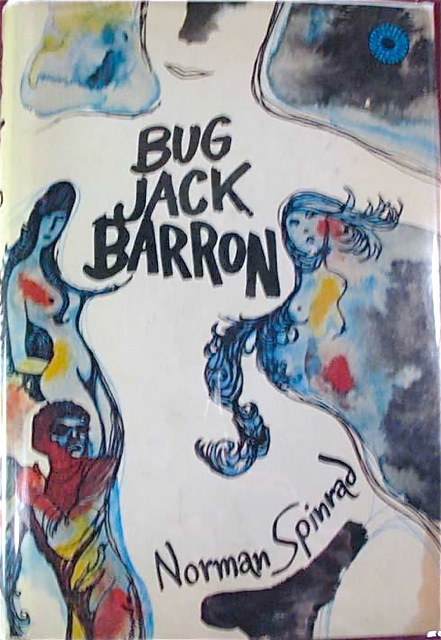
- Bug Jack Barron
Norman Spinradstandalone novel1969
similar bypolitical intriguesurveillancenorth americascience fictioncyberpunk
Bug Jack Barron is a 1969 science fiction novel by American writer Norman Spinrad, first serialized in the New Worlds magazine under the editorship of Michael Moorcock. It was nominated for the 1970 Hugo Award. The novel is notable for its lyrical style and unique use of cut-up phrases. In this regard, Spinrad has cited the influence of Beat writers William S. Burroughs, Allen Ginsberg, and Jack Kerouac.
- The Fresco
Sheri S. Tepperstandalone novel2000
similar bypolitical intriguechallengingour worldscience fiction+2 more
The Fresco is a science fiction novel by American writer Sheri S. Tepper, published in 2000. It describes Earth's contact with a confederation of intelligent alien races. The Fresco was on the shortlist for 2001 James Tiptree, Jr. Award
- Deception Point
Dan Brownstandalone novel2001
similar bypolitical intriguemysteriousmystery & detectiveour world+1 more
Deception Point is a 2001 mystery-thriller novel by American author Dan Brown. It is Brown's third novel. It was published by Simon & Schuster.
- The Crying of Lot 49
Thomas Pynchonstandalone novel1966
similar bymysteriousliterary & generalnorth america+3 more
The Crying of Lot 49 is a novel by the American author Thomas Pynchon. It was published by J. B. Lippincott & Co. on April 27, 1966. The shortest of Pynchon's novels, the plot follows Oedipa Maas, a young Californian woman who begins to embrace a conspiracy theory as she possibly unearths a centuries-old feud between two mail distribution companies. One of these companies, Thurn and Taxis, actually existed; operating from 1806 to 1867, Thurn and Taxis was the first private firm to distribute postal mail. Like most of Pynchon's writing, The Crying of Lot 49 is often described as postmodernist literature. Time magazine included the book in its list of the 100 best English-language novels from 1923 to 2005.
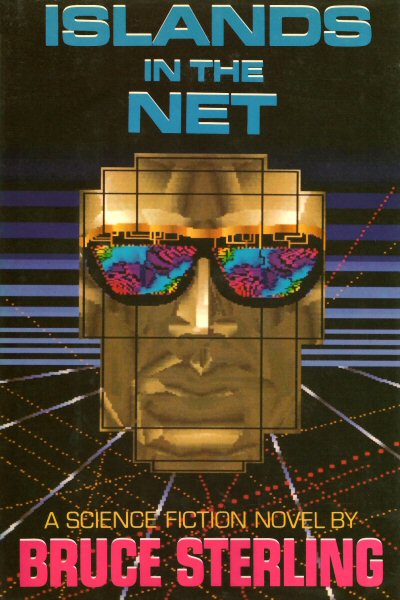
- Islands in the Net
Bruce Sterlingstandalone novel1988
similar bypolitical intriguesurveillanceour worldscience fictioncyberpunk
Islands in the Net is a 1988 science fiction novel by American writer Bruce Sterling. It won the John W. Campbell Memorial Award for Best Science Fiction Novel in 1989, and was nominated for both the Hugo and Locus Awards that same year. It offers a view of an early 21st century world, apparently peaceful, with delocalised, networking corporations. The protagonist, swept up in events beyond her control, finds herself in places that are off the net, from a datahaven in Grenada, to a Singapore under terrorist attack, to the poorest and most disaster-struck parts of Africa.
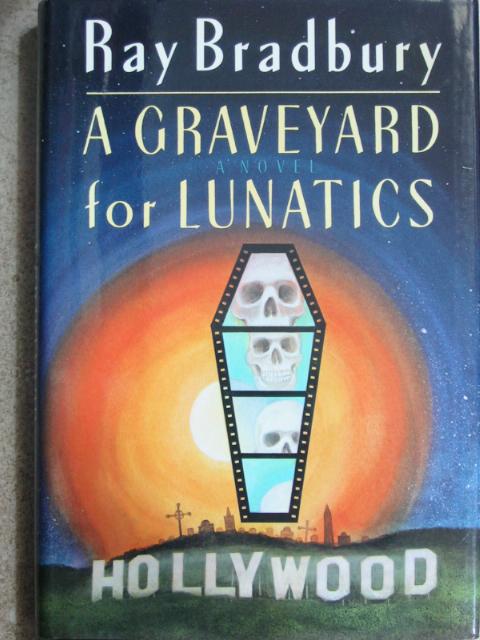
- A Graveyard for Lunatics: Another Tale of Two Cities
Ray Bradburystandalone novel1990
similar bymysteriousmystery & detectivefirst personnorth americabig city+1 more
A Graveyard for Lunatics: Another tale of two cities is a mystery novel by American writer Ray Bradbury, published in 1990. It is the second in a series of three mystery novels that Bradbury wrote featuring a fictionalized version of the author himself as the unnamed narrator.
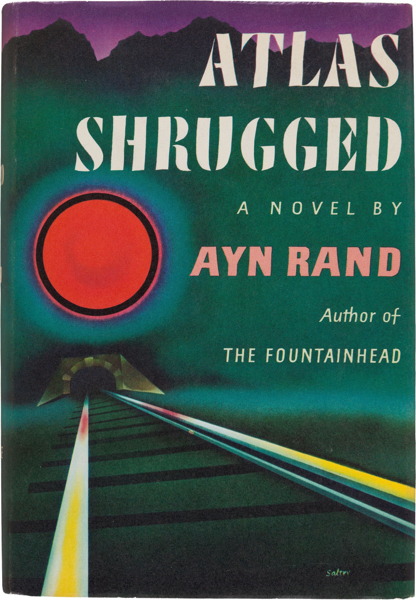
- Atlas Shrugged
Ayn Randstandalone novel1957
similar bypolitical intriguechallengingnorth americascience fiction+1 more
Atlas Shrugged is a 1957 novel by Ayn Rand. It is her longest novel, the fourth and final one published during her lifetime, and the one she considered her magnum opus in the realm of fiction writing. She described the theme of Atlas Shrugged as "the role of man's mind in existence" and it includes elements of science fiction, mystery, and romance. The book explores a number of philosophical themes from which Rand would subsequently develop Objectivism, including reason, property rights, individualism, rational egoism, and laissez-faire capitalism and depicts what Rand saw as the evil of altruism and governmental coercion. Of Rand's works of fiction, it contains her most extensive statement of her philosophical system.
- Triton
Samuel R. Delanystandalone novel1976
similar bypolitical intriguechallengingreflectivescience fiction+2 more
Trouble on Triton: An Ambiguous Heterotopia (1976) is a science fiction novel by American writer Samuel R. Delany. It was nominated for the 1976 Nebula Award for Best Novel, and was shortlisted for a retrospective James Tiptree, Jr. Award in 1995. It was originally published under the shorter title Triton.
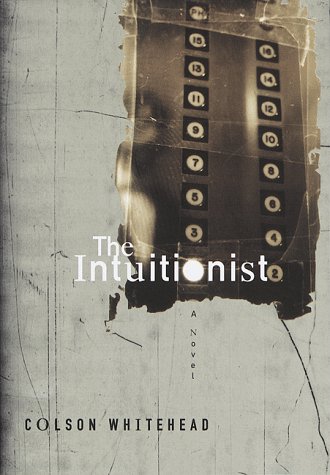
- The Intuitionist
Colson Whiteheadstandalone novel1999
similar bypolitical intriguemysteriousliterary & generalnorth americabig city+2 more
Literary fantasy novel of politics and race, with deadpan satirical elements. A black female Elevator Inspector who can Intuit mechanical problems is caught in a conspiracy over plans for the perfect, world-changing elevator. [Locus]
- The Ministry for the Future
Kim Stanley Robinsonstandalone novel2020
similar bypolitical intriguechallengingour worldscience fiction+1 more
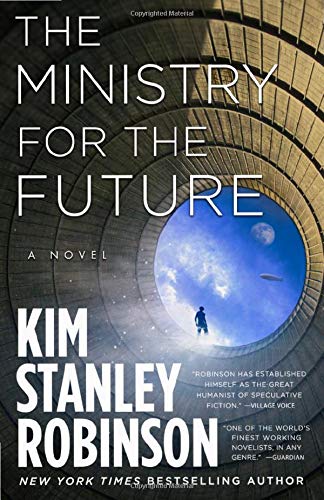
The Ministry for the Future is a climate fiction novel by American science fiction writer Kim Stanley Robinson, published in 2020. Set in the near future, the novel follows a subsidiary body, established under the Paris Agreement, whose mission is to act as an advocate for the world's future generations of citizens as if their rights were as valid as the present generation's. While the ministry pursues various ambitious projects, the effects of climate change are determined to be the most consequential. The plot primarily follows Mary Murphy, the head of the titular Ministry for the Future, and Frank May, an American aid worker traumatized by experiencing a deadly heat wave in India. Many chapters are devoted to other characters' accounts of future events, as well as their ideas about ecology, economics, and other subjects.
- Terra Ignota
series4 books2016
similar bypolitical intriguechallengingfirst personour worldscience fiction
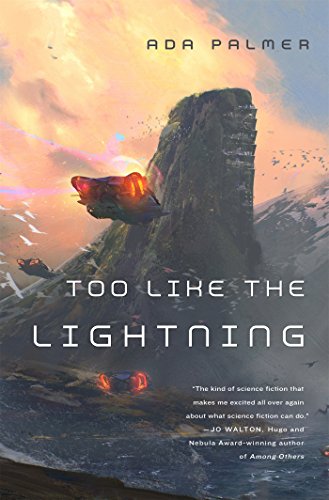
Terra Ignota is a quartet of science fiction and philosophical novels by the American author Ada Palmer. The series consists of Too Like the Lightning (2016), Seven Surrenders (2017), The Will to Battle (2017), and Perhaps the Stars (2021). After three centuries of a global near-utopia, a minor crime and a miracle child begin to unravel the social system and lead the world to technologically advanced total war. The first three books cover the events leading up to the war and the final book covers the war itself. The novels have won several awards, including a 2017 Compton Crook Award. The first novel was a finalist for the 2017 Hugo Award for Best Novel, and the series as a whole was a finalist for the 2022 Hugo Award for Best Series.
- The Silence of Six
E. C. Myersstandalone novel2014
similar bypolitical intriguesurveillancefirst personour worldnorth americascience fiction+1 more
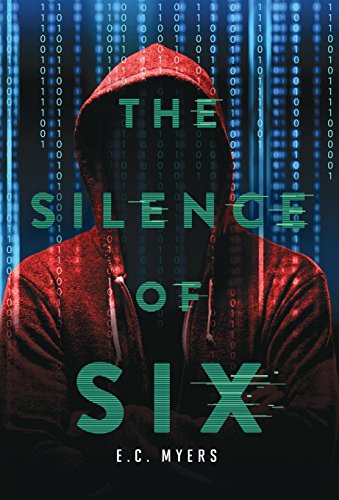
“What is the silence of six, and what are you going to do about it?” These are the last words uttered by 17-year-old Max Stein’s best friend, Evan: Just moments after hacking into the live-streaming Presidential debate at their high school, he kills himself. Haunted by the image of Evan’s death, Max’s entire world turns upside down as he suddenly finds himself the target of a corporate-government witch-hunt. Fearing for his life and fighting to prove his own innocence, Max goes on the run with no one to trust and too many unanswered questions. Max must dust off his own hacking skills and maneuver the dangerous labyrinth of underground hacktivist networks, ever-shifting alliances, and virtual identities — all while hoping to find the truth behind the “Silence of Six” before it’s too late.
- Rainbows End
Vernor Vingestandalone novel2006
similar bysurveillancenorth americascience fictionbig city+2 more
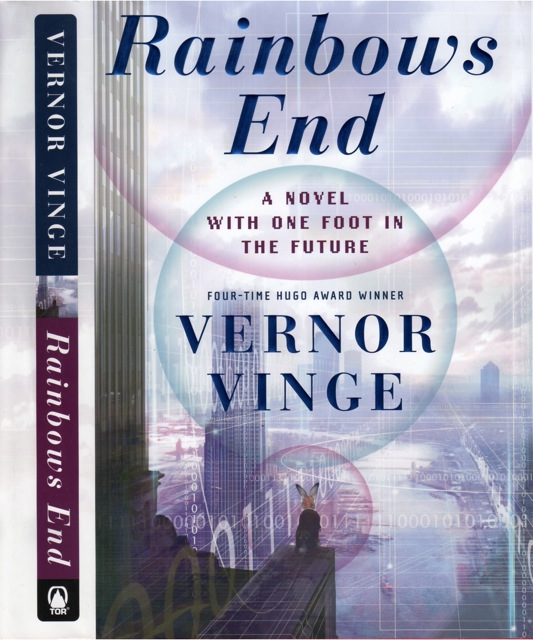
A science-fiction thriller set in a place and time as exciting and strange as any far-future world: San Diego, California, 2025. Robert Gu is a recovering Alzheimer’s patient. The world that he remembers was much as we know it today. Now, as he regains his faculties through a cure developed during the years of his near-fatal decline, he discovers that the world has changed and so has his place in it. He was a world-renowned poet. Now he is seventy-five years old, though by a medical miracle he looks much younger, and he’s starting over, for the first time unsure of his poetic gifts. Living with his son’s family, he has no choice but to learn how to cope with a new information age in which the virtual and the real are a seamless continuum, layers of reality built on digital views seen by a single person or millions, depending on your choice. But the consensus reality of the digital world is available only if, like his thirteen-year-old granddaughter Miri, you know how to wear your wireless access—through nodes designed into smart clothes—and to see the digital context—through smart contact lenses. With knowledge comes risk. When Robert begins to re-train at Fairmont High, learning with other older people what is second nature to Miri and other teens at school, he unwittingly becomes part of a wide-ranging conspiracy to use technology as a tool for world domination. In a world where every computer chip has Homeland Security built-in, this conspiracy is something that baffles even the most sophisticated security analysts, including Robert’s son and daughter-in law, two top people in the U.S. military. And even Miri, in her attempts to protect her grandfather, may be entangled in the plot. As Robert becomes more deeply involved in conspiracy, he is shocked to learn of a radical change planned for the UCSD Geisel Library; all the books there, and worldwide, would cease to physically exist. He and his fellow re-trainees feel compelled to join protests against the change. With forces around the world converging on San Diego, both the conspiracy and the protest climax in a spectacular moment as unique and satisfying as it is unexpected.
- Nova Trilogy
series3 books1961
completed
similar bysurveillancechallengingliterary & generalour worldscience fiction
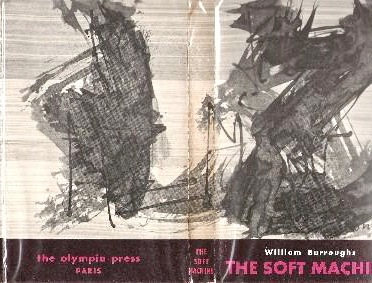
William S. Burroughs's Nova Trilogy -- The Soft Machine, The Ticket That Exploded, and Nova Express -- extends the fragmented cut-up and fold-in techniques he developed with Brion Gysin into a paranoid, hallucinatory sequence about control itself. Across the three books, the shadowy Nova Mob, personified as viral, parasitic forces of language and image, is opposed by an equally strange Nova Police, in an allegory for how societies are manipulated through media and addiction. It continues directly from the world and method of Naked Lunch rather than telling a conventional linear story.