Loreful
HomeDiscover
Search series, authors…⌘K
Loreful

Reading orders for SF/F series and shared universes — with your place kept in every one.

Explore

UniversesSeriesWorksAuthorsAtlas

Help

FAQAboutSite map

Account & legal

Sign inCreate accountPrivacyTerms

Data

Built on ISFDB, Wikipedia, Wikidata and Open Library. Curated reading orders carry their reasoning on the page; the rest follow publication order. Data sources & licenses

© Loreful · data: ISFDB · CC BY

More like Blitzed

but

Mood

The mood the book leaves you in.

  • The reading experience is propelled by journeys, exploration, and physical risk; excitement and forward momentum dominate over dread or introspection.
  • Joy and loss are deliberately mixed; the resolution grants characters something real while taking something else away, leaving warmth and sorrow together.
  • The book demands work from the reader — dense prose, difficult structure, unfamiliar ideas, or morally uncomfortable material — as part of its intended effect.
  • Grim events, cruelty, or despair dominate the atmosphere, and the book does not soften them with comfort or comic relief.
  • The atmosphere is quietly unsettling — wrongness, unease, and the uncanny pervade the book without necessarily escalating into overt horror.
  • The book is built to move the reader; character feeling is foregrounded and major scenes aim at a strong emotional response.
  • Humor is a primary aim and the prose plays for laughs — comic situations, wit, or dialogue produce sustained comedy, not occasional levity.
  • The book insists that things can improve; effort and decency are shown to matter, and the arc bends toward better outcomes even through hardship.
  • The book teaches as it goes — real facts, history, science, or craft are conveyed in enough depth that learning is part of the reading experience.
  • The book is designed to uplift and motivate, presenting perseverance or achievement in a way that invites the reader to aspire or act.
  • The overall register is cheerful and easygoing; stakes are kept gentle and the book avoids dwelling on pain or dread.
  • Withheld information drives the experience; the book sustains enigmas and secrets the reader wants resolved, whatever its genre.
  • The book is contemplative and inward-looking, giving more weight to thought, memory, and meaning than to external events.
  • The book works as comfort reading — low tension, a soothing pace, and an atmosphere the reader can unwind in.
  • Grief, loss, or melancholy set the dominant register, and the book lets sorrow stand rather than resolving it into comfort.
  • Sustained suspense is the point; the book keeps the reader braced for what happens next through danger, pressure, or impending revelation.
  • Playful invention and charm define the register — fanciful conceits, light absurdity, and a narration that delights in its own oddity.

About

What the story runs on.

  • Stories in which extraterrestrial beings are central — as characters, cultures, or the object of the plot.
  • Stories structured as a quest — a journey undertaken to find, deliver, or destroy something of great import.
  • Stories in which staying alive against nature, catastrophe, or scarcity is the central problem.
  • Stories of lovers kept apart by law, family, faith, or station, where the obstacle to love is the plot.
  • Stories in which a friendship — its making, testing, or loss — is the emotional center.
  • Stories of growing up — a young protagonist crossing from childhood into adult knowledge and responsibility.
  • Stories about who a character truly is — self-discovery, doubled lives, and the search for a self.
  • Stories about mourning — living through the death of a loved one and what loss does to the survivors.
  • Stories in which a buried family truth — hidden parentage, crimes, or shames — surfaces and reorders the present.
  • Stories driven by maneuvering for power — factions, conspiracies, and statecraft conducted in shadow.
  • Stories about rising against rulers — uprisings, resistance movements, and revolutions and their aftermaths.
  • Stories in which war itself is the subject — combat, occupation, and what warfare does to soldiers and civilians.

Shelf

Where it sits in the library.

    • Fiction built on magic or other supernatural elements that have no scientific explanation.
    • Secondary-world fantasy at large scale, where the fate of nations or the world turns on the protagonists' struggle.
    • Fantasy set in a recognizably modern city or contemporary world where the supernatural intrudes on everyday life.
    • Fantasy that blends in horror's atmosphere and imagery, keeping a fantastical frame around grim or frightening material.
    • Action-driven fantasy following warriors or rogues with personal stakes against sorcerous threats, rather than world-spanning conflicts.
    • Fantasy set in a real historical period or a close analogue of one, with magic woven into the era.
    • Fantasy in which protagonists cross from the ordinary world into another world through a portal or similar passage.
    • Fiction that retells or reworks a traditional fairy tale in a new form or setting.
    • Fantasy drawing directly on myths, legends, and folklore, retelling them or building on their figures and logic.
    • Fantasy of ghosts, vampires, shapeshifters, psychics, and similar phenomena, usually set in an otherwise ordinary world.
    • Fiction mixing science-fictional trappings with overtly magical or impossible elements in one setting.
    • Low-stakes fantasy emphasizing comfort, community, and everyday pleasures over conflict and peril.
    • Speculative fiction of pervasive moral ambiguity, violence, and cynicism that rejects heroic conventions — fantasy and SF alike.
      • Fiction that extrapolates from science and technology — future societies, space travel, or speculative inventions — within at least nominally natural laws.
      • Science fiction of interstellar scope — starships, galactic polities, and adventure across star systems.
      • Science fiction committed to scientific rigor, where technical plausibility constrains the story.
      • Science fiction centered on armed forces and warfare, told largely from a military point of view.
      • Science fiction of networked, corporate-dominated near futures, pairing high technology with social decay.
      • Science fiction styled on nineteenth-century steam-powered technology, often in a Victorian or pseudo-Victorian setting.
      • Fiction depicting an oppressive or catastrophic society, presented as a warning.
      • Fiction set after civilization's collapse, following survivors in the ruins of the old world.
      • Fiction in which characters move between past and future, and the mechanics or consequences of that travel drive the plot.
      • Fiction exploring a world where a historical event went differently and history diverged from ours.
      • Science fiction about humanity's first encounter and communication with an alien intelligence.
      • Science fiction in which extraterrestrial forces attack or occupy Earth and humanity resists.
      • Fiction whose primary aim is to frighten or unsettle the reader through dread, menace, or the monstrous.
      • Horror of vast, indifferent, incomprehensible entities before which humanity is insignificant, in the Lovecraft tradition.
      • Horror of decaying houses, buried family secrets, and oppressive atmosphere in the Gothic literary tradition.
      • Horror centered on hauntings and the returning dead.
      • Horror located in the mind — paranoia, obsession, and unreliable perception rather than external monsters.
      • Horror built around the reanimated dead and survival amid their outbreaks.
      • Horror defined by explicit, transgressive gore that refuses to cut away from violence.
      • Speculative fiction of the strange and uncanny that resists both natural explanation and standard genre categories.
      • Fiction organized around solving a crime or puzzle, typically following an investigator toward the identification of a culprit.
      • A puzzle-first mystery that lays out clues so the culprit's identity can be deduced before the reveal.
      • Crime fiction of moral ambiguity, fatalism, and hard-edged style, set among the corrupt and the doomed.
      • A mystery following the realistic routines of police work — forensics, interviews, and case-building.
      • A gentle mystery with an amateur sleuth, a small community, and violence kept off the page.
      • A mystery set in a past era, where the investigation works within that period's methods and society.
      • Fast-paced fiction driven by imminent danger, pursuit, or high-stakes conspiracy, built to sustain tension.
      • A thriller of espionage — agents, tradecraft, and intelligence services in conflict.
      • A thriller driven by detailed contemporary or near-future technology, often military or scientific.
      • A thriller whose tension comes from mental states and manipulation between characters rather than external action.
      • Fiction whose central plot is a romantic relationship and its development toward an emotionally satisfying resolution.
      • Romance in which one or both partners are supernatural beings, blending fantasy elements into the love story.
      • A fantasy-romance hybrid in which the romantic arc and the fantasy plot carry equal weight.
      • Romance set in a past era, with courtship shaped by the period's society and manners.
      • Romance set in the present day, without supernatural or historical elements.
      • Fiction set in a real past period, where the historical setting materially shapes characters and events.
        • General and literary fiction emphasizing prose style, character interiority, or formal ambition over genre plot conventions.
        • Fiction in a realistic world where magical events occur and are treated as ordinary, in the tradition of Latin American literature.
        • Fiction that ridicules people, institutions, or society in order to criticize them.
        • Fiction of dreamlike, irrational imagery and logic that breaks from realistic representation.
        • Fiction that plays with narrative convention through metafiction, fragmentation, and self-reference.
        • Fiction propelled by journeys, exploration, and physical peril, where action and survival carry the plot.
        • Adventure fiction of ships and seafaring — naval engagements, voyages, and life at sea.
        • Fiction of the American frontier West — gunmen, ranchers, and lawmen, typically in the late nineteenth century.
        • Fiction centered on soldiers, campaigns, and the experience of warfare, historical or imagined.
          • Fiction written primarily to amuse, using comedic situations, wit, or parody as its organizing principle.
            • Multi-generational fiction following a family or dynasty across decades, with inheritance and kinship as the through-line.
              • Fiction whose world runs on explicit game mechanics — levels, stats, and skills that characters can see and exploit.
                • Fiction about costumed or superpowered heroes and their conflicts with comparable villains.

                Practical

                How long a commitment, whether it stands alone, and whether it has finished.

                Tap a chip to ask for it · tap again to rule it out · once more to clear. Numbers show what would be left.

                • K
                  Kairos

                  series · 11 books · 1962

                  completed

                  similar byyoung adult+1 more

                  The Time Quintet is a science fantasy series of five young adult novels written by American author Madeleine L'Engle and made up of A Wrinkle in Time (1962), A Wind in the Door (1973), A Swiftly Tilting Planet (1978), Many Waters (1986), and An Acceptable Time (1989).

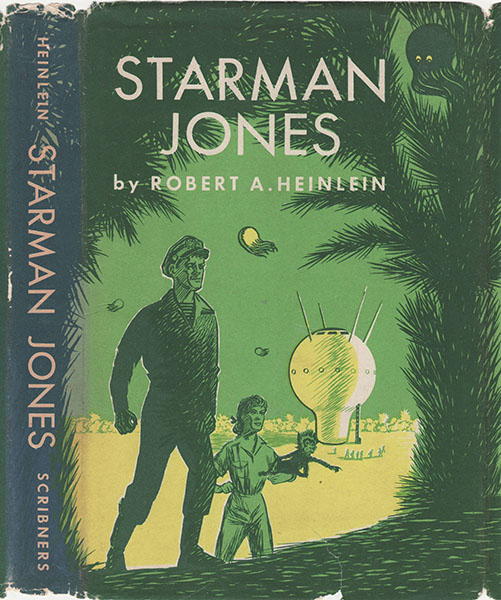
                • Cover of Starman Jones
                  Starman Jones

                  Robert A. Heinlein · standalone novel · 1953

                  similar byyoung adult+1 more

                  Starman Jones, a 1953 science fiction novel by Robert A. Heinlein, features a farm boy who wants to go to the stars. Charles Scribner's Sons published the book as part of the Heinlein juveniles series.

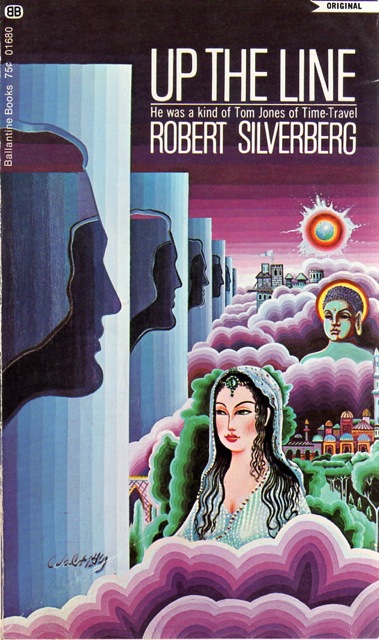
                • Cover of Up the Line
                  Up the Line

                  Robert Silverberg · standalone novel · 1969

                  similar bytime travel+1 more

                  Up the Line (1969) is a time travel novel by American science fiction author Robert Silverberg. The plot revolves mainly around the paradoxes brought about by time travel and is considered an example of the more sexually-permissive era of late 1960s American science-fiction, a reflection of the counterculture of its day. It was nominated for a Nebula Award for Best Novel in 1969 and a Hugo Award for Best Novel in 1970 but lost to Ursula K. Le Guin's The Left Hand of Darkness both times.

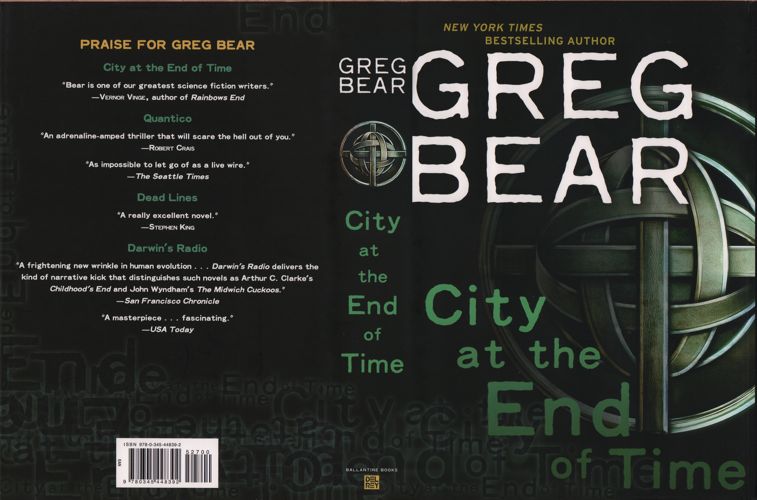
                • Cover of City at the End of Time
                  City at the End of Time

                  Greg Bear · standalone novel · 2008

                  similar bytime travel+1 more

                  City at the End of Time is a 2008 science fiction novel by American writer Greg Bear. It was published in August 2008 by Del Rey in the United States, and Gollancz in the United Kingdom. The story follows three drifters in present-day Seattle who are tormented by strange dreams of the Kalpa, a city one hundred trillion years in the future. The Kalpa is attempting to ward off the Typhon, an inexplicable entity that has consumed the rest of the ancient universe and broken down the laws of physics.

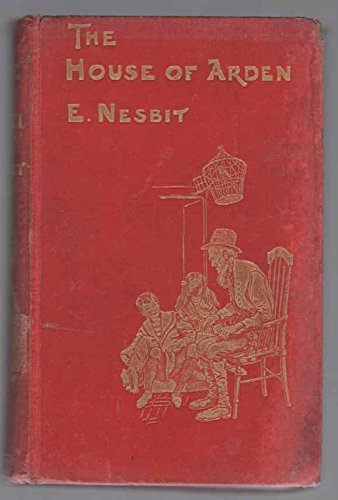
                • Cover of Fabian Time Fantasies
                  Fabian Time Fantasies

                  series · 2 books · 1908

                  completed

                  similar bytime travel+1 more

                  E. Nesbit's Edwardian time-travel duology follows two children who use a magic device to slip between their own era and the past. The House of Arden sends young Edred and his sister into English history in search of a family treasure, while its sequel, Harding's Luck, follows a poor orphan boy who travels back to the reign of James I and briefly lives another child's privileged life, before choosing to return and help the man who raised him, in a story pointedly concerned with poverty and welfare.

                • Cover of The Best-Kept Secret
                  The Best-Kept Secret

                  Emily Rodda · standalone novel · 1988

                  similar bytime travel+1 more

                  Eleven-year-old Jo takes a magical carousel ride seven years into the future, where she and her fellow travelers face a decision involving a possible change in the nature of reality.

                • Cover of Only a Monster
                  Only a Monster

                  series · 3 books · 2022

                  similar bytime travelyoung adult

                  Only a Monster is Vanessa Len's YA fantasy trilogy: Only a Monster (2022), Never a Hero and Once a Villain. It follows a teenage girl who discovers she comes from a line of time-manipulating 'monsters', the traditional enemies of a lineage of 'heroes', after falling for a boy from the opposing side. The trilogy reframes familiar hero/monster tropes around a contemporary, time-travel fantasy premise.

                • Cover of The Guardians of Time
                  The Guardians of Time

                  series · 4 books · 2002

                  similar bytime travelyoung adult

                  Guardians of Time is a trilogy of novels written by Marianne Curley. The plot of the trilogy consists of the Guardians of Time, trying to protect the past, present, and future by traveling into the past to thwart their enemies, and the Order of Chaos, who are trying to change past events to give themselves more power.

                • Cover of Crosstime Traffic
                  Crosstime Traffic

                  series · 6 books · 2003

                  similar by+2 more

                  Harry Turtledove's Crosstime Traffic novels are set on an Earth that has discovered travel to alternate timelines where history unfolded differently, exploited commercially by the monopoly company that gives the series its name. Aimed at young-adult readers, the loosely connected books -- including Gunpowder Empire, Curious Notions, and The Disunited States of America -- each send a young protagonist into a different divergent world.

                • Cover of Tempest (Julie Cross)
                  Tempest (Julie Cross)

                  series · 4 books · 2011

                  similar bytime travelyoung adult

                  Julie Cross' Tempest trilogy opens with Tempest (2012), a young-adult science-fiction novel published by St. Martin's Press that was nominated for a 2012 RT Book Reviews award and received a starred Kirkus review. It continues across Vortex and Timestorm, published through 2014.

                • Cover of When You Reach Me
                  When You Reach Me

                  Rebecca Stead · standalone novel · 2009

                  similar bytime travel+1 more

                  As her mother prepares to be a contestant on the 1970s television game show, "The $20,000 Pyramid," a twelve-year-old New York City girl tries to make sense of a series of mysterious notes received from an anonymous source that seems to defy the laws of time and space.

                • Cover of Playing Beatie Bow
                  Playing Beatie Bow

                  Ruth Park · standalone novel · 1980

                  similar bytime travelyoung adult

                  WorldCat: A lonely Australian girl from a divided family is transported back to the 1880's and an immigrant family from the Orkney Islands.

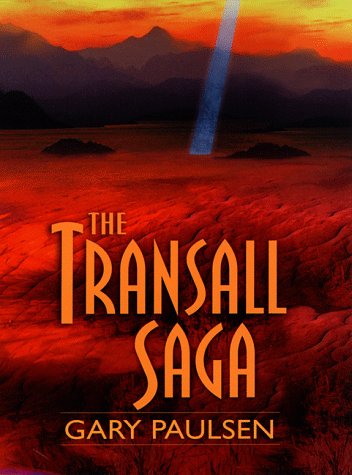
                • Cover of The Transall Saga
                  The Transall Saga

                  Gary Paulsen · standalone novel · 1998

                  similar byyoung adult+1 more

                  The Transall Saga is a 1998 post-apocalyptic survival novel by American author Gary Paulsen. It is a survival story like most of his other books but also involves the science fiction genre. There are also themes of speculative evolution.

                • Cover of The First State of Being
                  The First State of Being

                  Erin Entrada Kelly · standalone novel · 2024

                  similar bytime travel+1 more

                  The First State of Being is a 2024 children's time travel novel by Erin Entrada Kelly. Set in the lead-up to Y2K, it follows a young boy who discovers a strange teenager who claims to be from the future. Kelly earned the Newbery Medal in 2025 for the book, her second medal and her third recognition; it was also a finalist for the National Book Award for Young People's Literature in 2024.

                • Cover of The Ghosts
                  The Ghosts

                  Antonia Barber · standalone novel · 1969

                  similar bytime travelyoung adult

                  A brother and sister meet two strange children in the garden of their new home with whom they return to another century.

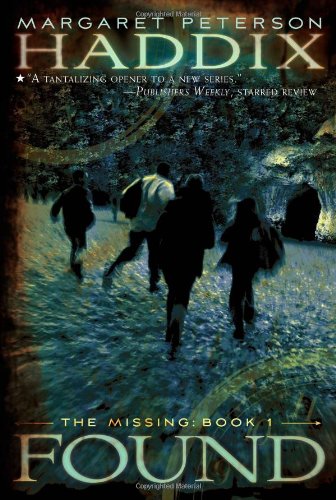
                • Cover of The Missing
                  The Missing

                  series · 10 books · 2008

                  similar bytime travelyoung adult

                  The Missing is a series of fictional young-adult novels written by Margaret Peterson Haddix. It tells the story of famous children from history stolen by futuristic time travelers from their place in time and accidentally sent to the 21st century as babies. They are then adopted by families in the 21st century. Because Jonah is one of the stolen children, he, along with his non-adopted sister Katherine, must help return the missing kids to their rightful places in history and fix time before it is destroyed. The first book in the series, Found, was published on April 22, 2008. The series continued with book titles Sent, Sabotaged, Torn, Caught, Risked, and Revealed. The eighth and final book, Redeemed, was released on September 8, 2015. There are also two ebook short stories, Sought and Rescued . Haddix originally intended the series to consist of only seven books. However, she stated that she had trouble closing out the series in seven books; leading to her decision to write Redeemed.

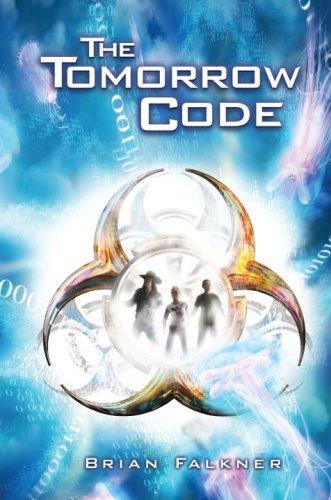
                • Cover of The Tomorrow Code
                  The Tomorrow Code

                  Brian Falkner · standalone novel · 2008

                  similar bytime travelyoung adult

                  THE END OF THE WORLD started quietly enough for Tane Williams and Rebecca Richards. . . .Tane and Rebecca aren't sure what to make of it--a sequence of 1s and 0s, the message looks like nothing more than a random collection of alternating digits. Working to decode it, however, Tane and Rebecca discover that the message contains lottery numbers . . . lottery numbers that win the next random draw! Suddenly Tane and Rebecca are rich, but who sent the numbers? And why? More messages follow, and slowly it becomes clear--the messages are being sent back in time from Tane and Rebecca's future. Something there has gone horribly wrong, and it's up to them to prevent it from happening. As they follow the messages' cryptic instructions, Tane and Rebecca begin to suspect the worst--that the very survival of the human race may be at stake.From the Hardcover edition.

                • Cover of Time Traders
                  Time Traders

                  series · 7 books · 1958

                  similar bytime travel

                  The Time Traders opens Andre Norton's Cold War-flavored science fiction series, following an American agent recruited to travel into the past and counter a Soviet operation built around ancient technology unearthed from a vanished civilization. Norton, later joined by collaborators Sherwood Smith and P. M. Griffin, expanded the sequence to seven novels published between 1958 and 2002, and revised the opening book herself in 2000. Like several of Norton's other series, it treats leftover technology from a long-gone ancient culture as its central plot engine.

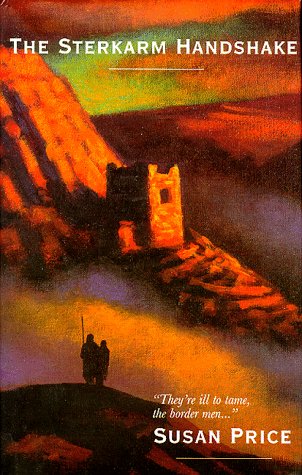
                • Cover of Sterkarm
                  Sterkarm

                  series · 3 books · 1998

                  similar bytime travel+1 more

                • Cover of Singing the Dogstar Blues
                  Singing the Dogstar Blues

                  Alison Goodman · standalone novel · 1998

                  similar bytime travelyoung adult

                  From the back cover of the Firebird paperback: Seventeen-year old Joss is a rebel who can blow a mean harmonica, and a student of time travel at the prestigious Centre for Neo-Historical Studies. This year, for the first time, the Centre has an alien student - Mavkel, from the planet Choria. And Mavkel has chosen Joss of all people, as his roommate and study partner. Joss is less than thrilled by the high-tech security surrounding Mavkel, and alarmed by the danger he seems to attract. Still, she is intrigued, because the Chorians are a harmonizing species of twins who communicate through song. What better partner for a demon harmonica player? Then Mavkel gets sick, Joss quickly realizes that he is pining for his lost twin, and his will to live is draining away. The only way she can help Mavkel is by breaking the Centre's strictest rules... and that means going back in time to change history.

                • Cover of Invictus
                  Invictus

                  Ryan Graudin · standalone novel · 2017

                  similar by+2 more

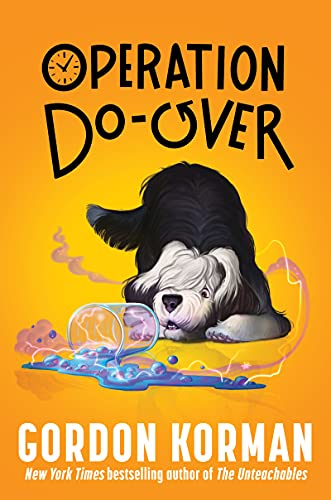
                • Cover of Operation Do-Over
                  Operation Do-Over

                  Gordon Korman · standalone novel · 2022

                  similar by+2 more

                • Cover of Out of Time
                  Out of Time

                  John Marsden · standalone novel · 1990

                  similar bytime travelyoung adult

                  James, a strange, silent boy, makes the acquaintance of old Mr. Woodford, a physicist who constructs a mysterious black box, but when the box comes into the boy's possession, it draws him into a magical and dangerous world, in and out of time.

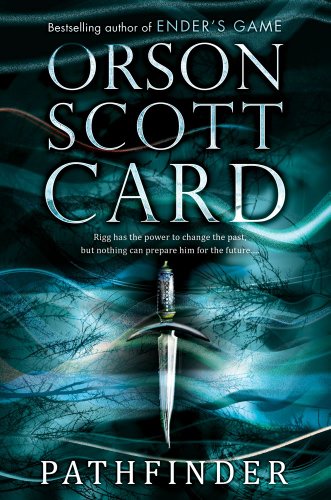
                • Cover of Pathfinder Trilogy
                  Pathfinder Trilogy

                  series · 3 books · 2010

                  similar bytime travelyoung adult

                  The Pathfinder series is a completed series of novels by Orson Scott Card that is notable for its unusual fusion of the themes of science fiction and fantasy, with some elements of historical fiction. One significant aspect of the Pathfinder series is its uniquely complex but well documented set of time travel rules.