More like Blocked
anchored on:science fiction
but
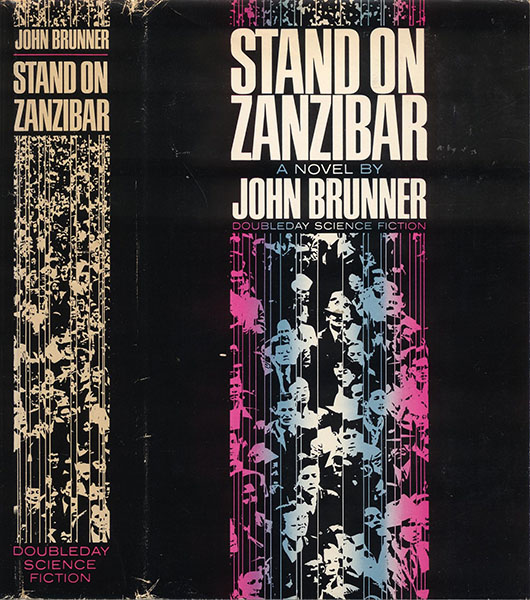
- Stand on Zanzibar
John Brunnerstandalone novel1968
similar byscience fiction+1 more
Stand on Zanzibar is a dystopian New Wave science fiction novel written by John Brunner and first in part published in New Worlds magazine in 1967 and in book form in 1968. The book won a Hugo Award for Best Novel at the 27th World Science Fiction Convention in 1969, as well as the 1969 BSFA Award and the 1973 Prix Tour-Apollo Award.
- Station Eleven
Emily St. John Mandelstandalone novel2014
similar byscience fiction+1 more
"Set in the days of civilization's collapse, Station Eleven tells the story of a Hollywood star, his would-be savior, and a nomadic group of actors roaming the scattered outposts of the Great Lakes region, risking everything for art and humanity. One snowy night a famous Hollywood actor slumps over and dies onstage during a production of King Lear. Hours later, the world as we know it begins to dissolve. Moving back and forth in time — from the actor's early days as a film star to fifteen years in the future, when a theater troupe known as the Traveling Symphony roams the wasteland of what remains — this suspenseful, elegiac, spellbinding novel charts the strange twists of fate that connect five people: the actor, the man who tried to save him, the actor's first wife, his oldest friend, and a young actress with the Traveling Symphony, caught in the crosshairs of a dangerous self-proclaimed prophet." (source: Goodreads.com)
- H. G. Wells' War of the Worlds
universe65 books1898
Start hereThe War of the Worlds · Start here
similar byscience fictionalien invasion
No one would have believed, in the closing years of the nineteenth century, that human affairs were being watched keenly and closely from the timeless worlds of space. And then the cylinders fell. H. G. Wells' War of the Worlds opens in the quiet of the Surrey commons, where a falling star proves to be the first Martian craft — and from the pit rise the towering tripods, the Heat-Ray, the choking Black Smoke and the creeping red weed, wielded by minds that regard mankind much as we regard the creatures we boil for supper. This is invasion rendered as natural disaster: cold, methodical, and vast beyond argument. Wells' 1898 novel is the seed; everything else grows from that Martian soil. The catalogue gathers direct sequels and continuations alongside a wide field of other hands. In War of the Worlds: Global Dispatches the invasion is retold across the whole planet through the eyes of Twain, Verne, Tolstoy, Lowell and Kipling; in the Manly Wade and Wade Wellman crossover, Sherlock Holmes, Watson and Professor Challenger take the field against the machines; and Scott Washburn's Great Martian War stretches the fighting into a decades-long alternate history of steam, artillery and grinding attrition. It is a loose shared world — no single decreed sequence, many voices answering one calamity. What sets this world apart is its refusal of heroics: the invaders fall not to generals but to the smallest things of Earth, humbling and indifferent. Begin, always, with Wells' original novel — it is short, and it is the ground every later book stands upon. From there follow your appetite: Global Dispatches for the panorama, the Holmes campaign for adventure, Washburn for the long war.
- Mother of Storms
John Barnesstandalone novel1994
similar byscience fiction+1 more
From the flaps of the Tor first edition: "It is 2028. A strike to destroy an illegal Arctic weapons cache has a catastrophic side effect. Massive amounts of energy are liberated from the polar ice, suddenly warming the Earth's climate. In the middle of the Pacific, a gigantic hurricane thousands of miles across is forming, larger than any in human history. A storm with winds of supersonic speed. A storm that changes direction at whim. A storm that refuses to die. A storm so vast it spawns dozens more in its wake... Blinded by intrigue, expedience, and greed, the world's politicians and power brokers have ignored the killer storms threat until it is too late. Already the death toll is in the tens of millions, as it savages the Pacific coast, while its devil's brood of smaller storms are wreaking havoc across the face of the planet. While the survivors scramble for advantage, a handful of courageous men and women undertake a daring, desperate plan to save humanity from total destruction - a plan so visionary it may alter forever the future of the human race."
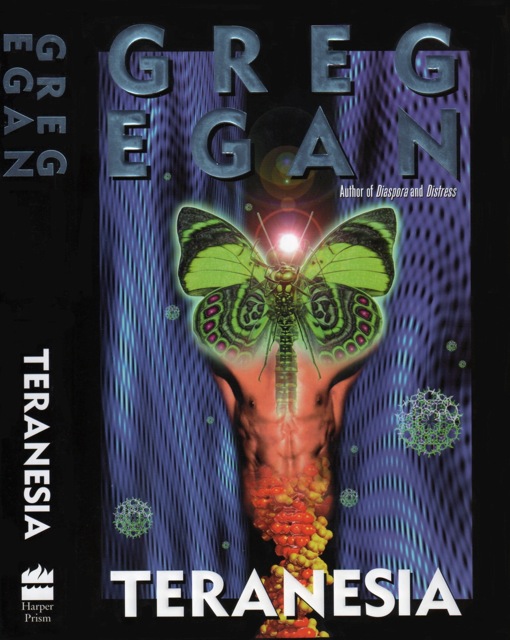
- Teranesia
Greg Eganstandalone novel1999
similar byscience fictionsoutheast asia
from the flaps of the HarperPrism first printing: "Welcome to Teranesia, the island of butterflies, where evolution has stopped making sense. Prabir Suresh lives in paradise, a nine-year-old boy with an island all his own to name, to explore, and to populate with imaginary monsters stranger than any tropical wildlife. Teranesia is his kingdom, shared only by his biologist parents and baby sister, Madhusree. The unexplained genetic mutation of the island's butterflies that brought his family to the remote South Moluccas barely touches Prabir; his own life revolves around the beaches, the jungle, and the schooling and friendship made possible by the net. When civil war breaks out across Indonesia, this paradise comes to a violent end and his family is broken apart, leaving Prabir with nagging feelings of guilt and an overwhelming, almost irrational sense of responsibility for his sister. The mystery of the butterflies remains unsolved but nearly twenty years later reports begin to appear of strange new species of plants and animals appearing throughout the region - species separated from their known cousins by recent, dramatic mutations that seem far too efficient and functional to have arisen by chance from pollution, disease, or any other random catastrophe. Madhusree is now a biology student; proud of her parents' unacknowledged work, and with no memories of the trauma of the war to discourage her, she decides to join a multinational expedition being mounted to investigate the new phenomenon. Unable to cast off his fears for her safety, Prabir reluctantly follows her. But travel between the scattered islands is difficult, and Madhusree's expedition is out of contact. In the hope of finding her, Prabir joins up with an independent scientist, Martha Grant, who has come to search for clues to the evolutionary mystery and whatever commercial benefits it might bring to her sponsor. As Prabir and Martha begin to untangle the secret of Teranesia, Prabir is forced to confront his past, and to face the painful realities that have shaped his life while also dealing with the implications of an unprecedented biological revolution. A Scientific mystery, an adventure story, and a meditation on the origins of love, Teranesia is Greg Egan's most ambitious and accessible novel yet."
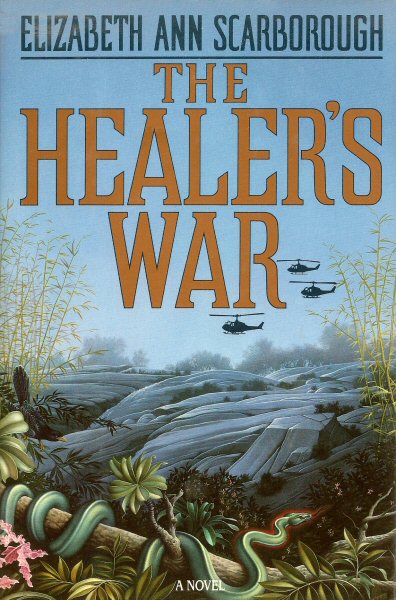
- The Healer's War
Elizabeth Ann Scarboroughstandalone novel1988
similar byscience fictionsoutheast asia
The Healer's War is a 1988 science fiction novel by American writer Elizabeth Ann Scarborough. It won the Nebula Award for Best Novel in 1989. The story is about a military nurse during the Vietnam War.
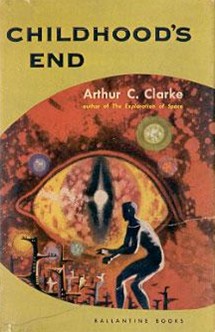
- Childhood's End
Arthur C. Clarkestandalone novel1953
similar byscience fictionalien invasion
Childhood's End is a 1953 science fiction novel by the British author Arthur C. Clarke. The story follows a peaceful alien invasion of Earth by mysterious Overlords, whose arrival begins decades of apparent utopia under indirect alien rule, at the cost of human identity and culture.
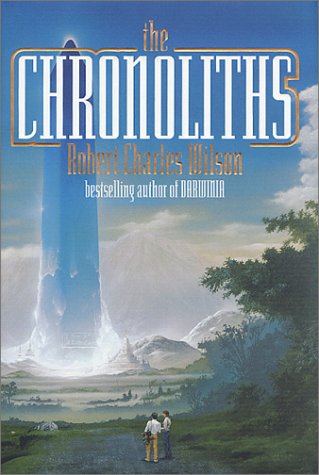
- The Chronoliths
Robert Charles Wilsonstandalone novel2001
similar byscience fictionsoutheast asia
The Chronoliths is a 2001 science fiction novel by American-Canadian writer Robert Charles Wilson. It was nominated for the 2002 Hugo Award for Best Novel and tied for the 2002 John W. Campbell Memorial Award for Best Science Fiction Novel.
- Cryptonomicon
Neal Stephensonstandalone novel1999
similar by+2 more
There are two main timelines in this novel. This first is during World War II, and follows the lives of three cryptologists: Lawrence Pritchard Waterhouse (American), Alan Turing (British), and Rudolf von Hacklheber (German), as well as the strange exploits of Detachment 2702. The second timeline takes place during the present, filled with the offspring of the main characters in the first timeline. They are preoccupied with the construction of a data haven.
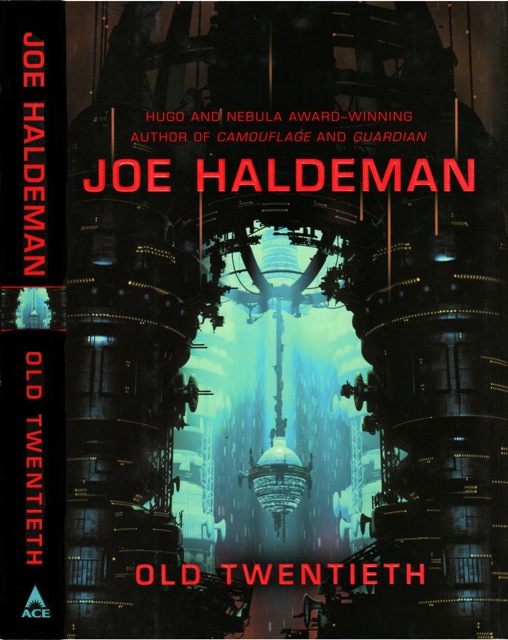
- Old Twentieth
Joe Haldemanstandalone novel2005
similar byscience fiction+1 more
The passengers aboard the starship Ad Astra spend most of their time on the thousand-year journey to Beta Hydrii within the virtual reality of twentieth-century Earth. There, they can experience nostalgia for the hardship of a life they've since evolved beyond. But when people inside the virtual reality chamber start to die, engineer Jacob Brewer finds himself face-to-face with a sentient machine obsessed with humanity. It has put itself in charge of the ship. And it wants to talk to Jacob...
- The Midwich Cuckoos
John Wyndhamstandalone novel1957
similar byscience fiction+1 more
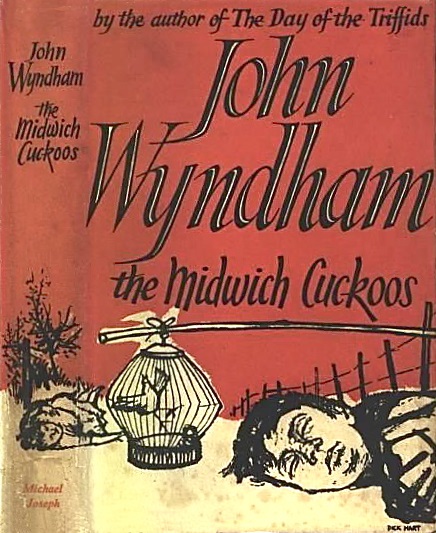
The Midwich Cuckoos is a 1957 science fiction novel written by the English author John Wyndham. It tells the tale of an English village in which the women become pregnant by brood parasitic aliens. The book has been praised by many critics, including the dramatist Dan Rebellato, who called it "a searching novel of moral ambiguities", and the novelist Margaret Atwood, who called the book Wyndham's "chef d'œuvre". The book has been adapted for film, radio, and television.
- The Puppet Masters
Robert A. Heinleinstandalone novel1951
similar byscience fictionalien invasion
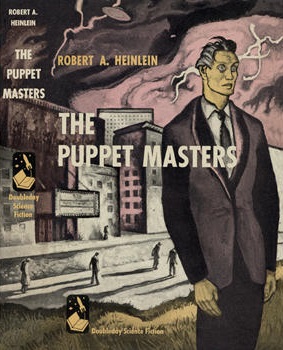
Parasitical aliens attach themselves to human hosts and take over their bodies. Two spies are sent to find out what's happening, but the extent is much farther than they knew. With access to the humans' memories, the aliens quietly invade the government and start taking over.
- The Kraken Wakes
John Wyndhamstandalone novel1953
similar byscience fictionalien invasion
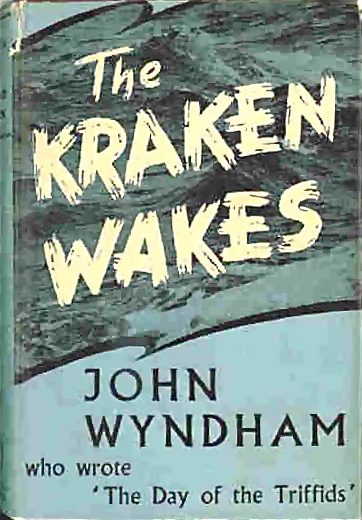
" Behind a spectacular meteor shower actually hides the beginning of an invasion by a mysterious and powerful alien race. Earth's life is disrupted by the attacks of extraterrestrials whose war machines, emerging from the depths of the oceans, seem indestructible. The coalitioned forces of the whole world are worthless, powerless in the face of the indecipherable and deadly plans of a superior intelligence, capable of bringing the entire planet to the brink of catastrophe" Goodreads May 20, 2022
- Tripods
series4 books1967
completed
similar byscience fictionalien invasion
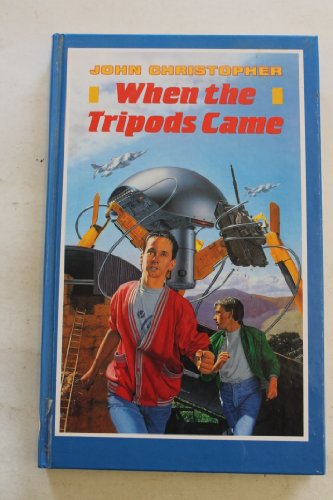
The Tripods is a series of young adult science fiction novels by John Christopher. The series takes place in a post-apocalyptic world where humanity is enslaved by "Tripods"—gigantic three-legged walking machines piloted by an alien race later identified as the "Masters". The first two books were the basis of a science fiction TV series, produced in the United Kingdom in the 1980s.
- Restoree
Anne McCaffreystandalone novel1967
similar byscience fiction+1 more
Torn from Earth by a bizarre and nameless black force, Sara has no idea where she is or why she inhabits a beautiful new body. Controlled by brutal guards and tamed by terror, she can not comprehend her role as a nurse for a man who appears to be an idiot. She discovers that the planet she had been brought to was Lothar and that the man she was caring for was its Regent, Sara knows the restorees had to escape. When they do, they become fugitives on a world of multiple evils. (adapted from the back cover of the Baen edition)
- Forge of God
series2 books1987
completed
similar byscience fiction+1 more
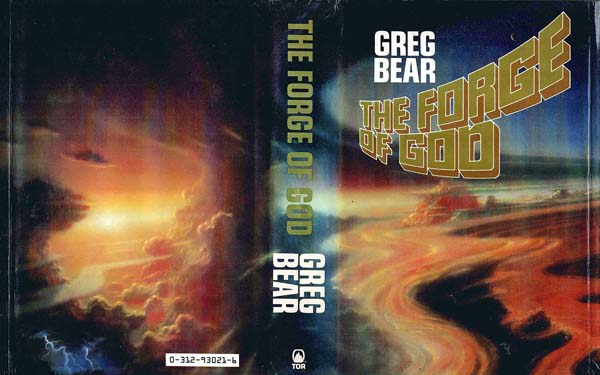
The Forge of God (1987) is Greg Bear's science fiction novel about Earth's discovery that it is the target of an incomprehensible, overwhelming alien attack, following scientists and ordinary people as they try to understand what is destroying the planet. Its 1992 sequel, Anvil of Stars, follows a group of young survivors sent on a mission of interstellar retaliation, continuing directly from the first book's ending.
- Footfall
Larry Niven & Jerry Pournellestandalone novel1985
similar byscience fictionalien invasion
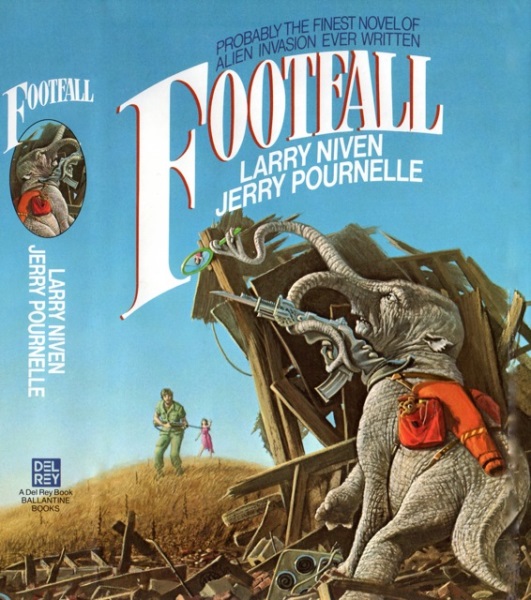
When aliens travel to Earth from Alpha Centauri, differences between alien and human psychology result in an unprovoked invasion, and the resulting resistance results in the aliens' use of a devastating weapon.
- The 5th Wave
series4 books2013
similar byscience fictionalien invasion
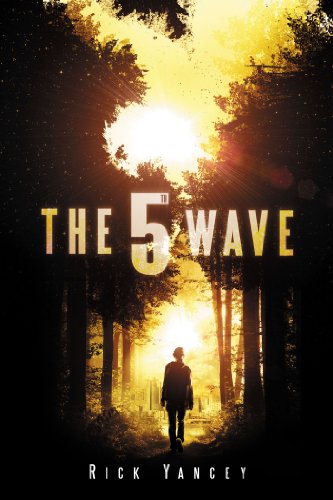
Rick Yancey's The 5th Wave opens after a series of escalating alien attacks has already devastated Earth's population and infrastructure, following sixteen-year-old survivor Cassie Sullivan as she searches for her younger brother while trying to work out who, among the remaining humans, can still be trusted. The trilogy is young-adult science fiction that treats its alien-invasion premise as a survival and paranoia story more than a war story.
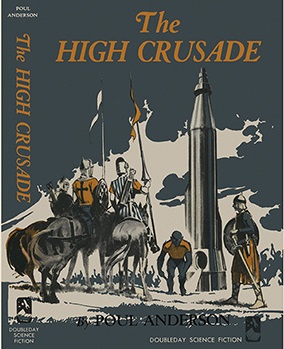
- The High Crusade
Poul Andersonstandalone novel1960
similar byscience fiction+1 more
The High Crusade is a science fiction novel by American writer Poul Anderson, about the consequences of an extraterrestrial scoutship landing in medieval England. Poul Anderson described the novel as "one of the most popular things I've ever done, going through many book editions in several languages."