More like Bloodshift
anchored on:our world
but
- I Am Legend
Richard Mathesonstandalone novel1954
similar byscience fictiontensevampiresour world
The last human survivor of the vampire epidemic has to maintain his defences against their onslaught, while attempting to research the cause and possibly solution to the plague. Robert Neville is the last living man on Earth... but he is not alone. Every other man, woman and child on the planet has become a vampire, and they are hungry for Neville's blood. By day he is the hunter, stalking the undead through the ruins of civilization. By night, he barricades himself in his home and prays for the dawn. How long can a man survive like this?
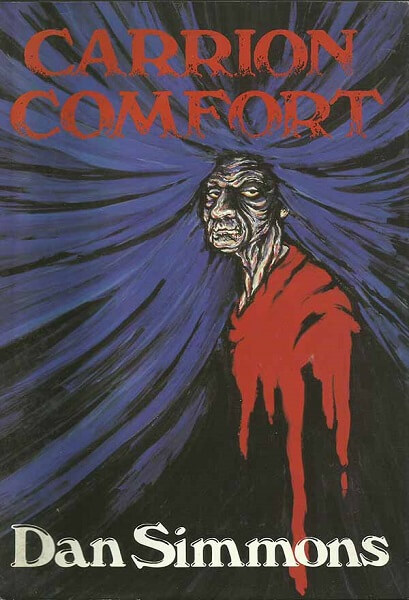
- Carrion Comfort
Dan Simmonsstandalone novel1989
similar byscience fictiontenseour world+1 more
Carrion Comfort is a science fiction/horror novel by American writer Dan Simmons, published in 1989 in hardcover by Dark Harvest and in 1990 in paperback by Warner Books. It won the Bram Stoker Award, the Locus Poll Award for Best Horror Novel, and the August Derleth Award for Best Novel. It is based on a novelette of the same title, published in 1983 in the magazine Omni. The first half of the novelette makes up chapter 1 of the novel, while the second half forms chapter 3.
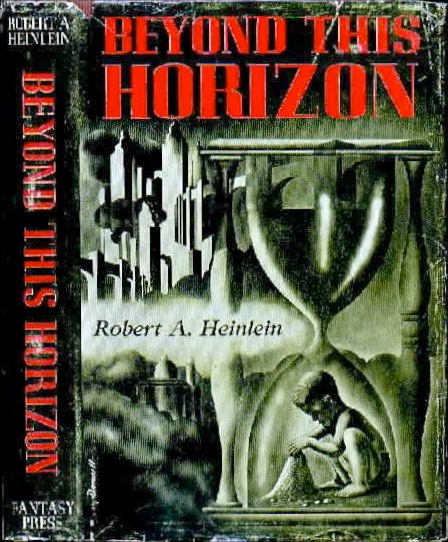
- Beyond This Horizon
Robert A. Heinleinstandalone novel1948
similar byscience fictionour worldgenetic engineering+1 more
From the front flap of a 2001 Baen reprint: "Utopia has been achieved. For centuries, disease, hunger, poverty, and war have been things found only in the history tapes. And applied genetics has given men and women the bodies of athletes and a lifespan of over a century. They should all have been very happy... But Hamilton Felix is bored. And he is the culmination of a star line, each of his last thirty ancestors chosen for superior genes. Hamilton is, as far as genetics can produce one, the ultimate man. And this ultimate man can see no reason why the human race should survive, and has no intention of continuing the pointless comedy. However, Hamilton's life is about to become less boring. A secret cabal of revolutionaries who find utopia not just boring, but desperately in need of leaders who know just What Needs to be Done, are planning to revolt and put themselves in charge. Knowing of Hamilton's disenchantment with the modern world, they have recruited him to join their Glorious Revolution. Big mistake! The revolutionaries are about to find out that recruiting a superman was definitely not a good idea..."
- Slan
series2 books1946
similar byscience fictionour world+2 more
Slan (1946) is A. E. van Vogt's science fiction novel about slans, a persecuted race of telepathic superbeings living hidden among ordinary humans, first serialized in Astounding Science Fiction before its Arkham House hardcover edition. More than sixty years later, Kevin J. Anderson completed Slan Hunter (2007), an authorized sequel built from van Vogt's notes to continue the story left unfinished at the original author's death. The two novels together bracket a single continuing narrative rather than an ongoing series.
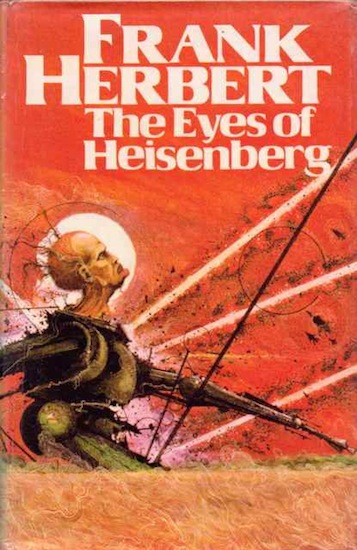
- The Eyes of Heisenberg
Frank Herbertstandalone novel1966
similar byscience fictiontenseour worldgenetic engineering
Tens of thousands of years in the future, Earth is ruled by the Optimen, a genetically engineered aristocracy that has made itself functionally immortal, while ordinary people, the Folk, live under strict reproductive control. When Harvey and Lizbeth Durant arrive to have their embryo genetically screened, the examining doctor finds something in the child no one has seen in a very long time: real potential for both fertility and life span, traits the Optimen have arrogated to themselves. Rather than destroy the embryo as policy demands, the doctor hesitates, setting off a chain of surveillance, suspicion and resistance. A tightly wound Frank Herbert thriller about genetic caste and rebellion.
- The Triffids
series3 books1951
similar byscience fictionour world+1 more
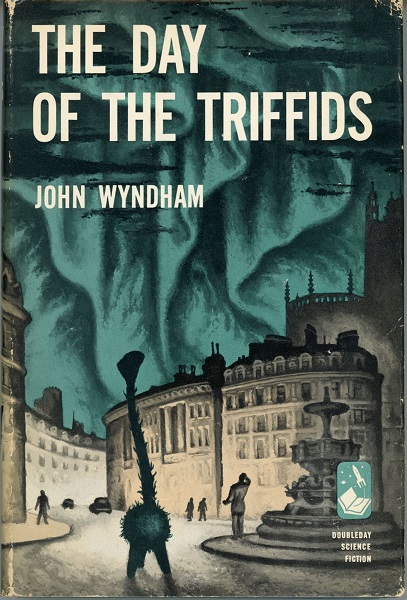
John Wyndham's The Day of the Triffids (1951) opens with a meteor-shower-like event that leaves most of Britain's population blind, throwing civilization into collapse just as triffids, an aggressive and mobile species of poisonous plant, become free to hunt the helpless survivors. Simon Clark's authorized sequel The Night of the Triffids (2001) picks up a generation later, narrated by the original protagonist's son as he confronts a new triffid-dominated world, and John Whitbourn's The Age of the Triffids extends the shared setting further still. Together the three novels form a loose post-apocalyptic trilogy built on Wyndham's original premise rather than a tightly plotted single story.
- Dune
series20 books1963
part of Dune Universe
similar byscience fiction+1 more
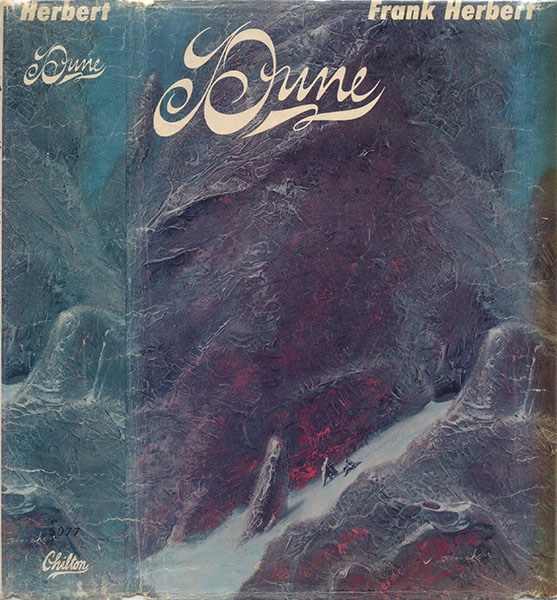
Frank Herbert's Dune Chronicles opens with 1965's Dune, set on the desert planet Arrakis where House Atreides takes control of the only source of the vital spice melange and young Paul Atreides is pulled into a struggle over its politics and religion. Herbert carried the story forward across five further novels — Dune Messiah, Children of Dune, God Emperor of Dune, Heretics of Dune, and Chapterhouse: Dune — following Paul's line over the following millennia, before Brian Herbert and Kevin J. Anderson later extended the saga. Many other editions of these six novels are omnibus and box-set repackagings rather than separate stories.
- The Passage
series3 books2010
similar byscience fictiontensevampires
The Passage is a novel series by Justin Cronin. There are three published books in the series. The film rights were acquired by Fox Entertainment Group in 2007 for adaptation into a film trilogy, but after 12 years of development and planning, it was changed to a television series, which premiered in January 2019 and was canceled after the first season.
- The White Plague
Frank Herbertstandalone novel1982
similar byscience fictiontenseour worldgenetic engineering
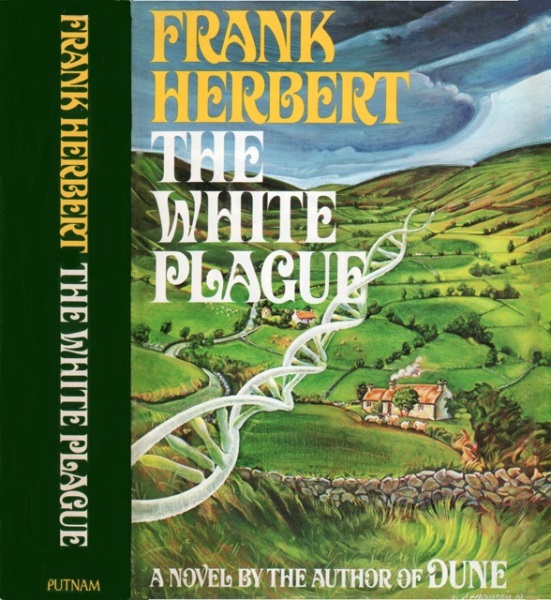
The White Plague is a 1982 science fiction novel by American author Frank Herbert about an engineered disease which kills only women. It was nominated for a best science fiction novel Locus Award in 1983.
- H. G. Wells' War of the Worlds
universe65 books1898
Start hereThe War of the Worlds · Start here
similar byscience fiction+2 more
No one would have believed, in the closing years of the nineteenth century, that human affairs were being watched keenly and closely from the timeless worlds of space. And then the cylinders fell. H. G. Wells' War of the Worlds opens in the quiet of the Surrey commons, where a falling star proves to be the first Martian craft — and from the pit rise the towering tripods, the Heat-Ray, the choking Black Smoke and the creeping red weed, wielded by minds that regard mankind much as we regard the creatures we boil for supper. This is invasion rendered as natural disaster: cold, methodical, and vast beyond argument. Wells' 1898 novel is the seed; everything else grows from that Martian soil. The catalogue gathers direct sequels and continuations alongside a wide field of other hands. In War of the Worlds: Global Dispatches the invasion is retold across the whole planet through the eyes of Twain, Verne, Tolstoy, Lowell and Kipling; in the Manly Wade and Wade Wellman crossover, Sherlock Holmes, Watson and Professor Challenger take the field against the machines; and Scott Washburn's Great Martian War stretches the fighting into a decades-long alternate history of steam, artillery and grinding attrition. It is a loose shared world — no single decreed sequence, many voices answering one calamity. What sets this world apart is its refusal of heroics: the invaders fall not to generals but to the smallest things of Earth, humbling and indifferent. Begin, always, with Wells' original novel — it is short, and it is the ground every later book stands upon. From there follow your appetite: Global Dispatches for the panorama, the Holmes campaign for adventure, Washburn for the long war.
- The Black Cloud
Fred Hoylestandalone novel1957
similar byscience fictiontenseour world
The Black Cloud is a 1957 science fiction novel by British astrophysicist Fred Hoyle. It details the arrival of an enormous cloud of gas that enters the Solar System and appears about to destroy most of the life on Earth by blocking the Sun's radiation.
- The Kraken Wakes
John Wyndhamstandalone novel1953
similar byscience fictiontenseour world
" Behind a spectacular meteor shower actually hides the beginning of an invasion by a mysterious and powerful alien race. Earth's life is disrupted by the attacks of extraterrestrials whose war machines, emerging from the depths of the oceans, seem indestructible. The coalitioned forces of the whole world are worthless, powerless in the face of the indecipherable and deadly plans of a superior intelligence, capable of bringing the entire planet to the brink of catastrophe" Goodreads May 20, 2022
- Blood of Eden
series4 books2012
similar bytensevampiresour world
The Blood of Eden is a young adult fantasy novel series by Julie Kagawa. The first book in the series, The Immortal Rules was published on April 24, 2012 through Harlequin Teen. The series follows the character of Allison Sekemoto, a teenage vampire that is trying to survive in a world where vampires exist and rule over much of the population.
- The Lathe of Heaven
Ursula K. Le Guinstandalone novel1971
similar byscience fictiontenseour world
The Lathe of Heaven is a 1971 science fiction novel by American writer Ursula K. Le Guin, first serialized in the American science fiction magazine Amazing Stories. It won the 1972 Locus Award for Best Novel and was a finalist for the 1971 Nebula Award for Best Novel and 1972 Hugo Award for Best Novel. Two television film adaptations were released: the PBS production, The Lathe of Heaven (1980), and Lathe of Heaven (2002), a remake produced by the A&E Network.
- Micro
Michael Crichton & Richard Prestonstandalone novel2011
similar byscience fictiontenseour worldgenetic engineering
Micro is a techno-thriller novel by Michael Crichton, the seventeenth under his own name and second to be published after his death, published in 2011. Upon his death in 2008, an untitled, unfinished manuscript was found on his computer, which would become Micro. Publisher HarperCollins chose science writer Richard Preston to complete the novel from Crichton's remaining notes and research, and it was finally published in 2011. Micro followed the historical thriller Pirate Latitudes, which was also found on his computer and published posthumously in 2009.
- The Boys from Brazil
Ira Levinstandalone novel1976
similar bytenseour worldgenetic engineering+1 more
The Boys from Brazil is a 1976 thriller novel by American writer Ira Levin. It was made into a film of the same title that was released in 1978.
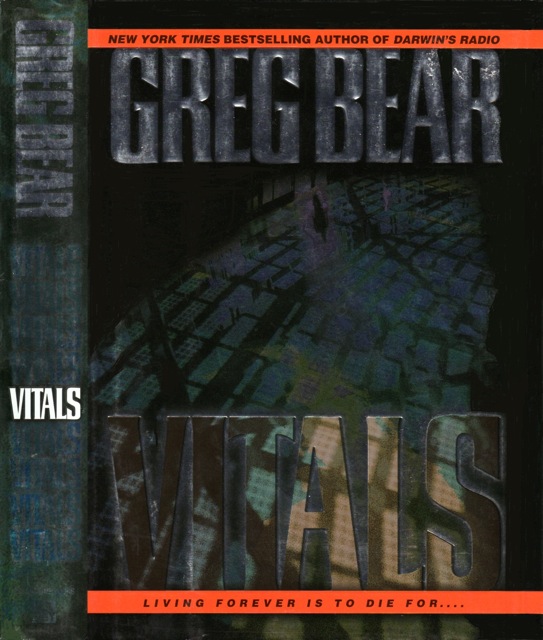
- Vitals
Greg Bearstandalone novel2002
similar byscience fictiontenseour worldgenetic engineering
From the flaps of the Del Rey first edition: "Hal Cousins is one of a handful of scientists nearing the most sought after discovery in human history: the key to short-circuiting the aging process. Fueled by a wealth of research, an overdose of self-confidence, and the money of influential patrons to whom he makes outrageous promises, Hal experiments with organisms living in the hot thermal plumes in the ocean depths. But as he journeys beneath the sea, his other world is falling apart. Across the country, scientists are being inexplicably murdered - including Hal's identical twin brother, who is also working to unlock the key to immortality. Hal himself barely eludes a cold-blooded attack at sea, and when he returns home to Seattle, he finds himself walking into an eerie realm where voices speak to him from the dead ... where a once-brilliant historian turned crackpot is leading him on a deadly game of hide-and-seek ... and where the beautiful, rich widow of his twin is more than willing to pick up the pieces of Hal's life-and take him places he's never been before. Suddenly Hal is trapped inside an ever-twisting maze of shocking revelations. For he is not the first person to come close to ending aging forever - and those who came before him will stop at nothing to keep the secret to themselves. Now every person on earth is at risk of being made an unsuspecting player in one man's spectacular and horrifying master plan. From the bottom of Russia's Lake Baikal to a billionaire's bionic house built into the cliffs of the Washington seashore, from the darkest days of World War II and the reign of Josef Stalin to the capitalist free-for-all that is the United States, Vitals tells an astounding tale of the most unimaginable scientific secret of all - exposed by the quest for immortality itself..."
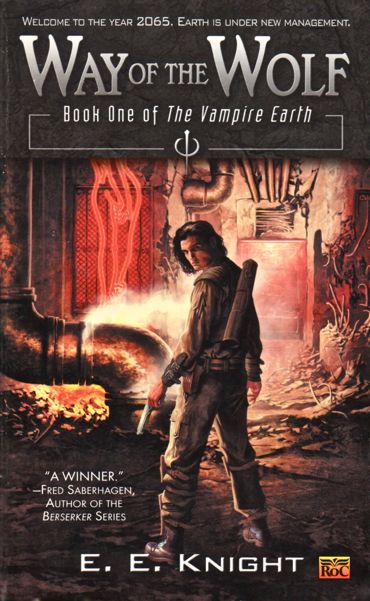
- The Vampire Earth
series12 books2003
similar byscience fictiontensevampires+1 more
Vampire Earth is a series of science fiction/dark fantasy novels by American writer E. E. Knight.
- Prey
Michael Crichtonstandalone novel2002
similar byscience fictiontenseour worldgenetic engineering
Prey is the thirteenth novel by Michael Crichton under his own name and his twenty-third novel overall. It was first published in November 2002, making it his first novel of the twenty-first century. An excerpt was first published in the January–February 2003 issue of Seed magazine. Prey brings together themes from two earlier Crichton best-selling novels, Jurassic Park and The Andromeda Strain, and serves as a cautionary tale about developments in science and technology: in particular, nanotechnology, genetic engineering, and distributed artificial intelligence.
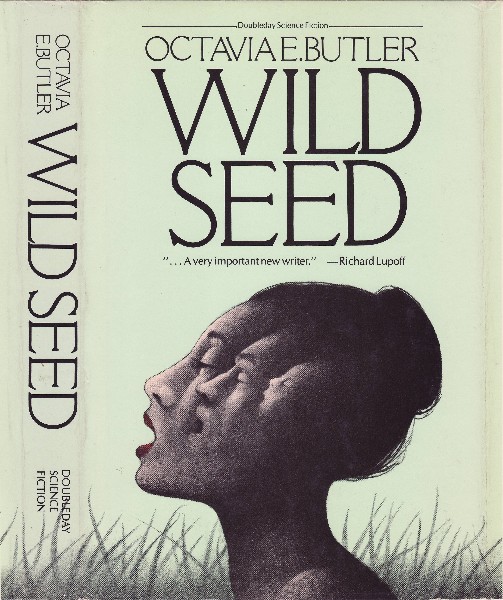
- Patternist
series6 books1976
completed
similar byscience fictiongenetic engineering+2 more
The Patternist series is a group of science fiction novels by Octavia E. Butler that detail a secret history continuing from the Ancient Egyptian period to the far future that involves telepathic mind control and an extraterrestrial plague. A profile of Butler in Black Women in America notes that the themes of the series include "racial and gender-based animosity, the ethical implications of biological engineering, the question of what it means to be human, ethical and unethical uses of power, and how the assumption of power changes people."
- Ender Wiggin
series14 books1977
part of Ender's Game Universe
similar byscience fiction+1 more
Orson Scott Card's Ender's Game (1985, expanded from his 1977 novella) follows child prodigy Andrew "Ender" Wiggin as he is recruited into a military training program built to prepare Earth's defenses for an anticipated third war against an insectoid alien species known as the Formics. The saga continues years later through Speaker for the Dead and Xenocide, following an older Ender as he confronts the moral weight of his role in that earlier conflict, and concludes the core arc in Children of the Mind, with Ender in Exile filling in the years between the first two books. Set within the wider Ender's Game universe, the series shifts from military coming-of-age story to slower, more philosophical science fiction as it progresses.